Lifestyle
Celebrating movie icons: Meryl Streep


TERRY GROSS, HOST:
This is FRESH AIR. I’m Terry Gross. Today, we continue our series Classic Films and Movie Icons and hear interviews from our archive with Meryl Streep and Sidney Poitier. I spoke with Streep in 2012 when she was nominated for an Oscar for her portrayal of British Prime Minister Margaret Thatcher in the film “The Iron Lady.” She won. She’d previously won for her performances in “Kramer Vs. Kramer” and “Sophie’s Choice.” She holds the record for the most Oscar nominations – a total of 21. One of the things she’s known for is her uncanny ability to do accents. Let’s start by hearing how she sounds as Margaret Thatcher. The film begins after Thatcher has lost her husband and is suffering from dementia. She’s imagining that her husband is still with her and talking to her. In this scene, Streep portrays Thatcher after she’s become the first woman to lead the Conservative Party. She’s speaking before the House of Commons.
(SOUNDBITE OF FILM, “THE IRON LADY”)
MERYL STREEP: (As Margaret Thatcher) The right honorable gentleman knows very well that we had no choice but to close the school…
(JEERING)
STREEP: (As Margaret Thatcher) …Because his union paymasters have called a strike deliberately to cripple our economy.
(JEERING)
STREEP: (As Margaret Thatcher) Teachers cannot teach when there is no heating, no lighting in their classrooms. And I ask the right honorable gentleman, whose fault is this?
(JEERING)
UNIDENTIFIED ACTOR #1: (As character) Methinks the right honorable lady doth screech too much.
(LAUGHTER)
UNIDENTIFIED ACTOR #1: (As character) And if she wants us to take her seriously, she must learn to calm down.
(JEERING)
STREEP: (As Margaret Thatcher) If the right honorable gentleman could perhaps attend more closely to what I am saying, rather than how I am saying it…
UNIDENTIFIED ACTOR #2: (As character) Here, here.
STREEP: (As Margaret Thatcher) …He may receive a valuable education in spite of himself.
GROSS: Margaret Thatcher later took voice lessons from a drama coach to help her sound more authoritative. Here’s Streep as Thatcher after those lessons, addressing Parliament about the war in the Falklands.
(SOUNDBITE OF FILM, “THE IRON LADY”)
STREEP: (As Margaret Thatcher) We were faced with an act of unprovoked aggression, and we responded…
UNIDENTIFIED ACTORS: (As characters) Hear, hear.
STREEP: (As Margaret Thatcher) …As we have responded in times past, with unity, strength and courage…
UNIDENTIFIED ACTORS: (As characters) Hear, hear.
STREEP: (As Margaret Thatcher) …Sure in the knowledge that though much is sacrificed, in the end, right will prevail over wrong.
(SOUNDBITE OF ARCHIVED NPR BROADCAST)
GROSS: Meryl Streep, welcome to FRESH AIR. Thank you so much for being here. And congratulations…
STREEP: Thank you.
GROSS: …On your Golden Globe and your Oscar nomination.
STREEP: Thank you very much for having me, Terry. I’m a huge fan.
GROSS: Oh, wow. Thank you.
(LAUGHTER)
GROSS: So we just heard you before and after Margaret Thatcher has voice lessons – voice lessons to teach her authority and power – so that you can speak more powerfully to the Parliament. Did she really have that kind of vocal training?
STREEP: She did. My memory is a little cloudy, but I remember reading that Laurence Olivier had something to do with arranging for her to have – he demurred. He said he wouldn’t care to do it himself, but he steered her in the direction of a good vocal coach. And she did go. And it did help her. And it was part of the “Pygmalion” process that Gordon Reece put her through.
GROSS: So can you talk a little bit about what you think she learned with those vocal lessons and how you transformed your voice as her after she really learned her way around as a public figure and had the advantage of those voice lessons?
STREEP: Well, I think that voice lessons really just bring out a voice that you already possess. So she already had – whatever the sort of stentorian tones that she acquired over time. They were all lying in wait there and within her arsenal. And she’d also had elocution in her high school, the equivalent of high school, in Grantham. She had changed her way of speaking. Her accent from Grantham had disappeared by the time she went to Oxford to study chemistry, and she had decided on a sort of a plummy kind of aspirant, upper-middle-class, what we would call upper-middle-class, voice. And so what the voice coach did was enabled her to expand her breath, deepen her voice, bring it to a place where men could listen to it in its most emphatic tones.
GROSS: So how did you change your voice for the before and after, for the more confident and experienced Margaret Thatcher versus the early Margaret Thatcher?
STREEP: Well, I had evidence of both voices, you know, from the public record, so I could listen to them. And it’s sort of my fun to sing along with records and imitate people that are on the telephone that have different ways of speaking. I mean, I pick things up like that, so it’s not a thing that’s a struggle. It’s work, but it’s not a struggle. It’s fun. And she had a very particular way of emphasizing points and making her point. And that had to do with bringing out a word that you didn’t normally think was the most important word in the sentence. Do you know what I mean?
GROSS: Yes.
STREEP: And she also had a sort of a way, like a railroad train of going – (inhaling) – (impersonating Margaret Thatcher) taking a breath and starting quite quietly and making a point in a way that you don’t really know that this point is going to be made through several examples, and there will not be a break in the speaking voice at any point. And you – if you think you’re going to interrupt, you’re really not going to have the opportunity because she’s just got capacity. It’s just really stunning as I looked at interviews.
GROSS: So you need a lot of breath to keep talking like that. Did you have it?
STREEP: I’ve just been talking like that.
(LAUGHTER)
STREEP: Yeah. I did need a lot of breath. I had – I needed much more breath than I have. After all my expensive drama school training, I couldn’t keep up with her.
GROSS: I think it’s interesting when you’re doing the voice of a real person, or I suppose if you’re learning an accent, too, you think of it as singing along with a record. So is that what you do, like, you play Margaret Thatcher giving a speech, and you do the equivalent of singing along with it, you give the speech as you’re listening to it?
STREEP: I say that because that’s my way in in the very beginning…
GROSS: Yeah.
STREEP: …How to enter it. Very quickly in the process, I don’t think about voice being separate from the way you hold your head or the way you sit or the way you dress or your way you put on lipstick. It’s all a piece of a person, and it’s all driven by conviction. In other characters, it’s driven by insecurity, or it’s driven by fear, or – there’s always a driver, and the – all the physical manifestations – you need your way in. So, yeah.
When I was a kid, when I was 16, 17, I’d come home from high school, and my dad collected all of Barbra Streisand’s records. And she was very young then. I think she was – she probably had three records out, and she was 21. And we had them all. And I knew every single song, every breath, every elision, every swell. And I sang along to it, but it – for me, it was a way to get out the feeling of the song and also to get out the feelings that, you know, roil in high school, to express something that I had no other way of expressing. And, of course, now I’m rich and famous, and I met Barbra Streisand, and I told her that, and she was nonplussed.
(LAUGHTER)
STREEP: She was just – oh, we can’t know what we mean to each other. You know, artists – you can’t know – you can’t know that, but she was really important.
GROSS: We’re listening to my 2012 interview with Meryl Streep. We’ll hear more of it after a break. This is FRESH AIR.
(SOUNDBITE OF ALEXANDRE DESPLAT’S “JULIA’S THEME”)
GROSS: This is FRESH AIR. Let’s get back to my 2012 interview with Meryl Streep as we continue our series Classic Films and Movie Icons.
(SOUNDBITE OF ARCHIVED NPR BROADCAST)
GROSS: I have another Margaret Thatcher question for you because you age several decades through the course of the film.
STREEP: Four.
GROSS: Yeah. So you had to wear, you know, like, a prosthetic older person’s neck, and your face has a lot of makeup or something because, you know, you age four decades. So is it harder to be expressive when you’re underneath something, you know, either a lot of makeup or a prosthetic or whatever?
STREEP: Well…
GROSS: I mean, you manage to be very expressive, but I’m wondering if it’s, you know, more difficult.
STREEP: It can be, but I didn’t want it to be. So I’ve worked for 35 years with a master artist – makeup artist and hairdresser. That’s Roy Helland, and he’s done everything – bleached my eyebrows for – and hair – for “Sophie’s Choice.” And he gave me a brown mullet in “Silkwood.” And…
GROSS: (Laughter).
STREEP: …You know, he got me ready for the Golden Globes. And he understands the job and changing the outside to get at something inside. So in conjunction with this British prosthetics designer, Mark Coulier, he and Roy and I, we did tests. And it was all about taking away, taking away, taking away. You know, we start with what Mark would carve the – a sculpture of me. They took a life mask. And then he’d add on, with clay or whatever the material is, age. And then they’d cast it in sort of this silicon thing. And then I would wear it, and we’d test it. And then I would say, inevitably, less, less, less, less. So it’s kind of remarkable how little I really am wearing. And…
GROSS: And when you’re saying, less, less – I want less – is that partly so that you can move your face and…
STREEP: So I can be free.
GROSS: …And be expressive? Yeah.
STREEP: It’s all about being free and having – so I can look in the mirror and see me, not stuff. And it all has to do with – you know, it’s not about the audience. It’s all about fooling the other actors into believing that you are who you say you are because that’s hard when you walk on set, and it’s a big makeup job. And it’s – it makes it hard for them. And I take my entire performance from them. So if they don’t look at me and hate me appropriately…
GROSS: (Laughter).
STREEP: …Or love me the way they’re supposed to or find, you know, an old face but see the young one underneath, which is Jim Broadbent’s task as Denis Thatcher, then I’m lost. I don’t have anything to go on ’cause I can read that immediately in their eyes, you know?
GROSS: Gee, I never thought of it that way – that you have to convince the other actors that you’re Margaret Thatcher.
STREEP: That’s the whole deal – the whole deal.
GROSS: You know, I hear a certain similarity between your voice in “The Iron Lady” as Margaret Thatcher and your voice in “Julie & Julia” as Julia Child. It almost strikes me as if – and I never thought about this till hearing you in both those films – that if Margaret Thatcher kind of drank too much…
(LAUGHTER)
GROSS: …And started being, like, surprised and delighted about how her, like, food concoction was behaving, that she might sound like Julia Child. What do you think?
STREEP: Well, they had a similar flutiness in – especially in the younger – Julia Child had (impersonating Julia Child) a flutiness…
GROSS: Yeah (laughter).
STREEP: …You know? which, is – and it’s also part of her class, her – the way that there are women of that time and of that class. We don’t like to talk about that in America, but there are classes in America. And she was of a class of women who were wealthy, privately educated, went to Smith, moved in that sort of circle. She was conscripted into the OSS, which is the early CIA, which was all filled with Yalies and Princeton and Harvard people and a few women, who were typing mostly, but also had something to do. And they had a way of speaking. I mean, the last person you would know – we would also recognize as having that way of speaking is Katharine Hepburn, probably.
When I was in – at Vassar – and I came from a public high school in New Jersey – there was a way of talking that the private school girls had that was different than the way I talked from (laughter) New Jersey.
GROSS: Let me play a little bit of you as Julia Child in “Julie & Julia.” And this is a scene when you’re on TV early in your TV career, and you’re making some kind of, like, mashed-potato pancake concoction that you’re about to flip, and it’s not – it kind of…
STREEP: …Doesn’t go well.
GROSS: Doesn’t go well. It kind of splatters in the air, and half of it lands on the stove instead of in the pan. So…
STREEP: Yeah.
GROSS: …Let’s hear a little bit of that. And this scene alternates with you on TV and with Julie watching you on TV.
STREEP: Amy Adams, yeah.
GROSS: Yeah. Amy Adams is Julie.
(SOUNDBITE OF FILM, “JULIE & JULIA”)
STREEP: (As Julia Child) I’m going to try to flip this thing over now, which is a rather daring thing to do.
AMY ADAMS: (As Julie Powell) She changed everything. Before her, it was frozen food and can openers and marshmallows.
CHRIS MESSINA: (As Eric Powell) Don’t knock marshmallows.
STREEP: (As Julia Child) Give it a try. When you flip anything, you’ve just got to have the courage of your convictions, especially if it’s a loose sort of mass like – oh, that didn’t go very well. But you see, when I flipped it, I didn’t have the courage…
ADAMS: (As Julie Powell) She’s so adorable.
STREEP: (As Julia Child) …I needed to – the way I should have. Oh, but you can always put it together. And you’re alone in the kitchen. Who’s to see?
ADAMS: (As Julie Powell) Pearls. The woman is wearing pearls in the kitchen.
STREEP: (As Julia Child) I’ve just got to practice the piano. I’m Julia Child. Bon appetit.
GROSS: You know, I love that, ’cause you talk about studying someone’s voice as if it’s music, and she has such a musical voice.
STREEP: She does.
GROSS: And, you know…
STREEP: And she has no breath.
GROSS: Yeah, I was going to say that.
STREEP: Absolutely none (laughter).
GROSS: Exactly. It sounds like she’s been running up a hill.
STREEP: She always sounds like that. I feel like that when I’m in the kitchen. Don’t you? Well, I’m not a very good cook, but…
GROSS: Me neither, honestly.
STREEP: (Laughter) I just…
GROSS: I believe that’s why…
STREEP: I find myself…
GROSS: …Delis exist, so that I don’t have to cook (laughter), but…
STREEP: Well, I got better after this, and my entire family really did appreciate it.
GROSS: (Laughter).
STREEP: Usually, they’re resentful of movies that I go off and make (laughter), but this one had a bonus attached. But, yeah…
GROSS: You know, I compared…
STREEP: …She had no breath.
GROSS: …I compared her voice and Thatcher’s voice before, but breath-wise, they’re the opposite, ’cause she’s almost, like, gasping for air.
STREEP: Yeah.
GROSS: And Thatcher has this, like, endlessly long breath.
STREEP: Well, she’s so alive, Julia Child, and Margaret is so designed. She’s so intent upon making her point. That’s the most important thing, is that she win the argument, and there is nothing that stands in the way of that train, you know? But Julia’s just alive in front of you. That’s part of why people loved her. They lived it with her. They breathed it with her. And the mistakes were all part of it. But she was adept, too, at what she was doing – incredibly adept.
GROSS: OK, so here’s a story I read, which I assume is true, but you can tell me if it actually happened (laughter), that in – for the 1976 Dino De Laurentiis remake of “King Kong,” you auditioned for Dino De Laurentiis and his son…
STREEP: Yes.
GROSS: …Who were Italian.
STREEP: Yes.
GROSS: And Dino De Laurentiis said in Italian – what did he say?
STREEP: (Speaking Italian). I don’t know. I can’t speak Italian anymore, ’cause I’m so old and forgetful, but he said something like, but this is so ugly. Why do you bring me this?
GROSS: This being you (laughter).
STREEP: Yes.
GROSS: Yes.
STREEP: I’m sitting in front of him, opposite the desk. He’s smiling. He looks impeccable. He has everything beautiful. And his son is very kind. His son said – ’cause his son had seen me in something, and he said, no, you know, Dad, she’s a wonderful actress. And because I had just – I’d studied a year of Italian at Vassar, I could understand what they were saying, and I said, you know, (speaking Italian), I’m very sorry that I’m not as beautiful as I should be, but, you know (laughter), this is it. This is what you get, sort of. And I left. I mean, I was very upset, but I didn’t show it. Yes, it’s a true story.
GROSS: So a very interesting story (laughter), ’cause you were being told early in your career, basically, that you’re not beautiful.
STREEP: Yeah.
GROSS: You’re not qualified – your face is not qualified for this role. And you’re also…
STREEP: Face and body, I believe.
GROSS: And body.
STREEP: Yes.
GROSS: But then you’re also making the decision to let them know that you understand what they said. They were intentionally speaking in Italian so that you wouldn’t understand them.
STREEP: Right. Right, right.
GROSS: But you did understand them. You let them know you understood them, and…
STREEP: Because they did – they think actresses are stupid. That was the other thing that – I mean, not they, ’cause I don’t think his son was that way. His son was my champion. I mean, he was the reason I was in the office. But the dad – he wasn’t being mean to me. He was just speaking to his son in Italian, but he had no idea that I would understand, because they think Americans are stupid, too, so…
GROSS: Did you worry that you were basically – I mean, you hadn’t been in any movies yet (laughter), so did you worry that word would spread about you that you were…
STREEP: A pain in the a**?
GROSS: …That you spoke back to directors? Yeah, that you were a real pain…
STREEP: (Laughter).
GROSS: …And that you were – yeah, that you were a problem, so, like, avoid her.
STREEP: I am a pain in the a**.
(LAUGHTER)
STREEP: How can I hide it?
(LAUGHTER)
STREEP: I mean (laughter), yeah, that is the package, you know, and…
GROSS: (Laughter).
STREEP: But I was not probably suited to that role either. I mean, that was the truth.
GROSS: How much did you want it?
STREEP: Not much. I mean, I did want a break, but I didn’t think I would be good in it. Honestly, I didn’t. It represented something that, I don’t know, I wasn’t drawn to. So I suppose it was easier to be obstreperous in the meeting because of that. If it was an audition for “Sophie’s Choice,” and Alan Pakula had said something like that, I maybe would have swallowed it because I wanted it so badly.
GROSS: We’re listening to the interview I recorded with Meryl Streep in 2012. We’ll hear more of that interview, and hear my 2000 interview with Sidney Poitier, after a break, as we continue our series, Classic Films and Movie Icons. I’m Terry Gross, and this is FRESH AIR.
(SOUNDBITE OF BOSTON CELLO QUARTET’S “RAPSODIA CUBANA”)
GROSS: This is FRESH AIR. I’m Terry Gross. Let’s get back to my 2012 interview with Meryl Streep, one of the movie icons we’re featuring this week on our end-of-summer series.
(SOUNDBITE OF ARCHIVED NPR BROADCAST)
GROSS: You were engaged to the actor John Cazale, whom most people know as Fredo in “Godfather” one and two, and in…
STREEP: “Dog Day Afternoon.”
GROSS: In “Dog Day Afternoon.” Why am I blanking on the title? And he had a small part in “The Deer Hunter.” You were nominated for an Oscar for your part in your – in “The Deer Hunter.” It was, like, one of your first films. And so you were engaged, and he died of bone cancer shortly after, in 1978.
STREEP: Yes. We were not engaged, but we were a couple. We lived together and – yes, for, like, three years.
GROSS: So he probably died not knowing how famous his roles were going to be, how famous those movies were going to be.
STREEP: I know. I know. He had – well, he had a – the “Godfather” movies were unbelievably popular. And, you know, they were just – popular isn’t the word. They were…
GROSS: Well, they’ve entered into iconic. Yeah.
STREEP: Yeah, absolutely. And they did early. I mean, early, early on, they had that importance, certainly in New York, where we lived. And, you know, we would walk along the street, and people would roll down the window, and they’d go, hey, Fredo, you know? And we could never pay for a dinner if we went to Little Italy – never, which was great. We went all the time. But he – yeah, he made five movies, and all five of them were nominated for best picture.
GROSS: You gave a terrific commencement address at Barnard in 2010, and one of the things you talked about was how you think of your first character as being you in high school (laughter), when you wanted to be the pretty, popular girl. So what you did was you studied Vogue and Mademoiselle. And what were some of the things you taught yourself to do?
STREEP: Bleach my hair, A, and curl it. And there was an elaborate thing, ’cause there weren’t hot curlers in those days, so you had to go to bed on – sleeping on rollers, which is just a torture, like maybe sleeping on one of those Maasai…
GROSS: (Laughter).
STREEP: …Wooden plugs that they put under your neck in the boma, you know, to go to sleep, which I also don’t understand.
GROSS: Did you ever use the tin-can thing, putting a tin can on top of your head?
STREEP: That was for the people with curly hair.
GROSS: All right. I get it.
STREEP: I was interested in curling…
GROSS: I get it.
STREEP: …My bone-straight hair…
GROSS: Right.
STREEP: …Which won’t bend, you know, under any circumstance. Yeah. But the girls with curly hair put it on cans so that it would straighten it out…
GROSS: Right.
STREEP: …During the night. Everybody was miserable.
GROSS: So you said that you adjusted your temperament to – in trying to be popular and appealing to boys.
STREEP: Yeah. Oh, sure.
GROSS: What did you change?
STREEP: I remember that, well, opinions took a back seat. Opinions were not, you know, attractive. I mean, this is stuff I remember thinking when I was quite young. You know, at my house, in order to be heard, you had to get your – no, you had to get your opinion out. No, no, no, don’t interrupt me. You know, Dad, he did that again. And you just…
GROSS: (Laughter).
STREEP: …You got it out. You learned to rise above the contending voices, but I recognized early on that that wasn’t attractive on a date. Like, if he said something stupid, you go, no I don’t agree with that at all. That’s – how can you say that? It’s idiotic. And that would not get a second date, so I would learn to go, (laughter) wow. Yeah, cool.
GROSS: (Laughter).
STREEP: You know, and that that would be OK. So it’s a form of acting for a purpose which girls learn to do, and girls are good at it, if they care to be. Now I don’t think they – what do I know? I have three daughters, and they’re all – they’re all doing it on their own, in their own way – I mean, getting along in life on their own terms. And I don’t feel they make those accommodations quite in the way we did, but this was something people did. Yeah.
GROSS: One other thing actresses, I think, worry about – you can be the leading lady in your 20s and 30s. Once you’re in your 40s, it’s really harder to get roles. There’s character roles and, you know, the parent roles. I think things are starting to change, but have you been satisfied with the roles for women of your age as you’ve changed ages over the years, or have you been frustrated with what’s out there?
STREEP: Both. I remember when I turned 40, I was offered within one year three different witch roles to be in.
GROSS: Literally witch?
STREEP: Witches, to play three different witches in three different contexts. But it was almost like the world was saying – or the (laughter) studios were saying – we don’t know what to do with you. And I remember – I mean, I’ve repeated this before many times, but I remember being shocked to find out that Bette Davis was 40 or 41 when she did “All About Eve” and was playing an over-the-hill, done, out-of-it, you’re-finished actress and that she was only 50 when she did “Baby Jane” and “Hush… Hush, Sweet Charlotte,” and those grotesques of witches. You could call them witches. So, yeah, I think there was for a long time in the movie business, a period of when a woman was attractive and marriageable or something – not marriageable. [Expletive], I guess, is the word (laughter), which…
GROSS: You can’t really say that on the radio.
STREEP: …I probably can’t say that. OK. Well, you know what I’m saying, so you substitute something better, but…
GROSS: We could bleep it.
STREEP: OK.
GROSS: It will have been bleeped by the time listeners hear that.
STREEP: OK. So that’s – that was it. And then after that, they really didn’t know what to do with you until you were the lioness in winter – right? – until you were 70. And then it was OK to, you know – “Driving Miss Daisy” or “Trip To Bountiful,” or things like that. But that middle period, what we call the middle, the most vibrant years of a woman’s life, arguably, from 40 to 60, were completely – nobody knew what to do with them. And that really has changed – completely changed – not for everybody. But for me, it has changed, and part of it, I think, has to do with the fact that I wasn’t that word that I just said that you bleeped before. When I was a younger actress, that wasn’t the first thing about me.
GROSS: Sexuality was not the first thing, is what you’re saying.
STREEP: It was not the first thing.
GROSS: Sexiness.
STREEP: Yeah, because when that goes away – cute. I was never cute. So when cute goes away, ’cause that goes away with age…
GROSS: Well, Meryl Streep, I really regret that we’re out of time. It’s been great to talk with you.
STREEP: Me too. Great to talk…
GROSS: Thank you so much for being on our show.
STREEP: Thanks, Terry. I enjoyed it.
(SOUNDBITE OF LAURENCE ROSENTHAL’S “MAIN TITLE/THE CHAUFFEUR”)
Copyright © 2024 NPR. All rights reserved. Visit our website terms of use and permissions pages at www.npr.org for further information.
NPR transcripts are created on a rush deadline by an NPR contractor. This text may not be in its final form and may be updated or revised in the future. Accuracy and availability may vary. The authoritative record of NPR’s programming is the audio record.




Understanding one of the world’s oldest civilizations can’t be achieved through a single film or book. But recent works of literature, journalism, music and film by Iranians are a powerful starting point. Clockwise from top left: The Seed of the Sacred Fig, For The Sun After Long Nights, Cutting Through Rocks, It Was Just an Accident, Martyr!, and Kayhan Kalhor.
NEON; Pantheon; Gandom Films Production; NEON; Vintage; Julia Gunther for NPR
hide caption
toggle caption
NEON; Pantheon; Gandom Films Production; NEON; Vintage; Julia Gunther for NPR
Few Americans have had the opportunity to visit or explore Iran, an ethnically diverse nation of over 90 million people which has been effectively shut off from the United States since the Iranian revolution of 1979. Now, with a U.S. and Israeli-led war on Iran underway, the ideas, feelings and opinions of Iranians may feel less accessible. However, some recent books, films and music made by artists and journalists in Iran and from the Iranian diaspora can help illuminate this ancient culture and its contemporary politics.
These suggestions are just a starting point, of course — with an emphasis on recent works made by Iranians themselves, rather than by outsiders looking in.
Books
For the Sun After Long Nights: The Story of Iran’s Women-Led Uprising, by Fatemeh Jamalpour and Nilo Tabrizy
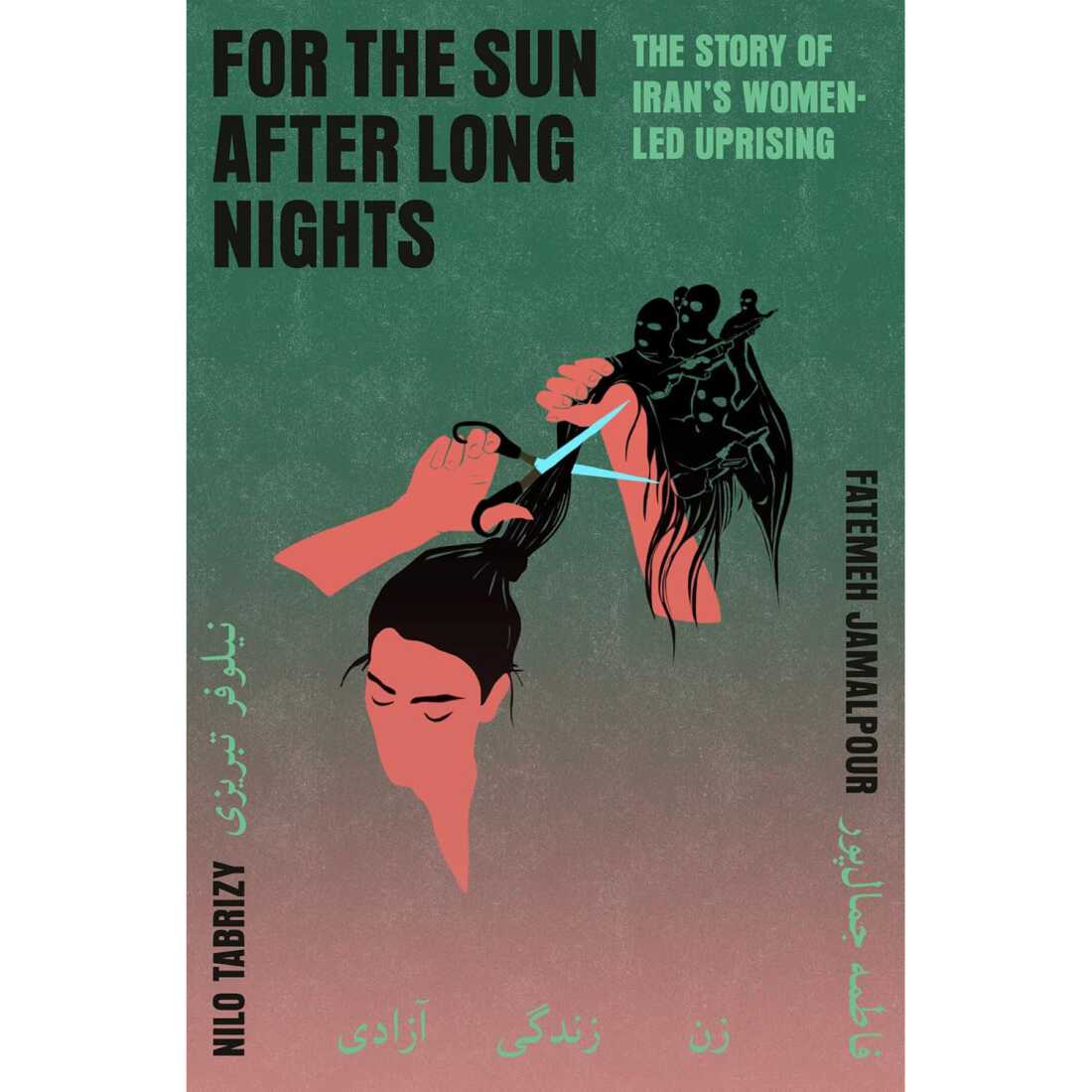
There are quite a few excellent titles that deconstruct the history of Iran from ancient times through the rule of the Pahlavi Dynasty to the Iranian Revolution. But there are far fewer books that help us understand the Iran of 2026 and the people who live there now. One standout is the National Book Award-nominated For the Sun After Long Nights: The Story of Iran’s Women-Led Uprising by journalists Fatemeh Jamalpour and Nilo Tabrizy, which chronicles — almost in real time — the Woman, Life, Freedom movement that began in 2022, during which Jamalpour was working secretly as a journalist in Tehran. In 2024-25, Jamalpour (who is now living in exile in the U.S.) and I spent a year together at the University of Michigan’s Knight-Wallace fellowship for journalists; her insights into contemporary Iran are among the best.
Gold, by Rumi, translated by Haleh Liza Gafori

If Americans are familiar with Persian poetry at all, it may well be through popular “translations” of the 13th-century Sufi poet Jalaluddin Rumi done by the late American poet Coleman Barks, who neither read nor spoke the Persian language and detached the works of Molana (“our master”), as Iranians call him, of references to Islam. (Instead, Barks “interpreted” preexisting English translations.)
In 2022, Iranian-American poet, performance artist and singer Haleh Liza Gafori offered the first volume of a corrective, in the form of fresh Rumi translations that are at once accessible, deeply contemplative and immediate. A second volume, Water, followed last year.
Martyr!: A Novel, by Kaveh Akbar
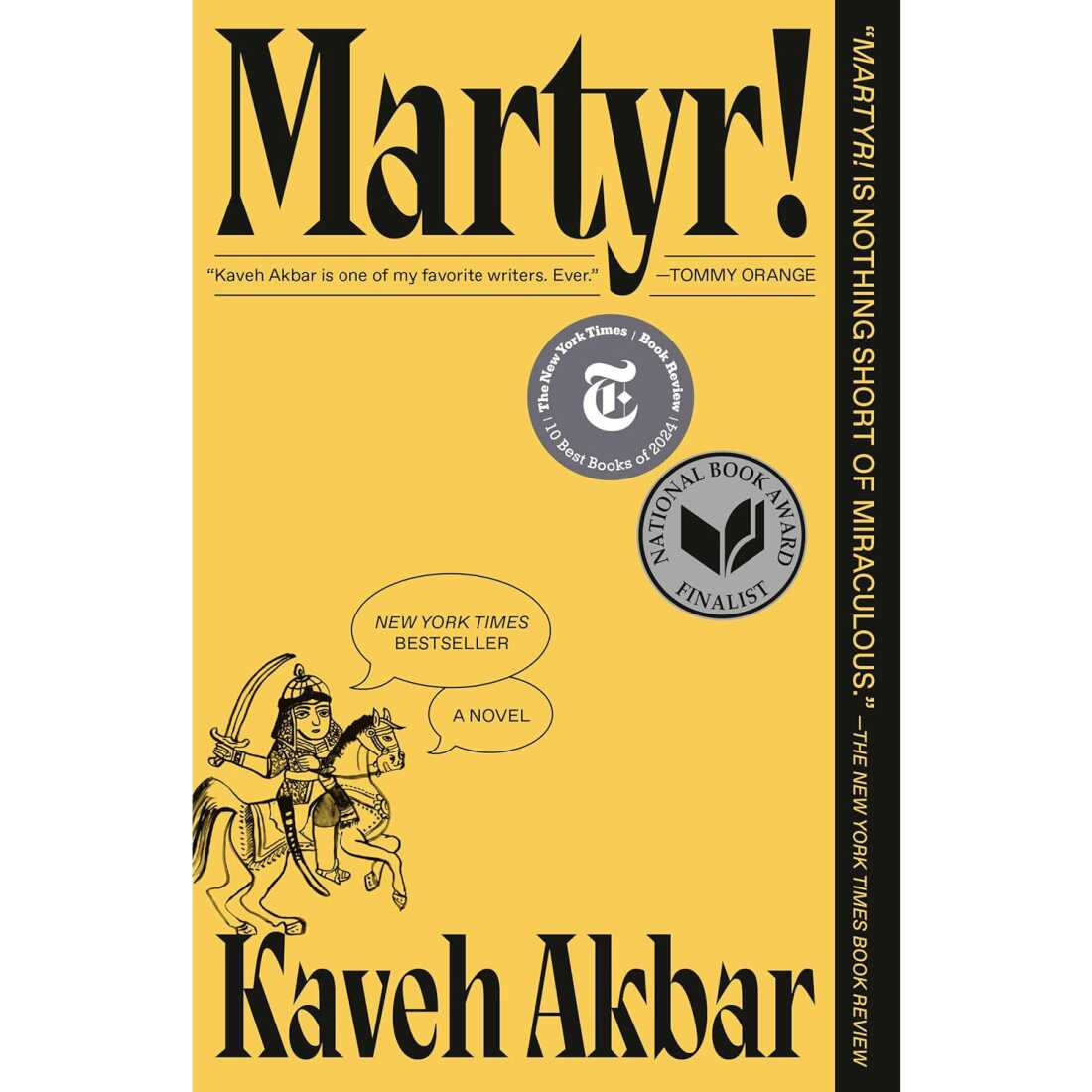
This 2024 debut novel by Kaveh Akbar, the poetry editor at The Nation, is an unflinching tour-de-force bursting with wit and insight into the complications of diaspora, the nature of identity in a post-War on Terror world and the inter-generational impact of the 1979 Revolution on Iranians. The protagonist, the Iran-born but American-raised Cyrus Shams, has struggled with addiction, depression and insomnia his whole life, and is trying his best to make sense of a world at the “intersection of Iranian-ness and Midwestern-ness.” As with so many other of the titles here, fiction and fact are woven together: the story centers around the true story of the U.S. downing an Iranian passenger plane in 1988 during the Iran-Iraq war.
The Stationery Shop: A Novel, by Marjan Kamali
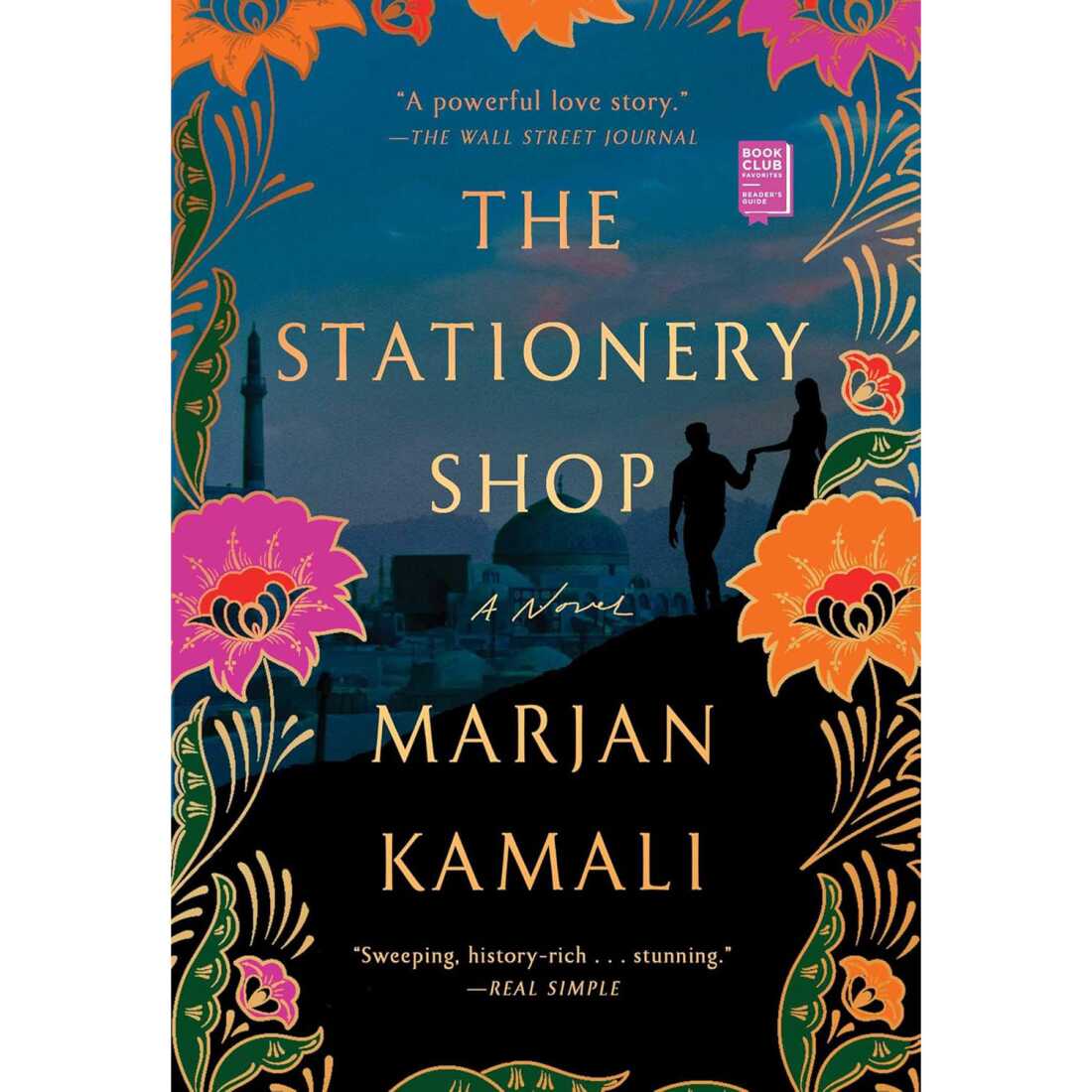
Marjan Kamali’s 2019 love story is the wistful tale of a young woman named Roya and an idealistic activist named Bahman, who meet cute in a Tehran store in the 1950s, but whose planned marriage falls apart due to turmoil both familial and political, as Iran’s democratically elected government falls in a U.S.-British lead coup that ends with the installation of the Shah. Roya flees to the U.S. for a fresh start, but the two reunite in 2013, wondering: what if life had spun out in a different direction?
Movies
Coup 53
This 2019 documentary directed by Iranian film maker Taghi Amirani and co-written by Walter Murch recounts Operation Ajax, in which the CIA and Britain’s MI6 engineered the removal of Mohammad Mossadegh, Iran’s democratically elected prime minister, and installed a friendly ruler, Shah Mohammad Reza Pahlavi, in his place. (The Shah was ousted in the 1979 revolution.) As Fresh Air critic John Powers noted in his review, “What emerges first is the backstory of the coup, which like so much in the modern Middle East is predicated on oil. Shortly after the black gold was discovered in early 20th century Iran, a British oil company now known as BP locked up a sweetheart deal for its exploitation. Iran not only got a mere 16% of the oil money before British taxes, but the books were kept by the British — and the Iranians weren’t allowed to see them.”
YouTube
Cutting Through Rocks
Sara Khaki and Mohammadreza Eyni’s film Cutting Through Rocks is up for an Oscar this season after premiering at the 2025 Sundance Film Festival. This inspiring documentary follows Sara Shahverdi — a divorced, childless motorcyclist — as she campaigns to become the first woman elected to the city council of her remote village, and who dreams of teaching girls to ride and to end child marriage.
YouTube
It Was Just an Accident
The latest film from acclaimed director Jafar Panahi — who has officially been banned from making films in Iran — is 2025’s It Was Just an Accident. Panahi, who has been jailed multiple times for his work and was recently sentenced again in absentia, has said in interviews that his inspiration for this brutal – and shockingly funny – thriller was people he met while in prison: an auto mechanic named Vahid finds himself face-to-face with the man who he is fairly certain was his torturer in jail, and eventually assembles other victims to try to confirm his suspicions. Fresh Air critic Justin Chang called It Was Just an Accident “a blast of pure anti-authoritarian rage.”
YouTube
The Seed of the Sacred Fig
This 2024 thriller — shot in secret by director Mohammad Rasoulof — centers on a family whose father, Iman, is appointed as an investigating judge in Tehran. But it soon becomes clear that his job has nothing to do with actually investigating. Iman, his wife, and two daughters come to suspect each other in our age of mass surveillance, as the city streets below erupt into the real-life Woman, Life, Freedom protests.
YouTube
Music
Kayhan Kalhor
One of the primary ambassadors of Persian classical music has been the composer and kamancheh (an Iranian bowed-instrument) virtuoso Kayhan Kalhor. Although music, like poetry, has been central to Iranian culture for centuries, all kinds of music were initially banned after the 1979 revolution. Since then, however, Iranian classical musicians have ridden many looping cycles of official condemnation, grudging tolerance, censorship and attempts at co-option by the regime.
Despite those difficulties, Kalhor has built a thriving career both inside Iran and abroad, including winning a Grammy Award as part of the Silkroad Ensemble and earning three nominations as a solo artist. Back in 2012, I invited him to our Tiny Desk to perform solo. “Didn’t know I could have goosebumps for 12 minutes straight,” a YouTube commenter recently wrote; I couldn’t put it any better.
YouTube
Saeid Shanbehzadeh
Among Iran’s 92 million people, about 40% of come from various ethnic minorities, including Azeris, Kurds and Armenians among many others. One of the most fascinating communities is the Afro-Iranians in the Iranian south, many of whose ancestors were brought to Iran as enslaved people from east Africa. Multi-instrumentalist and dancer Saeid Shanbehzadeh, who traces his ancestry to Zanzibar, celebrates that heritage with his band, and specializes in the Iranian bagpipe and percussion.
YouTube
The underground metal scene
Despite ongoing restrictions on music — including the continued ban on female singers performing in mixed-gender public settings — Iran is home to a thriving underground scene for metal and punk. Though it’s fictional, Farbod Ardebelli’s 2020 short drama Forbidden to See Us Scream in Tehran — which was secretly filmed in Tehran, with the director giving instructions remotely from the U.S. via WhatsApp — gives a flavor of that real-life scene and the dangers those artists face.
YouTube

Sen. Tillis To Kristi Noem
ICE Killings Are Like Dog You Killed
Published
Fireworks on Capitol Hill … Sen. Thom Tillis ripped into DHS Secretary Kristi Noem during a congressional hearing … comparing American citizens killed by immigration agents to a dog she killed.
Check out the video … the Republican Senator from North Carolina says Noem has shown terrible leadership and decision-making as Trump‘s DHS Secretary.
AP

Tillis says the killings of Renee Good and Alex Pretti in Minneapolis by ICE and Border Patrol remind him of a passage from Noem’s book … where she recalls killing a dog she brought on a hunting trip.
Noem said the 14-month-old dog, Cricket, was misbehaving … so she led the dog to a gravel pit and shot her.
X/@DHSgov
Sen. Tillis told her straight up … “Those are bad decisions made in the heat of the moment. Not unlike what happened up in Minneapolis. We’re an exceptional nation, and one of the reasons we’re exceptional is we expect exceptional leadership. And you’ve demonstrated anything but that.”

In 2021, Zhao made history as the first woman of color to win the best director Oscar for her film Nomadland. Her Oscar-nominated drama Hamnet has made $70 million worldwide.
Bethany Mollenkof for NPR
hide caption
toggle caption
Bethany Mollenkof for NPR
It took a very special kind of spirit to make Hamnet, which is nominated for best picture at this year’s Academy Awards. Chloé Zhao brought her uniquely sensitive, mind-body approach to directing the fictionalized story about how William Shakespeare was inspired to write his masterpiece Hamlet.
Zhao adapted the screenplay from a novel by Maggie O’Farrell, and for directing the film, she’s now nominated for an Oscar. She could make history by becoming the first woman to win the best director award more than once.
Zhao says she believes in ceremonies and rituals, in setting an intention, a mood, a vibration for any event. Before Hamnet premiered at the Toronto International Film Festival last year, she led the audience in a guided meditation and a breathing exercise.

Zhao also likes to loosen up, like she did at a screening of Hamnet in Los Angeles last month, when she got the audience to get up and dance with her to a Rihanna song.
She, her cast and crew had regular dance parties during the production of Hamnet. So for our NPR photo shoot and interview at a Beverly Hills hotel, I invited her to share some music from her playlist. She chose a track she described as “drones and tones.”
Our photographer captured her in her filmy white gown, peeking contemplatively from behind the filmy white curtains of a balcony at the Waldorf Astoria.

Zhao says she believes in ceremonies and rituals, and makes them a part of her filmmaking process.
Bethany Mollenkof for NPR
hide caption
toggle caption
Bethany Mollenkof for NPR
Then Zhao and I sat down to talk.
“I had a dream that we were doing this interview,” I told her. “And it started with a photo shoot, and there was a glass globe –”
“No way!” she gasped.
It so happens that on the desk next to us, was a small glass globe — perhaps a paperweight.
I told her that in my dream, she was looking through the globe at some projected images. “We were having fun and it was like we didn’t want it to stop,” I said.
“Oh, well, me and the globe and the lights on the wall: they’re all part of you,” Zhao said. “They’re your inner crystal ball, your inner Chloé.”
“Inner Chloé?” I asked. “What is the inner Chloé like?”
“I don’t know, you tell me,” she said. “Humbly, from my lineage and what I studied is that everything in a dream is a part of our own psyche.”
Dreams and symbols are very much a part of Zhao’s approach to filmmaking, which she describes as a magical and communal experience. She said it’s all part of her directing style.

Chloé Zhao used painting and dance to connect with actors on the set of her latest film Hamnet.
Bethany Mollenkof for NPR
hide caption
toggle caption
Bethany Mollenkof for NPR
“If you’re captain of any ship, you are not just giving instructions; people are also looking to you energetically as well,” she explained. “Whether it’s calmness, it’s groundedness, it’s feeling safe: then everyone else is going to tune to you.” Zhao says it has taken many years to get to this awareness. Her own journey began 43 years ago in Beijing, where she was born. She moved to the U.S. as a teen, and studied film at New York University where Spike Lee was one of her teachers. She continued honing her craft at the Sundance Institute labs — along with her friend Ryan Coogler and other indie filmmakers.
Over the years, Zhao’s film catalogue has been eclectic — from her indie debut Songs My Brothers Taught Me, set on a Lakota Sioux reservation, to the big-budget Marvel superhero movie Eternals. She got her first best director Oscar in 2021 for the best picture winner Nomadland. Next up is a reboot of Buffy the Vampire Slayer.
“A creative life,” she notes, “is not a linear experience for me.”
Zhao still lingers over the making of Hamnet, a very emotional story about the death of a child. During the production, Zhao says she used somatic and tantric exercises and rituals to open and close shooting days.
She also invited her lead actors Paul Mescal and Jessie Buckley to help her set the mood on set. They danced, they painted, they meditated together.
“She created an atmosphere where everybody who chose to step in to tell this story was there for a reason that was deeply within them,” actress Jessie Buckley told me.

Buckley is a leading contender for this year’s best actress Oscar. She said that to prepare for her very intense role as William Shakespeare’s wife, Zhao asked her to write down her dreams “as a kind of access point, to gently stir the waters of where I was feeling.”
Buckley sent Zhao her writings, and also music she felt was “a tone and texture of that essence.”
That kind of became the ritual of how they worked together, Buckley said. “And not just the cast were moving together, but the crew were and the camera was really creating dynamics and a collective unconscious.”

Filmmaker and Hamnet producer Steven Spielberg calls Zhao’s empathy her superpower.
Bethany Mollenkof for NPR
hide caption
toggle caption
Bethany Mollenkof for NPR
That was incredibly useful for creating Hamnet — a story about communal grief. Steven Spielberg, who co-produced the film, called Zhao’s empathy her superpower.
“In every glance, in every pause and every touch, in every tear, in every single moment of this film, every choice that Chloé made is evidence of her fearlessness,” Spielberg said when awarding Zhao a Directors Guild of America award. “In Hamnet, Chloé also shows us that there can be life after grief.”
Zhao says it took five years and a midlife crisis for her to develop the emotional tools she used to make Hamnet.
“I hope it could give people a two-hour little ceremony,” she told me. “And in the end, I hope that a point of contact can be made. That means that there’s a heart opening. But it will be painful, right? Because when your heart opens, you feel all the things you usually don’t feel. And then a catharsis can emerge.”
As our interview time came to a close, I told Zhao I have my own little ritual at the end of every interview; I record a few minutes of room tone, the ambient sound of the space we’re in. It’s for production purposes, to smooth out the audio.
Zhao knew just what I meant. She told me a story about her late friend Michael “Wolf” Snyder who was her sound recordist for Nomadland. “He said to me, ‘I don’t always need it, but just so you know, I am going to watch you. And when I tell that you are a little frazzled, I’m going to ask for a room tone … just to give you space.’” she recalled. “‘And if you feel like you need the silence space, you just look at me, nod. I’ll come ask for a room tone.’”
I closed our interview ceremony with that moment of silence, a moment of peace, for director Chloé Zhao.

Trump Has Been Sued 198 Times for Withholding Funding. It Hasn’t Stopped Him.

How Iran War Is Threatening Global Oil and Gas Supplies

Melissa Joan Hart, 49, Opens up About Weight Loss in Perimenopause
A glimpse of Iran, through the eyes of its artists and journalists

Anker’s last-gen sleep buds are nearly 40 percent off ahead of daylight saving time

Florida High School Football Rankings: Top 25 teams – Oct. 21

Cleary's 21 help Le Moyne down Central Connecticut State 69-64 in OT

How old is Bo Nix? What to know about Oregon quarterback ahead of 2024 NFL Draft

99th annual Pony Swim held in Virginia

Indiana Members Credit Union announced as new anchor tenant at Bottleworks District

Combustible Republican Senate primary in Texas heading into overtime

Hungarian veto proves EU needs less unanimity, says new Dutch PM

Pregnant migrant girls are being sent to a Texas shelter flagged as medically risky

Fraud-plagued Minnesota sues Trump admin for withholding $243M in Medicaid payments

Is Iran expanding attacks to target energy and civilian sites in the Gulf?
-

 World6 days ago
Exclusive: DeepSeek withholds latest AI model from US chipmakers including Nvidia, sources say
-

 Massachusetts6 days ago
Mother and daughter injured in Taunton house explosion
-

 Denver, CO6 days ago
10 acres charred, 5 injured in Thornton grass fire, evacuation orders lifted
-

 Louisiana1 week ago
Wildfire near Gum Swamp Road in Livingston Parish now under control; more than 200 acres burned
-

 Oregon4 days ago
2026 OSAA Oregon Wrestling State Championship Results And Brackets – FloWrestling
-

 Florida3 days ago
Florida man rescued after being stuck in shoulder-deep mud for days
-

 Maryland3 days ago
AM showers Sunday in Maryland
-

 Culture1 week ago
Try This Quiz on Thrilling Books That Became Popular Movies