Lifestyle
Can an LED therapy face mask really transform your skin?


Health and wellbeing reporter
 Getty Images
LED technology has been used to address a number of skin issues, such as eczema, mild to moderate acne, psoriasis and sun damage in a medical setting.
But the at-home LED market is on the verge of becoming a massive industry – with masks and other devices retailing for anything from £40 to £1,500.
The technology harnesses the power of light-emitting diodes (LEDs), which then stimulate skin cells when they are exposed to the skin repeatedly.
Mask developers make big claims that at-home LED masks can be used to treat acne scars, sun damage and fine lines – but does this stand up to scrutiny?

 Getty Images
The LED market is set to be worth £600m globally by 2032 – which is nearly double what airflow technology like the Dyson Airwrap will be worth at the same point.
According to consultant dermatologist Dr Jonathan Kentley, LED technology works by causing the skin to absorb light energy, which then triggers cellular changes in a process known as photobiomodulation (PBM).
“This allows new blood vessels and skin cells to be formed, along with more collagen and elastin,” he tells the BBC.
“PBM has also been used to treat acne as it has anti-inflammatory effects and reduces the amount of oil in the skin,” he adds.
A recent comprehensive study of PBM stated that more clinical trials on humans need to take place to fully understand how it actually works.
US space agency Nasa first began studying the effect of LEDs in the 1990s to see if it could help in cell regeneration.
Since then, medical-grade devices have been used by dermatologists “for many years”, according to Dr Kentley.
But at-home masks have only been on the retail market for about five years and cost a fraction of the medical devices.
The main differences between medical devices and High Street masks are the strength of the LEDs, the number of bulbs on the device and how close they sit to the skin’s surface when being used.
LED therapy masks are ‘visually interesting’
Dr Justine Kluk, who runs her own dermatology clinic and specialises in treating acne, believes that while at-home masks “sound promising”, mask wholesale manufacturers are “speculating” about their benefits.
“I don’t believe anyone has run clinical trials of the LED mask at home to see if it is the same dose as a device you would use in a clinic or hospital,” she tells the BBC.
“No-one is testing these devices in big enough sample sizes for long enough periods of time for us to feel really confident.
“So I believe the benefits from using one of these masks is probably very modest,” she adds.
Skincare makes up nearly half of all global sales in the beauty industry – and is set to continue to grow more than the likes of haircare, make-up and fragrance in the next year.
This is being boosted by Generation Z (those born between 1995 and 2009) and even Generation Alpha (born 2010 to now) whose skincare fascination is said to be fuelled by social media trends.
Dr Kluk says she has noticed “that people’s interest in at-home skin care and treatments has increased hugely since Covid” and believes the “visually interesting” element of the at-home LED mask makes it such an eye-catching product to sell online.
“People sitting watching TV wearing a red LED mask increases people’s curiosity.
“Every other consultation I’ve had for the last six months, has involved people asking me about LED masks,” she adds.
 Getty Images
When you search LED masks on social media platforms such as TikTok, you will be met with hundreds of videos with users showing off their results after using one of these at-home devices.
Natalie O’Neill, 29, tells the BBC she started to use a mask “out of curiosity to see if I would notice any difference” and did not use it to treat an existing skin condition like acne.
The skincare content creator says: “I noticed a change in my skin after a couple of weeks and felt it prevented breakouts really well.”
She adds that the mask has helped to “keep my skin tone looking more even” and faded marks on her face more quickly.
O’Neill was not paid to promote a particular mask and caveats all her content on this technology by saying she uses it alongside a consistent skincare routine.
“Getting red light or LED therapy in a clinic is not immediately transferable to a mask, which a lot of consumers don’t realise – I’m OK with that because I have the right expectations,” she adds.
Part of the appeal of LED masks is that they are easy to use and therefore have a low barrier to entry for potential buyers.
Laurence Newman is the chief executive of CurrentBody, whose at-home LED mask is one of the world’s best sellers.
He started selling professional equipment to clinics more than 25 years ago and began developing an at-home LED mask in 2009, bringing out the company’s first device just under 10 years later.
“We see that people use it for 10 minutes and get an instant glow afterwards,” he tells the BBC.
Newman says that women in particular “are moving towards totally non-invasive skincare” and looking for ways to improve their skin without botox and fillers.
Newman says the masks his company sells have been developed using the same technology as medical devices, which have a minimum requirement light wavelengths.
He emphasises that the at-home LED mask market and indeed at-home beauty technology market are in their infancy, with “a real movement of education” growing.
‘This is a lot of money to spend’
Dr Kentley concludes that “PBM is mostly considered safe, even at high levels” so using any form of LED technology is unlikely to “cause damage to cells”, however more research into how exactly PBM works is needed to understand what it can do.
“There have been many experimental and clinical studies into the use of PBM for various dermatologic conditions, however they have varied in the parameters of the device and treatment protocols,” he adds.
“Many of these studies were small and unstandardised and often paid for by the manufacturers so it is difficult to draw concrete conclusions”.
He says if someone is keen to buy a device they should make sure they choose one that has EU safety certifications and a high density of LED bulbs on the mask to ensure enough energy is being delivered to the skin.
Dr Kluk also says that she does not “want to discourage anyone” who is intrigued by the technology but wants “them to understand that this is a lot of money to spend on a device, which could potentially support a good skincare routine, or if it’s severe like acne, a good prescription regimen and some lifestyle measures – but it’s unlikely to do enough on its own.”

Lifestyle
Terry Tempest Williams on why women with big ideas get labeled ‘crazy’ : Wild Card with Rachel Martin
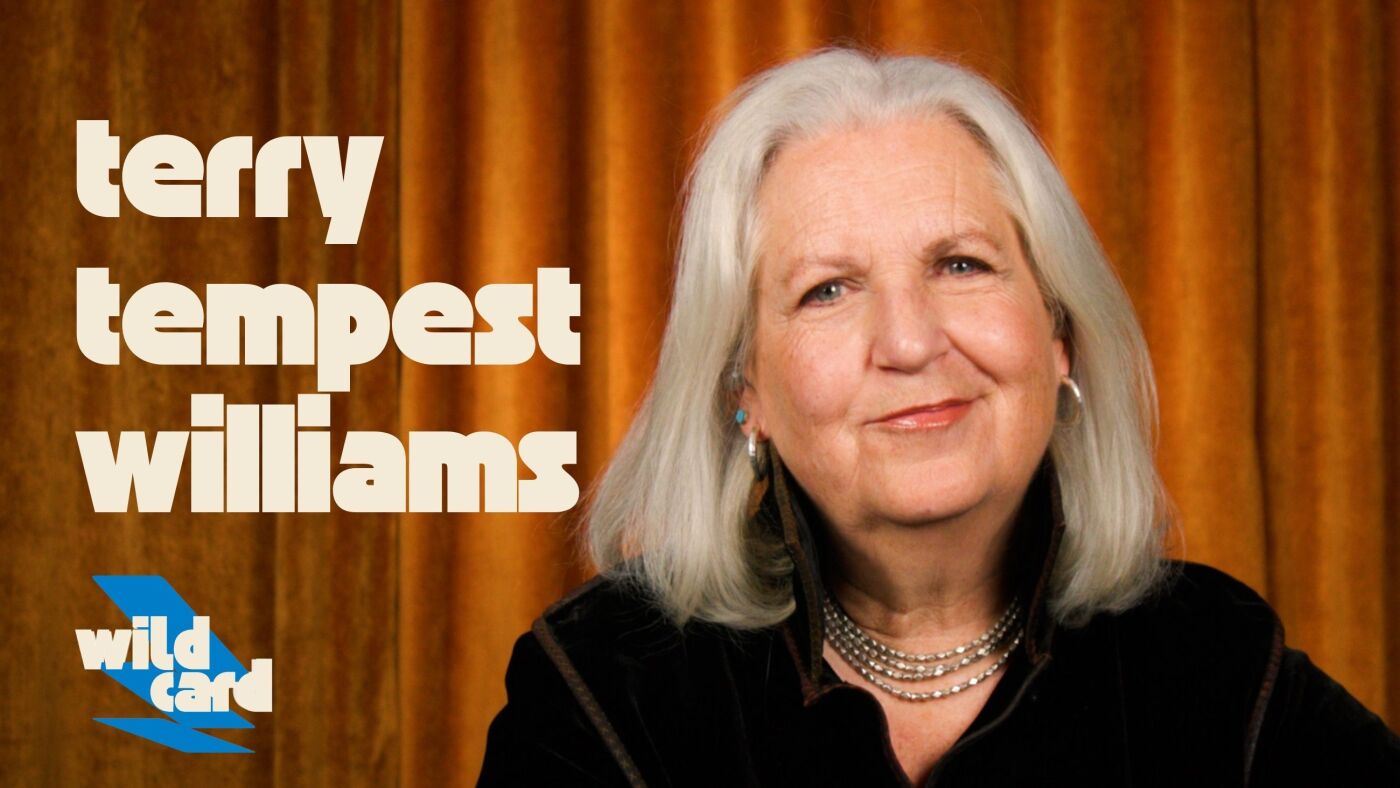
A note from Wild Card host Rachel Martin: I met Terry Tempest Williams about 25 years ago at a writer’s conference in Yosemite Valley. I was a young reporter who was there to do a story about how literature was addressing climate change and she made such a huge impression on me. I had never heard someone talk about the natural world the way Terry did and she had a spiritual depth I hadn’t encountered in my life at that point.
To this day, Terry’s writing always reorients me towards what is good, what is beautiful, and what is true. Her newest book is called “The Glorians.”

For its upcoming Los Angeles venue, experiential art firm Meow Wolf will focus on the art of storytelling, with a specific eye toward skewering our city’s moviemaking magic. To help bring that vision to life, Meow Wolf has entered into a creative partnership with Titmouse, one of L.A.’s most renowned independent animation houses.
The Hollywood-based studio behind popular series such as “Big Mouth” and “Star Trek: Lower Decks” will create animation that will be shown throughout the West L.A. venue, which is on target for a late 2026 opening at the Howard Hughes entertainment complex.
It’s a move that represents a shift for Santa Fe, N.M.-based Meow Wolf. Over the last decade-plus, the art collective has grown beyond its anything-goes, punk-meets-psychedelic roots into an organization with full-scale, maximalist installations in its hometown, Denver, Las Vegas, Houston and the Dallas suburbs. In the past, Meow Wolf kept most of its media in-house.
As part of its larger-than-life participatory art installations, Meow Wolf L.A. will feature a mix of live action and animation, the former filmed by Meow Wolf in its Santa Fe studio. Meow Wolf’s James Stephenson, a senior VP with the company and its creative director of emerging media, said the degree to which the L.A. exhibition will lean into various animation styles necessitated an outside partner. Titmouse’s work, in development by a number of directors with contrasting tones, will be shown on a variety of formats, ranging from cinema screens to full-room projections.
“I really believe in animation as an art form, and I know the Titmouse folks do too,” Stephenson says. “Animation is made by artists. It’s made by artists with their own hands. It’s something that is still very rooted in craft.”
Meow Wolf’s L.A. space is set in a former cinema complex, and will champion its location, taking guests on a journey through a converted movie house and beyond, into a sci-fi-inspired fantasyland with sentient spaceships and a 30-foot-tall mushroom tower. Meow Wolf creatives have spoken of the fantastical movie theater as one that will feature animated, self-aware candy before attendees enter the main exhibition space, making Titmouse’s work some of the first art guests will encounter. Titmouse co-founder Chris Prynoski has said the studio has lined up at least six directors for the exhibit.
An in-progress art installation destined for Meow Wolf L.A. at the art collective’s Santa Fe, N.M., headquarters. The L.A. exhibition will feature animation from Titmouse.
(Gabriela Campos / For The Times)
Titmouse, says Stephenson, is the right partner because “they’re known less for a house style, and more for a house vibe.” Over the years, Titmouse has been behind such diverse shows as “Scavengers Reign,” owning a Jean Giraud influence rooted in French and Spanish surrealism, the lively “Jentry Chau vs. the Underworld,” with an unique color palette that took inspiration from anime and Chinese mythology, the exaggerated comic book feel of Adult Swim’s “Metalocalypse,” and the approachable yet expressive tone of “Star Trek: Lower Decks.”
“Meow Wolf’s vibe is similar to Titmouse’s vibe,” Stephenson says. “It’s artist-first, artist-driven, independent and kinda edgy. They are always trying to find the edge of what’s possible. They try to see how far they can go, and it’s done for fun and in the spirit of taking risks.”
Prynoski says working with Meow Wolf will give Titmouse a sense of artistic freedom it doesn’t always have when delivering content for more traditional Hollywood partners. He says the multi-director approach is a callback to the early days of Warner Bros. Animation, when individual creators put their own stamp on Looney Tunes material.
“I use Bugs Bunny as an example,” Prynoski says. “You’ve got a Friz Freleng Bugs Bunny short. You’ve got a Chuck Jones Bugs Bunny short. You’ve got a Tex Avery Bugs Bunny short. They’re all different versions of Bugs Bunny, and people who are really paying attention can tell which director directed each one. Even though to the layman, these are all Bugs Bunny, but if you lined them up, they are drawing in different styles, sensibilities and techniques.”
Prynoski says that was a centerpiece of his pitch to Meow Wolf, noting that characters will reappear in multiple installations, each handled by a different artist. Meow Wolf L.A., in fact, will be the firm’s most character-driven exhibition, as guests will follow the storylines of three main protagonists throughout the space.
In announcing the partnership, Meow Wolf and Titmouse released an image from an animated work directed by Luca Vitale. It features a key character having a moment with a hummingbird and it’s done in an elegant, slightly anime-influenced style. It’s an image full of movement, reflecting a character in transition with inviting pastels and bold dashes.
“I like that image because I think it captures some of the sense of wonder that we want people to feel,” Stephenson says. “The character is having an encounter with the elusive nature of creativity and reality in a way that makes them have a different perspective of what’s possible.”
Other contributing animation directors to Meow Wolf L.A. include Space Dawg, Felix Colgrave, Alexander Vanderplank and Phimémon Martin, and Jun Ioneda.
Titmouse’s partnership with Meow Wolf will extend beyond the L.A. exhibition. The two will be working on the development of Meow Wolf New York, which is slated to open some time after Los Angeles, and are collaborating on a planned animated series, which Prynoski is spearheading.
Meow Wolf exhibits are the result of sometimes hundreds of disparate artists coming together in a shared space. Distilling that into a signature, singular style for a series could be a challenge. Stephenson pinpoints some guiding principles.
“You really need to feel the hand of the artist,” he says. “You need to feel a DIY aesthetic. You need to feel the materiality. Those are very specific to what we are.”

The Kennedy Center on June 28, with its facade signage still covered by a tarp and scaffolding.
Alex Wroblewski/AFP via Getty Images
hide caption
toggle caption
Alex Wroblewski/AFP via Getty Images
On Wednesday, a federal appeals court denied President Trump’s request to stop the removal of his name from Washington, D.C.’s Kennedy Center. The signage on the building has been covered with tarp and scaffolding since June 13, but in a court filing last month, the center’s current executive director said that Trump’s name has been removed.
In their decision, three judges from the U.S. District Court of Appeals for the District of Columbia Circuit said that the president had failed to prove that the arts center would be “irreparably injured” without Trump’s name attached to it.

NPR requested comment from the Kennedy Center, but did not receive an immediate reply.
This latest round of court decisions is part of the ongoing litigation filed by Rep. Joyce Beatty, D-Ohio, against President Trump and the board of the Kennedy Center. In a statement emailed Wednesday to NPR, Beatty said: “Today’s ruling again affirms that this administration’s efforts to rename the Kennedy Center were unlawful. His name no longer desecrates this sacred memorial, which belongs to the American people. Now it is time for the Trump administration to accept this, comply with the law, and take the tarps down.”
In previous court filings, Trump’s legal team had asserted that removing the president’s name from the arts complex, both on the physical building and in its digital materials, would inflict irreparable harm in both time and money already spent. In the denial, the three judges — Patricia Millett, Robert Wilkins and Gregory Katsas — wrote that since Trump’s name has already been removed, “a stay would not avert those harms.”
Furthermore, Trump had claimed that without his name attached, future fundraising would be threatened “and [will] contribute to the financial decline of the Center.” In response, the appeals judges wrote: “Appellants, however, have failed to support this assertion with any specific facts or evidence. They offer only the conclusory assertions of the Kennedy Center’s Executive Director that were made in a factually unsupported declaration.” The center’s current executive director, Matt Floca, specializes in physical plant management.

The presiding judge in the case, Christopher R. Cooper, has ordered that the center provide him a status report on the center’s operation and programming before the end of this month. As of Wednesday, the center’s calendar lists a small roster of programs, including outdoor free movie screenings, workshops for children, and five free live performances in July on its Millennium Stage. In the past, the Kennedy Center presented over 2,000 arts and education events each year, including free daily Millennium Stage performances.

-

 Ohio3 minutes ago
Feeling itchy? Ohio leads nation with 6 cities on Orkin’s 2026 bed bug list
-

 Oklahoma6 minutes ago
Oklahoma’s Brent Venables named to 2026 Dodd Trophy Preseason watch list
-

 Oregon11 minutes ago
Ryan Reynolds-backed Aviation Gin shutters Oregon distillery
-

 Pennsylvania18 minutes ago
PA state rep. wants to force the York State Fair to change its name
-

 Rhode Island21 minutes ago
R.I. leading multi-state lawsuit against Trump administration housing policy – The Boston Globe
-

 South-Carolina26 minutes ago
SC is at the top for food waste in the nation. How you can make changes
-

 South Dakota33 minutes ago
Petition to clarify South Dakota proof of citizenship law shot down over technicality
-

 Tennessee36 minutes ago
Tennessee State men’s hockey cancels 2026-27 inaugural season for second straight year

