Lifestyle
A secret shelf of banned books thrives in a Texas school, under the nose of censors


In the far, far suburbs of Houston, Texas, three teenagers are talking at a coffee shop about a clandestine bookshelf in their public school classroom. It’s filled with books that have been challenged or banned.
“Some of the books that I’ve read are books like Hood Feminism, The Poet X, Gabi, A Girl in Pieces,” says one of the girls. She’s a 17-year-old senior with round glasses and long braids. The books, she says, sparked her feminist consciousness. “I just see, especially in my community, a lot of women being talked down upon and those books [were] really nice to read.”
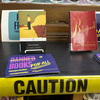
These students live in a state that has banned more books than nearly any other, according to PEN America. The Texas State Board of Education passed a policy in late 2023 prohibiting what it calls “sexually explicit, pervasively vulgar or educationally unsuitable books in public schools.” Over the past two years, Texas teachers have lost jobs or been pressured to resign after making challenged books available to students.
The teacher who created this bookshelf could become a target for far right-wing groups. That’s why NPR is not naming her, nor her students.

“We don’t want to jeopardize our teacher in any way, or the bookshelf,” another teenager explains. Until recently, he says, was not naturally inclined towards reading. But the secret bookshelf opened a world of characters and situations he immediately related to. “Just to see Latinos, like LGBTQ,” he says. “That’s not something you really see in our community, or it’s not very well represented at all.”
The secret bookshelf began in late 2021, when then-state representative Matt Krause sent public schools a list of 850 books he wanted banned from schools. They might, he said, “make students feel discomfort, guilt, anguish, or any other form of psychological distress because of their race or sex.”
That made this teacher furious. “The books that make you uncomfortable are the books that make you think,” she told NPR. “Isn’t that what school is supposed to do? It’s supposed to make you think?”
She swung into action, calling friends to support a bookshelf that would include all of the books Krause wanted banned. Then she enlisted a student to put it together.
“I went through the list and found the ones that I thought were cool,” he recalled to NPR over a London Fog latte. “And then she gave me her [credit] card and I bought them. It was a lot of gay books, I remember that.”
That same student came out as trans to his family while in high school. “I wouldn’t call them supportive, so I had to do a lot of sneaking around,” he said quietly. Now nineteen, he’s graduated and works as a host in a restaurant while deciding on his next move.
“Having these books, having these stories out there meant a lot to me, because I felt seen,” he said. Especially meaningful, he added, during a fraught time when Texas lawmakers banned transition-related care for teenagers. “Because of the way the laws are going for trans people especially,” he said, “it could be assumed that [my teacher is] grooming kids. And that would be terrible because that’s not what she’s doing at all.”

NPR repeatedly reached out to former Texas lawmaker Matt Kraus for comment and got no response. He is currently running for county commissioner in the Fort Worth area. The chief of communications for the public school district thanked for NPR for “highlighting this very important topic but we’re going to pass on this opportunity,” when asked to comment on how administrators are implementing policies around books that have been challenged.
“We’ve been seeing a climate of fear — and a variety of self censorship — going on by school leaders or librarians who do not understand the implications of the law or are fearful for their jobs,” said Carolyn Foote. She’s a retired English teacher and librarian who co-created the activist group Texas FReadom Fighters.
Kasey Meehan, of the free speech advocacy group PEN America, says she’s watched things in Texas escalate. She points to a teacher fired last year for sharing a graphic novel about Anne Frank to her students that showed Anne having a romantic daydream about another girl. Another teacher featured on an NBC podcast left her job under pressure after making literature available to students featuring a positive transgender character.
“Parents are taking books from schools and bringing them to police or sheriff offices and accusing librarians and educators of providing sexually explicit material to students,” Meehan says.
“It does make me nervous.” admitted the Houston teacher with the secret bookshelf. “I mean, this is absolutely silly that I am not free to talk about books without giving my name and worrying about repercussions.”
At some point, she hopes, it will no longer have to be a secret. Earlier this month, the U.S. Court of Appeals blocked part of a recently-passed state bill, known as HB 900, that would have required booksellers and publishers to rate any books sold to schools for sexual content. This was seen as a victory for freedom-to-read activists, but some of them noted to NPR that HB 900 still contains dangerously vague language about material prohibited in school, and no clear guidelines about enforcement.
“I do believe that book banning is going to go away,” the teacher says, firmly. But for now she adds, “I intend for this library to just keep growing.”






Once rivals on the tennis court, Martina Navratilova, left, and Chris Evert have become close friends in retirement. They are pictured above at the French Open in 1986.
Trevor Jones/Getty Images Europe
hide caption
toggle caption
Trevor Jones/Getty Images Europe
Chris Evert and Martina Navratilova were the most successful women’s tennis champions of their generation. Both were 18-time Grand Slam tournament winners — and each other’s greatest rivals.
Evert, a Florida native, became a tennis star in her teens. Navratilova was born in communist Czechoslovakia, and emerged as a player after Evert was established. They first faced off during a match in Akron, Ohio, in 1973, when Evert was 18, and Navratilova was 16. Evert won, but Navratilova left an impression.
“I remember thinking to myself, holy cow, when this young girl gets into better shape, she is going to be a force to be reckoned with,” Evert says. “She had so much talent. Her hands were quick, she had a big first serve, she had a big forehand, and she just was so powerful.”

Two years later, on the day she lost a semifinals match to Evert at the U.S. Open, Navratilova defected to the U.S. In the years that followed, her tennis game improved. Though she and Evert had initially been friendly, the friendship cooled as their rivalry heated up.
“Playing Chris was difficult because how can you not like Chris? What’s not to admire?” Navratilova says. “She was like the epitome of cool.”
The new Netflix documentary Chris & Martina: The Final Set tells the story of how Evert and Navratilova re-established their friendship and how they both faced cancer in retirement. Evert was diagnosed with ovarian cancer in 2021; Navratilova was diagnosed with throat and breast cancer in 2022.
“I can’t get away from her,” Evert jokes. “We had a 15-year career, and then we got cancer at the same time. It really is freaky, but I always say: If I want someone to be in the trenches with me, it’s Martina because she has been so supportive and so understanding.”

Navratilova agrees: “We have such a level of trust that we know whatever we say to each other, it stays there. We give each other the best advice we know how to. And there is no ulterior motive, no playing games.”
At the time that this interview was taped, Evert and Navratilova were both in remission from cancer. But late last week, Evert disclosed she’d recently been diagnosed with a recurrence of ovarian cancer.

“We know whatever we say to each other, it stays there,” Martina Navratilova says of her friendship with Chris Evert.
Netflix
hide caption
toggle caption
Netflix
Interview highlights
On supporting each other through cancer
Evert: There are a lot of phone calls between us. … I don’t cook, but Martina would bake bread for me, and her wife Julia would cook, make some chicken soup. … I got a lot of food from Martina. She got a necklace from me.
Navratilova: I get jewelry from Chris, she gets food from me.
Evert: Martina’s and my relationship — because we’ve had one for 50 years — is not the type where we have to talk to each other every day to maintain the closeness. I always knew she was there. She always knew I was there if we needed to talk, and that was that.
On the weakness they experienced with cancer
Navratilova: Chris’ diagnosis and treatment was much more life-threatening than mine, percentage wise, but my treatment was more difficult physically. … I was in New York for seven weeks and I literally sat on a yoga mat, maybe half an hour of the seven weeks, and did some stretching. I couldn’t even do the down dog pose because I would have fallen down. I had absolutely zero strength left.
Evert: The chemo kicked my butt, let’s put it that way. … It left me very weak, very, very weak. After chemo I would have three or four days of intense nausea and I just would feel tingling in my body and it just wasn’t nice. I didn’t have the energy. To walk six blocks was a big deal for me. And it was foreign. You know, it felt like it wasn’t my body, for sure.
On watching the old footage of their matches together for the documentary
Navratilova: For me, it was fun watching with Chris, because we had different reactions to what happened on the court. But what impressed me is how well we played with those wooden rackets. Because you know what? Those rackets are not easy to play with. But you try to put yourself in there physically, what it was like, mentally, what it is like. And it’s like, “Oh, I should have gone down the line,” or, “I can’t believe I missed that shot.” Or “Chris, you had such a great pass.” It was amazing. So it was impressive. … I wish I could still have that six-pack, but anyhow.

Evert: I remember feeling genuinely happy for her. I remember it was her first Wimbledon. That’s always been her dream since she defected. Her family couldn’t be there to watch her. She was all alone. And I just was happy for it. And I knew that this was gonna be one of many for her to win.
On defecting to the U.S. in 1975 when she was 18 years old
Navratilova: I was thrilled to be in the States. I always loved American cars. And when you ordered a ham sandwich, you got, like, two inches of ham and two slices of bread. Whereas growing up, you had thick bread and one slice of ham. So I thought I was in heaven. And it was $2.30 for that sandwich. I still remember it. I couldn’t believe how much ham I was getting.
Lauren Krenzel and Nico Gonzalez Wisler produced and edited this interview for broadcast. Bridget Bentz, Molly Seavy-Nesper and Beth Novey adapted it for the web.

-

 Los Angeles, Ca47 minutes ago
LeBron James informs Lakers he will play elsewhere next year
-

 Detroit, MI1 hour ago
5 realistic cornerback trade targets for the Detroit Lions after Terrion Arnold’s release
-

 San Francisco, CA1 hour ago
Headlines, June 30 – Streetsblog San Francisco
-

 Dallas, TX1 hour ago
LIVE | Ivory Coast, Norway meet for World Cup knockout match at Dallas Stadium
-

 Miami, FL1 hour ago
Every Dolphins head coach’s start in Miami from worst to best
-

 Boston, MA1 hour ago
Historian clears up one of the biggest myths about the Boston Tea Party
-
Denver, CO2 hours ago
Nemanja Jokic, the older brother of\u00a0Denver …
-

 Seattle, WA2 hours ago
3 Seahawks Rookies Who Must Step Up Right Away

