Lifestyle
6 books to help young readers learn about Black history


Brittni Robertson Powell, with the New Orleans-based bookstore Baldwin & Co. looks through her choice for Black History Month: I Am Ruby Bridges.
Aubri Juhasz /Aubri Juhasz
hide caption
toggle caption
Aubri Juhasz /Aubri Juhasz
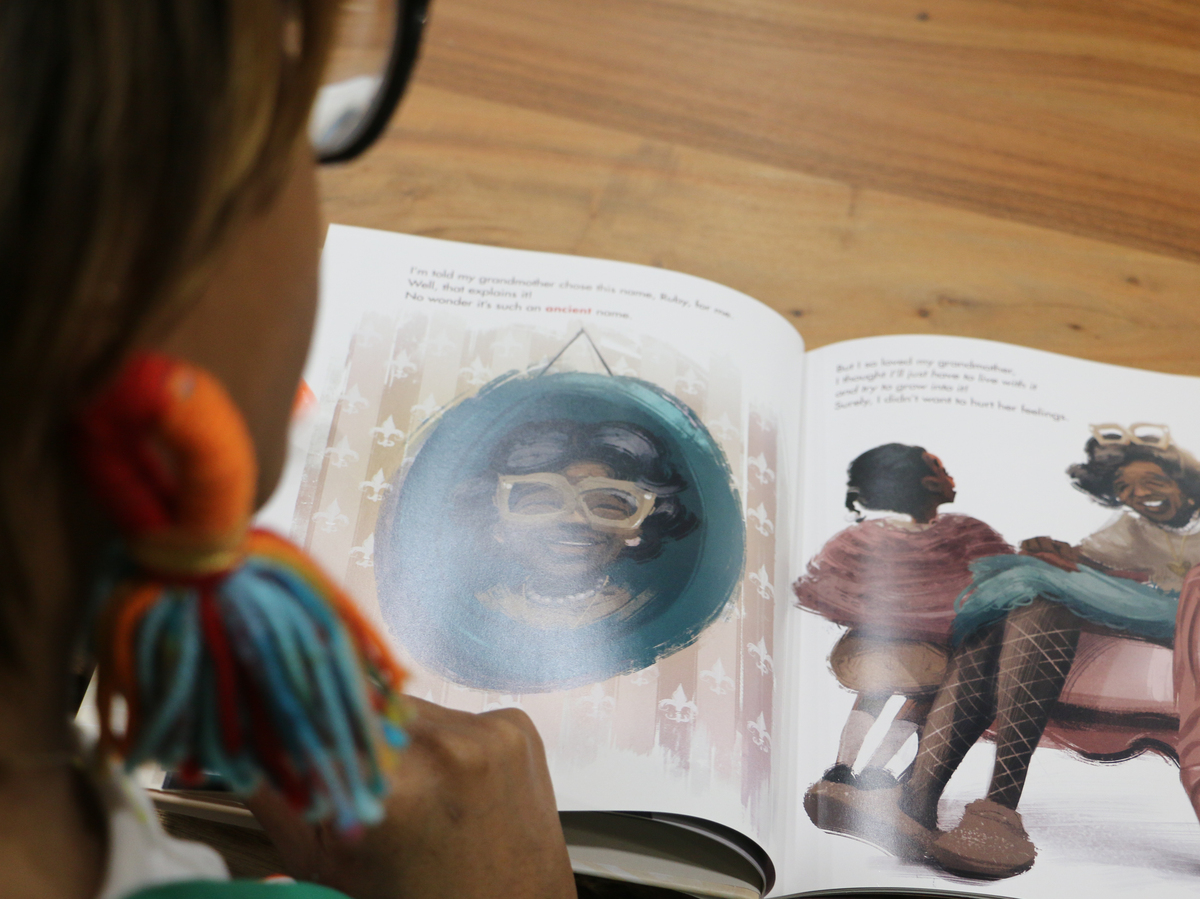
Brittni Robertson Powell, with the New Orleans-based bookstore Baldwin & Co. looks through her choice for Black History Month: I Am Ruby Bridges.
Aubri Juhasz /Aubri Juhasz
Each February, the U.S. honors the contributions and sacrifices of African Americans who have shaped the nation. If you’re struggling with the best way to educate children about Black history, this month or year-round, experts often suggest turning to literature to assist.
Books can help children engage with all kinds of history, but can be particularly helpful for the nuanced aspects of Black history, said Meg Medina, an award-winning children’s author and the 2023-2024 National Ambassador of Young People’s Literature.
“I think when we give kids really rich texts, and trust them with the information, trust them to be curious, allow them to follow their curiosity, we do them an enormous service,” she said.

And 2024 is a wonderful time to find the best texts to do this, Medina said.
“I tell people we are in a golden age of children’s books. So many incredible people are producing really meaningful work that respects kids intelligence, respects their curiosity,” she said.
Here are six picks for Black History Month reading, recommended by authors, librarians and book shop employees, appropriate for a range of ages from toddlers to teens.
Librarian of Congress Carla Hayden recommends A Library and Bright April

Dr. Carla Hayden, the nation’s Librarian of Congress, holds her picks for Black History Month reading: A Library and Bright April.
Jaclyn Diaz/NPR
hide caption
toggle caption
Jaclyn Diaz/NPR
As the Librarian of Congress, Carla Hayden oversees the national library of the United States, which contains a collection of approximately 164 million items. For Black History Month, she has two recommendations for children — firstly, A Library by Nikki Giovanni, with colorful illustrations by Erin K. Robinson.
“It’s a book that I would recommend for anyone, and particularly though, in Black History Month because it features a young African American girl and she takes so many adventures through books. And to have a young African American child having those adventures in a library at this time is very significant when so many things are being challenged,” Hayden said.
“Books can do so much. And during Black History Month, I think we owe it to the young people in our lives to introduce them to that free resource: The library,” Hayden said. “I’m a little prejudiced.”
Hayden shows a photo of herself as a young girl who loved the book Bright April.
Jaclyn Diaz
hide caption
toggle caption
Jaclyn Diaz

Hayden shows a photo of herself as a young girl who loved the book Bright April.
Jaclyn Diaz
She said A Library also reminded her of her second pick, a lifelong favorite book of hers, Bright April by Marguerite de Angeli.
The book, published in 1946, is about a young African American girl named April who experiences racial prejudice for the first time. The main character has pigtails and is a Brownie — a Girl Scout in the second or third grade of elementary school — which blew the mind of a young Hayden, who also was a Brownie with pigtails.
Bright April “even now makes me smile, because it was the first time I saw myself in a book,” she said. “I thought that I was April.”
She now owns a well-worn copy of the book, which serves as an important reminder: “It’s important during African American History Month, too, that we present materials, especially for children, where they can have windows on the world, of course, but also mirrors and they see themselves.”
Brittni Robertson Powell, a bookstore program director, recommends I Am Ruby Bridges
Brittni Robertson Powell, with the bookstore Baldwin & Co. in New Orleans, holds her pick, I Am Ruby Bridges.
Aubri Juhasz /Aubri Juhasz
hide caption
toggle caption
Aubri Juhasz /Aubri Juhasz
“I didn’t know what being the first really meant until the day I arrived,” Ruby Bridges writes in I Am Ruby Bridges, channeling the voice of her 6-year-old self.
Brittni Robertson Powell, program director for the New Orleans bookstore Baldwin & Co., said she picked the picture book to highlight her hometown’s not-so-distant history.
“Ruby is younger than my mom,” Robertson Powell said. “How is that possible?”
Robertson Powell said she and her 10-year-old son regularly drive past the New Orleans elementary school Bridges integrated in 1960 in the wake of Brown v. Board of Education.
“I told him, ‘This is where it happened.’ He cannot fathom that,” she said.
They recently read Bridge’s book together, and since then, he’s been applying the story to his own life, she said. When someone didn’t want to play with him recently, “He was like, ‘I wonder if that’s how Ruby felt?,” she said.
Robertson Powell likes the lessons the book teaches — among them, to be confident, be kind and accept people who are different from you.
“I’m glad she’s penned it because it’s being told by her, as opposed to other individuals who want to tell her story,” she said.
The importance of telling your own story, she said, is an important lesson for kids. too.
Meg Medina, children’s book author, recommends Schomburg: The Man Who Built A Library
Meg Medina, the 2023 – 2024 National Ambassador of Young People’s Literature and a children’s author, holds her book choice for Black History Month.
Meg Medina
hide caption
toggle caption
Meg Medina
Picture books aren’t just for little kids, said Meg Medina.
That’s partially why she chose Carole Boston Weatherford’s book Schomburg: The Man Who Built A Library.
“Even though it is a picture book, I think we should think about picture books as everybody books, especially a book like this,” she said.
The book tells the story of Arturo Schomburg, a historian, writer, book collector and activist who lived during the Harlem Renaissance.
As a child, he asked a teacher why the class wasn’t learning about the contributions of Black men and women to their country. The teacher told him that Black culture had nothing worthy to preserve.
“And that horrible statement stayed with him and fueled his lifelong passion for discovering, documenting and collecting proof and evidence of Black greatness across the globe,” Medina said.
Schomburg’s initial collection of around 5,000 items eventually led to the creation of the Schomburg Center for Research in Black Culture, a research library within the New York Public Library which now holds about 11 million items.
The book highlights some of the many people that Schomburg collected books and other items about, including Frederick Douglass and Phillis Wheatley, who is considered the first African-American author of a published book of poetry.
He was also from Puerto Rico, born of African and German descent, so the book highlights Afro-Latino history and identity as well.
“I love the idea of intersecting identities, which sometimes get cast aside when when we’re forcing people to sort of think of their identity as one thing or another,” Medina said.
Medina said the book is a springboard for learning about a man who wanted to discover the truth about his culture and its contributions. From there, the reader can learn about the many other people Schomburg highlights in his collection.
The depth of contributions of Black Americans to the country’s history and greatness are vast, Medina said. “I think kids deserve to know those things and deserve to learn about it and at least have the information so that they themselves can become little Arturo Schomburgs.”
Juno Kling, a Denver teen librarian, recommends The Black Kids
Blair-Caldwell African American Research Library teen librarian Juno Kling holds some of her favorite books. Jan. 16, 2024.
Kevin J. Beaty/Denverite
hide caption
toggle caption
Kevin J. Beaty/Denverite
The Black Kids by Christina Hammonds Reed follows a Black teenager named Ashley, who attends a predominantly white high school in Los Angeles and has lived a fairly cushioned life. Then, her world is upended by the Rodney King riots, which broke out in 1992 after four L.A. policemen, three of whom were white, were acquitted for the brutal beating of King, a Black man. Afterwards, Ashley is left questioning her life, identity and her position in society.
“I feel like it’s kind of an untold story because it talks about the intersection of race and class,” said Juno Kling, a teen librarian at the Blair-Caldwell African American Research Library in Denver.

Kling said she recommends the book for teens ages 14 through 18, because it’s easy for readers to relate to Ashley, since the book reads like a memoir or autobiography. While the King riots might be a heavy topic, Kling said reading about these issues through Ashley’s eyes gives people a “safe way to interface with those difficult topics.”
“These are lived experiences that teens have and they deserve to see themselves represented,” Kling said. “For teens who don’t share those identities, they deserve to know what their peers are going through and be able to have an understanding of that.”
The book also touches on how teens inadvertently find themselves in the middle of political issues, Kling said.
“You might not set out to be an activist and be a voice but sometimes events happen in real life and you have to step up and talk about those things,” Kling said. “That’s one of my favorite things about working with teens is the way that they’re starting to find those issues that are really key and important to them…That’s the age where your identities start to get politicized and you have to react to that.”
Jameka Lewis, a Denver library branch manager, recommends ABC Black History and Me
Blair-Caldwell African American Research Library senior librarian Jameka Lewis holds some of her favorite books. Jan. 16, 2024.
Kevin J. Beaty/Denverite
hide caption
toggle caption
Kevin J. Beaty/Denverite
ABC Black History and Me by Queenbe Monyei is a classic ABC picture book, featuring Black historical figures for to each letter of the alphabet.
Jameka Lewis, the branch supervisor at the Blair-Caldwell African American Research Library, recommends the book for children under the age of 5, because it’s geared toward learning the alphabet while also introducing young minds to key figures in history.
“I think it’s really important that kids are able to kind of put a face with a name,” she said.
It’s also one of the few board books — tough enough to withstand a toddler’s hands and mouth — that she’s come across that feature Black characters, she said.
Lewis also loves the illustrations of the historical figures, because they show a wide variety of Black skin tones.
“This book does a really good job of just highlighting how diverse and how eclectic and how unique Black people are, in different industries and in different ways that we’ve made history,” she said
Lewis said her favorite letter in the book is “P” for president, which features former President Barack Obama and current Vice President Kamala Harris.
Desiree Mathurin is a reporter with Denverite, part of Colorado Public Radio. Aubri Juhasz is an education reporter with WWNO in New Orleans. This story is part of NPR’s collaborative initiative with member stations.



The Kennedy Center, the facade of which remains covered with a tarp, is seen in Washington, DC, on June 28, 2026. A US federal judge asked on June 24 for an explanation for why a tarpaulin continues to cover the facade of the Kennedy Center where President Donald Trump’s name was recently removed. District Judge Christopher Cooper gave the board of trustees of the performing arts venue until the end of July to explain “the purpose for and status of the tarp and scaffolding that Defendants have erected on the front portico of the Center.”
ALEX WROBLEWSKI/AFP via Getty Images
hide caption
toggle caption
ALEX WROBLEWSKI/AFP via Getty Images
More than two weeks ago, President Trump’s name was removed from the Kennedy Center facade though it is still covered by a tarp and the legal battle continues.
On Monday, a U.S. Department of Justice filing on behalf of the Kennedy Center included some surprises. The document was submitted in response to issues raised by lawyers for ex-officio board member Rep. Joyce Beatty of Ohio who is suing to remove President Trump’s name from the center and stop its closure for renovations.
Among the revelations, the Kennedy Center admitted that, during a board meeting on December 18, 2025, Beatty had been “muted and prevented from speaking.” It was at that meeting that the board voted to add President Trump’s name to the center. The filing later acknowledges the congresswoman was “prevented from voicing her opposition.”
The John F. Kennedy Center for the Performing Arts is a living memorial to its namesake. The guidelines for how the theatre complex spends federal dollars are very specific. Among other rules, it states that “no additional memorials or plaques shall be designated or installed.” Beatty argues adding Trump’s name runs afoul of those rules and that any change requires approval from Congress.
According to one of Beatty’s filings, “There was no advance notice in the agenda that the Board would be considering a name change,” a statement the Kennedy Center now does not deny. The center admits that, prior to voting, there was “no discussion about potential risks or downsides of the vote to adopt a secondary name for the Center.” Nor was there a board discussion “about any potential conflict of interest that might result from the vote.”
The center’s lawyers previously contended that if Trump’s name were to be removed, it would “lose money from donors who support” him and “impede the Center’s fundraising efforts.”
Closing for renovations
Earlier this year, Trump announced on social media that the Kennedy Center would close for two years for renovations. He wrote that he made the decision after “a one year review” with “Contractors, Musical Experts, Art Institutions, and other Advisors and Consultants.”
But, according to the center’s lawyers, Trump’s announcement “was made without presenting any plans, analyses, timelines, or funding information to his cotrustees and without any Board vote.”
The Kennedy Center has long denied reporting by The Washington Post that ticket sales plummeted after President Trump became the Center’s board chair. In Monday’s legal filing, the Center admits that, by October 2025, “nearly half of the Center’s tickets were going unsold.”


Paul Tremblay has made a career of pushing the horror genre – and the novel format – in strange and exciting new directions.
In his latest, Dead but Dreaming of Electric Sheep, the author offers an amalgamation of genre elements that can be best described as psychological-dystopian-science-fiction horror. It’s a mouthful, but the narrative does all of that and more in a way that defies categorization.
Julia Flang is a former semiprofessional gamer working two mediocre jobs she dislikes and living in a modest ranch house in a San Fernando Valley suburb with her retired uncle, whom she calls Uncle Fun. Julia likes movies and gaming but there’s little else going on in her life, so when her estranged mother, the CFO of a large tech company, contacts her with a possible job offer – a “once-in-a-lifetime thing” that pays handsomely just for doing the interview – she hesitantly agrees.

The job is relatively simple and perfect for someone with gaming skills: using a controller built into a phone to get a man, who is stuck in a vegetative state, from California to the East Coast. It will require her to learn how to control his body – walking, moving, sitting, standing, using his arms – so she can maneuver him out of the facility where he is located and into cars and planes and through crowded airports. A fan of movies, Julia decides to call the man Bernie – after the movie Weekend at Bernie’s. When the ethics of the job start to bother her, Julia realizes it’s too late and she must go through with it. However, she’s soon contacted by people interested in sabotaging the whole thing, people who, like her, don’t align with the shady interests of conglomerates and those set to make “gobs of money” from this new, somewhat inhuman technology.
As with every Tremblay novel, any synopsis barely scratches the surface. The novel’s chapters alternate between Julia and you (yes, you). Julia’s chapters are “normal” in the sense that they obey a chronological order and have action, basic descriptions of movement and places, and dialogue. The chapters in second person are like fever dreams from a shadow world; the desperate experiences of a man trapped inside his own body with no control of it, no clue what’s happening to him, and only a few fragmented memories of his life. Also, Tremblay uses a similarly fragmented style of storytelling (including words and sentences trapped in boxes and/or “moving” on the page) to keep things interesting but also confusing and creepy.
This novel operates on several different levels and – planes of existence? Bernie has a head full of AI that controls his body, but his consciousness is still there and struggling to regain control, struggling to remember things. There are monsters, leeches, mysterious rabbits, and eerie shadows in his world, but the true horror comes from the lack of control, from being moved around against his will and having no clue what comes next. Bernie is the embodiment of losing control to AI, and when taken together with the commentary of creativity and AI and the meta interludes in which the author takes a wrecking ball to the fourth wall and addresses readers, this is the best anti-Generative AI story horror has produced so far.
Despite the horror of it, this is a very funny novel. Julia is sarcastic and struggles to keep her comebacks in line, but the conversations she has and messages she writes are always entertaining. However, the humor is far from the crown jewel here. That title belongs to a plethora of big ideas Tremblay juggles. The nature of life, death, and consciousness, the evils of conglomerates, inhuman practices in the name of capitalism, and AI, and even what it means to be human are all explored here: “Is Bernie alive? Is he feeling pain? Is he experiencing everything as a prisoner looking through the bars of his body? Has his consciousness been winnowed to a metaphysical keyhole? Where does consciousness begin or end?” There are no definite answers here, but the way Tremblay infuses humanity, love, the importance of relationships, and humor throughout the narrative provides the kind of answers that can’t and don’t need to be spelled out.
A genre-bender full of big ideas that constantly switches between a world full of real or uncomfortably plausible nightmares and a bizarre hellscape in which loss of self, memory, and autonomy are only the tip of the proverbial iceberg, Dead but Dreaming of Electric Sheep is a horrific and terrifyingly disorienting novel that invites readers to consider a future that already started. Tremblay has always been an innovator, but this beautifully written collection of real and imagined grotesqueries cements him not only as one of the most original and exciting voices in horror but also as one of the smartest, most engaging authors in contemporary fiction.
Gabino Iglesias is an author, book reviewer and professor living in Austin, Texas. Find him on X, formerly Twitter, at @Gabino_Iglesias.

-

 Seattle, WA8 minutes ago
Seattle’s solution for the middle-class housing squeeze: government housing | CNN Business
-

 San Diego, CA11 minutes ago
An Apprentice Program for Commercial Fishing
-
Milwaukee, WI16 minutes ago
Connecting Milwaukee teens to summer work
-

 Atlanta, GA23 minutes ago
Conference offers safe space for gay men to unpack the stigmas, challenges of adoption and surrogacy
-

 Minneapolis, MN26 minutes ago
Westbound I-94 reopens in Minneapolis after fatal crash
-

 Indianapolis, IN31 minutes ago
Edwards Checks Out At Indianapolis – SPEED SPORT
-

 Pittsburg, PA32 minutes ago
Analysis: Here’s why the Pittsburgh Symphony’s budget just jumped by $7 million to $42 million
-

 Augusta, GA38 minutes ago
Augusta’s role in the American Revolution: An underdog story 250 years in the making

