Lifestyle
10 ways travel insiders deal with annoying flight delays


protopicture / 500px/Getty Images
Earlier this year, my partner, two kids and I got stuck in Los Angeles for three days. We were on a layover, trying to get to Hawaii for a family reunion. But the airline kept canceling our next flights. It was a nightmare — we had no idea when we’d ever get to leave L.A.
After we finally got to Hawaii and back, and spent weeks fighting credit card charges for all those canceled flights, I wondered: What’s the best way to handle a sudden flight delay or cancellation? How do I avoid this situation in the future?
Air travel is getting notably worse. Data from the Department of Transportation shows an increase in canceled flights throughout 2024, when compared with the previous two years.
Travel experts explain how to make rebooking flights less painful — and what you can do to ensure your next trip goes smoothly.
Multitask! While standing in line, rebook your flight online

While standing in line, open up the airline app and rebook yourself, says travel reporter Chris Dong.
EschCollection/Getty Images
hide caption
toggle caption
EschCollection/Getty Images
Most people react to a cancellation by heading straight to the nearest customer service desk and queuing up to rebook their flight. The problem with that approach? Everyone else on your flight is doing that too.
“You have 300 people getting off the plane. There’s maybe one, two people trying to help everyone. That clearly is the least efficient way,” says travel reporter Chris Dong.

While standing in line, open up the airline app and rebook yourself, he says. There’s often a seamless way to get it done, no customer service conversation necessary. And online booking will likely solve your problem much quicker than waiting to get help from an agent.
Try calling the customer service hotline in another language.
If you can’t rebook online and need to speak to an agent, think outside the box. Do you speak another language? If so, try calling the number for the airline in that language, Dong says. It can save you time because it’s likely less flooded than the English-language line.
See if an agent can help you at the airport lounge.
If you have a travel credit card that gives you lounge access, head there to get one-on-one customer service. “Lounge agents are much more inclined to help you and are usually not as short-staffed,” Dong says. “That can get you help quickly.”

If you don’t already have lounge access, see if you can purchase a day pass on-site. It may be well worth it depending on your flight cost and timeline.
Know what you’re entitled to from the airline.

Many major airlines have committed to giving passengers cost-free rebooking, meal vouchers, hotel accommodations, hotel transportation and more.
Catherine Falls Commercial/Getty Images
hide caption
toggle caption
Catherine Falls Commercial/Getty Images
Most airlines in the U.S. aren’t required to compensate you for delays or cancellations unless it’s the airline’s fault (think maintenance issues or staffing problems).
To find out what you’re entitled to, check the Department of Transportation’s Airline Cancellation and Delay Dashboard. Many major airlines have committed to giving passengers cost-free rebooking, meal vouchers, hotel accommodations, hotel transportation and more.
Once you know what your airline offers, say, a hotel, you can rest easy about what to do that night — and focus on rebooking for the next day.
Check what your travel insurance covers.
Once you know what your airline will cover, check what your travel insurance will cover. Many credit cards include some travel insurance coverage, which can provide everything from trip cancellation to luggage insurance to any medical needs that might arise en route.
Pro-tip from Eulanda Osagiede, director of operations at Black Travel Alliance and chief operations officer at Black Travel Summit: The next time you buy your travel insurance, pick a plan through an independent company. She recommends Cover For You or Faye, rather than opting into the generic insurance offered by your airline. You’ll get better deals, she says.
Choose a flight earlier in the day.

Early morning flights are your best bet to avoid delays or cancellations, Dong says.
Industrial Donut Picks/Getty Images/iStockphoto
hide caption
toggle caption
Industrial Donut Picks/Getty Images/iStockphoto
If you have flight time options when rebooking or flexibility in your travel schedule, choose the early-morning flight. They’re your best bet to avoid delays or cancellations, Dong says.
If you’re on the first flight out, there’s little chance you’ll have to wait for that aircraft coming in from another city because it’s likely been sitting at the airport overnight.
Don’t let yourself get stranded. Keep moving.
If your airline can’t quickly rebook you, look for creative ways to get to your final destination. Buy a one-way ticket on another airline (ask for reimbursement later), skip the flight altogether and take a train or bus, or fly into a nearby city and drive the rest of the way.
“Don’t just be stuck,” Dong says. “As long as you get to a destination that’s closer to you, you’re better off. Figure it out when you get there.”
Book direct.
Beware of using a third party to book your flights. I bought my family’s Hawaii tickets on a third-party site, and when my rebooked Hawaii flight was re-canceled, the third-party site wouldn’t help me. What’s more, the airline didn’t even know the third-party site had told me I was rebooked (because apparently I never was).
“Book direct, always,” Dong says, to set yourself up for success and assistance in case of delays or cancellations. “In terms of pricing, there usually shouldn’t be a difference.”
If you want refunds or flight credits, be nice to your customer service rep.

Your best bet to get a refund from the airline is to do some serious sweet talking, says Eulanda Osagiede, director of operations at Black Travel Alliance and chief operations officer at Black Travel Summit.
DuKai photographer/Getty Images
hide caption
toggle caption
DuKai photographer/Getty Images
If you originally booked a refundable ticket directly with your airline, getting your money back should be no problem. But if, like me, you didn’t (oops), your best bet to get that refund is some serious sweet-talking, Osagiede says.
Osagiede says she’s gotten flight credits on canceled, non-refundable, zero-flight-credit trips just by being “very nice, very friendly” with the customer service representative on the phone. So don’t start yelling at them. Treating reps like the human beings they are can make all the difference.
Avoid non-refundable tickets.
And speaking of non-refundable tickets, avoid them if you can, Osagiede says. Yes, they are cheaper, but they are a risk. They do “not offer refunds or rescheduling, so you’re rolling the dice.”
As for me, I did eventually get my money back — but not without weeks of emails, phone calls and frustration. Next time, I’ll book directly with the airline, get travel insurance and have a backup plan in mind. If nothing else, getting stranded taught me that what’s worse than a canceled flight is not knowing what to do next.
This story was edited by Malaka Gharib. The visual editor is Beck Harlan. We’d love to hear from you. Leave us a voicemail at 202-216-9823, or email us at LifeKit@npr.org.
Listen to Life Kit on Apple Podcasts and Spotify, and sign up for our newsletter. Follow us on Instagram: @nprlifekit.

Lifestyle
Terry Tempest Williams on why women with big ideas get labeled ‘crazy’ : Wild Card with Rachel Martin
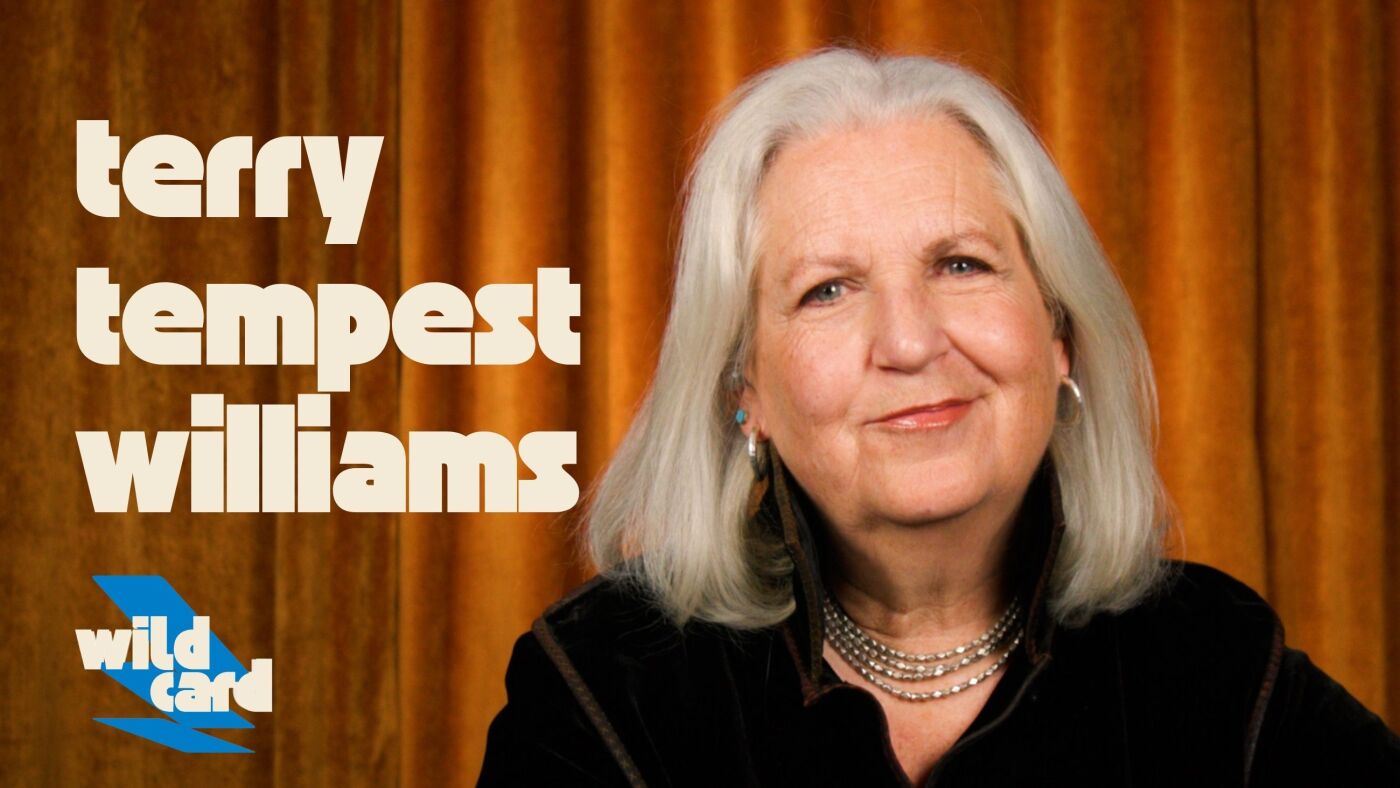
A note from Wild Card host Rachel Martin: I met Terry Tempest Williams about 25 years ago at a writer’s conference in Yosemite Valley. I was a young reporter who was there to do a story about how literature was addressing climate change and she made such a huge impression on me. I had never heard someone talk about the natural world the way Terry did and she had a spiritual depth I hadn’t encountered in my life at that point.
To this day, Terry’s writing always reorients me towards what is good, what is beautiful, and what is true. Her newest book is called “The Glorians.”

For its upcoming Los Angeles venue, experiential art firm Meow Wolf will focus on the art of storytelling, with a specific eye toward skewering our city’s moviemaking magic. To help bring that vision to life, Meow Wolf has entered into a creative partnership with Titmouse, one of L.A.’s most renowned independent animation houses.
The Hollywood-based studio behind popular series such as “Big Mouth” and “Star Trek: Lower Decks” will create animation that will be shown throughout the West L.A. venue, which is on target for a late 2026 opening at the Howard Hughes entertainment complex.
It’s a move that represents a shift for Santa Fe, N.M.-based Meow Wolf. Over the last decade-plus, the art collective has grown beyond its anything-goes, punk-meets-psychedelic roots into an organization with full-scale, maximalist installations in its hometown, Denver, Las Vegas, Houston and the Dallas suburbs. In the past, Meow Wolf kept most of its media in-house.
As part of its larger-than-life participatory art installations, Meow Wolf L.A. will feature a mix of live action and animation, the former filmed by Meow Wolf in its Santa Fe studio. Meow Wolf’s James Stephenson, a senior VP with the company and its creative director of emerging media, said the degree to which the L.A. exhibition will lean into various animation styles necessitated an outside partner. Titmouse’s work, in development by a number of directors with contrasting tones, will be shown on a variety of formats, ranging from cinema screens to full-room projections.
“I really believe in animation as an art form, and I know the Titmouse folks do too,” Stephenson says. “Animation is made by artists. It’s made by artists with their own hands. It’s something that is still very rooted in craft.”
Meow Wolf’s L.A. space is set in a former cinema complex, and will champion its location, taking guests on a journey through a converted movie house and beyond, into a sci-fi-inspired fantasyland with sentient spaceships and a 30-foot-tall mushroom tower. Meow Wolf creatives have spoken of the fantastical movie theater as one that will feature animated, self-aware candy before attendees enter the main exhibition space, making Titmouse’s work some of the first art guests will encounter. Titmouse co-founder Chris Prynoski has said the studio has lined up at least six directors for the exhibit.
An in-progress art installation destined for Meow Wolf L.A. at the art collective’s Santa Fe, N.M., headquarters. The L.A. exhibition will feature animation from Titmouse.
(Gabriela Campos / For The Times)
Titmouse, says Stephenson, is the right partner because “they’re known less for a house style, and more for a house vibe.” Over the years, Titmouse has been behind such diverse shows as “Scavengers Reign,” owning a Jean Giraud influence rooted in French and Spanish surrealism, the lively “Jentry Chau vs. the Underworld,” with an unique color palette that took inspiration from anime and Chinese mythology, the exaggerated comic book feel of Adult Swim’s “Metalocalypse,” and the approachable yet expressive tone of “Star Trek: Lower Decks.”
“Meow Wolf’s vibe is similar to Titmouse’s vibe,” Stephenson says. “It’s artist-first, artist-driven, independent and kinda edgy. They are always trying to find the edge of what’s possible. They try to see how far they can go, and it’s done for fun and in the spirit of taking risks.”
Prynoski says working with Meow Wolf will give Titmouse a sense of artistic freedom it doesn’t always have when delivering content for more traditional Hollywood partners. He says the multi-director approach is a callback to the early days of Warner Bros. Animation, when individual creators put their own stamp on Looney Tunes material.
“I use Bugs Bunny as an example,” Prynoski says. “You’ve got a Friz Freleng Bugs Bunny short. You’ve got a Chuck Jones Bugs Bunny short. You’ve got a Tex Avery Bugs Bunny short. They’re all different versions of Bugs Bunny, and people who are really paying attention can tell which director directed each one. Even though to the layman, these are all Bugs Bunny, but if you lined them up, they are drawing in different styles, sensibilities and techniques.”
Prynoski says that was a centerpiece of his pitch to Meow Wolf, noting that characters will reappear in multiple installations, each handled by a different artist. Meow Wolf L.A., in fact, will be the firm’s most character-driven exhibition, as guests will follow the storylines of three main protagonists throughout the space.
In announcing the partnership, Meow Wolf and Titmouse released an image from an animated work directed by Luca Vitale. It features a key character having a moment with a hummingbird and it’s done in an elegant, slightly anime-influenced style. It’s an image full of movement, reflecting a character in transition with inviting pastels and bold dashes.
“I like that image because I think it captures some of the sense of wonder that we want people to feel,” Stephenson says. “The character is having an encounter with the elusive nature of creativity and reality in a way that makes them have a different perspective of what’s possible.”
Other contributing animation directors to Meow Wolf L.A. include Space Dawg, Felix Colgrave, Alexander Vanderplank and Phimémon Martin, and Jun Ioneda.
Titmouse’s partnership with Meow Wolf will extend beyond the L.A. exhibition. The two will be working on the development of Meow Wolf New York, which is slated to open some time after Los Angeles, and are collaborating on a planned animated series, which Prynoski is spearheading.
Meow Wolf exhibits are the result of sometimes hundreds of disparate artists coming together in a shared space. Distilling that into a signature, singular style for a series could be a challenge. Stephenson pinpoints some guiding principles.
“You really need to feel the hand of the artist,” he says. “You need to feel a DIY aesthetic. You need to feel the materiality. Those are very specific to what we are.”

The Kennedy Center on June 28, with its facade signage still covered by a tarp and scaffolding.
Alex Wroblewski/AFP via Getty Images
hide caption
toggle caption
Alex Wroblewski/AFP via Getty Images
On Wednesday, a federal appeals court denied President Trump’s request to stop the removal of his name from Washington, D.C.’s Kennedy Center. The signage on the building has been covered with tarp and scaffolding since June 13, but in a court filing last month, the center’s current executive director said that Trump’s name has been removed.
In their decision, three judges from the U.S. District Court of Appeals for the District of Columbia Circuit said that the president had failed to prove that the arts center would be “irreparably injured” without Trump’s name attached to it.

NPR requested comment from the Kennedy Center, but did not receive an immediate reply.
This latest round of court decisions is part of the ongoing litigation filed by Rep. Joyce Beatty, D-Ohio, against President Trump and the board of the Kennedy Center. In a statement emailed Wednesday to NPR, Beatty said: “Today’s ruling again affirms that this administration’s efforts to rename the Kennedy Center were unlawful. His name no longer desecrates this sacred memorial, which belongs to the American people. Now it is time for the Trump administration to accept this, comply with the law, and take the tarps down.”
In previous court filings, Trump’s legal team had asserted that removing the president’s name from the arts complex, both on the physical building and in its digital materials, would inflict irreparable harm in both time and money already spent. In the denial, the three judges — Patricia Millett, Robert Wilkins and Gregory Katsas — wrote that since Trump’s name has already been removed, “a stay would not avert those harms.”
Furthermore, Trump had claimed that without his name attached, future fundraising would be threatened “and [will] contribute to the financial decline of the Center.” In response, the appeals judges wrote: “Appellants, however, have failed to support this assertion with any specific facts or evidence. They offer only the conclusory assertions of the Kennedy Center’s Executive Director that were made in a factually unsupported declaration.” The center’s current executive director, Matt Floca, specializes in physical plant management.

The presiding judge in the case, Christopher R. Cooper, has ordered that the center provide him a status report on the center’s operation and programming before the end of this month. As of Wednesday, the center’s calendar lists a small roster of programs, including outdoor free movie screenings, workshops for children, and five free live performances in July on its Millennium Stage. In the past, the Kennedy Center presented over 2,000 arts and education events each year, including free daily Millennium Stage performances.

-
Culture41 minutes ago
Which Version of the ‘Odyssey’ Should You Read?
-
Lifestyle44 minutes ago
Terry Tempest Williams on why women with big ideas get labeled ‘crazy’ : Wild Card with Rachel Martin
-

 Technology56 minutes ago
Google’s Nest Thermostat has hit its best price of the year
-

 World59 minutes ago
Argentinian flight instructor jumps to death from plane, 22-year-old student forced to land alone
-

 Politics1 hour ago
Omar’s disclosures erased millions, leaving her with potential negative net worth. She won’t explain why.
-

 Health1 hour ago
Dr Oz links obesity to chronic disease surge, says GLP-1s can ‘jumpstart’ better health
-

 Sports1 hour ago
Pirates star pitcher makes unfortunate history after being taken out in middle of perfect game bid
-

 Technology1 hour ago
Medical identity theft follows you into the doctor’s office

