Fitness
Health column: Forget the nursing home bill: Exercise pays you back | Washington County Enterprise-Leader


Since my friends know how passionate I am about health and fitness, they occasionally send me humorous cartoons that poke fun at exercise.
Consider this funny email, “It is well documented that for every minute that you exercise, you add one minute to your life. This enables you at 85 years old to spend an additional 5 months in a nursing home at $9,000 per month.”
I enjoyed the humor, but then wondered “Do some people actually subscribe to this theory? Do some believe that feebleness is an inevitable part of old age?”
The great news is that this thinking has been soundly disproven. Science has shown that exercise as an adult is repaid not minute for minute, but two for one. For each hour we invest, we receive two hours of additional lifespan, according to Dr. Ralph Paffenbarger in a longitudinal research on over 17,000 Harvard students.
Generous doses of regular aerobic exercise have been shown to be beneficial to every organ system in the body: the heart and lungs, the digestive system, the brain, breast, uterus, prostate and endocrine system. Exercise is a powerful sleep aid, a potent antidepressant, and can enhance memory and thinking as we age. That is because more oxygen and glucose reach the brain when blood flow is increased.
But will we really live those extra years in a nursing home? This speaks to one of our greatest fears about aging.
Lower body weakness is a common reason for admittance to a long-term care facility. And a statistic that the average 65 year old woman cannot lift 10 pounds shows how weakness can limit one’s ability to live alone. Therefore incorporating strength training into an exercise program may greatly improve strength, resilience, and help avoid injury.
Since muscles attach to bones, the best way to increase bone strength is to stimulate the muscle attached to it. This is most effectively done through a resistance-training program where muscle fatigue is achieved in 12 – 15 repetitions. The bones of the hip and lower back can also be strengthened through weight bearing exercises like walking, jogging, or hiking.
Research has shown that healthy older individuals who exercise with strength and balance training cut their rate of falls in half, even into their 90’s. Maria Fiatarone (JAMA, 1990) showed that an 8-week weight-lifting program produced a 175% increase in strength and a 48% increase in walk speed and balance in frail 80- and 90-year olds.
A strong neuromusculoskeletal system will preserve one’s ability to carry groceries, walk up stairs or pick up grandchildren. It is the ability to perform these routine activities that help us care for ourselves longer.
So will exercise make us live longer, just to drain our children’s inheritance by prolonging expensive nursing home care? I am thankful that the science says “no.” In fact, the failure to stay fit is a sure ticket to physical and mental deterioration for anyone who makes it past the age of 60.
A lifestyle that incorporates strength, aerobic and flexibility exercise is the best strategy for lifelong good health and independence. Come to the Farmington Senior Center and I’ll show you some folks who are aging well through this type of exercise right in our backyard!
Lisa is a former ICU nurse who grew up in Ft. Smith, Arkansas. She has spent the past 38 years in the fitness and wellness industry helping others with personal transformation through movement, nutrition, and mindset training. She holds a BSN from Oral Roberts University and an MBA from Indiana University, but is most passionate about helping others grow their “health bank” as a holistic nurse coach. You can reach Lisa at www.LisaBellHenson.com.


...RED FLAG WARNING REMAINS IN EFFECT UNTIL 11 PM PDT SATURDAY
FOR GUSTY WINDS AND LOW HUMIDITY FOR THE SIERRA FRONT...

* Affected Area...Fire Weather Zone 420 Northern Sierra Front
including Carson City, Douglas, Storey, Southern Washoe,
Western Lyon, and Far Southern Lassen Counties.

* Winds...West 20 to 30 mph with gusts up to 45 mph.

* Humidity...Afternoon minimums of 12 to 20 percent.

* Duration...2 to 5 hours Friday with 3 to 8 hours Saturday.

* Impacts...The combination of gusty winds and dry fuels can
cause fire to rapidly grow in size and intensity before first
responders can contain them.

PRECAUTIONARY/PREPAREDNESS ACTIONS...

Avoid outdoor activities that can cause a spark near dry
vegetation, such as yard work, target shooting, or campfires.
Follow local fire restrictions. Check weather.gov/reno for
updates and livingwithfire.info for preparedness tips.

&&
...LAKE WIND ADVISORY REMAINS IN EFFECT UNTIL 11 PM PDT SATURDAY FOR
WASHOE LAKE...

* WHAT...Southwest winds 20 to 30 mph with gusts up to 45 mph for
Washoe Lake.

* WHERE...Greater Reno-Carson City-Minden Area.

* WHEN...Until 11 PM PDT Saturday.

* IMPACTS...Small boats, kayaks and paddle boards will be prone to
capsizing and should remain off lake waters until conditions
improve.

* ADDITIONAL DETAILS...Winds may briefly subside tonight before
increasing again early Saturday morning.

PRECAUTIONARY/PREPAREDNESS ACTIONS...

Check lake conditions before heading out and be prepared for a
sudden increase in winds and wave heights. Consider postponing
boating activities on the lake until a day with less wind.

&&

In 2025, the global Virtual Reality fitness market was estimated to be worth between $30 – $50 billion dollars and by the mid 2030’s, it is likely to be estimated to be worth up to 400 billion dollars. Big name companies like Meta, Apple, Sony, Samsung and Nike, are investing a lot of money into the field.
One 2025 study by the University of Victoria found that more people utilising VR fitness programs were exercising for longer periods of time. VR based fitness users actively worked out sessions that were an average of 34% longer and VR fitness users were also 2.2 times more likely to complete weekly physical workout requirements than users of traditional home workout equipment.
The real question is, how viable is the market and how much of an opportunity is there for VC-funded startups that are working on the future of fitness technology?
Why Virtual Fitness is Worth Watching
VR fitness is built to solve the problem of the dropout of users of home fitness programs. According to studies, traditional home workouts suffer from dropout rates of 50% within three months. Repetitive workouts become boring and are a drain on motivation.
However, exercising in VR allows fitness to be gamified and VR fitness studies have uncovered an important phenomenon: users perceive their heart rate and effort to be lower than it is and are likely to work out even harder than in traditional settings.
Can You Actually Become Fitter With VR Fitness?
There is no shortage of virtual fitness games out there and yes, you can actually become fitter through a faster heart rate and all while ‘playing a game’ that might not seem so exhaustive when compared to the gym. Active VR games can create an effective aerobic workout and burn calories on par with biking or light jogging.
These games produce real results and the research backs it up. Active VR workouts consistently produce heart rates in the aerobic zone. Game examples include Beat Saber, Supernatural, Les Mills Body Combat VR and Thrill of the Fight.
Opportunities to Expand into Mental Well-Being Through VR
VR fitness isn’t just about physical output. Immersive environments have documented effects on stress and mood, exercising in a virtual forest or on a clifftop coastline produces different psychological responses to a gym mirror.
This mental wellness dimension is opening a new product category: VR fitness platforms that blur into mindfulness apps, targeting the significant overlap between corporate wellness programmes and mental health investment.
What Are The Limitations of Virtual Fitness?
Currently the biggest weakness in VR fitness is the lack of options for strength training. The types of movements that build and maintain muscle mass, like squats and deadlifts, can’t be effectively done in VR without some added equipment. One of the few companies that have started to tackle this problem is Black Box VR, which offers gyms combining VR and cable resistance.
Startups Worth Keeping an Eye On in The VR Fitness Sector
There are a handful of innovative startups in the VR fitness industry that are worth watching in 2026 and beyond- from subscription-based fitness tools to interactive challenges that help increase stamina and even strength:
Supernatural

In 2023, Meta completed its acquisition of Supernatural and integrated the VR fitness platform into the expanding Meta Quest ecosystem. The service offers users daily workouts set in immersive real-world locations, enhanced by licensed music and guided instruction.
As a subscription-based platform, Supernatural has consistently demonstrated some of the strongest retention rates in the consumer VR market, highlighting the viability of the VR fitness subscription model. In 2026, Meta announced that Supernatural would be spun off into a new independent company, Supernatural Health, led by the platform’s original founders. Supernatural Health is expected to relaunch in autumn 2026 with higher subscription pricing, reflecting a renewed focus on growing the platform as a standalone fitness business.
Black Box VR

Purpose-built VR gyms seem to be the focus of Black Box VR. Combining resistance machines and immersive environments is an interesting approach, especially with the existing VR home ecosystems providing frictionless workouts. Black Box VR’s franchise model suggests that they believe the hybrid VR/gym model will bring an edge over the competition when compared to only a software solution.
HOLOFIT

HOLOFIT is a virtual reality fitness platform developed by Holodia that transforms cardio workouts into immersive experiences. Using a VR headset, users can row, cycle, run, or perform bodyweight exercises while exploring virtual worlds and completing interactive challenges.
The platform connects with rowing machines, exercise bikes and ellipticals, making workouts more engaging and motivating through gamification, virtual coaching and online competitions.

Special promotional content provided by White Plains Hospital
There is no time like the present to get your fitness routine back on track—or start one for the first time, advises Dr. Michael Schwartz, an Orthopedic Surgeon and Sports Medicine Physician at White Plains Hospital Physician Associates.
Here’s what Dr. Schwartz wants you to keep in mind as you get moving this summer.

” data-image-caption=”<p>(PHOTO: Dr. Michael Schwartz, orthopedic surgeon and sports medicine physician at White Plains Hospital Physician Associates.)
” data-large-file=”https://i3.wp.com/myrye.com/wp-content/uploads/2026/06/schwartz-683×1024.png?ssl=1″ fifu-data-src=”https://i3.wp.com/myrye.com/wp-content/uploads/2026/06/schwartz-683×1024.png?ssl=1″ alt=”headshot photo” class=”wp-image-86488″ srcset=”https://i3.wp.com/myrye.com/wp-content/uploads/2026/06/schwartz-683×1024.png?ssl=1 683w, https://myrye.com/wp-content/uploads/2026/06/schwartz-200×300.png 200w, https://myrye.com/wp-content/uploads/2026/06/schwartz-768×1151.png 768w, https://myrye.com/wp-content/uploads/2026/06/schwartz-1024×1536.png 1024w, https://myrye.com/wp-content/uploads/2026/06/schwartz-1366×2048.png 1366w, https://myrye.com/wp-content/uploads/2026/06/schwartz-1200×1799.png 1200w, https://myrye.com/wp-content/uploads/2026/06/schwartz-2000×2999.png 2000w, https://myrye.com/wp-content/uploads/2026/06/schwartz-780×1169.png 780w, https://myrye.com/wp-content/uploads/2026/06/schwartz-400×600.png 400w, https://myrye.com/wp-content/uploads/2026/06/schwartz-706×1059.png 706w, https://myrye.com/wp-content/uploads/2026/06/schwartz-scaled.png 1707w” sizes=”(max-width: 683px) 100vw, 683px”/><figcaption class=) (PHOTO: Dr. Michael Schwartz, orthopedic surgeon and sports medicine physician at White Plains Hospital Physician Associates.) Credit: Contributed.
(PHOTO: Dr. Michael Schwartz, orthopedic surgeon and sports medicine physician at White Plains Hospital Physician Associates.) Credit: Contributed.Q: If I’m completely new to exercise or have taken considerable time off, how can I get started again this summer?
A: It’s important to start slow, maybe two to three days a week. The Centers for Disease Control and Prevention recommends that most people get about 150 minutes of physical activity a week, along with at least two days of strength training. And remember:
- Those minutes can be broken up throughout the week to help make the task more manageable.
- You can follow the recommended amount of time, but you don’t want to go too hard or too fast when you first start out.
- If you’re not used to running, start with a walk and then work your way up to more intense workouts. You can also do a lot of simple strength training at home with just a chair—search online for videos or apps to find the right routine for you.
- You should rest between exercises to give your muscles time to recover, repair, and rebuild.
Q: I hear a lot about overuse injuries. How can I avoid that?
A: These injuries can be common, which is why I often advise a combination of cardiovascular activities like running, rowing, and biking. If you switch up what you’re doing, then you’ll be using different muscle groups and hopefully not working one of them too hard.
Q: Workout trends seem to come and go. Is there one that you think is more beneficial than others?
A: People were really into their bikes when the pandemic hit and that was great. Some people enjoy Pilates, some like HIIT (high intensity interval training) workouts—these are great because they balance strength and cardiovascular focuses. This also benefits your metabolic function, which is great for your overall health. The best exercise routine to follow is one that you are actually going to do consistently: Find something you like, and then work it into your routine.
Q: Knowing the importance of both cardio and strength training, is there a way for a person to determine how much of each they need?
A: This is going to be unique for each person. It’s certainly something that you could talk to a personal trainer about if you’d like a personal assessment and one-on-one guidance. For most people, it’s about doing what you can.
For instance, walking is a great way to get a workout without fancy equipment or hiring a personal trainer. Just put on some sneakers and go. And, eventually, you can turn those walks into more intense workouts by adding hills, hiking on different terrains, or even rucking, adding weight to a backpack so you can turn your walk into a strength-training routine.
Q: How might a person’s approach to fitness change as they age?
A: When we’re younger, it’s important to build a strong foundation through cardio and strength training to develop muscle, endurance, and overall fitness. This sets us up for long-term health. But as we age—often starting in our 40s—muscle and bone density naturally begin to decline. That’s when strength training becomes even more essential, particularly for women navigating changes during and after menopause. Maintaining strength helps preserve mobility, balance, and core stability as we continue to age, which are critical for preventing falls and staying active without pain.
Q: We’ve all heard the phrase, “No pain, no gain.” But how can you tell the difference between healthy soreness and an injury?
A: Some soreness following exercise is normal, and it is important to allow your body rest periods for your muscles to recover. On the same note, you also need to be in tune with your body. An acute pain could mean that you pulled or otherwise injured something and you should see an orthopedist. Regular muscle soreness shouldn’t last more than a few days.
Dr. Michael Schwartz is an Orthopedic Surgeon and Sports Medicine Physician at White Plains Hospital Physician Associates. To schedule an appointment, call 914.849.7897.
This article originally appeared on Health Matters, a White Plains Hospital publication.
Related
-
Vermont1 second ago
West Rutland man dies in hit-and-run, police seek vehicle
-

 Virginia5 minutes ago
Vandals smash windows of nearly 3 dozen cars in Arlington Mill
-

 Washington12 minutes ago
The Washington Capitals Select Oliver Suvanto | Washington Capitals
-
 Wisconsin15 minutes ago
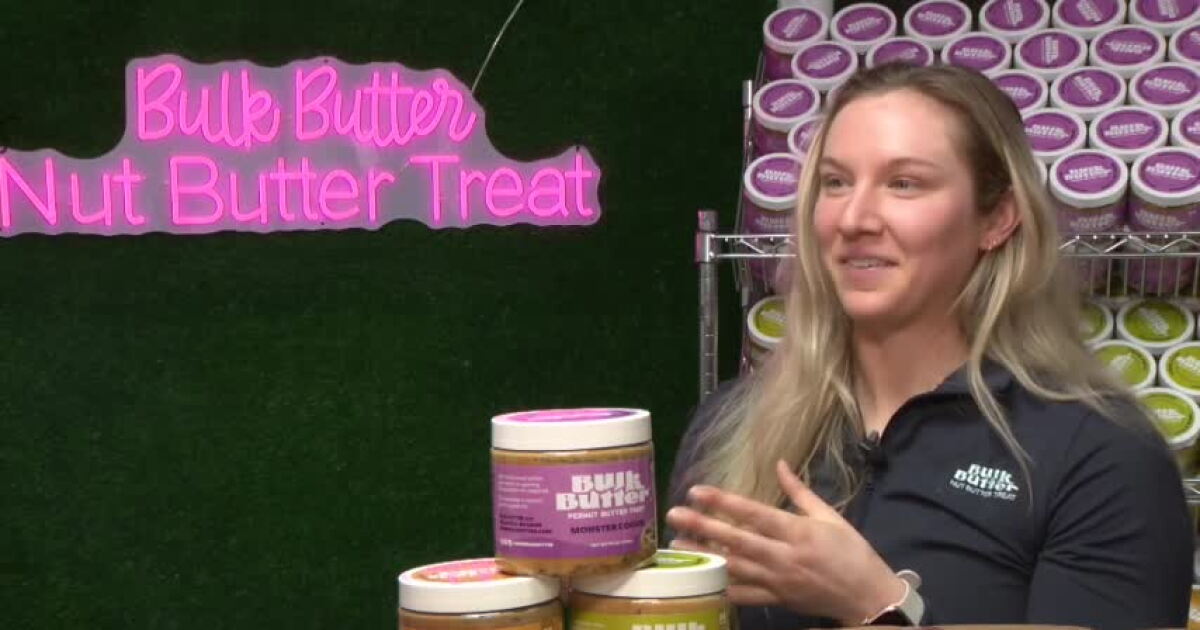
From bodybuilding to business: Wisconsin entrepreneur builds success with Bulk Butter
-

 West Virginia20 minutes ago
West Virginia First Foundation advances key initiatives at second quarterly board meeting
-

 Wyoming27 minutes ago
At 6,000-year-old crossing, Gov. Gordon OKs Wyoming’s first-ever designated pronghorn migration route – WyoFile
-

 Crypto30 minutes ago
SpaceX Lands Nasdaq-100 Spot Weeks After Record IPO
-

 Finance35 minutes ago
Hong Kong vows stronger exchange with reforms, bond futures and gold push

