Finance
Governor cites financial gap for family aid program, hints at cuts and puzzles lawmakers – WV MetroNews

West Virginia leaders are still assessing recent comments by Gov. Patrick Morrisey, who indicated the state has a $40 million structural gap in funding for Temporary Assistance for Needy Families.
The safety net program, often called TANF, provides monthly cash payments and support services to low-income families with children to help them achieve economic stability and self-sufficiency. It is a federally funded, state-run program often referred to as “welfare.”
Morrisey, responding to questions during a press conference last week, suggested the state might have to respond to a financial gap by making cuts to West Virginia’s childcare assistance and a voucher program that helps low-income families afford school clothes.
He also seemed to make reference to family support centers, but it was not clear.
However, the governor acknowledged all of that remains under review and would need to be discussed with legislators.
“There are a few that are out there that we have to make the decisions. We have not announced anything yet. We want to confer with the legislature, but for example, the clothing allowance, the FNS, and then childcare – they’re all in that bucket,” Morrisey said.
Since then, lawmakers and other close observers have said they need to learn more about the underpinnings of the financial gap cited by the governor, as well as his early ideas for what to do about it.


“I think there’s a lot of questions to still be answered,” House Speaker Roger Hanshaw, R-Clay, said on MetroNews Midday.
“None of that discussion was had with us during the regular legislative session this year, so we did what we did with respect to the budget for the upcoming fiscal year and the remainder of this fiscal year, absent that revelation. So the first thing we have to do is understand exactly how we got where we evidently are.”
Hanshaw and other lawmakers said legislative finance personnel would be working to learn more about the state’s position with TANF funding.
“We’re what we’re not going to be very excited about, I don’t think, would be substantial cuts to other services that are that are needed, necessary and beneficial,” Hanshaw said.
“There are there are things that the TANF funds support, other than direct payments, that that are also important to a lot of families, particularly some of the low-income families in West Virginia. So, we’re not excited necessarily to be making cuts to those programs, but we first of all don’t necessarily understand the announcement yet.”
Spotlight on TANF spending
The governor’s discussion of TANF funding came during a broader discussion of state agency audits that the administration concluded could result in millions of dollars in savings for the state.
However, the conclusions drawn about TANF were adjacent to those audits rather than direct conclusions from them.
“The TANF issue was identified as part of the administration’s broader review of the Department of Human Services, alongside the audit work being conducted across multiple departments,” said Lars Daleside, communications director for the governor, after a request for clarity from MetroNews.
“It was not a standalone ‘TANF audit’ in the traditional sense.”
The governor’s verbal explanation and Daleside’s followup indicated a structural imbalance developed over the years. The administration cited a temporary federal funding increases associated with the covid-19 pandemic that allowed programs supported by TANF to expand significantly.
Spending levels grew beyond what the recurring annual federal TANF block grant could support, the administration said.
As a matter of straight math, they said a federal block grant for TANF amounts to $100 million a year, while projected obligations tied to programs currently supported through TANF exceed that amount by about $40 million.
Earlier on, the state was able to rely on temporary carryover balances to bridge those gaps, Daleside said, but those balances are projected to be depleted in the coming years.
Morrisey said the emergency spending levels created a big structural deficit, “and quite frankly, we had these silos operating within human services that led to inadequate oversight of the TANF budget. So we’re obviously looking to fix that.”
The governor said funding for Temporary Assistance to Needy Families goes to help vulnerable families, support children and help people move toward stability and self-sufficiency. “Our kids and our families definitely need the help from that TANF program,” Morrisey said.
Going forward, he said, “You’ll be seeing that we’ll have those briefings with the legislature with an opportunity to solve a number of these problems.
“You can’t run deficits, and you can’t run them because you forgot to turn off the spigot with covid (emergency funds) going offline, and we’re certainly committed to being fiscally responsible, while also helping people who are very much in need.”
West Virginia budget trends and TANF
A review of West Virginia’s general revenue budget over the past few years shows relatively flat spending for TANF until recently.
Temporary Assistance for Needy Families runs through a federal block grant that requires a state match called “maintenance of effort.”
Both the federal and state portions were pretty stable from 2021 to 2025. Then the state budget data shows a jump that reflects the amount the governor cites.
The most significant driver is a $42,000,000 increase in the “Current Expenses” category of the federal TANF block grant.
Fiscal Year 2021
State Maintenance of Effort: $25,819,096
Federal Block Grant: $127,660,783
Total: $153,479,879
Fiscal Year 2022
State Maintenance of Effort: $25,819,096
Federal Block Grant: $127,725,762
Total: $153,544,858
Fiscal Year 2023
State Maintenance of Effort: $25,819,096
Federal Block Grant: $133,070,827 (includes $4,617,546 in Federal Coronavirus Pandemic funds)
Total: $158,889,923
Fiscal Year 2024
State Maintenance of Effort: $25,819,096
Federal Block Grant: $133,678,671 (includes $4,617,546 in Federal Coronavirus Pandemic funds)
Total: $159,497,767
Fiscal Year 2025
State Maintenance of Effort: $23,237,186
Federal Block Grant: $134,664,564
Total: $157,901,750
Fiscal Year 2026
State Maintenance of Effort: $25,819,096
Federal Block Grant: $176,664,564
Total: $202,483,660
Fiscal Year 2027
State Maintenance of Effort: $25,819,096
Federal Block Grant: $177,081,080
Total: $202,900,176
The fiscal 2026 budget appears to mark the transition where this gap is no longer covered by carryover funds and is instead reflected as an increase in budgeted federal spending authority.


Kelly Allen, executive director of the West Virginia Center on Budget & Policy think tank, suggests a likely explanation for what happened is that the state was diverting reserves to pay for programs related to TANF.
As those reserves began to run dry, the expenses continued and what is exposed is the true cost.
“It’s a flexible block grant from the federal government, states have a lot of flexibility in how they can use it, and they don’t have to spend their whole allocation in a year; they can run up a reserve and bank some of those dollars, and that’s what we did for several years,” Allen said on MetroNews Talkline.
At one point in 2023-2024, she said, West Virginia had a reserve of more than $120 million — more than an annual allocation but spent down in recent years.
When the governor talks about a “deficit,” Allen interprets that as the state spending down that TANF reserve, not a traditional budget deficit
“So, when the governor says ‘deficit’ that evokes a certain thought, but I think what he’s actually saying is we’ve been spending down into that reserve, and eventually that’s gonna run out,” she said. “And why we’ve been spending down into that reserve is that we’ve been funding a lot of childcare subsidies with TANF dollars.”
Some good news, Allen said, is that the governor alluded to an 18-month window to address the financial situation.
“This is a lot of reading between the lines,” she said, “but that to me says we have time for legislators to find alternative sources of revenue to continue these really, really important programs.”


To Jim McKay, state director of Prevent Child Abuse West Virginia, what the governor described represents a TANF surplus, not a deficit.
“The governor himself said that the state has 18 months of reserves remaining. That is not a crisis requiring immediate cuts to programs serving children and families,” McKay said.
Over many years, McKay said, the state actually underspent TANF and a large reserve grew to over $100 million.
“In recent years, the state has drawn on the TANF surplus to fund services such as Family Support Centers, Legal Aid, and child care,” McKay said.
“These programs help children stay safely at home with their families, which is the core statutory purpose of TANF. West Virginia leads the nation in the rate of children in foster care. We should be investing more in keeping families together, not less.”
Meanwhile, he cited emerging consequences: organizations across the state are waiting with uncertainty because their contracts for funding in July have not yet started the process for renewal.
“They heard the governor describe a deficit that has caused concern throughout the state that programs will have to stop serving families in a few weeks,” McKay said.
“This is occurring despite the approval of the budget bill that included sufficient funding from a combination of TANF and reserve TANF appropriations, but the contracts have still not gone out. These delays have real-life consequences.”
Broad picture of state use of covid dollars
The Pew Charitable Trusts has spent significant focus on how states have been able to manage covid relief funds, particularly as the emergency financial support was made available and then contracted.
Rebecca Thiess, who helps lead Pew’s managing fiscal risks project, focuses on how federal policies affect states.
Most states “did a pretty good job spending the one-time dollars on one-time expenses,” Thiess said in an interview with MetroNews. But, “some states did kind of put money towards operational expenses in the study that we did.”
On the whole, she said, states like West Virginia may benefit from financial caution.
“I do think that if the spending continued for even just a few years at COVID levels in an unsustainable way, you know, that’s an argument — I think you hear the governor saying this — for kind of more practical management of federal funds, so you don’t get kind of unpleasant surprises like this,” Thiess said.
West Virginia is following a lot of the same trends as most states right now, said Justin Theal, senior officer for The Pew Charitable Trusts. He said policymakers are facing the most widespread fiscal budgetary pressures since at least 2020, driven by factors like slower revenue growth and rising spending demands.
“During those years of unusually strong revenue growth, many states made long-term commitments in response to those temporary highs, like tax cuts, wage increases for public employees, expansions of spending programs. Those are now becoming much harder to afford now that revenue is back towards more normal conditions,” he said.
And now states are navigating the wind down of those pandemic funds. That marks a transition from an extraordinary period for state leaders who had sigificant extra resources and fiscal flexibility.
“But now they’re asking questions like, were the programs that we expanded or the tax rate changes that we enacted — were those affordable only with temporary resources? Do we have the ability to meet our ongoing spending with enough revenue? And that’s a very real part of the policy debate right now,” Theal said.
‘We need to find out if that’s actually the case or not’
West Virginia lawmakers now have work ahead to determine the basis of the governor’s conclusions and to assess priorities with available state funds.


“I think most are equally confused and maybe it’s designed this way,” said Delegate Anitra Hamilton, a Democrat from Monongalia County who is a member of the House health committee.
Hamilton was among the delegates in meetings last week about topics like data centers while the governor was making his remarks. She said she started receiving texts and emails about what the governor had said while she sat in those meetings.
“Until more information is given that can provide clarity, we can only restate what has been said and make assumptive remarks,” she said.
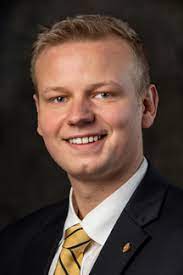
It’s the governor’s responsibility to make his case, said Delegate John Williams, D-Monongalia, speaking on “Talk of the Town” on WAJR Radio.
“We need to find out if that’s actually the case or not,” said Williams, who is the ranking Democrat on House Finance. “The Legislature, we just allocated $177 million to TANF, so let’s see if the governor is correct.”
Williams added, “We would like some more evidence. If that’s the assertion he’s making, we’d like that pointed out somewhere that we have a structural deficit. As far as we were concerned, when we passed our budget for fiscal 2027 just two months ago, there was no such structural deficit.
“So if he thinks that there’s going to be a deficit the burden of proof is on him and so far we haven’t seen anything.”
Hanshaw, the House speaker, agreed that more homework is necessary. But he believes there’s time to gather more information.
“As I understand it, we’re not in a catastrophic situation yet; it’s just going to be a problem that we face toward the end of the fiscal year,” Hanshaw said. “So we’ve got a little time on that left, not a lot. We’ve got a little time on that left, so step one for us is having our finance team understand exactly how we got where we are.”