Finance
Everton: Premier League club offered loan to complete new stadium


777 Partners agreed to buy current owner Farhad Moshiri’s 94% stake in September, but there is increasing question marks over the takeover following concerning developments around the Miami-based firm.
On Tuesday, Moshiri extended the sales and purchase agreement until the end of this month, giving 777 more time to try to complete the deal.
One of the conditions imposed by the Premier League for 777 to be given the green light is to fund about £100m for the completion of the club’s new stadium.
Costs for the project have spiralled from an initial £500m to more than £800m, which was disclosed in Premier League documents relating to the club’s appeal over their 10-point deduction for breaching financial rules.
GDA Luma describes itself as providing “capital solutions” to companies facing “complex financial and operational challenges”.
Earlier this month, 777 held discussions with the firm to see whether debt financing could be offered.


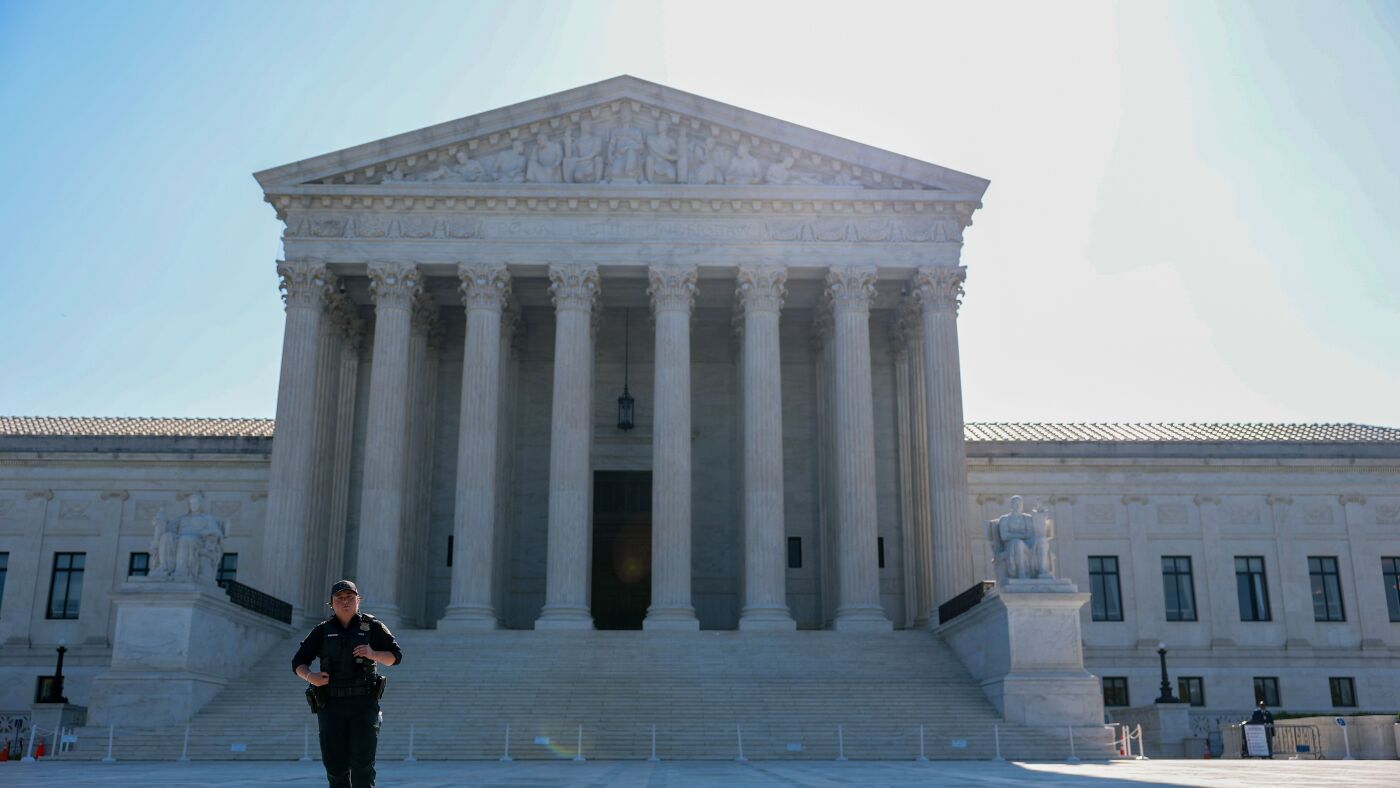
Tuesday’s Supreme Court ruling changing certain federal campaign finance limits could make a big difference in the battle for control of Congress this fall, giving Republican candidates who have been getting outraised by opponents direct access to more party cash.
Limited time: Save 25% on NBC News subscription
Get exclusive reporting, live Q&As and ad-free reading.


The World Bank is ditching its commitment to steer 45 percent of its spending toward projects with climate benefits, after facing pressure from the Trump administration.
The move, announced Monday following a meeting of the bank’s board of directors last week, marks a victory in President Donald Trump’s effort to purge climate policies from U.S. foreign policy. His administration has described the target as “distortionary” and “nonsensical.”
The bank preserved its broader Climate Change Action Plan — of which the 45 percent target was a key metric — just days before it was set to expire at the end of June. In addition to directing money toward climate projects, the plan provides technical support for helping countries reduce their greenhouse gas pollution and adapt to rising temperatures.
“We will retire the 45% climate co-benefits target,” the World Bank Group said in a statement, noting that it had “done significant work in answering client demand and needs.”
The bank’s work on climate “is and will remain firmly client driven, supporting them in delivering on their own ambitions as set out in their national plans and NDCs,” the statement added, referring to the nationally determined contributions countries submit under the Paris Agreement.
The decision to drop the climate finance target follows months of pressure from the Trump administration. People with knowledge of the negotiations said the U.S. was firm that the target must go despite other countries indicating their support for the bank’s climate goal. The U.S. has sway over the bank’s decisions as its largest shareholder.
Beyond the finance target, the Climate Change Action Plan also provides diagnostic reports on countries’ climate and development goals and aims to align lending with the Paris Agreement, which calls for preventing temperature rise from surpassing 2 degrees Celsius since the Industrial Revolution.
The bank said it would honor a board request to undertake an independent evaluation of the climate plan to determine if it’s helping countries grapple with rising temperatures. The decision effectively extends the plan beyond its expiration at the end of June.
The climate target was supported by many of the bank’s shareholders. It’s also been a prominent signal of the bank’s support for climate action at a time when the impacts of rising temperatures are accelerating.
“This is way, way away from where we should be for a responsible financial architecture,” said one official from a developed country who was directly involved in the negotiations and was granted anonymity to describe internal discussions.
The bank will continue to track and report on the amount of money going to projects with climate co-benefits. It exceeded its own target last year by directing 48 percent of its financing to climate-related projects.
Other climate targets embedded in agreements that govern different arms of the bank will remain, including one for the International Development Association, the bank’s fund for the poorest countries.
Multilateral development banks play a key role in global climate negotiations, where wealthy countries have committed to helping provide $300 billion a year for poorer countries by 2035. That no longer includes the United States, which has left the Paris Agreement and will exit the underlying United Nations Framework Convention on Climate Change early next year.
“Targets send enormous signals about an institution’s direction of travel,” said Clemence Landers, a senior fellow at the Center for Global Development. “At the same time, it’s a sign of the times and the World Bank is doing its level best to not rankle its largest shareholder.”
She believes the bank will continue financing renewable energy projects in countries that want them, despite having dropped its climate target.
“I wouldn’t be shocked if the bank continued to have an extremely robust clean pipeline with or without this target,” said Landers.
The bank says retiring the 45 percent target is part of its shift from a focus on “inputs to outcomes.” It will continue to monitor and report net greenhouse gas emissions across its projects and countries’ ability to withstand climate risks.
“We will continue to report to the Board on progress, including on climate co-benefits, and to contribute to our related joint MDB efforts,” the statement said, referring to its role as a multilateral development bank. “We will explore and discuss ways to better structure our engagement on adaptation, nature and pollution.”

Shanghai has been urged to build itself into a hub serving the rising outbound investment needs of Chinese firms, potentially increasing rivalry with Hong Kong as both cities race to augment their status as financial centres.
The suggestion by Liu Xiaochun, vice-president of the Shanghai Finance Institute and a senior banker with three decades of experience, was made in mid-June at a closed-door meeting hosted by China Finance 40, a Beijing think tank comprising many top Chinese financial regulators, bankers and academics.
“Just as American multinationals expanded globally with New York as their financial anchor, China’s outbound firms face a phenomenon shaped by unique international circumstances, and cannot rely on financial centres in other countries,” said Liu, former head of Agricultural Bank of China’s Hong Kong branch and former president of Hangzhou-headquartered China Zheshang Bank, according to a transcript of his speech published last week.
“China has Hong Kong, a mature international financial centre with the flexibility to respond to market changes, but that is not enough to fully meet the special needs of Chinese companies’ outbound expansion. In this regard, Shanghai needs to play a role.”
“To boost its standing as an international financial centre, Shanghai must demonstrate that role through support for outbound Chinese firms,” Liu said.
Behind Liu’s proposals is Shanghai’s ambition to make itself a global business hub. The city has the Yangtze River Delta at its back, more regional headquarters of multinational companies than any other mainland city and policy support from the central government.
-
 Business11 seconds ago
Disneyland to offer $59 evening tickets next month
-
 Entertainment3 minutes ago
After Amazon drops OpenAI movie ‘Artificial,’ film finds new home at Neon
-

 Lifestyle8 minutes ago
ICICLE: Capturing Interest in Chinese Brands
-
 Politics15 minutes ago
Newsom signs off on 100% California tax for money from Trump’s $1.8-billion ‘slush fund’
-
 Science18 minutes ago
After bold pledge, EPA shelves microplastics testing in U.S. drinking water
-
 Sports23 minutes ago
Walter Alston, Dave Roberts and everyone in between: The 10 managers in L.A. Dodgers history
-

 World33 minutes ago
World’s oceans experience hottest June ever, scientists say more heat ahead
-
 News1 hour ago
What the Supreme Court did on the final day of its term

