Entertainment
These Gen Z and millennial readers are reimagining L.A. book clubs

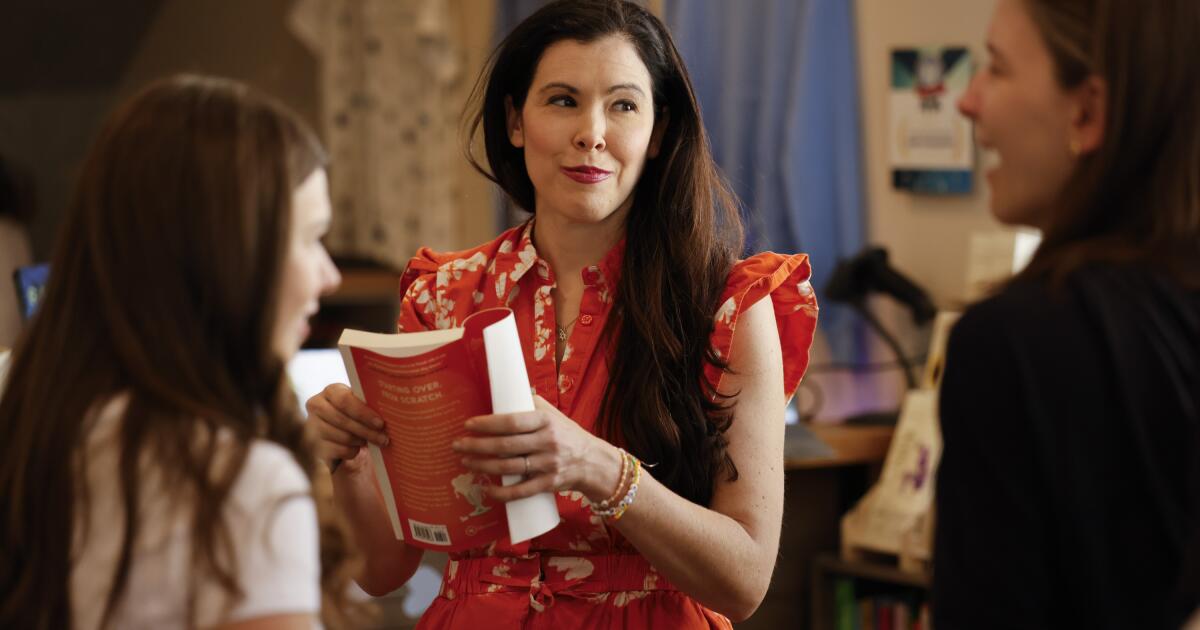
At first glance, the horde of pedestrians — mostly young women — circling the streets of Santa Monica in late January appeared to be a run club. Indeed, many were dressed for it, wearing tennis shoes and baseball caps to evade the sweltering sun.
Upon closer inspection, though, the clues were visible: the group’s relaxed pace, the bountiful tote bags, the occasional flash of a paperback. This was no run club, but instead the Preoccupied literary social calendar’s Walking Book Club, a monthly L.A.-based event where readers take a 40-minute (or so) stroll with a featured author, followed by discounted shopping at a local bookstore.
The Preoccupied Walking Book Club allows readers and authors to connect in a more flexible format.
(Carlin Stiehl / For The Times)
January’s pick was Ali Rosen, who was promoting her romance novel, “The Slow Burn,” at one of the more unconventional stops on her book tour. Although these days, as many fan-facing authors know, the “unconventional” book event is becoming increasingly, well, conventional. Driven by Gen Z and millennial organizers eager to shed the isolation of the pandemic era, events ranging from book crawls to silent reading parties are successfully turning time spent with literature into happening social occasions.
The book crawl
When Allison Ambili Kumar moved to L.A. in 2023, she said she was “overwhelmed in a good way” by the sheer volume of local bookstores and authors. But she also noticed that the market was saturated with author panels and conversations while lacking spaces where book lovers could interact with each other more organically.

“I feel like it expands my love for reading and expands my understanding of the stories that I’m reading when I do that in community,” says Allison Ambili Kumar, who coordinates book crawls across L.A.
(Genaro Molina / Los Angeles Times)
This led Kumar to launch a book crawl, inspired by her reading of “The Art of Gathering: How We Meet and Why It Matters” by Priya Parker. In Kumar’s book crawls, a traveling party of literary buffs bookstore hop, usually visiting at least three in one L.A. area. The idea is that readers can connect in a casual, welcoming environment, all the while increasing visibility for independent bookstores.
Kumar hosted her first book crawl in 2024 in Culver City and has since taken the event to Long Beach, Hollywood and Pasadena. Selected bookstores included legacy shops like Chevalier’s Books and Vroman’s as well as newer ventures like Village Well Books & Coffee and Bel Canto Books. (Book crawls are also a national trend beloved by many a TikToker, with last April marking the first synchronized Global Book Crawl.)
Some of Kumar’s favorite parts of the events are the “book hauls,” when, after each stop or at the end of the day, participants share what they picked up, show-and-tell style.
“I definitely think there’s a heightened joy in sharing what we love about the stories we love, and it also allows us a deeper level of understanding, given that you and I could read the same book and love it, hate it, feel differently about it, have different things that resonated with us from it,” Kumar said.
While Kumar’s book crawls on average draw about 20 attendees each, she said the community that’s formed around them is much larger.

“A lot of our walkers are coming every month, regardless of who the author is,” says the Preoccupied Walking Book Club co-host Morgan Messing.
(Carlin Stiehl / For The Times)
“Events are wonderful,” she said, “but it’s also taken on a life of its own, where people who’ve met on the book crawls are sharing a hotel room together for a romance conference this weekend, and we have our group chat, where people ask if anyone’s going to events at Village Well or the Ripped Bodice, so they can sit together.”
Danielle Dutta, who attended Kumar’s first book crawl in Culver City, began multiple friendships that way: messaging mutual social media connections about whether they were attending an upcoming book event.
“I mean, how else do you make friends as an adult?” Dutta said with a laugh.
The Walking Book Club
Samantha Dockser and Morgan Messing of the Preoccupied launched their literary platform in 2024 to provide a centralized resource for book lovers and authors to keep track of all the “bookish” events, as they call them, happening around L.A.
The duo started their monthly event as an audiobook walking club — a structure which has seen success in other L.A. locales — but quickly realized their attendees were too invested in chatting with their fellow book lovers to maintain the imposed quiet.
“We were trying to think of a structure for an event that would be a low lift for an author and also encourage potential new readers of an author to join,” Dockser explained. With a casual setting and minimal enforced structure, the walking book club format felt right.

Messing, left, and Samantha Dockser, right, interview author Ali Rosen before January’s Walking Book Club.
(Carlin Stiehl / For The Times)
Messing said she sees the reading community as “age-blind,” and the club’s attendance reflects that. Still, many regulars fall in the Gen Z to millennial range.
“I 100% agree that the strongest voices in shaping what the book space looks like are people that are in their 20s currently or were when TikTok popped off in 2020,” Dockser said, at least when it comes to fiction.
To that demographic, self-identifying as a reader is about more than “the literal act of reading a book,” she said. It means you see book-buying as a hobby, frequent book events and share a social circle with other readers.
Ironically, those most invested in the in-person elements of the reading hobby often had their first exposure to the book community online.
Early in the reign of social media, Messing said, there was much fearmongering about how these digital platforms spelled the death of reading.

“It’s honestly beautiful the way that TikTok and Instagram book spaces have taken something that people felt shy about and made it a space where they feel comfortable being themselves and connecting with other people,” Dockser says.
(Carlin Stiehl / For The Times)
“It’s actually done just the opposite,” the co-founder said. “It’s given readers community and introduced non-readers to books and even brought people to physical bookstores because people want to post their books on their social media.”
L.A.-based author Joss Richard, who promoted her swoony second-chance romance “It’s Different This Time” with the Preoccupied’s Walking Book Club in October, said events like Dockser and Messing’s are great for reader engagement and bring a welcome dose of fun. And while it can be tricky to navigate these more atypical formats, especially ones that involve parading down local streets with a swarm of buzzing fans at your back, Richard said most attendees of the Preoccupied’s club knew the drill.
“Rarely is it anyone’s first time going to one of those things,” the author said. That’s especially true of romance readers, who are generally regarded as the social butterflies of the book community.
Richard is sure to see many book event frequenters when she speaks on a romance panel at the L.A. Times Festival of Books April 18.
The silent reading party
The first meeting of Martha Esquivias’ reading club LB Bookworms consisted of the club founder and one of her friends casually reading together at a coffee shop. In the months that followed, Esquivias’ pet project grew into a series of what she called “reading picnics.” She and a few others would read outside in a format she credited to the international Silent Book Club, which has several chapters across L.A.

Martha Esquivias of LB Bookworms regularly co-hosts silent reading parties in collaboration with Cool Cat Collective in Long Beach.
(Juliana Yamada / Los Angeles Times)
Esquivias liked that the structure diverted from that of a traditional book club, which requires significant commitment and coordination.
“With this option, it feels like it’s less pressure and more ‘come and go,’” she said.
Coming of age during the social media boom, Esquivias said she always felt like she wasted her childhood on screens when she should have been playing outside or exploring hobbies. In many ways, plugging into the literary community and falling in love with reading again have healed that sense of loss.
“After the pandemic, there’s been huge talk about finding third spaces or community spaces. I think people crave that more,” she said, adding that she’s proud LB Bookworms has provided that to so many people.

“This is why I started this bookstore: I love community. I want to create a space where people connect with each other,” Sunny’s Bookshop owner Sanaz Tamjidi said.
(Malia Mendez / Los Angeles Times)
Sanaz Tamjidi, owner of Sunny’s Bookshop in Tarzana, last year hosted a silent reading event in collaboration with the L.A. chapter of “reading party” organizer Reading Rhythms.
Tamjidi, a self-proclaimed “zillennial,” said her bookstore’s events are popular among younger customers, who are increasingly seeking out social gatherings that don’t involve drinking or partying.
When Tamjidi told some older customers about the silent reading party, she said they were perplexed, asking, “Wait, so they would come and sit with each other, not talk, but just read silently?”
“They were like, ‘Times have changed,’” Tamjidi said, “and that’s the beauty of it.”


One Wednesday evening in May, at the boutique hotel Dream Hollywood — located just off the Walk of Fame — a young hotel staff member shuffled over to her co-worker to discuss a special guest on the top floor. Together they exchanged whispers about an artist’s unknown whereabouts and whether or not they would catch him on his descent to the first floor.
The name “Tito Double P” slipped out, referring to the Mexican corrido singer who happened to be in town promoting his latest album, “Acomodo.”
I met the 28-year-old on the top floor, where he opted for a warm, friendly hug in lieu of a firm business handshake. We were quickly rushed into a side room to conduct his last interview of the evening.
Those who’ve followed Tito Double P’s musical journey since 2023 would likely describe him as a chaotic force, with weathered vocals, off-the-cuff ad libs, riotous pelvic thrusts and suggestive tongue expressions.
Come Sunday, he’ll bring the ruckus when he headlines Belico Fest in L.A.’s BMO Stadium. But when we spoke about his second solo album, “Acomodo,” the Nayarit-born, Sinaloa-raised singer, whose real name is Jesús Roberto Laija García, arrived polished, perfumed and poised.
“After this LP, don’t be surprised if you see different things from me,” said Laija García.
Released on May 28, the LP contains 23 corridos, which see Laija García strike the commanding tone of brazen CEO. In its focus track, “Me Vale V,” the singer firmly declares he is manifesting his dreams and not paying anyone else mind. Its lyrics reveal it all: “Ya van tres días que no paro, pero bien trabado” (I’ve been going nonstop for three days now, but I’m totally locked in).
But listeners also get a more vulnerable side of the músicana mexicana singer, who agonizes over heartbreak in “La Fama” — while simultaneously voicing his vice for women and boozy escapades. Throughout the record, the singer sprinkles in the catchphrase, “Bélico pero no tanto, mija,” which translates to “warlike, but not too much, my dear” — striking a balance between his hard-shelled exterior and inner tenderness, namely in the yearning jazzy corrido “Pase y Pase,” in which he pleads for a late-night booty call.
Most notably, “Acomodo” boasts no features whatsoever, a rarity in an industry where artist collaborations play a key role in bringing in bigger audiences (and bigger payouts).
“Many people called me to ask why they weren’t going to be on [the record],” he said. But the solo move marked a milestone achievement for Laija García, who had no designs of becoming an international musical marvel.
“I was never the child who sang, who played the guitar in school festivities or at family parties,” said Laija García in a calm tone — occasionally referring to his stage name in the third person.
The singer still can’t fathom his own success. He cut his teeth by penning career-defining songs for his famous cousin, Peso Pluma — including anthemic corridos like “El Belicon,” “Siempre Pendientes” and “AMG.” These standout ballads touted a rugged lifestyle with elements of organized crime, which aided his primo’s ascent to the mainstream.

Tito Double P released his second solo album “Acomodo.”
(Adan Ornelas Anta)
In the process of composing his cousin’s Grammy-winning 2023 album, “Génesis,” Laija García asked him if he could also release his own material. “Let’s go!” he recalled Peso Pluma saying. “Your first song will be a duet with me.”
The plan was to debut Tito Double P with “La People,” a fiery narcocorrido that details the inner life of a cartel’s tactical security guard, who narrowly escapes a police raid.
But Laija García’s rollout plan took a detour when an unmastered version of his track was leaked to TikTok in spring 2023 — a bouncy tune he later renamed “Dembow Belico,” which is characterized by a Dominican-style boom-chi-boom-chick rhythm and raw, spitfire lyrics. This party track introduced audiences to a version of Tito Double P that radiated a lighthearted madness — fueled by Skyy vodka and Old Parr whiskey, as per the song’s lyrics.
“I liked it, it was something new,” said Luis R. Conriquez, who called up the new singer to be a collaborator. “What makes him special is his voice, his sound. He’s his own person.”
Together with Conriquez and Joel De La P, “Dembow Belico” was released on June 5, 2023, and became Tito Double P’s official debut in the music world — even giving life to one of the most viral clips of Mexican boxer Canelo Alvarez, who can be seen awkwardly dancing to it.
“From there on, Tito Double P was another persona,” said Laija García. Throughout his lively retelling of the story, he added a series of sound effects to move the story line — among them, wacha, pum, pum, pum, gol. “More than anything, Tito Double P came across as a character, because that guy was totally crazy, he didn’t give a damn.”

“More than anything, Tito Double P came across as a character, because that guy was totally crazy, he didn’t give a damn,” said Jesús Roberto Laija García, better known as Tito Double P.
(Adan Ornelas Anta)
In real life, Laija García considers himself a timid, camera-shy guy. That’s why he chose an illustration for the cover of his 2024 debut album “Incómodo,” rather than a real-life image of himself; the LP title directly translates to “discomfort.”
“I was going to be one of those artists that [only] releases songs, because [I thought,] ‘How embarrassing would it be if I got up on stage?’” he mused. “But now, I dominate the stage from head to toe. And I don’t want to come down.”
The debut record also served as an experimental project for Tito Double P, whose hard-won swagger elevated every sound he toyed with — whether it was on the brass-heavy banda song “La 701” with Luis R Conriquez, the techno thump of “La Bandolera,” the heavy-hitting urban track “Linda” with Neton Vega and the guitar-powered ballad “Los Cuadros” ft. Peso Pluma).
Featuring collaborations with established acts, such as Natanael Cano, Junior H and Grupo Frontera, the album peaked at No. 11 on the Billboard 200 chart and helped the rising star distinguish himself from his high-profile cousin — who he toppled from the No. 1 spot on the Top Latin Albums chart, five weeks after his debut release.
Although Laija García hasn’t shied away from embracing that familial tie either; in May, both Tito Double P and Peso Pluma concluded their “Dinastía” tour following their joint 2025 album of the same name.
“I still see comments on TikTok where people are surprised that we are cousins,” remarked Laija García.
Now with “Acomodo” — which debuted at the top of both Spotify Top Albums USA and Top Global Charts across all genres — Tito Double P affirmed his rightful place in música mexicana upper echelons.
“That’s why it’s called ‘Acomodo,’ because everything is aligning itself as it should be,” he said.
As Tito Double P made his way to the lobby, a member of the Dream Hollywood valet — who likely bore witness to Hollywood A-listers and other luminaries — asked if he could take a picture with the singer. “Tito, Tito, a photo please!” asked the employee.
Laija García flashed a friendly smile. Thankfully for the attendant, Tito Double P is always camera-ready.

A deliriously funny riff on The Wizard of Oz from director David Wain, Gail Daughtry and the Celebrity Sex Pass is a goofy patchwork of ideas. Some of them don’t work, but most of them do if you’re in on the joke. Written by Wain and his longtime collaborator Ken Marino, the comedy features an incredible number of hilarious people, sometimes playing absurdist versions of themselves. Jon Hamm, Jennifer Aniston, John Slattery, and Elizabeth Banks, among others, cameo alongside a cast of lesser-known but no less talented performers. Headlining the movie is Zoey Deutch, who, amid an impressive list of credits, has proven her knack for ridiculous humor like this (see 2019’s Zombieland: Double Tap). Wain directs a series of episodic segments that follow characters who skip along a yellow brick road of surreal gags and jokes about Hollywood. It’s all a bit nonsensical and ludicrous, but it made me laugh a lot.
For those of us who loved MTV’s sketch-comedy show The State (1993-1995) or Wain’s spoof movies such as Wet Hot American Summer (2001) and They Came Together (2014), Gail Daughtry will feel like a warm blanket. The State was a comedy troupe nesting ground for talent, many of whom went on to create and appear in dozens of other shows (Viva Variety, Reno 911!, Childrens Hospital, etc.), while member Michael Showalter has become a well-respected director whose output includes the indie comedy The Big Sick (2017) and the upcoming Colleen Hoover book adaptation Verity. Whenever Wain and Marino reteam with various members of The State (Michael Ian Black, Thomas Lennon, Kerri Kenney-Silver, Joe Lo Truglio, et al.), there’s usually something special in store. Even if the material doesn’t always work as a whole—see The Ten (2007), an anthology movie that pokes fun at the Ten Commandments—the result is bound to include some big laughs.
Deutch plays the titular Kansas bumpkin, a hairdresser who plans to marry her fiancé and lifelong sweetheart, the ingeniously named Tom Soursap McNoodleman (Michael Cassidy), in two weeks. At once naive and intense, she’s never been with anyone else. Neither has Tom. But after sharing their picks for a celebrity sex pass, Tom almost instantly encounters his choice in the flesh and then takes advantage of the opportunity. Burned because she didn’t actually think they were serious about following through, Gail resolves to seek out her chosen celebrity, Jon Hamm, and have sex with him to balance the scales. And so, Gail is off to see The Wonderful Wizard of Hollywood, alongside her coworker named Otto (Miles Gutierrez-Riley), an anagram of Toto. As the story unfolds, Gail Daughtry spoofs the structure of Dorothy’s adventure to Oz, except that Gail’s destination is Tinseltown.
Just as New York was “another character” in They Came Together, Los Angeles becomes one here. But instead of capturing the city’s flavor, Gail and Otto gravitate toward CityWalk at Universal Studios and, based on their hotel concierge’s recommendations, other local hotspots such as McDonald’s, Starbucks, and 7-Eleven. Gail and Otto begin searching for Hamm and gather friends along the way. Among them are Vincent (Marino), a former paparazzo who dreams of snapping a photo of Hamm; Caleb (Ben Wang), an aspiring CAA talent agent; and the crazed Slattery, who wants to work with Hamm again after their Mad Men days. Hot on their trail are two cartoonish mobsters (Joe Lo Truglio, Mather Zickel) desperate to recover a briefcase that was switched with Gail’s at LAX and contains information about their boss’ (Sabrina Impacciatore) plans to dismantle the global financial system. Their quest eventually brings them to Hamm, whose private security (Tobie Windham) enforces not with his fists or a taser, but with an obscure promise to make anyone who tests him “real sick.”
Gail’s travels are occasionally interrupted by Fourth Wall-breaking commentary from the film’s narrator, a mailman played by Fred Malmed. It’s one of the aspects of the movie that doesn’t work, but Gail Daughtry’s framework is less essential than the inspired jokes throughout. Wain and Marino riotously showcase the most banal aspects of LA, a signature of their delightfully dumb humor, which almost always lands as intended. Granted, some unfamiliar with their brand of comedy may take a while to get on its wavelength, and others may never understand why it’s funny. Still, there are enough non sequiturs and random punchlines blended with raunchy and occasionally dark-as-hell asides to keep the viewer off-kilter yet chuckling throughout.
There’s an irreverent surprise around every corner in Gail Daughtry, and Deutch fits right in with her comedian costars. Her impressive range renders the silliest moments without winking at the audience, but she also never reduces her character to a mere comic device. It’s also a joy to watch celebrities of Hamm and Aniston’s caliber poke fun at their image, even if the movie doesn’t challenge Being John Malkovich (1999) in its self-referentiality. Outside of last year’s disappointing The Naked Gun, few comedies today attempt to be pure joke machines. Wain and Marino deliver a movie that will probably take some time to be discovered and cherished for what it is, but after a few rewatches, much like the director’s other features, it’s sure to become a cult favorite.
Entertainment
Even if you know his crowd work clips and not his name, comedian Jeff Arcuri is ready to meet you
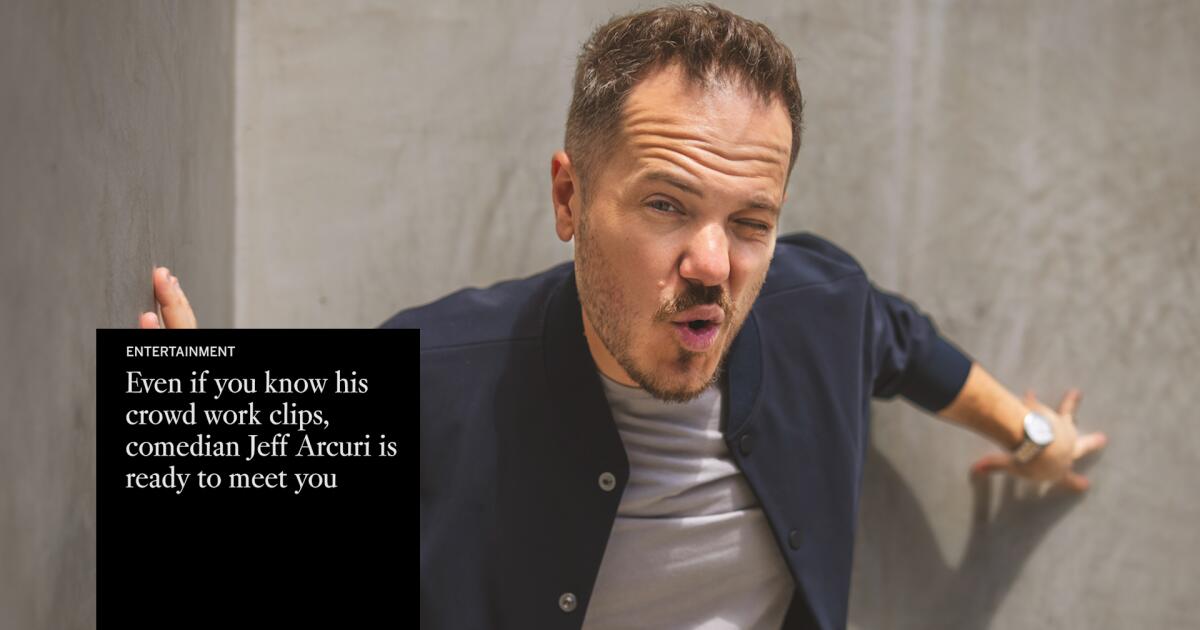
Life is a bit surreal for Jeff Arcuri these days. Though he’s been a stand-up comedian for over 14 years, most people in the world never knew it until clips of him joking around with audiences at spots like the Comedy Cellar in New York started going viral a few years ago. But while there’s no shortage of comics who’ve cracked the code to instant follows and likes (and plenty of scorn) by posting crowd work, Arcuri’s path in comedy has always been a coping mechanism for ADHD and razor-sharp situational awareness mixed with an overall lack of filter. At heart he’s always been a people person, even if he believes them less and less when they now say they’re fans of his.
“Is this ‘The Truman Show?’ I have that thought all the time where everyone’s just being nice and following me because they feel bad for me,” he tells The Times. “It’s crazy, all of it is crazy and I appreciate it every day.”
What he’s referring to, other than the millions upon millions of views online, is how recent internet fame combined with long-term anonymity in the comedy scene has fueled the rocket that’s sending him into a new level of notoriety on Netflix when his debut special “Nice to Meet You” drops on Tuesday. The new hour, performed in the round, tests Arcuri’s ability to remember minute facts and callbacks from random people in the crowd as well as his written material about his personal observations on life, family and his wife Katie Thurston — star of “The Bachelor” and “The Bachelorette” — who is currently battling Stage 4 breast cancer. Despite the low moments they’ve gone through this year, getting a debut special was his chance to share how he and his reality star spouse have found ways to laugh through their everyday struggles.
This interview has been edited for length and clarity.
Let’s talk about the weird level of fame that you’ve attained right now. You are the guy everyone sees on their Instagram reels but at the same time they’re like, “Who is that guy?”
Oh, 100%! My Uber driver, on a 45-minute ride here, we talked the entire time. As soon as I got in, he goes, “You do comedy?” I go, “Yeah, man,” We start talking, he’s asking me questions, we’re talking about comedy, and then we pull up, and he goes, “What’s your name, by the way?” He was quoting videos of mine the whole time, and then I wrote it down for him, I was like, “My special comes out July 7, give it a watch,” and he’s like, “All right, man, I only have YouTube, though.” I was like, all right, just lie, you don’t need to say that… In the airport I get a lot of people squinting and then I’ll see them look at their phone and try to figure out “how do I know this person.”
How have your crowd work clips on social media changed your career?
Immensely. I think it was the only way for me to put out as much content as I could and still perform live. It’s a beautiful thing, in my opinion. I get to show my improvisation, and yet still work on the written part personally, and like I get to repeat that joke for a year touring, as opposed to a crowd work moment, it happens, it’s done, I’m not gonna ever repeat that moment ever. So I think it’s just kind of a blessing that social media and everything took off at the same time the improvised crowd work took off, something that I had been honing for years prior to that, just because that’s what I did in my comedy, I just never had social media.
There’s so many opinions out there about crowd work, which, as I’m sure you know, aren’t always positive. Why do you think people are so triggered by crowd work?
There’s a lot of bad crowd work out there, just like there is bad anything else — fledgling or whatever rookie stuff. I think it’s died down, if I’m being honest. I think the main reason for the hate is because a lot of people started to try it that weren’t doing it, or whatever. And so there’s a lot of people that tried it because they saw the success. I was fortunate enough that I was already doing it, and so then I just applied it to social media. At no point in my career did I say, “I’m going to start talking to the audience.” I always did that. I’ve done that for over 14 years at that point when I started doing crowd work stuff, where it’s just a fun way to extrapolate on an idea. The fourth wall is broken in stand-up comedy the second you walk on stage. Any comedian that tells you otherwise is a liar. [If a comedian is saying] you don’t get to talk, just watch this, it creates this elitism that I don’t like in comedy. I want it to feel like it’s a conversation, so why would I shut off the other half of that conversation?
Jeff Arcuri considers his stand-up comedy to be a conversation.
(Jason Armond / Los Angeles Times)
What about comedians who complain about it?
It makes me cringe when I see comedians complaining about crowd work. Why are you worried about what you’re not doing? Do your thing, and then succeed. Don’t try and latch on to whatever the success is, and then complain that it didn’t work for you when that wasn’t your forte to begin with. I’m not gonna say I’m the best at certain things. There are comedians that have way better written jokes than I do, of course, that’s great, and I think that they should follow that.
I would say your skill falls somewhere between like situational awareness and ADHD.
Dude, I’m ADHD mid-sentence. I’ll forget why I was even talking about what I started talking about. It happens all the time. It’s a superpower.

-
Share via
After Netflix called you, what was the first thing you did to prepare for the special?
So that’s kind of hard, because last year was a big year for, like, health-wise for my wife. She was diagnosed with cancer and everything, so it was a lot of adjusting on the fly. [We found out about the special] within a day or so of finding out that she was misdiagnosed and her cancer was actually in a better place than where we thought it was … so it was a great week for us. So, it was very surreal, but it was then a switch to [prepping for a special] because I’m not going to record a special talking about [my life] prior to my life. It felt weird being able to talk about dating, talking about sex life, things like that when I just got married, so a lot of the special, I would say at least half, was written within a year of the taping, on the road that year, going through what I was going through with my wife. A lot of comics, especially for a special, [are] cooking for 10-15 years, and then you get to put out the body of work.
Your wife Katie Thurston has been the star of hit reality TV shows “The Bachelor,” “The Bachelorette.”After getting married, did comedy prepare you in any sort of way to kind of take that level of scrutiny?
Yes, I would say so. I had to, you know, take it on the chin, or whatever. Every comic knows when you scroll your video for comments to see what people said, you’re not scrolling to read all the appreciation. You’re scrolling, looking for one person that’s like, “this guy stinks” and then you go, “that’s my day. This is what everyone thinks of me right now.” So, I guess I was used to that in a certain way, a little bit, but her type of fame, I guess you could say, is way different than mine, and that hers is based on her personality and person completely, and mine is my presence on stage. So I always had that separation of privacy versus public. Hers was always intertwined, so that’s something that I didn’t really get used to.
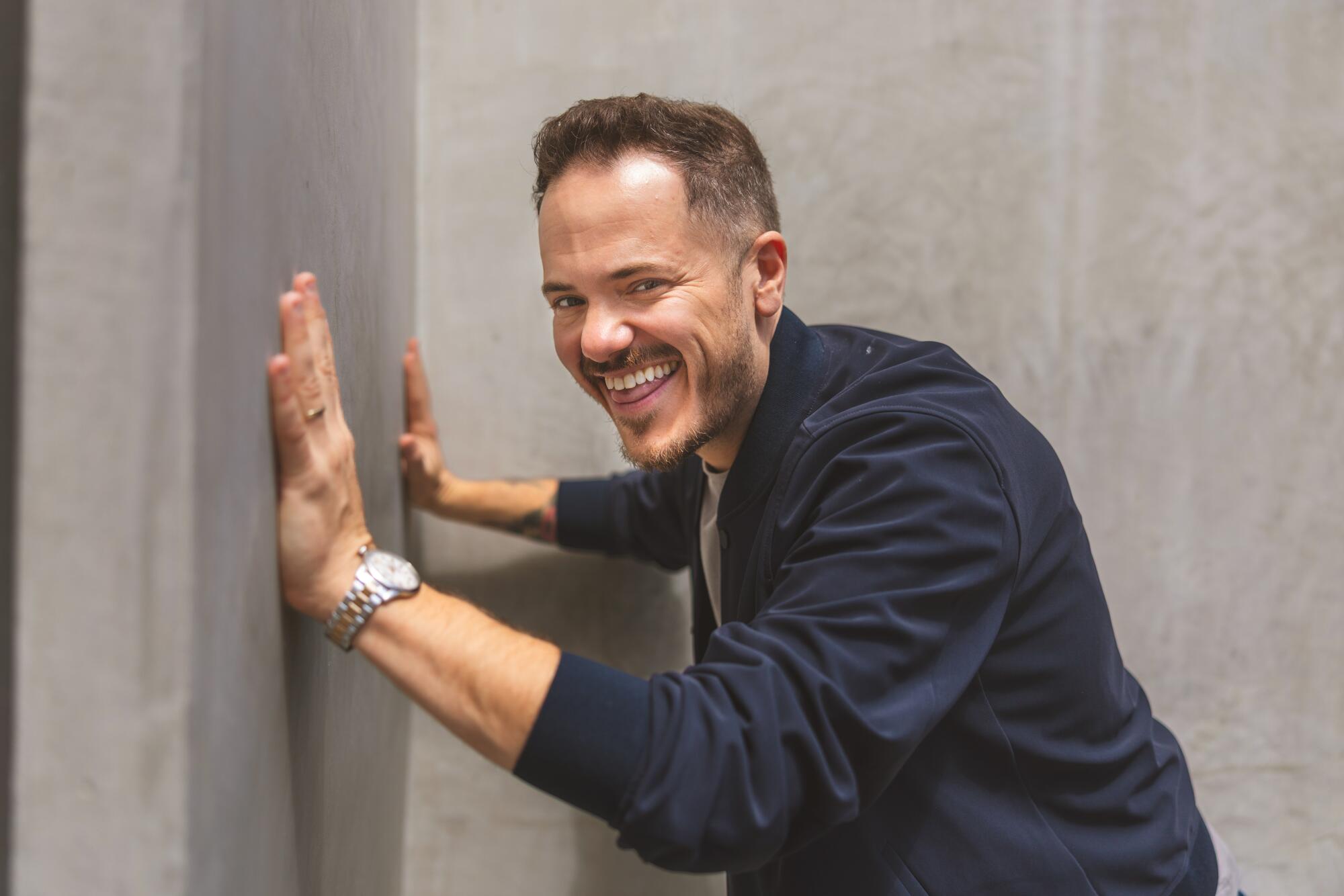
Jeff Arcuri’s written work for “Nice to Meet You” is recent because his and his wife’s lives changed in the last year.
(Jason Armond / Los Angeles Times)
You guys find a way in the special of battling through it with jokes about Stage 4 cancer.
There’s jokes that she’s made throughout the year that I would do on stage even after clearing it and saying, “my wife said this and she has cancer, and here’s the joke,” I still get people like, “Oh, come on, don’t make that joke, dude.” I’m like, “I didn’t. She did. I’m just telling you what happened.”
So it was kind of like dancing around that. We’re like, “We want to let people know that we make dark jokes about her life, about her cancer, about our situation, and not every joke, just like every couple, not every joke is meant for to be for everybody,” but I really wanted to let everyone know she is so funny, and she handles handles with such a smile. We just deal with it with with humor, and I wanted to express that. I think I did. I think I was able to do that without putting too many people off.
You’ve been a New York guy for a long time. What are some of the main differences between the N.Y. scene and L.A. scene?
I would say I’ve met more comedians that just want to do comedy in New York, met more comedians that love stand-up for stand-up. I’ve met a lot of comedians in L.A. that have five projects going on, and so when I wanted to pursue stand-up further, that’s where I decided to harness and go in there and do that, because I’m like, I don’t care about anything else right now, I want this to work for me. In terms of the comedy, like I do feel L.A. is the more there’s a lot more performance in the comedy, which is great in itself too, but I feel like sometimes L.A. leans more on performance and New York leans more on structure and word economy. There’s a lot more dry comedians coming out of New York. I’m a mix of both. I’m not the best writer, not the best performer. I’m right in the middle there, baby. I can do a little bit of both.
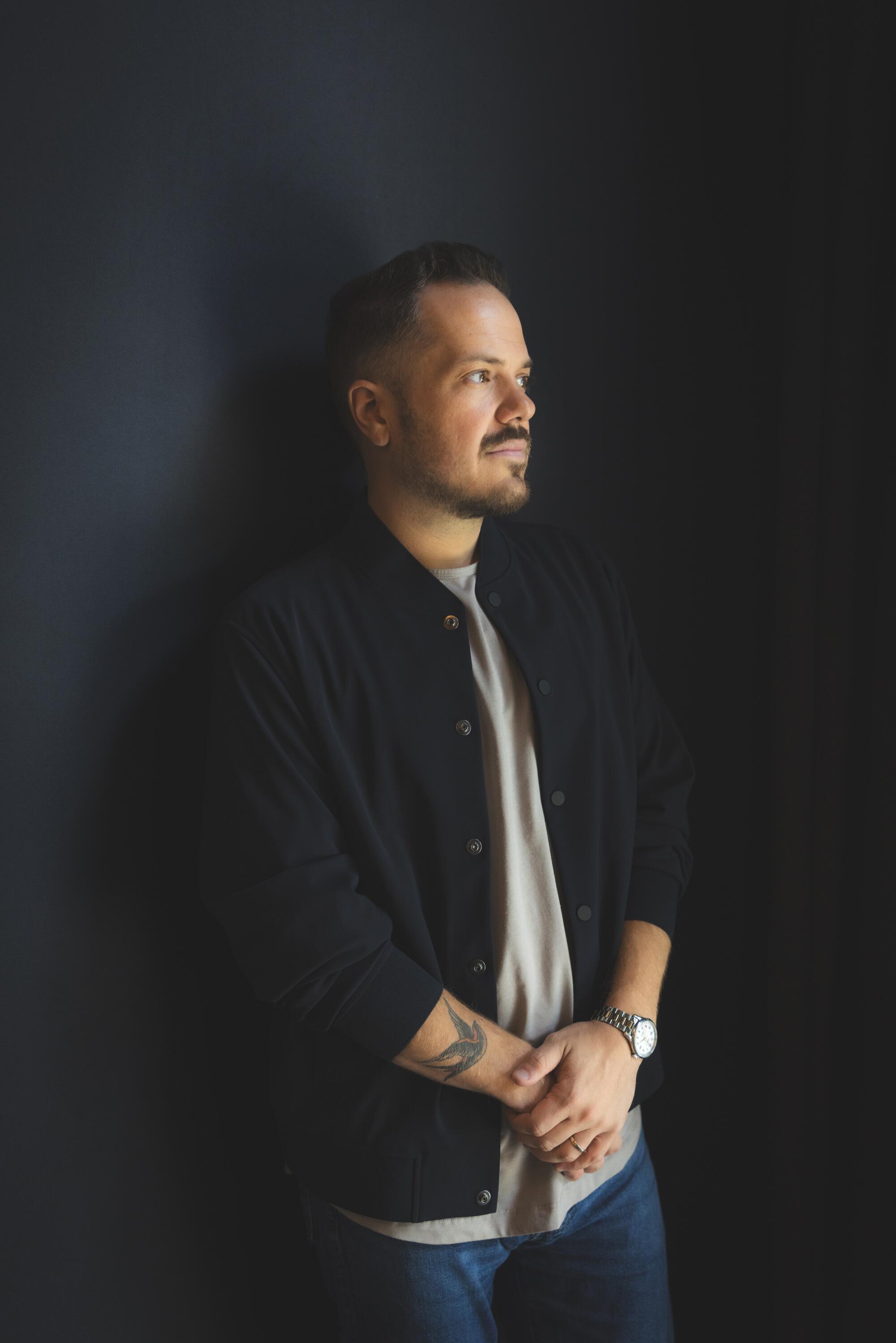
Jeff Arcuri is a New York-based comedian but loves performing in the Midwest.
(Jason Armond / Los Angeles Times)
What’s the best city you’ve ever experienced for crowd work?
I love the middle of the country. I love the Midwest and the “flyover states.” Because you go there, people will tell you stories that are normal to them and you’re like, what the f—? And it’s their ex, they’re expressing it there, you know. You go to New York and you do a set in Brooklyn or in Manhattan, wherever, that’s the ninth show they’ve seen that week. It’s more of a big deal to people in the Midwest, and you’re getting more real answers, you’re getting people that are going back to work the next day.
Thanks, Jeff. It’s been great talking to you.
That’s it? You sure you don’t have any hardballs?
Which comics do you hate the most?
Oh, s—. OK. Never mind. I take it back.
-
 Lifestyle9 minutes ago
Why Gen Z is movie-maxxing : Pop Culture Happy Hour
-

 Technology19 minutes ago
Meta’s glasses will turn off the camera if you tamper with the privacy light
-

 World24 minutes ago
WATCH: Mike Waltz tells Cuban delegation ‘this is not Havana’ during heated UN speech
-

 Politics31 minutes ago
Abbott orders probe after Texas hospital advertises ‘birth packages’ in Mexico: ‘Citizenship is not for sale’
-

 Health39 minutes ago
Dr Oz warns Medicare scammers are stealing billions — and your personal information could be next
-

 Sports46 minutes ago
Donovan Mitchell signs massive $273M Cavaliers extension as LeBron James return speculation grows
-
 Business54 minutes ago
Waymo reports teen riders for bad behavior and delivers them to the police
-
Entertainment1 hour ago
Tito Double P seizes the spotlight with his latest album, ‘Acomodo’

