In February of last year, Karol G boarded a private plane out of Burbank with 16 passengers on board. Just minutes after takeoff, the Colombian singer — one of the biggest global stars in Latin and pop music — saw smoke pouring out of the cabin. The pilots signaled for emergency landing maneuvers; her life flashed before her eyes.
“I was with my parents on the plane, my whole family, and all of us were like, ‘No, it can’t be like this,’” Karol G said, recalling the horrific day in an interview from the top floor of the L.A. Times’ offices in El Segundo, overlooking the Los Angeles International Airport flight path.
“It was really terrifying, visually,” she continued. “Seeing smoke inside the plane, every alarm going off, it was crazy. We were saying goodbye to people. I was just thinking about my one sister that was still in Colombia, that if something happened, what’s that gonna do to her? We were just sitting, waiting.”
Advertisement
The pilots quickly brought the plane down to a safe landing in Van Nuys, mercifully avoiding the fates of peers like Jenni Rivera, Aaliyah and Ritchie Valens.
A year and a half later, the now-34-year-old Karol G released “Tropicoqueta,” her fifth LP. The 20-track album spills over with so much abundant life — searing emotion and refined songcraft, winking humor and quaking bass, Latin music history and “la hora loca” of her Colombian community’s block parties — that it stands in defiance of that near-miss with death.
“Tropicoqueta” is up for Latin pop album at the 2026 Grammys, where Karol G previously won for música urbana album in 2024. (She’s a multiple winner at the Latin Grammys as well.) She also has a Coachella headline slot coming in April, making her the first Latina to top the world’s most influential festival. And at an incredibly fraught moment for Latinos and Latin culture in the U.S., she’s bringing a hemisphere’s worth of history and hopes with her onstage.
“It’s kind of my mission. I see it like my purpose,” she said. “I have a big, heavy responsibility on me being the first Latina to headline Coachella. I need to go and represent my Latina community and speak for my people and for women. It’s a good opportunity to get to more people around the world, and I think it’s my opportunity to get them involved in the place that I come from.”
(Bexx Francois / For The Times)
Advertisement
Carolina Giraldo Navarro is from Medellín, Colombia. As a teenager, her powerhouse vocals and brash charisma stood out onstage, and in a community famous for its raucous all-night street parties, like the ones she documents on “Tropicoqueta’s” self-titled closing track, she was serious about her music career: She had a brief teenage stint on Colombia’s version of “The X Factor” and went on to school in New York in the mid-2010s to study the record business. Later she racked up hits collaborating with Ozuna, Bad Bunny, J Balvin and others just as her home-base genre of reggaeton ascended to a global phenomenon on its own terms, in its native language.
Karol G turned heads not just for being a young woman in a hypermasculine genre, but for how she both mastered and expanded the genre from the moment she emerged in it. On her breakout 2017 hit with Bad Bunny, “Ahora Me Llama,” she brought both formidable bars as an MC and a poignantly melodic touch to that trap brooder. 2020’s “Bichota” became a mission-statement single for its bulletproof confidence and how she packed every line with fresh filigrees of hooks.
Her world-conquering 2023 LP “Mañana Será Bonito” had a post-breakup fervor of self-rediscovery, the first all-Spanish-language album by a woman to top the Billboard 200, home to her highest-charting Hot 100 single (the No. 7 “TQG,” with Shakira) and a Grammy winner for música urbana album. That year, she played two nights at the Rose Bowl to 120,000 fans, becoming the first Latina to headline a worldwide stadium tour.
What ground was left to break on a new album? Only her own.
“Tropicoqueta” is an adoring, comprehensive sweep through the generations of Latin music that made her. The LP starts with “La Reina Presenta,” a blessing from Mexican pop icon Thalía, a formative influence who passes the torch here over her classic “Piel Morena” — “You, showing me your new music? What’s the one I liked again? Play it, it’s so good,” Thalía says on the track.
Advertisement
Then come 19 more songs that cover the sweep of Latin music, past, present and future. There’s the sweltering bachata of “Ivonny Bonita,” with a guest turn from Pharrell; dips into the regional Colombian folk genre of vallenato; a veritable mariachi symphony on “Ese Hombre Es Malo”; and a heartrending duet with Marco Antonio Solís (of Mexican rock legends Los Bukis) on the regal “Coleccionando Heridas.” Even on the sly club-merengue “Papasito,” the album’s lone song partially in English, the tune and its charmingly retro video wink at, inhabit and critique the north-south love affair tropes that the first generations of Latina pop icons had to contend with and made magic within.
“I think it’s the riskiest album in my career because I didn’t know how to put all these genres together and have it make sense,” she said. “After ‘Mañana Será Bonito,’ I had a lot of pressure. I had everyone, like, asking, ‘What’s next after this album, what’s next after all of these hits?’ I was like, ‘Oh, my God, what is gonna be next?’
(Bexx Francois / For The Times)
“But on this album, my people inspired the concept,” she continued. “I just wanted to go back to my roots, back to the music that I grew up listening to. In my house, I used to listen to everything because my father was a singer. He used to play for us salsa, merengue, bachata, reggaeton. I started thinking that I wanted my people to feel nostalgic and in a different time in life. With ‘Colleccionando Heridas,’ especially, there are moms with their girls and their grandmas listening together because grandma loves Marco Antonio Solís, moms love the song and girls love Karol G. To be music that all the family can listen to, that’s a super special thing for me.”
Advertisement
“There is something that goes beyond doing a musical collaboration with a colleague. It is to live a magical experience, full of sensitivity and authenticity,” said Solís, who performed a moving duet with Karol G at the Latin Grammys. “That has been my experience with this great artist and human being, who deserves to be in that place that only corresponds to her.”
“Tropicoqueta” wears its history lightly on record (though Karol G coaxed the legendary Cuban American journalist Cristina Saralegui out of retirement for a context-heavy interview about the album). It’s laced with a few ultramodern cuts as well: If the reggaeton bounce of the Nina Sky-sampling “Latina Foreva” felt slight as a standalone single, it takes new form on an album tracing just how a banger like that came to be. “Un Gatito Me Llamó” is the most revved-up club track she’s ever tried, and “Si Antes Te Hubiera Conocido” just brought home the Latin Grammy for song of the year, where Karol G gave a feisty speech in defense of its genre range.
“Lately, a lot of professional people have an opinion of what people should and shouldn’t do, what they should and shouldn’t like, how they should dress,” she said while accepting her award. “I started to feel like nothing I was doing was good and like I was losing my magic, like I was losing the wonder. This happened during a strange time in my life, and the only thing that was left from all of that for me was to go back to the root and the intention and return to the purpose of what I’m doing because I love it, because I like it and because I was born for this.”
“Tropicoqueta” sounds like a hundred different genres because, to be true, it had to.
“In Italy recently, I was in an interview, and there was a guy that told me, ‘Latin music is reggaeton.’ I was like, ‘Yeah, but it’s not just reggaeton.’ He was like, ‘No, I cannot tell them apart.’”
Advertisement
“Like, I know this is hard to explain,” she said, giggling at the comprehensiveness of his ignorance. “But we are a universe of cultures and different sounds.”
Fittingly, at this year’s Grammys she’s the front-runner in the more genre-broad Latin pop album category. (Her frequent writing partner, Edgar Barrera, is up for songwriter, non-classical.) And though nods in the big three mainstream categories didn’t materialize, that wasn’t a total surprise for an LP so meticulous about playing with classic Latin genres.
(Bexx Francois / For The Times)
“I’m always gonna celebrate everything that I’ve got in my life, because I’m the only one that knows how hard it [was] for me to get to this point,” she said. “If I don’t get another Grammy, I don’t take it, like, super personal. But meeting Beyoncé at the Grammys was pretty special, right? The first time that I won the Latin Grammy, it was huge, celebrating with a lot of people that I grew up listening to, just saying, ‘Hi, I’m Carolina from Colombia,’ that was kind of unreal for me. It’s still unreal for me.”
In case this wasn’t abundantly clear, Karol G is one of the most commercially, creatively significant artists on the planet, of any genre, full stop. She needs no institution’s imprimatur, and there’s no corner of the industry promising anything she hasn’t already achieved.
Advertisement
Yet she still feels ambitious, hungry even, about the two weekends in April next year, when she will headline the Coachella Valley Music & Arts Festival, wrapping up a bill with Sabrina Carpenter and Justin Bieber as her main-stage mates.
Karol G last played the fest in 2022, a trial run for the history-sweeping philosophy of “Tropicoqueta.” “When they first invited me, I was like, ‘I can’t believe that I had this opportunity, because there’s a lot of artists that couldn’t perform in there, even having legendary songs.’ That’s why I decided I’m gonna celebrate the songs that opened the door for me. That’s why I did ‘Gasolina,’ Ricky Martin, Selena Quintanilla. It was a way for me to honor what all the different artists did for me to be there. I think I had a ‘before’ and ‘after’ with Coachella.”
While she’s tight-lipped about how next year’s set will update her raucous stadium tour, she did promise “a lot of different worlds for this show. I want to show all the evolution that I’ve had in my whole career, a really huge, innovative show.”
For her, there’s still something tantalizing about topping a mixed-genre bill before an audience that may not have heard her music at all. Is it weird to be one of the biggest musicians on Earth and yet still, in some circles, be introducing herself?
“I love that. If you are on tour, you know that the people there are waiting to see you, and they already know the songs,” she said. “But festivals give you the opportunity to open doors for more people that don’t know your music, who don’t know nothing.”
Advertisement
Coachella is just one place she’s opening more of her life to. In her May Netflix doc “Karol G: Tomorrow Was Beautiful,” she spoke about being sexually harassed and retaliated against by a former manager when she was a teenager.
“It’s always a challenge, you wake up and you think you forget things, but you’re never gonna forget,” she said, recalling that painful era in her career. “That part was specifically hard to put out, but my team were saying, ‘There’s a lot of people that are going to understand you, and they have their own crosses behind them getting really heavy. So maybe if they see through you, they’re gonna get more power to hold them.’ It was hard, but I think I’m an instrument of something.”
She also headlined the NFL’s halftime show in its Brazilian debut in September, an homage to her South American neighbor’s rhythms and plumage bookended by the United States’ flagship expression of sporting and economic muscle. “We don’t really do American football in our Latino countries,” she said. “So when the NFL called for that specific show, I told them I’m gonna bring the flavor of this album. ‘You are American football, but I’m Karol G and my album is about my roots.’ They were like, ‘No, we love that. Actually, that’s what we want.’ I loved that show, it was an opportunity to keep growing our movement.”
So what does she make of the right-wing backlash to her peer Bad Bunny — an outspoken American citizen of Puerto Rican descent who declined to tour the U.S. due to ICE raid fears — performing in Spanish at next year’s Super Bowl?
“It’s crazy. I think it’s only a few people that think that way, and most are really enjoying the decision to have him on the stage,” she said. “The people that are saying no, they’re powerful and they have a voice, so people listen and they make it like a big deal, but I can tell that Bad Bunny is going to kill it. He’s ready for that. He’s part of both worlds — Puerto Rico is an American territory, and at the same time, is Latino. I think, for the moment that we are having as humans, it’s great to have him represent everything. They’re just gonna make him do it even better and higher.”
Advertisement
What first made the likes of Bad Bunny and Karol G remarkable has, subtly, emerged as a key feature of their massive international appeal. No one blinks at Karol G headlining the world’s biggest festivals singing entirely in Spanish, drinking deeply from Latin music history. Reggaeton is the backbeat of the Global South and thrills the North; “Tropicoqueta” was a gift of the music she adored growing up with, it belongs to the world now too.
“When you start doing music, you just do music that you love, and everything is so good. But then you get teams, and they have expectations about numbers. They have expectations about streams, consumption, everything. That puts a lot of pressure on the artist,” she said. “You can get lost between the purpose and the results, and this can change all the art. So I tried all the time to be focused on my purpose, on what I want to do.
“Like, I don’t want to do an album in English, because maybe it’s time to do a crossover thing, because it’s gonna get more people. No, I don’t want to do it that way. It would be falling expectations of who I am. I just want to do that if I feel that,” she said. “‘Mañana’ killed for streaming. But the things that ‘Tropicoqueta’ brought me are super different. I thought I was doing an album for my Latina community, and it brought me fans from all over the world that I didn’t expect. That’s why you have to take care of the purpose instead of the result. The success, the love, that’s gonna be gone one day. The unique, real thing that I have forever is the feeling for my music. This is the one that I have to take care of the most.”
Rhea Seehorn was nervous about whether “Pluribus” would be recognized by Emmy voters Wednesday when nominations were announced. So she was jubilant when she and the surreal sci-series on Apple TV scored 18 nominations, the most for a first-year drama.
“I’m just so grateful,” the actor said in a phone interview. “People were like, ‘Why were you nervous?’ Honestly, you never actually know. I’m just so thrilled for the show, my co-stars, the production design, the editing, the writing, the music, the sound. I haven’t moved from my couch since they first announced everything because I’m still trying to call everybody on the show.”
Seehorn received a nomination for lead actress in a drama series for her portrayal of cynical Carol Sturka, a fantasy romance author who finds herself in a mystifying situation after a virus seems to have wiped out most of Earth’s population. The series was created by Vince Gilligan, who created the acclaimed series “Breaking Bad” and co-created its spinoff “Better Call Saul,” which also featured Seehorn.
The actor compared her experience of being nominated for “Pluribus” to “Better Call Saul,” which earned her two supporting actress nominations: “ ‘Better Call Saul’ was such a family that supported and cheered each other on, and I’m so grateful I have that environment again. People could not be happier for each other, and we get to celebrate the show together.”
She added, “The only part that feels different is that it’s my first nomination as a lead. It’s the process of Vince writing this for me and seeing the mountain which he wanted me to climb and going through that process. The whole thing has been its own journey, so ending up with awards and nominations, and being so well received by critics and fans is not lost on me.”
Advertisement
The series has been applauded for its mix of drama, comedy and strangeness in its portrait of a woman coming to terms to what seems like an impossible dilemma.
“I love the storytelling, how much Vince and I would drill down on making this as authentic as we could in terms of an everyman who has to deal with an insane situation,” Seehorn said. “Most of us are just not heroic or leaping off the couch to go save the world. And Carol is dealing with immense grief and confusion in an utter dystopian crisis. I love the humor and the drama that comes out of us being as realistic as we can with her amidst an unrealistic event.”
Fans of “Pluribus” have been relentlessly curious since the finale in December about when the second season will launch.
“I don’t know anything about that,” Seehorn said. “I don’t have to keep secrets because I’m not great at keeping them, and I know nothing. I don’t know what I’m doing with an atom bomb in the driveway. I can’t wait to find out. The writers want to have the same quality and reward the intelligence of the fans and never phone a single thing in. So their process is their process.”
In a roundabout way, the fact that I don’t have a strong attachment to The Wizard of Oz as a film (my late mother loved it, so that memory is deeply rooted in me, but the movie itself never did much for me) contributed directly to how amusing I found Gail Daughtry and the Celebrity Sex Pass to be. This comedy spoofs the plot of the classic fantasy movie, though the jokes are largely about Hollywood. The humor is big and broad, with some of the jokes really landing. Others? Not so much. Still, more than enough do to warrant a recommendation.
Gail Daughtry and the Celebrity Sex Pass gets a lot of mileage out of sending up show business, even if the observations, while funny, are not particularly new. Besides the deluge of jokes, there’s also a lot of likably broad characters to spend time with, especially our lead. They make the 90 minutes and change spent together with them go down very easy.
Sony Pictures Classics
For Gail Daughtry (Zoey Deutch), her life as a small town hairdresser is perfect. Engaged to her high school sweetheart Tom (Michael Cassidy), she’s the picture of happiness, at least until a trip to a celebrity book signing. There, Tom meets and ends up sleeping with his “celebrity pass,” a term Gail wasn’t even really previously aware of. Feeling betrayed, Gail impulsively joins her co-worker and friend Otto (Miles Gutierrez-Riley) on a trip to Los Angeles. There, a psychic convinces her that the can save her marriage by sleeping with her own celebrity pass: Jon Hamm (Jon Hamm).
Journeying through Tinseltown in a manner that recalls Dorothy’s adventure in Oz, Gail and Otto won’t have to find Hamm alone. Joining forces with talent agency assistant Caleb (Ben Wang), down on his luck paparazzo Vincent (Ken Marino), and actor John Slattery (John Slattery). As they search for Hamm, some for their own purposes, they meet other celebrities, while also being hunted by a group of Italian assassins after a case of mistaken identity. Eventually, they come across Hamm, and the moment of truth is at hand.
Sony Pictures Classics
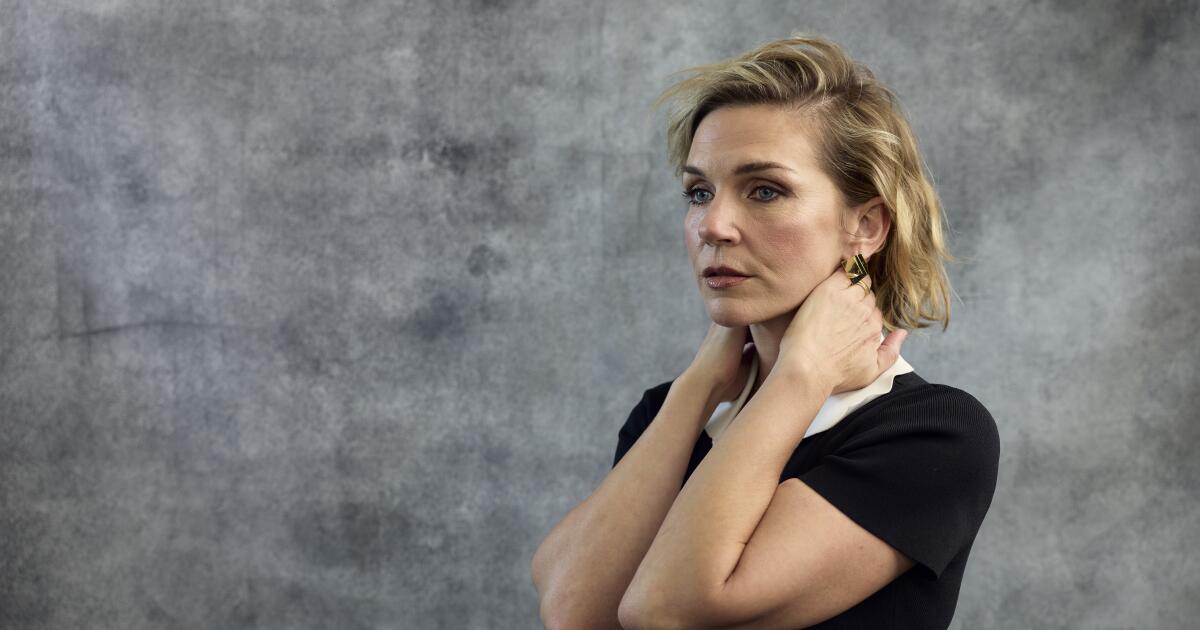
Zoey Deutch dives headfirst into a broad comedy like this, absolutely relishing the opportunity to get silly again. She’s able to make Gail a babe in the woods but also someone you laugh with, not at. It’s a wildly enjoyable turn. Deutch started out in comedies and was always a talented comedic actress, so it’s a pleasure to watch her back at it. Miles Gutierrez-Riley and Ben Wang get some very funny moments, while Ken Marino is a reliable comic presence. Jon Hamm and John Slattery are delighted to be sending up themselves, with amusing results. Supporting players here, in addition to Michael Cassidy, also include Kerri Kenney, Richard Kind, Thomas Lennon, Joe Lo Truglio, Fred Melamed, and more, plus some cameos.
Advertisement
Filmmaker David Wain, again co-writing with Ken Marino, continues to make it look easy. Few can make a silly comedy like Marino and Wain, especially as they pack their flicks with extra bits that only subsequent viewings reveal. Is Gail Daughtry and the Celebrity Sex Pass on the same level as Wet Hot American Summer or They Came Together? No, not quite. At the same time, is this, scattershot approach and all, funnier than most other 2026 releases? You bet. Marino and Wain have a hit rate that allows some of the jokes to miss, as you only have seconds to wait before the next one, which probably will hit.
Gail Daughtry and the Celebrity Sex Pass is very amusing, and occasionally hilarious, even if not as many jokes land as you might expect. Zoey Deutch is great in the lead role, David Wain is in his comfort zone, and the laughs come hot and heavy. If you’re a Wain fan, this new movie should be a must see.
Right now in Los Angeles it’s Wes Week, with multiple tributes to the career of filmmaker Wes Anderson, known for his fastidious visual style, melancholy longing and nerd-chic aesthetic.
On Monday night there was a sold-out 30th anniversary screening of Anderson’s debut feature, “Bottle Rocket,” at the Academy Museum with the filmmaker making a rare in-person L.A. appearance. He sat for a warmly endearing Q&A with actor Luke Wilson and director James L. Brooks, an early champion who executive-produced.
Then on Friday, Saturday and Sunday, the Hollywood Bowl will have three nights celebrating the music of Anderson’s films, hosted by the director’s 10-time fixture, Bill Murray. Among those scheduled to perform are Beck, Jenny Lewis, Karen O, Rufus Wainwright and Devo, among many more. Other surprise guests may appear as well, performing songs familiar from Anderson’s music-stuffed movies.
“I was surprised how many things we did have to leave out,” Anderson, 57, tells The Times in a recent interview conducted via voice notes (his personal preference) recorded from Paris, where he has long lived. “There’s so much music over all these movies because I’ve been doing them for so long. We could do a whole other round of this, but let’s see how it goes on this first one.”
Because of his unique use of music, combining left-field vintage pop songs with classical pieces and original scores by favored composers Alexandre Desplat and Devo’s Mark Mothersbaugh, there have been frequent requests over the years for live performances, but Anderson and his longtime music supervisor Randall Poster have always declined — up until now and this ambitious three-night event at the Bowl.
Advertisement
“From the moment that he said yes we’ve been on the phone talking about his vision and how to execute it,” says Johanna Rees, vice president of programming and creative partnerships at the L.A. Phil, during a recent call from San Diego. “It’s about exploring and celebrating so many styles of music. It’s been such a fun adventure.”
Kara Hayward and Jared Gilman in Wes Anderson’s 2012 movie “Moonrise Kingdom.”
(Focus Features)
This will be more than a typical evening at the Bowl, with dedicated Anderson-branded merchandise and uniformed bicycle riders dispensing candy. “The plan is you walk into the Hollywood Bowl and you are immersed in the world of Wes Anderson,” Rees says.
Advertisement
Criterion, which has long put out high-end home video editions of Anderson’s work and recently issued a 20-disc box set, will also have a special presence at the Bowl. Alongside the popular Criterion Mobile Closet making another stop in L.A., there will also be a lounge, a listening booth and a screening room showing Anderson’s movies as well as ones curated by him, including “Yojimbo,” “Amarcord” and “Belle de Jour.”
“Wes is an amazing community-builder as a human being,” said Peter Becker, president of Criterion, in a video call from the Il Cinema Ritrovato Festival in Bologna, Italy. “If you look at his films and the people he’s been working with consistently, we’re not the only ones who’ve been part of the greater Wes Anderson family for the last 25-plus years. How could we not be a part of this?”
From left, Jason Schwartzman, Adrien Brody and Owen Wilson in the movie “The Darjeeling Limited.”
(Fox Searchlight Pictures)
Music supervisor Poster met Anderson in 1996 at L.A.’s Original Farmers Market shortly after “Bottle Rocket” was finished and immediately began to assist in pulling together the soundtrack release. Though the CD at the time could not include some of the key songs from the movie, these Bowl events will finally offer a flexi-disc of the Rolling Stones’ “2000 Man” as well as a limited-edition yellow vinyl 12-inch record with two songs by the band Love.
Advertisement
The two have worked together on all of Anderson’s films since, with a process that is constantly developing.
“Sometimes we’ve been talking about it even before the film takes shape,” says Poster on a recent phone call from New York. “We get to that point where I feel informed to a certain degree, that we’ve identified an element or two, whether it’s a composer, a specific song, a specific band that allows us to sort of start weaving it together. Sometimes we have more details, and sometimes we’re in a little bit more of a process of discovery.”
As impeccably detailed as his movies can be, Anderson acknowledges that his method can still be a bit vague. “I really couldn’t tell you what it’s all about, where it came from or why,” he says. “It’s just totally instinctive.”
One of the most indelible moments in Anderson’s repertoire is Gwyneth Paltrow’s slow-motion exit from a bus in “The Royal Tenenbaums” to the sounds of Nico’s 1967 recording of the song “These Days,” perfectly capturing a tender, delicate rush of emotions.
“That music was part of the inspiration for the entire movie,” Anderson recalls. “There’s a Ravel string quartet in F Major and this song — those two things together, for whatever reason, suggested something to me that slowly became the whole movie. With Gwyneth Paltrow coming off of the bus, we played the music on the set. It was all a bit choreographed to that.”
Advertisement
“Everybody wanted to do ‘These Days,’ ” says Poster of the artists lined up for this weekend’s shows. “But Jackson Brown wrote ‘These Days’ and Jackson Brown is going to perform ‘These Days.’ Nobody could really argue with that one.” (The rest of the song choices and performers are being kept under wraps.)
Ben Stiller, left, Gwyneth Paltrow and Gene Hackman in the 2001 movie “The Royal Tenenbaums.”
(James Hamilton / Touchstone Pictures)
In choosing music for the movies, inspiration can strike from just about anywhere, as with the Johnny Duncan and the Blue Grass Boys’ recording of “Last Train From San Fernando,” memorable from the opening credits of 2023’s “Asteroid City.”
“I knew that song because my daughter used to listen to it,” says Anderson. “She had a CD of western swing from the ’50s and ’40s that she was listening to again and again. So I stole it from her.”
Advertisement
Poster mentions Anderson’s affinity for woodwinds and novelty instruments along with his tremendous sense of rhythm, which is why the music often has a strong percussive feel, from Gene Krupa’s “Drum Boogie” in last year’s “The Phoenician Scheme” to Japanese taiko drums and the work of composer Peter Jarvis.
“I would say that I think the biggest change is that Wes has taught himself how to read music,” says Poster. “He just really gets into the score’s DNA and really has a great insight into how to arrange thematic pieces that I think help make the movies more wholesome, just being a whole thing.”
Poster playfully refers to Anderson as “The Maestro” and remains struck by how fresh the music cues feel in the context of the films.
“When those clips come on — ‘Here Comes My Baby,’ ‘A Quick One, While He’s Away,’ ‘These Days,’ ‘Needle in the Hay,’ ‘Ooh La La’ — I mean, countless, countless, I always get a kick out of it.”
All of which should add up to a special alchemy at the Bowl.
Advertisement
“They won’t happen again,” says Rees of the three nights curated by Anderson. “Not knowing what he’s going to do in the future, but certainly this is a special event, a one-of-a-kind weekend. It won’t be happening like this again.”
For Anderson, putting together the Hollywood Bowl shows has been a reminder of how far his work has evolved.
“When we made ‘Bottle Rocket,’ I didn’t intend to have an original score at all,” he remembers. “We had some Ennio Morricone music. We put Bob Dylan’s ‘Pat Garrett and Billy the Kid’ in the movie originally — and that’s a score from somebody else’s movie. At a certain point everything sort of changed, and Mark Mothersbaugh came and saw the movie and he liked everything we had in there. And so he brought his own voice in, but from the point of view of somebody who was very sympathetic to what was already in place, and that led to more movies together.”
Showing a bit of his own trademark wistfulness, he adds, “It is quite an amazing thing to have Mark and Devo coming up on the stage to do this music that reflects back on all these years — this whole gathering.”










 Sony Pictures Classics
 Sony Pictures Classics