Entertainment
Review: After more than a decade, Lisa Kudrow and ‘The Comeback’ make a timely, final return

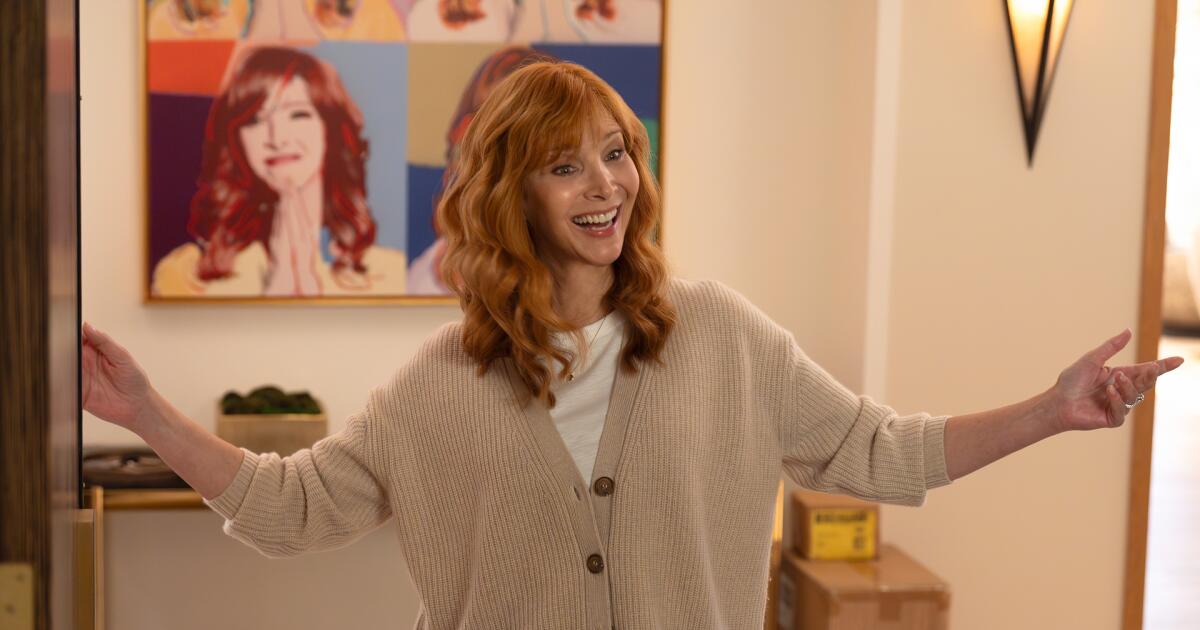
Like the mythical city of Brigadoon, Lisa Kudrow’s “The Comeback” has returned to television after many years away, with the difference that time has not stood still for its inhabitants, older in a changing world that values them less and which they navigate with less assurance.
Kudrow, who created and writes the series with Michael Patrick King, was in her youth a player in the twilight of network-dominated television, cast in a smart, influential show with wide, multigenerational appeal; in a quantitative sense, at least, everything would be downhill from there, as the medium transformed and transformed again. “The Comeback” premiered in 2005, just a year after the end of “Friends”; the first season addressed the rise of reality TV, and the next season, in 2014, riffed on dark, streaming “prestige” television.
The new (and final) season, which is both timely and speculative, addresses the impact of artificial intelligence on the medium and the industry, hinting at a dystopian future; this gives it a moral, even political component, not to say a sense of urgency. Not surprisingly, “The Comeback,” as a thing made by humans, comes down firmly on their side — it’s a manifesto at times — even as it acknowledges, uncomfortably, that computer-produced content might be “good enough.”
Once again, Kudrow plays Valerie Cherish, who, at 60 — the phrase “of a certain age” repeats throughout the series — still qualifies as a working actor. But she’s been pushed into the further reaches of the profession: Her two-season cozy mystery series, “Mrs. Hatt” (“part-time gardener, solves crime, husband is an ex-police chief”), is on no one’s radar but her own, having shown on Epix. A day’s work on a “no-budget” film is even less rewarding than she had imagined; she lasted all of two episodes on “The Traitors.” Paddling hard to stay current, to improve her brand, she bumbles through a podcast, “Cherish the Time,” without any idea what to do with that time; employs a social media person, Patience (Ella Stiller), with no discernible impact; and posts pictures of herself holding products in hopes of “future collabs.”
Still, she is not poor. Valerie and husband Mark (Damian Young), have moved from Brentwood to a condominium with a view in the (real life) Sierra Towers, overlooking the Sunset Strip, opening the latest “new chapter” in their lives, though just what that chapter for them is hard to say. Mark has lost his job in finance — “You told a joke at work at a time when jokes were illegal,” Valerie says, trying to cheer him, “no one cares now” — but left on a golden parachute; now he builds his day around pickleball. A potential role in a reality show, “Finance Dudes,” isn’t working out to anyone’s satisfaction. He’s on the verge of a three-quarter-life crisis.
When her self-promoting manager/publicist Billy (Dan Bucatinsky) comes to her waving an offer for a new series, for a new network, in which she’ll star, Valerie is more than intrigued, if taken aback when he tells her that it’s being written by AI. (He isn’t supposed to know.) Network head Brandon (Andrew Scott, as blandly discomfiting as his Moriarty on “Sherlock”) assures her that it is “within the Writers Guild agreement,” but that it is also a secret — which will account for a lot of comedy going forward, secrets and lies being the very stuff of the form. “AI is really extraordinary,” he tells Valerie. “After all, it picked you.”
It’s also created a wholly generic multicamera sitcom, “How’s That?,” in which Valerie’s character, Beth, as she describes it, “runs a cute, charming old New England B&B with the help of her hunk nephew, Bo — so Beth and Bo, B&B.” (“Viewers want a break from the complicated confusing storylines of all these dark streaming shows,” says a network exec.) Her eager supporting cast has no idea that the series is being written by anything other than its human faces, unhappily married couple Josh (John Early) and Mary (Abbi Jacobson). Josh, who thinks of himself as “the voice of women of a certain age,” is precious about the jokes he manages to get into the script; Mary couldn’t care less. Untalented writing assistant Marco (Tony Macht) only wants “to get, like, a really nice house.” The AI, meanwhile, is personified to the cast and crew, who know nothing about it, as someone named “Al,” who “works remotely.”
One by one, the old company is introduced into the new season, Valerie finds Jane (Laura Silverman), her former documentarian, working as a cashier at Trader Joe’s, having tired of scuffling as a filmmaker, “begging people to care about the things that I cared about.” When Valerie lets it slip that her new series is AI-generated — “but don’t tell anyone ‘cause that’s a secret” — Jane is inspired to pick up her camera again. Lance Barber will eventually rejoin as screenwriter Paulie G., Valerie’s old nemesis. Robert Michael Morris, who played Mickey, Valerie’s hairdresser and best friend, in earlier seasons, passed away in 2017; Jack O’Brien, as Tommy, occupies a version of that space here.
Valerie may be only moderately successful, but she isn’t a hack. She has an Emmy for “Seeing Red,” the drama at the center of Season 2. She pushes back against the costumer (Benito Skinner) who wants to put her in a caftan. She knows her craft and is nominally proud of belonging to a union. She’s not a diva, but she has her pride. And that she is loyal, even when it does her no good, makes her easy to like. Thrust half-wittingly onto this cutting edge — being the first in an AI comedy, Mark tells her, “is like saying, ‘I was the first one to eat an arm in the Donner Party’” — she is wholly sympathetic, and, eventually, as things bend toward horror in a last-act revelation, a hero.
Though the subject is serious, the approach this time is light and farcical. Partially abandoning the documentary aesthetic of its predecessors — the first season had the look of amateur video, and the second of guerrilla filmmaking — much of this season is shot as a conventional, non-meta television show, allowing us access to private conversations and meetings without having to account for Jane and her crew, or requiring the players to act as if they’re being watched. Paradoxically, without pretending to reality, it makes some things more real.
Playing himself, director James Burrows, whom Valerie convinces to helm her pilot, notes that the jokes AI writes might come fast but are never better than obvious. “Surprising only comes from a group of writers huddled in a corner beating themselves up to beat out a better show,” he says. And just as Valerie is not a character an algorithm could produce, Kudrow is not an actor a machine could ever imagine. She’s no Tilly Norwood, or Tilly Norwood at 60, or Tilly Norwood with quirks applied. There’s no one like her— other than her — for the learning machines to scrape.
You should never settle for “good enough” when better, or best, is available. But that choice is on you.



One man’s trash is another man’s treasure—or in this case, one Disney fan’s favorite film is another reviewer’s reason to rage online. Even some of the most iconic animated classics haven’t escaped the wrath of one-star reviews, with critics calling out everything from plot holes to questionable character choices.
Think you can see past the roasting and still recognize the movies? From timeless favorites to a few you might have forgotten, these brutally honest reviews put your memory of Disney movies to the test.
Take the quiz below and see if you can get a perfect score by matching each scathing review to the right film:
Follow
How did you do? Whether your own Disney rankings lined up with the one-star reviews or led you completely astray, there are plenty more quizzes to test your knowledge. Share this one with your friends and see if they can beat your score!
Box Office Bummers
Some Disney movies don’t just get roasted in one-star reviews—they also struggled to find an audience when they first hit theaters. While a few of these films have since earned cult followings, their initial box office runs tell a very different story.
Atlantis: The Lost Empire (2001) follows Milo on an adventure to uncover the sunken city, standing out for its bold visual style and action-packed approach. But when it came out, it didn’t quite catch on with audiences—especially with major competition at the time, including Shrek (2001).
The film ultimately didn’t perform as Disney had hoped, and its disappointing returns led to canceled plans for follow-ups and related projects as well as an estimated $54 million loss at the box office. What’s interesting, though, is how its reputation has shifted over time. Today, Atlantis is often revisited as an underrated gem, with fans appreciating its animation and nostalgic appeal.
Meanwhile, The Black Cauldron (1985) aimed to bring a darker, fantasy-driven story to Disney animation, following a group of unlikely allies as they set out to stop the evil Horned King, with elements pulled from Welsh mythology. Based on The Chronicles of Prydain, the film underwent major changes during production, including cuts that impacted its final story and pacing.
As the first animated film to feature Dolby sound and early computerized animation, it pushed into new territory, but that didn’t translate into success at the box office. The film struggled to connect with fans and ended up as one of the studio’s more notable financial disappointments, bringing in just $21 million—less than half of its $44 million budget. Still, it holds a unique place in Disney history and has gained a second life among viewers who value its moody atmosphere and departure from typical Disney formulas.
Clearly, not every Disney film was destined for success. But that just makes these one-star reviews all the more fun to decode.
More Like This:
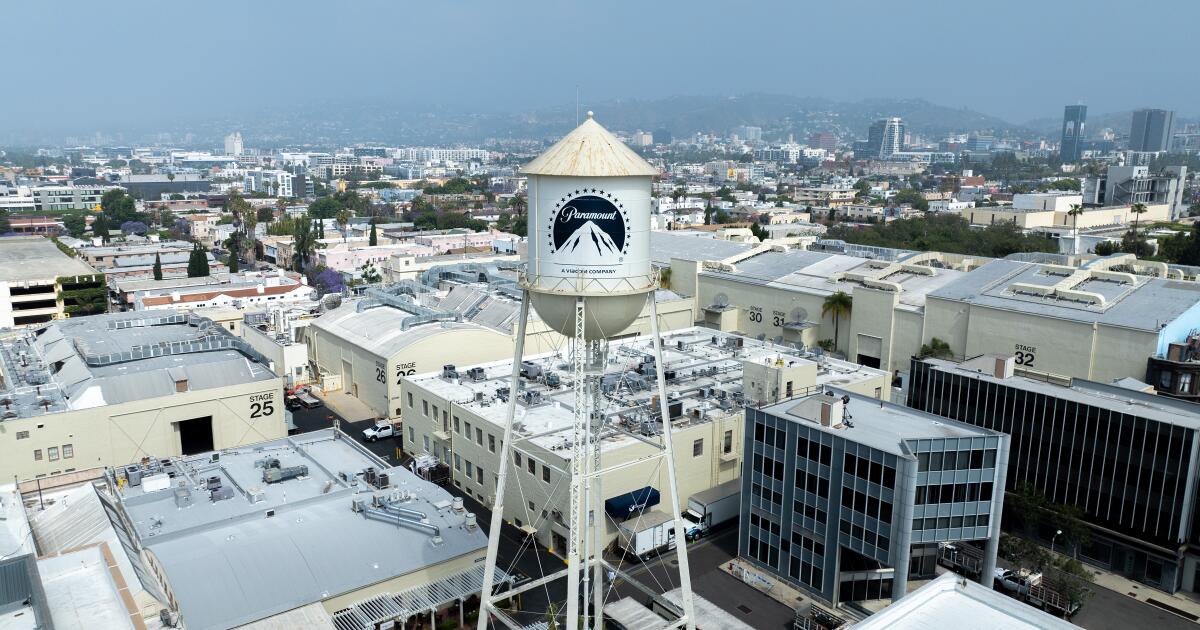
Should Paramount Skydance prevail in its $111-billion takeover of Warner Bros. Discovery, the Larry Ellison family would control two historic Hollywood film studios, dozens of cable channels, HBO and two legendary newsrooms, CBS News and CNN.
Concerns about the potential loss of more Hollywood jobs, and questions about newsroom independence, dominated a hearing Friday to address Los Angeles’ crisis of shrinking film and TV production jobs.
Paramount wants to wrap up its Warner merger by September — a rapid timetable. The takeover deal, which was struck last month after Netflix bowed out, would put HBO and CNN under the control of Larry Ellison and his son David, the chairman of Paramount, which includes CBS.
Both Ellisons maintain friendly relations with President Trump. Those bonds, along with challenges to legacy media and changes at CBS News in recent months, sparked handwringing during the hearing called by Sen. Adam Schiff (D-Burbank) and Rep. Laura Friedman (D-Glendale).
“The questions surrounding this merger go beyond jobs, contracts and consumers,” Schiff said. “They also go to editorial independence of two of America’s most significant news organizations, CNN and CBS News.”
Trump has long agitated for changes at CNN, and members of his cabinet, including War Secretary Pete Hegseth, have openly cheered for an Ellison takeover of CNN.
To pave the way for the Ellisons’ purchase of Paramount, the company paid $16 million to Trump last summer to settle his lawsuit over edits to a “60 Minutes” interview with Kamala Harris in October 2024. Most 1st Amendment experts had deemed Trump’s suit “frivolous.”
Since the Ellisons took the helm, there has been a change in direction at CBS News and a reduction in its size and scope. Staff members at CNN are bracing for similar changes, including to the tone of its newscasts.
In addition to the long-term health of Los Angeles’ film economy, the merger’s fate could determine “whether we have state sponsored media … or whether we have journalists who can truly follow the story,” Friedman said.
A Paramount spokesperson declined to comment.
The deal is currently before regulators in the U.S. and abroad.
Paramount Chairman David Ellison has vowed to “build a stronger Hollywood,” by increasing the creative output of the two legendary movie studios — Paramount and Warner Bros. — to 30 theatrical releases a year. Warner Bros., which owns such prominent franchises as “The Matrix,” Batman, Harry Potter, “The Big Bang Theory,” and “Friends,” has long been one of Hollywood’s most prolific studios.
But Paramount has suffered from years of under-investment and Ellison and his team have been working to boost the film pipeline.
Ellison has also pledged to keep both studio lots and preserve HBO.
“HBO will continue to operate independently under our ownership, enabling it to create more of the world-class content it is renowened for,” Ellison wrote in the Feb. 28 letter to Schiff and Friedman, responding to their concerns about consolidation.
During Friday’s hearing, the lawmakers turned to former CNN anchor Jim Acosta, who famously jousted with Trump during his first term, for his reflections. He was asked whether any “guardrails” could protect against potential merger harms.
“If this merger goes through, the guardrails are gone,” Acosta said. “If we continue to go down this road it will be lights-out for the news industry. We need media options that are not controlled by the wealthiest and most powerful people in the country.”
The hearing occurred the same day that CBS News imposed another sweeping round of layoffs and disbanded its CBS News radio network. It also came the same week as Trump’s Federal Communications Commission approved a massive television station merger, which will allow Texas-based Nexstar Media Group to control more than 250 stations, despite a legal challenge from state attorneys general.
The proposed Paramount-Warner merger would prompt at least $6 billion in cost savings, according to Paramount. Industry veterans warn that billions more in cuts may be necessary to make the deal math work.
A combined Paramount-Warner would carry nearly $80 billion in debt, a legacy of the proposed leveraged buyout and the mergers that came before it.
The hearing at Burbank City Hall —“Lights, Camera, Competition”: Promoting American Film Production,” — was wide-ranging. Award-winning actor Noah Wyle, the star and a producer of Warner Bros.’ “The Pitt,” discussed the need to bring more productions back to Los Angeles where thousands of out-of-work film professionals have been suffering. “The Pitt” is filmed in Burbank.
“Over the last six years, the aggregate effect of projects leaving the state in search of tax credits, the pandemic and last year’s fires has been a near cratering of our once thriving industry,” Wyle said. “We lost 42,000 film and TV jobs between 2022 and 2024.”
The hearing unfolded down the road from the massive Warner Bros. studio complex, and was held to explore ways to boost the Hollywood economy, including the potential for a national tax credit under consideration in Congress. The campaign is intended to keep film jobs in the U.S. amid an increased migration to Britain, where Warner Bros. maintains an expansive studio complex in London, and other countries that offer generous subsidies.
“Work in the entertainment industry is precarious,” said Matthew D. Loeb, International President of the International Alliance of Theatrical Stage Employees (IATSE). “Past studio mergers have meant fewer jobs.”

By PAYTON McCARTY-SIMAS
Starring Lili Reinhart, Lola Tung and Victoria Pedretti
Directed by Meredith Alloway
Written by Lily Houghton Meredith Alloway
IFC/Shudder
When we’re first introduced to Pumpkin (Lola Tung), the new-girl lead of Meredith Alloway’s pop-witchy debut feature, FORBIDDEN FRUITS, she’s holding a sample tray of knockoff Auntie Anne’s pretzel bites. Anyone who’s ever been to a mall can practically smell them through the screen: a blast of pure sugar, thick dough and hot grease. This suburban staple is overwhelmingly sweet and full of delicious, comfortingly familiar empty calories. As you get older, it’s likely you can’t eat this kind of high-calorie food court snack anymore; those yummy bombs of gluten and fat sit heavy in your stomach, and their one-note flavor no longer satisfies. But as a tween, they’re heavenly. Arguing about the merits of Auntie Anne’s, then, is a little beside the point. I doubt you could find someone who hates a cinnamon sugar pretzel. Really, you either like ‘em or you don’t. But at one point, I bet you probably did.

FORBIDDEN FRUITS is like that, too. This movie is, in essence, a Y2K mall-stalgic rerun of The Craft and Mean Girls, pure and simple, with dashes of catty confections like Jawbreakers and The Devil Wears Prada thrown in. It’s produced by Jennifer’s Body scribe Diablo Cody, and Alloway has cloned her signature style of wittily ratatat, long-acrylic-nails-on-a-keyboard dialogue with eerie, devotional precision. For younger viewers looking for more of this kind of film (fans of Scream Queens, for example), FORBIDDEN FRUITS will likely be a light, gossipy sugar rush. Older viewers nostalgic for this particular flavor of Teavana tea will almost certainly feel the same way.

On a technical level, this movie is admittedly in need of, like, a major makeover. Unlike the glittery Claire ’s-a-like charm bracelets its protagonists take as their talismans, FORBIDDEN FRUITS certainly isn’t pretty to look at, even on the unabashedly kitschy terms it openly embraces. While the props and costumes shine like the rhinestones the characters drop like acid, the shooting style is bizarrely perfunctory for such a surface-loving genre. The color grading is the same grey sludge that’s vexed audiences for years, a fact made more actively infuriating by the lovingly pastel teen-girl source material being drawn upon here.

Its plotting is similarly paper-thin, its twists as obviously, blaringly signposted as the path from Sephora to Forever 21 on a mall directory. YOU ARE HERE: A Free People clone at a mall in Texas. Three young, fabulously dressed women, all named after fruits, run it like a private kingdom, using witchcraft to keep their (fr)enemies in line and their hair looking fabulous. Pumpkin, their latest She’s All That-style project, ingratiates herself with the resident queen bee, Apple (a note-perfectly bitchy Lili Reinhart), only to sew drama in the coven. Spells are cast, Olive Gardens are visited, butterfly clips are traded, gossip and one-liners are hurled – and blood is eventually spilled. On Wednesdays, we secretly fuck guys in sporting goods changing rooms. You get it.

If this stock plot appeals, you’ll have a lot of fun with FORBIDDEN FRUITS. If it doesn’t, skip it. Highlights include Victoria Pedretti as Cherry, the Bubbles to Apple’s Blossom, who brings more soul to her sweet, simple Southern belle with a troubled past than she has to. Alexandra Shipp is game as Fig, the ambitious one who just wants to go to grad school and maybe even text her love interest in words instead of the emojis Apple mandates for all boy-related interaction. The soundtrack is appropriately bitchin’. Most of the jokes land with a pleasantly chummy wink. As a witch movie (a subject I’ve personally spent years investigating), there’s not a lot going on here. “Our magic isn’t some WitchTok ripoff fluffy bunny bullshit,” Cherry tells Pumpkin during her initiation ceremony. It is. But it’s still a pleasure to see women playing in this particular teen-girl-black-comedy garden. As Apple puts it, “Women who don’t have a garden won’t grow. What did that one bitch say? ‘A room of one’s own’?”
See FORBIDDEN FRUITS in limited theaters beginning March 27.

Video: ICE Agents Will Be Deployed to U.S. Airports, White House Confirms

Eat This Before Bed To Lose Weight Overnight: ‘Second Meal Effect’ Explained

Cortina d’Ampezzo mixes Olympic legacy with Alpine glamour

Crimson Desert dev apologizes for use of AI art

Analysts say Gaza ‘civilian’ deaths include Hamas, other terror members working as medics, media workers

Florida High School Football Rankings: Top 25 teams – Oct. 21

How old is Bo Nix? What to know about Oregon quarterback ahead of 2024 NFL Draft

Cleary's 21 help Le Moyne down Central Connecticut State 69-64 in OT

99th annual Pony Swim held in Virginia

Indiana Members Credit Union announced as new anchor tenant at Bottleworks District
Video: ICE Agents Will Be Deployed to U.S. Airports, White House Confirms

Schumer knocks Trump on Iran, plan to send ICE to airports: ‘Asking for trouble’

‘Risk of escalation is extremely high as Iran shows it can retaliate’

Immigration agents deploying to airports under border czar as TSA staffing falls short | CNN Politics

Video: Former F.B.I. Director Robert Mueller Dies at 81
-

 Detroit, MI4 days ago
Drummer Brian Pastoria, longtime Detroit music advocate, dies at 68
-

 Oklahoma1 week ago
Family rallies around Oklahoma father after head-on crash
-

 Nebraska1 week ago
Wildfire forces immediate evacuation order for Farnam residents
-

 Georgia6 days ago
How ICE plans for a detention warehouse pushed a Georgia town to fight back | CNN Politics
-

 Alaska1 week ago
Police looking for man considered ‘armed and dangerous’
-
 Science1 week ago
Federal EPA moves to roll back recent limits on ethylene oxide, a carcinogen
-
 Science1 week ago
H5N1 bird flu spreads to sea otters and sea lions along San Mateo coast, wildlife experts say
-

 Movie Reviews4 days ago
‘Youth’ Twitter review: Ken Karunaas impresses audiences; Suraj Venjaramoodu adds charm; music wins praise | – The Times of India