Phil Lesh, the bassist for the Grateful Dead who propelled many of its wildest musical explorations yet also composed and sang one of its loveliest songs, “Box of Rain,” has died. He was 84.
An announcement on Lesh’s instagram account went out on Friday: “Phil Lesh, bassist and founding member of The Grateful Dead, passed peacefully this morning. He was surrounded by his family and full of love. Phil brought immense joy to everyone around him and leaves behind a legacy of music and love. We request that you respect the Lesh family’s privacy at this time.” No cause of death has been reported at this time.
Just this week, Lesh and the Dead’s other founders were announced as the 2025 recipients of the Recording Academy’s prestigious MusiCares Persons of the Year award in recognition of the band’s philanthropy and cultural impact. An all-star tribute concert is planned for Jan. 31 at the Los Angeles Convention Center.
A classically trained musician who harbored an affection for jazz and the avant-garde, Lesh was something of an outlier within the Grateful Dead, a group whose two lead vocalists, Jerry Garcia and Bob Weir, were grounded in folk, bluegrass and blues. A rock ’n’ roll novice when he joined the nascent Dead in 1964, Lesh helped shape the band’s psychedelic aesthetic, especially during its early days when members devoted a portion of their time to exploring the possibilities of the recording studio. Although Lesh never lost his appetite for experimentation, he also honed his skills as a songwriter as the group re-embraced its folk roots on its pivotal early-1970s albums, “Workingman’s Dead” and “American Beauty.” “Box of Rain,” a tribute to Lesh’s late father that marked the bassist’s first lead vocal on a Grateful Dead record, was the pinnacle of this period, but he also had co-writing credits on “Truckin’,” “Cumberland Blues,” “St. Stephen” and “New Potato Caboose,” all crucial parts of the Dead’s songbook.
Grateful Dead biographer David Browne wrote of Lesh, “Beneath that affable exterior lay a taskmaster and perfectionist.” During the band’s first decade of fame, those tendencies manifested in the studio — he sculpted large segments of the aural collages on their second album, “Anthem of the Sun” — and on the stage, where he was one of the vocal advocates for their Wall of Sound, an innovative concert PA system that helped set the standard for arena rock, and also drove the band toward an extended hiatus from the road in 1975. Lesh later claimed that the Dead “was wildly successful for me until we took the break from touring [in 1975]. When we came back, it was never quite the same. Even though it was great and we played fantastic music, something was missing.”
Advertisement
Lesh remained with the Dead through their unexpected upswing in popularity in the late 1980s and early ’90s, a revival partially fueled by the band’s only Top 40 hit, “Touch of Grey.” He nevertheless was a bit of a diminished presence in the group’s later years, and neither wrote nor sang on the group’s final two studio albums. After the Dead disbanded following Garcia’s death in 1995 — a passing that came a year after their induction into the Rock & Roll Hall of Fame — Lesh kept the group’s adventurous spirit alive through a series of musical offshoots, alternating between explicitly solo projects like Phil Lesh and Friends and teaming up with his former bandmates in the Other Ones, Furthur and the Dead. Throughout these excursions, he attempted to stay true to the band’s initial guiding spirit: “The major factor with the Grateful Dead doing what they did and what we’re trying to do still is the Group Mind. When nobody’s really there, there’s only the music. It’s not as if we’re playing the music … the music is playing us.”
Phillip Chapman Lesh was born on March 15, 1940, in Berkeley. Raised in the Bay Area by working parents, he spent many hours with his grandmother. Hearing broadcasts of the New York Philharmonic drift out of his grandmother’s room sparked a love for music. Lesh persuaded his parents to let him learn to play the violin, eventually abandoning the instrument in his early teens. He switched to trumpet, developing such an intense interest in playing that his parents moved the family back to Berkeley so he could take advantage of the city’s high school music program.
Growing up in Berkeley at the peak of the Beat era, Lesh spent time at bohemian hot spots such as the bookstore City Lights and the Co-Existence Bagel Shop. Initially, college was a bit of a struggle. He dropped out halfway through his first semester at San Francisco State, moving back home to attend the College of San Mateo, and soon transferred to the University of California, Berkeley. His interest in the Beats deepened, complemented by an interest in experimental music, a passion he shared with his friend, keyboardist Tom Constanten. Enamored by the works of Thomas Wolfe in college, Lesh briefly considered pursuing literature academically but he was drawn back to music. Stravinsky’s “Rite of Spring” opened a door, as did the improvisational adventures of John Coltrane. He drew further inspiration from composer Charles Ives, claiming, “The music of Ives contains the world. … It sounds like the inside of your head when you’re day dreaming.”
Advertisement
The Grateful Dead’s Jerry Garcia, left, and Phil Lesh onstage at San Francisco’s Orpheum Theater in 1976 .
(Ed Perlstein/Redferns via Getty Images)
Volunteering as a recording engineer at the noncommercial radio station KPFA, Lesh also spent time attending folk cafes, entering social circles that led him toward Garcia, a folk guitarist with a flair for bluegrass. After Lesh heard Garcia sing the ballad “Matty Groves” at a party in 1962, the pair became fast friends, leading Lesh to record a tape of Garcia that aired on KPFA. It would take a while before the pair chose to collaborate. Lesh dropped out of UC Berkeley and headed to Las Vegas in the summer of 1962, living with Constanten’s family until they’d had enough of the bohemian in their midst. Taking a Greyhound bus back to Palo Alto, Lesh whiled away a few years rooming with Constanten and working at the post office as he composed classical music. Early in 1965, he went to see the Warlocks — the folk-rock group Garcia formed with guitarist Bob Weir, drummer Bill Kreutzmann and keyboardist Ron “Pigpen” McKernan. Garcia wound up asking Lesh to join the Warlocks as bassist. The fact that Lesh didn’t know how to play bass and only recently had developed an interest in rock ’n’ roll, let alone shown an inclination to play it, caused no concern.
While learning to play bass in the Warlocks, Lesh developed an elastic, melodic style that became as much a Dead signature as Garcia’s winding guitar leads. Once Lesh discovered a single credited to another band called the Warlocks, he had the group and selected associates convene at his apartment to decide upon a new name — a process that came to a standstill until Garcia plucked “the Grateful Dead” from a dictionary.
The Grateful Dead made its debut at one of Ken Kesey’s Acid Tests in 1965. Over the next year, the band would be a fixture at these psychedelic events, cultivating relationships with such figures as their manager Rock Scully and Owsley Stanley, a manufacturer of LSD who helped keep the Dead afloat during their early years; under the moniker “Bear,” he’d become the band’s sound engineer, a passion he shared with Lesh.
Advertisement
By the fall of 1966, the Dead signed with Warner Bros. Records, the label giving the group artistic control as well as unlimited studio time. After quickly cutting the Dead’s eponymous debut album in 1967, Lesh and Garcia soon would take advantage of this clause, spending an inordinate amount of time experimenting in the studio for “Anthem of the Sun” — the first record to feature the Dead’s second drummer, Mickey Hart, as well as Lesh’s college friend Constanten, whose time with the band was brief — and “Aoxomoxoa,” an album they wound up recording twice as they adapted to a new 16-track recorder they acquired. Faced with mounting debt, the band took that 16-track recorder to capture live performances at the Fillmore West and the Avalon, making “Live/Dead,” the album that righted them financially with Warner while also capturing the open-ended improvisations the band played onstage.
The Grateful Dead in 1970, clockwise from top left: Bob Weir, Phil Lesh, Bill Kreutzmann, Ron “Pigpen” McKernan, Mickey Hart and Jerry Garcia.
(Chris Walter/WireImage via Getty Images)
Despite the promise of “Live/Dead,” the Grateful Dead remained on rocky ground in the early 1970s. Nineteen members of their entourage were arrested for drug possession in New Orleans in January 1970 — the event became part of Dead lore when lyricist Robert Hunter immortalized the bust on “Truckin’” — and they’d discover by the end of the year that Lenny Hart, father of Mickey, who was brought aboard in a management role, embezzled much of their money. During all this, the band was able to record two pivotal studio albums: “Workingman’s Dead” and “American Beauty,” lively, folk-inflected rock ’n’ roll records that contained many of the band’s enduring songs, including “Uncle John’s Band,” “Casey Jones,” “Friend of the Devil,” “Sugar Magnolia” and Lesh and Hunter’s “Box of Rain.”
The inner workings of the Grateful Dead remained fluid in the early 1970s, as the band sustained membership turnover — Mickey Hart returned to the group after an absence, Pigpen retired from the band a year before his 1973 death; his time overlapped with his replacement, Keith Godchaux, who brought along his wife, Donna, as a backing vocalist — and failed business ventures, such as running their own record label. Despite this turmoil, the Dead stabilized in some senses after the twin successes of “Workingman’s Dead” and “American Beauty” established the band’s parallel paths: Onstage they’d chart the outer limits of their sound while attempting to focus on songcraft in the studio.
Advertisement
During the first half of the 1970s, the two avenues proved equally fruitful, but after the triple-live album “Europe 72,” the scales started to tip toward the group’s stage work, at least for their legion of fans known as Deadheads. Deadheads traded amateur recordings of Dead concerts in a practice endorsed by the band. These recordings helped build their fan base throughout the 1970s and ’80s and sustained their popularity long after the band was an active concern. These live recordings had an appeal beyond Deadheads: The group’s May 8, 1977, concert at Cornell University was placed into the National Recording Registry of the Library of Congress in 2011.
The band’s success as a road act eventually caused strain on its members, especially after the cumbersome, expensive tour of 1974, where their music was piped through their custom-made “Wall of Sound,” consisting of more than 600 speakers standing 40 feet high and 70 feet wide. Lesh wrote in his memoir “Searching for the Sound” that “this period (about forty gigs) remains to this day the most generally satisfying performance experience of my life with the band,” but the costs of touring with the system were prohibitive. Once the tour wound down, the Grateful Dead decided to stop performing for the foreseeable future.
As Garcia busied himself with “The Grateful Dead Movie,” hoping a theatrical release of October 1974 shows at the Winterland would satisfy audiences wanting to see live Dead, Lesh entered an aimless period. After collaborating with electronic composer Ned Lagin on the 1975 album “Seastones,” he started to drift and consume too much alcohol. He later remembered, “I didn’t know whether (the band) was ever going to start up again. I’ll be honest with you — that drove me to drink. That fear. I didn’t have a future. I didn’t have any side bands. The Grateful Dead was my band. I helped create it.”
Although the hiatus didn’t last long, it was enough to shift the momentum for Lesh. No longer singing high harmonies — he’d damaged his vocal cords, a condition exacerbated by his alcoholism — Lesh also receded from songwriting, gradually feeling disconnected from the AOR-oriented albums the band made for Arista. He told Dead biographer Browne, “I wasn’t deeply involved in those records. I felt like a sideman.”
Lesh’s fog started to lift in 1982 when he met a waitress named Jill Johnson. Two years later, they married, eventually raising two sons. Family life suited Lesh: He stopped drinking and took his boys on the road. Lesh hadn’t been the only member of the Grateful Dead to battle substance abuse, but in the late 1980s, the entire group had a moment of collective clarity that coincided with the sunny, celebratory “Touch of Grey” becoming an unexpected hit in 1987.
Advertisement
The Grateful Dead in the mid-’80s: Jerry Garcia, from left, Bob Weir, Phil Lesh, Brent Midland (seated), Bill Kreutzman and Mickey Hart.
(AP)
“Touch of Grey” introduced a new generation of fans to the Grateful Dead, many much rowdier than the Deadheads who had followed the group through the years. “Its effects were dramatic,” recalled Lesh. “It brought in a number of young people who didn’t really have a feel for the scene and the ethos surrounding it, which was considerable after two decades. We were thrilled with the interest in the band, but it just stood everything on its head. More people wanted to see us, so we had to play larger venues. Playing in front of larger crowds resulted in a loss of intimacy, and for me the experience was all downhill from there.”
Garcia reacted to the increased attention on the Grateful Dead by retreating to the heroin addiction that led to his death from a heart attack on Aug. 9, 1995. The Dead disbanded in the wake of Garcia’s passing. Lesh quickly faced his own health problems: In 1998, he had a successful liver transplant after having a chronic hepatitis C infection. Lesh crept back into action with Phil Lesh and Friends, a collective built on Bay Area musicians that initially played benefit concerts. By 1999, he rejoined Bob Weir, Mickey Hart and latter-day Dead associate Bruce Hornsby in the Other Ones, but his tenure in the group was brief. He and drummer John Molo left in 2000 to concentrate on Phil Lesh and Friends. Warren Haynes, the Allman Brothers Band guitarist who played often with Friends around this time, said, “Phil faced down death and came out the other side and has basically decided to do exactly what he wants with no compromise. That means a band which maintains the Dead’s improvisational quality, while also being more structured.”
Phil Lesh and Friends proved to be successful, eventually outdrawing Weir’s band Ratdog early in the 2000s. Lesh led the band through one studio album — 2002’s “There and Back Again,” featuring songs co-written by Robert Hunter — but that wound up being his last collection of original songs. He returned to the Grateful Dead fold in 2003 as part of the Dead, a touring entity featuring all four surviving members of the original band. The Dead drifted apart after a 2004 tour, so Lesh turned his attention to “Searching for the Sound: My Life With the Grateful Dead,” an autobiography published in 2005. He spent 2006 successfully battling prostate cancer.
Advertisement
Phil Lesh of The Dead performing in 2004.
(Tim Mosenfelder/Getty Images)
After receiving a Lifetime Achievement Award from the Grammys in 2007, the Dead reunited to play a pair of benefit shows for Barack Obama’s presidential campaign in 2008. Lesh and Weir continued with Furthur, which reconnected to the adventurous improvisations of the Grateful Dead’s spacier excursions. Furthur stayed together for five years, during which time Lesh and his family opened up a performing venue and restaurant called Terrapin Crossroads in San Rafael. Inspired by Levon Helm’s Midnight Ramble shows in Woodstock, Terrapin Crossroads featured many informal jam sessions headed by Lesh, who often played with his now grown sons as the Terrapin Family Band; he also brought incarnations of Phil Lesh and Friends to the venue.
Lesh decided to retire from touring after the disbandment of Furthur but he agreed to participate in “Fare Thee Well: Celebrating 50 Years of the Grateful Dead,” a collection of three concerts touted as the last time the four original surviving members of the Grateful Dead would perform together. Although Weir, Kreutzmann and Hart decided to soldier on as Dead & Company, Lesh opted out; this year, Dead & Company played an acclaimed 30-date residency at the state-of-the-art Sphere venue just off the Las Vegas Strip. Lesh kept Terrapin Crossroads as his performing home base through its closure in 2021, stepping aside for various festival appearances with Phil Lesh and Friends, notably joining Wilco’s Jeff Tweedy and Nels Cline to play a set as Philco at the Sacred Rose Festival in 2022.
Lesh is survived by his wife, Jill, sons Grahame and Brian and grandson Levon.
“Trying to find your niche as a movie star isn’t easy,” said Frank Scheck in The Hollywood Reporter. Take Glen Powell. A year ago, the Twisters and Anyone but You star was being talked about as possibly the next Tom Cruise. But he “stumbled badly” when he tried to play a macho action hero in November’s remake of The Running Man, and he’s now turned in a second straight box office flop. He took a risk with How to Make a Killing, playing a guy cheated by fate who we’re supposed to root for as he begins murdering off the seven rich relatives standing between him and an enormous inheritance. But c’mon. “Powell is charming, but he’s not that charming.”
The Week
Escape your echo chamber. Get the facts behind the news, plus analysis from multiple perspectives.
Advertisement
SUBSCRIBE & SAVE
Sign up for The Week’s Free Newsletters
From our morning news briefing to a weekly Good News Newsletter, get the best of The Week delivered directly to your inbox.
From our morning news briefing to a weekly Good News Newsletter, get the best of The Week delivered directly to your inbox.
The movie “needed to pick a side,” said Jacob Oller in AV Club. It could have been “a clownish class comedy” or “bitter sociopathic satire,” but it winds up being neither, and “at the center of it all is Powell, making the same face for an hour and 45 minutes, too unflappable to root for, too smug to magnetize as an inhuman American Psycho.” I’m not ready to give up on him, said Nick Schager in the Daily Beast. To me, he and co-star Margaret Qualley, who plays the femme fatale who eggs on the killing spree, come across as “such alluringly nasty delights” that this reworking of the 1949 black comedy Kind Hearts and Coronets “ survives its potentially lethal missteps and works on its own limited terms.” Though its teeth aren’t as sharp as they should be, “it’s smart and spiky enough to leave a pleasurably painful mark.”
‘Pillion’
Directed by Harry Lighton (Not rated)
Advertisement
★★★★
While this gay BDSM rom-com from a rookie director “might sound niche,” said Amy Nicholson in the Los Angeles Times, “free yourself to see it and you’ll discover it’s a universal romance.” Former Harry Potter side figure Harry Melling stars as a shy singleton who’s figuring out what he wants in a relationship when he happens into a submissive-dominant entanglement with a tall, handsome biker played by Alexander Skarsgard. Soon, Melling’s Colin is obeying his lover’s every order, including by shaving himself bald and sleeping like a dog on the floor. But the “kinky-funny” screenplay, which won a prize at Cannes, makes sure we see that Colin is not stuck but growing.
A free daily email with the biggest news stories of the day – and the best features from TheWeek.com
While the movie’s sex scenes are “refreshingly graphic,” they’re “never used or shock value,” said Odie Henderson in The Boston Globe. “The real shock comes from how emotionally involved the characters become within the construct of their kink.” And when Colin brings his new lover home to meet the parents, Skarsgard and Lesley Sharp, as Colin’s suburban London mom, do memorable work because “neither of them approaches the scene in a way you’d expect.” Until the ending, which “feels a little neat,” said Zachary Barnes in The Wall Street Journal, the movie “proceeds with an assurance of tone that’s especially impressive for a first-time filmmaker handling material like this.” Harry Lighton’s debut “could have been simply shocking, revving its engine in sexed-up style. Instead, Pillion purrs.”
‘Midwinter Break’
Directed by Polly Findlay (PG-13)
Advertisement
★★
Lesley Manville and Ciarán Hinds “would be appealing to watch just fumbling for their reading glasses,” said Natalia Winkelman in The New York Times. Unfortunately, this “staid” drama about an aging Irish couple puts that claim to the test. A “slow-moving film with a sappy score and mellow mood,” Midwinter Break opens with Manville’s Stella surprising Hinds’ Gerry by arranging a spur-of-the-moment trip to Amsterdam. Alas, “precious little conflict occurs until long afterward.”
But while Polly Findlay’s adaptation of a Bernard MacLaverty novel is a “delicate” film, said Lindsey Bahr in the Associated Press, its impact can be profound “if you can get on its level.” Stella, a devout Catholic, has an ulterior motive for dragging Gerry abroad, and when she nervously proposes how she’d like to live more purposefully in retirement, “it feels earth-shattering.” This is a couple accustomed to leaving much unsaid, including how the violence of the Troubles led them to flee Belfast years earlier for Scotland. Manville and Hinds give the movie everything they’ve got, said Caryn James in The Hollywood Reporter. In a scene in which Stella pours out her heart to a stranger, “Manville delivers one of her most magnificent performances, which is saying a lot.” Alas, the script lets them down, “not because it needs more action but because this ordinary couple’s problems seem so unsurprising, their inner lives so veiled.”
This story contains spoilers for the pilot of “Marshals.”
When the curtain came down on “Yellowstone” last year, Kayce Dutton had finally found his happily-ever-after.
The youngest son of wealthy rancher John Dutton (Kevin Costner) had secured a modest cabin in a mountainous region where he could reside in secluded peace with his beloved wife, Monica (Kelsey Asbille), and son, Tate (Brecken Merrill), far from the turbulent dysfunction of his family.
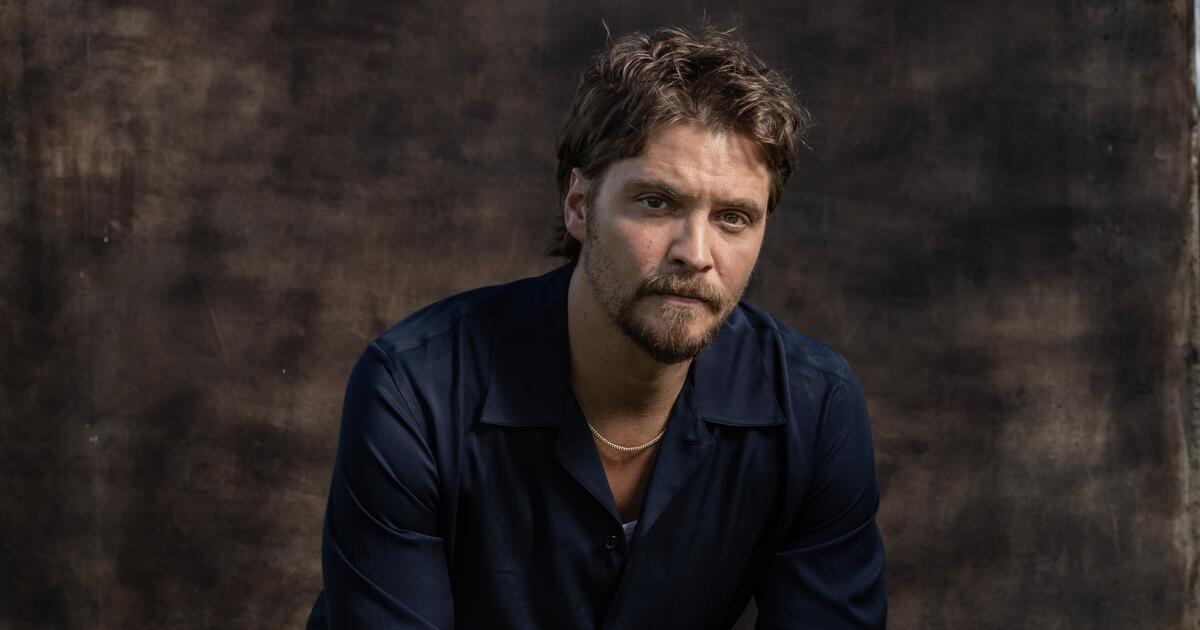
“Kayce found his little peace of heaven, getting everything he ever wanted and fought for,” said Luke Grimes, who plays the soft-spoken Dutton in “Yellowstone.”
Grimes reprises the role in CBS’ “Marshals,” which premiered Sunday. But in the new series, Kayce’s serenity has been brutally shattered, forcing him to find a new path forward after an unimaginable tragedy.
Advertisement
The drama is the first of several planned spinoffs of “Yellowstone,” which became TV’s hottest scripted series during its five-season run. And while some familiar faces return and events unfold against the magnificent backdrop of towering mountains and lush greenery, “Marshals” is definitely not “Yellowstone” 2.0.
Luke Grimes as Kayce Dutton in “Marshals,” which combines the gritty Western flavor of “Yellowstone” with the procedural genre.
(Sonja Flemming / CBS )
In “Marshals,” Kayce joins an elite squad of U.S. Marshals headed by his Navy SEAL teammate Pete Calvin (Logan Marshall-Green). The drama combines two distinct brands — the gritty Western flavor of “Yellowstone” with the procedural genre, a flagship of CBS’ prime-time slate.
Advertisement
During an interview at an exclusive club in downtown Los Angeles, Grimes expressed excitement about dusting off his cowboy hat and boots, though he admitted to having initial concerns about whether the project was a fit.
“I had never watched a procedural before, so I had to do some homework on what that was,” Grimes said hours before the gala premiere of “Marshals” at the Autry Museum of the American West in Griffith Park. “And I just couldn’t wrap my head around it at first. In the finale, Kayce had ridden off into the sunset. So I thought, ‘Let him be, let him go.’ ”
Those doubts eventually ebbed away.
“To be honest, there was a part of me that didn’t want to let Kayce go just yet,” Grimes said. “Saying goodbye to him was really hard, so the opportunity to keep this going was something I couldn’t pass up. We get to show his backstory and also this other side of him that we didn’t see in ‘Yellowstone.’ ”
But this Kayce is a man in crisis. “Yellowstone” devotees will likely be shocked by the “elephant in the room” — the revelation in the pilot episode that Monica has died of cancer. The couple’s sexy and loving chemistry was a key element in the series while also establishing Grimes as a heartthrob.
Advertisement
“I think fans will be upset — and they should be,” Grimes said as he looked downward. “Kayce is very upset. It’s the worst thing that could have happened to him. But as much as I’m really upset not to work with Kelsey, it’s a good idea for the show.”
He added, “His dream life is no longer available to him. Now the only thing he has is his son, who is not so sure he wants the same life as Kayce. A big part of the season is Kayce learning how to manage all these new things — new job, being a single father.”
“His dream life is no longer available to him. Now the only thing he has is his son, who is not so sure he wants the same life as Kayce,” said Luke Grimes about his character Kayce.
(Jay L. Clendenin / For The Times)
Executive producer and showrunner Spencer Hudnut (CBS’ “SEAL Team”) acknowledged in a separate interview that viewers may be stunned by the tragedy. “Real life intervenes for Kayce. Unfortunately it happens to so many of us.”
Advertisement
But he stressed that although Monica is physically gone, her presence will be heavily felt this season.
“She is guiding Kayce, and their relationship is moving forward,” Hudnut said. “His dealing with his inability to confront his grief is a big part of the season. It became clear that something horrible had to happen to put Kayce on a different path.”
As the development evolved, Grimes embraced the procedural concept: “This is a very different show and structure. This is an action show, very fast paced. I meet a lot of fans who say they really want to see Kayce go full Navy SEAL.”
Alumni from “Yellowstone” returning in “Marshals” include Gil Birmingham as tribal Chairman Thomas Rainwater and Mo Brings Plenty as his confidante Mo.
“Yellowstone” co-creator Taylor Sheridan, who had already spearheaded the prequels “1883” and “1923,” will further expand the “Yellowstone” universe later this month with “The Madison,” starring Michelle Pfeiffer and Kurt Russell, about a New York City family living in Montana’s Madison River territory. Later this year, Kelly Reilly and Cole Hauser will star in “Dutton Ranch,” reprising their respective “Yellowstone” roles as John Dutton’s volcanic daughter Beth Dutton and her husband, boss ranch hand Rip Wheeler.
Advertisement
Hudnut said fans of “Yellowstone” will recognize themes that were central to that series: “The cost and consequences of violence, man versus nature, man versus man.”
“We’re trying to tap into what people loved about ‘Yellowstone’ but to tell the story in a different framework,” he said. “The procedural brand is obviously very successful for CBS. And nothing has been bigger than ‘Yellowstone.’ So the challenge is, how do you marry those things?”
Taking on the lead role prompted Grimes to reflect on how “Yellowstone” transformed his life after co-starring roles in films like “American Sniper” and “Fifty Shades of Grey” and playing a vampire in the TV series “True Blood.”
“‘Yellowstone’ changed my life in many, many ways,” he said. “The biggest change is that I now live where we shot the show in Montana. The first time I went there, I would have never thought I would ever live there.
“I would come back to the city after shooting. But a little bit more each year, I felt more out of place here, and more peace and at home there. I’m a big nature person — I never was a big city person, but I had to be here to do what I wanted. But after the third season, my wife and I decided to move there. We wanted to start a family.”
Advertisement
The topic of a Kayce spinoff kept coming up during the filming of the finale, but “meanwhile we were having a baby, so that was the biggest thing on my plate.”
“‘Yellowstone’ changed my life in many, many ways,” said Luke Grimes.
(Jay L. Clendenin/For The Times)
Grimes was also dealing with the off-screen drama that impacted production due to logistical and creative differences between Costner and Sheridan. Costner, who was the show’s biggest attraction, exited after filming the first part of the final season. His character was killed off.
Asked about the backstage tension, Grimes said, “I just tried to do my job to the best of my ability, and not get caught up in all that. It was sort of frustrating, but I felt lucky to have a job.”
Advertisement
He recalled getting a call from Sheridan about the plans for a spinoff: “He said, ‘I think you should talk to the guy who is going to be the showrunner. I’m not telling you to do it, and I’m not telling you not to do it. But Spencer is great and he has some good ideas.’ ”
Hudnut said Kayce “was always my favorite character. Also, Luke is not Kayce. Kayce is an amazing character, but Luke is really thoughtful and smart. He is a true artist and has an artist’s soul, while Kayce is kicking down doors and terrorizing people. And Luke has such a great presence. He can do so much with just a look to the camera. He is a true leading man.”
In addition to starring in “Marshals,” Grimes is also an executive producer. He pitched the opening sequence — a flashback showing Kayce in the battlefield. He also performs the song that plays over the final scene, in which he visits his wife’s grave. The ballad is from Grimes’ self-titled country album which was released last year.
“Luke’s creative fingerprints are all over the pilot,” Hudnut said.
Grimes said he does not feel pressure about being the first follow-up from “Yellowstone” to premiere.
Advertisement
“We’re not trying to make the same show, so no matter what happens, its a win-win,” he said. “I had a blast doing it.”
I am a sucker for all those straight-to-video slasher movies from the 90’s; there was just a certain point where you knew the acting was terrible, however, it made you fall in love. I can definitely remember scanning the video store sections for all the different horror movies I could. All those movies had laughable names and boom mics accidentally getting in the frame. Truckerseems like a child of all those old dreams, because it is.
Let’s get into the review.
Synopsis
When a group of reckless teens cause an accident swroe to never speak of it. The father is reescued by a strange man. from the wreckage and nursed back to health by a mysterious old man. When the group agrees to visit the accident scene, they meet their match from a strange masked trucker and all his toys with revenge on his mind.
Roll on 18 Wheleer
Trucker is what you would imagine: a movie about a psychotic trucker chasing you. We have seen it many, many times. What makes the film so different is its homage to bad movies but good ideas. I don’t mean in a negative way. When you think of a slasher movie, it’s not very complicated; as a matter of fact, it takes five minutes to piece the film together. This is so simple and childlike, and I absolutely love it. Trucker gave us something a little different, not too gory, bad CGI fire, I mean, this is all we old schlock horror fans want. Trucker is the type of film that you expect from a Tubi Original, on speed. However, I would take this over any Tubi Original.
I found some parts that were definitely a shout-out to the slasher humor from all those movies. Another good point that made the film shine was the sets. I guess what I can say is the film is everything Joy Ride should have been. While most modern slashers are trying to recreate the 1980s, the film stands out with its love for those unloved 1990’s horror films. While most see Joyride, you are extremely mistaken, my friend; you will enjoy this film much more.
Advertisement
In The End
In the end, I enjoyed the entire film. At first, I saw it listed as an action thriller; I was pleasantly surprised, and Trucker pulled at my heart strings, enveloping me in its comfort from a long-forgotten time in horror. It’s a nostalgic blast for me, thinking back to that time, my friends, my youth, and finding my new home. Horror fans are split down the middle: from serial-killer clowns (my side) to elevated horror, where an artist paints a forty-thousand-year-old demon that chases them around an upper-class studio apartment. I say that a lot, but it’s the best way to describe some things.
The entire movie had me cheering while all the people I hated suffered dire consequences for their actions. It’s the same old story done in a way that we rabid fans could drool over, and it worked. In all the bad in the world today, and my only hope for the future is the soon-to-end Terrifier franchise. However, the direction was a recipe to succeed with 40+ year old horror fans like me. I see the film as a hope for tomorrow, leading us into a new era.