Movie Reviews
Feature movie review: WICKED: FOR GOOD


Near the end of Wicked: For Good, we at last get the song that gives this second part of the Broadway musical adaptation its sub-title. It’s a duet that serves as the emotional climax in the relationship between its two principal protagonists, the now-exiled-from-Oz “wicked witch” Elphaba (Cynthia Erivo) and the tool-of-the-Wizard “good witch” Glinda (Ariana Grande-Butera). The lyrics highlight the impact a profound relationship can have on you—“Who can say if I’ve been changed for the better / But because I knew you / I have been changed for good”—and director Jon M. Chu directs it beautifully, offering reverse cuts in which the actors nail the emotional complexity between these two frenemies. It’s a lovely, tear-jerking scene—all the more notable because it’s one of the few things that’s vaguely recognizable from the source material.
The decision to break Wicked into two parts was always going to be fraught, because it essentially meant figuring out how to turn a two-and-a-half hour theatrical experience into two two-and-a-half hour movies. And the challenge facing the second movie was going to be even more difficult, since nearly every one of the show’s best, catchiest songs was found before intermission. Like the Scarecrow, Wicked: For Good was going to have to be stuffed with additional material just to keep it moving—and it 100 percent feels like it.
That’s a damned shame, because the story about scapegoating, propaganda and deciding whether or not to side with a manipulative regime certainly feels resonant, and clearly has been punched up to emphasize that idea. It’s there in one of the new songs by composer Stephen Schwartz, “No Place Like Home,” in which Elphaba sings “How do I love this place / That’s never loved me,” which accompanies the persecuted animals escaping via a literal underground road. It’s still there in the pointedly cynical lyrics sung by the Wizard (Jeff Goldblum) in “Wonderful” about “great man” mythologies. Wicked was always a tale about moral choices and twisting truth for power, and that idea hasn’t been stripped away.
It has, however, been seriously diluted. Filling out the running time involves packing in a lot of CGI busy-ness, from the opening attack by Elphaba on the enslaved-animal-driven construction of the Yellow Brick Road to the stampede of critters disrupting the wedding between Glinda and Fiyero (Jonathan Bailey). Winnie Holzman and Dana Fox add a flashback back-story for Glinda involving her lack of magical talents, intended to make her focus on superficiality more sympathetic, and providing context for the second of the two new songs, “Girl in the Bubble”—a nice opportunity for performance moments for Grande-Butera, but otherwise utterly unnecessary to the character arc. On stage, Wicked’s second act was a ruthlessly efficient integration of familiar elements from The Wizard of Oz driving toward its resolution, even if that meant the songs were mostly narratively functional rather than irresistibly memorable. Wicked: For Good drags out every beat, making its considerably darker tone compared to the first half feel like even more of a slog.
There’s another moment near the end, one that almost exactly echoes the way the stage version presents the famous melting of the Wicked Witch as a shadow-play. The visual restraint of it is striking, in juxtaposition with the way Chu seems determined to make everything else about his Oz as big and gaudy as possible. Financially, it’s undoubtedly going to be a brilliant creative decision to get two Wicked box-office hits out of this story, even if that meant giving audiences a year-long intermission between acts one and two that blunts some of the callbacks in both the dialogue and the relationships. Everything was there in the original musical to make for a single great movie. I can say it wasn’t changed for the better. Because they knew how, it has been changed for greed.


Ryan Gosling in Sony Pictures’ ‘Project Hail Mary’
Now in Theaters
“Project Hail Mary”
(Amazon – MGM Pictures)
Rated PG-13
“I put the ‘Not’ in ‘astronaut!’
When was the last time you walked out of movie theater feeling not only better about humanity but also our future?
Based on the revered 2021 Andy Weir novel of the same name, and adapted for the screen by Drew Goddard (“Buffy the Vampire Slayer,” “Daredevil” and “The Martian”), “Project Hail Mary” is an ingeniously crafted and perfectly paced sci-fi drama about a biologist and school teacher who wakes up from a coma aboard a spacecraft that’s on a mission to save all life on Earth. As both the star and co-producer, it took Ryan Gosling seven years to bring this vastly entertaining instant classic to the big screen, and it was so worth the wait.
Admittedly, I wasn’t thrilled with the trailers or even the tone that seemed to give ABC afterschool-special vibes. But after seeing it in its entirety, everything about it blew me away.
Who Are We?
Bursting with fascinating and enthralling moral quandaries, it makes viewers question themselves and our species. And refreshingly, “Project Hail Mary” is a magnificent “grand idea” kind of story that seamlessly weaves themes of self-preservation, obligation, the intrinsic meaning of humanity and most powerfully (and surprisingly) friendship. You will come away with fresh personal revelations and deep, self-examinations that you probably never intended to ponder, which is the beauty of epic sci-fi tales like this. They force us to muse about the kinds of societies we want to live in.
And with the wondrous inclusion of Gosling’s all too real co-star Rocky, I became so emotionally gripped, that I was close to tears a few times. I just love it when a film not only challenges but surpasses whatever preconceived notions you may have held about it beforehand.
Intensely moving, meticulously thoughtful, endlessly nuanced and massively entertaining, it’s easy to see why “Project Hail Mary” is already considered one of the best films of the year.
-@TheAndreKelley
.

ONLY IN THEATERS
“You, Me & Tuscany”
(Will Packer Productions)
Rated PG-13
“You pretended to be the White Italian man’s fiancé?
But ended up catching feelings for the Black Italian cousin-brother?”
As expected, “You, Me & Tuscany” is really, really cute. Halle Bailey (“The Little Mermaid,” “Grown-ish”) and Rege-Jean Page (“Black Bag,” “Bridgerton”) are initially combative, though there’s little doubt as to where the two are headed in this charming and delightfully executed story. Writer-producer Will Packer (“Think Like A Man,” “Girls Trip”) outdid himself in this colorful, feel-good, family-friendly, classic comedy of errors.
Glorious Tuscan Countryside
And while making excellent use of the lush and intoxicating Tuscan countryside, what I found curiously effective was that the dynamic of the ensemble became as big a part of the film as the romance itself. Surprisingly, I was completely caught off-guard as those familial aspects developed. And though Rege-Jean Page is not my cup of tea (too skinny, too pretty) as a lead, I now see why women react to him the way they do. He’s a very good dramatic actor, he holds attention quite easily on the big screen and of course, that face-card would never be declined.
Also, with Black women now becoming the most educated, economically-empowered and increasingly, well-traveled demographic of society, Packer smartly captures that zeitgeist with this well-produced and topically focused vacation vehicle.
Notably, his critically-acclaimed and commercially successful “Girls Trip” was domestically based whereas Tuscany makes faithful and fantastic use of the kinds of village locales and gorgeous countrysides we’d all like to visit. So what better way to explore and find parts of ourselves while also falling in love than abroad?
A Welcome Genre Update
And finally, be it his television shows or movies, I sincerely love Will Packer’s upscale treatment and desperately needed update of the romantic-comedy genre. Typically, the majority are White and situation-based, whereas this one was Black-centered and in an international setting. So, those aspects alone I genuinely enjoyed.
I’m a sucker for thoughtful production with Black folks looking great, being well-lit and shot properly. We don’t often get passport-driven international fare with a wonderful balance of warmth, humor and heart like this, so don’t wait to stream it. “You, Me & Tuscany” is well worth the trip.
@YOUMETUSCANY
#YOUMETUSCANY
.

NOW IN THEATERS
“Hoppers”
(Pixar) Rated PG
“Let’s squish the humans!”
Impressively, within mere minutes of its opening we get a solidly hilarious understanding of Mabel Tanaka’s deeply feisty affinity for animals, and her incessant, almost uncontrollable desire to help them.
Voiced delightfully by Piper Curda (Disney Channel’s “A.N.T. Farm”) as the willful and resourceful protagonist, she makes quick use of new technology that allows her to infiltrate and talk to the animal kingdom.
John Hamm (“Bridesmaids,” “Mad Men”) is fantastic as her arch nemesis, the town’s preening and vainglorious, Gavin Newsom-esque Mayor Jerry, who’s behind the ominous threat to the very habitat that Mabel and her friends are fighting to defend.
State-of-the-art Animation
And true to the magnificent legacy of Pixar’s usual flawless execution (“Hoppers” is their 30th film) the state-of-the-art animation is absolutely gorgeous and intriguing to look at. Much of it, especially with regard to the larger animals, is unlike anything I’ve ever seen. You almost want to reach out and touch them. The hair and body textures are next-level fascinating and so lifelike, it’s as if you’re watching plush animals come to life in this brilliantly spooled sci-fi comedy.
And don’t get it twisted nor let the animation aspects of talking animals fool you. There are some very clear (as well as oblique) nods to our current reality that make this more than what it appears on the surface. Ingeniously, it imparts universal themes of cooperation, community and inclusion, as well as a plethora of life-lessons we want all young people exposed to.
Stay for the Credits
Unfortunately, there’s no usual Pixar short at the beginning of the movie and like any Marvel film, I strongly urge you to stay for the end credits. Witty, warm and a bit whimsical, “Hoppers” is brimming with hilarious and heartfelt laughs and lessons.
And with everything that’s currently happening in our world, there’s never been a better time to enjoy what’s going on in someone else’s.
Good news, grown-ups, even though most of the screens at your local theater are probably still devoted to “The Super Mario Galaxy Movie,” there’s a decent option for adults in one of the other houses. I’m convinced that “The Drama” has stayed in the top three at the domestic box office for the past two weekends by reeling in parents who don’t want to watch Mario with their kids, but don’t want to leave the theater. Or it could be good advertising, good word-of-mouth, good reviews, or other non-cynical reasons.
The film follows Charlie (Robert Pattinson) and Emma (Zendaya), a nauseatingly-cute Boston-area couple a week away from their wedding. He’s a bit of a creep and she doesn’t talk much about her military-family upbringing, but they’re sure they can learn to live with each other’s foibles, after all, they’re in love. Hopefully it’s not much of a spoiler to say that their love will be tested over the course of the film as they deal with, well, drama.
That drama first rears its head at a couples’ dinner with friends Mike (Mamoudou Athie) and Rachel (Alana Haim). Rachel has the bright idea to have everyone at the table reveal the worst thing they’ve ever done. I’m not sure what the “best” case scenario is for a game like this, but it certainly ends in one of the worst. Emma makes the grave miscalculation of thinking that she has the forum to be honest, and reveals a secret that ruins everybody’s night.
I joked about spoilers earlier, but when it comes to Emma’s secret, things are more difficult. Unlike traditional spoilers, this one comes early in the movie, when she and Charlie are still in their “honeymoon phase,” so to speak. Not revealing the secret makes it hard to look at the rest of the movie, but it’s in the movie’s best interest that the audience is taken off-guard so they don’t have time to form opinions about the controversial subject matter in advance.
What I can say is that once Emma’s secret is revealed, Charlie can’t look at her the same way again. He tries to put it out of his mind, but… if you’re told not to think of a red umbrella, you think of a red umbrella, and Emma’s secret might have involved some red umbrellas if people were carrying umbrellas. It is worth noting that Emma’s secret does not involve tangible victims or require tangible consequences. All it can do is affect how people think of her, which is invariably some form of “worse.”
Emma’s secret drives Charlie to madness in his relationship with his friends, his assistant (Hailey Gates), and especially Emma. Eventually his insecurities drive her crazy, and by the time of the wedding, they’re quite the dysfunctional couple. They’re talking about spending the rest of their lives together, but can the relationship even survive the reception? Let’s just say that there will probably be a lot fewer fantasies about getting married to Robert Pattinson after this movie.
“The Drama” really clicked with me, even though its appeal lies in a dark, awkward, cringey comedy that I don’t normally like. Probably the highlight of the film for me was a scene from the trailers, where Charlie and Emma try to pose for wedding photos like everything is okay when it definitely isn’t. It’s not hard to tell from the trailers that “something” is off, but the added context made it funnier than it ever was when being cryptic (though being cryptic was the right tone for the trailers). I recommend this film, but try to wear a beat-up shirt that you won’t mind stretching out from tugging at your collar.
Grade: B
“The Drama” is rated R for sexual content, some violent/bloody images, language throughout, and brief drug use. Its running time is 105 minutes.
Contact Bob Garver at rrg251@nyu.edu.

Perhaps the reason Keanu Reeves doesn’t quite grasp the tone in Jonah Hill’s Hollywood star in crisis over a scandal “comedy” “Outcome” is that director, co-writer and co-star Hill didn’t make what he was going for clear.
Maybe Hill didn’t quite know himself what notes to hit in a not-quite-funny romp through extortion, taking stock and making amends for the selfish lives stars must live to become movie stars. It doesn’t help that Reeves is a frustratingly awkward actor in any film that doesn’t have fight choreography, comedies and sensitive dramas or dramedies especially.
There are a couple of laughs in this picture, and a few poignant, almost “honest” moments provided by Martin Scorsese, who plays the talent manager who “discovered” the former child star Reef Hawk (Reeves), abandoned as Reef ascended to the pinnacle of Hollywood success,by Susan Lucci, as Reef’s estranged “Real Housewives” mother and Cameron Diaz as one of two high school friends (Matt Bomer is the other) who stuck with their 56 year old pal and got a posh free ride for their trouble.
But the picture doesn’t play, doesn’t send much of a message and most certainly never “lands.”
The title “Outcome” is a sophmoric pun, and in Hill’s antic “crisis lawyer” co-starring performance there are traces of every over-the-top comedy of his foul-mouthed cherub youth. As a bald, bearded David Cross-on-uppers lawyer who decorates his office with “client” photos of Kanye, the Clintons and Kevin Spacey, Hill’s Ira is forever trying misread-the-room “jokes” that he freely admits don’t “land.”
“I gotta go. Adam Driver bought a pet chimp and it ate some lady’s face off at the mall!”
Even the ones Ira doesn’t apologize for play as strained, with only Hill’s toothy, tasteless/tactless energy to put them over.
Reef, a former addict and all-around Hollywood “nice guy” is just about to end a five year hiatus from acting, kicking his heroin addiction and keeping much of that and a legion of people who apparently “hate” him — with cause — out of the public eye and unattached to his pristine image.
But the new landscape for celebrity has made him paranoid. “You’re always being watched, observed,” he fearfully grouses to Kyle (Diaz) and Xander (Bomer).
And now somebody has a video they’re threatening to release, something that could ruin Reef and his image. He compulsively Googles “Is Reef Hawk an ass—e,” “Reef Hawk scandal” and “Reef Hawk video,” waiting for a shoe to drop — which shoe, he has no idea.
Which is why fast-talking Ira sends him on an apology tour through his past — that first manager, his mother — who only meets with him in an interview for her “Housewives” show. Mom’s sense of victimhood, living through her wildly popular son’s rise having “sacrificed” and groomed him for stardom since childhood, is genuine and almost touching if not genuinely funny.
“Just because it’s performative doesn’t mean it’s not the TRUTH!”
Hill can’t find laughs in a meeting Ira stages with his crisis-management “team” — an Allred-ish abused women lawyer, a Rev. Al-ish civil rights pastor, an Asian rights advocate.
What? No Jewish anti-semitism minimizer?
“We ran the numbers. It turns out hating Jews doesn’t negatively impact a person’s career.”
David Spade pops up as a new Malibu neighbor whose very young, very pregnant wife (Kaia Gerber) lands the movie’s funniest line.
“I know you. You used to date my grandmother!”
Van Jones plays himself, an interviewer willing to be arm-twisted by the star insisting he be introduced as a (two time) “Oscar winner.” Drew Barrymore plays herself as an interviewer you maybe don’t want to screw with.
Soaking up the one-liners and Hill’s antic but comically winded patter makes one wonder if even recasting the lead would have helped.
But watching Reeves struggle with his alternately serious or faux dismayed reactions, a damaged soul with remorse for those he’s wronged but a human void that potential laughs spiral into to die is a burden this lightweight goof on the devolving nature of “fame” never overcomes.
Rating: R, profanity, a sexual situation
Cast: Keanu Reeves, Cameron Diaz, Jonah Hill, Susan Lucci, Matt Bomer, Ivy Wolf, David Spade, Martin Scorsese and Drew Barrymore
Credits: Directed by Jonah Hill, scripted by Jonah Hill and Exra Woods. An Apple TV+ release.
Running time: 1:24
Related


Coroner: Toddler dies after being hit by vehicle in Upstate

PBR | No. 1 John Crimber goes 4-for-4, tops final three rounds to win First PREMIER Bank PBR Sioux Falls

Tennessee immigration bill sparks nonprofit concerns over unintended impacts on vulnerable US citizens

Texas AG opens investigation into Austin over APD guidance on ICE warrants
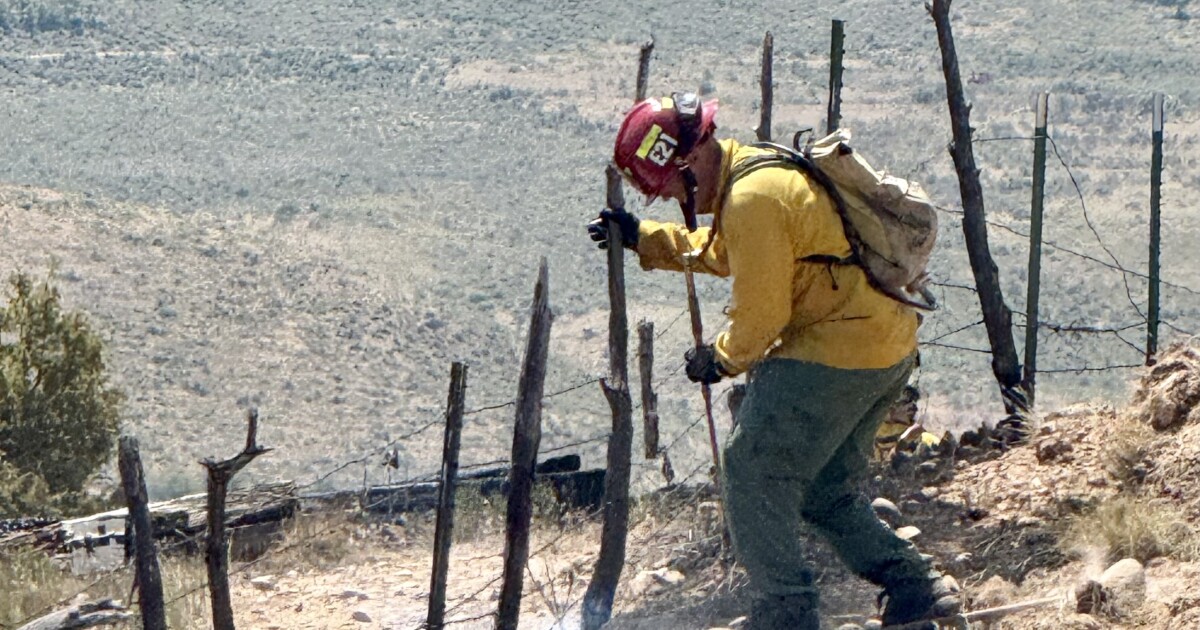
Utah delays imposing fee for wildfire mitigation program

Florida High School Football Rankings: Top 25 teams – Oct. 21

How old is Bo Nix? What to know about Oregon quarterback ahead of 2024 NFL Draft

Cleary's 21 help Le Moyne down Central Connecticut State 69-64 in OT

99th annual Pony Swim held in Virginia

Indiana Members Credit Union announced as new anchor tenant at Bottleworks District

Embattled Rep Tony Gonzales announces plans to resign amid sexual misconduct allegations

UN experts slam attacks on Gaza shelters, forced displacement in West Bank

DOJ fires at least 4 prosecutors involved in FACE Act cases during Biden administration

Melania Trump’s Epstein remarks turn up the heat on DOJ, Acting AG Todd Blanche to do more
Newsletter: Cautious optimism in Brussels as Orbán ousted in landslide Hungarian opposition win
-

 Atlanta, GA1 week ago
1 teenage girl killed, another injured in shooting at Piedmont Park, police say
-

 Georgia6 days ago
Georgia House Special Runoff Election 2026 Live Results
-

 Arkansas3 days ago
Arkansas TV meteorologist Melinda Mayo retires after nearly four decades on air
-

 Pennsylvania1 week ago
Parents charged after toddler injured by wolf at Pennsylvania zoo
-
 Milwaukee, WI1 week ago
Potawatomi Casino Hotel evacuated after fire breaks out in rooftop HVAC system
-

 Technology1 week ago
Anthropic essentially bans OpenClaw from Claude by making subscribers pay extra
-

 Austin, TX6 days ago
ABC Kite Fest Returns to Austin for Annual Celebration – Austin Today
-

 World1 week ago
Zelenskyy warns US-Iran war could divert critical aid from Ukraine