CBS Sports Chairman Sean McManus has a bit of trouble recalling the first Super Bowl he ever attended.
It may have been 1980 when the Pittsburgh Steelers defeated the Los Angeles Rams at the Rose Ball, he said during a recent conversation at his office on Manhattan’s West Side.
But when you’ve spent much of your life in control rooms and trailers for major sporting events since working as a 12-year-old production assistant at the Jacksonville Open for $25 in cash, it’s hard to keep track.
On Sunday, he will oversee the CBS telecast of Super Bowl LVIII, when the defending champion Kansas City Chiefs take on the San Francisco 49ers at Allegiant Stadium in Las Vegas. It will be McManus’s ninth and final trip to the Big Game in the executive role he has held since 1996.
McManus, 68, is retiring in April following CBS’ coverage of The Masters golf tournament, capping a career that spanned much of the history of TV sports. (He will be succeeded by his second-in-command David Berson).
Advertisement
He is the son of Jim McKay, the legendary ABC Sports broadcaster who hosted “Wide World of Sports,” the anthology program that brought events that ranged from barrel jumping to world champion heavyweight fights into the nation’s living rooms during the 1960s and ’70s. A teenage McManus was in Munich, Germany, for the 1972 Summer Olympics, where McKay reported on the killing of 11 Israeli athletes by Palestinian militants.
After stints at ABC, NBC and IMG, McManus arrived at CBS Sports in 1996 when it was in a distressed state. Two years earlier, CBS lost the rights to its NFL package, outbid by Rupert Murdoch’s then-nascent Fox network.
The departure of the NFL devastated CBS, which lost its perch as the top-rated network, and put Fox on the map, an early demonstration of the league’s impact in the television ecosystem that has only become mightier over time.
The NFL is now a key driver in shaping the streaming video landscape, as evidenced with the playoff game exclusive to NBC’s Peacock and the plans for a new streaming platform formed by the league’s media rights holders Fox and ESPN in partnership with Warner Bros. Discovery.
McManus successfully led the negotiations for CBS to get the NFL rights back in 1998. It helped turn around the network, which became the most-watched for the next two decades. McManus has been along for entire ride, including a six-year stint when he oversaw news and sports — a dual role only replicated in broadcast TV by ABC’s Roone Arledge.
Advertisement
McManus has been in the control room for 27 Masters and NCAA men’s basketball tournaments. He sat alongside two former U.S. presidents at the memorial service for legendary CBS news anchor Walter Cronkite.
But his fondest memories will likely be the hundreds of weekends he spent at the Manhattan-based CBS Broadcast Center, which served as a command center for the network’s NFL coverage. On his final day during the regular season, he was surprised by staff with a chocolate cake with the icing inscription “NFL Sundays Will Never Be The Same” and a signed football from the “NFL Today” panel.
Before heading to Las Vegas, McManus shared some recollections about his career and thoughts about the weekend ahead. This interview has been condensed for clarity.
Do you remember the first time watching your father on TV?
The Masters in 1961. So I was 6 years old. I was watching it with my mother and I was very confused because my father identified himself as “Jim McKay.” And I didn’t quite understand McManus-McKay at the time. But my mom explained it to me.
Advertisement
It’s wacky that he had to change his name to get a job on a show called “The Real McKay.”
He was happy to do it because he was looking for work. I remember watching a lot of “Wide World” events. I remember the U.S.A.-U.S.S.R. track meet broadcast from the Soviet Union in those days.
Muhammad Ali fights were a staple of “Wide World.” Did you get to attend any?
Well, the No. 1 sporting event on my list is Muhammad Ali-Joe Frazier I (in 1971). I had gone to Ali’s other fights. I really wanted to go and my dad got me a ticket. And I was there in the fourth row. Frank Sinatra was running around being the official photographer for Life magazine. From a social standpoint it was probably the biggest sporting event to that day. You can’t overestimate how big it was. Not the center of the sports universe; the center of the universe. It was Ali who was the rebel, and people considered him a draft dodger. And then there was Joe Frazier.
People believed he represented the establishment.
Advertisement
I remember the ring introductions and when Ali went in, there were some boos because in those days, the Black Muslims were not exactly accepted.
You were with your father in the ABC Sports studio in Munich when he reported on the tragedy at the 1972 Summer Olympics. What kind of impression did that leave on you?
First and foremost it elevated the respect I had for my father, because I saw what he went through for more than 12 hours being on live television. None of us there understood the impact that it was having in the United States. Remember, there was no cable news, no CNN, MSNBC, Fox News, no internet, no social media. So the only avenue of information was through ABC and through my father. And if you put it in a historical perspective, people didn’t talk about terrorism; it wasn’t part of our vernacular. It was probably the first international acts of terrorism to actually get live coverage.
A member of the Arab Commando group, which seized members of the Israeli Olympic Team at their quarters at the Olympic Village in Munich, Germany, Sept. 5, 1972.
(Kurt Strumpf / AP)
Advertisement
Do you remember the public’s response to him?
When he returned, there were duffel bags of letters that people had sent to ABC Sports. For the rest of his career when people came up to him they would say, “I’ll always remember 1972.” And today when people come up to me and say, “I was a big fan of your father’s,” 90% of the time they will say, “1972 is memory that I’ll never forget.”
Jim McKay’s words that day are part of broadcasting history.
He said, “My father always told me that our greatest fears and greatest hopes are never realized. Well, today our worst fears were realized.” And then he gave the news about all the Israelis being killed. And then he just paused and said, “They’re all gone.” Along with Walter Cronkite, when he took off his glasses and announced the death of JFK, I think you can make the case that those are certainly among the most famous words ever said on television.
Advertisement
You came up at ABC Sports with some big names and a few characters who could be pretty rough on the furniture back in the day.
I think Don Ohlmeyer and Roone Arledge are probably the two best sports producers in the history of sports television. And (ABC Sports producer) Chuck Howard is right up there also. With Chuck, I got yelled at pretty much constantly while doing graphics for ABC Sports. I was a production assistant so I was the low man on the totem pole, worrying about everything from music for the show, to graphics, to booking the limousines and hotels for the talent and the production team. So I really learned trial by fire. Even though I had known Chuck from the time I was probably 9 years old, he still treated me like every other PA, which was to yell, and unfortunately in those days, humiliate you. Whether you were male or female, or son of Jim McKay, it didn’t matter, you got it.
Were you ducking any flying objects?
Chet Forte, (the first director of “Monday Night Football”) was known for throwing his headset against the monitor wall. There were always two or three extra headsets for Chet.
So let’s fast-forward to 1995 when you get a call from Peter Lund, then–president of CBS, about coming over to run the sports division. How did you convince him that you could get the NFL rights back for the network?
Advertisement
I didn’t try to convince him because I didn’t have a great amount of confidence that I could deliver. Only one network ever had NFL football and given it up, and that was CBS. The effects were devastating. So in my wildest dreams it was tough for me to imagine any of the current NFL TV partners would agree not to renew a football package. It was by far my primary goal by 100% was to get the NFL back and I thought about nothing else for a year and a half.
James Brown, Sean McManus, Bill Cowher, CBS Sports Executive Vice President David Berson, and Nate Burleson at “NFL Today.”
(Mary Kouw CBS)
What was the key to making the deal?
Advertisement
Once the negotiating process started, we had the right strategy, which was to try to convince the NFL to do the American Football Conference package first because NBC (the AFC rights holder at the time) was going after “Monday Night Football.”
When we made our offer of $500 million a year, NBC passed with the hope that they would get “Monday Night Football.” I immediately signed the deal so that it was official, and then the celebrations began. And it was by far professionally, you know, the most satisfying moment of my life.
It’s been said the move saved CBS at that time.
I don’t want to say that, but in many ways it helped, yes. We went to being No. 1 again. When everybody accused us of overbidding, Mel Karmazin (then-CBS Corp. president) said, “If I can make a dollar on the NFL it’s worth it.” And we made money every year of the deal. Same story as with Rupert Murdoch. Everybody thought he was crazy and he built a network on the back of the NFL. When you saw what happened to CBS and Fox it really was the first real establishment of just how powerful the NFL would become.
The Super Bowl was always the most–watched broadcast of the year. But there was a time where there some pretty big swings in the number–driven team matchups and the competitiveness of the game. That seems to matter less now. How did the game becomepart of the culture?
Advertisement
It became America’s holiday, a chance for everybody to sort of forget any of the problems that were going on in their personal lives or in the world. And it just really became a celebration, halftime, and the fear of missing out is very prevalent. You want to be able to talk about the commercials, and the halftime show, and who won the game. And today the NFL is a 12-month-a-year, 365-day story.
If you watch cable sports coverage in April or March, or even June and July, more often than not one of the lead stories is the NFL. A player being traded, a coach doing this, an owner doing this. It gets an enormous amount of coverage, more than any other sport, because it’s so popular. And it’s so popular because it gets more coverage. And it just feeds upon itself. It’s the ultimate TV drama.
McManus with Leslie Moonves, former President Bill Clinton, former President Barack Obama, pay tribute to Walter Cronkite.
(John P. Filo/CBS)
Advertisement
Speaking of drama, and perhaps one of the scariest night of your career, how did you react when the power went out in the Superdome during Super Bowl XLVII in 2013?
I thought if the game is being played and we’re not covering it, that is an unmitigated disaster of epic proportions. Do you stop the game because America can’t watch it? What about, in those days, the $4 million commercials? The stadium was black; we had to deal with the fact that we had no communication. Couldn’t talk to (CBS Sports lead announcer) Jim Nantz. Didn’t know if people could hear Jim. We were pretty roundly criticized for our coverage, but for the first 10 minutes we just had no idea how to communicate with anybody. The NFL wasn’t talking. The stadium authority wasn’t talking, so it was really difficult. Once we found out that it wasn’t CBS who caused the problem there was a feeling of relief. Then there was a feeling of, ‘What happens if the power never comes back on?’ What’s the financial liability? Do they play it Monday night? And, you know, what happens to the ratings? And how many tens of millions of dollars are we going to lose?
On top of all that were you wondering if it was a terrorist attack?
That was the first thought, yeah. I had my family in the stands. So it was traumatic and terrifying. Fortunately, for whatever reason, it gave some motivation to the San Francisco 49ers and they came back in the game and made it a thrilling, close game. It looked like it was going to be a rout for the Baltimore Ravens.
Your 2016 deal for the NCAA men’s basketball tournament, which put every game across CBS and Turner’s cable networks, recognized how the audience was going in the consumption of sports on TV. How did you imagine it?
Advertisement
Well, first I imagined the present, which wasn’t working. Splitting the country into eight different regions and simultaneously showing four games at one time wasn’t pleasing anybody. The viewer got mad and wanted to be able to watch all the games however they wanted to, So I knew we needed a partner. Turner Broadcasting’s David Levy was a friend. And I looked around and I saw, ‘Well, they’ve got many cable channels — imagine what would happen to TruTV if they had a Kentucky basketball game or an opening-round game?’ So it was a process of necessity, because if we hadn’t found a partner, ESPN was going to buy it. We were not going to be able to sell the traditional way of covering the tournament.
Kansas City Chiefs tight end Travis Kelce walks with Taylor Swift following the AFC Championship NFL football game between the Baltimore Ravens and the Kansas City Chiefs, Sunday, Jan. 28, in Baltimore.
(Julio Cortez / Associated Press)
You said publicly that you were hoping for a Super Bowl with the Kansas City Chiefs, who have exploded in the pop culture thanks to Taylor Swift and Travis Kelce. How much will it impact the rating on the game?
Advertisement
Well, the Super Bowl’s going to get what it’s going to get. Kansas City, if you look at research, is the No. 1 team in terms of drawing fans. Patrick Mahomes in many ways is still the face of the NFL. So from that standpoint it helps. I’m not going to minimize the fact that the Taylor Swift phenomenon will be part of the storylines. There’s always multiple storylines going into a Super Bowl. It will increase interest among people who maybe don’t have interest in the Super Bowl. It just reconfirms what we’ve been talking about here. The No. 1 performer in the world shows up at some football games and it’s a huge phenomenon. It just adds to our overall theme that there is nothing like the NFL in this country. .
“Trying to find your niche as a movie star isn’t easy,” said Frank Scheck in The Hollywood Reporter. Take Glen Powell. A year ago, the Twisters and Anyone but You star was being talked about as possibly the next Tom Cruise. But he “stumbled badly” when he tried to play a macho action hero in November’s remake of The Running Man, and he’s now turned in a second straight box office flop. He took a risk with How to Make a Killing, playing a guy cheated by fate who we’re supposed to root for as he begins murdering off the seven rich relatives standing between him and an enormous inheritance. But c’mon. “Powell is charming, but he’s not that charming.”
The Week
Escape your echo chamber. Get the facts behind the news, plus analysis from multiple perspectives.
Advertisement
SUBSCRIBE & SAVE
Sign up for The Week’s Free Newsletters
From our morning news briefing to a weekly Good News Newsletter, get the best of The Week delivered directly to your inbox.
From our morning news briefing to a weekly Good News Newsletter, get the best of The Week delivered directly to your inbox.
The movie “needed to pick a side,” said Jacob Oller in AV Club. It could have been “a clownish class comedy” or “bitter sociopathic satire,” but it winds up being neither, and “at the center of it all is Powell, making the same face for an hour and 45 minutes, too unflappable to root for, too smug to magnetize as an inhuman American Psycho.” I’m not ready to give up on him, said Nick Schager in the Daily Beast. To me, he and co-star Margaret Qualley, who plays the femme fatale who eggs on the killing spree, come across as “such alluringly nasty delights” that this reworking of the 1949 black comedy Kind Hearts and Coronets “ survives its potentially lethal missteps and works on its own limited terms.” Though its teeth aren’t as sharp as they should be, “it’s smart and spiky enough to leave a pleasurably painful mark.”
‘Pillion’
Directed by Harry Lighton (Not rated)
Advertisement
★★★★
While this gay BDSM rom-com from a rookie director “might sound niche,” said Amy Nicholson in the Los Angeles Times, “free yourself to see it and you’ll discover it’s a universal romance.” Former Harry Potter side figure Harry Melling stars as a shy singleton who’s figuring out what he wants in a relationship when he happens into a submissive-dominant entanglement with a tall, handsome biker played by Alexander Skarsgard. Soon, Melling’s Colin is obeying his lover’s every order, including by shaving himself bald and sleeping like a dog on the floor. But the “kinky-funny” screenplay, which won a prize at Cannes, makes sure we see that Colin is not stuck but growing.
A free daily email with the biggest news stories of the day – and the best features from TheWeek.com
While the movie’s sex scenes are “refreshingly graphic,” they’re “never used or shock value,” said Odie Henderson in The Boston Globe. “The real shock comes from how emotionally involved the characters become within the construct of their kink.” And when Colin brings his new lover home to meet the parents, Skarsgard and Lesley Sharp, as Colin’s suburban London mom, do memorable work because “neither of them approaches the scene in a way you’d expect.” Until the ending, which “feels a little neat,” said Zachary Barnes in The Wall Street Journal, the movie “proceeds with an assurance of tone that’s especially impressive for a first-time filmmaker handling material like this.” Harry Lighton’s debut “could have been simply shocking, revving its engine in sexed-up style. Instead, Pillion purrs.”
‘Midwinter Break’
Directed by Polly Findlay (PG-13)
Advertisement
★★
Lesley Manville and Ciarán Hinds “would be appealing to watch just fumbling for their reading glasses,” said Natalia Winkelman in The New York Times. Unfortunately, this “staid” drama about an aging Irish couple puts that claim to the test. A “slow-moving film with a sappy score and mellow mood,” Midwinter Break opens with Manville’s Stella surprising Hinds’ Gerry by arranging a spur-of-the-moment trip to Amsterdam. Alas, “precious little conflict occurs until long afterward.”
But while Polly Findlay’s adaptation of a Bernard MacLaverty novel is a “delicate” film, said Lindsey Bahr in the Associated Press, its impact can be profound “if you can get on its level.” Stella, a devout Catholic, has an ulterior motive for dragging Gerry abroad, and when she nervously proposes how she’d like to live more purposefully in retirement, “it feels earth-shattering.” This is a couple accustomed to leaving much unsaid, including how the violence of the Troubles led them to flee Belfast years earlier for Scotland. Manville and Hinds give the movie everything they’ve got, said Caryn James in The Hollywood Reporter. In a scene in which Stella pours out her heart to a stranger, “Manville delivers one of her most magnificent performances, which is saying a lot.” Alas, the script lets them down, “not because it needs more action but because this ordinary couple’s problems seem so unsurprising, their inner lives so veiled.”
This story contains spoilers for the pilot of “Marshals.”
When the curtain came down on “Yellowstone” last year, Kayce Dutton had finally found his happily-ever-after.
The youngest son of wealthy rancher John Dutton (Kevin Costner) had secured a modest cabin in a mountainous region where he could reside in secluded peace with his beloved wife, Monica (Kelsey Asbille), and son, Tate (Brecken Merrill), far from the turbulent dysfunction of his family.
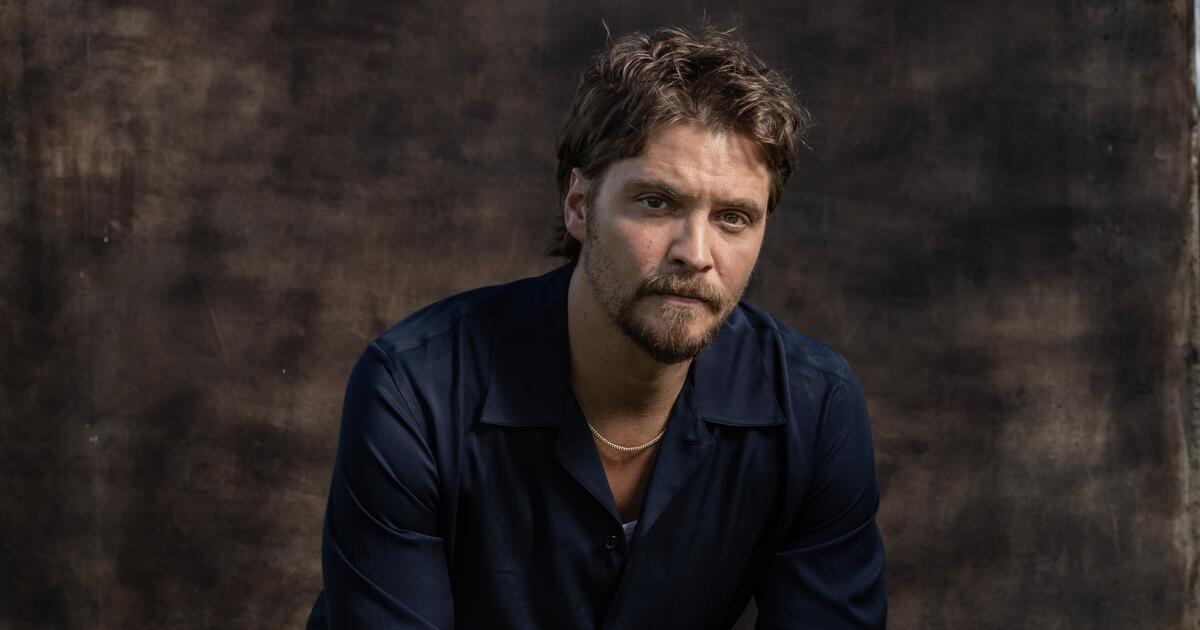
“Kayce found his little peace of heaven, getting everything he ever wanted and fought for,” said Luke Grimes, who plays the soft-spoken Dutton in “Yellowstone.”
Grimes reprises the role in CBS’ “Marshals,” which premiered Sunday. But in the new series, Kayce’s serenity has been brutally shattered, forcing him to find a new path forward after an unimaginable tragedy.
Advertisement
The drama is the first of several planned spinoffs of “Yellowstone,” which became TV’s hottest scripted series during its five-season run. And while some familiar faces return and events unfold against the magnificent backdrop of towering mountains and lush greenery, “Marshals” is definitely not “Yellowstone” 2.0.
Luke Grimes as Kayce Dutton in “Marshals,” which combines the gritty Western flavor of “Yellowstone” with the procedural genre.
(Sonja Flemming / CBS )
In “Marshals,” Kayce joins an elite squad of U.S. Marshals headed by his Navy SEAL teammate Pete Calvin (Logan Marshall-Green). The drama combines two distinct brands — the gritty Western flavor of “Yellowstone” with the procedural genre, a flagship of CBS’ prime-time slate.
Advertisement
During an interview at an exclusive club in downtown Los Angeles, Grimes expressed excitement about dusting off his cowboy hat and boots, though he admitted to having initial concerns about whether the project was a fit.
“I had never watched a procedural before, so I had to do some homework on what that was,” Grimes said hours before the gala premiere of “Marshals” at the Autry Museum of the American West in Griffith Park. “And I just couldn’t wrap my head around it at first. In the finale, Kayce had ridden off into the sunset. So I thought, ‘Let him be, let him go.’ ”
Those doubts eventually ebbed away.
“To be honest, there was a part of me that didn’t want to let Kayce go just yet,” Grimes said. “Saying goodbye to him was really hard, so the opportunity to keep this going was something I couldn’t pass up. We get to show his backstory and also this other side of him that we didn’t see in ‘Yellowstone.’ ”
But this Kayce is a man in crisis. “Yellowstone” devotees will likely be shocked by the “elephant in the room” — the revelation in the pilot episode that Monica has died of cancer. The couple’s sexy and loving chemistry was a key element in the series while also establishing Grimes as a heartthrob.
Advertisement
“I think fans will be upset — and they should be,” Grimes said as he looked downward. “Kayce is very upset. It’s the worst thing that could have happened to him. But as much as I’m really upset not to work with Kelsey, it’s a good idea for the show.”
He added, “His dream life is no longer available to him. Now the only thing he has is his son, who is not so sure he wants the same life as Kayce. A big part of the season is Kayce learning how to manage all these new things — new job, being a single father.”
“His dream life is no longer available to him. Now the only thing he has is his son, who is not so sure he wants the same life as Kayce,” said Luke Grimes about his character Kayce.
(Jay L. Clendenin / For The Times)
Executive producer and showrunner Spencer Hudnut (CBS’ “SEAL Team”) acknowledged in a separate interview that viewers may be stunned by the tragedy. “Real life intervenes for Kayce. Unfortunately it happens to so many of us.”
Advertisement
But he stressed that although Monica is physically gone, her presence will be heavily felt this season.
“She is guiding Kayce, and their relationship is moving forward,” Hudnut said. “His dealing with his inability to confront his grief is a big part of the season. It became clear that something horrible had to happen to put Kayce on a different path.”
As the development evolved, Grimes embraced the procedural concept: “This is a very different show and structure. This is an action show, very fast paced. I meet a lot of fans who say they really want to see Kayce go full Navy SEAL.”
Alumni from “Yellowstone” returning in “Marshals” include Gil Birmingham as tribal Chairman Thomas Rainwater and Mo Brings Plenty as his confidante Mo.
“Yellowstone” co-creator Taylor Sheridan, who had already spearheaded the prequels “1883” and “1923,” will further expand the “Yellowstone” universe later this month with “The Madison,” starring Michelle Pfeiffer and Kurt Russell, about a New York City family living in Montana’s Madison River territory. Later this year, Kelly Reilly and Cole Hauser will star in “Dutton Ranch,” reprising their respective “Yellowstone” roles as John Dutton’s volcanic daughter Beth Dutton and her husband, boss ranch hand Rip Wheeler.
Advertisement
Hudnut said fans of “Yellowstone” will recognize themes that were central to that series: “The cost and consequences of violence, man versus nature, man versus man.”
“We’re trying to tap into what people loved about ‘Yellowstone’ but to tell the story in a different framework,” he said. “The procedural brand is obviously very successful for CBS. And nothing has been bigger than ‘Yellowstone.’ So the challenge is, how do you marry those things?”
Taking on the lead role prompted Grimes to reflect on how “Yellowstone” transformed his life after co-starring roles in films like “American Sniper” and “Fifty Shades of Grey” and playing a vampire in the TV series “True Blood.”
“‘Yellowstone’ changed my life in many, many ways,” he said. “The biggest change is that I now live where we shot the show in Montana. The first time I went there, I would have never thought I would ever live there.
“I would come back to the city after shooting. But a little bit more each year, I felt more out of place here, and more peace and at home there. I’m a big nature person — I never was a big city person, but I had to be here to do what I wanted. But after the third season, my wife and I decided to move there. We wanted to start a family.”
Advertisement
The topic of a Kayce spinoff kept coming up during the filming of the finale, but “meanwhile we were having a baby, so that was the biggest thing on my plate.”
“‘Yellowstone’ changed my life in many, many ways,” said Luke Grimes.
(Jay L. Clendenin/For The Times)
Grimes was also dealing with the off-screen drama that impacted production due to logistical and creative differences between Costner and Sheridan. Costner, who was the show’s biggest attraction, exited after filming the first part of the final season. His character was killed off.
Asked about the backstage tension, Grimes said, “I just tried to do my job to the best of my ability, and not get caught up in all that. It was sort of frustrating, but I felt lucky to have a job.”
Advertisement
He recalled getting a call from Sheridan about the plans for a spinoff: “He said, ‘I think you should talk to the guy who is going to be the showrunner. I’m not telling you to do it, and I’m not telling you not to do it. But Spencer is great and he has some good ideas.’ ”
Hudnut said Kayce “was always my favorite character. Also, Luke is not Kayce. Kayce is an amazing character, but Luke is really thoughtful and smart. He is a true artist and has an artist’s soul, while Kayce is kicking down doors and terrorizing people. And Luke has such a great presence. He can do so much with just a look to the camera. He is a true leading man.”
In addition to starring in “Marshals,” Grimes is also an executive producer. He pitched the opening sequence — a flashback showing Kayce in the battlefield. He also performs the song that plays over the final scene, in which he visits his wife’s grave. The ballad is from Grimes’ self-titled country album which was released last year.
“Luke’s creative fingerprints are all over the pilot,” Hudnut said.
Grimes said he does not feel pressure about being the first follow-up from “Yellowstone” to premiere.
Advertisement
“We’re not trying to make the same show, so no matter what happens, its a win-win,” he said. “I had a blast doing it.”
I am a sucker for all those straight-to-video slasher movies from the 90’s; there was just a certain point where you knew the acting was terrible, however, it made you fall in love. I can definitely remember scanning the video store sections for all the different horror movies I could. All those movies had laughable names and boom mics accidentally getting in the frame. Truckerseems like a child of all those old dreams, because it is.
Let’s get into the review.
Synopsis
When a group of reckless teens cause an accident swroe to never speak of it. The father is reescued by a strange man. from the wreckage and nursed back to health by a mysterious old man. When the group agrees to visit the accident scene, they meet their match from a strange masked trucker and all his toys with revenge on his mind.
Roll on 18 Wheleer
Trucker is what you would imagine: a movie about a psychotic trucker chasing you. We have seen it many, many times. What makes the film so different is its homage to bad movies but good ideas. I don’t mean in a negative way. When you think of a slasher movie, it’s not very complicated; as a matter of fact, it takes five minutes to piece the film together. This is so simple and childlike, and I absolutely love it. Trucker gave us something a little different, not too gory, bad CGI fire, I mean, this is all we old schlock horror fans want. Trucker is the type of film that you expect from a Tubi Original, on speed. However, I would take this over any Tubi Original.
I found some parts that were definitely a shout-out to the slasher humor from all those movies. Another good point that made the film shine was the sets. I guess what I can say is the film is everything Joy Ride should have been. While most modern slashers are trying to recreate the 1980s, the film stands out with its love for those unloved 1990’s horror films. While most see Joyride, you are extremely mistaken, my friend; you will enjoy this film much more.
Advertisement
In The End
In the end, I enjoyed the entire film. At first, I saw it listed as an action thriller; I was pleasantly surprised, and Trucker pulled at my heart strings, enveloping me in its comfort from a long-forgotten time in horror. It’s a nostalgic blast for me, thinking back to that time, my friends, my youth, and finding my new home. Horror fans are split down the middle: from serial-killer clowns (my side) to elevated horror, where an artist paints a forty-thousand-year-old demon that chases them around an upper-class studio apartment. I say that a lot, but it’s the best way to describe some things.
The entire movie had me cheering while all the people I hated suffered dire consequences for their actions. It’s the same old story done in a way that we rabid fans could drool over, and it worked. In all the bad in the world today, and my only hope for the future is the soon-to-end Terrifier franchise. However, the direction was a recipe to succeed with 40+ year old horror fans like me. I see the film as a hope for tomorrow, leading us into a new era.