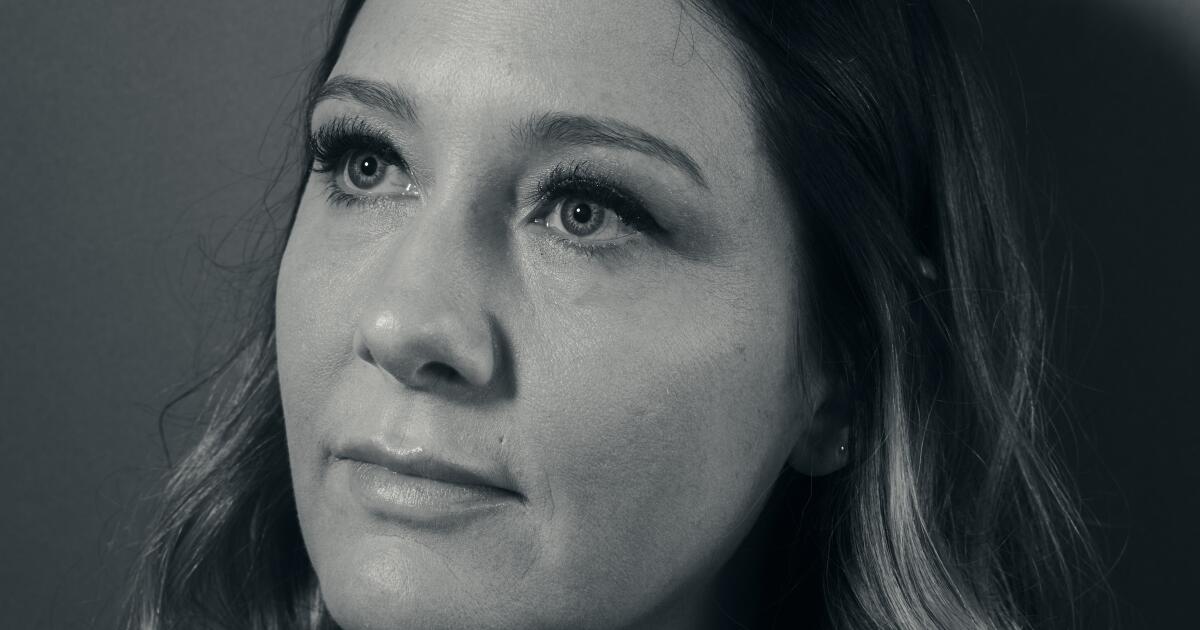
For filmmaker Erica Tremblay, “Fancy Dance” has already achieved the highest of honors.
After screening the film for an audience of Cayuga-language speakers in Toronto this past year, one of the elders grabbed her by the cheeks and told her “good job” in Cayuga.
“Some of them were crying because they’re in their 80s and 90s and they’ve never seen their language in a film before,” says Tremblay. “To me, that’s the biggest award that the film has received so far.”
“Fancy Dance,” which hits theaters Friday in limited release before arriving on Apple TV+ on June 28, follows Jax (Lily Gladstone) and her teenage niece Roki (Isabel Deroy-Olson), for whom she has been caring since the disappearance of Roki’s mother. As Jax juggles searching for her sister and helping Roki prepare for an upcoming powwow dance, authorities come to take Roki away from the reservation and place her with her white grandfather.
Directed by Tremblay, 43, who co-wrote the script with Tlingit screenwriter Miciana Alise, “Fancy Dance” marks the Seneca-Cayuga filmmaker’s narrative feature debut. The film premiered as part of the U.S. dramatic competition at the 2021 Sundance Film Festival in Park City, Utah. Like her 2020 short “Little Chief” (which also stars Gladstone), “Fancy Dance” is set in and around the Seneca-Cayuga reservation in Oklahoma.
Advertisement
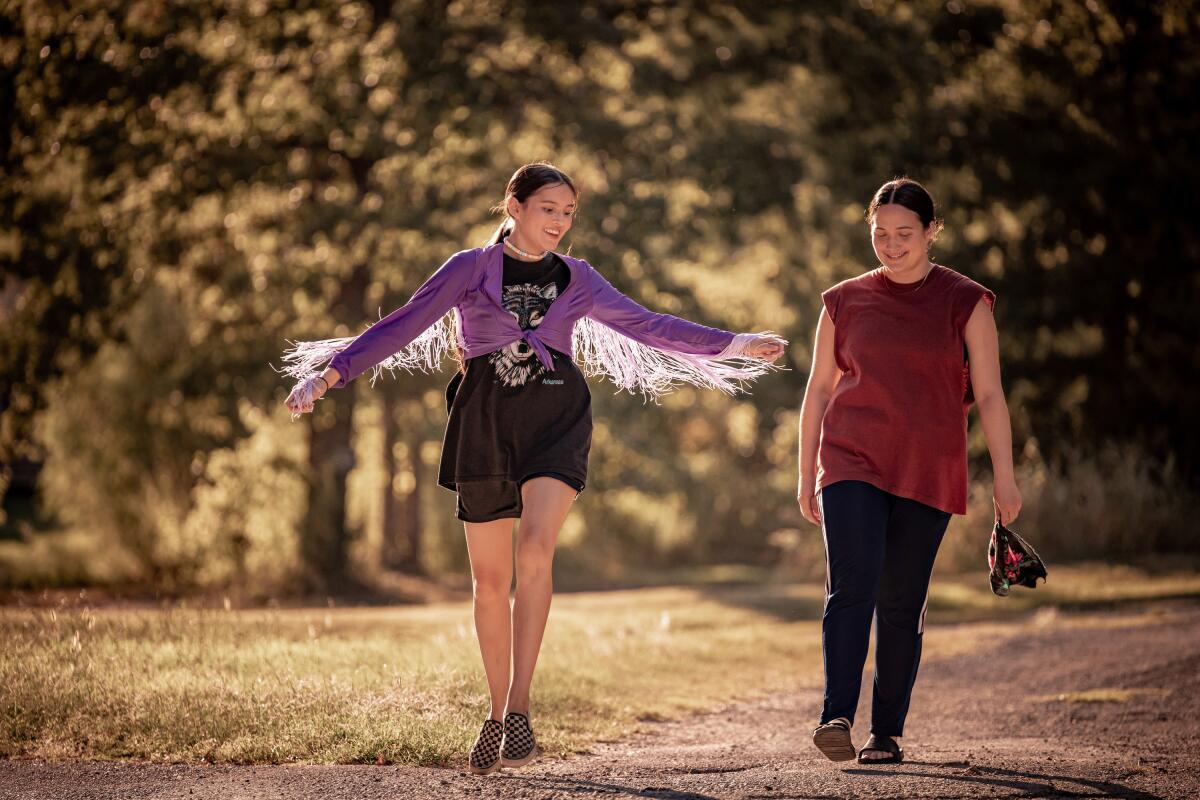
Isabel Deroy-Olson, left, and Lily Gladstone in the movie “Fancy Dance.”
(Apple TV+)
Tremblay, who has written and directed on series such as “Reservation Dogs” and “Dark Winds,” explains that she found inspiration for the film’s story while in a three-year-long language-immersion program studying Cayuga.
“We were learning familial words at the time and I learned that the word for mother is knó:ha’ and that the world for your auntie on your maternal side was knohá:’ah, which means ‘little mother’ or your ‘other mother,’” says Tremblay. “This beautiful matriarchy and the importance of matrilineal kinship was so brilliantly obvious in the language and it was so moving to me.”
Advertisement
Within Cayuga vocabulary and grammar and syntax, Tremblay was able to feel a connection to her culture in a new way. And it was also a reminder that it was not that long ago that her culture and its perspective on matriarchy was present and thriving.
Through Jax and Roki’s story, “Fancy Dance” touches on ongoing systemic issues affecting Indigenous women and their communities, such as the missing and murdered crisis and the forced removal of Native American children from their families. But primarily, “Fancy Dance” is Tremblay’s love letter to her culture and the Cayuga language.
“It’s just hitting me that in a few short days, the film will be available globally and Cayuga is going to be heard around the world,”she says during a recent video chat over Zoom. “This is a big deal. So I’m feeling gratitude and pride, which is sometimes hard for me to allow myself to feel.”
Tremblay discusses “Fancy Dance’s” Cayuga dialogue, the issues the film addresses and her optimism for the future of the industry below. This conversation has been edited for length and clarity.
Why was it important for you to use Cayuga in this film?
Advertisement
We’re at a place with our language, Cayuga, where there are less than 20 first-language speakers left. That’s dire. I think it’s considered close to extinct as a language. I’m not a fluent speaker. I’ll always be a language learner. But I have knowledge of the language and you can’t just hold it to yourself. It very much feels like a responsibility that, because I had the privilege to study in a language-immersion program, I have to do my part to pass it on.
Roki (Isabel Deroy-Olson), left, and Jax (Lily Gladstone) in “Fancy Dance.”
(Apple TV+ )
Jax and Roki’s relationship is at the heart of the movie. What I really enjoyed were the little routine moments they shared — moments of joy, like when Roki gets her first period.
It was really important to have those moments of joy and those moments of levity because that’s what it feels like in my community. I know so many Jaxes. I was raised by Jaxes and without those women and queer folks in my life, I wouldn’t be here. It’s through laughter and it’s through connection that you can transcend all of these things that are happening.
Advertisement
Both of my nieces and my nephew have all gotten their periods. My youngest niece just got her period this past month. It’s such a joyous occasion for us Haudenosaunee people. When [Roki and Jax] go to the diner and she orders all of the strawberry stuff, it was like when I got my period and we went to the Chinese buffet and I ordered sweet-and-sour chicken and all this stuff. We don’t get to celebrate menses enough.
I’m always happy to see cultures that celebrate periods because so often it feels like there’s a weird shame or embarrassment around it.
It’s so sad because there is. We have certain things that you can and can’t do when you’re on your period. It’s not shameful in our culture. When you’re on your period, there are certain things that you’re not allowed to be near or go around because you’re so powerful that you can disrupt it. Anthropologists tried to rewrite that, but it’s in the language, it’s in the ceremonies, it’s in the culture. I’m much more excited about accepting that than any sort of shame. I’m signing up for: I’m at my most powerful.
How did you approach balancing these topics that matter to you with making entertainment?
Miciana and I wrote this film and made this film for Native people. We wanted the film to be a film that’s by Native people, about Native people. When Native people watch this, they’re going to see things represented accurately and authentically that make them proud and that they can identify with. So, No. 1, the responsibility when we were making the film was to Native people and to not re-traumatize or trigger Native people when they watched the film.
Advertisement
For the non-Native audiences that will come to find this film, we wanted to be able to talk about issues that are happening in Indian country in the hope that people who watch this can be guided to these topics by way of channeling humanity versus hitting you over the head. Every one of us on this planet can identify with the themes of love and loss and grief. Hopefully through the ebb and flows of [Jax and Roki’s] love, the audiences will recognize these systemic issues that are impacting Native people in modern times and they will think about their relationships to these systems.
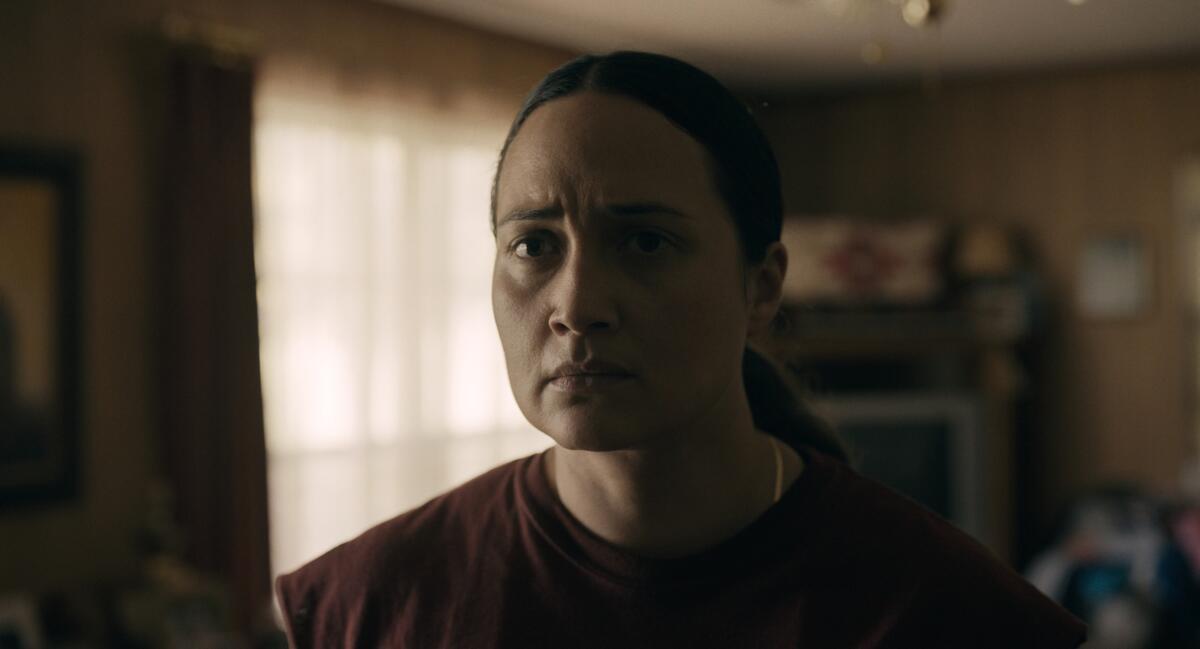
Lily Gladstone in the movie “Fancy Dance.”
(Apple TV+)
We’ve been in a period where it feels like there is more attention being paid to Native projects — like “Dark Winds” and “Reservation Dogs.” What has it been like for you to see and experience that growth? Has the momentum stopped?
I’m really grateful for Sierra Ornelas at “Rutherford Falls” and Sterlin Harjo [of “Reservation Dogs”] and Sydney Freeland [of “Echo”] and all of these incredible showrunners and directors that are working and are my mentors. They’re really pushing up against all odds and it’s so inspiring. It allows you to see yourself that way, to see yourself as a storyteller that can do this job for a living and that you can make stories about communities that you want to.
Advertisement
You don’t know if this is just a moment that Hollywood is having that will just go right back. With all the strikes and everything that happened, we’re still trying to find our footing in. What is the new Hollywood? What are the impacts of AI that are coming? All of this is really anxiety-inducing.
It’s really hard on these sets. I’ll often turn around on a tech scout and be the only woman. You might be working with collaborators that don’t want to listen to you because you’re a woman or you’re Indigenous or they just have this idea that you don’t have as much knowledge. That is very actively still happening and it f— sucks. But I have optimism that things are moving in the right direction.
But how do you make up for over 100 years of really deplorable, horrible behavior in, like, three seasons of TV? It’s going to take a lot more investment by Hollywood studios to make up for the bad behavior that existed for so long and that continues to exist. I always call on these studios and these companies: You can’t just say things out loud. You have to actually actively do things.
What that really means is writing checks. You have to actively employ people with money. It’s great you have these mentorship programs, but you have to hire these people and pay them and invest in their pitches and their ideas. There needs to be more active support from these institutions and we’re slowly seeing that happen. But we need more of that in order for this to not just be a fad. So ask me this question again in five years.
I’m impressed by your optimism.
Advertisement
I think as an industry, we’re all just holding on and hoping that we can get things back. My mom always taught me to be optimistic while also recognizing reality. I think that we can be optimistic and at the same time call out bad behavior from the studios and these systems. I want to work with them and I’m so excited when I do. Look at a show like “Reservation Dogs” — that’s a great example of how great work can come from these relationships and I’m excited to see more of that.
And I feel like my optimism is also a quality that I learned from the Jaxes in my life. When you look at Jax and Roki, the only way that they can get to the other side of what they’re facing is because they have optimism and they love each other. They know that they can get themselves guided through this life as long as they rely on each other. I feel the same way about the work that Sterling’s doing and the work that I’m doing and Tazbah [Chavez] and all of these incredible filmmakers. The only way we get to the other side of this is by linking hands and doing it together. And that comes from being inspired by these incredible Native people that I know and love that are sustaining much more.
I go home [to the Seneca-Cayuga reservation] and there’s a person missing. That’s a way bigger f— deal than not getting hired in Hollywood. But it’s through laughter, through love, through humanity, through holding hands that we get to the other side of it. We’re going to survive Hollywood. We’ve survived way worse.
A family and friends gather for a naming-day ceremony at a Danish seaside hotel, but an unexpected appearance by one uninvited attendee (Trine Dyrholm) ruptures the veil of bland, happy-clappy familial unity in director Mads Mengel’s gutsy, well-wrought debut feature, The Guest.
The most audacious move here may be Mengel and co-screenwriter Christian Bengtson’s choice to write something that will inevitably invite comparisons with Festen (The Celebration), arguably the most notorious Danish-language film of the last 30 years, which similarly revolved around a bougie gathering disrupted by angry revelations. But there’s a savvy 2026 vibe about the way the film refuses to create florid melodrama out of quotidian crisis, and instead observes with generosity as the characters grope awkwardly toward emotional détente and mutual forgiveness.
The Guest
The Bottom Line
When wetting the baby’s head goes too far.
Advertisement
Venue: Karlovy Vary Film Festival Cast: Simon Bennebjerg, Trine Dyrholm, Josephine Park, Peter Gantzler, Petrine Agger, Mette Klakstein Wiberg, Kristine Kujath Thorp, Buster Lund Luscher Director: Mads Mengel Screenwriter: Christian Bengtson, Mads Mengel
1 hour 40 minutes
Festen-alumnus Dyrholm, having a bit of a career moment with outstanding performances both here and in the recent The Girl With the Needle among others, leads a uniformly excellent cast in a work that deserves celebration on the festival circuit and beyond.
Dyrholm’s Vibeke is technically the first person we meet, although she’s seen only in shadow at first as she smokes and drives while her unattached seatbelt, caught outside by a closed door, clatters on the road. This is the kind of unsafe driving her son Karl (Simon Bennebjerg) so deplores, a point of contention later on in the story when he will steal her car keys in interest of her own safety and that of others.
Advertisement
But well before we get to that flashpoint, the film introduces Karl, effectively the film’s protagonist, as he arrives at the swanky resort with his wife Emilie (Mette Klakstein Wiberg) and their infant son Elliot (Buster Lund Luscher). The young family, who’ve chosen this new, secular tradition instead of a christening to welcome their child to the world, are there a day before the ceremony to meet up with core family members.
As this advance party settles down for dinner, a table that includes Karl’s sister Rikke (Josephine Park) and Emilie’s parents Frank (Peter Gantzler) and Kirsten (Petrine Agger), there’s a surprise: Vibeke is coming, courtesy of Rikke’s invitation. Karl is quietly furious and seems determined to turn her away, even when she shows up minutes later. Poor Frank and Kirsten look on confused, determinedly polite in their insistence that all family members should be welcome.
Bengtson and Mengel’s economical script carefully dripfeeds backstory as the film unfolds to explain that Karl hasn’t spoken to his mother in years, that Rikke has taken over all the daily mom management and that she’s very worn out by it. Even so, she insists Vibeke is regularly taking her medication and isn’t a problem these days, although to Karl every weird anecdote and moment of emotional intensity is an augur of impending chaos. Rikke counters that their mother is just “big, that’s her personality not her condition.”
Interestingly, that specific condition is never named throughout, although armchair diagnosticians might spot many of the signs of bipolar disorder. But the film’s emotional focus on the person and her actions rather than the label is also very contemporary, reflecting a more holistic, inclusive mindset and approach to dealing with mental health issues.
Which is all fine and dandy, until Vibeke duly does skip a dosage and starts getting manic. One of the first signs of chemical imbalance arrives during the ceremony on the beach, when Vibeke carries little Elliot much further away from the shore than anyone wants, creating a panic. From there it just gets worse as Vibeke picks up on the censorious feeling emerging from the other party guests, who had found her so charming the night before when she’d led everyone to the casino to play roulette and diverted a bunch of partying teenagers from the room next to Karl and Emilie so they could get some sleep. When the toasts at the formal dinner begin, Vibeke’s mood darkens much further, and if we’ve all learned one thing from Festen, it’s be very afraid when a Dane gets up to make a toast.
Advertisement
Cinematographer David Bauer’s nimble-footed lensing and use of natural light does indeed hark back considerably to the look of those Dogme 95 movies back in the day, as does the naturalistic editing style deployed by Louis Emil Ramm Seeberg. But there are plenty of sins against the rules of cinematic chastity that marked that movement, such as the ample space made for Lasse Aagaard’s affecting, low-key score that amps up the anxiety as Vibeke starts to spiral.
That said, Mengel keeps things simple in sonic terms when it really counts, letting the musicality of Dyrholm’s deep, sonorous voice ring out on its own in the big monologue scenes. She is, as ever, utterly mesmerizing but the performance is made even more powerful by the muted, expressive reactions of the rest of the cast as they look on, frozen like deer in the headlights of the car crash of pseudo-christening. Moments of levity puncture the gloom, but the final feeling is one of numbed sorrow and pity for all these kind, fallible people, just trying to do their best.
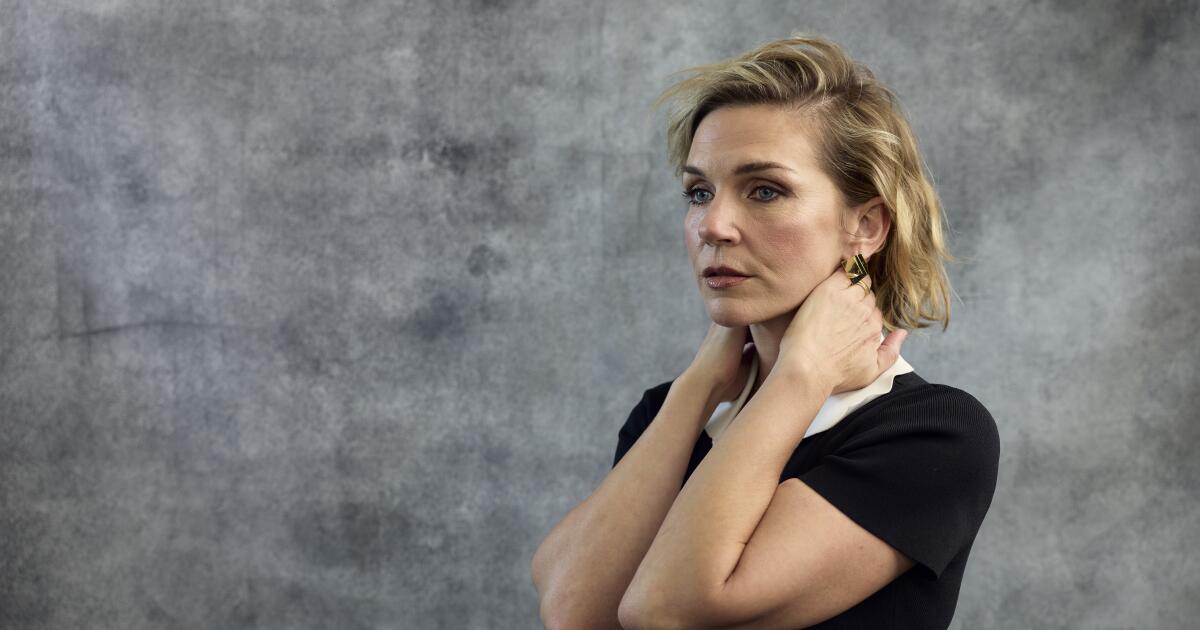
Rhea Seehorn was nervous about whether “Pluribus” would be recognized by Emmy voters Wednesday when nominations were announced. So she was jubilant when she and the surreal sci-series on Apple TV scored 18 nominations, the most for a first-year drama.
“I’m just so grateful,” the actor said in a phone interview. “People were like, ‘Why were you nervous?’ Honestly, you never actually know. I’m just so thrilled for the show, my co-stars, the production design, the editing, the writing, the music, the sound. I haven’t moved from my couch since they first announced everything because I’m still trying to call everybody on the show.”
Seehorn received a nomination for lead actress in a drama series for her portrayal of cynical Carol Sturka, a fantasy romance author who finds herself in a mystifying situation after a virus seems to have wiped out most of Earth’s population. The series was created by Vince Gilligan, who created the acclaimed series “Breaking Bad” and co-created its spinoff “Better Call Saul,” which also featured Seehorn.
The actor compared her experience of being nominated for “Pluribus” to “Better Call Saul,” which earned her two supporting actress nominations: “ ‘Better Call Saul’ was such a family that supported and cheered each other on, and I’m so grateful I have that environment again. People could not be happier for each other, and we get to celebrate the show together.”
She added, “The only part that feels different is that it’s my first nomination as a lead. It’s the process of Vince writing this for me and seeing the mountain which he wanted me to climb and going through that process. The whole thing has been its own journey, so ending up with awards and nominations, and being so well received by critics and fans is not lost on me.”
Advertisement
The series has been applauded for its mix of drama, comedy and strangeness in its portrait of a woman coming to terms to what seems like an impossible dilemma.
“I love the storytelling, how much Vince and I would drill down on making this as authentic as we could in terms of an everyman who has to deal with an insane situation,” Seehorn said. “Most of us are just not heroic or leaping off the couch to go save the world. And Carol is dealing with immense grief and confusion in an utter dystopian crisis. I love the humor and the drama that comes out of us being as realistic as we can with her amidst an unrealistic event.”
Fans of “Pluribus” have been relentlessly curious since the finale in December about when the second season will launch.
“I don’t know anything about that,” Seehorn said. “I don’t have to keep secrets because I’m not great at keeping them, and I know nothing. I don’t know what I’m doing with an atom bomb in the driveway. I can’t wait to find out. The writers want to have the same quality and reward the intelligence of the fans and never phone a single thing in. So their process is their process.”
In a roundabout way, the fact that I don’t have a strong attachment to The Wizard of Oz as a film (my late mother loved it, so that memory is deeply rooted in me, but the movie itself never did much for me) contributed directly to how amusing I found Gail Daughtry and the Celebrity Sex Pass to be. This comedy spoofs the plot of the classic fantasy movie, though the jokes are largely about Hollywood. The humor is big and broad, with some of the jokes really landing. Others? Not so much. Still, more than enough do to warrant a recommendation.
Gail Daughtry and the Celebrity Sex Pass gets a lot of mileage out of sending up show business, even if the observations, while funny, are not particularly new. Besides the deluge of jokes, there’s also a lot of likably broad characters to spend time with, especially our lead. They make the 90 minutes and change spent together with them go down very easy.
Sony Pictures Classics
For Gail Daughtry (Zoey Deutch), her life as a small town hairdresser is perfect. Engaged to her high school sweetheart Tom (Michael Cassidy), she’s the picture of happiness, at least until a trip to a celebrity book signing. There, Tom meets and ends up sleeping with his “celebrity pass,” a term Gail wasn’t even really previously aware of. Feeling betrayed, Gail impulsively joins her co-worker and friend Otto (Miles Gutierrez-Riley) on a trip to Los Angeles. There, a psychic convinces her that the can save her marriage by sleeping with her own celebrity pass: Jon Hamm (Jon Hamm).
Journeying through Tinseltown in a manner that recalls Dorothy’s adventure in Oz, Gail and Otto won’t have to find Hamm alone. Joining forces with talent agency assistant Caleb (Ben Wang), down on his luck paparazzo Vincent (Ken Marino), and actor John Slattery (John Slattery). As they search for Hamm, some for their own purposes, they meet other celebrities, while also being hunted by a group of Italian assassins after a case of mistaken identity. Eventually, they come across Hamm, and the moment of truth is at hand.
Sony Pictures Classics
Zoey Deutch dives headfirst into a broad comedy like this, absolutely relishing the opportunity to get silly again. She’s able to make Gail a babe in the woods but also someone you laugh with, not at. It’s a wildly enjoyable turn. Deutch started out in comedies and was always a talented comedic actress, so it’s a pleasure to watch her back at it. Miles Gutierrez-Riley and Ben Wang get some very funny moments, while Ken Marino is a reliable comic presence. Jon Hamm and John Slattery are delighted to be sending up themselves, with amusing results. Supporting players here, in addition to Michael Cassidy, also include Kerri Kenney, Richard Kind, Thomas Lennon, Joe Lo Truglio, Fred Melamed, and more, plus some cameos.
Advertisement
Filmmaker David Wain, again co-writing with Ken Marino, continues to make it look easy. Few can make a silly comedy like Marino and Wain, especially as they pack their flicks with extra bits that only subsequent viewings reveal. Is Gail Daughtry and the Celebrity Sex Pass on the same level as Wet Hot American Summer or They Came Together? No, not quite. At the same time, is this, scattershot approach and all, funnier than most other 2026 releases? You bet. Marino and Wain have a hit rate that allows some of the jokes to miss, as you only have seconds to wait before the next one, which probably will hit.
Gail Daughtry and the Celebrity Sex Pass is very amusing, and occasionally hilarious, even if not as many jokes land as you might expect. Zoey Deutch is great in the lead role, David Wain is in his comfort zone, and the laughs come hot and heavy. If you’re a Wain fan, this new movie should be a must see.





 Sony Pictures Classics
 Sony Pictures Classics


