Entertainment
Connie Francis, legendary singer of 'Who's Sorry Now?' and 'Where the Boys Are,' dies at 87

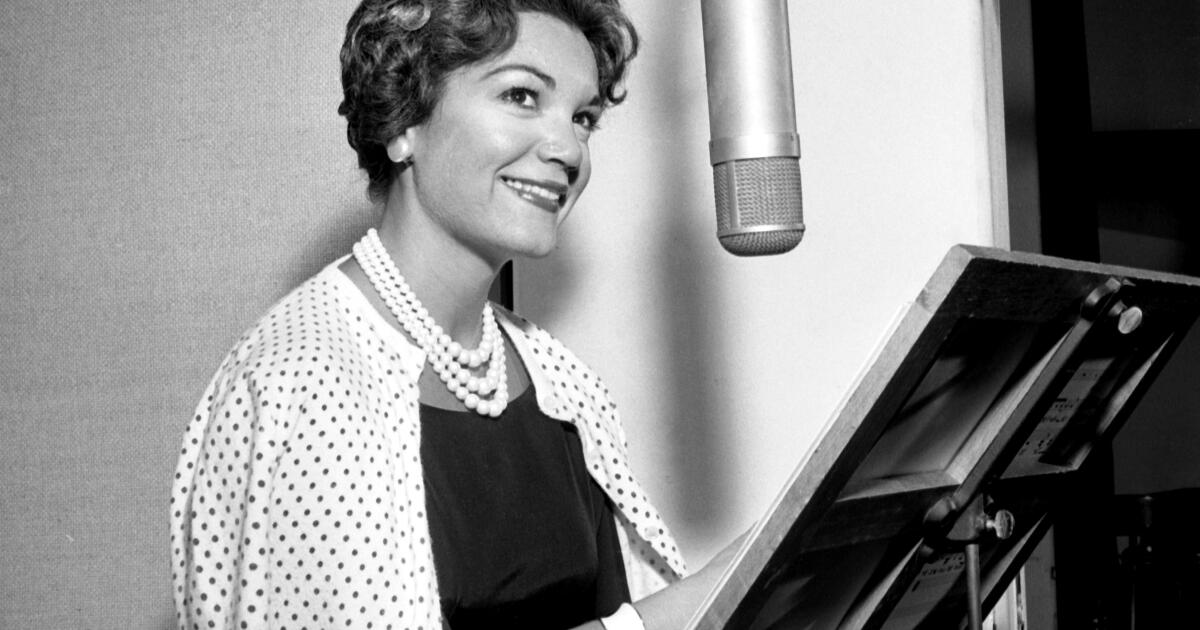
Connie Francis, the angelic-voiced singer who was one of the biggest recording stars of the late 1950s and early 1960s, has died. She was 87.
Her friend and publicist, Ron Roberts, announced the singer’s death Thursday, according to the Associated Press.
Less than a month prior to her death, Francis was hospitalized for “extreme pain” following a fracture in her pelvic area. The singer, who shared details about her health with fans on social media, used a wheelchair in her later years and said she lived with a “troublesome painful hip.”
Francis emerged when rock ’n’ roll first captivated America. Her earliest hits — a dreamy arrangement of the old standard “Who’s Sorry Now?,” the cheerfully silly “Stupid Cupid” and the galloping “Lipstick on Your Collar” — fit neatly into the emerging genre’s lighter side. Although she targeted teen listeners with such songs as the spring break anthem “Where the Boys Are,” Francis ultimately gravitated toward the middle of the road, singing softly lit, tasteful pop for adult audiences.
Francis’ commercial peak roughly spanned from Elvis Presley’s induction into the U.S. Army to the Beatles first setting foot on American soil. Over that five-year period, Francis was one of the biggest stars in music, earning three No. 1 hits: “Everybody’s Somebody’s Fool,” “My Heart Has a Mind of Its Own” and “Don’t Break the Heart That Loves You.” As her singles offered familiar adolescent fare, her albums were constructed for specific demographics. During the early ’60s, she cut records dedicated to “Italian Favorites,” “Rock ’n’ Roll Million Sellers,” “Country & Western,” “Fun Songs for Children,” “Jewish Favorites” and “Spanish and Latin American Favorites,” even recording versions of her hits in Italian, German, Spanish and Japanese.
This adaptability became a considerable asset once her pop hits dried up in the mid-’60s. Francis continued to be a popular concert attraction through the 1960s, her live success sustaining her as she eased into adult contemporary fare. A number of personal tragedies stalled her career in the 1970s, but by the ’90s, her life stabilized enough for her to return to the stage, playing venues in Las Vegas, Atlantic City and elsewhere until her retirement in the 2010s.
Connie Francis circa 1960.
(Archive Photos/Getty Images)
Connie Francis was born Concetta Maria Franconero on Dec. 12, 1938, in Newark, N.J. When she was 3, her father bought her an accordion and she spent her childhood learning Italian folk songs. By age 10, her parents enrolled her in local talent contests. When her father attempted to book her on the New York-based television show “Startime,” producer George Scheck only agreed because Francis played the accordion and he was “up to here in singers.” Francis remained a fixture on “Startime” through her early teens — Scheck served as her manager during these formative years — during which time she also appeared on Arthur Grodfrey’s “Talent Scouts.” Godfrey stumbled over her Italian name, suggesting she shorten it to something “easy and Irish,” thereby giving birth to her stage name.
Scheck managed to secure Francis a record contract with MGM in 1955. As she received work dubbing her singing voice for film actresses — she subbed for Tuesday Weld in 1956’s “Rock, Rock, Rock” and Freda Holloway in 1957’s “Jamboree” — MGM steadily attempted to move her from pop to rock. Nothing clicked until Francis recorded “Who’s Sorry Now?” as a favor to her father, giving the 1923 tune a romantic sway.
“Who’s Sorry Now?” caught the ear of Dick Clark, who regularly played the record on his “American Bandstand,” which had just expanded into the national market. Clark’s endorsement helped break “Who’s Sorry Now?” and sent it into the Billboard Top 10. MGM attempted to replicate its success by having Francis spruce up old chestnuts, but to no avail. The singer didn’t have another hit until she cut “Stupid Cupid,” a song co-written by Neil Sedaka and Howie Greenfield, a pair of young songwriters at the Brill Building who were navigating the distance separating Broadway-bound pop and rock ’n’ roll.
“Stupid Cupid” was the first of many hits she’d have with the songwriters, including the slinky ‘Fallin’” and the ballad “Frankie.” She later said, “Neil and Howie never failed to come up with a hit for me. It was a great marriage. We thought the same way.” Sedaka and Greenfield weren’t the only Brill Building songwriters to command Francis’ attention: She developed a romance with a pre-fame Bobby Darin, who was chased away by her father.
Over the next few years, Francis recorded both standards and new songs from Sedaka and Greenfield, along with material from other emerging songwriters, such as George Goehring and Edna Lewis, who wrote the lively “Lipstick on Your Collar.” Within less than two years, her popularity was such that MGM released five different Connie Francis LPs for Christmas 1959: a set of holiday tunes, a greatest-hits record, an LP dedicated to country, one dedicated to rock ’n’ roll and a set of Italian music, performed partially in the original language.

Connie Francis and Neil Sedaka in 2007.
(George Napolitano / FilmMagic / Getty Images)
With her popularity at an apex, Connie Francis made her cinematic debut in the 1960 teen comedy “Where the Boys Are,” which also featured a Sedaka and Greenfield song as its theme. Francis appeared in three quasi-sequels culminating in 1965’s “When the Boys Meet the Girls,” but she never felt entirely comfortable onscreen, preferring live performance. “Vacation” became her last Top 10 single in 1962 — the same year she published the book “For Every Young Heart: Connie Francis Talks to Teenagers.” Too young to be an oldies act, Francis spent the remainder of the 1960s chasing a few trends — in 1968, she released “Connie & Clyde — Hit Songs of the ’30s,” a rushed attempt to cash in on the popularity of Arthur Penn’s controversial hit film “Bonnie and Clyde” — while busying herself on a showbiz circuit that encompassed Vegas, television variety shows and singing for troops in Vietnam.
A comeback attempt in the early 1970s was swiftly derailed by tragedy. After appearing at Long Island’s Westbury Music Fair on Nov. 8, 1974, she was sexually assaulted in her Howard Johnson’s hotel room; the culprit was never caught. Francis sued the hotel chain; she’d later win a $2.5-million settlement that helped reshape security practices in the hospitality industry. As she was recovering from her assault, she underwent a nasal surgery that went astray, leading her to lose her voice for years; it took three subsequent surgeries before she regained her ability to sing. Francis spent much of the remainder of the ’70s battling severe depression, but once her voice returned, recordings happened on occasion, including a disco version of “Where the Boys Are” in 1978.

Connie Francis.
(ullstein bild via Getty Images)
Francis returned to the public eye in the early 1980s, first as a victims rights activist, then as a live performer. Her comeback was marred by further tragedy — the murder of her brother George, a lawyer who became a government witness after pleading guilty to bank fraud; the police indicated the killing was related to organized crime.
Francis continued to work in the wake of his death, playing shows and writing her 1984 autobiography, “Who’s Sorry Now?,” but she continued to be plagued with personal problems. She told the Village Voice’s Michael Musto, “In the ’80s I was involuntarily committed to mental institutions 17 times in nine years in five different states. I was misdiagnosed as bipolar, ADD, ADHD, and a few other letters the scientific community had never heard of.” After receiving a diagnosis for post-traumatic stress disorder, Francis returned to live performances in the 1990s; one of her shows was documented on “The Return Concert Live at Trump’s Castle,” a 1996 album that was her last major-label release. When asked by the Las Vegas Sun in 2004 if life was still a struggle, she responded, “Not for the past 12 years.”
Francis regularly played casinos and theaters in the 2000s as she developed a biopic of her life with Gloria Estefan, who planned to play the former teen idol. The film never materialized. In 2010, Francis became the national spokesperson for Mental Health America’s trauma campaign. By the end of the 2010s, she retired to Parkland, Fla., and published her second memoir, “Among My Souvenirs: The Real Story, Vol. 1,” in 2017.
Connie Francis married four times. Her first marriage, to Dick Kanellis in 1964, ended after three months; her second, to Izzy Marion, lasted from 1971 to 1972. She adopted a child with her third husband, Joseph Garzilli, to whom she was wed from 1973 to 1978. Her fourth marriage, to Bob Parkinson, ended in 1986 after one year.


When I spend time around fellow writers, regardless of their achievements, conversation is much the same as in any other context. When I watch groups of fictional writers in films, they are continually striving to outdo one another, to show off their brilliant intellects. It’s a constant process of trying too hard, and it’s exhausting. To his credit, Dustin Hoffman, who plays established literary genius David in this torrid tale of family conflict, doesn’t come across this way, rising above the clumsy script thanks to his patient approach. The same cannot be said of the other actors, all of whom have proved their talent elsewhere yet seem seduced by the notion that this is how intelligent people behave.
The plot here is fairly simple, and not without potential. David’s son Jacob (Tom Sturridge) is a copywriter and successful creator of jingles, but after his wife Elise (Alison Brie) wins a major award, he starts getting insecure, wanting to prove that he can make it as a proper literary type. The obvious way to do this seems to be to write a biography of David, but David has no interest in engaging with this. He provides a number of reasonable justifications for this. Underlying them is the fact that we all tend to frame ourselves in different ways for different people. What one might be willing to say to the great anonymous public is not necessarily something one might feel able to say to one’s son.

This stalemate is broken by the arrival of John (André Holland, fresh from the similarly awkward – but smarter – The Dutchman), an old friend of Jacob whom David remembers fondly. At Elise’s instigation, a secret deal is made: John will look after the increasing fragile older man during the day and, in the process, extract his stories from him, giving them to Jacob for his book. John agrees to this because he needs the money Jacob offers him, and it seems like a sweet deal. It immediately sets up a power imbalance, however.
Complicating matters further are John’s past as a literary protégé who failed to fulfil his promise; the fact that he was once in a relationship with Elise, whose dissolution she regrets; and the pressure that she’s under to match her great success, from an agent who subscribes to the popular but rather tedious belief that inspiration is most easily found in bad behaviour.
Another way writers in films differ from those in the real world is that for them, critical success comes with money, so they don’t have to write very much. A good deal of this film is spent listening to them whine about how hard it is, as if under the misapprehension that it’s not really a form of work. Sturridge is particularly unfortunate; between this and Jacob’s whining about issues with his parents, he doesn’t get much else to do. Brie has a little more to work with as the film flirts with the idea that we’re caught up in Elise’s imaginary scenarios, but this doesn’t really convince. Holland manages to salvage something, but it’s only Hoffman who is really able to interject some energy into proceedings – ironic given that he spends a lot of his scenes in a haze of cannabis smoke.
It’s not terrible. Writer/director Alex Vlack frames scenes nicely enough and all the technical work is carried out to a good standard. There’s just little reason for viewers to invest. Like its characters, it’s intent on trying to communicate cleverly, but has very little to say.
Reviewed on: 04 Jul 2026

Comedy saved Teruko Nakajima’s life.
In 2016, Nakajima received psychiatric care at Cedars-Sinai Medical Center, diagnosed with depression, PTSD and suicidal ideation. Her doctors searched for ways to manage her stress by exposing her to various activities, including video games, serene Icelandic landscapes and an aerial silks performance. The last brought her anxiety down, revealing that the arts were the answer. Her doctor prescribed the arts, comedy specifically, so she went to the Upright Citizens Brigade for class.
She found a calling and a safe space in comedy.
“I didn’t know I was born a comedian,” Nakajima said. “Finally, I really felt I was accepted as a comedian, validated for who I am.”
Nakajima shares her healing journey to the stage in “Made in America,” which just had an encore performance at UCB on Tuesday after its award-winning run in 2022 (it is also available for streaming on UCB’s website through Tuesday). The one-woman show arrives in time for the United States’ 250th anniversary on Saturday, documenting Nakajima’s search for the American dream as a first-generation Japanese American woman. “Made in America” premiered in 2022 at the Hollywood Fringe Festival during Joe Biden’s presidency and following the Jan. 6 United States Capitol attack. In 2026, its musings on identity and belonging pierce through today’s political landscape shaped by Donald Trump’s second presidency.
“I wanted to let people know this is an American story,” she said.
“Made in America” is about Nakajima’s life. It begins in her mother’s womb. She felt so safe there, she yearned to return. Growing up, she experienced an emotionally and physically abusive life at home, recalling her father breaking furniture and her mother’s alcohol-induced belittling comments. But her name, Teruko, translates to a “shining child.” Thus, she proclaims in the show, “I’m a superstar!”
The beauty in “Made in America” is Nakajima’s ability to find the humor in her trauma. When the show transitions to her life in America, she talks about her life as a dominatrix in New York City and her struggles with romance in Los Angeles. Her comedic jabs at the American economy and humorous reflections juxtapose somber moments of stillness in the midst of her struggles. This balance puts her life into perspective, revealing a positive personality beneath a dark saga.
Nakajima performs “Made in America” at Upright Citizens Brigade Theater.
(Nick Rasmussen)
“I look very happy-go-lucky and cheerful, but actually, I am a very dark person because I have a dark history,” she said. “I always wanted to leave my story behind. I wanted to leave my mark in this world before I died, so I needed to make something.”
The first class Nakajima took at UCB was John Flynn’s storytelling course. There, she started building pieces of the show without realizing it. As they added up, the idea for a show surfaced. After class one day, she asked Flynn to direct it. Flynn, who has been teaching at UCB in New York and L.A. for about 20 years, agreed.
“She disarms people,” Flynn said. “There’s something about her that is just so unique and so delightful that you won’t forget her.”
Flynn first met her at his storytelling open mic. She walked in with her emotional support dog Titi (also known as Tiny Teruko), wearing her signature red heart-framed glasses, without lenses. Soon, these glasses would make him double over in laughter when she performed and cried, dabbing her eyes with tissue through the frame.
“When you start to learn her story and the experiences she’s had, it is amazing that she is so positive,” he said. “She’s such a sort of undeniable positive energy that she just radiates all the time, which is so compelling and why people are so drawn to her.”

Revived at UCB amid Trump’s second term and the nation’s 250th birthday, Nakajima’s show doubles as a defiant immigrant love letter to America — and a refuge for audiences feeling alone.
(Nick Rasmussen)
Nakajima puts all of herself into the show. Aside from comedy, she has been a cheerleader in Japan, a salsa dancer in New York and a sculptor on the side — she loves sculpting MLB players’ butts; Derek Jeter is her favorite. In the show, she folds these aspects of her life into a single story, dancing from section to section. Comedy is more than just laughs; it’s storytelling.
“I am so good at cheering people up, since I was very little,” she said. “I had no competition with others because I’m the one and only. Nobody looks like me.”
Together, Flynn and Teruko parsed through her life stories to give the show an arc. For Flynn, it’s like carving away at what is already there to create something fun and cohesive, like a sculpture. “What’s fun about directing one-person shows like this is that it’s usually just two people in a room putting something together,” Flynn said.
Bringing the show back this year, the work gets sharper and tighter, but the biggest shift is in its conclusion. Once optimistic about the future of life in America, the show now has a stronger desire to make change. There was a sense of hope in 2022 for women like Nakajima, an immigrant who sought safety in a new country and struggled with abuse from her family and strange men. Today, as Trump’s immigration policies lean on deportation and discrimination, she simply wants to be seen.
“America, thank you for not giving up on me,” Nakajima said toward the end of the show. She is proud to be American, not just because she gets to have the same nationality as her dog Titi, but primarily because of the new life it offered her. America promised happiness. Whether it actually comes is another story, but in this one, the promise itself gave her a sense of purpose.
“After the show, people come to me in person and through messages,” she said. “A lot of people said, ‘I felt like I am not alone.’ That gives me so much hope and unity. I feel safe and like I have something to look forward to because I’m not the only one.”
Flynn realized how much he took for granted while working on the show with Nakajima. “I think, even though these are scary times and things seem to be going in directions that aren’t the best, there are still great people, and there’s something that is still there and is not dying and is still fighting,” Flynn said.
When she began her acting journey, Nakajima thought she’d turn to drama, but there’s something more unguarded in comedy.

Nakajima holding up her dog Titi during a performance of “Made in America.”
(Nick Rasmussen)
“I’m very authentic and invincible through comedy,” she said.
By the end of “Made in America,” Nakajima is no longer trying to find her way back to her mother’s womb. She is confident in her place in the world. She remembers that she is a star. She brings out her dog Titi, who was hidden on stage throughout the entire performance, and shares that UCB gave her a new outlook on life. Comedy breaks away her stresses and allows viewers to be vulnerable with her.
“I always wanted to feel safe,” she said. “I never had that. Finally, I found a safe space, and then I realized that I’m actually important. I’m actually worthy. I’m so happy right now to be able to express myself through comedy because it’s the truth.”
Movie Reviews
1986 Movie Reviews – About Last Night, Big Trouble in Little China, The Great Mouse Detective, Howling II, Psycho III, Under the Cherry Moon | The Nerdy

Welcome to an exciting year-long project here at The Nerdy. 1986 was an exciting year for films giving us a lot of films that would go on to be beloved favorites and cult classics. It was also the start to a major shift in cultural and societal norms, and some of those still reverberate to this day.
We’re going to pick and choose which movies we hit, but right now the list stands at nearly four dozen.
Yes, we’re insane, but 1986 was that great of a year for film.
The articles will come out – in most cases – on the same day the films hit theaters in 1986 so that it is their true 40th anniversary. All films are also watched again for the purposes of these reviews and are not being done from memory. In some cases, it truly will be the first time we’ve seen them.
This time around, it’s July 4, 1986, and we’re off to seeAbout Last Night, Big Trouble in Little China, The Great Mouse Detective, Howling II, Psycho III, and Under the Cherry Moon.
About Last Night
St. Elmo’s Fire was awful. This feels like a make-good for two of the actors.
Danny Martin (Rob Lowe) meets Debbie Sullivan (Demi Moore) and their chemistry is electric and immediate. They waste no time becoming serious, and moving in together, despite neither of them having ever had a serious relationship. They quickly discover it’s not quite as easy as just sharing an apartment like you do with a roommate.
I didn’t love the movie (mainly due to Jim Belushi’s Bernie character), but I did enjoy it far more than I anticipated.Moore and Lowe’s on-screen chemistry really clicked far more than most on-screen couples.
It’s a good character study, and keeps you engaged. Is it essential viewing? That’s up to you.
Where to watch: Available to stream.
Big Trouble in Little China
If there was ever a poster child for a movie that found a second life in rentals and on cable, this is it.
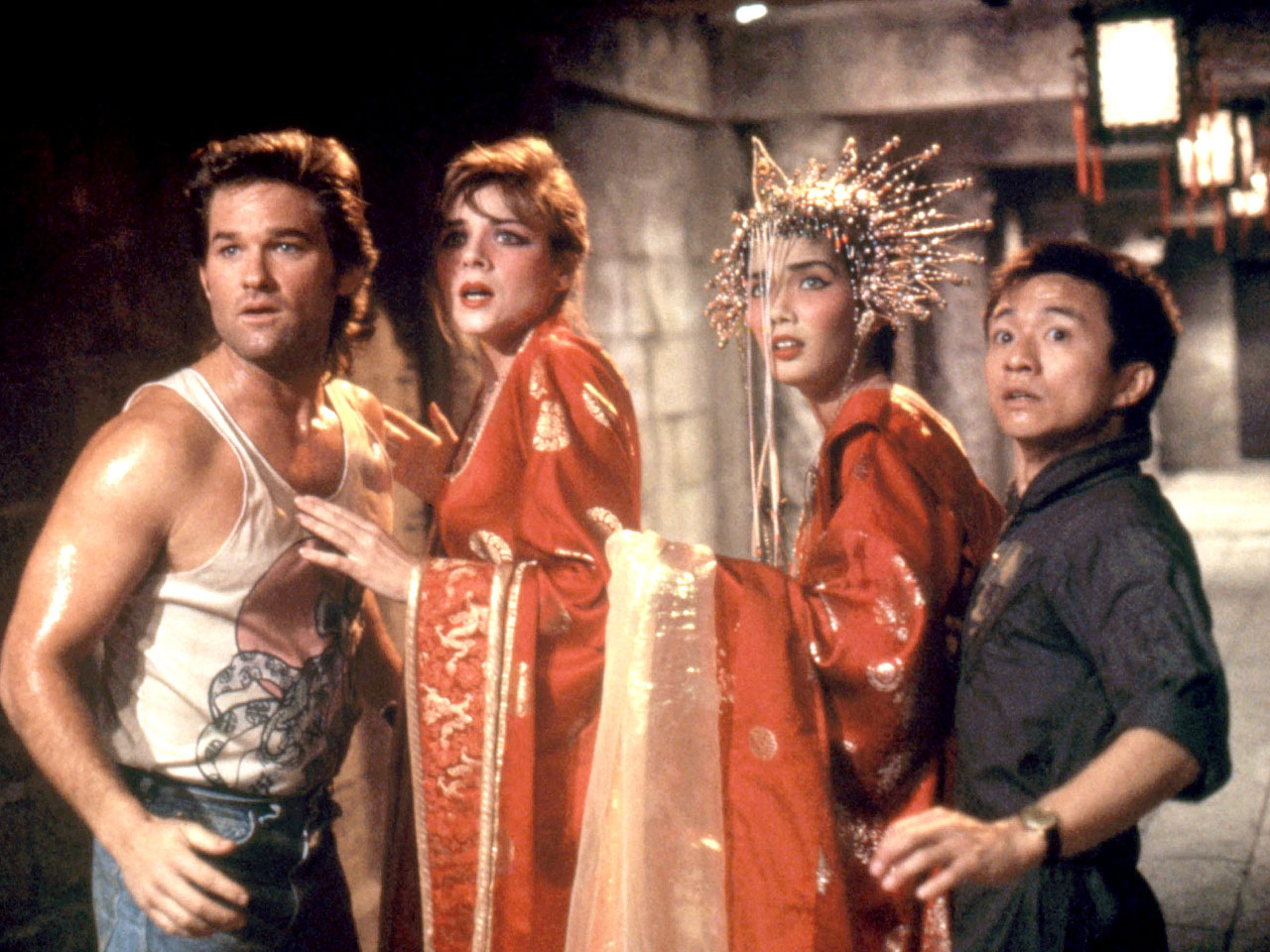
Jack Burton (Kurt Russell) is a over-the-road trucker with a lot of thoughts on life and how important reflexes are. While making a delivery in Chinatown, he gets sucked into a situation with an ancient Chinese evil trying to regain its humanity, and all Jack really wants is to get his truck back.
John Carpenter wasn’t quite a household name, but with films such as Halloween, The Thing and Escape From New York to his name, people were taking notice. Teaming with Russell for another outing seemed like it would be another win, but this one proved just a little too odd for mainstream audiences. Once it got into our homes, however, everyone fell in love with it.
As Jack Burton always says, it’s a must-see for any 80s journey.
Where to watch: Available to stream.

The Great Mouse Detective
I had never seen it, and as Disney films go, I would have been fine keeping it that way.
Set in Longon in 1897, a young mouse named Olivia Flaversham witnesses her toymaker father get kidnapped. She seeks out Basil of Baket Street, also known as the Great Mouse Detective. Along with David Q. Dawson, recently returned from serving in the military in Afghanistan, the three of them try to stop Professor Ratigan from replacing the Queen.
It’s just a Sherlock Holmes story, but with mice. I didn’t find anything that compelling about it. It was pretty enough to look at, but the story just left me fairly empty.
Where to watch: Available to stream.

Howling II
I… have a lot of thoughts.
Following up on the end of the The Howling, Ben White (Reb Brown) buries his sister Karen White, and quickly learns she was a werewolf. He teams up with werewolf hunter Stedan Crosscoe (Christopher Lee) to take down Stirba (Sybil Danning), the queen of the werewolves who is about to celebrate her 1,000th birthday, and stop the spread of the werewolf curse.
On paper it sounds fine, in execution it is just… horrible. Poorly lit, horrible acting, low-grade effects, and costuming that leaves you more confused than anything else.
Avoid at all costs.
Where to watch: Available to stream.

Psycho III
I have to admit, so far these sequels haven’t been horrible.
Following up shortly after the vents of Psycho II, Norman (Anthony Perkins) is still hiding the body of Emma Spool, and having issues again with seeing “Mother.” He hires drifter Duane Duke (Jeff Fahey) to run the motel. He also meets Maureen (Diana Scarwid), a nun on the run after she accidentally kills one of her sisters. With a new woman in his life, Mother has some thoughts on what Norman should be doing.
In general I actually enjoyed this new outing in the franchise, although it feels it missed some opportunities at the end of the story of Norman and Maureen working together. What if Maureen had actually been the one manipulating Norman this time? There was another movie lurking in the background that sadly never gets broached.
What we did end up with, however, was entertaining.
Where to watch: Available to stream.

Under the Cherry Moon
This film was unfairly maligned.
Christopher Tracy (Prince) and Tricky (Jerome Benton) as wooing women in France in hopes of getting enough money to head back to Miami one day. When Christopher hears about Mary Sharon (Kristin Scott Thomas) inherting a trust fund of $50 million for her 21st birthday, she becomes his next mark, but little does he know how it will end for him.
Following Purple Rain, Prince could do no wrong in Hollywood and was given a blank check for his next film. Audiences and critics did not warm to this film as it wasn’t Purple Rain 2 and it lived with a bad reputation for years.
I hadn’t seen it in 35 years or more when I watched it for this report, and… I really enjoyed it. It’s over-the-top, but in the right way. Prince was clearly paying homage to the silent movie romance films, and it works for what it is. Is he a great actor? No. Does it work for this film? Yes.
Honestly, this may be one of the most enjoyable films I’ve had in this project in several weeks. It’s worth a reassessment.
Where to watch: Available to stream.
1986 Movie Reviews will continue on July 11, 2026, with Club Paradise.
-

 Atlanta, GA2 minutes ago
Atlanta United 2 Earns 1-0 Win Against Toronto FC II | Atlanta United 2
-

 Minneapolis, MN5 minutes ago
Teen in critical condition after being pulled from Minnehaha Falls
-

 Indianapolis, IN10 minutes ago
Peace on the Plaza: Community building through basketball
-

 Pittsburg, PA17 minutes ago
Pittsburgh's Paul Skenes Named To National League All-Star Team
-

 Augusta, GA19 minutes ago
BREAKING: Parents of missing 4-year-old arrested, child believed to be deceased
-

 Washington, D.C24 minutes ago
US at 250: How celebrations unfolded in Washington DC
-

 Cleveland, OH32 minutes ago
Cleveland marks America’s 250th birthday with lakefront fireworks show
-

 Austin, TX34 minutes ago
Iranian-Americans rally at Texas Capitol for “Free Iran” on Fourth of July

