Entertainment
Can this LA comic's seminar help stand-ups rewrite the rules to their success?


On Dec. 23, the day the comedy community learned 34-year-old L.A. performer Neel Nanda had died, Mike Lawrence took to social media. “There’s more opportunities to succeed in comedy which means there’s more opportunities to fail,” he wrote. “Rejected packets, videos with low counts, struggling podcasts … be kind to yourself. Celebrate the wins and personal milestones. Chase real happiness, not algorithms.”
It was the moment the veteran performer on “Conan” decided to offer comedians without insurance free Zoom seminars in scriptwriting and packet submissions. Following a pair of two-hour sessions in early January, a third is slated for Saturday from noon to 2 p.m. (with attendance capped at 150), the same night Lawrence appears in the Pasadena Ice House’s 8 p.m. show in the Legendary Room.
“What people charge and what they promise is criminal,” he posted after the initial session on Jan. 4. “I charge nothing, but that’s also what I promise!” He planned more, refusing to charge a fee or collect donations.
Lawrence reappeared onscreen Jan. 9 in a black X-Men tee, burgeoning Letterman beard and thick albeit stylish glasses. Advice to “have a plan” and “know who you are” were right up top. “Follow the rules” was another biggie. “Except when you need to break them!” References included Jo Koy’s Golden Globes bomb and Marvel movies.
“The impetus of why I wanted to do this,” Lawrence says of his Zoom sessions, “is the amount of comedians that are passing away, dealing with health issues, all kinds of things. You can be touring the country and still not be covered. It’s a rough existence. It sucks that it’s a luxury.”
Lawrence’s parents divorced early. He lived with his dad in the Paradise Village trailer park in Davie, Fla. His mother, Alice Colin, had been a SoFlo comedian at Uncle Funny’s and Coconuts alongside Todd Barry and Dan “Larry the Cable Guy” Whitney.
“No one wants to do what their mom does when they’re 15,” Lawrence says, “but I still needed attention and validation from strangers.”
At first, he went with slam poetry. His parents supported his hobby, driving him around South Florida for seven years to the library’s teen readings (until he got kicked out at 18), Borders Books’ senior-citizen audiences, and the Chocolate Moose cafe. In 2005, the first time he tried comedy at the latter, Lawrence says, “It was like Dylan going electric.”
Fourteen months later, he moved to New York City with $2,000 and nothing but McDonald’s on his resume. There, Lawrence worked at Pinkberry, hit the alt open mics on the Lower East Side and slowly found his community at Long Island City’s the Creek and the Cave.
Socializing wasn’t easy. Lawrence was quick and hard-hitting, yet had trouble connecting onstage. He was perceived as unfriendly, with difficulty maintaining relationships. Comic books and wrestling were all-consuming. There was his lifelong difficulty with math but uncanny aptitude for memorizing details; constant anxiety — a fear of being watched or judged. It still feels impossible to shop if he’s the only customer. Returning professional emails gives him panic attacks. He doesn’t drive to this day.
In 2008, as Barack Obama was elected president, Lawrence was bedridden with Crohn’s disease. It caused a severe rectal abscess. There was the chronic depression, too, and feeling like something else was different mentally. With no health insurance, he said, “I literally couldn’t take care of any of it.”
Mike Lawrence, far left, performs at the Just for Laughs comedy festival in Montreal in 2016.
(Troy Conrad)
A writing job on a 2012 pilot for comedian and radio host Tom Papa and two for E! came and went. Lawrence recorded his 2013 Comedy Central Records album, “Sadamantium,” at Sunset Boulevard’s now-razed Meltdown Comics. It wasn’t until becoming a writer on “Inside Amy Schumer” in 2015 — when he was in his mid 30s — that he became eligible to join the Writers Guild, complete with insurance.
“I could finally afford to have all this stuff addressed,” he remembers. “I basically bought my diagnoses.”
After 10 years in New York City and several high-profile appearances on Comedy Central’s original “@Midnight,” in 2017, Lawrence moved to Los Angeles. @Midnight was canceled six months later, but Comedy Central brought him aboard “The Comedy Jam” and kept him in rotation as a writer for roast specials. Recurring gigs included “Drop the Mic” on TBS, Jimmy Carr’s “The Fix,” co-producing on “Crashing,” the Independent Spirit Awards, reality fare and more. He has won a Writers Guild Award for “Triumph’s Election Watch” and earned three Primetime Emmy nominations.
Lawrence and producer Adina Pliskin (“Sesame Street,” “Mission Unstoppable With Miranda Cosgrove”) married in 2014. He started antidepressants in 2019 and began appreciating the importance of self-care. Lawrence’s low sperm count initiated the process of adoption in the summer of 2020.
“It was really, really important to me to get a handle on exactly who I was,” he says of the time.
As Lawrence and Pliskin made colorful profiles containing photos and letters, took parenting and CPR classes, and passed a home study from Child Protective Services, his therapist recommended a specialist. A lengthy, three-part process diagnosed him with autism, bringing with it a transformative clarity.
Giving Pliskin the results “was like RuPaul telling his friends he’s gay: ‘Well, I’m glad “you” can say it now!’ She always knew. And she said, ‘I love you for who you are.’ Watching ‘Love on the Spectrum’ together was eye-opening.”
Their adoption process took two years and three months, with two matches falling through. Son Logan — named for Lawrence’s favorite superhero — arrived in November 2022. Lawrence’s father died three months later.
“He could have just told me he didn’t want to be a grandfather,” Lawrence began joking onstage. It bothered him that his dad worked full-time to the end.
“It’s a testimony to my parents that they really supported whatever dumb thing I did,” he says of their influence. “It’s the template of how I want to be with Logan. Even if we think he’s wrong, whatever he’s into is fine.”
During the 2023 strikes, Lawrence heard from Pete Davidson, who originally sought his comic-book expertise for a DC project. He opened for Davidson’s theater dates for six months, entertaining the former “Saturday Night Live” cast member with stories of uneasy fatherhood. Lawrence was an “SNL” guest writer the October week Davidson returned to host.
It was the delayed season premiere following the strikes. No new writers were aboard. The Gaza Strip bombings had begun two days before. Lawrence was intimidated.
“It’s an institution. Can I hang? Am I good enough?” he asked himself. Though discouraged when a pitched sketch failed, his punch-up jokes successfully made it to air.
“I don’t have to feel like a fraud,” Lawrence realized. “Having imposter syndrome — the ‘Am I worthy? Can I say I’m a dad in the same way that person says they’re a dad?’ — it’s the stuff that gets into your head.”
Lawrence left Twitter in 2020. His professional focus rests on series writing, though he’s continued performing live “a few times a month.” Recent spots include at Blind Barber as well as evenings at Largo comedy club with Sarah Silverman, Pete Holmes and comedy hero Patton Oswalt.
“Because I don’t drive,” he insists, “it’s still that New York mentality that it costs me 60 to 80 bucks to do a show!”
Along with the writing seminar on Jan. 20 and the Ice House set, Lawrence returned to work this week on Season 2 of Davidson’s Peacock series, “Bupkis.”
“I’m still horribly depressed a lot of the time,” he admits. “But now I have a kid, so I can’t think about killing myself anymore.”
With a revitalized career and fatherhood on his plate, Lawrence’s perspective on success has notably shifted.
“The key to success is lowering your expectations of it,” he said. “It’s healthier to do [your passion] because you like it, and not be obsessed to the point of letting it define you,” Lawrence says. “I’ve never felt the fulfillment that I have in this.”



Entertainment
After ‘Yellowstone’ and a twist of fate, Luke Grimes rides again as Kayce in ‘Marshals’

This story contains spoilers for the pilot of “Marshals.”
When the curtain came down on “Yellowstone” last year, Kayce Dutton had finally found his happily-ever-after.
The youngest son of wealthy rancher John Dutton (Kevin Costner) had secured a modest cabin in a mountainous region where he could reside in secluded peace with his beloved wife, Monica (Kelsey Asbille), and son, Tate (Brecken Merrill), far from the turbulent dysfunction of his family.
“Kayce found his little peace of heaven, getting everything he ever wanted and fought for,” said Luke Grimes, who plays the soft-spoken Dutton in “Yellowstone.”
Grimes reprises the role in CBS’ “Marshals,” which premiered Sunday. But in the new series, Kayce’s serenity has been brutally shattered, forcing him to find a new path forward after an unimaginable tragedy.
The drama is the first of several planned spinoffs of “Yellowstone,” which became TV’s hottest scripted series during its five-season run. And while some familiar faces return and events unfold against the magnificent backdrop of towering mountains and lush greenery, “Marshals” is definitely not “Yellowstone” 2.0.
Luke Grimes as Kayce Dutton in “Marshals,” which combines the gritty Western flavor of “Yellowstone” with the procedural genre.
(Sonja Flemming / CBS )
In “Marshals,” Kayce joins an elite squad of U.S. Marshals headed by his Navy SEAL teammate Pete Calvin (Logan Marshall-Green). The drama combines two distinct brands — the gritty Western flavor of “Yellowstone” with the procedural genre, a flagship of CBS’ prime-time slate.
During an interview at an exclusive club in downtown Los Angeles, Grimes expressed excitement about dusting off his cowboy hat and boots, though he admitted to having initial concerns about whether the project was a fit.
“I had never watched a procedural before, so I had to do some homework on what that was,” Grimes said hours before the gala premiere of “Marshals” at the Autry Museum of the American West in Griffith Park. “And I just couldn’t wrap my head around it at first. In the finale, Kayce had ridden off into the sunset. So I thought, ‘Let him be, let him go.’ ”
Those doubts eventually ebbed away.
“To be honest, there was a part of me that didn’t want to let Kayce go just yet,” Grimes said. “Saying goodbye to him was really hard, so the opportunity to keep this going was something I couldn’t pass up. We get to show his backstory and also this other side of him that we didn’t see in ‘Yellowstone.’ ”
But this Kayce is a man in crisis. “Yellowstone” devotees will likely be shocked by the “elephant in the room” — the revelation in the pilot episode that Monica has died of cancer. The couple’s sexy and loving chemistry was a key element in the series while also establishing Grimes as a heartthrob.
“I think fans will be upset — and they should be,” Grimes said as he looked downward. “Kayce is very upset. It’s the worst thing that could have happened to him. But as much as I’m really upset not to work with Kelsey, it’s a good idea for the show.”
He added, “His dream life is no longer available to him. Now the only thing he has is his son, who is not so sure he wants the same life as Kayce. A big part of the season is Kayce learning how to manage all these new things — new job, being a single father.”

“His dream life is no longer available to him. Now the only thing he has is his son, who is not so sure he wants the same life as Kayce,” said Luke Grimes about his character Kayce.
(Jay L. Clendenin / For The Times)
Executive producer and showrunner Spencer Hudnut (CBS’ “SEAL Team”) acknowledged in a separate interview that viewers may be stunned by the tragedy. “Real life intervenes for Kayce. Unfortunately it happens to so many of us.”
But he stressed that although Monica is physically gone, her presence will be heavily felt this season.
“She is guiding Kayce, and their relationship is moving forward,” Hudnut said. “His dealing with his inability to confront his grief is a big part of the season. It became clear that something horrible had to happen to put Kayce on a different path.”
As the development evolved, Grimes embraced the procedural concept: “This is a very different show and structure. This is an action show, very fast paced. I meet a lot of fans who say they really want to see Kayce go full Navy SEAL.”
Alumni from “Yellowstone” returning in “Marshals” include Gil Birmingham as tribal Chairman Thomas Rainwater and Mo Brings Plenty as his confidante Mo.
“Yellowstone” co-creator Taylor Sheridan, who had already spearheaded the prequels “1883” and “1923,” will further expand the “Yellowstone” universe later this month with “The Madison,” starring Michelle Pfeiffer and Kurt Russell, about a New York City family living in Montana’s Madison River territory. Later this year, Kelly Reilly and Cole Hauser will star in “Dutton Ranch,” reprising their respective “Yellowstone” roles as John Dutton’s volcanic daughter Beth Dutton and her husband, boss ranch hand Rip Wheeler.
Hudnut said fans of “Yellowstone” will recognize themes that were central to that series: “The cost and consequences of violence, man versus nature, man versus man.”
“We’re trying to tap into what people loved about ‘Yellowstone’ but to tell the story in a different framework,” he said. “The procedural brand is obviously very successful for CBS. And nothing has been bigger than ‘Yellowstone.’ So the challenge is, how do you marry those things?”
Taking on the lead role prompted Grimes to reflect on how “Yellowstone” transformed his life after co-starring roles in films like “American Sniper” and “Fifty Shades of Grey” and playing a vampire in the TV series “True Blood.”
“‘Yellowstone’ changed my life in many, many ways,” he said. “The biggest change is that I now live where we shot the show in Montana. The first time I went there, I would have never thought I would ever live there.
“I would come back to the city after shooting. But a little bit more each year, I felt more out of place here, and more peace and at home there. I’m a big nature person — I never was a big city person, but I had to be here to do what I wanted. But after the third season, my wife and I decided to move there. We wanted to start a family.”
The topic of a Kayce spinoff kept coming up during the filming of the finale, but “meanwhile we were having a baby, so that was the biggest thing on my plate.”

“‘Yellowstone’ changed my life in many, many ways,” said Luke Grimes.
(Jay L. Clendenin/For The Times)
Grimes was also dealing with the off-screen drama that impacted production due to logistical and creative differences between Costner and Sheridan. Costner, who was the show’s biggest attraction, exited after filming the first part of the final season. His character was killed off.
Asked about the backstage tension, Grimes said, “I just tried to do my job to the best of my ability, and not get caught up in all that. It was sort of frustrating, but I felt lucky to have a job.”
He recalled getting a call from Sheridan about the plans for a spinoff: “He said, ‘I think you should talk to the guy who is going to be the showrunner. I’m not telling you to do it, and I’m not telling you not to do it. But Spencer is great and he has some good ideas.’ ”
Hudnut said Kayce “was always my favorite character. Also, Luke is not Kayce. Kayce is an amazing character, but Luke is really thoughtful and smart. He is a true artist and has an artist’s soul, while Kayce is kicking down doors and terrorizing people. And Luke has such a great presence. He can do so much with just a look to the camera. He is a true leading man.”
In addition to starring in “Marshals,” Grimes is also an executive producer. He pitched the opening sequence — a flashback showing Kayce in the battlefield. He also performs the song that plays over the final scene, in which he visits his wife’s grave. The ballad is from Grimes’ self-titled country album which was released last year.
“Luke’s creative fingerprints are all over the pilot,” Hudnut said.
Grimes said he does not feel pressure about being the first follow-up from “Yellowstone” to premiere.
“We’re not trying to make the same show, so no matter what happens, its a win-win,” he said. “I had a blast doing it.”

I am a sucker for all those straight-to-video slasher movies from the 90’s; there was just a certain point where you knew the acting was terrible, however, it made you fall in love. I can definitely remember scanning the video store sections for all the different horror movies I could. All those movies had laughable names and boom mics accidentally getting in the frame. Trucker seems like a child of all those old dreams, because it is.
Let’s get into the review.
Synopsis
When a group of reckless teens cause an accident swroe to never speak of it. The father is reescued by a strange man. from the wreckage and nursed back to health by a mysterious old man. When the group agrees to visit the accident scene, they meet their match from a strange masked trucker and all his toys with revenge on his mind.
Roll on 18 Wheleer
Trucker is what you would imagine: a movie about a psychotic trucker chasing you. We have seen it many, many times. What makes the film so different is its homage to bad movies but good ideas. I don’t mean in a negative way. When you think of a slasher movie, it’s not very complicated; as a matter of fact, it takes five minutes to piece the film together. This is so simple and childlike, and I absolutely love it. Trucker gave us something a little different, not too gory, bad CGI fire, I mean, this is all we old schlock horror fans want. Trucker is the type of film that you expect from a Tubi Original, on speed. However, I would take this over any Tubi Original.
I found some parts that were definitely a shout-out to the slasher humor from all those movies. Another good point that made the film shine was the sets. I guess what I can say is the film is everything Joy Ride should have been. While most modern slashers are trying to recreate the 1980s, the film stands out with its love for those unloved 1990’s horror films. While most see Joyride, you are extremely mistaken, my friend; you will enjoy this film much more.

In The End
In the end, I enjoyed the entire film. At first, I saw it listed as an action thriller; I was pleasantly surprised, and Trucker pulled at my heart strings, enveloping me in its comfort from a long-forgotten time in horror. It’s a nostalgic blast for me, thinking back to that time, my friends, my youth, and finding my new home. Horror fans are split down the middle: from serial-killer clowns (my side) to elevated horror, where an artist paints a forty-thousand-year-old demon that chases them around an upper-class studio apartment. I say that a lot, but it’s the best way to describe some things.
The entire movie had me cheering while all the people I hated suffered dire consequences for their actions. It’s the same old story done in a way that we rabid fans could drool over, and it worked. In all the bad in the world today, and my only hope for the future is the soon-to-end Terrifier franchise. However, the direction was a recipe to succeed with 40+ year old horror fans like me. I see the film as a hope for tomorrow, leading us into a new era.
Trucker is set to release on March 10th, 2026
Entertainment
Review: In ‘American Classic,’ Kevin Kline and Laura Linney deliver a love letter to theater

The lovely, funny “American Classic,” premiering Sunday on MGM+, is a love letter to theater, community and community theater. Kevin Kline plays Richard Bean, a narcissistic stage actor. He’s famous enough to be opening on Broadway in “King Lear,” but he has to be pushed onstage and is forgetting lines. After he drunkenly assails a hostile New York Times critic — caught on video, of course — he’s suspended from the play, and his agent (Tony Shalhoub) advises him to get out of town and lay low until the heat’s off, as they used to say in the gangster movies.
Learning that his mother (Jane Alexander, acting royalty, in film clips) has died, Richard heads back to his small Pennsylvania hometown, where his family — all actors, like the Barrymores, but no longer acting — owns a once-celebrated theater. To Richard’s horror, it has, for want of income, become a dinner theater, hosting touring productions of “Nunsense” and “Forever Plaid” instead of the great stage works on which he cut his teeth.
Brother Jon (Jon Tenney), running the kitchen at the theater, is married to Kristen (Laura Linney), Richard’s onetime acting partner, who dated him before her marriage; now she’s the mayor. Their teenage daughter, Miranda (Nell Verlaque) — a name from Shakespeare — does want to act and move to New York, as her mother had before her, but is afraid to tell her parents. Richard’s father, Linus (Len Cariou), is suffering from dementia, though not to the point he won’t actively contribute to the action; every day he comes out again as gay.
Across the eight-episode series, things move from the ridiculous to the sublime. Richard’s attempt to stage his mother’s funeral, with her coffin being lowered from the ceiling, while “Also sprach Zarathustra” plays and smoke billows toward the audience, fortunately comes to naught; but he announces at the ceremony that he’ll direct a production of Thornton Wilder’s 1938 play “Our Town” at the theater, to “restore the soul of this town.” (His big idea is to ignore Wilder’s stage directions, which ask for no curtain, no set and few props, with a “realistic version,” featuring a working soda fountain, rain effects and a horse.) Fate will have other plans for this, and not to give away what in any case should be obvious, the title of the play will also become its ethos, with a cast of amateurs, including Miranda’s jealous boyfriend, Randall (Ajay Friese), and ordinary people standing in for the ordinary people of Wilder’s Grover’s Corners.
The series has a comfortable, cushiony feeling; it’s the sort of show that could have been made as a film in the 1990s, and in which Kline could have starred as easily in his 40s as in his 70s; it has the same relation to reality as “Dave,” in which he played a good-hearted ordinary Joe who takes the place of a lookalike U.S. president. The town is essentially a sunny place, full of mostly sunny people, to all appearances, a typical comedy hamlet. But we’re told it’s distressed, and Mayor Kristen is in transactional cahoots with developer Connor Boyle (Billy Carter), who wants clearance to build a casino on the site of a landmark hotel. (Much of the plot is driven by money — needing it, trading for it, leaving it, losing it.) He also wants his heavily accented, bombshell Russian girlfriend, Nadia (Elise Kibler), to have a part in “Our Town.”
As in the great Canadian comedy “Slings & Arrows,” set at a Shakespeare Festival outside of Toronto, themes and moments and speeches from the play being performed are echoed in the lives of the performers, while the viewer experiences the double magic of watching a fine actor playing an actor playing a part. Kline, of course, is himself an American classic, with a long stage and screen career that encompasses classical drama, romantic and musical comedy and cartoon voiceovers; the series makes room for Richard to perform soliloquies from “Hamlet” and “Henry V,” parts Klein has played onstage. He brings out the sweetness latent in Richard. Linney, who played against her sweetheart image in “Ozark,” is happily back on less deadly ground (though she’s tense and drinks a little). Tenney, who was sweet and funny on “The Closer,” and who we don’t see enough of these days, is sweeter and funnier here, and gets to sing. (All the Beans will sing, except for Linus.)
As a comedy, it is often predicable — you know that things will work out, and some major plot points are as good as inevitable — but it’s the good sort of predictability, where you get what you came for, where you hear the words you want to hear, ones you could never have written yourself. “American Classic” is not out to challenge your world view in any way but wants only to confirm your feelings and in doing so amplify them. Shock effects are fine in their place — and to be sure there are major twists in the plot — but there is a certain release when the thing you’re ready to have happen, happens, whether it brings laughter or tears. Either is welcome.

WGA cancels Los Angeles awards show amid labor strike
After ‘Yellowstone’ and a twist of fate, Luke Grimes rides again as Kayce in ‘Marshals’

Zendaya and Tom Holland Are Married, Her Longtime Stylist Claims

Trump justifies Iran attack as Congress and others raise objections
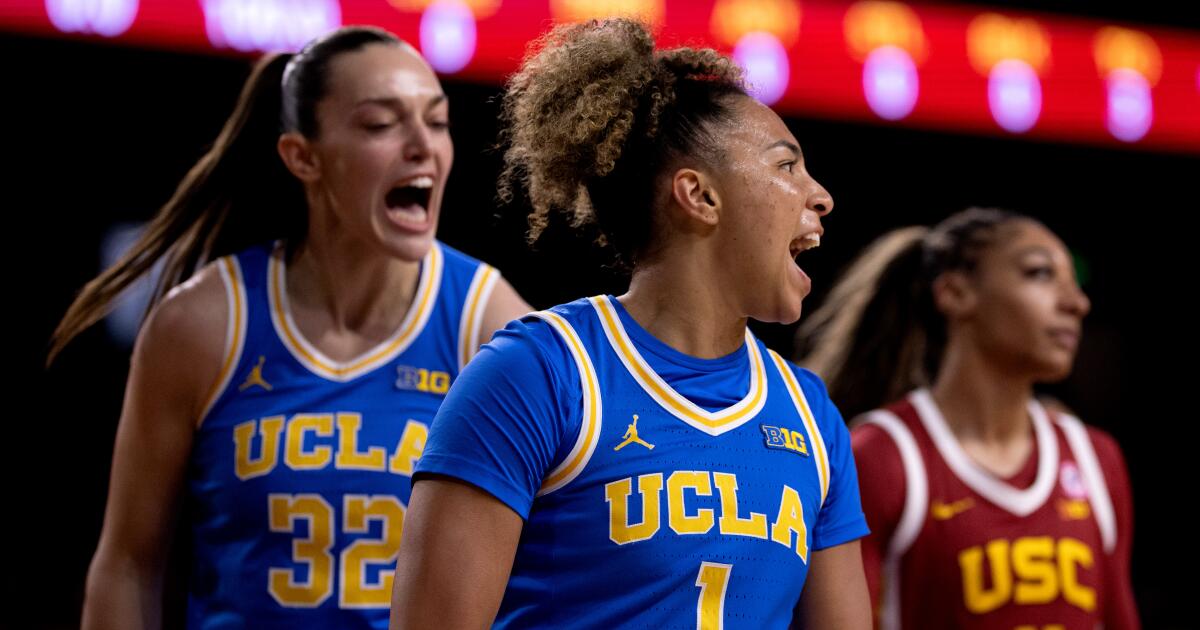
No. 2 UCLA women dominate rival USC to finish Big Ten play undefeated

Florida High School Football Rankings: Top 25 teams – Oct. 21

Cleary's 21 help Le Moyne down Central Connecticut State 69-64 in OT

How old is Bo Nix? What to know about Oregon quarterback ahead of 2024 NFL Draft

99th annual Pony Swim held in Virginia

Indiana Members Credit Union announced as new anchor tenant at Bottleworks District

Israel FM says Europe too divided, slams Spanish PM

Satellite images provide view inside Iran at war

Video: What the Texas Primary Battle Means for the Midterms

Dems’ potential 2028 hopefuls come out against US strikes on Iran

At least nine killed after Iranian strike on Israel’s Beit Shemesh
-

 World4 days ago
Exclusive: DeepSeek withholds latest AI model from US chipmakers including Nvidia, sources say
-

 Massachusetts4 days ago
Mother and daughter injured in Taunton house explosion
-

 Montana1 week ago
2026 MHSA Montana Wrestling State Championship Brackets And Results – FloWrestling
-

 Denver, CO4 days ago
10 acres charred, 5 injured in Thornton grass fire, evacuation orders lifted
-

 Louisiana7 days ago
Wildfire near Gum Swamp Road in Livingston Parish now under control; more than 200 acres burned
-

 Technology1 week ago
YouTube TV billing scam emails are hitting inboxes
-

 Technology1 week ago
Stellantis is in a crisis of its own making
-

 Politics1 week ago
OpenAI didn’t contact police despite employees flagging mass shooter’s concerning chatbot interactions: REPORT