The weather was a pleasure. While much of the rest of the country roasted, San Francisco last weekend appeared a beatific city lorded over by mild yet sunny cerulean skies and ideally chilly nights.
Civic Center and the adjacent Hayes Valley neighborhood offered their own musical gratifications. June is a special month for the San Francisco Symphony, whose music director is allowed to indulge his passions. San Francisco Opera boasts a June festival of three operas, and the incomparable Kronos Quartet mounts its own festival.
Symphony, opera and Kronos were all marvelous. Esa-Pekka Salonen conducted an exalted performance of Bruckner’s Fourth Symphony in Louise M. Davies Symphony Hall, the orchestra brass as golden as a certain nearby bridge. Next door at the War Memorial Opera House, a gripping performance introduced America to Kaija Saariaho’s opera “Innocence,” a shocking drama of gun violence. A couple of blocks away at SF Jazz, Kronos celebrated its 50th anniversary, reminding us that this ensemble has changed music like no other.
All venues were full. All audiences I joined were infectiously rapt. All three institutions, it might be added, still provided large glossy program books with extensive notes, something nearly extinct in the rest of the country.
Yet everywhere I went there was an inescapable feeling of doom, of disquieting calm before the storm. Lovely days now, but summer forebodes fires. Apparent urban bliss camouflages San Francisco’s seemingly insoluble urban ills.
Advertisement
As I headed into Davies Hall for the Sunday matinee, I was greeted by a longtime member of the orchestra handing out yellow fliers on which was a message from the musicians to patrons. “The board is trying to turn us into a regional orchestra,” the bass player angrily announced.
The symphony is indeed in a state of turmoil that feels existential. Four years ago, Salonen became music director with the mandate to foster innovation, following what he had accomplished in his 17 years at the helm of the Los Angeles Philharmonic.
Unfortunately, the city and its orchestra were hard hit by the pandemic. Rather than give Salonen the support to realize his bold vision, the San Francisco Symphony, which sits on a $345-million endowment (the second largest of any American orchestra), slashed, slashed and slashed some more. Management insists the institution will otherwise run out of cash. Dire financial projections have become self-fulfilling prophecy.
Salonen has refused to renew his contract (which runs for one more season) after the board scaled back a European tour, new commissions, innovative programming and staged productions with Peter Sellars, its much-heralded digital media, its “Concerts for Kids” series and the far-reaching creative partners from various walks of music and technology Salonen appointed. A black-box series, SoundBox, a hit with young audiences, has been downgraded as well. Frank Gehry’s proposals for inexpensive experimental new halls made by refashioning warehouses on Treasure Island should be a no-brainer, but for this board they are a nonstarter. A musicians strike looks likely in the fall.
Still, one ironic outcome from these troubles is an orchestra hell-bent on proving its worth. There was in its performance Sunday — which opened with a wondrous performance of Schumann’s Piano Concerto and soloist Yefim Bronfman — unrelenting intensity. Meanwhile, Bruckner’s brazen rhythmic patterns in his “Romantic” symphony sounded like bodacious calls for change and expletives against the board. In the composer’s grand lyrical phrases, the orchestra seemed to say, with profound expression, Read our collective hearts.
Advertisement
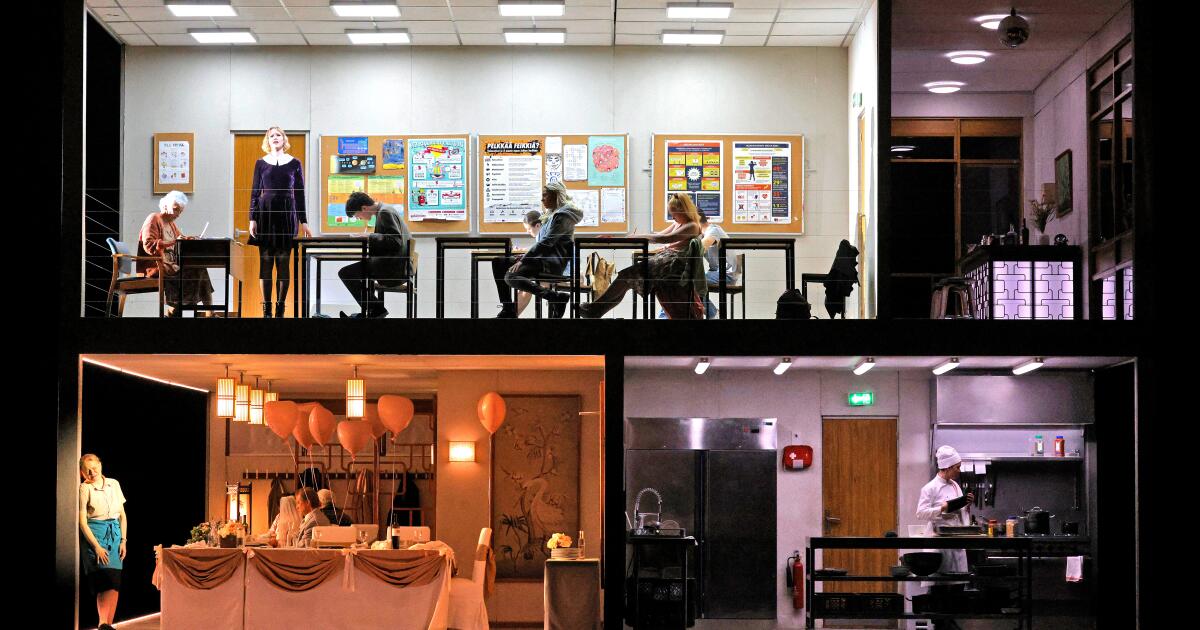
A scene from the San Francisco Opera production of Kaija Saariaho’s “Innocence.”
(Corey Weaver / San Francisco Opera)
The atmosphere at San Francisco Opera feels to an outsider more accepting than bellicose. But it, too, has instituted large cutbacks. Facing rising costs in producing opera, it will reduce the number of operas performed from eight to six next season. That’s a third the number the company once presented. The big difference between this company and the orchestra, however, is that the will to continue its mission appears unchanged, and new ways are being explored to pay for it.
I met with Matthew Shilvock, the company’s general director and a trained musicologist. He says costs are rising so rapidly that every year an additional $2 million to $3 million is needed for even this modest number of productions.
Advertisement
Shilvock’s strategy is to productively tap into the kind of crisis intensity felt by his neighboring symphony. Every production, every performance needs to matter. That includes continuing to present new and challenging work.
“Innocence,” which has been a hit, gives him confidence that this is the right approach. The opera, which had its premiere in Aix-en-Provence, France, in 2021, was the last for Saariaho, who died a year ago. It is also a change of direction from her earlier profoundly philosophical and poetic pieces, all done in collaboration with Sellars.
There is little of that poetry or profundity here; “Innocence” is more akin to a Netflix drama. Ten years after a school shooting in which 10 students and their teacher were killed, the mother of one of the victims and the young shooter confront each other at a party. The students are ghosts, actors with speaking roles. There are strange and startling twists of plot keeping the audience in suspense.
The issue of gun violence was presented with complexity. The fashionable production by Simon Stone is cleverly devised on a revolving stage. The large cast of singing actors proved uniformly excellent Friday night, the last of the six performances. The enthusiastic conductor, Clément Mao-Takacs, could be overly flashy, but the real glory in the opera, its saving grace in many ways, was the exceptional beauty and expression of Saariaho’s orchestral writing, and this came through spectacularly well.
Under a surface of undulating sonic beauty, the roots of the shattering elements in “Innocence” can be found in Saariaho’s 1987 “Nymphéa” for string quartet and electronics. That happens to be one of more than 1,000 string quartets Kronos has commissioned over the last half century. Thanks to Kronos, Steve Reich, Terry Riley, Philip Glass and many of the great names of the 20th and 21st centuries — along with composers in rock, jazz, country, folk, raga, Chinese pipa music and other global traditions from every continent — turned to this unlikely medium.
Advertisement
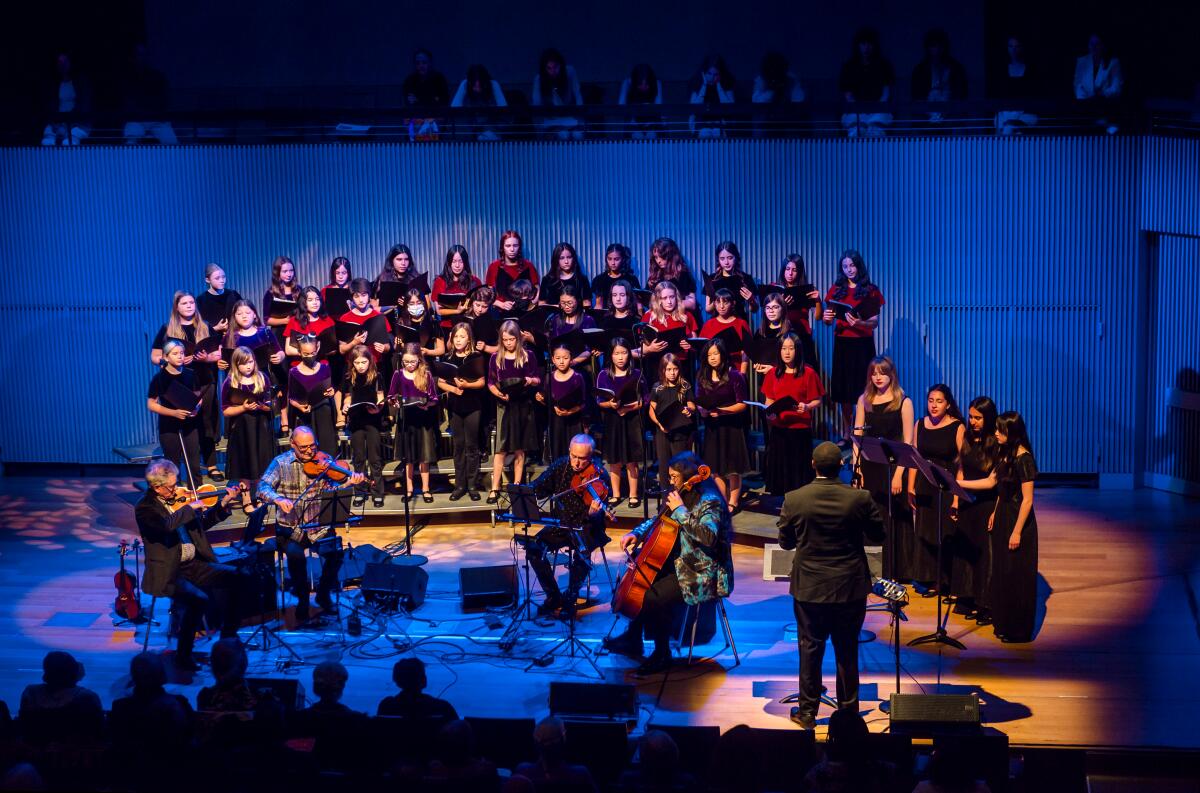
The Kronos Quartet performs with the San Francisco Girls Chorus at SF Jazz on Saturday night in San Francisco.
(Lenny Gonzalez / Kronos Quartet)
No ensemble in the history of music has come close to doing so much, and a four-night festival can’t come close to exhibiting it. So with but a little looking back, Kronos did what it always does: look ahead, performing new music.
Saturday night, the first of the two programs I heard, was the premiere of Mary Kouyoumdjian’s spiritually spellbound “The Space Between.” There was a movement from Riley’s new, otherworldly “This Assortment of Atoms — One Time Only!” This is one of the Kronos Quartet’s “50 for the Future” commissions from composers, Glass and Laurie Anderson among them, producing works suitable for young string quartets. All the scores are made available for free on the Kronos website, and more than 38,000 scores have been downloaded in 108 countries and territories.
The concert also included two feisty new works by teenage composers Hannah Wolkowitz and Ilaria Hawley. The San Francisco Girls Chorus joined Kronos for works by the likes of Yoko Ono, Pete Seeger and Mali singer Hawa Kassé Mady Diabaté. At the end, the guest was Iranian singer Mahsa Vahdat.
Advertisement
The festival ended Sunday with Sam Green’s live Kronos documentary film “A Thousand Thoughts,” which includes live performances by the Kronos. This was the 46th and last time the film will be shown. Two key members of the quartet from the last four-plus decades, violinist John Sherba and Hank Dutt, are retiring. It was a bittersweet, deeply moving and loving finale.
What will happen next to the Kronos? The ensemble also is losing its first and only manager, Janet Cowperthwaite, who behind the scenes made the commissions and all else possible. First violinist David Harrington, the quartet’s visionary founder, will soldier on with cellist Paul Wiancko and two new young players, violinist Gabriela Díaz and violist Ayane Kozasa.
An era has ended. But Harrington is the most optimistic musician I know. His record of accomplishing the unthinkable has made him an unerring San Francisco symbol for the future.
It would be a poor investment not to bet on Kronos. Harrington has made the impossible happen not by cutting back but by tirelessly seeking more. He has gained international support by not letting anything stop him.
The San Francisco Symphony and San Francisco Opera could do the same by believing in the future, beginning with digging into the damn endowments. The city, too, could (and typically does) do worse than following Kronos’ extraordinary belief in the possible. We all could. The model exists.
A family and friends gather for a naming-day ceremony at a Danish seaside hotel, but an unexpected appearance by one uninvited attendee (Trine Dyrholm) ruptures the veil of bland, happy-clappy familial unity in director Mads Mengel’s gutsy, well-wrought debut feature, The Guest.
The most audacious move here may be Mengel and co-screenwriter Christian Bengtson’s choice to write something that will inevitably invite comparisons with Festen (The Celebration), arguably the most notorious Danish-language film of the last 30 years, which similarly revolved around a bougie gathering disrupted by angry revelations. But there’s a savvy 2026 vibe about the way the film refuses to create florid melodrama out of quotidian crisis, and instead observes with generosity as the characters grope awkwardly toward emotional détente and mutual forgiveness.
The Guest
The Bottom Line
When wetting the baby’s head goes too far.
Advertisement
Venue: Karlovy Vary Film Festival Cast: Simon Bennebjerg, Trine Dyrholm, Josephine Park, Peter Gantzler, Petrine Agger, Mette Klakstein Wiberg, Kristine Kujath Thorp, Buster Lund Luscher Director: Mads Mengel Screenwriter: Christian Bengtson, Mads Mengel
1 hour 40 minutes
Festen-alumnus Dyrholm, having a bit of a career moment with outstanding performances both here and in the recent The Girl With the Needle among others, leads a uniformly excellent cast in a work that deserves celebration on the festival circuit and beyond.
Dyrholm’s Vibeke is technically the first person we meet, although she’s seen only in shadow at first as she smokes and drives while her unattached seatbelt, caught outside by a closed door, clatters on the road. This is the kind of unsafe driving her son Karl (Simon Bennebjerg) so deplores, a point of contention later on in the story when he will steal her car keys in interest of her own safety and that of others.
Advertisement
But well before we get to that flashpoint, the film introduces Karl, effectively the film’s protagonist, as he arrives at the swanky resort with his wife Emilie (Mette Klakstein Wiberg) and their infant son Elliot (Buster Lund Luscher). The young family, who’ve chosen this new, secular tradition instead of a christening to welcome their child to the world, are there a day before the ceremony to meet up with core family members.
As this advance party settles down for dinner, a table that includes Karl’s sister Rikke (Josephine Park) and Emilie’s parents Frank (Peter Gantzler) and Kirsten (Petrine Agger), there’s a surprise: Vibeke is coming, courtesy of Rikke’s invitation. Karl is quietly furious and seems determined to turn her away, even when she shows up minutes later. Poor Frank and Kirsten look on confused, determinedly polite in their insistence that all family members should be welcome.
Bengtson and Mengel’s economical script carefully dripfeeds backstory as the film unfolds to explain that Karl hasn’t spoken to his mother in years, that Rikke has taken over all the daily mom management and that she’s very worn out by it. Even so, she insists Vibeke is regularly taking her medication and isn’t a problem these days, although to Karl every weird anecdote and moment of emotional intensity is an augur of impending chaos. Rikke counters that their mother is just “big, that’s her personality not her condition.”
Interestingly, that specific condition is never named throughout, although armchair diagnosticians might spot many of the signs of bipolar disorder. But the film’s emotional focus on the person and her actions rather than the label is also very contemporary, reflecting a more holistic, inclusive mindset and approach to dealing with mental health issues.
Which is all fine and dandy, until Vibeke duly does skip a dosage and starts getting manic. One of the first signs of chemical imbalance arrives during the ceremony on the beach, when Vibeke carries little Elliot much further away from the shore than anyone wants, creating a panic. From there it just gets worse as Vibeke picks up on the censorious feeling emerging from the other party guests, who had found her so charming the night before when she’d led everyone to the casino to play roulette and diverted a bunch of partying teenagers from the room next to Karl and Emilie so they could get some sleep. When the toasts at the formal dinner begin, Vibeke’s mood darkens much further, and if we’ve all learned one thing from Festen, it’s be very afraid when a Dane gets up to make a toast.
Advertisement
Cinematographer David Bauer’s nimble-footed lensing and use of natural light does indeed hark back considerably to the look of those Dogme 95 movies back in the day, as does the naturalistic editing style deployed by Louis Emil Ramm Seeberg. But there are plenty of sins against the rules of cinematic chastity that marked that movement, such as the ample space made for Lasse Aagaard’s affecting, low-key score that amps up the anxiety as Vibeke starts to spiral.
That said, Mengel keeps things simple in sonic terms when it really counts, letting the musicality of Dyrholm’s deep, sonorous voice ring out on its own in the big monologue scenes. She is, as ever, utterly mesmerizing but the performance is made even more powerful by the muted, expressive reactions of the rest of the cast as they look on, frozen like deer in the headlights of the car crash of pseudo-christening. Moments of levity puncture the gloom, but the final feeling is one of numbed sorrow and pity for all these kind, fallible people, just trying to do their best.
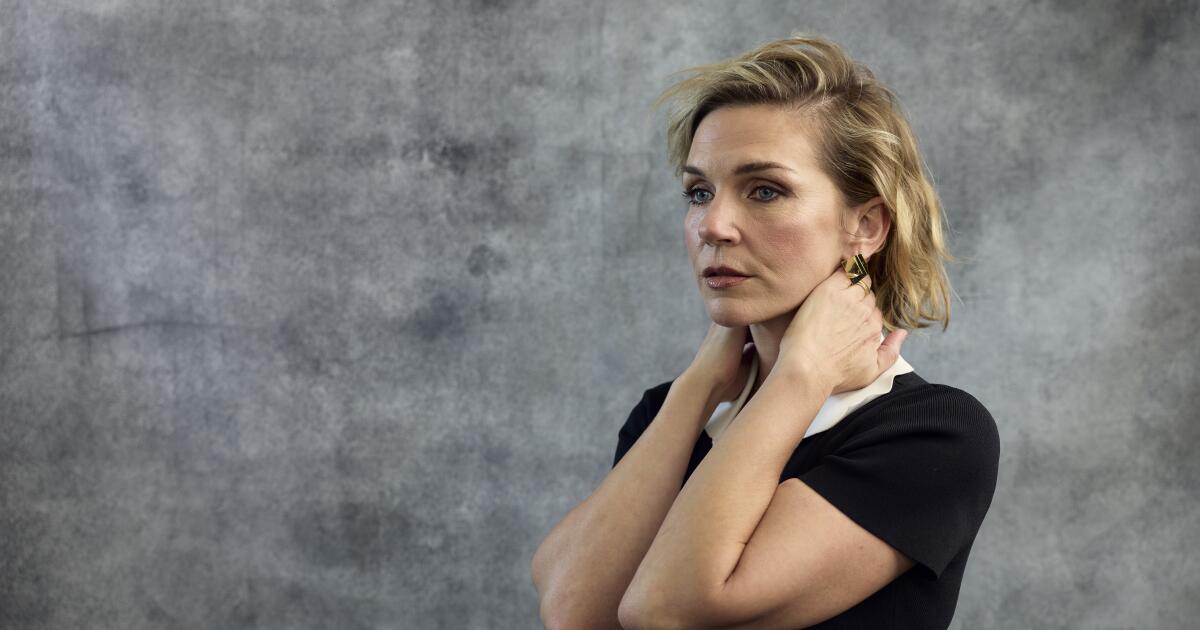
Rhea Seehorn was nervous about whether “Pluribus” would be recognized by Emmy voters Wednesday when nominations were announced. So she was jubilant when she and the surreal sci-series on Apple TV scored 18 nominations, the most for a first-year drama.
“I’m just so grateful,” the actor said in a phone interview. “People were like, ‘Why were you nervous?’ Honestly, you never actually know. I’m just so thrilled for the show, my co-stars, the production design, the editing, the writing, the music, the sound. I haven’t moved from my couch since they first announced everything because I’m still trying to call everybody on the show.”
Seehorn received a nomination for lead actress in a drama series for her portrayal of cynical Carol Sturka, a fantasy romance author who finds herself in a mystifying situation after a virus seems to have wiped out most of Earth’s population. The series was created by Vince Gilligan, who created the acclaimed series “Breaking Bad” and co-created its spinoff “Better Call Saul,” which also featured Seehorn.
The actor compared her experience of being nominated for “Pluribus” to “Better Call Saul,” which earned her two supporting actress nominations: “ ‘Better Call Saul’ was such a family that supported and cheered each other on, and I’m so grateful I have that environment again. People could not be happier for each other, and we get to celebrate the show together.”
She added, “The only part that feels different is that it’s my first nomination as a lead. It’s the process of Vince writing this for me and seeing the mountain which he wanted me to climb and going through that process. The whole thing has been its own journey, so ending up with awards and nominations, and being so well received by critics and fans is not lost on me.”
Advertisement
The series has been applauded for its mix of drama, comedy and strangeness in its portrait of a woman coming to terms to what seems like an impossible dilemma.
“I love the storytelling, how much Vince and I would drill down on making this as authentic as we could in terms of an everyman who has to deal with an insane situation,” Seehorn said. “Most of us are just not heroic or leaping off the couch to go save the world. And Carol is dealing with immense grief and confusion in an utter dystopian crisis. I love the humor and the drama that comes out of us being as realistic as we can with her amidst an unrealistic event.”
Fans of “Pluribus” have been relentlessly curious since the finale in December about when the second season will launch.
“I don’t know anything about that,” Seehorn said. “I don’t have to keep secrets because I’m not great at keeping them, and I know nothing. I don’t know what I’m doing with an atom bomb in the driveway. I can’t wait to find out. The writers want to have the same quality and reward the intelligence of the fans and never phone a single thing in. So their process is their process.”
In a roundabout way, the fact that I don’t have a strong attachment to The Wizard of Oz as a film (my late mother loved it, so that memory is deeply rooted in me, but the movie itself never did much for me) contributed directly to how amusing I found Gail Daughtry and the Celebrity Sex Pass to be. This comedy spoofs the plot of the classic fantasy movie, though the jokes are largely about Hollywood. The humor is big and broad, with some of the jokes really landing. Others? Not so much. Still, more than enough do to warrant a recommendation.
Gail Daughtry and the Celebrity Sex Pass gets a lot of mileage out of sending up show business, even if the observations, while funny, are not particularly new. Besides the deluge of jokes, there’s also a lot of likably broad characters to spend time with, especially our lead. They make the 90 minutes and change spent together with them go down very easy.
Sony Pictures Classics
For Gail Daughtry (Zoey Deutch), her life as a small town hairdresser is perfect. Engaged to her high school sweetheart Tom (Michael Cassidy), she’s the picture of happiness, at least until a trip to a celebrity book signing. There, Tom meets and ends up sleeping with his “celebrity pass,” a term Gail wasn’t even really previously aware of. Feeling betrayed, Gail impulsively joins her co-worker and friend Otto (Miles Gutierrez-Riley) on a trip to Los Angeles. There, a psychic convinces her that the can save her marriage by sleeping with her own celebrity pass: Jon Hamm (Jon Hamm).
Journeying through Tinseltown in a manner that recalls Dorothy’s adventure in Oz, Gail and Otto won’t have to find Hamm alone. Joining forces with talent agency assistant Caleb (Ben Wang), down on his luck paparazzo Vincent (Ken Marino), and actor John Slattery (John Slattery). As they search for Hamm, some for their own purposes, they meet other celebrities, while also being hunted by a group of Italian assassins after a case of mistaken identity. Eventually, they come across Hamm, and the moment of truth is at hand.
Sony Pictures Classics
Zoey Deutch dives headfirst into a broad comedy like this, absolutely relishing the opportunity to get silly again. She’s able to make Gail a babe in the woods but also someone you laugh with, not at. It’s a wildly enjoyable turn. Deutch started out in comedies and was always a talented comedic actress, so it’s a pleasure to watch her back at it. Miles Gutierrez-Riley and Ben Wang get some very funny moments, while Ken Marino is a reliable comic presence. Jon Hamm and John Slattery are delighted to be sending up themselves, with amusing results. Supporting players here, in addition to Michael Cassidy, also include Kerri Kenney, Richard Kind, Thomas Lennon, Joe Lo Truglio, Fred Melamed, and more, plus some cameos.
Advertisement
Filmmaker David Wain, again co-writing with Ken Marino, continues to make it look easy. Few can make a silly comedy like Marino and Wain, especially as they pack their flicks with extra bits that only subsequent viewings reveal. Is Gail Daughtry and the Celebrity Sex Pass on the same level as Wet Hot American Summer or They Came Together? No, not quite. At the same time, is this, scattershot approach and all, funnier than most other 2026 releases? You bet. Marino and Wain have a hit rate that allows some of the jokes to miss, as you only have seconds to wait before the next one, which probably will hit.
Gail Daughtry and the Celebrity Sex Pass is very amusing, and occasionally hilarious, even if not as many jokes land as you might expect. Zoey Deutch is great in the lead role, David Wain is in his comfort zone, and the laughs come hot and heavy. If you’re a Wain fan, this new movie should be a must see.





 Sony Pictures Classics
 Sony Pictures Classics


