Entertainment
Ann Philbin wins the Getty Prize and steers $500,000 to NPR, KCRW and LAist


NPR is receiving a highly symbolic financial boost days before Congress is expected to vote on the fate of federal funding that supports the news and culture nonprofit.
Ann Philbin, former director and current director emeritus of the Hammer Museum at UCLA, has been named this year’s Getty Prize recipient. The honor comes with a $500,000 grant for a nonprofit of the winner’s choice, and Philbin has selected NPR and its Los Angeles member stations, KCRW and LAist.
The prize is considered the Getty’s highest honor and recognizes what the institution calls “cultural leaders whose work expands human understanding and appreciation of arts and culture.” Previous awardees include Frank Gehry, Mark Bradford, Ed Ruscha, Yo-Yo Ma and Thelma Golden.
“I wanted to shine a light on one of the most pressing issues of our day,” Philbin said in a phone interview. “And that’s freedom of speech and freedom of the press.”
Philbin said she requested that half of the Getty grant go to NPR and the other half to be split between KCRW and LAist.
“Those two radio stations for me — and I think for so many Angelenos who spend so much time in their cars — are constant companions,” Philbin said. “We listen to them all the time, and they’re precious to us. To even think about the fact that they might not exist is unbearable.”
NPR Chief Executive Katherine Maher in May filed a lawsuit against President Trump after he issued an executive order directing the Corp. for Public Broadcasting to freeze all funding to NPR and PBS. She said Philbin’s decision to split the donation between NPR and its local affiliates showed a level of understanding about the interdependency of the local and national radio platforms not often mirrored in the national conversation.
“It is an extraordinary gift at an extraordinary time with real, material impact for the stations,” Maher said.
Congress has until the end of the week to vote on a White House proposal known as the rescission bill that would claw back $9 billion in foreign aid and more than $500 million per year in federal funding already approved for the Corp. for Public Broadcasting, which funnels financial support to NPR and PBS as well as local public radio and TV stations across the country.
Trump has been adamant that his allies vote in favor of the rescission package, writing on Truth Social last week that he will withhold support and endorsements from any Republican who doesn’t vote in its favor. He called the Corp. for Public Broadcasting, NPR and PBS “a monstrosity.”
The proposed cuts to the Corporation for Public Broadcasting would total $1.1 billion over the next two years. Federal funding accounts for about 15% of PBS’ budget and 1% of NPR’s budget, according to NPR, but local stations would be the hardest hit and some may not survive, Maher said. If they vanished, she added, they would take with them the kind of hyper-local, community-based reporting that helps forge and maintain a sense of place, identity and purpose, particularly in rural communities.
“That impact is something that is hard to conceptualize, even when you are a member of Congress who represents some of these communities,” Maher said. “Because you spend so much time living with one foot in the world of places like Washington, D.C., and very little time in the areas of the country where broadband services are not reliable or easily available, and cellphone service is not necessarily consistent and universal.”
Philbin noted that NPR’s mission statement is to create a more informed public and to celebrate the diversity of the human experience, and that those values are being challenged by a storm of misinformation.
The Getty Prize was founded in 2013 as the Getty Medal. It was initially given to several individuals each year, but last year it transformed into its current incarnation, honoring a single person who chooses the “pay-it-forward” grant recipient.
Last year’s honoree was Mark Bradford, who chose to steer the grant money to the Arts for Healing and Justice Network, which brings arts programming to minors in the juvenile justice system.


When I spend time around fellow writers, regardless of their achievements, conversation is much the same as in any other context. When I watch groups of fictional writers in films, they are continually striving to outdo one another, to show off their brilliant intellects. It’s a constant process of trying too hard, and it’s exhausting. To his credit, Dustin Hoffman, who plays established literary genius David in this torrid tale of family conflict, doesn’t come across this way, rising above the clumsy script thanks to his patient approach. The same cannot be said of the other actors, all of whom have proved their talent elsewhere yet seem seduced by the notion that this is how intelligent people behave.
The plot here is fairly simple, and not without potential. David’s son Jacob (Tom Sturridge) is a copywriter and successful creator of jingles, but after his wife Elise (Alison Brie) wins a major award, he starts getting insecure, wanting to prove that he can make it as a proper literary type. The obvious way to do this seems to be to write a biography of David, but David has no interest in engaging with this. He provides a number of reasonable justifications for this. Underlying them is the fact that we all tend to frame ourselves in different ways for different people. What one might be willing to say to the great anonymous public is not necessarily something one might feel able to say to one’s son.

This stalemate is broken by the arrival of John (André Holland, fresh from the similarly awkward – but smarter – The Dutchman), an old friend of Jacob whom David remembers fondly. At Elise’s instigation, a secret deal is made: John will look after the increasing fragile older man during the day and, in the process, extract his stories from him, giving them to Jacob for his book. John agrees to this because he needs the money Jacob offers him, and it seems like a sweet deal. It immediately sets up a power imbalance, however.
Complicating matters further are John’s past as a literary protégé who failed to fulfil his promise; the fact that he was once in a relationship with Elise, whose dissolution she regrets; and the pressure that she’s under to match her great success, from an agent who subscribes to the popular but rather tedious belief that inspiration is most easily found in bad behaviour.
Another way writers in films differ from those in the real world is that for them, critical success comes with money, so they don’t have to write very much. A good deal of this film is spent listening to them whine about how hard it is, as if under the misapprehension that it’s not really a form of work. Sturridge is particularly unfortunate; between this and Jacob’s whining about issues with his parents, he doesn’t get much else to do. Brie has a little more to work with as the film flirts with the idea that we’re caught up in Elise’s imaginary scenarios, but this doesn’t really convince. Holland manages to salvage something, but it’s only Hoffman who is really able to interject some energy into proceedings – ironic given that he spends a lot of his scenes in a haze of cannabis smoke.
It’s not terrible. Writer/director Alex Vlack frames scenes nicely enough and all the technical work is carried out to a good standard. There’s just little reason for viewers to invest. Like its characters, it’s intent on trying to communicate cleverly, but has very little to say.
Reviewed on: 04 Jul 2026

Comedy saved Teruko Nakajima’s life.
In 2016, Nakajima received psychiatric care at Cedars-Sinai Medical Center, diagnosed with depression, PTSD and suicidal ideation. Her doctors searched for ways to manage her stress by exposing her to various activities, including video games, serene Icelandic landscapes and an aerial silks performance. The last brought her anxiety down, revealing that the arts were the answer. Her doctor prescribed the arts, comedy specifically, so she went to the Upright Citizens Brigade for class.
She found a calling and a safe space in comedy.
“I didn’t know I was born a comedian,” Nakajima said. “Finally, I really felt I was accepted as a comedian, validated for who I am.”
Nakajima shares her healing journey to the stage in “Made in America,” which just had an encore performance at UCB on Tuesday after its award-winning run in 2022 (it is also available for streaming on UCB’s website through Tuesday). The one-woman show arrives in time for the United States’ 250th anniversary on Saturday, documenting Nakajima’s search for the American dream as a first-generation Japanese American woman. “Made in America” premiered in 2022 at the Hollywood Fringe Festival during Joe Biden’s presidency and following the Jan. 6 United States Capitol attack. In 2026, its musings on identity and belonging pierce through today’s political landscape shaped by Donald Trump’s second presidency.
“I wanted to let people know this is an American story,” she said.
“Made in America” is about Nakajima’s life. It begins in her mother’s womb. She felt so safe there, she yearned to return. Growing up, she experienced an emotionally and physically abusive life at home, recalling her father breaking furniture and her mother’s alcohol-induced belittling comments. But her name, Teruko, translates to a “shining child.” Thus, she proclaims in the show, “I’m a superstar!”
The beauty in “Made in America” is Nakajima’s ability to find the humor in her trauma. When the show transitions to her life in America, she talks about her life as a dominatrix in New York City and her struggles with romance in Los Angeles. Her comedic jabs at the American economy and humorous reflections juxtapose somber moments of stillness in the midst of her struggles. This balance puts her life into perspective, revealing a positive personality beneath a dark saga.
Nakajima performs “Made in America” at Upright Citizens Brigade Theater.
(Nick Rasmussen)
“I look very happy-go-lucky and cheerful, but actually, I am a very dark person because I have a dark history,” she said. “I always wanted to leave my story behind. I wanted to leave my mark in this world before I died, so I needed to make something.”
The first class Nakajima took at UCB was John Flynn’s storytelling course. There, she started building pieces of the show without realizing it. As they added up, the idea for a show surfaced. After class one day, she asked Flynn to direct it. Flynn, who has been teaching at UCB in New York and L.A. for about 20 years, agreed.
“She disarms people,” Flynn said. “There’s something about her that is just so unique and so delightful that you won’t forget her.”
Flynn first met her at his storytelling open mic. She walked in with her emotional support dog Titi (also known as Tiny Teruko), wearing her signature red heart-framed glasses, without lenses. Soon, these glasses would make him double over in laughter when she performed and cried, dabbing her eyes with tissue through the frame.
“When you start to learn her story and the experiences she’s had, it is amazing that she is so positive,” he said. “She’s such a sort of undeniable positive energy that she just radiates all the time, which is so compelling and why people are so drawn to her.”

Revived at UCB amid Trump’s second term and the nation’s 250th birthday, Nakajima’s show doubles as a defiant immigrant love letter to America — and a refuge for audiences feeling alone.
(Nick Rasmussen)
Nakajima puts all of herself into the show. Aside from comedy, she has been a cheerleader in Japan, a salsa dancer in New York and a sculptor on the side — she loves sculpting MLB players’ butts; Derek Jeter is her favorite. In the show, she folds these aspects of her life into a single story, dancing from section to section. Comedy is more than just laughs; it’s storytelling.
“I am so good at cheering people up, since I was very little,” she said. “I had no competition with others because I’m the one and only. Nobody looks like me.”
Together, Flynn and Teruko parsed through her life stories to give the show an arc. For Flynn, it’s like carving away at what is already there to create something fun and cohesive, like a sculpture. “What’s fun about directing one-person shows like this is that it’s usually just two people in a room putting something together,” Flynn said.
Bringing the show back this year, the work gets sharper and tighter, but the biggest shift is in its conclusion. Once optimistic about the future of life in America, the show now has a stronger desire to make change. There was a sense of hope in 2022 for women like Nakajima, an immigrant who sought safety in a new country and struggled with abuse from her family and strange men. Today, as Trump’s immigration policies lean on deportation and discrimination, she simply wants to be seen.
“America, thank you for not giving up on me,” Nakajima said toward the end of the show. She is proud to be American, not just because she gets to have the same nationality as her dog Titi, but primarily because of the new life it offered her. America promised happiness. Whether it actually comes is another story, but in this one, the promise itself gave her a sense of purpose.
“After the show, people come to me in person and through messages,” she said. “A lot of people said, ‘I felt like I am not alone.’ That gives me so much hope and unity. I feel safe and like I have something to look forward to because I’m not the only one.”
Flynn realized how much he took for granted while working on the show with Nakajima. “I think, even though these are scary times and things seem to be going in directions that aren’t the best, there are still great people, and there’s something that is still there and is not dying and is still fighting,” Flynn said.
When she began her acting journey, Nakajima thought she’d turn to drama, but there’s something more unguarded in comedy.

Nakajima holding up her dog Titi during a performance of “Made in America.”
(Nick Rasmussen)
“I’m very authentic and invincible through comedy,” she said.
By the end of “Made in America,” Nakajima is no longer trying to find her way back to her mother’s womb. She is confident in her place in the world. She remembers that she is a star. She brings out her dog Titi, who was hidden on stage throughout the entire performance, and shares that UCB gave her a new outlook on life. Comedy breaks away her stresses and allows viewers to be vulnerable with her.
“I always wanted to feel safe,” she said. “I never had that. Finally, I found a safe space, and then I realized that I’m actually important. I’m actually worthy. I’m so happy right now to be able to express myself through comedy because it’s the truth.”
Movie Reviews
1986 Movie Reviews – About Last Night, Big Trouble in Little China, The Great Mouse Detective, Howling II, Psycho III, Under the Cherry Moon | The Nerdy

Welcome to an exciting year-long project here at The Nerdy. 1986 was an exciting year for films giving us a lot of films that would go on to be beloved favorites and cult classics. It was also the start to a major shift in cultural and societal norms, and some of those still reverberate to this day.
We’re going to pick and choose which movies we hit, but right now the list stands at nearly four dozen.
Yes, we’re insane, but 1986 was that great of a year for film.
The articles will come out – in most cases – on the same day the films hit theaters in 1986 so that it is their true 40th anniversary. All films are also watched again for the purposes of these reviews and are not being done from memory. In some cases, it truly will be the first time we’ve seen them.
This time around, it’s July 4, 1986, and we’re off to seeAbout Last Night, Big Trouble in Little China, The Great Mouse Detective, Howling II, Psycho III, and Under the Cherry Moon.
About Last Night
St. Elmo’s Fire was awful. This feels like a make-good for two of the actors.
Danny Martin (Rob Lowe) meets Debbie Sullivan (Demi Moore) and their chemistry is electric and immediate. They waste no time becoming serious, and moving in together, despite neither of them having ever had a serious relationship. They quickly discover it’s not quite as easy as just sharing an apartment like you do with a roommate.
I didn’t love the movie (mainly due to Jim Belushi’s Bernie character), but I did enjoy it far more than I anticipated.Moore and Lowe’s on-screen chemistry really clicked far more than most on-screen couples.
It’s a good character study, and keeps you engaged. Is it essential viewing? That’s up to you.
Where to watch: Available to stream.
Big Trouble in Little China
If there was ever a poster child for a movie that found a second life in rentals and on cable, this is it.
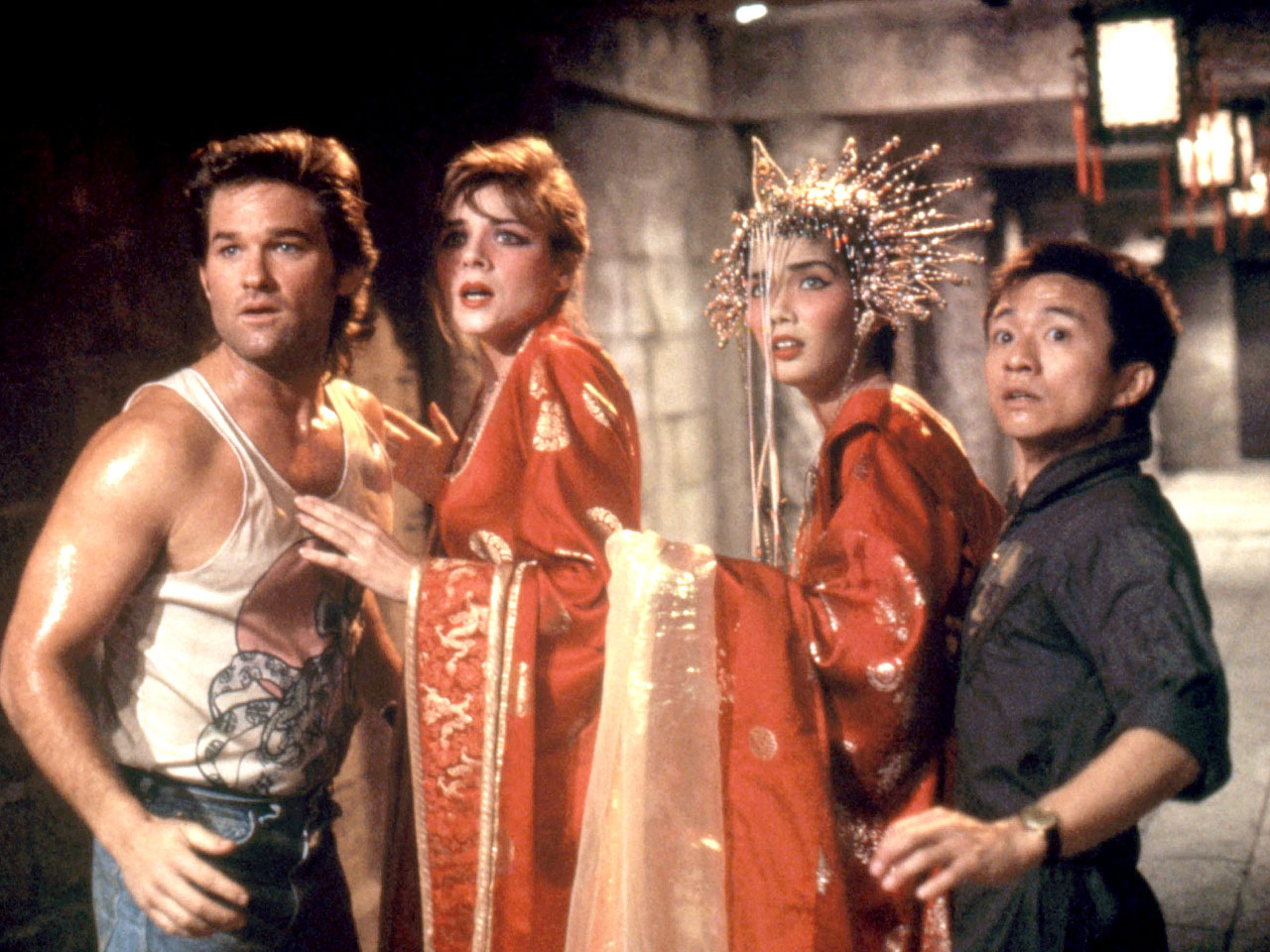
Jack Burton (Kurt Russell) is a over-the-road trucker with a lot of thoughts on life and how important reflexes are. While making a delivery in Chinatown, he gets sucked into a situation with an ancient Chinese evil trying to regain its humanity, and all Jack really wants is to get his truck back.
John Carpenter wasn’t quite a household name, but with films such as Halloween, The Thing and Escape From New York to his name, people were taking notice. Teaming with Russell for another outing seemed like it would be another win, but this one proved just a little too odd for mainstream audiences. Once it got into our homes, however, everyone fell in love with it.
As Jack Burton always says, it’s a must-see for any 80s journey.
Where to watch: Available to stream.

The Great Mouse Detective
I had never seen it, and as Disney films go, I would have been fine keeping it that way.
Set in Longon in 1897, a young mouse named Olivia Flaversham witnesses her toymaker father get kidnapped. She seeks out Basil of Baket Street, also known as the Great Mouse Detective. Along with David Q. Dawson, recently returned from serving in the military in Afghanistan, the three of them try to stop Professor Ratigan from replacing the Queen.
It’s just a Sherlock Holmes story, but with mice. I didn’t find anything that compelling about it. It was pretty enough to look at, but the story just left me fairly empty.
Where to watch: Available to stream.

Howling II
I… have a lot of thoughts.
Following up on the end of the The Howling, Ben White (Reb Brown) buries his sister Karen White, and quickly learns she was a werewolf. He teams up with werewolf hunter Stedan Crosscoe (Christopher Lee) to take down Stirba (Sybil Danning), the queen of the werewolves who is about to celebrate her 1,000th birthday, and stop the spread of the werewolf curse.
On paper it sounds fine, in execution it is just… horrible. Poorly lit, horrible acting, low-grade effects, and costuming that leaves you more confused than anything else.
Avoid at all costs.
Where to watch: Available to stream.

Psycho III
I have to admit, so far these sequels haven’t been horrible.
Following up shortly after the vents of Psycho II, Norman (Anthony Perkins) is still hiding the body of Emma Spool, and having issues again with seeing “Mother.” He hires drifter Duane Duke (Jeff Fahey) to run the motel. He also meets Maureen (Diana Scarwid), a nun on the run after she accidentally kills one of her sisters. With a new woman in his life, Mother has some thoughts on what Norman should be doing.
In general I actually enjoyed this new outing in the franchise, although it feels it missed some opportunities at the end of the story of Norman and Maureen working together. What if Maureen had actually been the one manipulating Norman this time? There was another movie lurking in the background that sadly never gets broached.
What we did end up with, however, was entertaining.
Where to watch: Available to stream.

Under the Cherry Moon
This film was unfairly maligned.
Christopher Tracy (Prince) and Tricky (Jerome Benton) as wooing women in France in hopes of getting enough money to head back to Miami one day. When Christopher hears about Mary Sharon (Kristin Scott Thomas) inherting a trust fund of $50 million for her 21st birthday, she becomes his next mark, but little does he know how it will end for him.
Following Purple Rain, Prince could do no wrong in Hollywood and was given a blank check for his next film. Audiences and critics did not warm to this film as it wasn’t Purple Rain 2 and it lived with a bad reputation for years.
I hadn’t seen it in 35 years or more when I watched it for this report, and… I really enjoyed it. It’s over-the-top, but in the right way. Prince was clearly paying homage to the silent movie romance films, and it works for what it is. Is he a great actor? No. Does it work for this film? Yes.
Honestly, this may be one of the most enjoyable films I’ve had in this project in several weeks. It’s worth a reassessment.
Where to watch: Available to stream.
1986 Movie Reviews will continue on July 11, 2026, with Club Paradise.
-
 Politics17 seconds ago
Commentary: Happy Birthday, America! You’ve weathered another rough year
-
 Sports8 minutes ago
Dodgers’ Eliezer Alfonzo praying his sister and stepmother will be found in Venezuela
-

 World18 minutes ago
Reform UK’s Farage failed to disclose funds from convicted criminal: Report
-
 News45 minutes ago
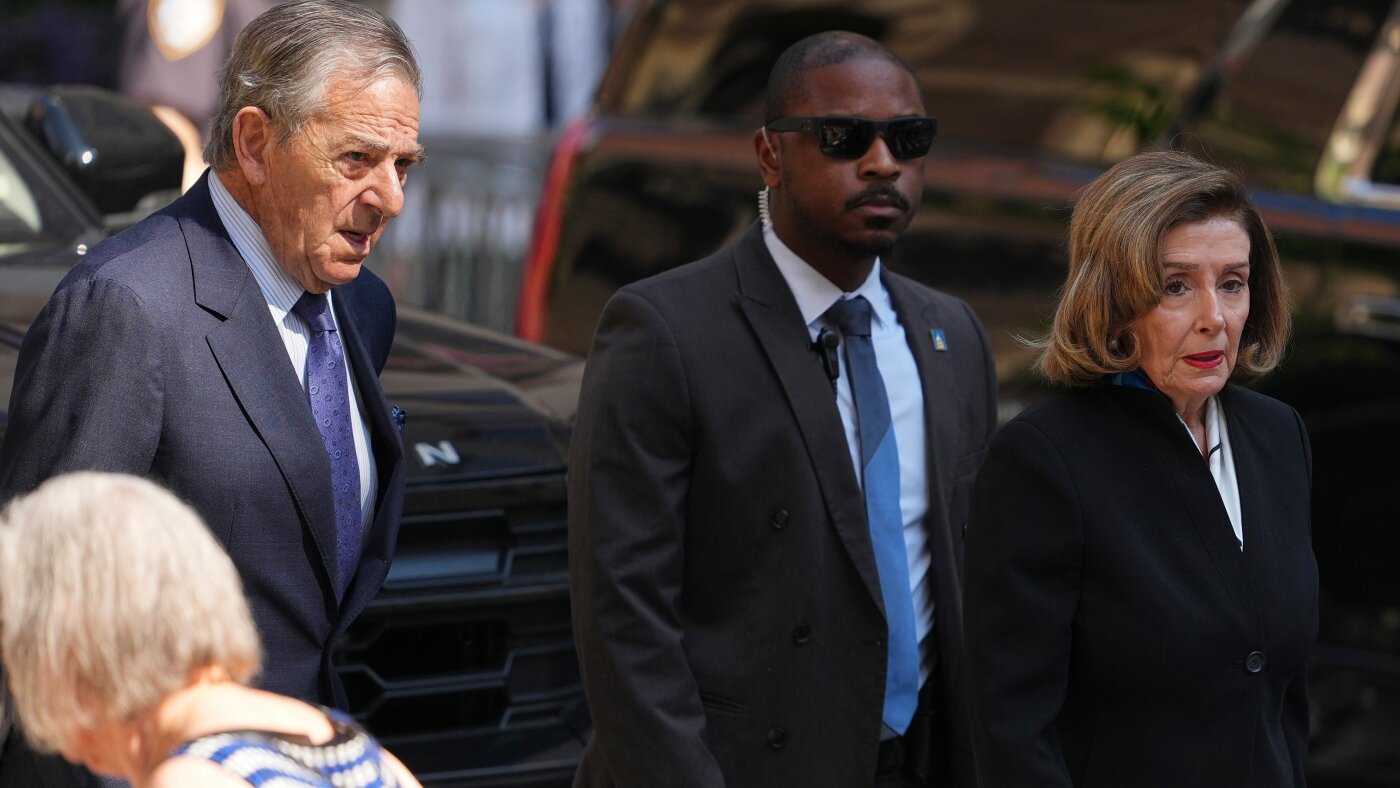
Paul Pelosi in hit-and-run in California, car left with major damage, authorities say
-

 Los Angeles, Ca2 hours ago
Firefighters battle Fourth of July blazes around Los Angeles
-

 Detroit, MI2 hours ago
Storm chances linger into the start of the week across Metro Detroit
-

 San Francisco, CA3 hours ago
Relay for America runs flag from San Francisco to D.C. in message of unity
-

 Dallas, TX3 hours ago
Cowboys newcomer already looks like a waste of money in Dallas

