Education
Trump Administration Cancels $1 Billion in Grants for Student Mental Health


The Trump administration has halted $1 billion for mental health services for children, saying that the programs funded by a bipartisan law aimed at stemming gun violence in schools were no longer in “the best interest of the federal government.”
Lawmakers authorized the money in 2022 after a former student opened fire at an elementary school in Uvalde, Texas, killing 19 children and two teachers and injuring 17 others. The measure, known as the Bipartisan Safer Communities Act, broke a decades-long impasse between congressional Republicans and Democrats on addressing gun violence by focusing largely on improving mental health support for students.
But just as some of the mental health programs are starting, the Education Department canceled the funding this week and informed grant recipients that they would have to reapply for the money because of potential violations of federal civil rights law.
The department did not specify a civil rights law or provide the grant recipients with any evidence of violations, according to the notice reviewed by The New York Times.
An Education Department spokeswoman confirmed that the grants had been discontinued because of a particular focus on increasing the diversity of psychologists, counselors and other mental health workers.
“Under the deeply flawed priorities of the Biden administration, grant recipients used the funding to implement race-based actions like recruiting quotas in ways that have nothing to do with mental health and could hurt the very students the grants are supposed to help,” said Madi Biedermann, the department’s deputy assistant secretary for communications. “We owe it to American families to ensure that taxpayer dollars are supporting evidence-based practices that are truly focused on improving students’ mental health.”
Ms. Biedermann declined to provide applications that the department viewed as discriminatory, citing privacy laws. Instead, she offered examples of specific provisions pulled from lengthy applications.
A provision in one application set a “diversity goal” of hiring eight nonwhite counselors out of a total of 24. A line in an additional application included training for mental health professionals that included helping counselors “recognize and challenge systemic injustices, antiracism and the pervasiveness of white supremacy to ethically support diverse communities.”
Another highlighted the importance of handling “racial stress and trauma” of students. One applicant’s training included understanding “the influences of racism and white privilege in education practice.”
The grant cancellations were reported earlier by The Associated Press.
Senator Christopher S. Murphy, a Connecticut Democrat who helped negotiate the legislation, said it was illegal for any president to halt funding approved by Congress and called on Republican supporters to stand up for the law. Three Republican senators, John Cornyn of Texas, Susan Collins of Maine and Thom Tillis of North Carolina, who wrote a column in support of the law three years ago, did not return calls seeking comment.
“I’m raw about this because I sat in the room for a long time negotiating a really delicate compromise on a really tough issue,” Mr. Murphy said in an interview. “What’s the point of being in Congress and writing laws if the president can just ignore them? So, I’m angry that my Republican partners are not out there raising objections to what the president is doing.”
Christopher Rufo, the conservative activist who has spearheaded the assault on critical race theory and diversity, equity and inclusion programs, posted screenshots on social media this week of some grant applications, which he said was proof that the program was “being used to advance left-wing racialism and discrimination.”
“No more slush fund for activists under the guise of mental health,” Mr. Rufo wrote.
But Mary Wall, a former deputy assistant secretary for education involved in setting up the process to solicit bids for the program under the Biden administration, said it was a “gross overstep” to equate mental health services with the radicalization of children.
The application process favored programs that reflected the communities they served, she said. Programs aimed at training mental health professionals for predominantly minority communities, for example, received extra consideration if they could show how the training would be aimed at professionals with similar backgrounds. Ms. Wall said this was “a common-sense practice” with proven results.
“One of the first questions after every single school shooting is whether the student had access to mental health support and services,” Ms. Wall said. “It is no stretch to say that taking away this support introduces the risk of harm to school communities and students.”



In our national memory, George Washington is a mythic figure, cast in metal, carved in stone. His leadership, first as general, then as president, is so intertwined with the roots of this country that it is sometimes hard to separate the man from the idea of America. How does one imagine the living presence of such an icon, much less embody him?
There is a small fraternity of men bold enough to try. At historical parks and commemorations from Virginia to Seattle, these interpreters (their preferred term) transform themselves into Washington. Each has his own approach, but what all their representations seek to capture is a legacy that has endured from his time to ours. If America, at least in part, is an idea, then our national project becomes, like theirs, an act of interpretation, an imperfect attempt to translate some idealized vision into the messy reality of our own time.
— Ezekiel Kweku
“By some strange quirk
of genetics, I have
Washington’s exact
dimensions. Where my
sleeves fall on my wrist,
the size of my chest, the
size of my thighs, where
the breeches fall to my
knees, are all identical.”
John Koopman, 67, often performs
while riding his horse, Bear. He
has portrayed Washington for 20 years.
James Fryer, 70, wears a replica of a general’s uniform that Washington designed himself. He recently completed training to portray Washington for the nonprofit Historic Philadelphia.
“Some people portray George as a marble statue. I don’t do a marble George. I am interested in talking to everyone, even those who yell at me because George was a slave owner. I want to respect them, try to educate them, or maybe even inspire them.”
Vern Frykholm, 77, was moved to bring his interpretation of Washington to Washington State, where he lives, after seeing a 2011 performance in Pennsylvania.
Dean Malissa, 73, signs his personal
correspondence, including emails,
as Washington did: “Your Most Humble
and Obedient Servant.” He became
the Official George Washington
at Mount Vernon in 2004, and held
that role for nearly 20 years.
“I describe him sometimes as just a dude. I look at him and think, I could see myself in the same world, making similar bad decisions or similar good decisions.”
Daniel Cross, 39, portrayed a young Washington at Virginia’s Colonial Williamsburg until last year. He now works with organizations around the country.
Curt Radabaugh, 62, has 13,000 history books in his personal library, including several hundred about Washington. He is a veteran of the U.S. Marines and a retired police officer.
“He’s a mentor, a father
figure, and not only in the
sense that he’s a patriarch
of the country. Because
I grew up without a
father, he kind of became
my surrogate father.”
Brian Hilton, 58, says he researches
Washington’s era every morning before
his children get up and at night after
they go to bed. He is a high school history
teacher near Richmond, Va.
Daniel Shippey, 57, partners on interpretations with his wife, Kelly, who portrays Martha Washington. Kelly researched 18th-century hair techniques to create her husband’s costume hairstyle. They live in Virginia.
“You’re playing the myth of George Washington as well as the historical figure. I make his voice a little firmer and deeper than it probably was in real life. I play him a little funnier than he probably was. In reality, if you came to see him, he probably wouldn’t talk to you as much as I do.”
Doug Thomas, 53, is Washington’s second cousin nine times removed.
John Godzieba, 67, has reenacted
the crossing of the Delaware as
Washington every Christmas for the
past 16 years at Pennsylvania’s
Washington Crossing Historic Park.
“In many ways I don’t look like him. My eye color is wrong. My nose is wrong. My hair color is wrong. I wouldn’t have cast myself in this role.”
Ron Carnegie, 64, has portrayed Washington at Colonial Williamsburg for 20 years.
Ryan Williams, 37, is a veteran who specializes in playing a young Washington during the French and Indian War. He lives in Virginia.
“Some people portray
Washington almost
like a superhero.
I like to bring out that
he has faults. He’s a
person like you or me.”
Michael Grillo, 64, is a historical
tailor who hand-sews his own clothes
for reenactments. He also makes
period props, including two American
battle flags and pewter mugs
engraved with Washington’s crest.
Martin Schoeller is a photographer and director known for his close-up portraits of everyone from world leaders and celebrities to female bodybuilders. For this project, he used a large format camera to photograph 13 historical interpreters of George Washington — many of whom arrived in full uniform — over three days in Virginia and New York City.
Additional reporting by Tenzin D. Tsagong. Interviews have been edited and condensed for length and clarity. Top quotes from Brian Hilton, Daniel Shippey and Daniel Cross.
Produced by Sara Barrett, Danny DeBelius and Sam Whitney. Additional production by Olivia James.
One task the robots can take from us? Cleaning. Especially hard-to-access windows. So when writers Caroline Mullen and Evan Dent found this little guy — whose government name is “EcoVacs Winbot Mini” — they were intrigued. Could he clean the uncleanable? Caroline and Evan put their robot friend to the test at both the Wirecutter office and a high-rise apartment. Is a robo-window cleaner more effective than scrubbing yourself?

new video loaded: School Year Cut Short and Aid Delivery Slowed Amid Fuel Crisis in Cuba

By McKinnon de Kuyper
June 22, 2026
-
 News23 minutes ago
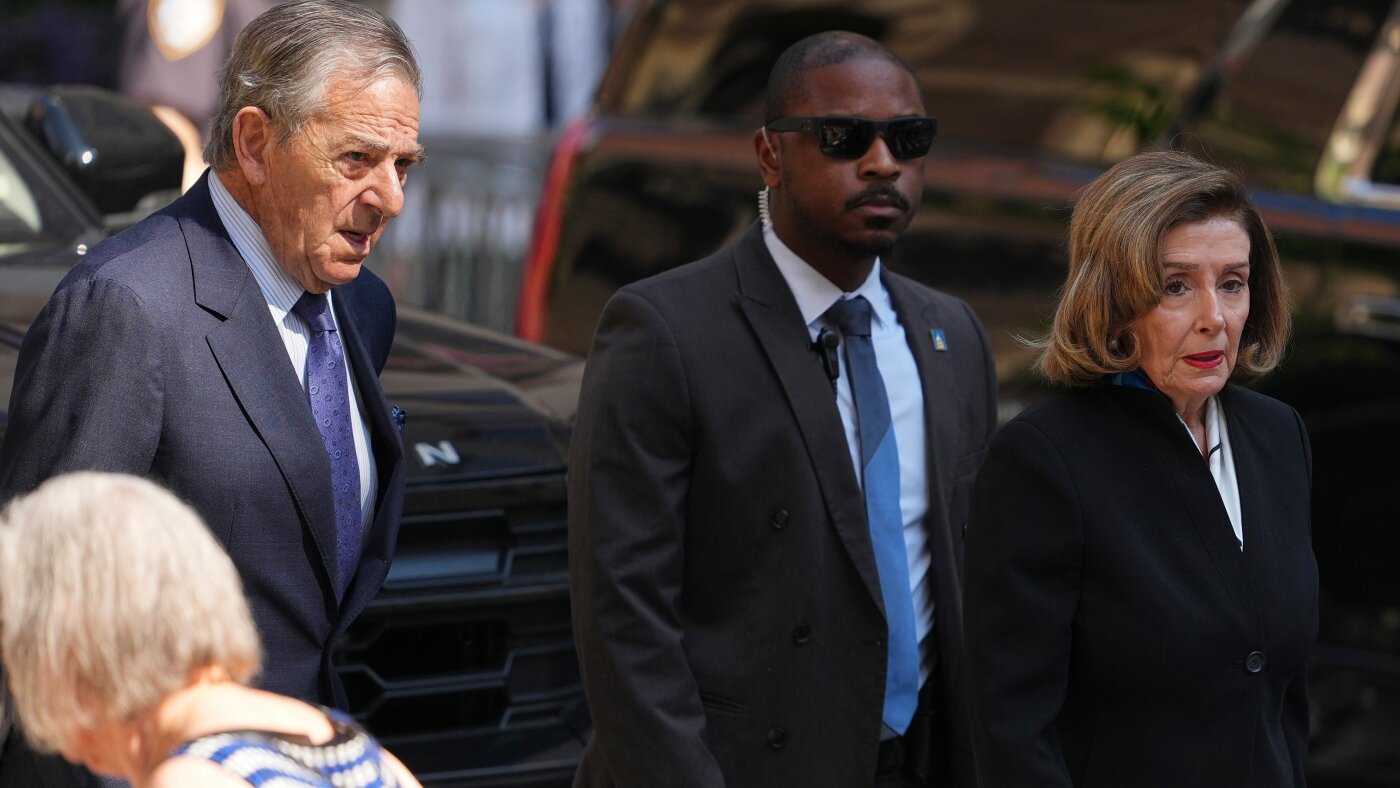
Paul Pelosi in hit-and-run in California, car left with major damage, authorities say
-

 Los Angeles, Ca2 hours ago
Firefighters battle Fourth of July blazes around Los Angeles
-

 Detroit, MI2 hours ago
Storm chances linger into the start of the week across Metro Detroit
-

 San Francisco, CA2 hours ago
Relay for America runs flag from San Francisco to D.C. in message of unity
-

 Dallas, TX2 hours ago
Cowboys newcomer already looks like a waste of money in Dallas
-

 Miami, FL2 hours ago
Police search for suspect after man is shot while on a boat near hotel in Fort Lauderdale on 4th of July
-

 Boston, MA2 hours ago
Sonny Gray shines again, and the Red Sox make it two straight wins at the Angels to start grinding road trip – The Boston Globe
-

 Denver, CO3 hours ago
Aldi expanding into Colorado, applies for permits at two Denver locations

