Education
Navy SEAL Whose Lacrosse Workout Left Tufts Players Hospitalized Is Called Unqualified


An active-duty Navy SEAL who led a grueling training session for the Tufts University men’s lacrosse team last year that led to the hospitalization of nine students did not appear to be qualified for that role, according to a review commissioned by the university that was released on Friday.
Twenty-four of the 61 students who participated in the voluntary workout developed rhabdomyolysis, also known as rhabdo, a serious and somewhat rare muscle condition, the review said.
The president and athletics director of Tufts, which won the Division III men’s lacrosse championship a few months before the September 2024 training session, acknowledged in a statement on Friday that the session had not been appropriate.
“We would like to extend our sincere apologies to the members of the men’s lacrosse team, their families, and others affected by this situation,” Sunil Kumar, the university’s president, and John Morris, the athletics director, said.
The university, in Medford, Mass., outside of Boston, declined to name the Navy SEAL involved in the exercise regimen, other than to say that he had recently graduated from Tufts and was an equipment manager for the lacrosse team.
He did not cooperate with two independent investigators who prepared the report, according to its executive summary.
“To our knowledge, the third party who led the Navy SEAL workout did not have any credentials that qualified him to design, lead or supervise group exercises,” the summary said.
The review was conducted by Rod Walters, a sports medicine consultant, and Randy J. Aliment, a lawyer who specializes in internal investigations for universities and assessments of student-athlete safety and health.
The Naval Special Warfare Command, which oversees the SEAL program, did not immediately respond to a request for comment on Friday.
At the time of the episode, a spokeswoman for the command said that the SEAL was not at Tufts as part of a Navy-sanctioned event, and it was unclear if the sailor would face any disciplinary action.
During the 75-minute workout, lacrosse players and two other students did a series of repetitions focused almost exclusively on upper extremity muscle groups, including about 250 burpees, according to the review.
Popular with the military and in CrossFit gyms, burpees can involve quickly squatting down, jumping into a plank, performing a push-up, jumping forward into a squat, then jumping back into a standing position. But they have also been blamed for causing injuries when done incorrectly or quickly.
The review found that the university’s director of sports performance approved the workout plan the same day that he received it from the Navy SEAL and did not share it with others in the athletics department in advance.
The sports performance director, who was not named in the review, texted the plan to his staff about an hour before the students began the workout.
In the report, the investigators found that the Navy SEAL who led the training had lacked familiarity with N.C.A.A. policies and regulations and did not follow the principles of acclimatization that are necessary to avoid injury during training.
The review also faulted the university for its response to the situation, saying that there were no policies or procedures in place for transportation of students to and from hospitals, or direction of care from a medical perspective.
About 40 percent of the students who participated in the training sessions completed the exercises, but the majority had to modify the routine because of its difficulty, the report’s executive summary said.
“By the next morning, students began experiencing adverse effects and reported to the team athletic trainer,” the investigators wrote. “Two days later, several cases of Exertional Rhabdomyolysis had been identified.”
High-intensity workouts can cause rhabdo, as can trauma like a car crash or a fall, medical experts say. It involves injuries to skeletal muscles, leading the muscles to die and release their contents into the bloodstream.
Although rhabdo is an uncommon condition that affects about 26,000 people a year in the United States, according to the Cleveland Clinic, it can be life-threatening.
In 2011, 13 University of Iowa football players were hospitalized with rhabdo when the team jumped back into workouts after taking some time off following a bowl game. In recent years, there have been reports of a women’s soccer team in Texas suffering from rhabdo, which left one player hospitalized.
Guidelines developed several years ago by the N.C.A.A. that are aimed at preventing rhabdo said that college athletes should be given “transition periods” after a break in training or introducing new members to a team.
During transition periods, the N.C.A.A. recommends, athletic trainers and coaches should ensure that intensity and volume of activity is gradually increased over time.
Sara Ruberg contributed reporting.



In our national memory, George Washington is a mythic figure, cast in metal, carved in stone. His leadership, first as general, then as president, is so intertwined with the roots of this country that it is sometimes hard to separate the man from the idea of America. How does one imagine the living presence of such an icon, much less embody him?
There is a small fraternity of men bold enough to try. At historical parks and commemorations from Virginia to Seattle, these interpreters (their preferred term) transform themselves into Washington. Each has his own approach, but what all their representations seek to capture is a legacy that has endured from his time to ours. If America, at least in part, is an idea, then our national project becomes, like theirs, an act of interpretation, an imperfect attempt to translate some idealized vision into the messy reality of our own time.
— Ezekiel Kweku
“By some strange quirk
of genetics, I have
Washington’s exact
dimensions. Where my
sleeves fall on my wrist,
the size of my chest, the
size of my thighs, where
the breeches fall to my
knees, are all identical.”
John Koopman, 67, often performs
while riding his horse, Bear. He
has portrayed Washington for 20 years.
James Fryer, 70, wears a replica of a general’s uniform that Washington designed himself. He recently completed training to portray Washington for the nonprofit Historic Philadelphia.
“Some people portray George as a marble statue. I don’t do a marble George. I am interested in talking to everyone, even those who yell at me because George was a slave owner. I want to respect them, try to educate them, or maybe even inspire them.”
Vern Frykholm, 77, was moved to bring his interpretation of Washington to Washington State, where he lives, after seeing a 2011 performance in Pennsylvania.
Dean Malissa, 73, signs his personal
correspondence, including emails,
as Washington did: “Your Most Humble
and Obedient Servant.” He became
the Official George Washington
at Mount Vernon in 2004, and held
that role for nearly 20 years.
“I describe him sometimes as just a dude. I look at him and think, I could see myself in the same world, making similar bad decisions or similar good decisions.”
Daniel Cross, 39, portrayed a young Washington at Virginia’s Colonial Williamsburg until last year. He now works with organizations around the country.
Curt Radabaugh, 62, has 13,000 history books in his personal library, including several hundred about Washington. He is a veteran of the U.S. Marines and a retired police officer.
“He’s a mentor, a father
figure, and not only in the
sense that he’s a patriarch
of the country. Because
I grew up without a
father, he kind of became
my surrogate father.”
Brian Hilton, 58, says he researches
Washington’s era every morning before
his children get up and at night after
they go to bed. He is a high school history
teacher near Richmond, Va.
Daniel Shippey, 57, partners on interpretations with his wife, Kelly, who portrays Martha Washington. Kelly researched 18th-century hair techniques to create her husband’s costume hairstyle. They live in Virginia.
“You’re playing the myth of George Washington as well as the historical figure. I make his voice a little firmer and deeper than it probably was in real life. I play him a little funnier than he probably was. In reality, if you came to see him, he probably wouldn’t talk to you as much as I do.”
Doug Thomas, 53, is Washington’s second cousin nine times removed.
John Godzieba, 67, has reenacted
the crossing of the Delaware as
Washington every Christmas for the
past 16 years at Pennsylvania’s
Washington Crossing Historic Park.
“In many ways I don’t look like him. My eye color is wrong. My nose is wrong. My hair color is wrong. I wouldn’t have cast myself in this role.”
Ron Carnegie, 64, has portrayed Washington at Colonial Williamsburg for 20 years.
Ryan Williams, 37, is a veteran who specializes in playing a young Washington during the French and Indian War. He lives in Virginia.
“Some people portray
Washington almost
like a superhero.
I like to bring out that
he has faults. He’s a
person like you or me.”
Michael Grillo, 64, is a historical
tailor who hand-sews his own clothes
for reenactments. He also makes
period props, including two American
battle flags and pewter mugs
engraved with Washington’s crest.
Martin Schoeller is a photographer and director known for his close-up portraits of everyone from world leaders and celebrities to female bodybuilders. For this project, he used a large format camera to photograph 13 historical interpreters of George Washington — many of whom arrived in full uniform — over three days in Virginia and New York City.
Additional reporting by Tenzin D. Tsagong. Interviews have been edited and condensed for length and clarity. Top quotes from Brian Hilton, Daniel Shippey and Daniel Cross.
Produced by Sara Barrett, Danny DeBelius and Sam Whitney. Additional production by Olivia James.
One task the robots can take from us? Cleaning. Especially hard-to-access windows. So when writers Caroline Mullen and Evan Dent found this little guy — whose government name is “EcoVacs Winbot Mini” — they were intrigued. Could he clean the uncleanable? Caroline and Evan put their robot friend to the test at both the Wirecutter office and a high-rise apartment. Is a robo-window cleaner more effective than scrubbing yourself?

new video loaded: School Year Cut Short and Aid Delivery Slowed Amid Fuel Crisis in Cuba

By McKinnon de Kuyper
June 22, 2026
-
 Science2 minutes ago
‘I’d rather my house burn down than get cancer’: Herbicide use upends California’s fight to save forests
-
 Sports7 minutes ago
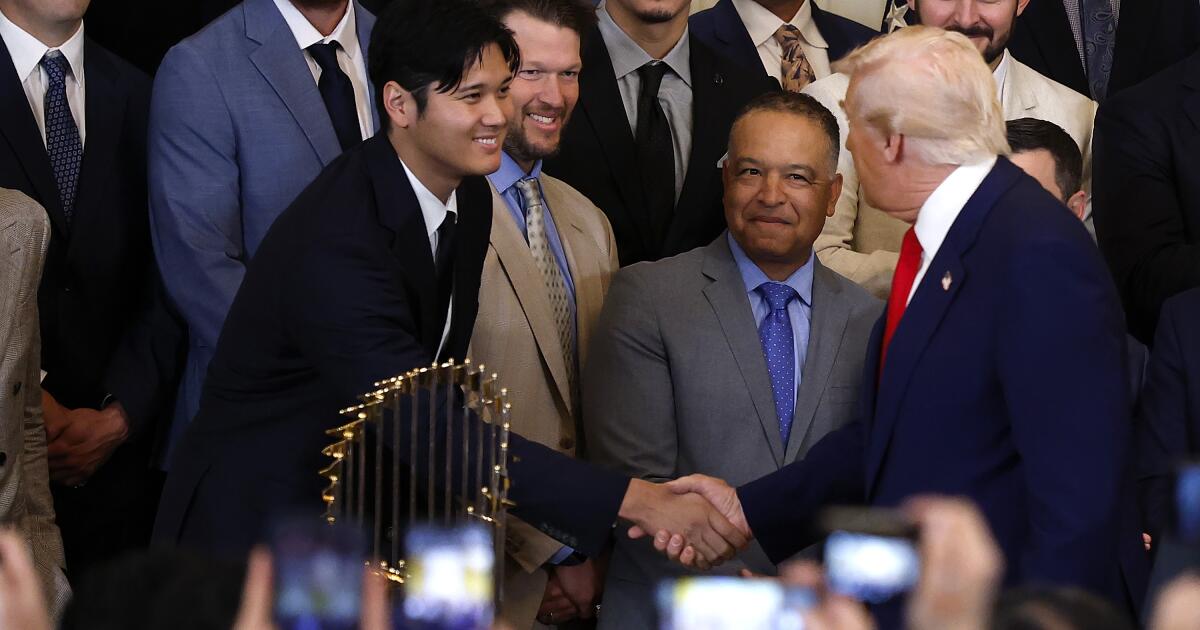
Dodgers scheduled to visit White House in late July to celebrate 2025 World Series win
-

 World17 minutes ago
Former US Olympian pleads not guilty in DC reflecting pool vandalism case
-
 News44 minutes ago
Former Olympian pleads not guilty in reflecting pool vandalism charges
-

 Los Angeles, Ca2 hours ago
Heat advisory, beach hazards in effect as Southern California sizzles
-

 Detroit, MI2 hours ago
Teen on moped hit by car after cruising through stop sign in Detroit
-

 San Francisco, CA3 hours ago
Flight of fancy: San Francisco moves to build private luxury airport terminal
-

 Dallas, TX3 hours ago
Dallas’ digital creator economy is booming. Burnout is too.

