Culture
Ghiroli: The Orioles’ honeymoon is over, and their front office needs to find answers


BALTIMORE — The backslapping of goodbyes in the Baltimore Orioles clubhouse was deafening, the official obituary for a team that has been playing dead for months.
This much is clear: The honeymoon is over.
Last year, when this group was swept out of the American League Division Series by the eventual champion Texas Rangers, the reasons seemed valid. They were young, inexperienced. They had simply run out of gas in October. There was dejection, but it was hard to be too upset at a team that had stunned the sport by winning 101 games and the AL East. Over and over, those around the team offered variations of the same phrase: It was just the beginning of a long window for this young core.
The window is here. And if the organization, everyone from general manager Mike Elias on down, doesn’t learn from its mistakes, it could slam shut sooner than anyone thought.
A new ownership group, led by David Rubenstein, will take a close look at the business in its first full offseason, and the list of upgrades and to-dos is long. This front office would be wise to do its own autopsy, after a listless 2-1 loss to the Kansas City Royals that should send shock waves through every corner of Camden Yards.
“It all came crashing down on us sooner than anyone expected it to,” catcher James McCann said of an Orioles team with World Series expectations that was 20 games over .500 in the first half of the season.
This isn’t just about Jordan Westburg’s injury, though when Westburg fractured his hand, the Orioles’ offense took a nosedive in August and September. Nor is it about the alarming play of catcher Adley Rutschman, who is either hurt or just went the better part of four months as a below-average offensive player.
And it isn’t just about playing things too safe at the trade deadline, though you could certainly start there. The Orioles were a .500 team in the second half of the season, and were it not for the acquisition of Wednesday’s starter, Zach Eflin, the deadline could be chalked up as a total failure. It is the second successive season Elias and his group opted not to make a big splash but to instead hold on to most of their top prospects and carefully cultivated farm system.
Maybe bigger moves weren’t out there, but there were other paths to upgrade. One, closer Lucas Erceg, stared them in the face as he finished the job for the Royals in both wild-card games. Two more, the San Diego Padres’ Tanner Scott and Jason Adam, were significant enough bullpen upgrades that it makes you wonder: How many games could they have changed for the Orioles? Being bold can invigorate a clubhouse. Being safe, for the second season in a row, can be deflating. “It’s better than nothing,” a member of last year’s team texted me after the team acquired Jack Flaherty and Shintaro Fujinami, both busts, last July. Was it, though?
Optics matter. Clubhouse dynamics matter. Experience matters. Especially in the postseason.
Kansas City, a small-market team, infused its club with four new players at the deadline and added another trio in August on waivers. It prioritized veterans, knowing postseason experience was important. Who in the Orioles lineup has the experience and cache to call a pregame meeting to light a fire, or keep things loose in the dugout? Veterans matter, even when they don’t show up in the numbers.
Of course, the Orioles could have added Scott, Adam, Erceg and vintage Mariano Rivera at the deadline and it still wouldn’t have helped much against Kansas City. The O’s lineup looked flummoxed and miserable the past two days, flailing at pitches outside the zone, desperate to hit a three-run homer with no one on base. In perhaps the lasting image of this series, Colton Cowser struck out swinging at a ball that hit him in the fifth inning with the bases loaded. Had he kept his bat on his shoulders, the Orioles would have taken the lead.
The O’s scored one run the entire series, running the organization’s playoff losing streak to 10 in the process. They never led and, dating back to last year’s sweep against Texas, have had the lead in just one inning in five postseason games. These don’t just feel like losses; they feel almost inevitable. That is what needs to change.
O’s became the 4th team to win ≥ 90 regular-season games, make the playoffs and go winless in the playoffs in consecutive seasons. Brewers are about to join them.
Others:
2021-22 Cardinals
2018-19 A’s
1969-70 Twins@Stathead— Rob Daniels (@oriolesfactoids) October 3, 2024
“Last year, Game 1 (we had an) opportunity, didn’t win, but then the next two kind of got out of hand,” Orioles manager Brandon Hyde said. “This year, you felt like these were two winnable games.”
The Orioles front office and coaches will spend a long time unpacking all the reasons they became a .500 team: injuries, underperformance, over-reliance on their young stars. The players, eyes red-rimmed and shocked, will retreat to their offseason homes and wonder what could have been.
“For it to happen two years in a row is a tough pill to swallow,” said first baseman Ryan Mountcastle, who, like many of his teammates, had no answers for how this team slid so far from July on. For how the entire lineup dipped in runs per game, slugging percentage, OPS and every other tangible metric as the season wore on.
Someone better find those answers. Next year, the Orioles won’t have ace Corbin Burnes — who came over last offseason in a fantastic trade by the front office — or Anthony Santander, who hit a team-leading 44 home runs and is also headed to free agency. Those are big shoes to fill.
Make no mistake: This is still a talented young team. But never has an offseason felt more critical. Never has there been a time to aggressively chase upgrades and not waste another year of a young, controllable, cheap core.
Windows change. Injuries happen; players age. The Orioles don’t even have to leave the division for proof of how quickly things can turn sour. Just look at the Toronto Blue Jays.
The front office has proved it can build a minor-league system and develop an enviable group of young, big-league talent. It has done a terrific job turning around an organization that was in dire straits. Now it’s time to figure out how to take the next step.
Good isn’t good enough anymore. And just getting to October can’t be, either.
(Photo: Patrick Smith / Getty Images)



Among the many complaints made about the modern American novelist, the loudest, if not the most intelligent, has been the charge that he is not speaking for his country. A few seasons back an editorial in Life magazine asked grandly, “Who speaks for America today?” and was not able to conclude that our novelists, or at least our most gifted ones, did.
This opening paragraph is from an essay titled “The Fiction Writer and His Country” by a writer whose work was influenced by Catholicism, the rural South and peacocks. Who was it?

Welcome to Lit Trivia, the Book Review’s regular quiz about books, authors and literary culture. This week’s challenge is all about an influential group of writers, editors and other creative types known as the Algonquin Round Table. In the five multiple-choice questions below, tap or click on the answer you think is correct. After the last question, you’ll find links to related books and other information about the era if you’d like to do further reading.

A strong sense of place can deeply influence a story, and in some cases, the setting can even feel like a character itself. But as it’s summer here in the Northern Hemisphere and travel adventures abound, this week’s literary geography quiz takes you on a trivia tour of notable libraries around the world. To play, just make your selection in the multiple-choice list and the correct answer will be revealed. At the end of the quiz, you’ll find links to more information if you’d like to do further reading.
-

 Sports3 minutes ago
Pirates star pitcher makes unfortunate history after being taken out in middle of perfect game bid
-

 Technology8 minutes ago
Medical identity theft follows you into the doctor’s office
-
 Business15 minutes ago
California soccer fans sue StubHub after it fails to deliver expensive World Cup tickets
-
 Entertainment18 minutes ago
Lucas Museum to give free annual passes to South L.A. neighbors, host community preview day
-
 Lifestyle23 minutes ago
Meow Wolf taps famed L.A. animation house for its new Los Angeles venue
-
Politics30 minutes ago
Column: Trump decries ‘communism’ while his government takes ownership of companies
-
 Science33 minutes ago
‘I’d rather my house burn down than get cancer’: Herbicide use upends California’s fight to save forests
-
 Sports38 minutes ago
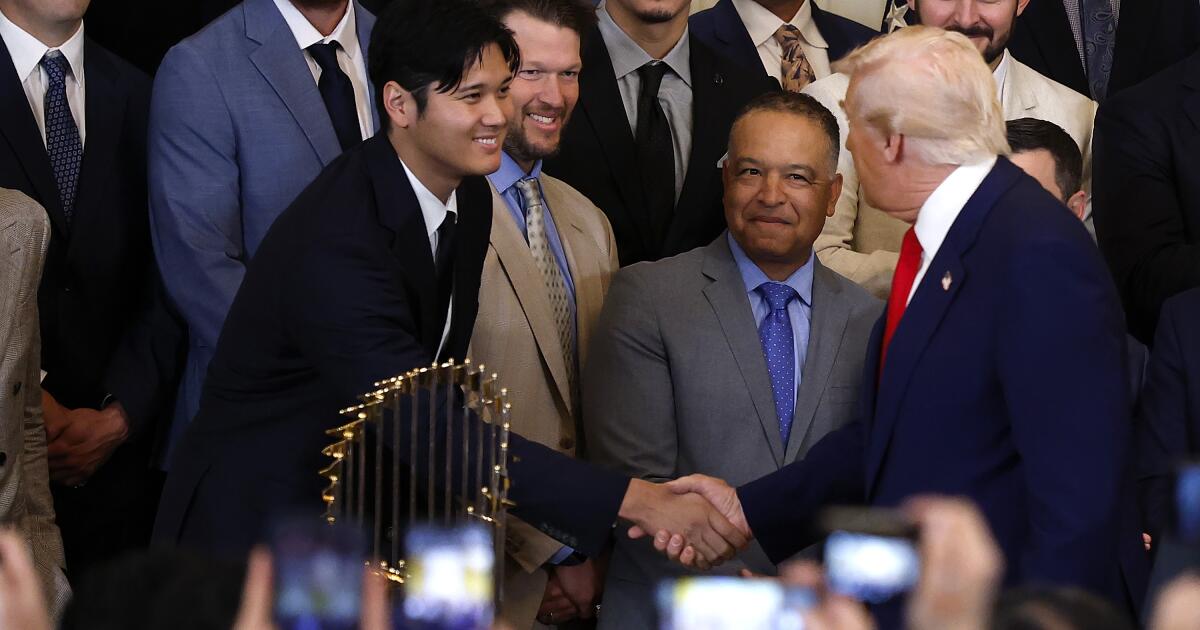
Dodgers scheduled to visit White House in late July to celebrate 2025 World Series win


