Business
Video: ‘Lack of Further Progress’ on Inflation Keeps Interest Rates High


new video loaded: ‘Lack of Further Progress’ on Inflation Keeps Interest Rates High
transcript
transcript
‘Lack of Further Progress’ on Inflation Keeps Interest Rates High
Jerome H. Powell, the Fed chair, said that the central bank needed “greater confidence” that inflation was coming down before it decided to cut interest rates, which are at a two-decade high.
-
Today, the F.O.M.C. decided to leave our policy interest rate unchanged and to continue to reduce our securities holdings, though, at a slower pace. Our restrictive stance of monetary policy has been putting downward pressure on economic activity and inflation, and the risks to achieving our employment and inflation goals have moved toward better balance over the past year. However, in recent months, inflation has shown a lack of further progress toward our 2 percent objective, and we remain highly attentive to inflation risks. We’ve stated that we do not expect that it will be appropriate to reduce the target range for the federal funds rate until we have gained greater confidence that inflation is moving sustainably toward 2 percent. So far this year, the data have not given us that greater confidence. In particular, and as I noted earlier, readings on inflation have come in above expectations. It is likely that gaining such greater confidence will take longer than previously expected.
Recent episodes in Business




Tennessee propositioned Paramount Skydance, hoping to tempt it to become the next company to leave California.
As California Atty. Gen. Rob Bonta gathered a coalition of 12 state attorneys general to try to block Paramount’s $111-billion takeover of Warner Bros. Discovery, Tennessee slid into Paramount’s DMs, suggesting it would be better treated in the southern state.
Corporate flight from the Golden State has increased in recent years, with many California-based companies fleeing for lower taxes and more lax business regulations. For the first time this year, California was not the state with the most Fortune 500 companies, after Texas dethroned it in June.
California companies packing up their people and headquarters to move to Texas has been a well-traveled road for those looking for options. Now Tennessee wants to be in the running as a prime destination as well.
Here is what you need to know about its efforts:
What happened with Paramount?
In a July 2 letter to Paramount Chief Executive David Ellison, Tennessee Deputy Gov. Stuart McWhorter pitched a relocation of the studio’s Hollywood headquarters to the Volunteer State. In the middle of a brutal legal battle with California regarding the proposed Warner Bros. merger, Tennessee may appear more appealing to Ellison. Paramount relocated its headquarters from New York to Los Angeles in August of last year.
“As Paramount Skydance writes its next chapter, Tennessee offers a compelling proposition: a state where creativity and technology converge, where talent is developed intentionally, and where innovation is embraced,” said McWhorter in the letter viewed by The Times. “We would welcome the opportunity to share our vision for how Tennessee could help shape the future of Paramount Skydance and its talented team.”
Though many in Hollywood have giggled at the idea of a major studio moving to the South, it isn’t totally ridiculous.
Ellison has backing from his father, tech billionaire and Oracle co-founder Larry Ellison. Oracle, once a California-based company, is now moving its headquarters to Nashville.
In December of 2020, the software tech company left California, where it was founded in 1977, to relocate to Texas. In April 2024, it chose Nashville as the home for Oracle’s “world headquarters,” which began construction in February.
Have other companies moved to Tennessee?
Oracle isn’t the first company to set up in Tennessee. Nissan, which had operated its U.S. headquarters out of Gardena since 1960, left the state in 2005 for Franklin. Nissan chose Tennessee for its drastically lower operational costs.
Mitsubishi Motors also moved its headquarters to Franklin from Cypress in 2019. Mitsubishi moved for lower operational costs and to be in a state with less-strict business regulations than California‘s.
Two beloved California burger chains moved to Tennessee.
In 2018, CKE, the parent company of Los Angeles-founded Carl’s Jr., also left California for Tennessee. CKE consolidated Carl’s Jr. and its St. Louis chain, Hardee’s, under its headquarters in Franklin.
In-N-Out — arguably California’s most iconic burger spot known for its animal fries and double doubles— began a transition out of California in 2023. It established a corporate office in Franklin, and last summer, owner and Chief Executive Lynsi Snyder announced her own move to Tennessee.
Last year, Snyder said pandemic-era restrictions and California policy motivated her decision to leave, but she has no plans for In-N-Out to expand farther East. The majority of In-N-Out locations are still in California.
“There’s a lot of great things about California, but raising a family is not easy here. Doing business is not easy here,” Snyder said.
What is so special about Tennessee?
The southern state’s highly business-friendly tax incentives make it an extremely desirable location. Businesses and billionaires are drawn to Tennessee by its lack of state income and property taxes. Instead, the state relies on a 7% sales tax as its main source of tax revenue. Tennessee also offers a number of tax credits and grants for businesses, including many designed to support newly relocated businesses, cover costs of training new employees, and construction.
Tennessee’s central location and well-connected infrastructure support supply chain logistics. Seven interstate highways run through Tennessee, and six of the United States’ class 1 rail lines operate there, allowing companies to cut transportation costs dramatically. Memphis is also home to the busiest cargo airport in the country.
The Tennessee Department of Economic and Community Development says the state has one of the best business incentive programs in the country and has been ranked the third best state for doing business by Chief Executive magazine.
Tennessee Gov. Bill Lee attributes the success to the state’s competitive tax policy, workforce, and quality of life.
“Companies choose Tennessee because they recognize the strength of our workforce, our strategic location and our ability to support long-term growth,” Lee said in an emailed statement. “Tennessee’s success comes from our commitment to helping businesses thrive.”
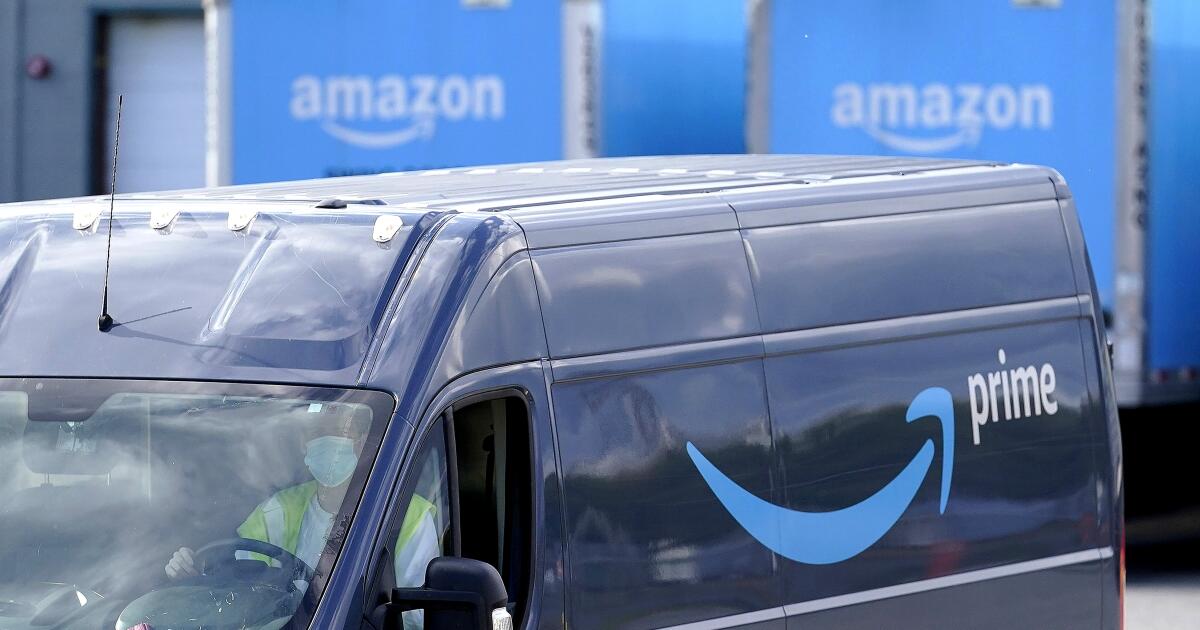
Two Amazon delivery service partners are shutting offices and laying off hundreds.
Xpress Delivery, located in Oakland, will be laying off 80 employees. OnPoint Logistics will be ceasing operations at its San Francisco location and cutting 96 jobs, according to a government filing.
Amazon delivery service partners are independent businesses that partner with Amazon to deliver packages from a local fulfillment center to the delivery station using Amazon delivery vans and provided devices.
In January, Amazon announced it would cut 16,000 jobs from its workforce and announced additional layoffs in May in its selling partner services team.
These are only joining a growing list of layoffs across California’s tech and business hubs. LinkedIn, Cisco, Meta, and Oracle have all announced layoffs this year. Both LinkedIn and Cisco cut around 5% of their workforce overall, with hundreds of those layoffs occurring in California. Meta and Oracle slashed over 10% of their workforces in favor of implementing AI into its operations.
Both OnPoint and Xpress delivery stations will permanently cease operations, and no replacement companies have been announced yet to operate there.
Amazon did not respond to a request for comment.

Netflix has long been seen as the winner in the streaming wars, with more than 325 million subscribers globally and hits like “Stranger Things” and “KPop Demon Hunters.”
For months, Netflix had been telling investors how it planned to scale its business to new heights by acquiring Warner Bros. Discovery, a potentially transformative media deal.
But after the streaming giant passed on buying the media company in February, Netflix has faced persistent questions from investors about its plans for staying on top.
Reflecting the investor unease, Netflix’s stock price, which closed Tuesday at $73.68 a share, has declined 21% this year and is down 42% from a year ago.
“Obviously, they have a very successful business,” said Ross Benes, a senior analyst at research firm eMarketer, adding that most of Netflix’s revenue comes from its subscriptions. “Your investors always want to just see more and more and more, and they mostly provide that one thing.”
Part of the reason investors are anxious is that Netflix’s share of TV viewing time in the U.S. has steadily declined in recent months as rival YouTube has gained market share, according to Nielsen data.
Netflix represented 7.8% of all TV viewing in the U.S. in April — the lowest percentage since May 2025. It was 7.5% in April 2025, Nielsen said.
By comparison, YouTube has seen its share of the streaming audience go up. YouTube’s TV viewing share in April rose to 13.4%, up from 12.4% a year earlier, Nielsen said.
Some investors fear that if viewership is down, subscribers could cancel the service, which would negatively affect the platform’s growing advertising business. It could also undercut Netflix’s ability to raise prices in countries like the U.S.
Despite the investor jitters, equity analysts estimate Netflix will have a strong second quarter, with revenue increasing 14% to $12.58 billion and net income rising 8% to nearly $3.38 billion, according to FactSet. One reason is continued growth in its advertising business and the popularity of new programming such as crime series “I Will Find You.”
Netflix will release its second quarter earnings results on Thursday. The company declined to comment for this story.
Netflix has noted that it has a low churn rate compared to competitors. The company said it has a long runway for growth, penetrating only about 5% of global TV viewing, according to a letter to shareholders in April. A number of its shows and movies appear on Nielsen’s most-watched streaming lists.
Among the company’s key priorities are broadening its entertainment offerings in areas such as live programming, games and video podcasts as well as growing its advertising business.
“A measure of our performance is engagement, which is not just the quantity of hours watched, but also the quality of that experience for our audiences,” Netflix said in its April letter, adding that its primary internal quality metric reached an all-time high in the first quarter.
“We believe we have meaningful advantages as we strive to become a must‑have service for consumers: a strong global brand, a wide range of high‑quality programming, a best‑in‑class product experience, and a frequent role at the center of culture,” Netflix said in its April letter.
Several equity analysts believe the Los Gatos-based company is still growing and remain bullish on the stock.
The last time Netflix came under major scrutiny from investors was in 2022, when it reported subscriber declines in the first quarter of that year. That pushed Netflix into pursuing other initiatives including selling cheaper subscriptions with ads, cracking down on password sharing and offering games on its service.
Last year, Netflix said it generated more than $1.5 billion in advertising and expects to roughly double that to $3 billion this year.
“We believe this is a long-term growth company,” said Jessica Reif Ehrlich, senior media and entertainment analyst at BofA Securities, who has a buy rating on the stock.
As part of its diversification, Netflix has expanded its portfolio of live programming over the years, including adding NFL games and streaming Major League Baseball’s opening day game.
But some analysts say Netflix needs to have a larger share of live sports content to draw sports fans into subscribing.
“They’re getting a lot of casual sports fans, but avid sports fans don’t need Netflix at all really, not yet,” Benes said.
Additionally, Netflix is adding new content to its platform by partnering with YouTube creators, adding video podcasts such as “The Breakfast Club” and partnering with media companies like BuzzFeed Studio to bring videos as short as three minutes to its service, which could help with viewer engagement.
“They help existing subscribers use the service more,” Benes said. “Let’s say I get in the habit of watching all these video podcasts on Netflix. It might not be the reason why I pay for it, but I might say, ‘Oh, I don’t know if I want to cancel it.’”
Some analysts think Netflix should consider other acquisitions to fuel future growth after walking away from Warner Bros. Discovery, which was scooped up by Paramount.
Comcast earlier this year announced that it plans to spin off NBCUniversal, which has properties including “Minions” and “Jurassic Park.” Some analysts speculated that Netflix could be interested in buying it.
“From our point of view, it makes a ton of sense,” Reif Ehrlich said. “Universal also has a great film and TV library. Maybe not as deep as Warner Bros., but very strong.”
Netflix executives also are considering launching live channels, including ones that are based on genres, and bundling with other streaming services, according to a person familiar with the matter who was not authorized to speak publicly. The Wall Street Journal was the first to report on the internal discussions.
Netflix launched TF1 live channels this year on its service in France in a partnership with media company TF1 Group. TF1 said its audience targets that were set for the 18-month horizon were achieved in less than three weeks.
When it comes to Netflix’s next move, anything is possible.
“Years ago, they said they wouldn’t get into advertising. They wouldn’t get into sports. They wouldn’t have theatrical releases,” Reif Ehrlich said, naming efforts that Netflix initially was adverse to doing before changing course . “So the business will continue to evolve and change.”
-

 North Carolina2 minutes ago
As cyclosporiasis cases rise, western NC shoppers take extra precautions with produce
-

 North Dakota8 minutes ago
Two injured in motorcycle mishap in Pembina County
-
Ohio14 minutes ago
Ohio Lottery Powerball, Pick 3 Midday winning numbers for July 18, 2026
-

 Oklahoma20 minutes ago
UFC Oklahoma City bonuses: Dricus Du Plessis leads $100,000 winners
-

 Oregon26 minutes ago
Media Release-July 18 Evening | Central Oregon Fire Information
-

 Pennsylvania32 minutes ago
Police: Burglary at home of Philadelphia Eagles star Saquon Barkley
-

 Rhode Island38 minutes ago
What to do if you see a spotted lanternfly
-

 South-Carolina44 minutes ago
South Carolina Lottery Powerball, Pick 3 results for July 18, 2026

