Business
The Return for These Investors Isn’t Money, It’s More Affordable Housing


A few months ago, Matt Bedsole got a call from two real estate developers asking for his help. Their plan to build a four-story apartment complex in Chattanooga, Tenn., had a financial hole that no backer seemed eager to fill. The developers needed $8 million. Would Mr. Bedsole be interested in stepping in?
Mr. Bedsole is not a normal investor. He is the chief executive of Invest Chattanooga, a fund set up by the city of 200,000 to invest in local apartment projects. Unlike private equity firms — the main backers of new construction — he judges deals not solely on their financial return, but on how much housing they can deliver the city.
The apartment complex cleared that hurdle. It called for 170 new units that would replace a self-storage center ringed by barbed wire, in a gentrifying part of the city. But Mr. Bedsole had terms. In exchange for the $8 million investment, he got a 51 percent stake in the building and an agreement that 30 percent of its units be priced below market rate. The developers said yes. They closed the deal over pastrami sandwiches.
“Money is tight and developers don’t have a ton of options for capital right now,” Mr. Bedsole said in an interview. “We have it, but we want affordable units in the deal.”
Invest Chattanooga is part of a new class of government-backed funds that invest directly in new housing. The aim is to speed up construction and create housing that is permanently affordable and controlled locally. In the process they are rewriting how local housing programs have traditionally operated.
Each effort is a little different, but the guiding principle is to get developers to build more housing, with lower rents, in exchange for public investment. Instead of asking a high rate of return, as a private investor would, these funds require less money back from developers but stipulate that a portion of the units carry below market-rate rents.
They come at a time when a mix of higher interest rates and rising costs for insurance and materials like lumber have caused investors to run from new construction. Economists estimate the nation needs about 2 million new housing units, yet the pace of home building slowed last year.
Some states, like Hawaii, have created funds that lend money to developers on more favorable terms than Wall Street or a bank would, while others, including New York, have created funds to accelerate stalled projects. Atlanta aims to use public land to stimulate new home building: The city’s Urban Development Corporation contributes city-owned land to private development projects and keeps a stake after the building is completed.
Then there are public investment funds like the one in Chattanooga.
There are about two dozen of these funds in the United States, said Shaun Donovan, the chief executive of Enterprise Community Partners, which recently created a team to help them and is trying to set up its own fund to augment their efforts. The funds provide “capital, but capital at this moment of maximum impact, which is getting the building out of the ground,” said Mr. Donovan, who served as the housing secretary in the Obama administration.
Most of these efforts were inspired by Montgomery County, Md., whose Housing Opportunity Commission has for decades been a kind of national laboratory for affordable housing innovation. Mr. Bedsole has been something of a human catalyst in this process: He helped create Atlanta’s system based on the Montgomery County model, then took these ideas to Chattanooga last year.
“The cavalry isn’t coming, so we have to figure this out on our own,” said Tim Kelly, Chattanooga’s mayor.
From Public Housing to Patchwork
Figuring out how to produce low-cost housing for people who cannot afford market rents is a riddle that has vexed cities throughout the modern era. Governments have spent much of the past century veering between public and private sector solutions. Today most new affordable housing is delivered by a hybrid system, in which public subsidies finance private development.
That system is a product of shifting politics more than considered policy design. Starting in the 1970s, the federal government essentially stopped building public housing as part of a broader shift away from welfare benefits. What replaced it was a patchwork of rental vouchers and tax benefits — the biggest of which, the Low-Income Housing Tax Credit (LIHTC), was created in 1986 — for companies that provide affordable housing. Local governments now depend on that credit to build everything from low-cost apartments for teachers to supportive housing for people leaving homeless shelters.
One of the problems with low-income tax credits is that they are complicated to use and expire over time, often between 15 and 30 years, at which point the building’s owner can start charging market rents. It’s a galling turn for cities, since they often give millions in grants to finance affordable projects. To prevent building owners from evicting low-income tenants after the affordability restrictions lapse, many governments end up buying buildings back.
“So now the state has paid for the building twice — initially with subsidies, and then by giving a wad of cash to the developer,” said Stanley Chang, a state senator in Hawaii. “That is obscene.”
A Small Chip at a Growing Problem
Mr. Kelly, the mayor of Chattanooga, said he created Invest Chattanooga to prevent that obscenity. A businessman who ran car dealerships and co-founded the local soccer club, he was elected in 2021 (and re-elected last year) on an affordable housing platform.
At first, Chattanooga responded to its housing crisis by overhauling its zoning laws to allow more density, and legalizing backyard units on residential lots. This was the formula followed by many state and local governments over the past decade as rent and house prices have ballooned. But, as in many cities, the construction that followed leaned heavily toward higher-end buildings, where rents are too expensive for large swaths of the work force.
According to a city report, over the past five years Chattanooga has lost about half of its apartments that rent for less than $1,000 a month. The new apartments rent for too much, while federal programs do not produce enough units to meet the need.
But there are two ingredients in construction: land and money. So Chattanooga decided to focus on the second of these and became an investor, putting up $20 million to create Invest Chattanooga and hiring Mr. Bedsole from Atlanta to run it.
Invest Chattanooga is run like a business that makes money, then turns profits into cheaper housing. It puts up the initial cash, usually a mix of equity and debt financing, that developers need to get a bank loan. In exchange for the money, projects built with the fund must have at least 30 percent of their units reserved for families making below the median income in the area.
The city gets a return but it’s low — about 8 percent on the recent deal to replace the storage center, versus private equity firms that in many cases ask for double that amount. That difference can mean a developer saves several million dollars on a multiunit building, making it possible to lower the rent. And unlike units built with federal tax credits, Invest Chattanooga owns the building so can capture the upside of higher land values down the line.
Mr. Bedsole said Invest Chattanooga has a relatively modest goal of producing 100 affordable units a year by 2030, and to raise an additional $20 million for more projects. It is one little chip in a problem that gets bigger every day. Unlike the public housing agencies of old, his agency is not replacing developers in the process of building housing. Rather, it is trying to replace the financiers who decide what does and does not get built.
“I’m not competing with developers,” Mr. Bedsole said. “I’m competing with private equity.”



Business
Many indie festival films struggle to get distribution. Alamo Drafthouse is trying to change that
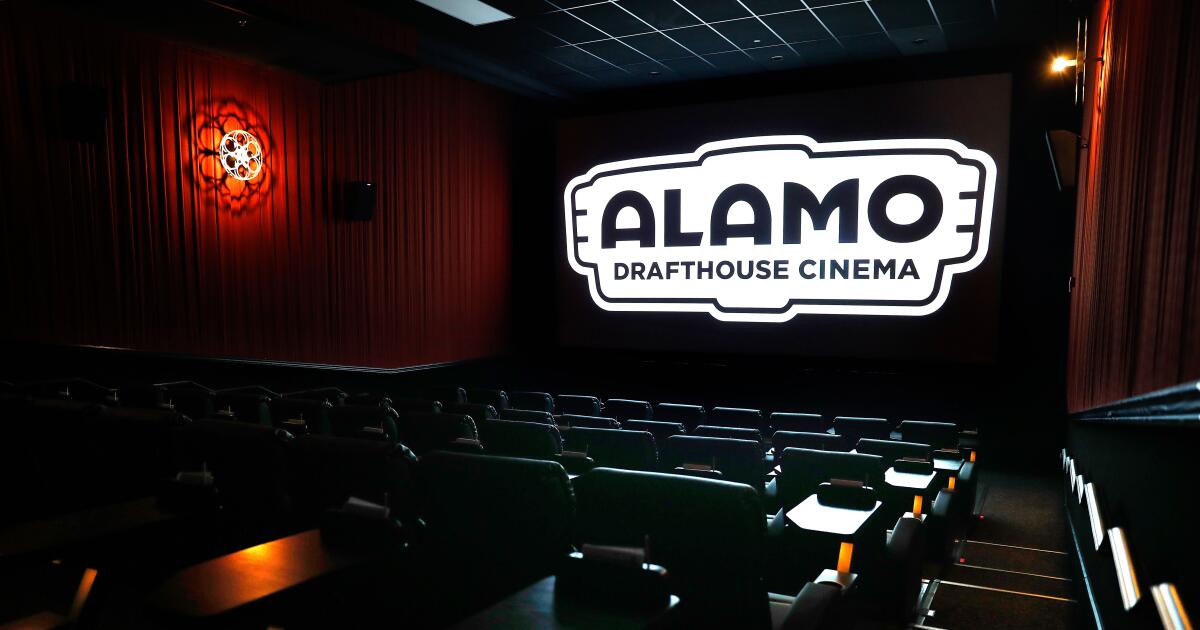
Dine-in movie theater chain Alamo Drafthouse Cinema is launching a new initiative to show unreleased independent films that had successful festival runs, a move that comes as specialty films have struggled to gain distribution.
The Alamo Exclusives program, announced Wednesday, will give limited theatrical runs to films that showed at festivals including Sundance, the Toronto International Film Festival, Tribeca Festival and South by Southwest festival, as well as Alamo’s own Fantastic Fest.
The idea is to help showcase films that received critical acclaim, but did not secure distribution or acquisition deals. The chain will not acquire these films, but instead will enter into agreements with filmmakers to exhibit their films on Alamo Drafthouse screens. By showing these films to audiences on the big screen, these films could get the momentum they need for further opportunities.
The program’s first film will be the documentary “Butthole Surfers: The Hole Truth and Nothing Butt,” which debuted last year at South by Southwest and chronicles the history of the punk rock band.
The film will be shown in Alamo Drafthouse theaters for a limited time later this summer.
The Austin-based chain, which is owned by Sony Pictures, has a long history of curating indie films for its audiences, giving Alamo Drafthouse confidence that its viewers want to see these kinds of movies, company chief executive Michael Kustermann said in a statement.
“Time and again, they’ve shown they’ll come out to support bold, original films when given the opportunity,” he said. The new Alamo Exclusives “gives us another way to champion filmmaker-driven films that deserve to be discovered and connect them with the wider Alamo Drafthouse audience.”
The initiative comes at a difficult time for indie films. Since the pandemic upended the movie business, traditional studios and distributors have had less appetite for risk, including betting on smaller indie films out of festivals.
And as the 2023 dual writers’ and actors’ strikes thinned out theatrical lineups, that aversion to uncertainty became a push for reliable and profitable hits.
“Too many incredible films premiere at festivals and then never receive the theatrical life they deserve,” Lisa Dreyer, director of Fantastic Fest and film innovation at Alamo, said in a statement. “We are actively searching for films across all genres, from horror to comedy, to everything in-between, to champion in this new, exciting way.”

The recall of a popular chip brand over salmonella concerns was recently upgraded to the U.S. Food and Drug Administration’s highest level, just ahead of the Fourth of July holiday and countless backyard barbecues.
On June 24, the FDA designated the recall of several varieties of Zapp’s and Dirty brand potato chips as Class I, meaning it’s “a situation in which there is a reasonable probability that the use of or exposure to a violative product will cause serious adverse health consequences or death.”
FDA has classified the following items as Class I:
Zapp’s
- 1.5-ounce Zapp’s Bayou Blackened Ranch Kettle Chips
- 2.5- and 8-ounce Zapp’s Bayou Blackened Ranch Potato Chips
- 1.5- and 8-ounce Zapp’s Big Cheezy Potato Chips
Dirty
- 1.5- and 2-ounce Dirty Brand Salt and Vinegar Potato Chips
- 2-ounce Dirty Maui Onion Chips
- 2-ounce Dirty Sour Cream and Onion Potato Chips
The chips are produced by Utz Quality Foods, LLC, which on April 28 issued a recall after learning “that a seasoning containing dry milk powder, sourced from California Dairies, Inc. and supplied by a third-party supplier, may contain the presence of Salmonella.”
Salmonella can lead to sometimes deadly infections in elderly people, young children and those with weakened immune systems, according to the FDA.
More than 680,000 bags are included in the recall.
Anyone who has these products should not eat them and should discard them immediately.
What to look for
Salmonella is a foodborne illness that can be fatal to young children, pregnant women, older adults and people with weakened immune systems, according to the National Institutes of Health.
Symptoms may develop 12 to 72 hours after infection, according to the FDA.
The FDA said that people with strong immune systems infected with salmonella may experience fever, diarrhea (which may be bloody), nausea, vomiting and abdominal pain. The illness can last four to seven days.
In rare cases, the infection may produce more severe illnesses such as arterial infections, endocarditis and arthritis, the agency added.
What to do if infected
If you contract salmonella, the Centers for Disease Control and Prevention recommends drinking plenty of fluids to prevent dehydration.
The CDC advises consulting a doctor before taking antidiarrheal medicine or antibiotics. If severe symptoms continue after two days, seek medical help, the agency says.
Because those with diarrhea can spread salmonella to others, it’s also recommended to avoid sharing food or preparing meals for others, sexual contact and swimming in public pools, and to stay home while sick.
Times staff writer Jasmine Mendez contributed to this report.

The Minions took over theaters this weekend as Universal Pictures and Illumination’s “Minions & Monsters” won the top spot at the box office, though with a lower-than-expected domestic haul.
The animated movie, which follows the Minions’ takeover of Hollywood, took in $61.4 million in the U.S. and Canada for the five-day Fourth of July holiday weekend, according to studio estimates. That haul was lower than analysts’ expectations for a domestic opening of about $68 million. The movie’s three-day total was $36.4 million.
But the Minions performed well internationally, bringing in about $85 million. In total, “Minions & Monsters” made $159.9 million worldwide on a production budget of about $85 million.
The film is the latest in the powerhouse franchise that began with “Despicable Me” in 2010. Across its previous six installments, the “Despicable Me” and “Minions” franchise has made more than $5.6 billion at the global box office. The last movie, 2022’s “Minions: The Rise of Gru,” made more than $940 million worldwide.
“Minions & Monsters” marks the lowest opening for the franchise. Part of the issue could be timing — the box office can be negatively affected when the Fourth of July lands on a Saturday, said Paul Dergarabedian, head of marketplace trends at Rentrak.
Walt Disney Co. and Pixar’s “Toy Story 5” came in second at the box office this weekend with a domestic three-day gross of $31 million. Angel Studios’ biopic “Young Washington” ($20.8 million), Warner Bros. and DC Studios’ “Supergirl” ($9.6 million) and Universal’s “Disclosure Day” ($6 million) rounded out the top five, according to Rentrak.
The haul for “Minions & Monsters,” coupled with the strong holdover performance of “Toy Story 5,” proved again that family films are making a dent in the summer box office.
“Toy Story 5” has now brought in a total of $764.3 million worldwide, and last month, Universal, Illumination and Nintendo’s “The Super Mario Galaxy Movie” crossed $1 billion at the global box office, becoming the first film of any kind to do so this year.
The rest of the summer theatrical lineup is also expected to bring in audiences and push domestic box office totals closer to pre-pandemic figures. Next week, Disney will release its live-action “Moana,” followed by Christopher Nolan’s “The Odyssey” and Sony Pictures’ “Spider-Man: Brand New Day.”
To date, the summer box office is now about $2.3 billion, a nearly 12% increase compared with the same period a year ago, according to Rentrak data. Compared with pre-pandemic 2019’s numbers, however, it is still down about 7%.
-
 Lifestyle4 minutes ago
‘Alice and Steve’ might be a mess — but it’s also too fun to stop watching
-

 Technology12 minutes ago
America’s greatest idea is still under threat
-

 World19 minutes ago
Zelenskyy pressures US and Europe for more ‘air defense’ assistance amid ongoing war with Russia
-

 Politics22 minutes ago
ICE renews hunt for El Chapo’s last two fugitive sons with massive reward
-

 Health34 minutes ago
Biohacker hoping to live to 160 reveals alarming diagnosis: ‘My stomach is eating itself’
-

 Sports37 minutes ago
FIFA president addresses Trump call amid scrutiny over decision on USA World Cup star
-

 Technology42 minutes ago
Fake Booking.com travel credit scam targets travelers
-
Business49 minutes ago
Many indie festival films struggle to get distribution. Alamo Drafthouse is trying to change that

