Business
Southern California Edison to pay $80 million over deadly 2017 Thomas fire


Southern California Edison has agreed to pay $80 million to cover costs and damages from the 2017 Thomas fire, a massive blaze in Ventura and Santa Barbara counties that killed two people and later triggered a massive mudflow that resulted in 23 deaths.
The Thomas fire, which scorched more than 280,000 acres and destroyed more than 1,000 structures, ignited on Dec. 4, 2017, after high winds caused two Southern California Edison power lines to slap together, fire officials found.
Combined with another blaze sparked by the company’s equipment, it became the eighth-largest wildfire in state history, according to the California Department of Forestry and Fire Protection.
The utility agreed, in a settlement finalized Friday afternoon, to pay the federal government to resolve claims on behalf of the U.S. Forest Service, the Justice Department announced Monday. Edison did so without admitting wrongdoing or fault.
In a news release, the Justice Department called it “the largest wildfire cost recovery settlement by the United States in the Central District of California.”
“This record settlement provides significant compensation to taxpayers for the extensive costs of fighting the Thomas fire and for the widespread damage to public lands,” First Assistant U.S. Atty. Joseph T. McNally said.
Gabriela Ornelas, a spokesperson with Edison, called the settlement “a reasonable resolution.”
“We continue to protect our communities from the risk of wildfire with grid hardening, situational awareness and enhanced operational practices,” she said.
The Thomas fire began in two locations on that December evening, according to fire officials. The first ignition point was in Anlauf Canyon and the second was at the top of Koenigstein Road in Ventura County. The two fires joined together and formed the Thomas fire.
In 2020, the federal government filed a lawsuit on behalf of the Forest Service against Edison to recover costs from fighting the fire and for the extensive damage it caused to Los Padres National Forest, the U.S. attorney’s office said in its news release.
The Justice Department alleged that Edison owned, maintained and operated the power lines that caused both ignitions. In Anlauf Canyon, the government alleged that Edison power lines made contact with one another and ignited dry vegetation below. On Koenigstein Road, the federal litigation alleged that an Edison power pole transformer failed and caused an energized power line to fall to the ground, also igniting dry vegetation.
Edison previously acknowledged that its equipment probably started a fire off Koenigstein Road in Santa Paula, but its own investigators concluded that the company was probably not responsible for the second, larger blaze that began in Anlauf Canyon.
The utility agreed to pay the $80-million settlement within 60 days of the effective date of the agreement, according to the U.S. attorney’s office.
Utility-sparked wildfires in recent years have devastated vast swaths of the state, killing people and destroying small towns in their wake.
The Camp fire of 2018, which investigators said was caused by a failed Pacific Gas & Electric transmission line in the Sierra Nevada foothills, became the deadliest wildfire in California history, destroying the town of Paradise and killing 85 people.
Edison has paid out millions in recent years tied to wildfires. In 2021, the utility agreed to pay $550 million in fines to the California Public Utilities Commission safety and enforcement division for its role in five wildfires.
The agreement included fines and penalties relating to the Thomas, Woolsey, Rye, Meyers and Liberty fires, which collectively burned more than 380,000 acres and destroyed thousands of homes.
Investigators with the commission’s Safety and Enforcement Division determined that Southern California Edison violated state safety regulations, which led to the ignition of the blazes, they said.

Business
Many indie festival films struggle to get distribution. Alamo Drafthouse is trying to change that
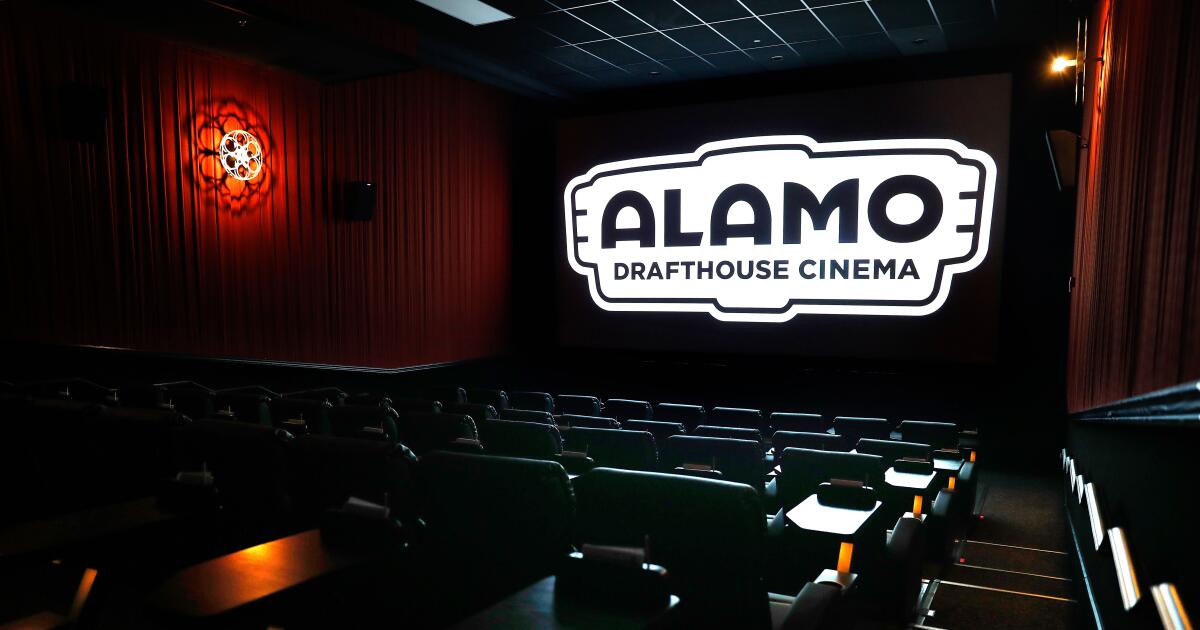
Dine-in movie theater chain Alamo Drafthouse Cinema is launching a new initiative to show unreleased independent films that had successful festival runs, a move that comes as specialty films have struggled to gain distribution.
The Alamo Exclusives program, announced Wednesday, will give limited theatrical runs to films that showed at festivals including Sundance, the Toronto International Film Festival, Tribeca Festival and South by Southwest festival, as well as Alamo’s own Fantastic Fest.
The idea is to help showcase films that received critical acclaim, but did not secure distribution or acquisition deals. The chain will not acquire these films, but instead will enter into agreements with filmmakers to exhibit their films on Alamo Drafthouse screens. By showing these films to audiences on the big screen, these films could get the momentum they need for further opportunities.
The program’s first film will be the documentary “Butthole Surfers: The Hole Truth and Nothing Butt,” which debuted last year at South by Southwest and chronicles the history of the punk rock band.
The film will be shown in Alamo Drafthouse theaters for a limited time later this summer.
The Austin-based chain, which is owned by Sony Pictures, has a long history of curating indie films for its audiences, giving Alamo Drafthouse confidence that its viewers want to see these kinds of movies, company chief executive Michael Kustermann said in a statement.
“Time and again, they’ve shown they’ll come out to support bold, original films when given the opportunity,” he said. The new Alamo Exclusives “gives us another way to champion filmmaker-driven films that deserve to be discovered and connect them with the wider Alamo Drafthouse audience.”
The initiative comes at a difficult time for indie films. Since the pandemic upended the movie business, traditional studios and distributors have had less appetite for risk, including betting on smaller indie films out of festivals.
And as the 2023 dual writers’ and actors’ strikes thinned out theatrical lineups, that aversion to uncertainty became a push for reliable and profitable hits.
“Too many incredible films premiere at festivals and then never receive the theatrical life they deserve,” Lisa Dreyer, director of Fantastic Fest and film innovation at Alamo, said in a statement. “We are actively searching for films across all genres, from horror to comedy, to everything in-between, to champion in this new, exciting way.”
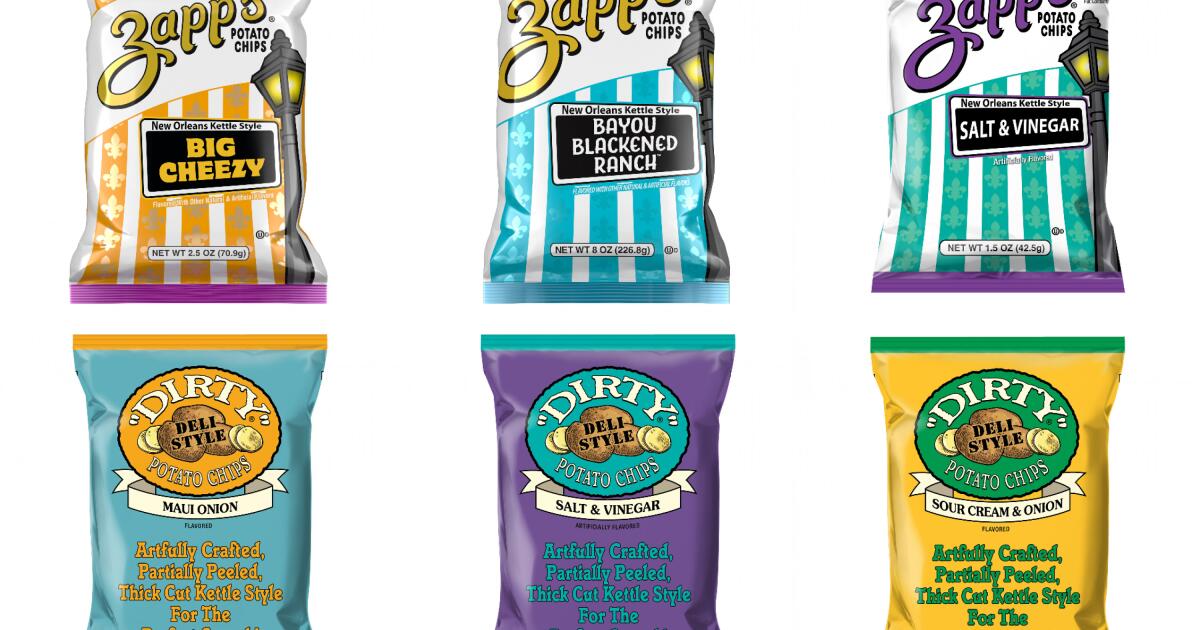
The recall of a popular chip brand over salmonella concerns was recently upgraded to the U.S. Food and Drug Administration’s highest level, just ahead of the Fourth of July holiday and countless backyard barbecues.
On June 24, the FDA designated the recall of several varieties of Zapp’s and Dirty brand potato chips as Class I, meaning it’s “a situation in which there is a reasonable probability that the use of or exposure to a violative product will cause serious adverse health consequences or death.”
FDA has classified the following items as Class I:
Zapp’s
- 1.5-ounce Zapp’s Bayou Blackened Ranch Kettle Chips
- 2.5- and 8-ounce Zapp’s Bayou Blackened Ranch Potato Chips
- 1.5- and 8-ounce Zapp’s Big Cheezy Potato Chips
Dirty
- 1.5- and 2-ounce Dirty Brand Salt and Vinegar Potato Chips
- 2-ounce Dirty Maui Onion Chips
- 2-ounce Dirty Sour Cream and Onion Potato Chips
The chips are produced by Utz Quality Foods, LLC, which on April 28 issued a recall after learning “that a seasoning containing dry milk powder, sourced from California Dairies, Inc. and supplied by a third-party supplier, may contain the presence of Salmonella.”
Salmonella can lead to sometimes deadly infections in elderly people, young children and those with weakened immune systems, according to the FDA.
More than 680,000 bags are included in the recall.
Anyone who has these products should not eat them and should discard them immediately.
What to look for
Salmonella is a foodborne illness that can be fatal to young children, pregnant women, older adults and people with weakened immune systems, according to the National Institutes of Health.
Symptoms may develop 12 to 72 hours after infection, according to the FDA.
The FDA said that people with strong immune systems infected with salmonella may experience fever, diarrhea (which may be bloody), nausea, vomiting and abdominal pain. The illness can last four to seven days.
In rare cases, the infection may produce more severe illnesses such as arterial infections, endocarditis and arthritis, the agency added.
What to do if infected
If you contract salmonella, the Centers for Disease Control and Prevention recommends drinking plenty of fluids to prevent dehydration.
The CDC advises consulting a doctor before taking antidiarrheal medicine or antibiotics. If severe symptoms continue after two days, seek medical help, the agency says.
Because those with diarrhea can spread salmonella to others, it’s also recommended to avoid sharing food or preparing meals for others, sexual contact and swimming in public pools, and to stay home while sick.
Times staff writer Jasmine Mendez contributed to this report.

The Minions took over theaters this weekend as Universal Pictures and Illumination’s “Minions & Monsters” won the top spot at the box office, though with a lower-than-expected domestic haul.
The animated movie, which follows the Minions’ takeover of Hollywood, took in $61.4 million in the U.S. and Canada for the five-day Fourth of July holiday weekend, according to studio estimates. That haul was lower than analysts’ expectations for a domestic opening of about $68 million. The movie’s three-day total was $36.4 million.
But the Minions performed well internationally, bringing in about $85 million. In total, “Minions & Monsters” made $159.9 million worldwide on a production budget of about $85 million.
The film is the latest in the powerhouse franchise that began with “Despicable Me” in 2010. Across its previous six installments, the “Despicable Me” and “Minions” franchise has made more than $5.6 billion at the global box office. The last movie, 2022’s “Minions: The Rise of Gru,” made more than $940 million worldwide.
“Minions & Monsters” marks the lowest opening for the franchise. Part of the issue could be timing — the box office can be negatively affected when the Fourth of July lands on a Saturday, said Paul Dergarabedian, head of marketplace trends at Rentrak.
Walt Disney Co. and Pixar’s “Toy Story 5” came in second at the box office this weekend with a domestic three-day gross of $31 million. Angel Studios’ biopic “Young Washington” ($20.8 million), Warner Bros. and DC Studios’ “Supergirl” ($9.6 million) and Universal’s “Disclosure Day” ($6 million) rounded out the top five, according to Rentrak.
The haul for “Minions & Monsters,” coupled with the strong holdover performance of “Toy Story 5,” proved again that family films are making a dent in the summer box office.
“Toy Story 5” has now brought in a total of $764.3 million worldwide, and last month, Universal, Illumination and Nintendo’s “The Super Mario Galaxy Movie” crossed $1 billion at the global box office, becoming the first film of any kind to do so this year.
The rest of the summer theatrical lineup is also expected to bring in audiences and push domestic box office totals closer to pre-pandemic figures. Next week, Disney will release its live-action “Moana,” followed by Christopher Nolan’s “The Odyssey” and Sony Pictures’ “Spider-Man: Brand New Day.”
To date, the summer box office is now about $2.3 billion, a nearly 12% increase compared with the same period a year ago, according to Rentrak data. Compared with pre-pandemic 2019’s numbers, however, it is still down about 7%.
-

 Detroit, MI14 minutes ago
Fans pack Detroit’s Campus Martius for USA-Belgium World Cup match
-

 San Francisco, CA26 minutes ago
Terrified passengers film Waymo autonomous vehicle driving into live fireworks in San Francisco
-

 Dallas, TX29 minutes ago
WATCH: USA vs. Belgium watch party at FIFA Fan Festival Dallas
-

 Miami, FL34 minutes ago
Tim Hardaway Jr. returns home as Miami Heat sign veteran guard:
-

 Boston, MA41 minutes ago
‘Enough is enough’: Weekend violence in Boston sparks calls for change, from more police to community investment – The Boston Globe
-

 Denver, CO42 minutes ago
Kalshi Promo Code DENVER: Trade $10, Get $10 World Cup Bonus for USA-Belgium – Denver Stiffs
-

 Seattle, WA49 minutes ago
Fans take over Seattle for USA-Belgium World Cup match
-

 San Diego, CA50 minutes ago
Elite California city set for mass illegal street vendor expansion as judge issues stunning verdict

