Business
Santa Monica's Third Street Promenade is a retail relic. Can it be saved?

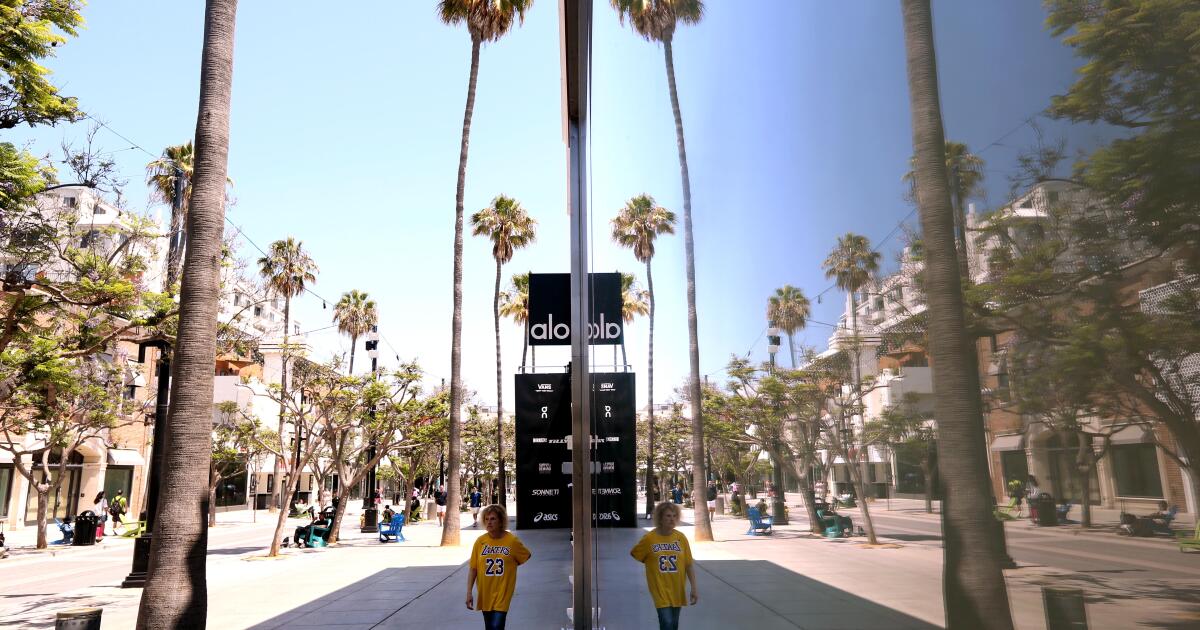
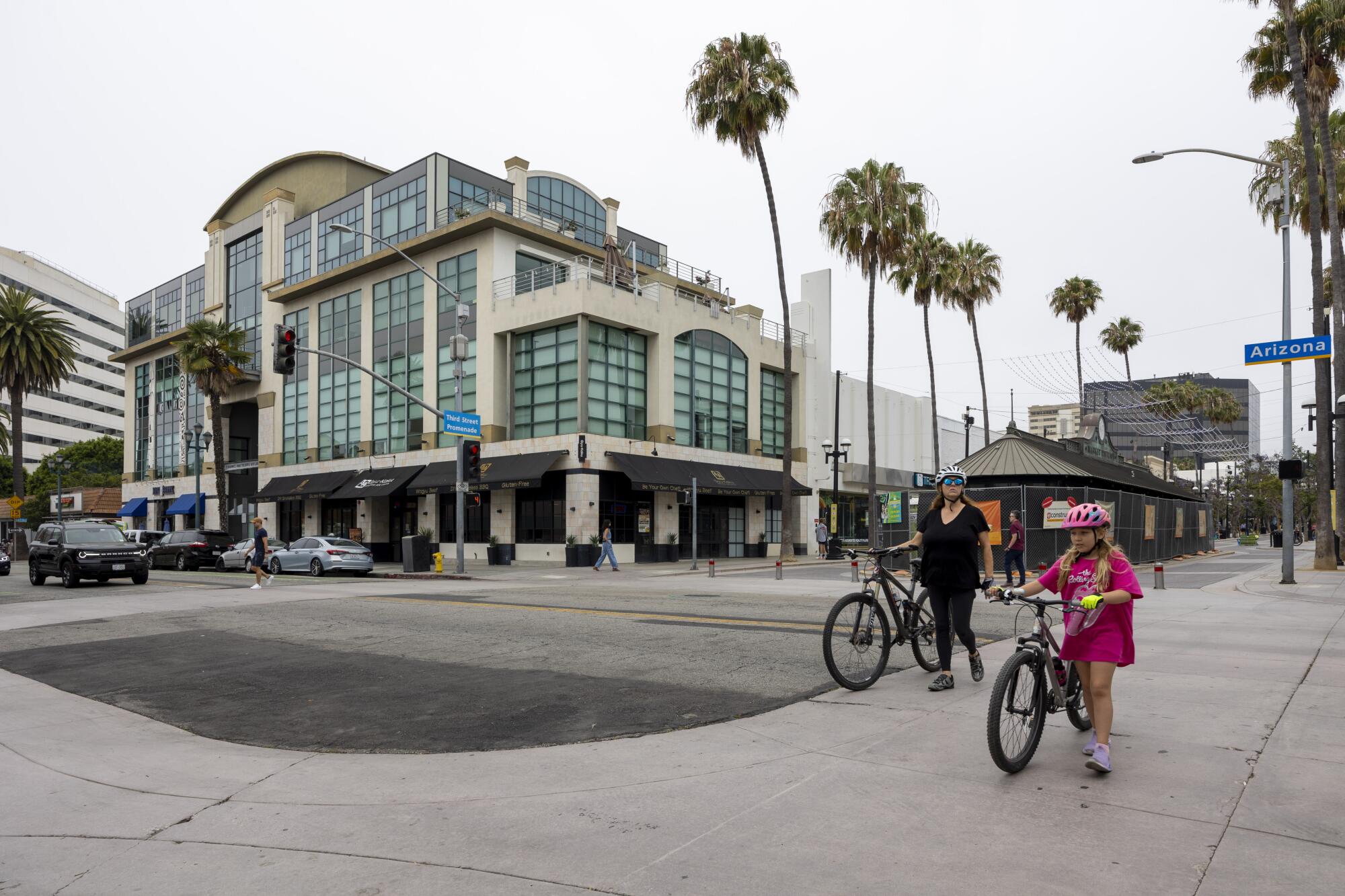
Once Santa’s Monica’s signature destination for shopping and dining, the Third Street Promenade is showing its age.
Its decline has left the promenade’s landlords and city officials trying to counter years of stagnation, public safety concerns and fast-changing retail norms in an attempt to breathe new life into it.
The climb back to commercial viability is steep. Foot traffic at the pedestrian mall that teemed with locals and tourists during its heydey in the 1990s has been thinning for years, dropping by more than a third since 2019. “For rent” signs front a discouraging number of empty stores.
A visitor walks past a shuttered Market Pavilion now surrounded by cyclone fence on the Third Street Promenade.
(Genaro Molina/Los Angeles Times)
The reasons for the Promenade’s troubles are many and layered. While, like many shopping districts and malls, it took a beating during the pandemic as shoppers stayed at home, its economic troubles predate COVID-19.
The Promenade, which has had few improvements since a renovation 35 years ago, was allowed to grow “tired and old,” real estate consultant David Greensfelder said. Its scale also presents challenges, as the mall’s unusually large stores are hard to fill in an era when many big retailers are reducing their footprints.
And issues and perceptions around public safety are also at play.
The Promenade’s reputation took a hit in May 2020 when protests in response to the murder of George Floyd devolved into violence and ransacking of stores. Over 100 businesses, many of them on or near the Promenade, were damaged or destroyed, said Santa Monica Mayor Phil Brock. In the years since, crime trends have been mixed in the city with robbery and shoplifting rates up slightly last year compared to 2022 and declines in several other categories. High-profile robberies in the region and an increase in the number of people living on the street in Santa Monica, meanwhile, have contributed to the sense among some that the Promenade is unsafe.
“We’re not only trying to fight the actual crime that’s occurring because it is, but we’re also trying to rehabilitate this perception of safety in Santa Monica,” said Santa Monica Police Lt. Ericka Aklufi.
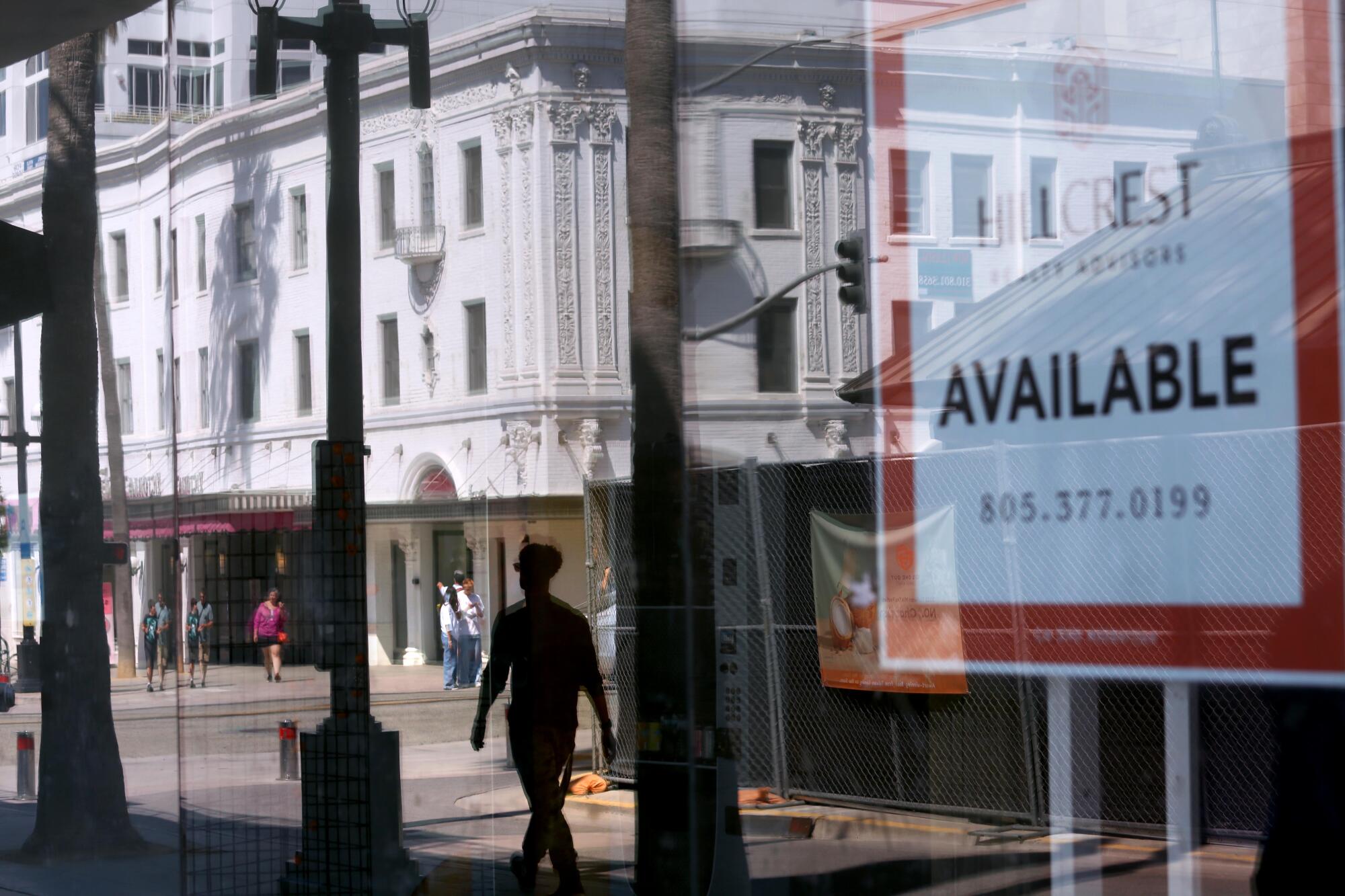
A passerby is caught in the reflection of an empty storefront available for rent on the Third Street Promenade in Santa Monica.
(Genaro Molina/Los Angeles Times)
On a recent weekday, “Optimus Crime,” a large mobile police command center that bears a resemblance to a Transformer, was parked at a crosswalk on the Promenade. Nearby, a banner hung over one of the mall’s vacant storefronts proclaiming, “Santa Monica is Not Safe.”
For the record:
7:47 p.m. July 17, 2024An earlier version of this article said that John Alle manages 15,000 square feet of space on the Promenade; some of that space is elsewhere.
John Alle, who co-founded the Santa Monica Coalition about two years ago to bring attention to public safety issues in the city, manages about 15,000 square feet of commercial real estate, including the storefront where the sign hangs.
He claims rampant theft and near constant presence of homeless people forced one of his tenants in the building to leave. And although the sign likely is counter-productive to bringing people to the Promenade, Alle said he hopes the public shaming will prompt tourists and other visitors to demand the city do more to help the Promenade.
He added, “I don’t think it’s going to deter shopping. There’s not much shopping going on there.”
The high-profile success of the promenade in the 1990s also planted the seeds of the current struggle to keep stores occupied, experts said.
Third Street for decades was Santa Monica’s main commercial strip, but by the late 1950s it was laboring to keep up with new regional shopping centers. After a lengthy renovation in 1989, when the mall was renamed as the Third Street Promenade, real estate developer Shaul Kuba and his partners started acquiring troubled properties on the Promenade at a deep discount and set out to find a flashy national tenant that could serve as a bellwether.
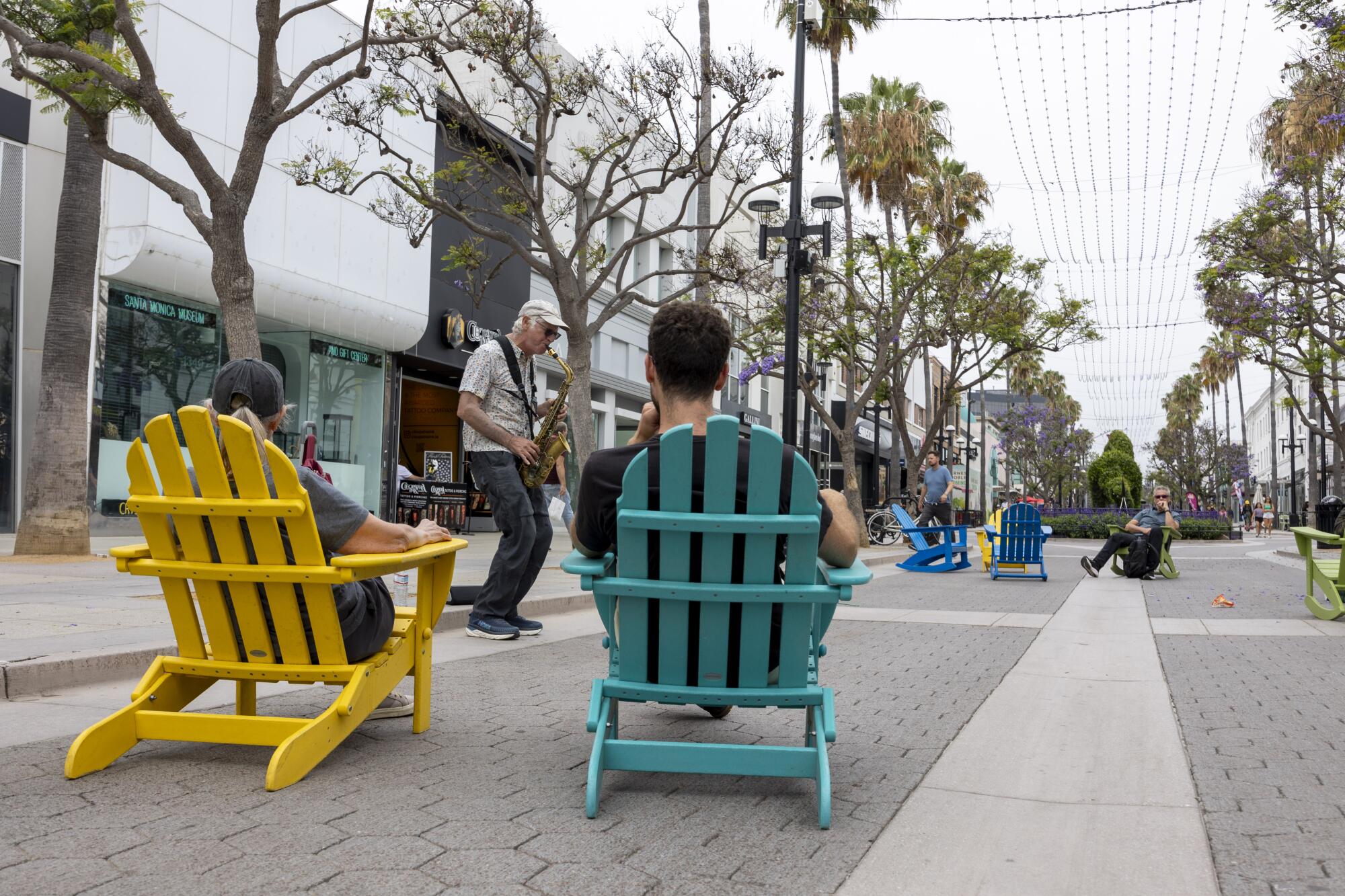
Aaron Cohen plays the saxophone on Third Street Promenade earlier this month.
(Zoe Cranfill / Los Angeles Times)
They managed to land a Disney Store, and the match was lit, Kuba said. “That opened the door for a lot of other retailers — J. Crew, Banana Republic, Old Navy.” The Promenade began to thrive after a long stretch as a retail backwater.
But in recent years these “big box” stores have been hurt by competition from online sellers and narrowly-focused specialty retailers.
They have adapted by opening fewer, smaller stores, which is a problem for the Promenade. As tenants have departed, they have left behind uncommonly large spaces because of Third Street’s history as a prime retail venue serving large stores.
“I think every landlord is hoping a big box is coming back, and sometimes they do, but really, across the country retailers are shrinking,” said retail property broker Christine Deschaine of Kennedy Wilson.
Out of necessity, landlords are getting creative in an effort to fill the space and adapt to the changing expectations and habits of consumers, who now rely heavily on online purchasing. Shoppers, said Lars Perner, who teaches clinical marketing at USC’s Marshall School of Business, want a unique experience, an antidote to the big chains that provide mass-produced products.
“The idea that you’re getting something special is what draws crowds,” Perner added.
What was once a JCPenney and later Banana Republic is now a roomy, upmarket John Reed Fitness gym. Pickleball is played at a hybrid clothing retailer, sports club and restaurant Pickle Pop, which occupies 10,000-square-feet that was a former Adidas store. The top floor of a shuttered food court will be transformed into a “golf experience” that may include miniature golf, Deschaine said.
Other large store spaces may be carved into units for smaller tenants, as has been done successfully on nearby 2nd Street, Deschaine said.
Some noteworthy retail tenants are already on the way, she said, including a technology company she declined to name that has agreed to take a prime space at the Broadway entrance to the Promenade. Also generating buzz is the pending arrival on the Promenade of Raising Cane’s Chicken Fingers, a Louisiana fast-casual restaurant chain.
Restocking the Promenade with tenants is a tall order in part because of its overall size, said Devin Klein, a property broker with JLL.
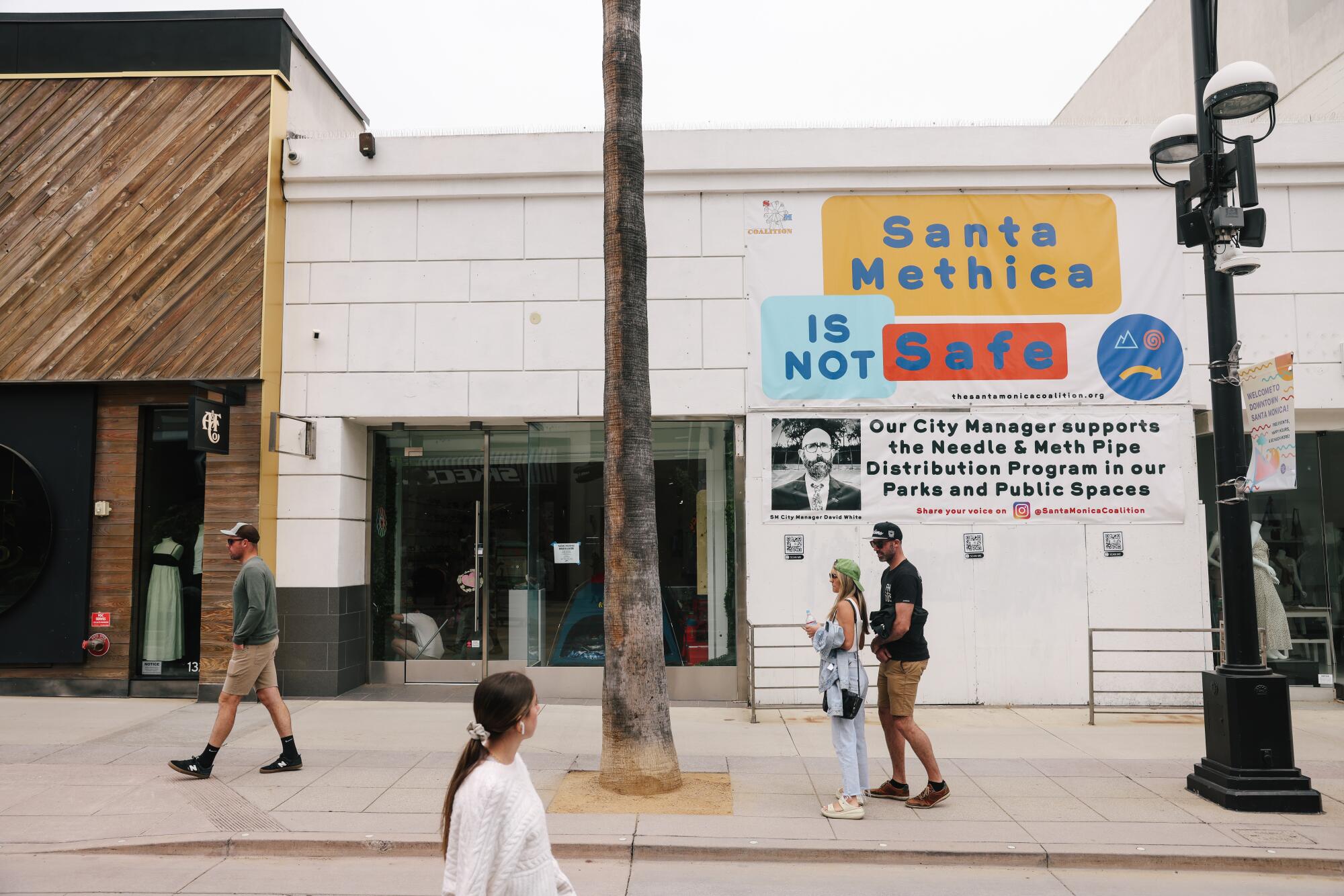
A sign in a Third Street Promenade storefront warns, “Santa Monica is not safe.”
(Dania Maxwell / Los Angeles Times)
The Promenade and Santa Monica Place mall next door have a combined total of more than 1 million square feet, he said, about twice as much as the Grove shopping center in Los Angeles.
At its low point during the pandemic toward the end of 2020 and into 2021, vacancy on the Promenade rose to 30% to 35%, Klein said, and is now between 20% and 25%.
That improvement can be attributed to some property owners accepting that they can’t demand as much rent as they used to get when the market was hotter and landlords came to believe they could charge tenants “Rodeo Drive rents,” said Brock, Santa Monica’s mayor.
He added, “We were never Rodeo Drive.”
“Landlords have really started to play ball with retailers and adjust their rent according to the market,” Klein said, “which has allowed more spaces to to get leased.”
Over the past several years, Santa Monica city officials have tried to make it easier to open and run a business on the Promenade.
It has eased restrictions on the types of operating permits it issues in an effort to reverse a past in which it “micromanaged a little bit and maybe went overboard” on what businesses could set up shop, said David Martin, the city’s Community Development director.
Shopping traffic has long been in decline on the Third Street Promenade.
(Zoe Cranfill / Los Angeles Times)
For example, a quota on how many restaurants are allowed on a city block has been eased and a cumbersome entitlement process that effectively prevented pop-up events has been removed.
“We are trying to make sure that the city process is as clear as possible, as fast as possible, and then leave it to the market to bring in the kinds of businesses that the public is demanding,” Martin said.
For several years, Santa Monica city officials have had a blueprint to dramatically transform the Promenade itself, which hasn’t seen meaningful changes in decades.
A proposal, dubbed Promenade 3.0, was devised in 2019 at the behest of the city and Downtown Santa Monica Inc. a nonprofit that works with the city to manage the downtown area. The plan by architecture firm RIOS would cost about $60 million and is intended to make the Promenade more engaging to visitors so they linger and shop more.
A primary goal would be to stop funneling people through the middle of the street and encourage them to circulate in a loop pattern. Curbs might be eliminated to make it feel less like a closed street. Rooftop restaurants would be encouraged. Additions could include beer gardens, water features, a viewing tower and small pop-up retail stations to incubate new stores.
The proposal was stalled by pandemic-related challenges including plummeting city tax revenue that could have helped fund it, RIOS architect Nate Cormier said.
Martin said that property owners on the Promenade could possibly fund the initiative, but there’s nothing in the works.
“The idea of completely redoing the Promenade like was done in like the ’80s, that’s not currently on the table,” he said.
Nevertheless, the city’s seaside location will continue to make it a draw for visitors and businesses, encouraging recovery of the Promenade, Klein said.
“You can never change the fact that it’s still one of the prettiest areas in the world,” he said. “There’s always going to be some kind of a bounceback when you have this kind of real estate. Let’s face it — you’re a couple blocks from the ocean.”


Sony Pictures will invest $100 million and take a minority stake in virtual reality venue operator Cosm, as the studio continues to build a business in communal experiences.
As part of the investment, Sony Pictures Chief Executive Ravi Ahuja will also join Cosm’s board of directors, the studio said Wednesday. The size of Sony’s minority stake was not disclosed.
The El Segundo-based Cosm currently operates three venues — one at Hollywood Park in Inglewood, and the others in Dallas and Atlanta. The company plans to open additional venues in Detroit and Cleveland.
Cosm bills itself as a “shared reality venue,” and its facilities center around a massive, wraparound screen that is intended to envelop viewers with additional digital effects. The company has largely focused on sports, though it has also shown Cirque du Soleil shows and done several collaborations with Warner Bros., including recent screenings of 2001’s “Harry Potter and the Sorcerer’s Stone” in honor of the film’s 25th anniversary.
“Cosm sits at the intersection of several trends shaping the future of entertainment,” Ahuja said in a statement. “We’ve followed Cosm since before launch and have been impressed with the quality of the experience and the enthusiasm it’s generating with audiences.”
The investment is Sony’s latest venture into experiential entertainment. In 2024, the Culver City-based studio acquired dine-in theater chain Alamo Drafthouse Cinema.

The Los Angeles City Council on Tuesday unanimously advanced an ordinance to halt new oil and gas drilling and phase out all existing production over the next 20 years. L.A. is home to more than 2,000 active oil wells.
The measure revives a similar ban passed in 2022, which was struck down by a judge following legal challenges from the oil and gas industry.
It must pass a second vote before final adoption later this summer, and would make L.A. the largest city in the United States to phase out existing oil wells.
“Today, Los Angeles is making a decision that aligns with our need to turn the page on urban oil drilling,” Councilmember Katy Yaroslavsky said during Tuesday’s council meeting. “The absence of an enforceable oil ordinance has had real consequences for our communities.”
The ban in 2022 was seen as a historic move for a region built on the petroleum industry.
But in 2024, a Los Angeles County Superior Court judge invalidated the law, ruling that the state, not the city, has jurisdiction over petroleum production. The legal challenge was brought by oil companies including Warren Resources, which operates a large oil field in Wilmington. Much of the field is beneath the city of Long Beach, but it also extends under Los Angeles.
Shortly after that, state legislators advanced Assembly Bill 3233, which reaffirmed city and county authority to regulate oil and gas activity. It was largely seen as the missing piece that made the original ordinance vulnerable.
“It’s now unequivocal that cities have the authority to regulate, limit and prohibit oil and gas operations within our jurisdiction,” Yaroslavsky said.
The new ordinance, written by the Department of City Planning, prohibits new oil and gas extraction, including drilling, redrilling or deepening existing oil wells for the purposes of production. It also designates all existing and active idle wells as “nonconforming uses,” meaning they may only operate during the phaseout period and are no longer compliant with current zoning.
Warren Resources, which led the lawsuit against the previous ban, did not immediately respond to a request for comment. The company previously argued that the 2022 ban was rushed and would lead to more oil imports to the area, causing increased emissions from tankers and trucks and other environmental consequences.
Many wells in the city operate near schools, homes and parks. Most are concentrated in low-income areas and communities of color, such as Wilmington and the harbor district, West L.A. and South L.A., where residents have long reported respiratory issues, headaches, throat irritation and other health problems. Studies have found oil wells can emit carcinogens and are linked to adverse health effects.
“This ordinance is such an important step toward giving every frontline community in Los Angeles access to clean air,” Silvia Esparza, a South L.A. resident and member of environmental justice group Stand-L.A., said in a news conference ahead of Tuesday’s vote.
Ashley Hernandez, a Wilmington resident and organizer with the nonprofit Communities for a Better Environment, said bloody noses and noxious fumes were a regular part of life in the neighborhood growing up.
She noted that in addition to oil drilling, L.A. residents continue to face other environmental hazards, such as the recent oil pipeline rupture that sent crude into the L.A. River or the ongoing cold storage warehouse fire in Boyle Heights that is spewing toxic smoke.
“I’m here to remind L.A. city and these toxic neighbors that Wilmington residents are more important than any ‘black gold’ under their homes,” Hernandez said. “We need our city to protect our families now and to stop the oil industry’s reign of power in our city. A passage of the oil phaseout ordinance today gives the city a chance to correct this wrong.”
Times staff writer Dakota Smith contributed to this report.

Shares in Elon Musk’s rocket company SpaceX halted their three-day slide that had erased roughly $600 billion off its market value.
SpaceX shares closed at $156.11 with a nearly 1% gain on Tuesday, a slight recovery from a 16% fall on Monday.
That loss dropped the stock below $160.95, where it ended the day June 12 after a 19% surge during its record initial public offering. The IPO gave it a market cap of $2.2 trillion, making SpaceX one of the world’s most valuable public companies.
It also turned Musk into the world’s first trillionaire, a status he retains despite the sell-off.
The downturn probably reflects investor unease over the company’s spending plans and potential debt load, analysts say.
SpaceX raised a total of $86 billion after underwriters exercised their right to sell additional shares, on top of the $75 billion initially raised. It was the largest IPO in history.
A little more than half a billion shares were distributed to institutional and retail investors at a price of $135, with the stock opening at $150 as some holders immediately flipped shares for a profit.
Shares rose as high as $176.52 during the IPO before settling at the $160.95 price. In the weeks since, shares reached a high of $225.64, meaning that some investors lost money or are underwater with paper losses.
Since the IPO, SpaceX has dropped some big bucks.
It announced last week that it was acquiring AI coding startup Cursor for $60 billion in a deal expected to close in the third quarter. The San Francisco company, founded in 2022, enables engineers to instruct software in English to run coding tasks autonomously.
It also sold $25 billion in bonds on Tuesday , unusual for a company that just went public, much less for one that just raised a record sum.
The IPO surpassed the 2019 offering by Saudi Aramco, Saudi Arabia’s state-owned oil giant, which raised $29.4 billion, the prior record holder.
S&P Global issued a report last week that assigned SpaceX a “BBB” credit rating, the lowest possible rating to qualify as an investment grade credit risk. It noted the company will have “elevated capital expenditure” through 2029.
SpaceX rivals OpenAi and Anthropic filed this month for initial public offerings that, while not expected to be as large as Musk’s company, will be large in their own right.
Wedbush analyst Dan Ives, who has been bullish on SpaceX stock, said the market is digesting “massive debt and equity raises from Big Tech players” in the coming years.
“This is part of an industry wave of debt offerings on Wall Street, like Alphabet and SpaceX among others,” he wrote in an email.
With the stock already giving up gains since the IPO, it will be further tested when tranches of locked-up shares held by current and former employees are released.
At least 20% of the shares will be released after second-quarter results are disclosed sometime in the coming months, with all the lockups expiring in December.
SpaceX, based in Texas, is the leading launch services company in the world, with its Falcon 9 rocket accounting last year for the vast majority of satellites sent into space.
It is also the leading satellite-based broadband provider with its Starlink service. But the extraordinary interest in the IPO was driven by Musk’s plans to make the company an AI leader — including plans to launch orbiting satellite data centers powered by the sun that crunch AI data.
He merged his xAI artificial intelligence company into SpaceX this year, with the combined entity recently announcing it was leasing computer power to rivals Anthropic and Google at two terrestrial data centers it has constructed.
Musk moved the company’s headquarters from Hawthorne to Texas in 2024, but it retains large operations in the South Bay city and blasts off regularly from Vandenberg Space Force Base in Santa Barbara County.
Investment research firm Morningstar placed a $780-billion valuation on SpaceX, focusing on its core rocket and Starlink broadband satellite businesses. It suggested investors wait a few months for the stock to settle before buying in.
“I think the day-to-day stock price movements are usually based on market sentiment,” said report co-author Nicolas Owens, an equity analyst at Morningstar. “So I was not surprised when it went way up right after the IPO — and I’m not surprised it [came down]. Not much has really changed in the fundamentals.”
Mike Alves, founder of Pasadena’s Vida Vision Fund, has a stake in SpaceX that accounts for 46% of his AI and robotics fund.
He said he was not perturbed by the stock drop, noting that Facebook fell under $18 a share just months after its May 2012 IPO closed at $38 a share. It has since risen more than 1,000% above its offering price.
“The volatility doesn’t really matter because you’re going to multiply your best investment many times, so I’m not so worried about it,” he said, adding that investors seeking shares could now “scoop them up at a good deal.”
-
 Lifestyle2 minutes ago
A judge says the Kennedy Center must update him on its plans — and address that tarp
-

 Technology12 minutes ago
A new paper argues Microsoft exaggerated its quantum claims a year ago
-

 World17 minutes ago
Colombia’s ‘El Tigre’ secures presidency as leftist rival finally concedes defeat
-

 Politics25 minutes ago
Comer probes alleged Biden collusion with gun control activists in Glock lawsuit
-

 Sports33 minutes ago
2026 World Cup Third-Place Standings: Who’s In, Who’s On The Bubble
-

 Technology40 minutes ago
FCC phone ID plan could end burner phones
-
Business43 minutes ago
Sony Pictures invests $100 million in virtual reality venue Cosm
-
 Entertainment48 minutes ago
Culture Clash knows the end is near. It wants to go out with a bang

