Business
Josephine Antoci: Erewhon’s viral tastemaker to the stars

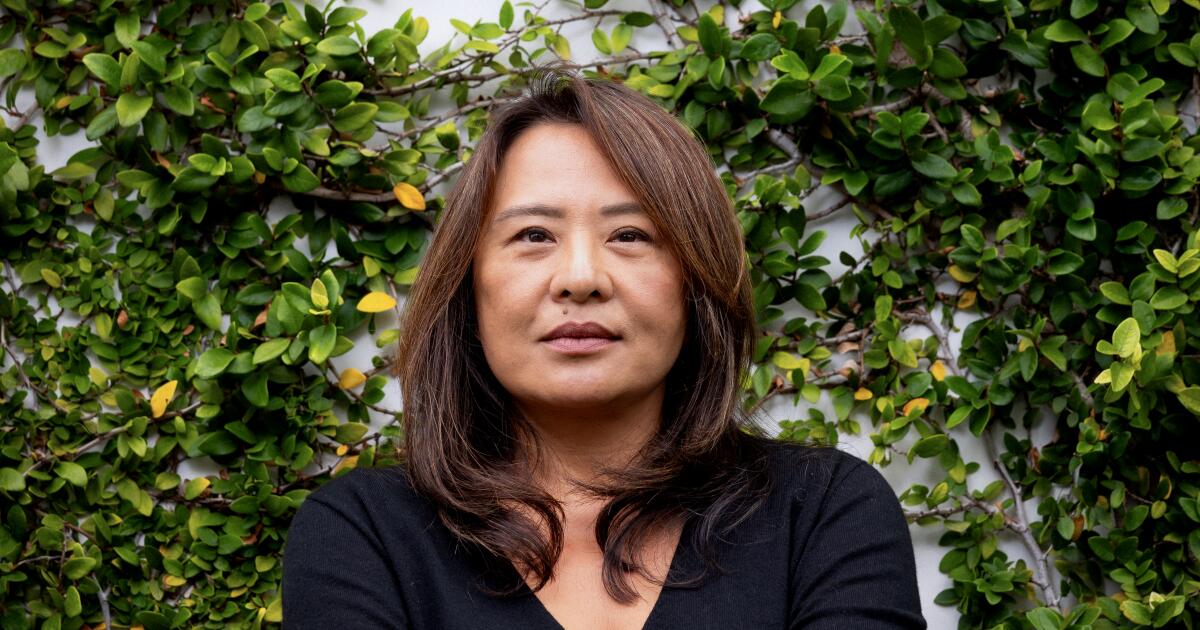
Josephine Antoci, photographed at Erewhon in Santa Monica on Aug. 11.
What Josephine Antoci likes, Erewhon sells. And if Erewhon sells it — sea moss gels, kale chips, bone broth tonics, paleo bagels, celebrity smoothies — it’s almost guaranteed to become a viral sensation among the hot and health-obsessed.
Antoci is co-owner and chief tastemaker of the hyper-trendy luxury organic grocer: first in line to vet and sample every prospective product, and the final authority on which ones make the cut.
“I respect the level of influence that I have, but I don’t view myself as a trendsetter,” she said. “I’m never trying to chase the next big thing.”
Erewhon has been the biggest thing in the grocery business since Antoci and her husband, Tony, bought the Los Angeles company in 2011 and gave its one remaining store an aesthetic glow-up and merchandise overhaul.

Discover the change-makers who are shaping every cultural corner of Los Angeles. This week we bring you The Creators, who are leaving their mark in film, art, music and more. Come back each Sunday for another installment.
The revitalized Erewhon shot to cult status, fueled by frequent A-list sightings and an army of lifestyle influencers who obsessively documented their grocery pilgrimages on social media. What was once a mundane chore had turned into a super-premium, brag-worthy experience.
One store became 10. The Kardashians, the Biebers and the Beckhams are regulars. Erewhon-branded merch, including $185 hoodies and $150 sweatpants, is an actual thing. For a certain demographic, visiting an Erewhon for a combo plate with vegan buffalo cauliflower is a tourist bucket-list item and passes as a reasonable first-date activity.
All of the chain’s locations are in affluent areas — Beverly Hills, Calabasas, Culver City and Venice among them — and their meticulously curated, endlessly photographed shelves are a reflection of Antoci’s discerning palate, rigorous quality standards and impeccable eye for identifying the next wellness craze.
On a Friday morning last summer, Antoci, 57, arrived at the Santa Monica Erewhon fresh from a workout and asked the store director for a $15 Post Workout Smoothie, a gluten-free blend of organic blueberries, organic chia seeds, organic coconut water, lucuma, maca and vanilla collagen. It’s one of the lesser-known drinks at the tonic bar, the top seller still being Hailey Bieber’s Strawberry Glaze Skin Smoothie, which Antoci said is purchased between 45,000 and 50,000 times a month companywide.
Antoci has lived in L.A. ever since leaving Taipei, Taiwan, where she was born and raised, to move in with a cousin in Cheviot Hills at 18. She got her GED and attended Santa Monica College for a couple of years before transferring to UCLA, where she majored in economics.
Within weeks of immigrating, she met Tony Antoci at a Chinese takeout restaurant in Beverly Hills that was owned by her extended family. They had their first date at Magic Mountain, married eight years later and have three children, all now in their 20s and employed by Erewhon.
The Antocis previously owned a food distribution business called Superior Anhausner Foods that sold groceries and supplies to restaurants around Southern California. She worked in sales; after the couple sold the company in 2009 to wholesale juggernaut Sysco, running a grocery store seemed like a logical pivot.
At Erewhon, Josephine is president and Tony is chief executive. He manages the behind-the-scenes business operations, she said, while “I handle everything that you can see.”
Antoci settled into a corner table on the store’s elevated, planter-box-filled patio with her smoothie, the deep purple concoction a striking contrast against her sleek all-black outfit: thin black sweater, loose satiny black pants, chunky black sunglasses and braided black platform sandals.
‘Those cool new weird things are what make us special, and her testing every single week, for hours on end, is what makes this place Erewhon. Her thing is like, “If I wouldn’t bring it into my house, I’m not going to bring it into the store.”’
— Alec Antoci, vice president of brand and marketing at Erewhon, on his mother’s buying philosophy
She took a sip of her Post Workout Smoothie. “Very clean,” she said, not overly sweet, packed with protein and electrolytes, and free of bananas (she doesn’t care for them right after exercising). Despite rumors, Antoci said the many stars who have had a featured smoothie at Erewhon — the list includes Gisele Bündchen, Olivia Rodrigo and Kendall Jenner — don’t pay for the honor; instead, Erewhon donates $2 per smoothie sold to a charity of the celebrity’s choice.
Antoci is high-energy yet down-to-earth, warm and engaging but direct about what she wants — especially when it comes to the stores. She drops in unannounced several times a week, inspecting the displays, rearranging items herself and flagging down the head chef if she notices a dish in the cafe looks wilted or undersauced.
Thousands of brands large and small try to make it into Erewhon every year, hoping to tap into the elite grocery chain’s coveted customer base: generally young, eager to spend on whatever is in at the moment and likely to hype it on TikTok and Instagram. Antoci is the gatekeeper, so everyone wants to know what she likes.
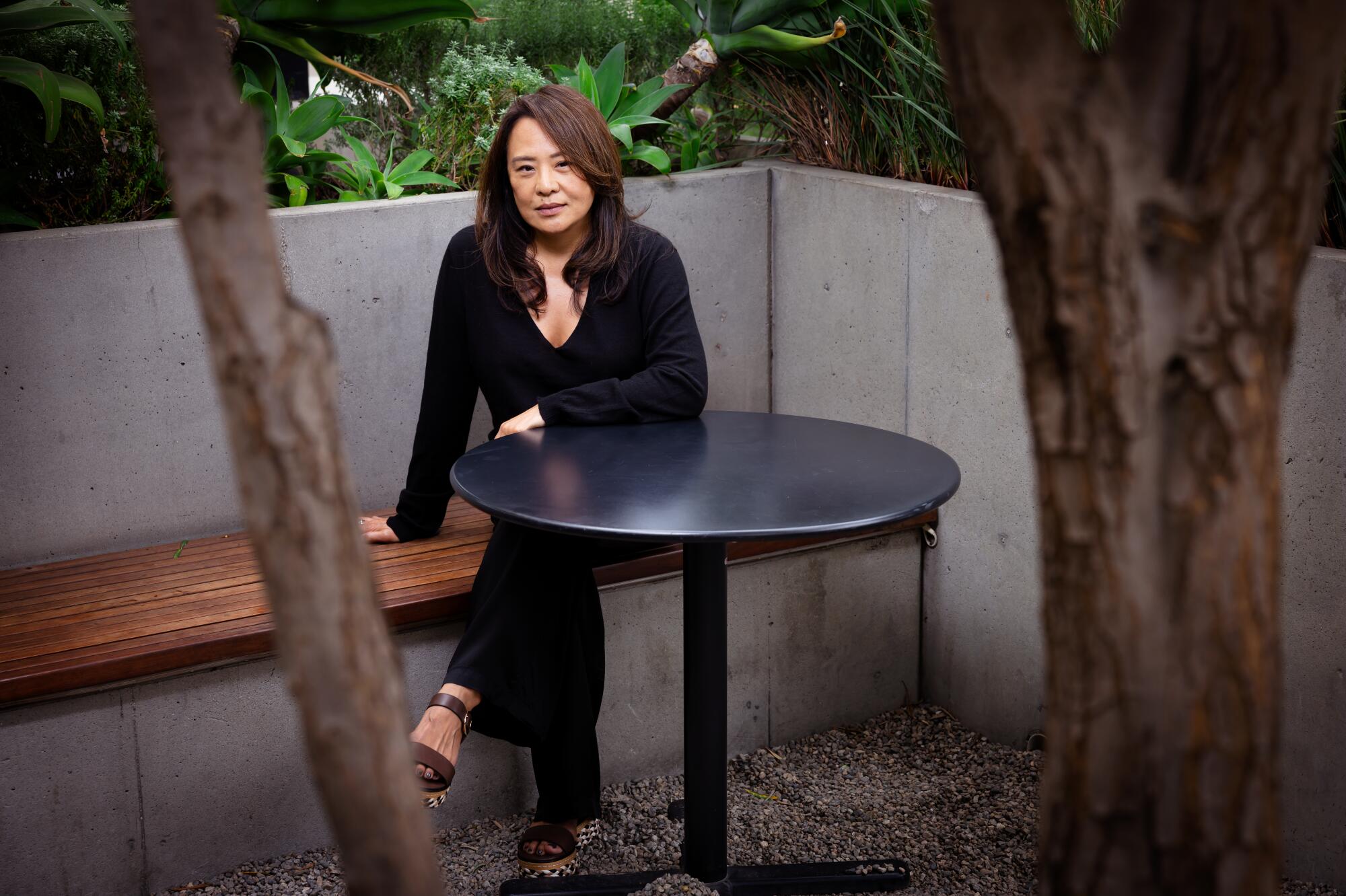
In Erewhon’s produce department and in its tonic bars and cafes, her top priority is using organic ingredients.
With packaged products, Antoci scrutinizes every ingredient profile. She oversees a methodical review process that begins with an online submission form, which encourages vendors to “source local, organic, non-GMO, sustainable, biodynamic and/or regenerative-farmed ingredients that cater to multiple dietary preferences.”
Products must be free of processed sugar, bleached flour, canola oil and yeast extracts. Another red flag is anything heavily processed, she said.
Brands that clear the prescreening hurdle are invited to submit samples. Once a week, Antoci drives across town to Erewhon’s downtown headquarters, where she and two small teams — one for grocery, the other for health and beauty — gather in a conference room and tear open packages of protein powders and superfood balls, dip into jars of bone broth and slather hyaluronic sea serums onto their faces. Sometimes she’ll take products back to her Brentwood home for further testing and to seek input from her family.
“She says no 99% of the time,” said Alec Antoci, 25, the eldest of her three children and Erewhon’s vice president of brand and marketing.
Alec spent his teens and early 20s helping out around Erewhon, a fast-tracked corporate education that included partaking in the human guinea pig sample sessions led by his mother. Antoci has a sly sense of humor, and Alec laughed as he told stories of how, affecting an innocent expression, she would urge employees to taste bizarre products, and the time they tried too many CBD edibles.
“If she’s never seen it before, she’s like, ‘Let’s try it, let’s bring it in, it’s got benefits, it’s good for you, it’s clean,’” he said. “It’s just trying to see trends like that and really try to forward-think, like, what would people want in health and wellness?”
Sometimes Erewhon will already be oversaturated in a particular category, resulting in a no. Other times, Antoci will love something so much that she’ll ask the founder to manufacture it under Erewhon’s private-label umbrella. Unlike supermarket brands where private-label is often the cheaper alternative, at Erewhon it’s positioned as a prestige line that includes olive oil, chocolate, honey, coffee, candles and dietary supplements.
Many products fall just short of getting Antoci’s stamp of approval. Say, for instance, a coconut bacon maker wants to sell at Erewhon, but the vegan snack is dusted with sugar that isn’t organic — an automatic rejection.
“A lot of small founders will say, ‘OK, we’ll change the ingredients just for you guys,’” Antoci said. Once the item is reformulated and the packaging updated, “Then we would bring it in. If you’re a founder, getting your foot into Erewhon will get you basically anywhere, really.”
Two years ago, Antoci selected Agent Nateur, a Los Angeles skincare and supplements brand, to join the vendor lineup at Erewhon. Soon after, the brand’s $99 marine collagen and pearl powder began showing up in viral TikTok videos about “what hot girls are buying from Erewhon,” founder Jena Covello said.
The product “really catapulted after we launched it at Erewhon,” she said.
Antoci possesses a keen sense of what’s up and coming, correctly predicting several categories that went on to become big sellers at Erewhon.
“Kombucha’s something she pushed early,” Alec said. “Functional lemonades, soda alternatives and also water alternatives as well, like chlorophyll water, charcoal water, hydrogen water, oxygenated water. Those cool new weird things are what make us special, and her testing every single week, for hours on end, is what makes this place Erewhon. Her thing is like, ‘If I wouldn’t bring it into my house, I’m not going to bring it into the store.’”
Antoci possesses a keen sense of what’s up and coming, correctly predicting several categories that went on to become big sellers at Erewhon.
That’s not to say everything has to taste amazing. Alec recalled sampling a particularly foul, sticky tar-like substance called shilajit, which he described as “the worst. Like, disgusting.” But the supplement was rich in antioxidants, commonly used in ayurvedic medicine and hard to find. Antoci gave the seller the green light. Now a tiny jar is sold at Erewhon for $70.
Antoci’s first encounter with Erewhon was in the 1990s, when one of her previous company’s restaurant clients, the chef of the legendary Rex il Ristorante in downtown L.A., placed an order for spelt. Antoci had never heard of the ancient grain but said yes, figuring she’d be able to locate it somewhere. She did, at the Erewhon store on Beverly Boulevard.
Erewhon was founded in 1966 by Japanese immigrants Michio and Aveline Kushi — pioneers of the natural-foods macrobiotic movement — who began selling imported organic goods such as brown rice and soy sauce out of their Boston home with help from their young children.
Erewhon grew to three stores and a distribution facility on the East Coast, and in 1969, the company opened a location in L.A. on Beverly Boulevard.
The Kushis sold the company in the 1970s. By the time the Antocis acquired the brand, it had dwindled to a single shabby location next to the Grove lined with bulk bins of unique grains and nuts.
Antoci preserved Erewhon’s macrobiotic, natural-foods core but gave the store the high-end modern L.A. treatment: bright, design-forward and stocked with aspirational, good-for-you products sold at steep prices.
“I want it to feel like it’s a happy place,” Antoci said. “I don’t want it to be: ‘I need to go grocery shopping and, ugh, it’s such a drag.’”
Just as it was in its earliest days, Erewhon is again a close-knit family business. Twenty-three-year-old Austin helps his dad with Erewhon’s growing real estate portfolio — the company has been actively looking for retail space in Orange County — and Maddy, 22, is a marketing coordinator, assisting on the brand’s video and photo shoots for social media.
Their mother, Alec said, is a talented home cook who finds inspiration at the restaurants they frequent. She recently helped develop a miso black cod for Erewhon’s cafe that is similar to the iconic version at Nobu, as well as a line of wontons, dumplings and pot stickers that the grocer released in October (Din Tai Fung is one of her go-to restaurants).
“I’ve been working on this for a long time,” Antoci said. “I’ve always loved dumplings, but I can’t find organic dumplings.”
Suddenly the customer at the next table over, overhearing the conversation, leaned over.
“Are you the owner of Erewhon?” he said, then added almost breathlessly: “I’m Tanner, hi, it’s nice to meet you, I’m a big fan, I love the store.”
Tanner said he lived around the corner and had been coming to Erewhon every day to work on the patio and grab lunch (“I can eat whatever I want and I know it’s going to be healthy,” he said). Antoci glanced over at the tabletop in front of him, empty save for a can of Diet Coke.
“I bring my own because they don’t sell Diet Coke,” he said sheepishly. “People make fun of me; they’re like, ‘Where did you get that?’”
“You know, Olipop has a low-calorie,” Antoci said, recommending a small-batch prebiotic soda that is sold at Erewhon. “Tastes like Coke.”
Tanner hesitated, looking pained at the thought of replacing his Diet Coke with a “digestive health beverage” made of plant fibers.
Antoci quickly course-corrected.
“You know — everything in moderation,” she said brightly. “Just once in a while is fine. It’s all good.”


Comcast is spinning off its NBCUniversal entertainment and news media businesses into a separate publicly traded company, a move that would unwind an audacious play the cable giant made for the storied Hollywood assets 15 years ago.
The plan would put broadcast networks NBC and Telemundo, NBC News, cable network Bravo, streaming service Peacock, the Los Angeles-based Universal film and television studios, Universal theme parks and British TV service Sky in a new stand-alone company.
Philadelphia-based Comcast would remain in its core business of distributing pay-TV channels, broadband internet and wireless services.
The spinoff would be the second such move by Comcast in two years. Late last year, the Brian L. Roberts-controlled company cast off most of its cable portfolio, including CNBC, USA Network, MS NOW and Golf Channel to form a new entity called Versant.
But the maneuver failed to budge Comcast’s listless stock, which has languished for years as its primary business lost thousands of broadband customers.
Comcast executives needed to make a bolder move to mollify frustrated investors.
Comcast stock peaked at nearly $26 per share Monday before closing at $24.22, up roughly 4.5% from Friday. Still, the stock remains below its 52-week high of $34.34.
The plan announced Monday would unravel Comcast’s bold decision to acquire NBCUniversal from General Electric Co. in 2011. At the time, Comcast saw tremendous value in marrying NBC’s entertainment operations, including its then-lucrative cable channels, with its cable TV distribution service that Roberts’ late father, Ralph, launched in Tupelo, Miss., in 1963.
“They were two distinct businesses,” longtime cable analyst Craig Moffett wrote in a Monday note to investors. “Having them under the same roof didn’t make either better.”
Consumers shifted to streaming, and Comcast’s attempt to build a top-tier digital service, Peacock, has fallen well short of its goal. Peacock lags behind rivals despite billions of dollars in investment from Comcast.
The concept of unwinding its NBCUniversal operation began in earnest in the fall, when Comcast joined the bidding for Warner Bros. Discovery. Comcast executives knew they could ill afford to spend billions to buy a rival; Wall Street would have pummeled the company.
So Comcast offered to spin off NBCUniversal and pair it with Warner Bros., turning two original Hollywood studios into a new media colossus.
But 43-year-old billionaire David Ellison prevailed in the bidding, agreeing to pay $111 billion to capture Warner Bros. Discovery. Losing the auction forced Comcast to find a different path forward.
On a call with investors, Roberts said the separation would bolster the two firms as they navigate increasing competitive challenges while technology companies continue to transform entertainment.
“We asked ourselves three basic questions,” Roberts said. “One, can these businesses stand alone and have the heft to stand alone in separate companies? Two, do they have a clear, viable capital allocation path to invest? And three, is now the right time? And the answer we came back with was yes to all counts.”
A free-standing NBCUniversal, home of the “Minions” and “Jurassic Park” franchises, probably would be an acquisition target, as media companies have been consolidating in an effort to get more content and mass distribution for their streaming services. Ellison’s Paramount is on track to close its Warner Bros. purchase, which would combine such media assets as HBO Max, CBS, CNN, Paramount Pictures and Warner Bros. studios.
With its Sky business, NBCUniversal has a toehold in Britain and Europe at a time when Amazon and Netflix are flexing their global distribution muscles.
Comcast would be positioned to combine with another cable and internet provider, such as Connecticut-based Charter, which owns the Spectrum television service. Charter is in the process of buying the smaller Cox cable service, which also has operations in Southern California.
Comcast is expected to complete the spinoff next year and will retain an 19% stake in the new entity.
The timetable could put NBCUniversal up for grabs by 2028 — when the company is set to broadcast the Summer Olympics, which will be held in Los Angeles.
Comcast acquired NBCUniversal in 2011. The industry-reshaping deal combined the largest distributor of TV channels with a provider of top-rated TV channels and a movie studio. But the streaming revolution has decimated the cable television business. Traditional TV viewing has been in a steady decline over the last decade. NBC has relied heavily on NFL broadcasts, and more recently, NBA and Major League Baseball games to remain relevant.
NBCUniversal has invested heavily in its streaming service, Peacock, but has been unable to reach the scale necessary for profitability. Comcast‘s stock price has struggled as a result.
Roberts, chairman and chief executive of Comcast, will continue to be involved in the leadership of Comcast and NBCUniversal, working in partnership with the CEOs of both companies.
Mike Cavanagh will remain as CEO of NBCUniversal, and Comcast’s former chief financial officer, Michael Angelakis, will return to run Comcast after the spinoff.
“Perhaps the best part of today’s welcome announcement … is that Mike Angelakis is coming back,” Moffett, the analyst, wrote. “He will now helm the cable business, [which] is unequivocally good news. With Mike Angelakis’s return, Comcast has come full circle.”
Moffett added that, despite Monday’s announcement, the 2011 combination was not a complete bust.
“The deal to acquire NBCU from GE was financially brilliant,” he said. “It was structured so that Comcast paid for just half of the acquisition and then let NBCU’s own cash flow pay for the rest.”
Over the years, Comcast has raked in billions in profit from its media holdings.
Comcast executives on the analyst call played down the notion that the two companies were being positioned for another deal.
“Absolutely not,” Roberts said. “This is the right move to put each company in the strongest position to create value, fully monetize its assets and aggressively pursue its own organic growth strategies.”
Cavanaugh, who has been running the combined company for three years, sounded more like a buyer than a seller.
“Our plan for NBCUniversal and Sky is to build and invest for growth,” he said. “We have the freedom now to explore adjacent businesses where we have the right to play, and that’s thanks to the stability of our company and management team.”
The spinoff announcement comes a week after Fox Corp. announced its deal to purchase the streaming platform Roku for $22 billion. The deal is aimed at ensuring that Fox has a means to get its portfolio of sports, news and entertainment channels into viewers’ homes as the traditional pay-TV business continues to erode.

Rocket Lab took a big step Monday to better compete with rivals SpaceX and Amazon, announcing an $8-billion acquisition of satellite communications company Iridium.
The Long Beach rocket-and-satellite maker is buying a company that provides critical communications services to pilots, mariners and others, while giving Rocket Lab a foothold in the emerging satellite-based mobile phone market.
“We are going to absorb it, optimize it and scale it into something that is really truly fantastic,” said Rocket Lab Chief Executive Peter Beck in a YouTube presentation of the deal.
Rocket Lab is paying $54 a share for McLean, Va.-based Iridium — $27 in cash and the rest in shares. Deutsche Bank and Wells Fargo are providing $3.6 billion in financing in the deal, which is expected to close next year.
Iridium’s 66 low-Earth-orbit satellites provide voice, data, navigation and other services to remote regions and across the globe to 2.55 million government, defense, aviation, maritime and commercial subscribers.
Iridium reported net income of $114 million in 2025, up 2% from the previous year. Revenue climbed 5% to $872 million.
The market for mobile cellular and other satellite-based communications is growing rapidly.
Elon Musk’s SpaceX spent $17 billion last year to acquire spectrum from EchoStar and then followed it up with a $2.6-billion purchase. The spectrum will allow its Starlink broadband satellite network to provide mobile phone service worldwide.
In April, Amazon agreed to acquire satellite operator Globalstar in a roughly $11.6-billion deal that would expand the services of its satellite system and the so-called direct-to-device smartphone market.
The competition has raised concerns about Iridium’s ability to compete.
SpaceX went public this month in the largest initial public offering ever, raising $86 billion, with the company now valued at more than $2 trillion.
In February, Iridium Chief Executive Matthew Desch said the company has shown it’s not “in decline,” dismissing concerns that it couldn’t compete with Starlink, according to Morningstar.
Founded in 2006 in New Zealand, Rocket Lab moved to the U.S. a decade ago and opened its Long Beach headquarters in 2020. It has manufacturing and mission operations in Virginia, New Mexico, Colorado, Maryland, Toronto and New Zealand.
The company manufactures a small rocket called Electron that has launched 262 satellites into space, making it the second-busiest U.S. launch provider behind SpaceX. Rocket Lab is developing a larger rocket called Neutron, and it also makes satellites, subsystems and space components.
Beck said the acquisition of Iridium will propel Rocket Lab into the satellite communications business. That would otherwise be a slow process, requiring the acquisition of spectrum, satellite development and establishment of a customer base.
“We think we’ve found a little bit of a shortcut here,” Beck said, noting the combined company will be vertically integrated, able to design, build, launch and operate its own satellites.
The deal is “very strategic” for Rocket Lab, William Blair analyst Louie DiPalma said in a note to clients, according to Morningstar.
Rocket Lab has announced multiple contracts this year.
Last week, the company said it would launch Electron rockets for three NASA missions from its New Zealand site.
In May, Rocket Lab announced a $30-million contract with Costa Mesa defense contractor Anduril for multiple hypersonic test flights in Virginia using Rocket Lab’s HASTE launch vehicle.
The company is among scores of businesses that have revitalized Southern California’s aerospace and defense industries since SpaceX was founded in 2002. SpaceX, now headquartered in Texas maintains operations in Hawthorne.
Secretary of Defense Pete Hegseth visited Rocket Lab’s headquarters in January during a stop on his tour of defense contractors in Southern California and across the country.
“This company, you right here, are front and center, as part of ensuring that we build an arsenal of freedom that America needs,” Hegseth told several hundred cheering workers. “The future of the battlefield starts right here with dominance of space.”
Iridium investors cheered the news. Its shares gained 25% to close Monday at $54.59. Rocket Lab shares jumped 16% to close at $97.95.

With SpaceX’s historic initial public offering minting a small army of new millionaires overnight, the Southern California housing market is bracing for a big wave of buyers looking to upgrade their digs or perhaps snag a second home, potentially driving up prices in some in-demand neighborhoods.
Shares of SpaceX started trading June 12 and ended the day having raised $75 billion and making founder Elon Musk the world’s first trillionaire. It was by far the largest IPO on record, more than double the 2019 offering by Saudi Arabia’s state-owned oil giant Saudi Aramco.
At least 4,000 current and former SpaceX employees are expected to become millionaires, with about 400 of them earning $100 million or more, said Andrew Benson, chief executive of Hill.com, an investment platform for trading stock in pre-IPO tech companies.
SpaceX’s compensation philosophy historically favored equity over cash salaries, so this windfall extends well beyond executives and engineers to include nontechnical staff, entry-level workers and even cafeteria employees.
Because SpaceX has its highest concentration of employees in humble Hawthorne south of the 105 Freeway, the homebuying spree is expected to be most pronounced in the sandy South Bay and the “Silicon Beach” tech corridor that includes Venice and Santa Monica, but it may also appear in other upmarket Los Angeles-area neighborhoods or even farther away in the form of second homes.
One SpaceX buyer has been eyeing a $32-million pocket listing of his in tony Brentwood for months while waiting for the IPO, according to real estate broker Cory Weiss of Douglas Elliman.
“People are starting to look,” he said, and most will spend $5 million or more.
Melissa Pilon, a real estate agent in the South Bay with Compass, heard from one SpaceX buyer the day the company went public on a property in north Redondo Beach, and expects to hear from more would-be homeowners.
“I’m not sure how this will play out, but I think real estate agents are feeling optimistic,” Pilon said. “I think there will definitely be an uptick, but I don’t know if it will be a sustainable thing. There might be some superficially inflated prices.”
The SpaceX IPO and planned initial public offerings of OpenAI and Anthropic could generate millions in capital gains tax revenue for the state over years as shareholders cash out.
Even without inclusion of those IPOs, state finance officials this year upped their forecast of capital gains income Californians would earn due to the huge run-up in the stock market driven by AI companies. On average, gains are taxed at 10%.
While SpaceX shares have fallen recently, current and former employees who were granted shares or options still would come away winners given the stock remains above the $135 IPO price. Shares closed Friday at $153.23, up 0.15%.
It could take several months for the housing market to feel the full effect of SpaceX millions, said Paul Habibi, a UCLA lecturer and real estate expert witness at Grayslake Advisors.
The most significant buying boom is likely to take place early next year, he predicted, after the standard lockup on stock sales is fully ended in December. Batches of limited stock sales will be allowed in the coming months, however, and some real estate agents and bankers are putting together workarounds to help expectant millionaires leverage their future gains to secure loans.
Habibi expects the largest concentration of purchases to be focused in the South Bay, primarily Manhattan Beach and Redondo Beach, with some spillover into Culver City and possibly north Orange County.
The gush of new money stands to drive up the cost of homes in neighborhoods already in hot demand, echoing a pattern that has occurred in the San Francisco Bay Area.
“A place like Manhattan Beach has roughly 11,000 housing units, so there could be a pretty significant impact if a lot of those folks decide that they want to go buy houses in those neighborhoods that have such a supply constraint,” Habibi said. “Those markets are already among the priciest in Southern California and I can only imagine that will continue with this new wealth creation.”
Hermosa Beach real estate agent Ed Kaminsky agrees interest will center in the South Bay, including Palos Verdes, and he has already heard from prospective SpaceX buyers. Their dream houses have ocean views, swimming pools and four or more bedrooms, which may be hard to find.
“There are a lot of buyers that were in rentals from the Palisades fire looking to buy now and combined with all of the IPOs this summer, I think inventory in South Bay could be tight,” Kaminsky said, “The question is whether we have the kinds of properties on the market that they’re looking for.”
The concentration of buyers looking to purchase property in the South Bay could temporary inflate prices in the area, similar to when Snap Inc., social media platform Snapchat’s parent company, went public in 2017 valued at $24 billion, Habibi said. SpaceX by comparison was valued at $1.77 trillion.
“What’s interesting about Snap is that the workforce was largely clustered on the Westside, and you could see almost immediate effects in Venice and Santa Monica within months of the IPO,” Habibi said. “That was a pretty notable and significant effect on that local housing market” that temporarily inflated prices in an already hot market.
“The amount of wealth and how it comes into L.A. is always very different and vacillates,” Weiss said. “I’m not saying this is groundbreaking and nothing like L.A.’s ever seen before, but I do know that there are people who have been waiting for this to happen.”
Among them are potential buyers who have toured condominiums in Century City, where some of the region’s most luxurious condo towers stand, he said.
Certain buyers may want to buy a condo in a fancy full-service building in L.A. to use as a pied-à-terre, Weiss said, while moving their families to a distant city or state where they could commute by plane on weekends.
San Diego County should see an influx of new buyers with SpaceX dollars, said Del Mar real estate agent Kristina Quesada, co-owner of the Yost Quesada Team at Douglas Elliman. They’ll join a recent wave of house hunters from the Bay Area flush with new tech fortunes and an appetite for second homes or vacation properties near the ocean.
Buyers want to “obtain that coastal lifestyle” for less money than it would cost in other California waterfronts, she said. Popular San Diego County locations run west of Interstate 5 from Carlsbad south through such seaside communities as Encinitas, Del Mar, La Jolla and Coronado Island. Prices start around $2 million.
San Francisco real estate agent Butch Haze of Compass has seen tech booms followed by ravenous bursts of homebuying since the first internet gold rush of the late 1990s.
“Show me a great job market and I’ll show you a really strong real estate market,” he said.
San Francisco’s surging tech industry, which is getting a burst of new business around artificial intelligence, may even have a knock-on effect on Los Angeles-area real estate, Haze said.
After making a fortune through an IPO or acquisition of their companies, “the single tech guys love to move down to L.A. to be closer to the beautiful people,” Haze said. “And they get their beachfront property.”
-

 North Carolina1 minute ago
North Carolina budget nears completion with focus on pay raises
-

 North Dakota8 minutes ago
North Dakota water damage expert trains mold detection dog
-

 Ohio11 minutes ago
Central Ohio under extreme heat warning as heat index over 105 expected
-

 Oklahoma23 minutes ago
Oklahoma’s Kyle Dillingham, Peter Markes to perform at Great American State Fair
-

 Oregon26 minutes ago
Baker County was 1st official jurisdiction in Eastern Oregon – La Grande Observer
-

 Pennsylvania31 minutes ago
Editorial: Classrooms reflect Pennsylvania’s demographic reality
-

 Rhode Island38 minutes ago
Rhode Island wins 5 gold medals at 2026 Special Olympics
-

 South-Carolina41 minutes ago
Hricik launches no-money pledge campaign for SC attorney general

