Business
California lawmakers approve expanded $750-million film tax credit program


After weathering a pandemic, dual strikes and massive wildfires, Hollywood is finally getting a lifeline.
California legislators voted Friday to more than double the amount allocated each year to the state’s film and television tax credit program, raising that cap to $750 million from $330 million.
The increase is a win for the studios, producers, unions and industry workers who have lobbied state legislators for months on the issue.
Other states and countries have increasingly lured productions away from California with generous tax credits and incentive programs, leaving many in Hollywood without work for months. In interviews, town halls and legislative committee hearings, industry workers said that without state intervention, they feared Tinseltown would be hollowed out, similar to Detroit after the heyday of its auto industry.
“It’s now time to get people back to work and bring production home to California,” Directors Guild of America executive and Entertainment Union Coalition President Rebecca Rhine said in a statement. “We call on the studios to recommit to the communities and workers across the state that built this industry and built their companies.”
Gov. Gavin Newsom called to expand the annual tax credit program last year, saying at the time that “the world we invented is now competing against us.”
From there, state lawmakers looked to expand the provisions of the program. A separate bill going through the Legislature would broaden the types of productions eligible to apply, including animated films, shorts and series and certain large-scale competition shows. It would also increase the tax credit to as much as 35% of qualified expenditures for movies and TV series shot in the Greater Los Angeles area and up to 40% for productions shot outside the region.
That bill, AB 1138, was unanimously approved Thursday by the state Senate Revenue and Tax Committee. It will be up for final votes next week.
California provides a 20% to 25% tax credit to offset qualified production expenses, such as money spent on film crews and building sets. Production companies can apply the credit toward any tax liabilities they have in California.
The bump to 35% puts California more in line with incentives offered by other states, such as Georgia, which provides a 30% credit for productions.
Lawmakers and industry insiders have said the increased tax credit cap and the proposed criteria changes to the incentive program must both be approved to make California more competitive for filming. The bill was written by Assemblymember Rick Chavez Zbur (D-Los Angeles) and state Sen. Benjamin Allen (D-Santa Monica).
“After years of uncertainty, workers can once again set the stage, cue the lights, and roll the cameras — because California is keeping film and TV jobs anchored right here, where they belong,” Zbur said in a statement about the $750-million cap. “This is a historic investment in our creative economy, our working families, small businesses, and the communities that depend on this industry to thrive.”



Business
Many indie festival films struggle to get distribution. Alamo Drafthouse is trying to change that
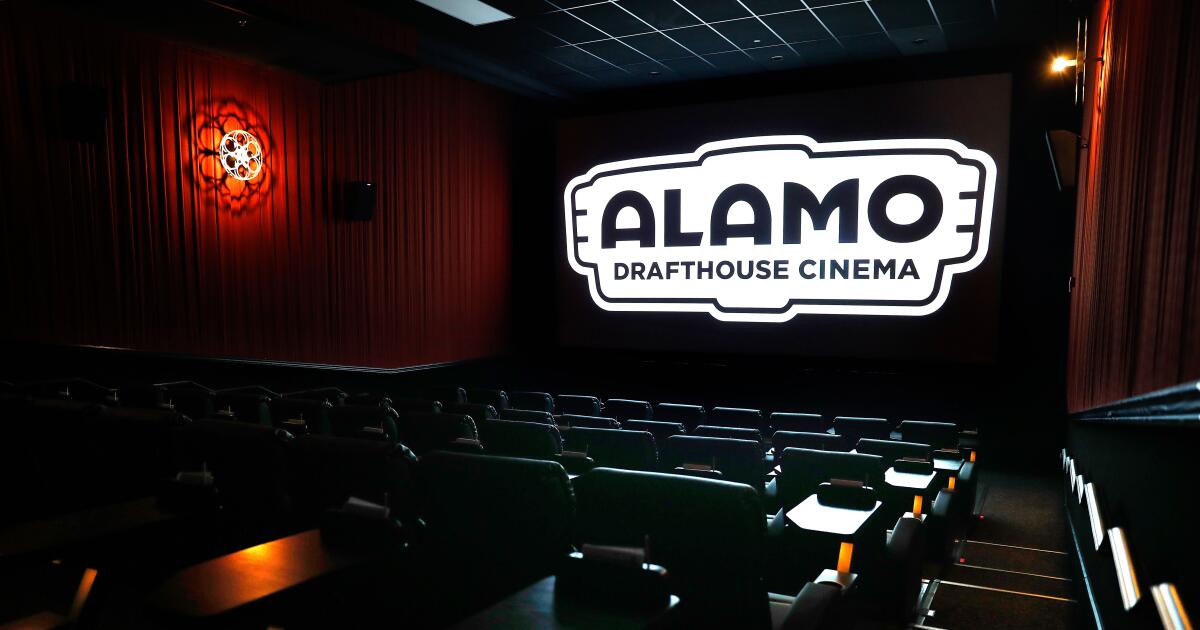
Dine-in movie theater chain Alamo Drafthouse Cinema is launching a new initiative to show unreleased independent films that had successful festival runs, a move that comes as specialty films have struggled to gain distribution.
The Alamo Exclusives program, announced Wednesday, will give limited theatrical runs to films that showed at festivals including Sundance, the Toronto International Film Festival, Tribeca Festival and South by Southwest festival, as well as Alamo’s own Fantastic Fest.
The idea is to help showcase films that received critical acclaim, but did not secure distribution or acquisition deals. The chain will not acquire these films, but instead will enter into agreements with filmmakers to exhibit their films on Alamo Drafthouse screens. By showing these films to audiences on the big screen, these films could get the momentum they need for further opportunities.
The program’s first film will be the documentary “Butthole Surfers: The Hole Truth and Nothing Butt,” which debuted last year at South by Southwest and chronicles the history of the punk rock band.
The film will be shown in Alamo Drafthouse theaters for a limited time later this summer.
The Austin-based chain, which is owned by Sony Pictures, has a long history of curating indie films for its audiences, giving Alamo Drafthouse confidence that its viewers want to see these kinds of movies, company chief executive Michael Kustermann said in a statement.
“Time and again, they’ve shown they’ll come out to support bold, original films when given the opportunity,” he said. The new Alamo Exclusives “gives us another way to champion filmmaker-driven films that deserve to be discovered and connect them with the wider Alamo Drafthouse audience.”
The initiative comes at a difficult time for indie films. Since the pandemic upended the movie business, traditional studios and distributors have had less appetite for risk, including betting on smaller indie films out of festivals.
And as the 2023 dual writers’ and actors’ strikes thinned out theatrical lineups, that aversion to uncertainty became a push for reliable and profitable hits.
“Too many incredible films premiere at festivals and then never receive the theatrical life they deserve,” Lisa Dreyer, director of Fantastic Fest and film innovation at Alamo, said in a statement. “We are actively searching for films across all genres, from horror to comedy, to everything in-between, to champion in this new, exciting way.”
The recall of a popular chip brand over salmonella concerns was recently upgraded to the U.S. Food and Drug Administration’s highest level, just ahead of the Fourth of July holiday and countless backyard barbecues.
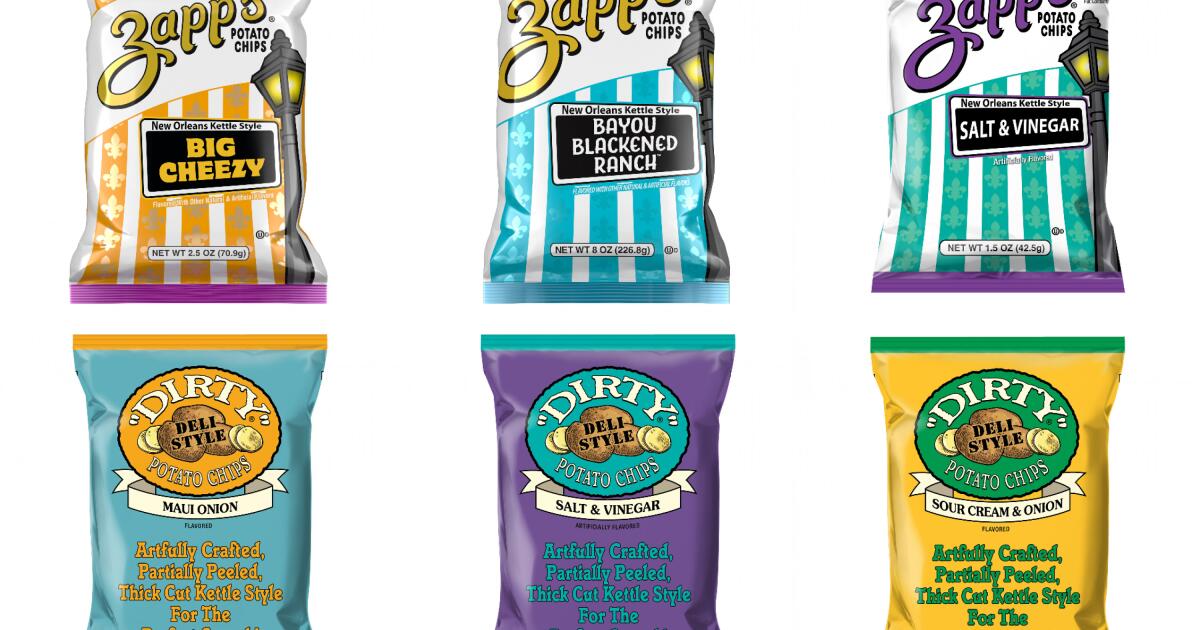
On June 24, the FDA designated the recall of several varieties of Zapp’s and Dirty brand potato chips as Class I, meaning it’s “a situation in which there is a reasonable probability that the use of or exposure to a violative product will cause serious adverse health consequences or death.”
FDA has classified the following items as Class I:
Zapp’s
- 1.5-ounce Zapp’s Bayou Blackened Ranch Kettle Chips
- 2.5- and 8-ounce Zapp’s Bayou Blackened Ranch Potato Chips
- 1.5- and 8-ounce Zapp’s Big Cheezy Potato Chips
Dirty
- 1.5- and 2-ounce Dirty Brand Salt and Vinegar Potato Chips
- 2-ounce Dirty Maui Onion Chips
- 2-ounce Dirty Sour Cream and Onion Potato Chips
The chips are produced by Utz Quality Foods, LLC, which on April 28 issued a recall after learning “that a seasoning containing dry milk powder, sourced from California Dairies, Inc. and supplied by a third-party supplier, may contain the presence of Salmonella.”
Salmonella can lead to sometimes deadly infections in elderly people, young children and those with weakened immune systems, according to the FDA.
More than 680,000 bags are included in the recall.
Anyone who has these products should not eat them and should discard them immediately.
What to look for
Salmonella is a foodborne illness that can be fatal to young children, pregnant women, older adults and people with weakened immune systems, according to the National Institutes of Health.
Symptoms may develop 12 to 72 hours after infection, according to the FDA.
The FDA said that people with strong immune systems infected with salmonella may experience fever, diarrhea (which may be bloody), nausea, vomiting and abdominal pain. The illness can last four to seven days.
In rare cases, the infection may produce more severe illnesses such as arterial infections, endocarditis and arthritis, the agency added.
What to do if infected
If you contract salmonella, the Centers for Disease Control and Prevention recommends drinking plenty of fluids to prevent dehydration.
The CDC advises consulting a doctor before taking antidiarrheal medicine or antibiotics. If severe symptoms continue after two days, seek medical help, the agency says.
Because those with diarrhea can spread salmonella to others, it’s also recommended to avoid sharing food or preparing meals for others, sexual contact and swimming in public pools, and to stay home while sick.
Times staff writer Jasmine Mendez contributed to this report.

The Minions took over theaters this weekend as Universal Pictures and Illumination’s “Minions & Monsters” won the top spot at the box office, though with a lower-than-expected domestic haul.
The animated movie, which follows the Minions’ takeover of Hollywood, took in $61.4 million in the U.S. and Canada for the five-day Fourth of July holiday weekend, according to studio estimates. That haul was lower than analysts’ expectations for a domestic opening of about $68 million. The movie’s three-day total was $36.4 million.
But the Minions performed well internationally, bringing in about $85 million. In total, “Minions & Monsters” made $159.9 million worldwide on a production budget of about $85 million.
The film is the latest in the powerhouse franchise that began with “Despicable Me” in 2010. Across its previous six installments, the “Despicable Me” and “Minions” franchise has made more than $5.6 billion at the global box office. The last movie, 2022’s “Minions: The Rise of Gru,” made more than $940 million worldwide.
“Minions & Monsters” marks the lowest opening for the franchise. Part of the issue could be timing — the box office can be negatively affected when the Fourth of July lands on a Saturday, said Paul Dergarabedian, head of marketplace trends at Rentrak.
Walt Disney Co. and Pixar’s “Toy Story 5” came in second at the box office this weekend with a domestic three-day gross of $31 million. Angel Studios’ biopic “Young Washington” ($20.8 million), Warner Bros. and DC Studios’ “Supergirl” ($9.6 million) and Universal’s “Disclosure Day” ($6 million) rounded out the top five, according to Rentrak.
The haul for “Minions & Monsters,” coupled with the strong holdover performance of “Toy Story 5,” proved again that family films are making a dent in the summer box office.
“Toy Story 5” has now brought in a total of $764.3 million worldwide, and last month, Universal, Illumination and Nintendo’s “The Super Mario Galaxy Movie” crossed $1 billion at the global box office, becoming the first film of any kind to do so this year.
The rest of the summer theatrical lineup is also expected to bring in audiences and push domestic box office totals closer to pre-pandemic figures. Next week, Disney will release its live-action “Moana,” followed by Christopher Nolan’s “The Odyssey” and Sony Pictures’ “Spider-Man: Brand New Day.”
To date, the summer box office is now about $2.3 billion, a nearly 12% increase compared with the same period a year ago, according to Rentrak data. Compared with pre-pandemic 2019’s numbers, however, it is still down about 7%.
-

 Delaware25 seconds ago
Delaware County commissioners criticize Marion County prosecutor
-

 Florida8 minutes ago
Deadly July 4th shooting arrest; South Florida man accused of Miami stabbing attack
-

 Georgia10 minutes ago
Poll shows Georgia Democrats ahead in senate, gubernatorial races
-

 Hawaii15 minutes ago
$5 deal for National Fried Chicken Day
-
Idaho22 minutes ago
An Idaho mother who said her toddler twins died after vaccinations has been charged with murder
-

 Illinois25 minutes ago
Severed arm in Illinois lake: Court records say body parts found in freezer, half-brother claimed self-defense
-

 Indiana31 minutes ago
Indiana Black Expo to present award to Mathew Knowles for health advocacy
-

 Iowa38 minutes ago
Iowa Democrats and Republicans gain voters, independent voters decrease

