Entertainment
Six Flags bans YouTuber for life for eating chicken nuggets on a roller coaster


After eating a lot of fast food, some of it on roller coasters, YouTuber Allen Ferrell has been banned by Six Flags from all of its amusement parks nationwide. For life.
McDonald’s chicken nuggets were apparently an ultra-processed food item too far for the folks at Six Flags’ Cedar Point in Sandusky, Ohio.
“This guest has been banned from all Six Flags parks for life,” a Cedar Point spokesman explained in an email Thursday to Cleveland TV station WKYC. “Safety is a cornerstone of our business and we have zero tolerance for inappropriate and unsafe behavior.”
Zero tolerance for inappropriate behavior? Zero? Where’s the fun in that?
“Our ride safety policy strictly prohibits all loose articles on rides, including food which can become a choking hazard,” the spokesperson continued.
“I had no idea that eating a 10-piece chicken nugget on a roller coaster would be a national headline, but here we are,” Ferrell told Fox 8 News in Cleveland.
He said he gets the park’s point with the ban, even though he’s been going there since he was a kid and is a huge fan of the operation.
“I understand. And we kind of worked it out,” he told Fox 8 News. “They just don’t want other people getting hurt on the ride. But me personally, it was a really fun challenge.”
Ferrell’s shtick on social media is accepting challenges from his followers and then taping himself attempting to do what they propose. Eat a McDonald’s Big Mac inside a Burger King. Throw a plunger at a Target sign. Bowl blindfolded until he gets a strike.
“If anyone asks,” Ferrell tells one apparently bored ride operator in the video that documented this particular coaster crime, “I do not have chicken nuggets in my underwear.”
Ferrell decided to try the challenge on the park’s Millennium Force ride, a “looming giant amongst a park full of them,” a coaster that was “designed for the purpose of proving bigger is better.” A roller coaster that when it was created in 2000 “demanded an all-new category just to classify its one of a kind nature,” giving rise to the “giga-coaster.” According to Cedar Point, as all of this verbiage is, Millennium Force “shoots riders over hills, past lagoons and through tunnels, all at unthinkable speeds.”
The ride actually tops out at 93 mph, a speed often thought about on freeways in the Los Angeles area when traffic is going 8 mph. It’s quite thinkable to eat fast food in a car in L.A. But it turns out what was really unthinkable was Ferrell getting all 10 nuggets down the hatch before the Six Flags ride was over.
In the video, which had almost 800,000 views on YouTube as of Friday afternoon, he morphs from happy snacking dude to dude moaning in discomfort, struggling to shove nuggets in his mouth while unintentionally applying dipping sauce to his face via G-force.
“Oh, I failed,” Ferrell says, wiping off the face-sauce as the coaster pulls up to the platform and someone in line blurts, “Are those chicken nuggets?”
Turns out he snarfed seven of them, he confesses to the two guys in front of him in the coaster car. Ferrell said later that he was glad to be in the back row because it meant nobody behind him got sauced.
That said, watching the sweet-and-sour sauce flying in slow motion is actually quite amusing. But eating nuggets that have been in one’s underwear?
The perma-ban sounds like the least of his problems.


Starring: Marshall Williams, Richard Harmon and Alex Essoe
Directed by: James Kondelik
Rated: NR
Running Time: 108 minutes
Our Score: 1.5 out of 5 Stars
Survival horror is the ultimate guilty pleasure because you can amplify any life-or-death situation into the paranormal, horrific, thrilling, or cruelly dramatic extremes it finds itself in. So why doesn’t “Pitfall” come close to tickling “The Ritual,” “The Blair Witch Project,” or “Wolf Creek” vibes?
Woods and grief feel like a ritualistic trope at this point as “Pitfall” opens on Scott (Marshall Williams) and Ashley (Alex Essoe) mourning the death of their parents. For reasons that may or may not be revealed later, they join three friends on an ominous trip that quickly introduces the titular pitfall, a massive trap designed to kill prey.
The movie constantly battles convention with unpredictability. The problem is that at more than 100 minutes long, there’s plenty of time to sit around and wonder where the story is heading. If “Pitfall” moved with the frantic pace of a Tuesday afternoon soap opera on meth, maybe I’d be swept up in the chaos. Instead, I found myself waiting for reveals that felt more eye-rolling than shocking.
I really wanted to like “Pitfall” because of how invested it is in physical violence, emotional trauma, and psychological brutality. Unfortunately, the movie never convinced me it knew what to do with those ideas. By the time it arrives at its revelations and ultimate purpose, “Pitfall” feels less like a title and more like a review.
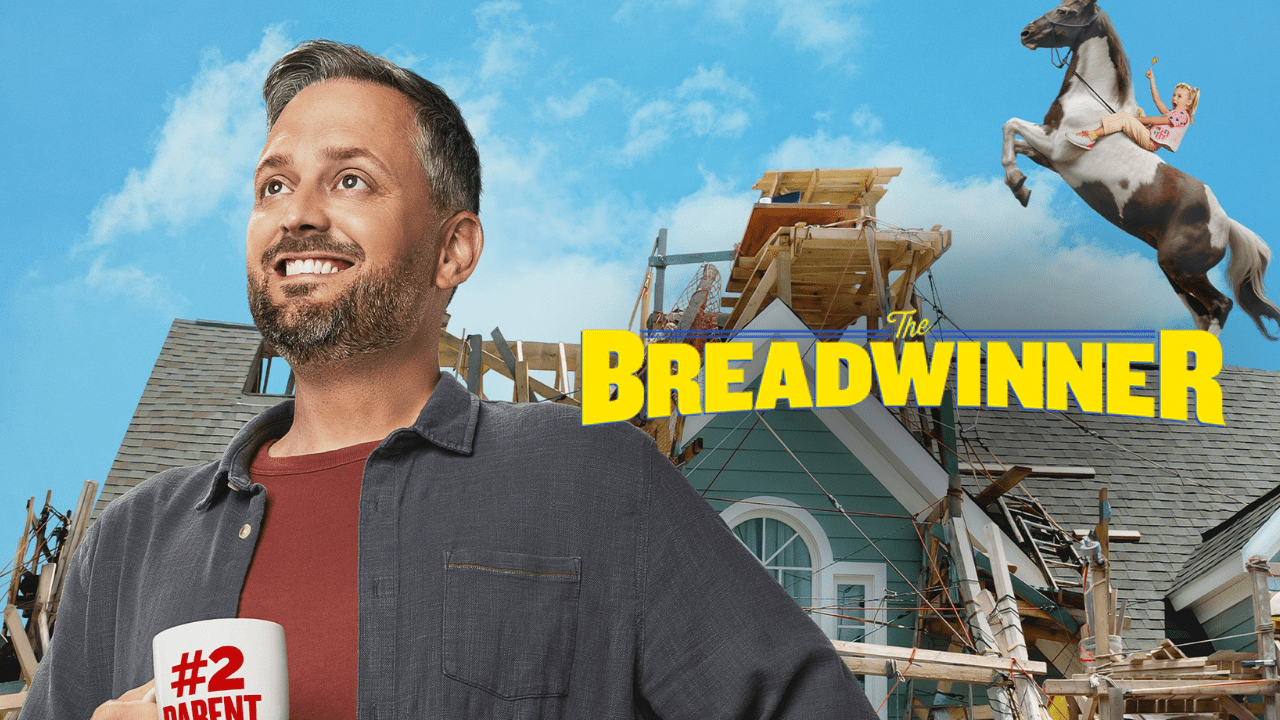
As a lowkey, throwback family drama, The Breadwinner is an amusing extension of comedian Nate Bargatze’s humor and vibe, providing some breezy entertainment and wholesome messages.
About the Film
The “dads are big dummies around the house” gag is far from a novel idea, but as a skilled comedian knows, it’s not always the subject that matters, but how you talk about it that makes or breaks the joke. Comic Nate Bargatze is as good as anyone at doing that, blending a dry and self-deprecating delivery with a refreshingly clean brand of comedy. His cinematic debut in The Breadwinner is exactly what might be expected. As a lowkey, throwback family drama, The Breadwinner is an amusing cinematic extension of comedian Nate Bargatze’s humor and vibe, providing some breezy entertainment and wholesome messages.
As one of the biggest and most influential comics in the world right now, the main draw in The Breadwinner is Nate Bargatze himself. Many Christians have latched onto him due to his trademark “clean comedy” that swims refreshingly upstream of the regular vulgarity and shock jock tendencies in the comedy world. For “clean comedy” to work, both the “clean” and the “comedy” need to be present. The Breadwinner mostly passes the test but does better at the first than the second. It is more a clean and wholesome drama than a hilarious comedy.
During an opening voiceover, Bargatze remarks, “This might sound a bit old fashioned….” He’s speaking about the traditional family dynamic of a husband “breadwinner” and the stay-at-home mom (a family structure the film eventually challenges for a more modern understanding). “Old fashioned” is also a good description of the film itself. The Breadwinner feels a bit like a Christian film made in the 1990s, or as if a sitcom like Full House had ever made a theatrical feature film. Whether this is a harsh criticism or a ringing endorsement may depend on the desires and expectations of the audience.
I suspect that “old fashioned” is exactly what many Christian audiences want. Not “old fashioned” as in “outdated”, but as a nostalgic throwback to a simpler time and to conservative values. Much of the film is exactly that, both a wholesome affirmation of family and a movie that is easily accessible for families. At the same time, some of the film’s messages may be a bit muddy or progressive for some viewers (see themes below).

To be “clean” is only part of the equation, and the absence of vulgarity doesn’t inevitably result in effective “comedy”. My biggest problem with The Breadwinner is that, despite featuring an often-hilarious comic, the movie just isn’t all that funny. This may partially be a matter of taste, and how much (or little) you jive with the comedic sensibilities of Bargatze himself. During the film’s closing credits, recordings of his various standup sets are shown, revealing how his jokes have been directly incorporated into the movie. It’s a fascinating glimpse into the adaption process of jokes from the stage into a film and highlights the synergy between the film and Bargatze’s comedy.
As an observational comic, Bargatze’s strength is in his ability to find hidden humor in the middle of relatable, everyday life (even more relatable to me, as the movie was filmed 10 minutes from my house). While some of the events in the film’s third act do elevate the spectacle and stakes (such as letting a horse loose to inside the house), many of the gags are built on relatable family experiences (keeping up with laundry, cooking, helping emotional children navigate the challenges of growing up ). Hearing Nate Bargatze do a comedy set and find humor in these mundane life experiences can be hilarious, but actually seeing those mundane experiences play out on screen is a bit more, well, mundane.

The Breadwinner is not necessarily boring, but it’s also not always all that exciting. There was no laughing out loud in my theater, and I can’t recall any standout moments that I’d be excited to revisit or to watch with someone else. Basically, all the funniest moments are featured in the movie’s marketing trailers, so how you feel about those is a gauge for how much you will enjoy the film.
Overall, The Breadwinner is fine as a film that will land well with its target audience. Still, I think it would be great as a sitcom show like a real-world Bluey. I genuinely cared about the family and would enjoy spending more time with them. The film’s lowkey stakes and everyday family life vibe would translate perfectly to the small screen while giving Bargatze an opportunity to showcase more comedic range than just a struggling “Mr. Mom”. Even so, fans of Bargatze and his brand of humor, or audiences just looking for some squeaky-clean family entertainment, may find exactly what they’re looking for here. It may not be a great film, but it’s a hard movie to dislike. The Breadwinner has plenty of heart and charm to be endearing and provides enough moderate chuckles to send audiences out of the theater with a smile.
On the Surface
For Consideration
On the Surface—(Profanity, Sexual content, violence, etc.).
Language: There are a few uses of “God.”
Violence: None.
Sexuality: There are a couple mild innuendos (for example, a roofer remarks that his ex-wife left him a review that “his tools don’t get the job done”).
Other: Frequent drug and alcohol abuse is shown.
Beneath The Surface
Engage The Film
Family Dynamics
The central theme in The Breadwinner is identity and where it’s found. Nate Wilcox (Nate Bargatze) finds his identity as the best car salesman at his dealership. He must determine where his purpose and self-worth come from when he’s required to stay at home with the kids while his wife, Katie (played by Mandy Moore), navigates a similarity drastic transition from stay-at-home mom to thriving businesswoman. Their children face similar challenges, struggling to not allow external factors (such as school spelling bee competitions and cute boys) to determine who they are. It’s a wholesome message, and one that works for any age demographic. The film ultimately suggests that identity must come from the love and unity of a family.

Where the message gets a bit muddy is in the nuances of how the film answers those questions. The film’s tagline is “Let the dad era begin.” The so-called “dad era” begins when Nate finally decides that instead of trying to follow mom’s hardline established family organizational system he instead needs to develop a new system that works for him. As a dad myself, the “dad era” is actually pretty great, requiring the children to take on more responsibly while emphasizing trust and partnership rather than a rigid top-down scheduling structure. Nate’s motivations are ultimately selfish (he lies and returns to work) but seeing him as a stay-at-home dad rather than a “poor substitute mom” is commendable. Unfortunately, the film seems to disagree, suggesting that the success of a stay-at-home dad is only in how closely they can mimic mom.
His wife slips effortlessly from stay-at-home mom to big-time business owner, while he is a bumbling disaster as a homemaker. It is seemingly easy to be a working dad and hard to be a domestic mom, falling into the trap of many Hollywood films that struggle to be pro-woman (good!) without also being anti-man (bad!). The Breadwinner doesn’t go quite that far. It’s not anti-man, but it fails to celebrate or show the strengths of dads and men. Even a few moments of Nate helping his wife with her own role reversal would have gone a long way to showcasing the complementary difference and strengths within the family.

Entertainment
This Puerto Rican filmmaker honored his family with an unconventional movie called ‘TheyDream’

At this year’s Sundance Film Festival, filmmaker William D. Caballero won the NEXT Special Jury Award for Creative Expression for his intensely personal, multimedia feature debut, “TheyDream.” During his acceptance speech, he made a powerful statement.
“In case ICE were ever to harm me or kill me, this film will serve as the truth of who I am, and who my family is, before Fox News or this administration ever makes us out to be the villain[s],” he recalls paraphrasing during a recent interview.
Blending live action footage with different animation techniques — as well as the 3-D-printed miniatures that have been a fixture of Caballero’s work for more than a decade — “TheyDream” honors the filmmaker’s Puerto Rican loved ones, particularly his mother, Milly.
She collaborated with him in the making of this one-of-a-kind portrait of loss, resilience and shared healing. Their heartfelt exchanges throughout this process are also shared on-screen.
“Seeing her light up and become transformed throughout was just invigorating, because it allowed us to talk about heavy things and bond throughout the process of creating a story that’s personal [for us] both,” Caballero says. “It’s like, ‘Let’s guide each other and instead of me taking your stories and making magic with them, let’s make this magic together.’”
The brilliantly unconventional piece of autobiographical storytelling will screen as the closing night film of the Los Angeles Latino International Film Festival (LALIFF) on Sunday. Recently, John Leguizamo and Ben DeJesus joined the film as executive producers.
Starting with his 2013 short film “How You Doin,’ Boy? Voicemails From Gran’pa,” Caballero has used miniatures to immortalize his loved ones. That bite-sized introduction to his Boricua grandfather’s humorous wisdom evolved into the HBO Latino show, “Gran’pa Knows Best.”
“When I started working on ‘Gran’pa Knows Best,’ I knew that 3-D printing was this new technique,” he says. “But I’d never seen anyone that looked or sounded like my grandfather in it. I realized that it could be a really creative method to preserve his voice and his story. “
Then came the 2017 short “Victor & Isolina” about his grandparents’ relationship, and more recently in 2022, he debuted “Chilly and Milly,” which focused on his parents. Some of the sets from these shorts, tiny replicas of places familiar to Caballero, and a few of the miniature characters were reused in “TheyDream.”
“Being able to create these things in miniature is almost like getting back in touch with the idea of play,” Caballero explains. “As a child, you invent lots of stories all the time. But now as an artist, I’m able to tell stories that touch upon reality and painful memories, but also hopes and dreams in a way that hearkens back to the innocence of childhood.”

Filmmaker William D. Caballero will screen “TheyDream” on Sunday at the Los Angeles Latino International Film Festival (LALIFF).
(William D. Caballero)
“TheyDream” is a culmination of the eclectic and nimble artistic practice that Caballero has developed since he studied digital art at the Pratt Institute in Brooklyn.
“I’d always just been attracted to new ways of expressing myself and expressing stories. And I say this both in a way that brings me pride, but also brings me a bit of a headache, because I don’t think I’ll ever be a conventional filmmaker,” he says, laughing.
Still, working outside the margins of traditional moviemaking requires great adaptability.
When Caballero received funding for “TheyDream” in 2021, the money wasn’t enough to conceive it as he had originally envisioned it: entirely told with 3-D-printed figures in physical sets. The lack of resources forced him to rethink his approach, and he opted for hiring two Puerto Rican animators, Julisse Tinoco and Frank Martinez, each of whom animate in distinct styles, to help him create some of the sequences needed.
“This all goes back to the resourcefulness that I learned when I was young,” Caballero says. “When you’re born Latino and low-income in this society, you can’t let yourself be written off or you’re already defeated before you even begin.”
Caballero grew up in housing projects in New York City, and later in a trailer in his grandmother’s backyard in Fayetteville, N.C. Both of his parents were disabled.

Filmmaker William D. Caballero poses as his father for a reference shot in the making of his 2026 film “TheyDream.”
For Caballero, he says the arts have provided an escape that he “needed in order to survive and not feel weighed down by American consumerism, by poverty and by feeling trapped.” Whenever grief has perturbed him, Caballero has processed it through creativity.
With “TheyDream,” he wished to extend that vehicle for self-reflection to his mother. The film addresses complicated familial bonds and his mother’s experience caring for others.
“Throughout the years, we’ve lost several of my family members that we were both close to, but my mother especially,” he says. “She feels their absence much stronger than I do. I live in Los Angeles, my mother still lives in North Carolina. Knowing that she was alone in the mobile home, it just made me feel like, ‘That can’t be good for her.’”
His mother, he says, deals with self-esteem issues because her identity has for so long been reduced to being a caretaker for elderly relatives, who, inevitably, pass away — leaving her feeling like a failure. In reality, it was thanks to her devotion that they added years of life.
Caballero’s mother was at the Sundance premiere of “TheyDream,” where she witnessed how others saw her through the film she helped her son craft.
“I wanted her to feel like, ‘Mom, look at all these people that are clapping for you. They’re clapping for you because you are a hero. You deserve to hold yourself high and be strong and know that there’s something incredible in your story that’s indicative of the stories of many low-income Americans, regardless of race,’” Caballero says, visibly moved.
A prolific and highly regarded artist (he is a 2018 Guggenheim Fellow), Caballero has several other projects in the works that he’s trying to shop around. One of them is an episodic series titled “Second Fiddle,” about a 15-year-old Latino boy who gets accepted to a prestigious summer youth orchestra camp — and whose overbearing mother decides she’s going to stay in the camp with him.

Caballero’s mother, Milly, got the animated treatment in “TheyDream.”
“I never saw a Latino playing violin on TV or the big screen. I didn’t see any quirky, nerdy, artsy Latino kids like I was,” he says. “And I felt in my core that [it] was just wrong and something that I could change.”
Another project, “Raúl Playing Game,” is “an adult version of Pixar’s ‘Inside Out,’ ” that takes place in the mind of a closeted bisexual man. Caballero himself is bisexual. In 2022, “Raúl Playing Game” was selected for the LALIFF Inclusion Fellowship, which provided support for a short film version that serves as proof of concept for a potential TV show.
“I always wanted to make sure that I was telling authentic stories even if not necessarily always positive stories,” he says. “I’m very happy that I never lost track of that. Because I do believe that we need to tell our own stories, in our own unique voices, before someone else does it for us.”
-

 New Jersey4 minutes ago
Police fire tear gas during protest outside New Jersey ICE facility
-

 New Mexico11 minutes ago
Patrick Brenner: New Mexico can’t afford permitting paralysis | Carlsbad Current Argus
-

 North Carolina14 minutes ago
North Carolina felon gets 22 years for 15 guns, fentanyl pills, meth and cocaine
-

 North Dakota20 minutes ago
How popular is mail-in and absentee voting in North Dakota?
-

 Ohio27 minutes ago
Ohio voters literally can’t believe our eyes. Danger of AI ads not overblown | Letters
-

 Oklahoma29 minutes ago
Oklahoma’s dramatic literacy goals now up to elementary schools to implement
-
Oregon35 minutes ago
Oregon Lottery Mega Millions, Pick 4 results for May 29
-

 Pennsylvania42 minutes ago
Cheers to summer: Try these Western Pennsylvania beers that pair perfectly with warm weather

