Culture
Where Have All the Book Reviews Gone?


But here’s a catch with A.I. It’s easy to tell when a reference, or a comparison, or a sentence, doesn’t belong to a writer. Erudition and style aren’t forgeable for long; it still must be earned. As for A.I.’s sleek, space-efficient text, we’ve already grown accustomed to what that sounds like — the flat, consistent tone, the pert little summary bits, the repetitions, the impersonal and fluorescent-lit mood. Reading it, you feel you’ve been through the desert on a horse with no name.
It will get much better. Like a Nakamichi Model 500, perhaps, A.I. models will probably someday be programmed to calculate range and trajectory and to spit out rich critical prose. But as John Berryman put it in one of his “Dream Songs,” speaking of dead-on-their-feet essayists everywhere, “When the mind dies it exudes rich critical prose.” A.I. machinations can reflect the consensus, but it’s part of a real critic’s job to not go flopping along with the times, to wage guerrilla warfare on that consensus. Je suis Claude? Nix to that.
Book reviews may survive if only because, as Elizabeth Hardwick observed, publishers need praise for their new releases “as an Easter basket needs shredded green paper under the eggs.” But the breakup of the monoculture, the rise of algorithms and the flattening of taste mean that critics will never, for better and worse, have the consecrating power they once did.
Pauline Kael, Albert Murray, Lester Bangs, Edmund Wilson and Kenneth Tynan — five of my critical heroes — knew what to notice, in ways that can’t be taught or imitated, and they knew how to make their prose and their ideas stick. I’m cheered by the young critics out there, swimming in this sea without drowning in it, trying not to be cast into gaol by their creditors, and working to make certain that the last snatch of book criticism isn’t three fire emojis, two jazz-hands, a crying face and a facepalm.



Welcome to Literary Quotable Quotes, a quiz that tests your recognition of classic lines. This week’s installment highlights observations from future or alternate worlds depicted in popular science fiction. In the five multiple-choice questions below, tap or click on the answer you think is correct. After the last question, you’ll find links to the books if you’re intrigued and inspired to read more.

Welcome to Lit Trivia, the Book Review’s regular quiz about books, authors and literary culture. This week’s challenge tests your memory of books that made huge impacts on society after they were published — some of them even spurring changes to American laws. In the five multiple-choice questions below, tap or click on the answer you think is correct. After the last question, you’ll find links to the books if you’d like to do further reading.


Where do you turn when you need advice? A chatbot? A life coach? A wise and trusted friend?
How about a poet? Poets may not be famous for making the best life choices, but because they subject the mess of human existence to the discipline of language, they can be as helpful as any therapist or mentor.
Good poets know the rules and when to break them, which is something they can teach the rest of us.
To wit:
Giving advice is a peculiar literary undertaking. It flourishes in certain popular genres — graduation speeches, newspaper columns, country and western songs and poems like this one — but what, in these contexts, is it really for?
I’m thinking of situations when you don’t urgently need help but nonetheless enjoy reading answers to questions you may not have thought to ask. What interests you isn’t the content of the advice — you could get all the life hacks you want from A.I. — so much as the voice of the person dispensing it.
Wendy Cope is an English poet, born in 1945, who has been a fixture of her country’s literary scene since the 1980s. More recently, her short, buoyant poem “The Orange” has been widely memed online, bringing her to the attention of new readers beyond Britain.
Cope favors rhyme, meter, brisk jokes and tart aperçus. She addresses romance, friendship and the petty absurdities of modern life with disarming good humor. The last line of “The Orange” is “I love you. I’m glad I exist.” Somehow she makes it the opposite of cringe.
This isn’t the kind of poetry you would describe as “confessional.” And yet …
Question 1/7
Stop, if the car is going “clunk”
Or if the sun has made you blind.
Don’t answer e–mails when you’re drunk.
Tap a word above to fill in the highlighted blank.Want to learn this poem by heart? We’ll help.
Fill in the missing words below. You can always refer to the reading by A.O. Scott and full
text above.Let’s start with the first stanza.
-
Entertainment2 minutes ago
Todd and Julie Chrisley sue law firm for $25 million, say legal flub led to conviction
-
 Lifestyle5 minutes ago
Want to experience the World Cup for $10? Head to the FIFA Fan Festival
-
 Politics10 minutes ago
Commentary: In Orange County, a progressive Latina pol beats back well-funded haters — again
-
 Sports20 minutes ago
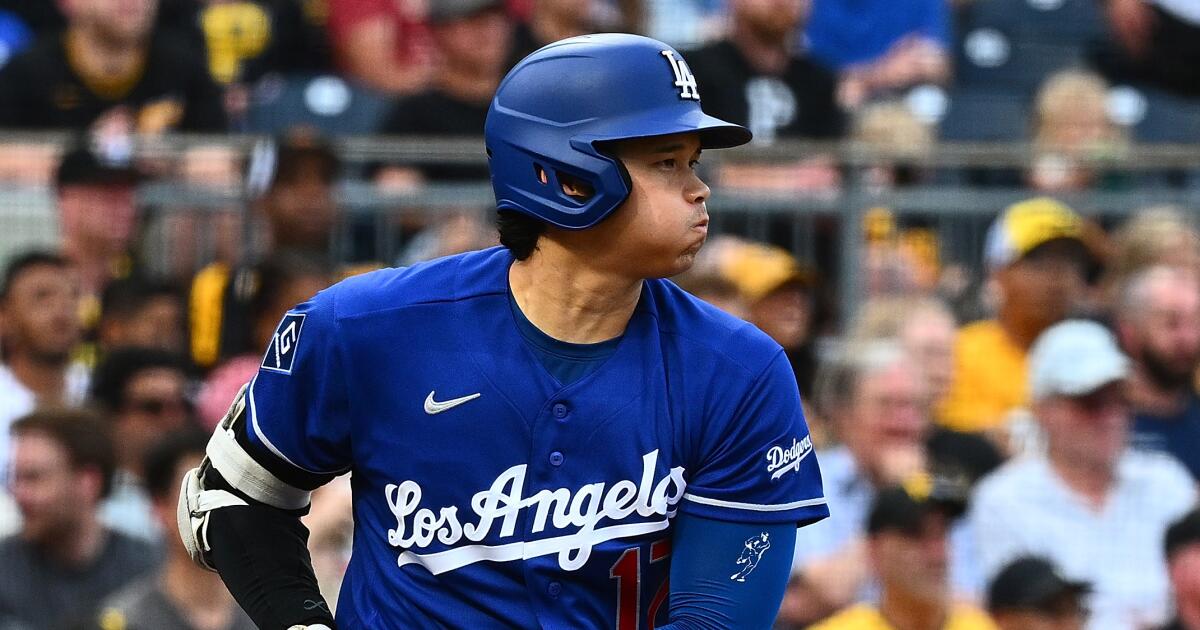
Shohei Ohtani, Justin Wrobleski sustain injuries, exit early for Dodgers vs. Pirates
-

 World32 minutes ago
Russia ‘lost standing’ despite ‘a breather’ from higher oil prices, IMF chief says
-

 News55 minutes ago
A Nebraska immigration raid shut businesses down a year ago. The fallout is ongoing, officials say.
-

 Los Angeles, Ca2 hours ago
Southern California police officer accidentally shoots colleague in ‘horseplay’ incident
-

 Detroit, MI3 hours ago
Airbnb Is Betting on Detroit as a Destination


