New Jersey
How hunters are helping to feed those in need throughout New Jersey


How hunters in NJ are helping feed the hungry, food pantries
See how hunters in New Jersey are working with food pantries to help feed the hungry in the state.
For more than 25 years, hunters around the Garden State have been making a difference by working with Hunters Helping the Hungry, a nonprofit organization that raises money and coordinates the efforts of hunters, butchers, and food banks throughout New Jersey to help put food on the table for those in need.
The program began during the 1997/1998 hunting season, a result of the efforts of three Hunterdon County hunters along with help from a butcher named John Person and Kathy Rummel, the director at the time of Norwescap.
“We started out 25 years ago just as hunters, you know, wanting to go out and get some extra deer. New Jersey had very liberal deer quotas and bag limits. You could get unlimited does,” said Lester Giese, one of the founders of Hunters Helping the Hungry. “I was on a trip, and I was going through West Virginia, and I saw at one of the gas stations a brochure for Hunters Helping the Hungry. I picked up the brochure and looked at it and said, ‘What a great idea.’ When I got back, as it turned out, the state legislature just recently passed a law to allow venison donations.”
Five deer were donated during that first season, according to Giese. Today, the organization averages about 1,000 donations per year, which amounts to between 23,000 and 28,000 pounds of venison, he said.
Overall, since the program’s inception, Hunters Helping the Hungry has facilitated the donation of nearly 2.5 million servings of venison.
While the program originally started as a way to assist hunters who could harvest more deer than they could use, the organization’s mission has expanded. According to its website, Hunters Helping the Hungry currently aims to:
- Continue paying butchering costs for hunters who are able to take more deer than they can use;
- Support municipal and private property owners that pay for the butchering process directly while they attempt to reduce the deer population on their property;
- And set aside a portion of grants from the state Department of Agriculture to support and pay for the butchering of deer taken by farmers and their agents during depredation hunts.
These efforts ultimately help New Jersey’s food bank system and provide a source of protein to those in need, while also keeping the state’s deer herd in check
“So, kind of a nutshell, we started out just a small group of us with a small focus,” Giese said. “And now we’re trying to do a lot of things for a lot of people.”
The process: From forest to food pantry
In New Jersey the deer hunting season runs from the second week of September through the second week of February. According to Hunters Helping the Hungry board member Mark Charbonneau, this is one of the longest hunting seasons in the United States.
Hunters who want to make a donation bring their legally harvested deer to one of the state-inspected butchers that partner with the organization. Processing fees are paid to the butcher by Hunters Helping the Hungry from a fund consisting of donations and grants.
The butcher processes the deer at no cost to the hunter and gives it to one of the participating food banks, such as Norwescap, which partners with pantries in Warren, Sussex, and Hunterdon counties.
Venison issued to the food banks is distributed to over 400 charities around the state.
Although New Jersey’s deer hunting season starts in the fall, Charbonneau, a board member of about 20 years and a hunter of about 40, says that the process starts well beforehand.
“The process actually starts before hunting season starts. What I mean by that is hunters will start scouting certain locations to be able to know where deer are, to be able to prepare to harvest them legally and as ethically and quickly as possible,” said Charbonneau, adding that less than 2% of the New Jersey population are deer hunters.
Charbonneau continued, “So when you start that process of scouting areas, setting up your locations, then going afield, then harvesting your game, then removing your game from the field, then field dressing it properly, then bringing it to a butcher, then making that donation, there’s a lot of steps involved and there’s a lot of time involved.”
JB Person, an Hunters Helping the Hungry board member and the owner of GameButcher in Lebanon, is one of several participating butchers that process the donated deer.
“What the hunters do is come here, they have to fill out some paperwork, and along with the paperwork we request they also fill out a donation slip. They donate the whole deer,” Person said. “What we do is skin it and process it into various cuts – roast, steak, chops, and ground meat. Everything is cut, wrapped, and frozen and then when we have a bunch ready to go, I get in touch with Norwescap and then they come and pick it up.”
Game Butchers averages between 150 and 200 donated deer per year, according to Person, who added that Hunters Helping the hungry is “in desperate need of butchers.”
How to donate deer to Hunters Helping the Hungry
Hunters looking to make a donation can take their legally harvested deer to any of the participating butchers listed on the Hunters Helping the Hungry website.
Once the required forms have been filled out, the butcher will process the deer. The food bank will then pick up the processed deer from the butcher and distribute the frozen venison to various food pantries, emergency shelters, churches, etc.
If the dressed weight of the deer is more than 50 pounds, Hunters Helping the Hungry will pay the entire processing fee, according to the organization’s website. If the dressed weight of the deer is less than 50 pounds, the hunter will be required to pay the first $50 of the processing fee.
Throughout the 2025/2026 hunting season, a total of 802 deer were donated to Hunters Helping the Hungry. This amounts to 26,846 pounds of venison which yields 107,384 servings.
“The number one thing that people need to know about our organization is that the hunters of the great state of New Jersey are the reason for our success,” Charbonneau said. “The hunters have taken it upon themselves in the great state of New Jersey to go afield every year and harvest game to help those not as fortunate as most.”
For additional information about Hunters Helping the Hungry and how you can donate and/or get involved as a hunter or a butcher, visit the organization’s website at https://www.huntershelpingthehungry.org/.



From Camden and Cherry Hill to Trenton and the Jersey Shore, what about life in New Jersey do you want WHYY News to cover? Let us know.
In New Jersey, Mercer County officials have enacted new policies limiting the ability of federal immigration agents to access and use county property to conduct immigration enforcement operations.
Mercer County Executive Dan Benson issued an executive order and the Board of County Commissioners passed a resolution Friday that bans U.S. Immigration and Customs Enforcement and Customs and Border Patrol from using any nonpublic area on county property to enforce immigration law, unless they have obtained a judicial warrant or judicial order.
“From Minneapolis to Delaney Hall, ICE has repeatedly shown a total disregard for the law and for the constitutional rights of citizens and non-citizens alike,” Benson said in a statement. “We respect the Federal Government’s authority to enforce immigration law, but we will not allow them to use County properties to harass our families.”
“With this resolution, we’re sending a clear message that everyone in our community can safely interact with County government, and access County services, without fear,” said Board of Commissioners Chair Terrance Stokes in a statement. “ICE’s actions threaten the fabric of our community, and we will take whatever steps we can, within the bounds of the law, to protect our residents.”

New Jersey and New York City commuters are facing extensive delays in and out of New York Penn Station Friday, with intensifying ripple effects, after an Amtrak work train car on one of the hub’s tracks caught fire.
The FDNY says it was called to the Midtown scene on 31st Street, between Seventh and Eighth avenues, around 1:30 a.m. Nearly 100 personnel responded. Five civilians were evaluated at the scene by EMS, officials say.
It’s not clear what sparked the fire involving Amtrak’s contractor maintenance vehicles in one of the Hudson River Tunnels. It was knocked down well before 6 a.m., but service on New Jersey Transit, Amtrak, Long Island Rail Road and more was expected to see heavy impacts well into the morning rush, with Hudson River trains operating at reduced capacity. Amtrak said it didn’t expect to lift its suspension until at least noon.
Travel Advisory: Due to unforeseen track and signal maintenance resulting from a now extinguished fire in the New York area, all services traveling south of New York (NYP) are temporarily suspended. This suspension is anticipated to be in place until noon at a minimum. Services…
— Amtrak Northeast (@AmtrakNECAlerts) May 29, 2026
New Jersey Transit and LIRR also announced delays and cancellations. Cross-honoring and diversion programs were in effect as the situation developed. Complete LIRR service at NY Penn had resumed by around 7 a.m., Friday said, though equipment issues were causing cancellations. Get the latest transit information here.
Video from outside Penn Station showed smoke billowing in the pre-dawn hours, as emergency personnel stood by with stretchers awaiting any potential victims.
Amtrak is investigating the cause of the fire.
“We sincerely apologize for the inconvenience this may cause,” the agency’s latest announcement said, pledging to provide updates as new information becomes available.

How are detainees at Delaney Hall being treated?
A statement issued by DHS said detainees receive comprehensive medical care and all are treated well.
“They are provided with 3 meals a day, clean water, clothing, bedding, showers, soap, and toiletries. Illegal aliens also have access to phones to communicate with their family members and lawyers. Certified dieticians evaluate meals,” the department wrote.
The release accused Sherrill, Booker and U.S. Sen Andy Kim, as well as U.S. Reps. Rob Menendez, Nellie Pou, LaMonica McIver, Frank Pallone and Analilia Majia, of continuing “to peddle falsehoods about ICE facilities,” and “spreading smears about ICE law enforcement and the Delaney Hall ICE facility in New Jersey.”
Sinha said the assertion that individuals being arrested and taken to Delaney Hall are dangerous criminals is false.
“This is an administration that has repeatedly lied to us about what’s going on in immigration enforcement and immigration detention facilities,” Sinha said.
He added while Sherrill does not have the legal authority to enter Delaney Hall unannounced, that fact that she was denied entry is concerning.
“The federal government has denied her repeatedly, and it makes you question, ‘What is the federal government trying to hide?’” he asked. “They have no allegiance to any rule of law or semblance of democracy; they’re trying to rewrite the Constitution for people who are noncitizens.”
On Thursday, Sherrill issued a statement saying the New Jersey Department of Health attempted to conduct a inspection of Delaney Hall, but officials were only allowed to inspect only a limited part of the facility.
“We will review and share the department’s findings from the limited portion it was allowed to inspect, and we will continue to pursue all appropriate avenues for demanding transparency and ensuring humane conditions for the individuals being held at the facility,” she said in the statement. “As I’ve said repeatedly, refusing to provide full access raises serious questions about what ICE is trying to hide from public view.”
Sinha said a hunger strike among those inside the facility is continuing because they are being given spoiled food and inadequate medical care in deplorable conditions.
“People shouldn’t have to starve themselves to make their dignity known; people shouldn’t have to starve themselves to have their rights protected, but that’s what’s happening here,” he said.
Reports of escalating violence
Late Thursday afternoon there were reports of violence escalating within Delaney Hall.
Nedia Morsy, the director of Make the Road New Jersey, an immigration advocacy group, issued a statement saying multiple sources within the facility reported ICE agents attacking detainees and causing serious injuries.
“Right now there are ICE agents inside of Delaney Hall violently beating the hunger strikers,” Morsy said in the statement. “Someone will be killed if no one intervenes and shuts this down. These masked agents are acting as if they’re above the law. This is a modern-day concentration camp, and history will not forgive silence in this moment. We need to shut down Delaney Hall and free everyone inside.”
Resistencia en Accion, another immigrant rights group, also released a statement, calling for violence against detainees to end.
“We express our utmost disgust with the violence perpetrated by Immigration and Customs Enforcement (ICE) agents today, May 28. Reports at approximately 1:40 p.m. reveal that ICE agents attacked the hunger strikers inside with batons and tear gas. Family members outside received calls from inside, confirming that there were people screaming, and according to their loved ones inside, unconscious detainees and blood on surfaces. ICE is the sole responsible actor for the escalation that has led to several wounded people inside and outside this week,” the statement reads.
WHYY News reached out to DHS late Thursday seeking comment about the reports of violence at Delaney Hall. A written statement was emailed to WHYY that said ICE agents had responded to a physical altercation involving detainees.
“In accordance with established ICE policies and their training, staff used the minimum amount of force to safely deescalate the situation,” DHS wrote. “Following the incident, all affected detainees were promptly evaluated by on-site medical personnel and were cleared with no serious injuries.”
-

 South Dakota8 minutes ago
How to watch South Dakota State vs. Arizona State baseball today, time
-

 Tennessee11 minutes ago
What channel is Tennessee softball vs Texas Tech on today? Time, TV schedule to watch WCWS game
-
 Texas16 minutes ago
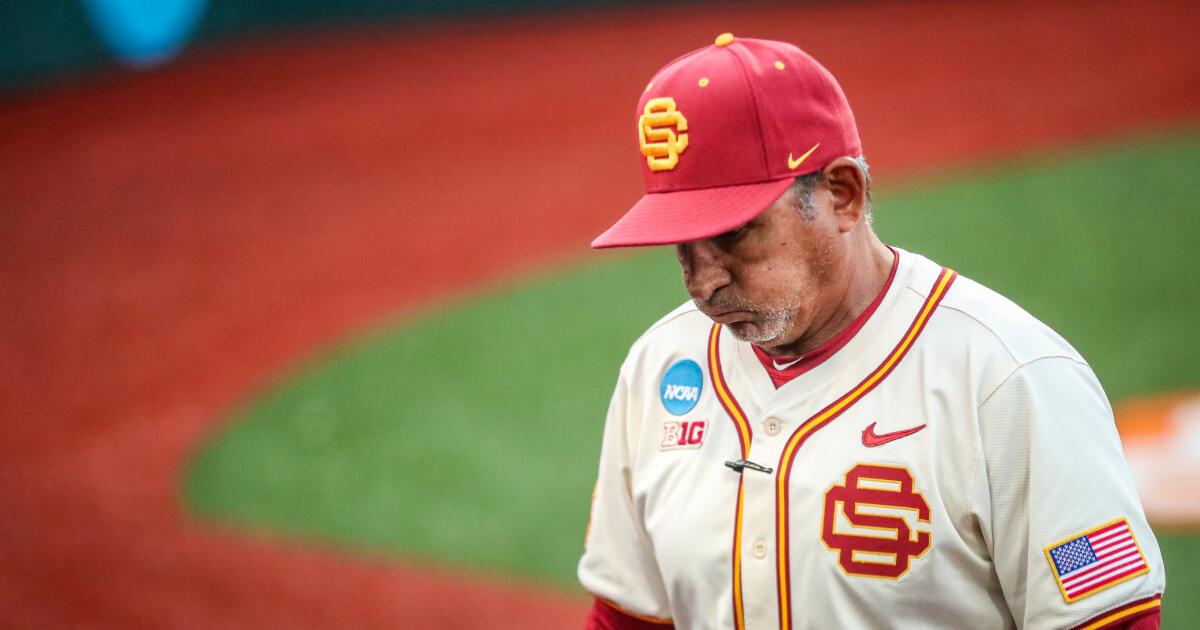
USC squanders late lead, falls to Texas State in NCAA regional opener
-

 Utah23 minutes ago
DHHS issues emergency actions against Utah behavioral school attended by Paris Hilton
-

 Vermont26 minutes ago
Vermont’s only theme park opened in the 50s. How Santa’s Land got its start
-

 Virginia31 minutes ago
‘I didn’t know I could go that fast’: Virginia pizza maker breaks record – WTOP News
-
Washington38 minutes ago
Washington Lottery Mega Millions, Cash Pop results for May 29, 2026
-

 Wisconsin41 minutes ago
Wisconsin Lottery Mega Millions, Pick 3 results for May 29, 2026

