Crypto
Capitol Connections: Rep. Scot Matayoshi on banning cryptocurrency kiosks, cell phones in schools


This post is part of our Capitol Connections series, where Annalisa Burgos sits down with state lawmakers to discuss their priorities for the legislative session and issues affecting their districts. Watch the full interview above and click here for more Capitol Connections.
HONOLULU (HawaiiNewsNow) – State Representative Scot Matayoshi is proposing legislation to combat fraud and scams and restrict cryptocurrency ATM purchases after hearing multiple accounts of kupuna being victimized.
Matayoshi, D, who represents Kaneohe and Kailua and chairs the House Consumer Protection and Commerce Committee, said a relative told him about a friend who was defrauded out of hundreds of thousands of dollars through an online scam.
“I think every single person I’ve talked to has known a cousin, an auntie, a friend of an auntie or a friend of a mom or whatnot that has been defrauded or at least has experienced someone trying to defraud them of money,” Matayoshi said.
Bank teller freeze authority
One bill would allow bank tellers to freeze transactions if they suspect fraud is occurring. Matayoshi said bank tellers serve as the first line of defense because many seniors visit banks in person and have relationships with tellers.
“If the bank teller believes that there’s a fraud, a fraudulent transaction happening, they can put a freeze on it and for a couple of days or however long they need in order for the person to honestly just snap out of it,” Matayoshi said.
He said victims typically realize they’ve been scammed within 24 to 48 hours, but by then the money is already gone and difficult to recover.
Cryptocurrency ATM restrictions
Matayoshi is also introducing legislation to prohibit cryptocurrency purchases through kiosks found inside grocery stores and convenience marts across the state, citing their frequent use in fraudulent transactions targeting seniors.
“These crypto kiosks, in my opinion, are mostly used for fraudulent transactions,” Matayoshi said. “The benefit to them doesn’t outweigh the massive fraud going on with these ATMs.”
The bill would still allow people to withdraw money from crypto ATMs if they already own cryptocurrency and want to convert it to cash.
Store owners have reported seeing seniors at crypto kiosks with cash, talking on phones with someone guiding them through transactions. Matayoshi said scammers often instruct victims to use the machines after claiming their relatives are in danger and need bail money.
Deceptive mailer protections
Another bill targets deceptive mailers that appear to be from mortgage companies or government agencies but are actually third-party services charging excessive fees.
“I’ve been getting a lot of letters that purport to be my mortgage company, that purport to be my car company,” Matayoshi said. The bill would require large disclaimers stating the mailers are not from actual companies and make transactions voidable if proper disclosures aren’t included.
School cell phone ban
Matayoshi is also proposing a school-wide cell phone ban from “bell to bell” that would protect teachers and schools from liability when confiscating devices.
As a former seventh-grade science teacher in Nanakuli, Matayoshi said teachers currently avoid confiscating phones worth hundreds or thousands of dollars due to liability concerns.
“If the cell phone broke, if another kid stole it out of my desk, if it got lost, then I would be held responsible for it,” Matayoshi said.
The bill includes exceptions for emergencies and educational use, and requires parents to pick up confiscated phones. Matayoshi said removing phones from classrooms could reduce bullying and allow students to interact without fear of being recorded.
Budget concerns
Matayoshi said his measure of success for the legislative session will be ensuring essential services like SNAP benefits and Medicaid are maintained despite tight budget constraints.
“Success for me at the end of session would be making sure that those core essential services are still being taken care of, that the government is still providing for people in need,” Matayoshi said.
Copyright 2026 Hawaii News Now. All rights reserved.



Key Takeaways
- Zcash targets July 21, 2026 for Ironwood mainnet activation after sealing the Orchard pool.
- ZEC trades at $462.33 on July 4, up 13.3% in seven days and over 1,000% in a year.
- Node operators must migrate to Zebra or updated clients before Ironwood’s mainnet launch.
The upgrade traces back to a discovery on May 29. Security researcher Taylor Hornby, working under contract for Shielded Labs, found a soundness flaw inside the Orchard shielded pool’s elliptic curve code. The bug lived in a piece of the halo2_gadgets crate handling point multiplication. A prover could swap in the wrong base point and still get the circuit to accept an invalid proof.
That flaw mattered because Orchard hides sender, receiver and amount by design. A counterfeit note created inside the pool would look identical to a real one. The bug had sat in the code since Orchard went live in May 2022 as part of the NU5 upgrade.
Rapid Patch, No Confirmed Losses
Zcash’s core engineers, including Daira-Emma Hopwood, Kris Nuttycombe and Jack Grigg, confirmed the issue within hours of Hornby’s report. A soft fork disabled new Orchard actions around June 1 to contain exposure. A hard fork, NU6.2, followed on June 3 with a corrected verifying key, restoring full Orchard functionality.
Orchard transactions paused for roughly a day during the rollout. Transparent and Sapling transfers kept running the whole time. Zcash Open Development Lab and Shielded Labs both say they found no evidence that the bug was ever exploited, and the network’s turnstile accounting, which tracks value entering and leaving each pool, showed no signs of unauthorized minting.
There’s a catch developers can’t patch away. Orchard’s privacy means nobody can prove a negative. No cryptographic method exists to confirm counterfeiting never happened, only that it probably didn’t.
Ironwood Closes the Gap
Announced June 6, Ironwood is the fix for that remaining uncertainty. It ships as NU6.3 and was built by ZODL alongside Tachyon, Valar Group, the Zcash Foundation and Shielded Labs.
The upgrade opens a new Ironwood shielded pool built on the patched Orchard circuit, now backed by ongoing formal verification and added independent audits. At the same time, the old Orchard pool gets sealed. Wallets will block new deposits into it, internal transfers between users inside the pool get disabled, and funds can only leave through the turnstile toward Ironwood or a transparent address.
That sealing is the actual fix. Once the legacy pool stops taking new value and stops circulating internally, any theoretical counterfeit notes get boxed in. Anyone running a full node can then add up balances across the active pools and confirm the total supply lines up with what the protocol allows, without waiting on developer assurances or a full migration.
Ironwood also carries ZIP 2005, a set of note format changes meant to support recovery in a future quantum computing scenario. It doesn’t make Zcash quantum-secure today, but it lays the groundwork for a smoother transition later.
Timeline and What Users Need to Do
Testnet activation for Ironwood landed around July 3 and 4. Zebra, the Rust client maintained by the Zcash Foundation, and Valar Group’s independent implementation are both running release candidates against it.
Mainnet activation is targeted for around July 21, tied to a zcashd end-of-support block. Developers say hashrate signaling looks ready, and existing testnet time gives wallets enough runway, so a delay isn’t currently on the table.
Node operators on older zcashd builds will need to move to Zebra or an updated client before that date. Wallets are expected to prompt users to migrate shielded funds out of the old Orchard pool with minimal friction, often a single approval.
Market Response
ZEC’s price tells its own story of the past six weeks. The token fell more than 50% from around $630 down to the $250 to $300 range once the vulnerability became public, then rebounded sharply once the patch and Ironwood plan landed.
As of July 4, ZEC trades at $462.33, up 13.3% over the past seven days, even after a flat 24-hour session. Zooming out, the coin is up more than 1,000% over the past year, a stretch that includes both a run to a 52-week high near $744 in November 2025 and the Orchard scare in late May.
Investor Chamath Palihapitiya has publicly flagged Ironwood’s supply verification model as a meaningful step for the coin, adding outside attention to what started as a bug fix.
For now, the work left is coordination. Formal verification results are due before mainnet, and wallet, exchange, and infrastructure providers still need to ship updated support in the next two and a half weeks.

US President Donald Trump has made $US1.4 billion ($2b) from cryptocurrency in the past 12 months.
$US635 million came from celebration coins royalties and $US236m came from cryptocurrency “token sales”, while the rest of his income came from assorted cryptocurrency wallets.
His celebration coin income is linked to meme coins he launched before returning to office, namely $TRUMP.
But what are meme coins and has anyone other than the Trump family profited?
Meme coins
Cryptocurrencies are a type of digital asset, not unlike a stock, which can be used as an exchangeable form of money online.
Much like paper currencies since the gold standard was ended, crypto has value because investors collectively agree it does, in part due to its security and scarcity.
Meme coins on the other hand are a bit harder to pin down.
“Meme coins are cryptocurrencies that leverage popular memes or internet trends to create a community-driven, often playful approach to digital currency,” according to crypto broker Blockchain.com.
Meme coins have no inherent value and, unlike Bitcoin, have varying limits of scarcity, rendering the price of any coin vulnerable to the rise and fall in popularity of whatever meme or trend inspired the item.
As an example Hailey Welch, an American woman, launched her own brand of meme coin after she rose to internet fame in June 2024.
The $HAWK coin released in December 2024 reached a market capitalisation of $500m before it crashed to $25m by late January.
Investors have since sued $HAWK.
The $TRUMP coin
The $TRUMP coin is valued at $US1.65 as of July 1, 2026. (Supplied: GetTrumpMemes.com)
Mr Trump’s own meme coin $TRUMP launched days before his second inauguration, also in January 2025.
At its peak it sold for almost $US75 a coin, but by the end of February its value had plummeted to about $US20 and as of July 1, 2026 its value sits at $US1.65.
This is where the bulk of Mr Trump’s $US635m in royalties and $US236m in token sales are believed to have come from.
In April 2026, Democratic Senator for California Adam Schiff said he and other senators would be investigating a Mar-a-Lago conference which invited the top 297 $TRUMP token holders to attend and offered VIP access to Mr Trump.
In a statement he said CIC Digital and Fight Fight Fight LLC, which controlled 80 per cent of $TRUMP supply, received trading revenue from all $TRUMP activity.
“The announcement of the conference ‘set off a quick but brief run-up in the price of the $TRUMP meme coin, which reached $3.08 before tumbling back down,’” the senators highlighted.
“President Trump financially benefits from the market value and activity of the $TRUMP cryptocurrency.“
Mr Schiff and his fellow senators asserted “not all” investors of $TRUMP and the similarly branded first ladies meme coin, $MELANIA, benefited from their investment.
“According to recent reports, $TRUMP, and the First Lady’s meme coin, $MELANIA, “erased an estimated $4.3 billion in retail wealth,” they said.
“Insiders, however, reportedly made a fortune: 45 ‘early-deployment wallets’ earned $1.2 billion off the meme coins, meaning that for every dollar insiders earned, retail investors lost $20.”
World Liberty Financial, another Trump family-linked business which distributed Mr Trump’s royalty and token sale revenue, provided him with an additional $65m in income.
Eric Trump and Donald Trump Jr are involved in its management and it was co-founded by Zach Witkoff, the son of Mr Trump’s special envoy to the Middle East Steve Witkoff.

Donald Trump Jr and Eric Trump with Zach Witkoff. (Reuters: Eduardo Munoz)
Mr Trump’s $236m in token sale revenue is a marked leap in profits collected compared to Mr Trump’s 2025 disclosure which only reported $US57m from token sales.
World Liberty Financial launched another cryptocurrency in May, 2025 called USD1.
USD1 rose to US$1.016 after launch and is now valued at $U0.99.
It was also used to pay bonuses to UFC fighters performing at the White House in June.
On July 1, after his disclosure came out, Mr Trump said his wealth was the result of the US stock market’s success.
“”You know why I’m profiting? Because the stock market’s going up, everybody’s profiting,” Mr Trump said, according to Reuters.

Key Takeaways
- OKX launched a 20 USDT airdrop for earthquake victims, easing the financial burden on affected residents.
- Eligible La Guaira residents receive automatic credits, providing immediate crisis relief without hurdles.
- Following Binance’s $3M pledge, OKX’s move amplifies the role of crypto in global disaster relief efforts.
OKX Opens Airdrop for Venezuelan Earthquake Victims
OKX, one of the largest cryptocurrency exchanges by volume, has taken action to help Venezuelan users affected by the twin earthquakes that left over 2,000 dead and hundreds of buildings collapsed.
On social media, using its Latam account, OKX referred to the twin earthquakes that hit Venezuela on June 24, 2026, and how the cryptocurrency community has responded to this event in one of the Latam countries with growing crypto adoption.
“We know that these days have been difficult. But we have also seen something extraordinary: the solidarity of Venezuela and the entire international community, which fills us with hope,” it declared.
To help Venezuelan users in regions hit by the natural disaster, OKX announced it will distribute 20 USDT to each user with proof of address (POA) verifying they reside in La Guaira, the state most affected by the twin earthquakes.
While OKX did not disclose the total funds available for this initiative, it pointed out that support was limited and would be distributed on a “first-come, first-served” basis.
The funds will be automatically credited to the accounts that fulfill the POA requirement. “No registration, claim code, or qualifying transaction is required; the 20 USDT reward is automatically credited once eligibility is confirmed,” the exchange explained.
“We know that the road ahead will require effort, help, and support from everyone for a long time. But you will not walk it alone. We are one region, and we will be with you on this journey. We stand with you, Venezuela.” OKX concluded.
OKX’s relief efforts follow a similar campaign by Binance. The most popular exchange in Venezuela pledged $3 million to users residing in La Guaira, Distrito Capital, Miranda, Aragua, Carabobo, Falcón, and Yaracuy, offering a similar path for users to reclaim 20 USDT via redeemable vouchers.
-

 Technology4 minutes ago
NASA launched an emergency mission to stop the Swift Observatory from crashing to Earth
-

 World11 minutes ago
Tens of thousands of far-left protesters clash with police in anti-conservative party riots
-

 Politics14 minutes ago
Trump set to deliver ‘historic’ speech celebrating America’s 250th anniversary
-

 Health19 minutes ago
The ‘1776 Diet’: What Americans really ate during the nation’s founding
-

 Sports26 minutes ago
Kylian Mbappé’s seventh goal of the World Cup lifts France past Paraguay in physical Round of 16 match
-
 Business34 minutes ago
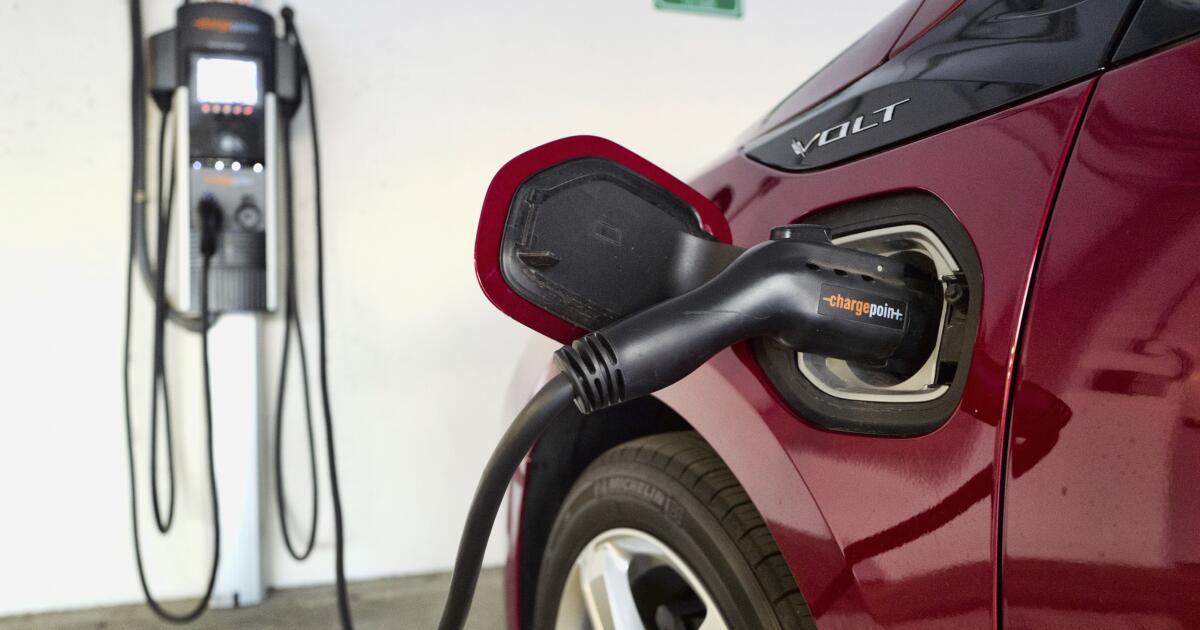
California is bringing back EV rebates. This is how to get one
-
 Entertainment41 minutes ago
Comedy saved her life. Now Teruko Nakajima’s ‘Made in America’ is saving others
-
 Politics49 minutes ago
Legal correspondent Paula Reid expected to join MS NOW after CNN departure

