Florida
How to save your Florida plants after a winter freeze: A guide


Tallahassee Nurseries offers plant protection tips for winter freeze
Tallahassee Nurseries experts share suggestions on how to save your plants during freeze events in the Sunshine State.
Provided by Tallahassee Nurseries via Facebook
Recent freezing weather may have damaged plants in your yard, but not all damage is permanent.
Some plants may look worse before they get better, according to Sara MacDonald at the St. Lucie County Extension office of the University of Florida’s Institute of Food and Agricultural Sciences.
We compiled a list of things residents should do with their plants after freezing temperatures to help them recover and avoid causing more damage, along with some tips for preventing damage before the next freeze. Here’s what to do to tell if your plant has been killed, and how to save it if it still has a chance.
How to tell if a plant is killed by freezing temperatures, or just damaged
Scratch the bark of a plant lightly with a fingernail or a coin. If the revealed area is green, the plant is still alive. If it is brown or black, the plant is likely dead.
Guidelines for watering Florida plants before and after a freeze
Here are some things to remember when watering plants:
- Moist soil holds more heat than dry soil and releases it slowly overnight
- Cold, windy weather can dry plants out
- Water plants to help thaw soil and rehydrate roots
- Container plants may need extra attention
- Suspend irrigation during freezing conditions
What NOT to do after plants are frozen
Here are some things to avoid if your plants suffered during low temperatures.
- Avoid heavy pruning right after a freeze. Cutting too early can remove living tissue and stimulate vulnerable new growth.
- Don’t fertilize right after a freeze. Wait until warmer weather and active growth return
- Don’t over-water. Watering is important to help plants that dried out in the cold, dry air, but drowning the plants will cause more harm than good.
How to protect Florida plants from the next freeze
Another cold front is moving through Florida on Thursday, Feb. 5., so here are some tips to protect your plants.
Cover your plants to trap heat from the soil, and make sure the cover reaches the ground, said Maria Quirico Bautista, a UF/IFAS Lake County residential horticulture agent via email Jan. 29. Secure the cover with bricks or pins, especially this weekend since very gusty winds are expected.
Recommended covers include:
- frost cloth
- burlap
- old bed sheets
Additionally, apply 2 to 3 inches of mulch to insulate roots, but avoid piling mulch against the trunk.
You can get all of Florida’s best content directly in your inbox each weekday day by signing up for the free newsletter, Florida TODAY, at https://tcpalm.com/newsletters.



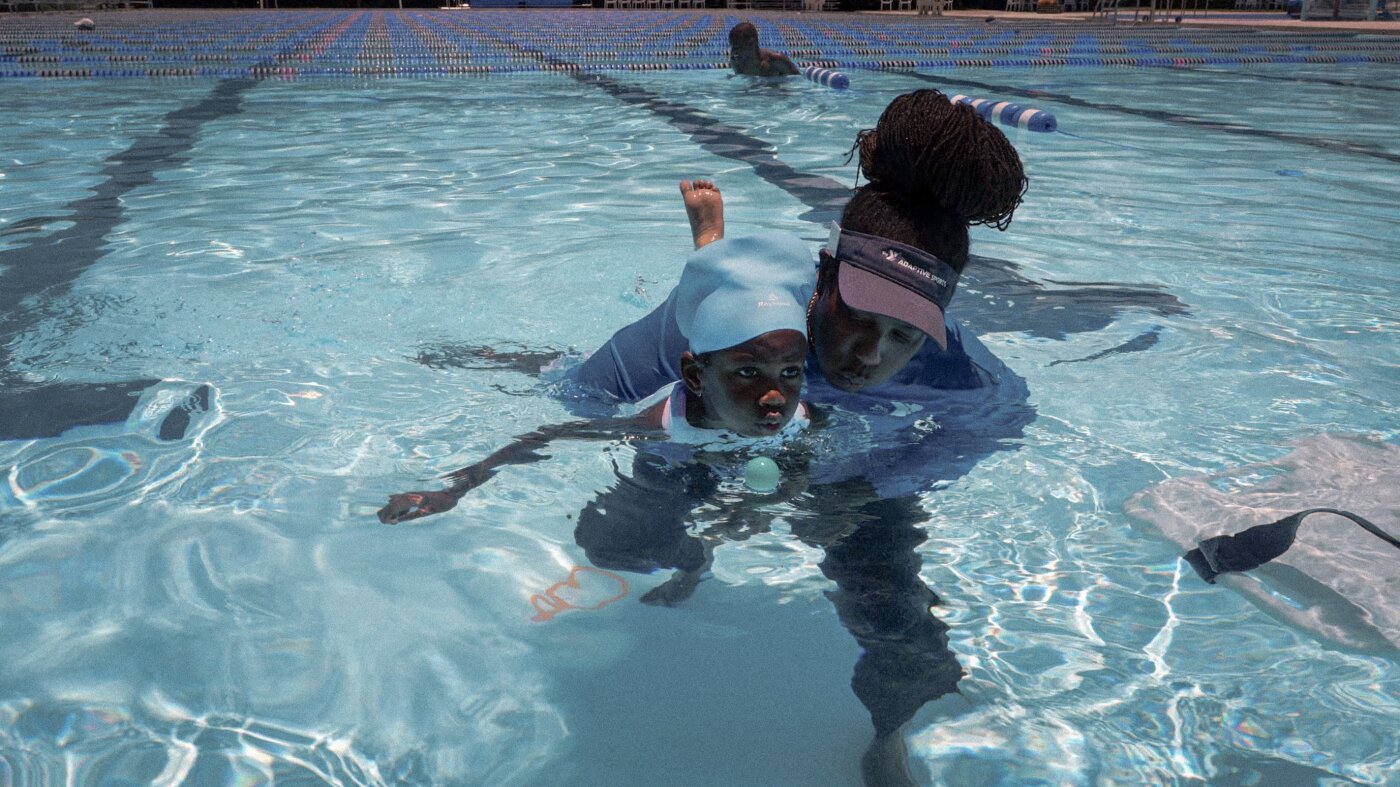
Garland Jones, recreational therapist and senior program director of the YMCA of South Florida’s special needs program, teaches Mackenzie Wesley, 5, to breathe safely in water by using a ping pong ball as a visual aid.
LA Johnson/NPR
hide caption
toggle caption
LA Johnson/NPR
WESTON, Fla. — Mackenzie Wesley sports a big grin and bright blue Lilo & Stitch swim gear as she runs into her weekly swim lessons. It’s fitting, because the 5-year-old has something in common with movie character Lilo: She adores water.
“Whether it’s the pool or beach, she enjoys it fully,” says her dad Steven Wesley.
Mackenzie isn’t alone: Many kids with autism share a natural love for water because it can be sensory bliss — the feeling on their skin, the pressure and the sparkle of the water can all be soothing. Lucky for her, Mackenzie lives here, less than an hour outside of Miami in a state that’s dotted with bodies of water.

But there’s a tragic reality tied to that fact, as Mackenzie’s mom, Brittany Bucknor, is all too aware. “In Florida, there’s water everywhere, and also with kids her age, and also just being on the spectrum, it’s a very — way higher — rate of having an incident of drowning.”
Kids with autism are 160 times more likely than other children to die from drowning, according to a seminal 2017 study from Columbia University. In fact, in Florida, most children drown in backyard pools. That’s largely because about half of autistic children have a tendency to wander from safe settings. That fact, combined with an attraction to water can make for a dangerous combination. Quality swim lessons can help.
That’s one of the reasons Mackenzie’s parents enrolled her in Swim Buddies, the YMCA of South Florida’s low-cost program aimed at children with disabilities. It’s also why the state of Florida, which has one of the highest childhood drowning rates in the nation, is expanding a voucher program on July 1 that will put children ages 1-7 who have autism at the front of the line for subsidized swim lessons. “We have tragic circumstances and stories across the state of Florida of young children with autism that are wandering away, they’re eloping from their homes, from their classrooms,” says Florida state Rep. Anna Eskamani, a Democrat, and one of the lawmakers who sponsored the bipartisan bill that changed the state’s swim vouchers.
“These [tragedies] are so preventable, but if that child at an early age does not have access to drowning prevention and swimming lessons, then those statistics will only continue.”
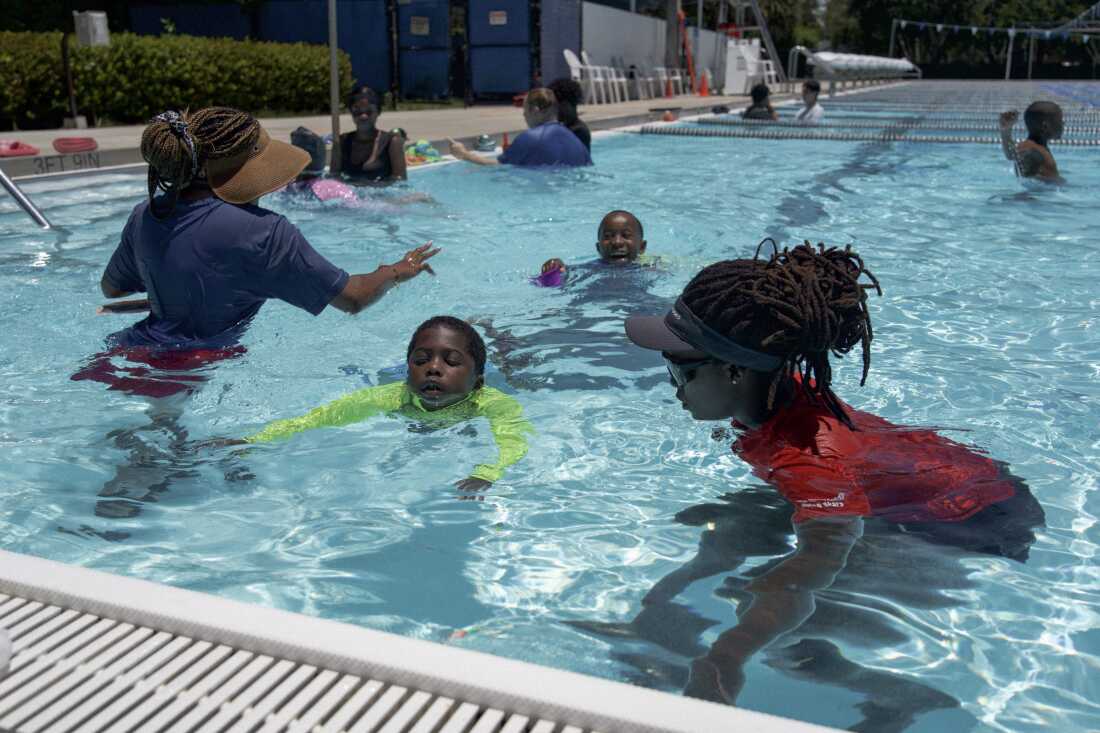
Recreational therapist Tiera Chaney works with Amir Williams, 6, during a recent Swim Buddies session.
LA Johnson/NPR
hide caption
toggle caption
LA Johnson/NPR
Once the updated law takes effect, many healthcare providers across the state will begin providing parents of newborns with information about drowning prevention and the state swim program, Eskamani says. Generally, the voucher comes out to about $200, she says, and pays for up to eight swim lessons.
A “whole-person” approach
The YMCA of South Florida has one of the largest adaptive recreational programs for kids with special needs in the area, including those with autism, who make up the fastest-growing group of children with disabilities. “We provide this program for those with a variety of disabilities, primarily over 60 percent of our youth who do come have a diagnosis of autism,” says Alison Bregman-Rodriguez, vice president of the YMCA of South Florida, where she oversees 64 locations, 27 of which serve children with learning differences. “This program, however, does serve all who want to feel like they belong.”
When Mackenzie’s parents learned that their local YMCA already had a robust and low-cost program for one-on-one instruction with kids with disabilities in mind, they jumped on the opportunity. “I really appreciate the program and specifically Miss Garland. She’s been very patient with Mackenzie and challenged her too,” Bucknor says.
She is referring to Garland Jones, who oversees the special needs recreational program here and also spends time working directly with swimmers, alongside other recreational therapists and trained volunteers. Jones agrees that patience is key in working with kids with disabilities, something that’s emphasized in the training for instructors. “We come at everything with a whole-person approach instead of just a physical approach. We do the physical, the emotional, the social.”

A selection of colorful, sparkly toys are often used for positive reinforcement and redirection in Swim Buddies lessons.
LA Johnson/NPR
hide caption
toggle caption
LA Johnson/NPR
The program’s hallmarks are individualization and one-on-one instruction rather than traditional group lessons. Staffers assess each child to learn about their needs and tailor their lessons in response. “We might have a kid who loves to get in the bathtub and splash around in the water or we might have a child who is very fearful of getting in the water,” Jones says.
On this recent summer Sunday, Tania Santiago Perez is sitting poolside, observing the Swim Buddies lessons. She is a professor at Florida International University who studies effective swim instruction for children with autism, including at this YMCA, with research partner and professor Tana Carson. Their research shows that when done right, swim instruction for kids with autism can help save lives. “The fact that we have been seeing that in five or six sessions they’re able to improve swim skills, to us, is very powerful,” Santiago Perez says.
Each lesson begins with group introductions to help swimmers build trust with the teachers and fellow participants in the pool. “That’s one thing to promote group cohesion and then the socialization with other kids,” says Santiago Perez. “Because with kids with autism, sometimes they’re very to themselves and that social behavior is one thing we want to develop.”
After the meet-and-greet, each child must wait to be explicitly told it’s safe to enter the water.

The adaptive swim lessons at the YMCA of South Florida serve more than 600 children with disabilities, but the program is overwhelmed with requests. Jones says she hopes the state will provide more funding to help facilities like theirs meet the need.
LA Johnson/NPR
hide caption
toggle caption
LA Johnson/NPR
Because many autistic children are prone to “eloping,” or running away suddenly, Santiago Perez says instructors are trained to stay no more than an arm’s length from each swimmer.
During one Swim Buddies session, a swimmer dashes out of the pool. “So the therapist is trying to redirect him back to get inside the pool,” says Santiago Perez as she points to the instructor gently but firmly guiding the child physically and with clear verbal commands.
Next, the instructor tries luring the child back into the pool with a sparkly pink rubber duck, which does the trick. “Toys help a lot because at the end of the day, they’re kids and kids learn by play and positive reinforcement,” Santiago Perez says.
In another corner of the pool, Garland Jones is working with Mackenzie Wesley on safe breathing techniques above the water because, in the past, putting her face under water has been uncomfortable and led to choking. Jones is using a bright blue ping pong ball in front of Mackenzie so she can see how her breath is physically moving the ball.
Once Mackenzie is eased in, Jones helps her practice blowing bubbles in the water, making a humming noise to show what it should sound like. “Hmmmm,” mimics Mackenzie. Then she ducks her head under water and pops back up, with a smile on her face. “Mackenzie has grown so much. I’m so proud of her,” says Jones, who’s been working with her in Swim Buddies for over a year. “We had a couple of instances where she was [swallowing] water a lot.” Now, she blows bubbles and goes under water like a pro.
Demand overwhelms supply of lessons
Parents looking on during Swim Buddies lessons have heard about the swim voucher program, and many were excited that it could make life-saving lessons affordable for lower-income families. “People who don’t have kids on the spectrum don’t take in mind that we’re paying a lot already for stuff like behavioral therapy, speech, occupational therapy,” says Augusto Sandino, whose son David has been in Swim Buddies for a year and a half. “All the programs, everything is money, man. So every little bit helps, and also, creating these inclusive communities is a big win.”
While Florida maintains a list of approved providers around the state, Jones and Santiago Perez both share the concern that many facilities lack enough qualified instructors. “You have people who are biters, spitters, who will scratch, things of that nature,” Jones says. “I just think we need more individuals who are trained in working with individuals with special needs so that they can be successful.”
The YMCA of South Florida is already overwhelmed with requests for its specialized swim lessons. Alison Bregman-Rodriguez, the vice president, says they do their best to find a spot for every child, but they don’t want to compromise the quality of lessons they provide. And while the voucher may increase demand, facilities like this often have to leverage other sources of money to keep programs like Swim Buddies afloat.

Researcher Tania Santiago Perez of Florida International University helped train some of the instructors at the Swim Buddies program. Her research has found that even after five or six quality lessons, most kids with autism showed improvement.
LA Johnson/NPR
hide caption
toggle caption
LA Johnson/NPR
Even before the new priority for children with autism, demand for swim lessons outstripped supply. “The problem is access,” says Santiago Perez. In the program’s first year, only about a third of families who applied for vouchers actually got them. She worries that the gap will only increase.
NPR reached out to the Florida Department of Health for details about how the changes to the swim program will work. They declined an interview and did not answer questions about how many vouchers would be available.
As Mackenzie Wesley’s swim lesson comes to an end, her parents wrap her in a towel and share that just a few weeks ago, she had a big milestone: She was invited to her very first pool party. “She was in the pool like she was a pro, an expert,” her mom says. “She had her little floatie and she was doing her own thing, so she’s been a lot more confident in the water and a way stronger swimmer for sure.”
This, says Garland Jones, is the kind of milestone that makes her work so rewarding. It means Mackenzie is on her way to having the skills that will allow her to embrace her natural love for water, and to do it safely.
Edited by: Nirvi Shah
Visual design and development by: LA Johnson

-
Freight train derailment near Philadelphia sparks hazmat scare
01:37
-
Now Playing
New details in deadly Florida alligator attack
01:19
-
UP NEXT
173 million people under extreme heat alerts as fires rage out west
01:49
-
Trump praises Supreme Court ruling upholding bans on transgender athletes in female sports
01:43
-
Great Americans: A conversation with Alex Cole, Legacy Flight Academy
02:27
-
Supreme Court rejects Trump’s push to end birthright citizenship
02:03
-
Man killed by crocodile on popular Puerto Vallarta beach
01:32
-
Alex Murdaugh in court after double murder conviction is overturned
01:59
-
New details on Taylor Swift’s wedding
01:00
-
Around 162 million under heat alerts
02:01
-
Great Americans: A conversation with Carter Beard, Annin Flagmakers
02:22
-
Pilot says he hit drone on final approach to JFK airport
01:14
-
Miraculous rescues days after deadly earthquakes
02:09
-
Rising cost of youth sports across the country
02:18
-
Trump’s deal to end war in question after Iran retaliates to US strikes
02:14
-
Good News: ‘America’s Tapestry’ project celebrates nation’s 250th anniversary
02:06
-
More than $4 million worth of wagers made ahead of Taylor Swift’s wedding
01:38
-
Dangerous fire, flood conditions prompt states of emergency
01:34
-
Death toll grows to more than 1,400 after Venezuela quakes
02:32
-
Aircraft crashes into a Beijing skyscraper
01:09
Nightly News
-
Freight train derailment near Philadelphia sparks hazmat scare
01:37
-
Now Playing
New details in deadly Florida alligator attack
01:19
-
UP NEXT
173 million people under extreme heat alerts as fires rage out west
01:49
-
Trump praises Supreme Court ruling upholding bans on transgender athletes in female sports
01:43
-
Great Americans: A conversation with Alex Cole, Legacy Flight Academy
02:27
-
Supreme Court rejects Trump’s push to end birthright citizenship
02:03
Nightly News
Nightly News
Nightly News
Nightly News
Nightly News
Play All

A swiftly-growing wildfire in western Broward County has consumed over 4,000 acres, having ballooned in size since igniting a few days ago.
The Atlantic Fire, located near the Sawgrass Expressway and Commercial Boulevard, burned 4,755 acres and was 0% contained as of 8:01 p.m. June 29, according to a map of active wildfires provided by the Florida Forest Service. The fire began over the weekend, and had grown to 180 acres by Sunday.
Wildfires in neighboring Miami-Dade County burned thousands of acres in recent weeks
Three wildfires burning in Miami-Dade County cumulatively consumed over 19,000 acres over the past few weeks.
The Quarry 2 Fire, which began on June 15 near NW 137 Avenue and NW 41 Street, had grown to 19,018 acres and was 97% contained as of 1:26 p.m. June 21, according to a map of active wildfires provided by the Florida Forest Service. The Well Fire, which began on June 16 and is located near NW 122 Avenue and NW 58 Street, had burned 2,814 acres and was 90% contained as of 4:41 p.m. June 25.
The Corrections Fire, located south of 8th Street and west of Krome Avenue, had burned 363 acres and was 95% contained as of 12:12 p.m. June 25.
Sarah Perkel is a South Florida Connect Reporter for the USA TODAY Network’s Florida Connect team. You can get all of Florida’s best content directly in your inbox each weekday day by signing up for the free newsletter, Florida TODAY.
-
Sports28 seconds ago
2026 World Cup knockout round TV schedule, game previews and results
-

 World12 minutes ago
Russian gas imports rise despite EU phase-out
-

 News35 minutes ago
Woman survives falling 1,500 feet down Mount Shasta
-

 Los Angeles, Ca2 hours ago
Man dies after violent solo crash in Sherman Oaks
-

 Detroit, MI2 hours ago
Priority Waste CEO shares progress on plan to fix disruptions, delays across Metro Detroit
-

 San Francisco, CA2 hours ago
The San Francisco Church That Holds America’s Secrets
-

 Dallas, TX2 hours ago
Crews battle large fire at Pilates studio in Uptown Dallas, officials say
-

 Miami, FL3 hours ago
alaïa clads first miami boutique in pink mosaic tiles, from interior to facade


