Business
Judge rejects Paramount’s request to expedite case against Warner Bros.

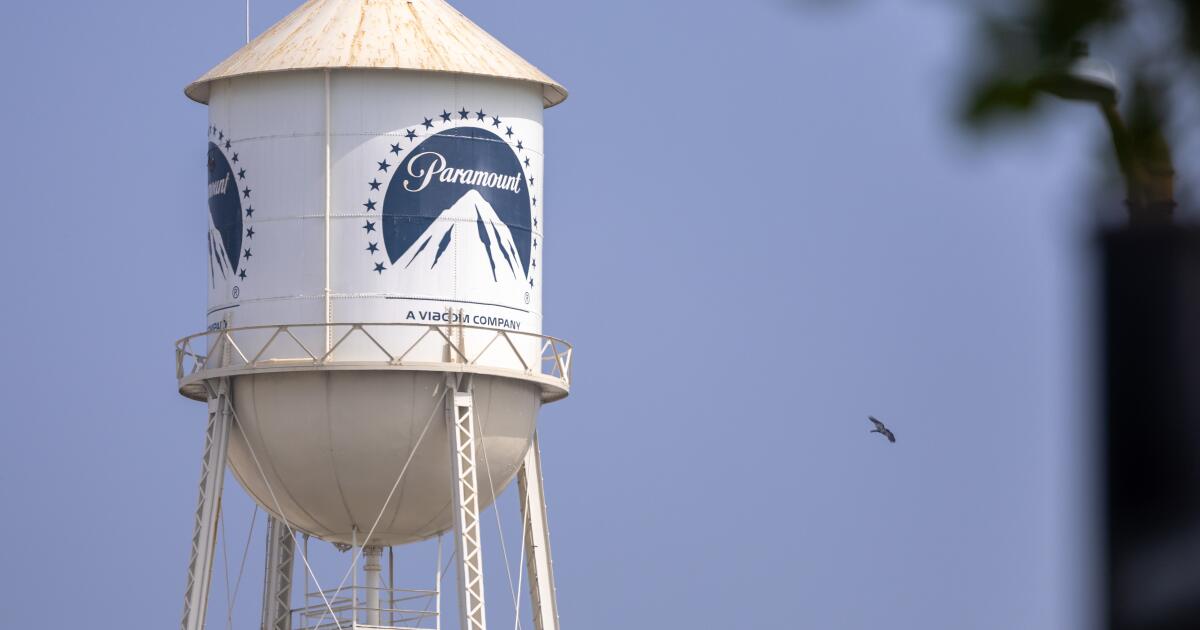
Paramount suffered a blow in a Delaware courtroom Thursday as a judge refused to expedite its lawsuit against Warner Bros. Discovery seeking information about internal deliberations and a financial analysis.
Reuters reported that Vice Chancellor Morgan T. Zurn of the Delaware Chancery Court said during a hearing that Paramount had failed to show it would suffer “cognizable irreparable harm” without the financial details it sought.
Now the pressure is on Paramount to win over Warner shareholders before next week’s tender offer deadline. Investors have until Wednesday to sell their stock to Paramount for $30 a share. Paramount could extend that deadline.
Paramount sued on Monday, claiming investors needed information that Warner has yet to provide about how board members valued various assets in determining that its sale to Netflix was more lucrative.
Paramount wanted the judge to fast-track the proceedings to help boost its outreach to Warner shareholders.
The David Ellison-led company has insisted its $108-billion deal, including absorption of Warner debt, represents a higher value for Warner shareholders than Netflix’s Dec. 4 cash-and-stock deal. Warner board members closed the auction that night, awarding Netflix the prize.
Netflix, which has seen its stock slide about 17% since early December, is reportedly weighing whether to bolster its bid by offering all cash for Warner Bros. movie and television studio, HBO and HBO Max. Netflix declined to comment.
Paramount wants to buy all of Warner Bros. Discovery, including CNN and the other basic cable channels.
In a statement Thursday, Warner Bros. Discovery said Paramount Skydance’s legal challenge “was yet another unserious attempt to distract and the Judge saw right through it.”
“We are pleased a Delaware Court agreed with our belief and rejected the notion that this lawsuit needed special treatment and may have other serious flaws,” Warner Bros. Discovery said. “Despite its multiple opportunities, Paramount Skydance continues to propose a transaction that our board unanimously concluded is not superior to the merger agreement with Netflix.”
Paramount downplayed its latest setback, saying Zurn’s ruling “does not pertain to the merits of Paramount’s claim.”
Paramount, in its statement, said that Warner shareholders deserved information about how Warner board’s evaluated the value for Warner’s cable channels to better compare the two proposals.
Netflix doesn’t want the cable channels allowing Warner to move forward with plans to spin off those channels this summer. Warner shareholders would get stock in that new company, called Discovery Global.
“WBD shareholders should ask why their Board is working so hard to hide this information,” Paramount said, adding it “continues to urge WBD to make these disclosures so that WBD shareholders can make an informed decision.”
Times staff writer Samantha Masunaga contributed to this report.



Everyone will know more, he told me, when Quantica signs a contract with a tech company to use the facility. That announcement could come by the end of the year.
Besides, Mr. Peterson said, much of the apprehension over the data center comes from people who are afraid of A.I. more broadly, as if “Big Brother is going to take over,” he said.
Those people, he added, “have no role in this conversation.”
What Mr. Peterson could tell me now, he said, was that the project would have minimal impact on the land and the people who live nearby. And residents wouldn’t have to pay a thing for it. He offered no guarantees, but said the project would bring its own power — at least some of it from solar and natural gas.
Despite what opponents have been saying, and despite the information gleaned from data centers around the world, Mr. Peterson said the Broadview site would need “not that terribly much” water.
It will bring jobs, he said. Thousands of temporary workers could descend on Broadview for the construction. The number of permanent jobs would be 30, 40, 100 — he doesn’t know for sure. But he described them as good-paying jobs that would not require specialized training or a college education. Jobs like janitors, maintenance workers or security guards.
He likened it to “being a miner, but not having to grab a drill.” Generations of families could stay in Broadview because people would not have to move to make a living, as many are doing now. They could say, “Oh my gosh, I could push a broom and come home to my home in Lavina that I love — and my kids can do that?”
For anyone who doesn’t like the idea of living next to a data center, he added, “there’s probably a county up the road that doesn’t have one.”
He said the eventual deal would include a “community benefits package,” which could help Broadview pay for things like its problematic wastewater lagoon. The Montana Department of Environmental Quality issued the town a violation in March for longstanding issues at the site, demanding compliance. Remediation could cost millions.
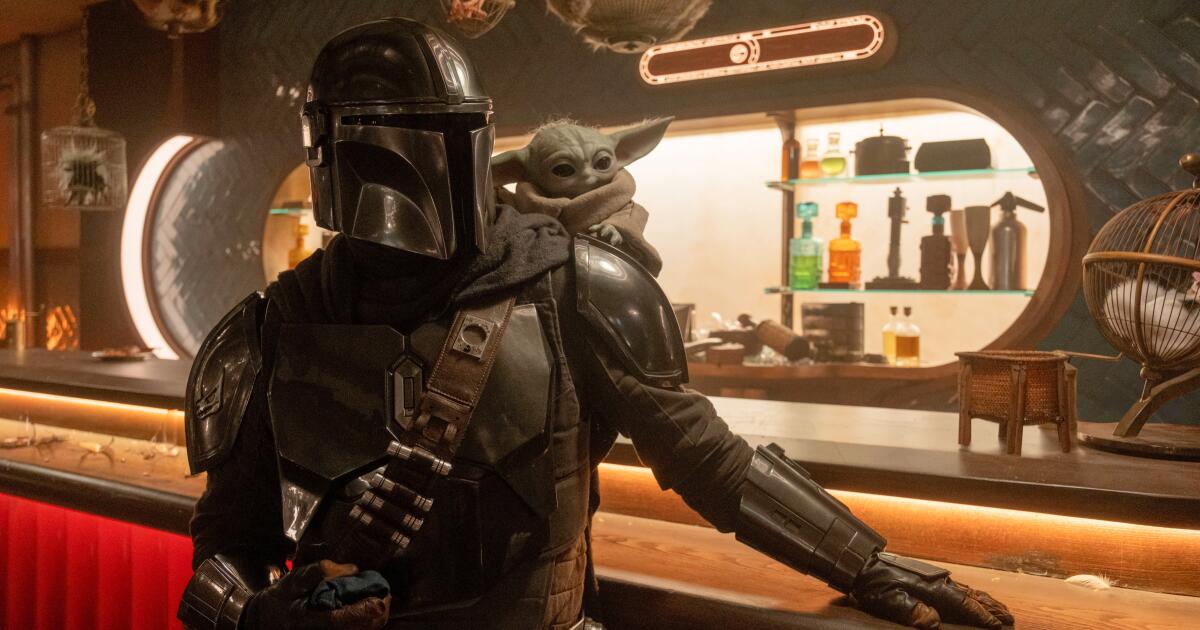
After a 6½-year hiatus from theaters, “Star Wars” returns to the big screen this weekend with “The Mandalorian and Grogu.”
This time around, however, the franchise faces a much different universe than it did in 2019 when the last film came out. For one, theatrical attendance has fallen dramatically since “Star Wars: Episode IX — The Rise of Skywalker” grossed more than $1 billion worldwide in the pre-pandemic days.
Then, there’s Walt Disney Co.-owned Lucasfilm’s own trajectory. In the last few years, new “Star Wars” stories have come only via streaming series on Disney+. And since the service debuted in 2019, the San Francisco-based studio pumped out 13 shows, including “The Mandalorian,” which inspired the film, though others received mixed reviews.
Lucasfilm is also under new leadership, as veterans Dave Filoni and Lynwen Brennan are now co-presidents after George Lucas’ handpicked successor, Kathleen Kennedy, stepped down this year.
It all adds up to a crucial question: Can the nearly 50-year-old franchise still delight its longtime fans, while bringing in new viewers to help it endure?
“There’s a lot riding on this,” said Jeff Bock, box-office analyst at entertainment data and research firm Exhibitor Relations. “It’s close to a make-or-break strategic test … just to see if the modern ‘Star Wars’ is still viable theatrically.”
“The Mandalorian and Grogu” is expected to gross around $80 million in the U.S. and Canada for the four-day Memorial Day weekend, according to studio estimates.
That would rank among some of the top openings this year, including Amazon MGM Studios’ “Project Hail Mary” ($80.5 million) and Disney-owned 20th Century Studios’ “The Devil Wears Prada 2” ($76.7 million). Another big sci-fi installment, Warner Bros. Pictures and Legendary Entertainment’s “Dune: Part Two,” opened to $82.5 million in 2024.
But for a “Star Wars” movie, that’s considered low.
2019’s “The Rise of Skywalker,” for example, opened to $177 million, with 2015’s “The Force Awakens” and 2017’s “The Last Jedi” each debuting to more than $200 million. The $84-million opening for 2018’s “Solo: A Star Wars Story” was considered a disappointment at the box office.
To be sure, theatrical expectations have changed dramatically since the pandemic, which altered moviegoers’ habits and trained many to wait and watch films at home.
“The Mandalorian and Grogu” also stems from a streaming series and does not continue the story line of the traditional “Star Wars” saga films that follow the Skywalker family. (The movie’s reported production budget of $166 million also makes it cheaper than its predecessors.)
And for Disney, box-office revenue will not be the only indicator of this film’s success.
Director Jon Favreau, left, and Pedro Pascal on the set of Lucasfilm’s “Star Wars: The Mandalorian and Grogu.”
(Nicola Goode / Lucasfilm Ltd. / Disney via Associated Press)
The company expects the movie will boost other parts of its business, including streaming, its gaming collaboration with Fortnite and the all-important theme parks, where the film’s main characters appear at the Star Wars: Galaxy’s Edge-themed land, and the Millennium Falcon: Smugglers Run ride has been overlaid with a “Mandalorian and Grogu” storyline.
Then of course, there’s merchandise. (Famously, fans rushed to buy items of Grogu — known colloquially as Baby Yoda — after “The Mandalorian” show debuted in 2019, though products didn’t arrive for months. Once available, 13 million Grogu toys were sold in the two years after they were released, Disney has said.)
“It’s not using cinema in the way ‘Star Wars’ used cinema before,” said Carmelo Esterrich, a professor at the school of communication and culture at Columbia College Chicago, who has written about how “Star Wars” is a reflection of American culture. “It’s using the franchise of television and the power machine of Grogu to bring it to the big screen.”

Grogu’s appeal highlights an important goal for the franchise: expanding beyond its original fan base to new audiences. Although “The Mandalorian and Grogu” builds on storylines from the streaming show, the film was designed to be accessible to viewers who had never watched it.
“I hope that our excitement and joy and love of ‘Star Wars’ translates to a new generation of fans seeing it, experiencing it the way we did for a long time,” director Jon Favreau told an audience in April at the CinemaCon trade conference during a presentation about Disney’s film lineup.
Early ticket sale tracking indicated strong interest from older men, who have historically been the core audience for “Star Wars” films. But after an extensive marketing campaign, Disney’s studio estimates now show audiences are younger, with more families and women represented.
To date, “The Mandalorian” is still the most popular Disney+ series. The show, which has run for three seasons, has won 15 Emmys, including for sound mixing and special effects. The critical and fan response, as well as the opportunity to explore new characters’ backstories, led Lucasfilm to choose this show to spin off into a movie, according to sources close to the studio.
Since the launch of the platform in November 2019, “The Mandalorian” and other “Star Wars” titles such as “The Acolyte” and the second season of “Andor” have seen relatively high audience demand, according to an analysis by Parrot Analytics, a firm that tracks streaming data. Despite several big hits, the average demand for live-action television series set in the galaxy far, far away have shown a slight downward trend over time.


In contrast, demand for live-action series from Disney-owned Marvel Studios has held stable since the premiere of its first streaming show, “WandaVision.” Though Marvel’s television offerings outnumber those of “Star Wars,” overall audience interest in the superhero shows is less than the biggest “Star Wars” hits and more comparable to some of Lucasfilm’s lesser-hyped titles, including “Skeleton Crew,” according to Parrot Analytics.
In the end, “The Mandalorian and Grogu” needs to keep audience interest in “Star Wars” on the big screen. Next year, Lucasfilm will release “Star Wars: Starfighter,” a film starring Ryan Gosling and directed by Shawn Levy of “Deadpool & Wolverine” that has generated great interest, particularly given Gosling’s turn in “Project Hail Mary.”
“This is a safe reentry point,” Bock of Exhibitor Relations said of “The Mandalorian” movie. “If Grogu can bring in the families and if ‘The Mandalorian’ continues to bring in the audiences of the old movies, maybe they can bridge these generations like classic ‘Star Wars’ once did.”

Oil prices fell sharply on Monday after American officials said the United States and Iran had agreed in principle to a peace deal that would reopen the Strait of Hormuz, a vital trading route for oil and natural gas that normally carries up to one-fifth of the world’s oil supply. But final approval of a deal could take a while.
President Trump vowed on Monday that either a deal would be “great and meaningful” or “there will be no deal.” Esmaeil Baghaei, the Iranian foreign ministry spokesman, said on Monday that “no one can claim that the signing of an agreement is imminent,” according to Iran’s state broadcaster. Iran’s top negotiators, led by Mohammad Bagher Ghalibaf, the speaker of Parliament, arrived in Qatar on Monday for further talks, Iranian state media said.
-

 Los Angeles, Ca2 minutes ago
Koreatown apartment fires spark within minutes of each other, injuring 1
-

 Detroit, MI26 minutes ago
Teen Charged As Adult In Detroit Shooting That Injured 14-Year-Old: Prosecutor
-

 San Francisco, CA38 minutes ago
This Week: S.F. management, Board Meeting, Pride Bike – Streetsblog San Francisco
-
Dallas, TX44 minutes ago
Mailbag: Impact of Lawrence not signing yet?
-

 Boston, MA56 minutes ago
21-year-old arrested for Dorchester shooting that injured one
-

 Denver, CO1 hour ago
WATCH | Eucharistic Procession Coming to Downtown Denver June 6
-

 Seattle, WA1 hour ago
The Best Date Night Restaurants In Seattle – Tasting Table
-

 San Diego, CA1 hour ago
MLB Trade Rumors: San Diego padres Eyeing 2 Specific Relievers

