World
Bulgaria rocked by protests as country draws close to Eurozone membership


NEWYou can now listen to Fox News articles!
Bulgaria’s government withdrew an unpopular 2026 draft budget after tens of thousands of angry people took to the streets in the capital, Sofia, and other cities across the country.
The protests have been led mostly by young Bulgarians who claim the government is concealing widespread corruption. Business groups and members of the opposition also say the draft budget would harm Bulgaria’s economy just before it’s set to join the Eurozone in early 2026.
“Gen Z took to the streets because they want to stay in Bulgaria, but they want a renewed, different, corruption-free Bulgaria,” Daniel Lorer, member of Bulgaria’s parliament, told Fox News Digital.
BULGARIA’S SUPPORT FOR UKRAINE’S NATO MEMBERSHIP GROWS STRONGER DURING ZELENSKYY’S VISIT
A protester holds a placard bearing the logo of the popular Japanese manga One Piece, a symbol adopted by Gen Z protest movements worldwide, during an anti-government protest in Sofia on Dec. 1, 2025. Tens of thousands of people held anti-government protests in Bulgaria on Monday, widening an anti-corruption movement sweeping the European Union’s poorest country as it prepares to adopt the euro. (Nikolay Doychinov / AFP via Getty Images)
“They want reforms. The government refused to listen. The budget it proposed simply extended all its previous policies, funded through higher taxes, social security contributions and more debt,” Lorer added.
As the protests continued, Bulgaria’s government, led by Prime Minister Rosen Zhelyazkov, eventually backed down, vowing to drop the most divisive elements of the budget, including tax and social security increases.
The prime minister said a new budget will be proposed at a later date.
“The government saw what the citizens who protesters had to say…I support these people who protest for more rights, more democracy, more justice. We believe that the protest is not so much political, but more of a social, human side, in search of more dialogue, more tolerance, and more harmony in social relations,” Prime Minister Zhelyazkov said at a press conference.
“This is a visible protest of young people, young people who are looking for their place in the future of Bulgaria, which we are obliged to hear, and we are obliged to do what is necessary to be secured with the funds that the country has,” Zhelyazkov added.
The protests were mostly peaceful. However, some masked protesters clashed with police after attacking offices of the ruling party in Sofia.
BULGARIA IMPOSES EU ENTRY BAN ON 2 SUSPECTED RUSSIAN SPIES
Political stability in an EU country, one with a longstanding history with neighboring Russia, is ripe for Moscow’s usual tricks of intervening in the domestic affairs of its former communist bloc allies.
“Russia is always glad to stir unrest. Anything that upsets the democratic process in any EU country is welcome, and even more so in Eastern Europe, their former sphere of influence,” Lorer said.
Bulgarian President Rumen Radev, who holds a largely ceremonial position, sided with the opposition and opposed the budget, calling for the resignation of the government and early elections.
A protester pushes a burning garbage bin during scuffles with police at a demonstration organized by Bulgaria’s opposition PP-DB coalition against the proposed financial framework of the country’s budget, Sofia, Bulgaria, Dec. 1, 2025. (Dimitar Kyosemarliev/Reuters/File Photo)
The move could risk political gridlock and weaken Bulgaria’s alliance with NATO allies and the EU, Ruslan Stefanov, director for the Center for the Study of Democracy in Sofia, told Fox News Digital.
“Radev, who echoes Kremlin talking points and opposes the Euro, could still sabotage the process despite it being legally irreversible. This is a volatile mix that threatens stability and could invite more unwelcome Russian meddling,” Stefanov said.
Bulgaria, along with Romania, is set to join the Eurozone in January 2026. While joining the Eurozone is seen as a major step in Bulgaria’s political and economic development, the adoption of the currency is unpopular in large segments of society, as fears of inflation and the cost of living hamper the livelihoods of everyday Bulgarians.
FARMERS FLOOD BULGARIA’S CAPITAL PROTESTING EU REGULATIONS, HIGH ENERGY COSTS
Bulgaria, one of the poorest nations in the European Union, joined the EU in 2007 and formally began the process of joining the Eurozone in 2018. The Lev, Bulgaria’s currency, was included in the European Exchange Rate Mechanism in July 2020.
Russian President Vladimir Putin meets Russian delegation and some officials ahead of the Istanbul talks, on May 14, 2025 in Moscow, Russia. (Kremlin Press Office / Handout/Anadolu via Getty Images)
Since announcing that the country will join the monetary union, skepticism has abounded, and many Bulgarians are not convinced that their economic prospects will improve once they are part of the union.
Many experts and observers have concluded that Russia has been behind a persistent social media campaign to stoke opposition and sow doubt and confusion as Bulgaria’s accession date draws near.



Peruvian presidential candidate Roberto Sanchez visited jailed former president Pedro Castillo as officials counted ballots from the closely contested runoff election against conservative rival Keiko Fujimori.
Published On 8 Jun 2026

NEW YORK (AP) — A federal lawsuit seeks to halt the upcoming UFC fight card on the White House South Lawn in a mixed martial arts show timed for President Donald Trump’s 80th birthday and part of the celebration of the nation’s 250th anniversary.
The filing Saturday by the Public Integrity Project on behalf of two Virginia residents contends the Trump administration’s authorization of the June 14 event was unlawful. The lawsuit says such approval violated National Park Service regulations prohibiting sporting events on federal parklands, Congress did not consent to the towering arch overlooking the event space and no environmental review was conducted before the construction.
“This is fundamentally a private, commercial, corrupt use of our most sacred national monuments for private gain,” said Brendan Ballou, a lawyer for the plaintiffs. “And that is what is motivating this lawsuit.”
The White House said in a statement that the legal challenge was “an obstructionist, baseless, and dilatory” attempt to prevent Trump from hosting the fight and that the event was “no different than the various other White House-hosted events on the South Lawn and properly permitted events on the Ellipse and National Mall throughout the year.”
UFC did not immediately respond to a request for comment Sunday.
Crews are erecting an octagon-shaped cage on the South Lawn. Trump has said the finished UFC project will feature “a 5,000-seat arena right outside the front door of the White House.” Additional large screens broadcasting the fights will be set up in a park at the nearby Ellipse, and the UFC has said it plans to issue as many as 85,000 free tickets to accommodate spectators at both locations.
The octagon and surrounding structures are the latest project in the White House building boom Trump is leading.
World
Suspected Hamas terrorist arrested in Greece for allegedly plotting attack on Israeli cruise ship

NEWYou can now listen to Fox News articles!
A suspected Hamas terrorist, reportedly granted asylum a year from the Gaza war, was arrested by Greek police for allegedly plotting an attack on an Israeli cruise line.
The Gaza man, 37, was arrested on the Greek island of Crete on Sunday for his alleged ties to one of four suspected Hamas terrorists previously arrested in Cyprus, having traveled with him to Malaysia, where they allegedly received training in making explosives from commercially available chemical agents.
The Israeli cruise ship MS Crown Iris was the believed target of the attack before it was scheduled to arrive in Crete on Tuesday. Police did not publicly identify the man or name a target in their initial statement.
Searches in homes in both Crete and the Greek capital, Athens, turned up a number of mobile phones, a laptop, external hard drives and bank cards, The Associated Press reported.
3 ALLEGED HAMAS MEMBERS ACCUSED OF PLOTTING AGAINST JEWISH INSTITUTIONS IN GERMANY
A Wednesday protest at the port of Piraeus near Athens, Greece, opposing the arrival of the Crown Iris cruise ship was a prelude to the arrest of a suspected Hamas terrorist who is alleged to have plotted an attack. (Costas Baltas/Anadolu)
The suspect, an electrician who has been reportedly living in Crete for the past year and working at a hotel there after being granted asylum, will appear before a magistrate later Sunday.
The suspected terrorist had placed an online order for what police said were “chemical agents” that could be used in the manufacture of explosives, according to the report.
State broadcaster ERT, cited by Israeli and Greek media, reported that police also found laboratory equipment.
TWO CONVICTED OF TERRORISM IN DENMARK FOR GRENADE ATTACK NEAR ISRAELI EMBASSY
The case appears to be part of a broader regional counterterrorism probe. Cypriot authorities arrested two Palestinians on May 22 after intelligence led investigators to materials in two residences that police said could be used to manufacture explosives. Two more Palestinian men were detained May 29 as part of the same investigation, according to Greek police.
The Crown Iris has become a recurring flashpoint at Greek ports amid anger over the war in Gaza. Protesters gathered near the ship when it docked in Piraeus on Wednesday, June 3, and demonstrations against the vessel have followed it at Greek ports since last year.
Protesters allege that Mano Maritime, the owner of the MS Crown Iris, is profiting from the Hamas-Israel war by selling tourist services to Israel Defense Forces soldiers during breaks from active duty.
In July 2025, Greek police used tear gas and made arrests as demonstrators tried to block the ship at Agios Nikolaos on Crete.
Greek security forces were forced to protect Israeli tourists traveling on buses to board the Israeli-owned cruise ship MS Crown Iris at the port of Piraeus in Athens on June 3, 2026. (Aggelos Nakkas/AFP)
CLICK HERE TO DOWNLOAD THE FOX NEWS APP
The investigation remains ongoing, and authorities have not announced formal charges against the suspect.
The Associated Press contributed to this report.
-

 Health11 minutes ago
Scientists reveal surprising brain benefit of laughter: ‘It’s a mental workout’
-

 Sports14 minutes ago
Ketel Marte frustrating Diamondbacks by opting to take days off with trade deadline looming: report
-

 Technology19 minutes ago
Antares reaches reactor criticality under Trump pilot program, marking major nuclear milestone
-
 Business26 minutes ago
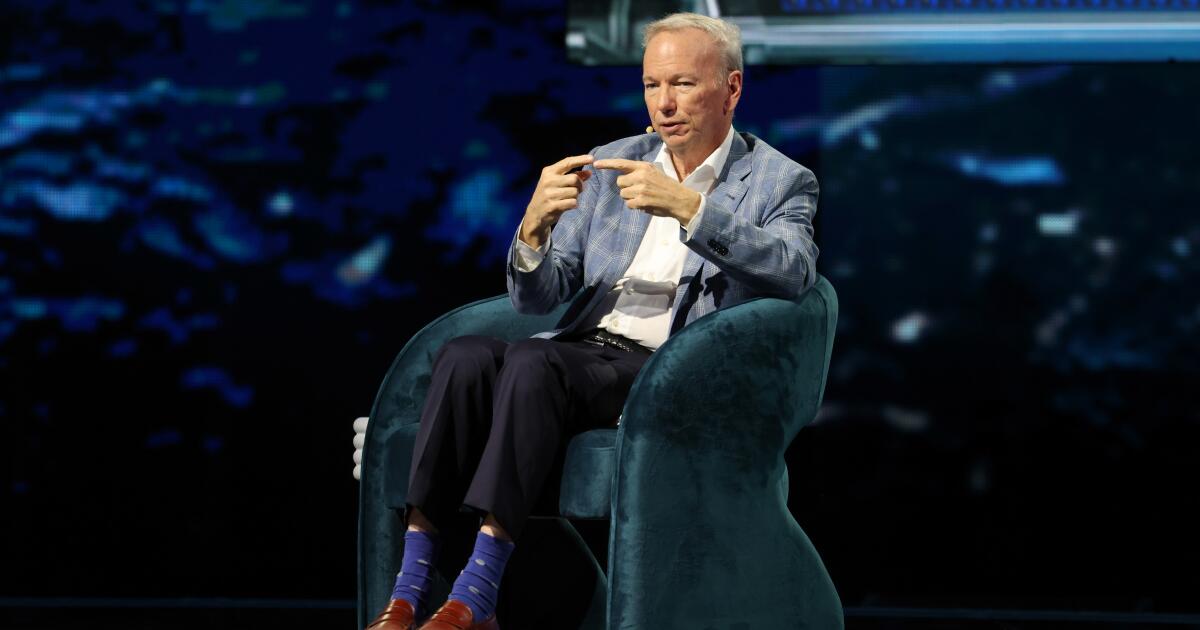
Ex-girlfriend of former Google CEO Eric Schmidt ordered to pay him $10 million after rape accusations
-
 Entertainment29 minutes ago
Tony Awards 2026: “Schmigadoon!” wins best musical in a season saved by revivals
-
 Politics41 minutes ago
Mainstream California Democrats survived election night, but their brand remains challenged
-
 Sports49 minutes ago
The Times’ softball coach of the year: Katie Stith of JSerra
-

 World59 minutes ago
Peru’s Sanchez visits jailed ex-president as votes are counted

