


Sign up for the Today newsletter
Get everything you need to know to start your day, delivered right to your inbox every morning.

NEWYou can now listen to Fox News articles!
A large van covered in rotating digital posters circled Midtown Manhattan last week after democratic socialist Zohran Mamdani won a dramatic New York City mayoral election.
New Hampshire Republican Gov. Kelly Ayotte’s re-election campaign sent a van covered with ads reading: “NYC business owners: Mamdani got you down? Come on up to New Hampshire for no Communism, less red tape, and less taxes,” and various phrases encouraging New Yorkers to head north.
“New Hampshire has a lot to offer anyone who is looking to leave NYC ahead of the Mamdani regime,” Ayotte told Fox News Digital. “We are the safest state in the nation, the best for economic opportunity, and we have some of the lowest taxes anywhere. Whether you own a business or just want to keep more of your hard-earned money — come on up to the Granite State. We’d love to have you!”
Mamdani, who has pledged to raise taxes in order to fund his vision of free buses and free child care, was elected mayor of New York City Tuesday.
‘DEMOCRATS ARE NERVOUS’ ABOUT POTENTIAL ZOHRAN MAMDANI VICTORY, NEW REPORT WARNS
New Hampshire Gov. Kelly Ayotte sent a van to New York City telling fleeing business owners to move to her state. (Kelly for New Hampshire)
“Come to New Hampshire,” one slide on the side of the truck read. “We’ll help your business make the switch, and you can keep more of your hard-earned money!”
The mayor-elect has not shied away from his commitment to implementing socialist policies in the Big Apple. His tax hike proposals have reportedly discouraged individuals from moving to the city and are pushing some New Yorkers to flee the five boroughs altogether.
Fox News Digital’s Kristen Altus spoke with developer Isaac Toledano, the CEO of Miami-based BH Group, who said his company has closed more than $100 million in signed contracts, which is twice as much as the previous year, from New York buyers in just the past few months.
The van, paid for by Kelly Ayotte’s re-election campaign, circled throughout Midtown Manhattan. (Kelly for New Hampshire)
ZOHRAN MAMDANI LAUNCHES ANTI-TRUMP TOUR ACROSS FIVE BOROUGHS IN NEW YORK CITY
“During COVID the first exodus was less about taxes, and more about access to schools and a more ‘normal’ way of life. Don’t get me wrong, taxes were a motivation, but not the sole motivation,” Mitch Roschelle, real estate expert and managing director at Madison Ventures, told Fox News Digital.
“Fast forward to the Mamdami era. The next exodus from NYC will be led by residents who are already paying their fair share and do not want to fund the bevy of social welfare programs that lay ahead,” Roschelle added.
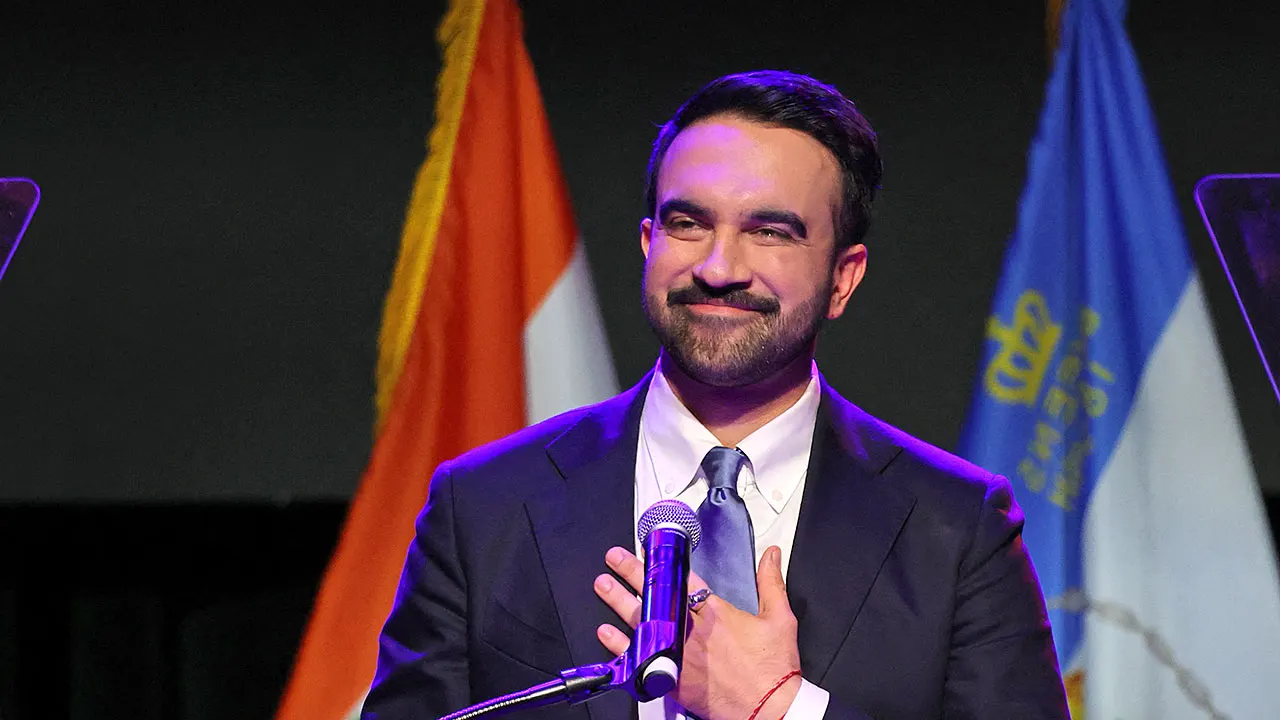
After democratic socialist Zohran Mamdani won New York City’s mayoral race, New Hampshire Gov. Kelly Ayotte’s campaign sent a van through Manhattan urging businesses to relocate north for “no Communism, less red tape, and lower taxes.” (Angela Weiss/AFP via Getty Images)
According to a report from the Office of the New York State Comptroller, the population of NYC fell 5.3% from April 2020 to July 2022. For comparison, the number of New Yorkers that left the city during that time is more than the entire population of Long Beach, California.
“The exodus may not be immediate, and I suspect it will be tied to the school year for families,” Roschelle continued. “The spring will be the big test of the prevailing group—think about migration.”
CLICK HERE TO DOWNLOAD THE FOX NEWS APP
“That said, any change in public safety, or a major tax increase on the ‘rich’ will dramatically accelerate exits from NYC,” Roschelle added.
Mamdani will be officially sworn into office on Jan. 1, 2026.
Preston Mizell is a writer with Fox News. Story tips can be sent to Preston.Mizell@fox.com and on X @MizellPreston.
Read the full article from Here


Local News
Just days after announcing it would shut down for good, Clover Food Lab now says it has found a path forward to reopen some restaurants.
The vegetarian restaurant chain will reopen its Cambridge and Boston locations for lunch service on Tuesday, June 9, after securing a deal with an investor, CEO Julia Wrin Piper told Boston.com.
Clover announced May 26 it would close all 11 of its restaurants and its meal-box delivery operations, citing inflation, thin margins, and limited ability to raise prices.
Wrin Piper said the company is focusing on Boston and Cambridge as it reopens some locations. Before last week, the chain also had restaurants in Sudbury, Burlington, Westford, and Somerville.
“We are intentionally focusing on shrinking our footprint to focus on our core communities,” Wrin Piper said. “The operational plan is still being worked out.”
Since March, the company had been searching for a buyer but was unable to find one. However, late last week, Clover finalized an investment deal that will allow the company to continue operating, Wrin Piper said.
Wrin Piper declined to identify the investor or disclose further details about the deal. In an email announcing the reopening, Clover described the investor as “mission-aligned” with the brand and motivated by the “differentiation of [Clover’s] locally-sourced menu.”
“Now, we’re in a position where we’re resourced enough that we’ll be able to move forward with some of the operational changes that will be essential for long-term financial sustainability, specifically reduced footprint, really focusing on serving truly the local community,” Wrin Piper said.
The reopening also comes after an “outpouring of love” from customers following the closure announcement, Wrin Piper noted.
Clover locations saw an increase in traffic, and sales surged as supporters flocked to restaurants in their final days, the company said in the email.
The company also received messages from customers sharing memories and expressing appreciation for the brand. In notes shared with Boston.com, customers described Clover as “irreplaceable” and a “unique Boston institution.” Others reflected on years of meals and experiences tied to the restaurant.
“My memories are mostly about the vibe — welcoming, delicious, passionate, sustainable, and community oriented,” one note reads. “Clover staff were always friendly and helpful. I estimate I had at least 2,000 Clover sandwiches over the 17 years. I tried them all and had my favorites.”
Wrin Piper said the response was deeply touching.
“It’s meaningful to see a customer really enjoy a sandwich or really connect with a story that we’re telling about a local farm,” she said. “It’s exciting if you see one customer doing it. If you see literally 1,000 customers do it over the course of a day, it’s incredibly meaningful.”
Founded as a food truck outside MIT in 2008, Clover built its reputation on vegetarian meals made with ingredients sourced from local farms. What began as a single truck eventually expanded into a regional fast-casual chain and meal-box delivery service.
Clover went public with its financial issues when it filed for bankruptcy protection in 2023, citing rising costs, slow sales, and difficulty raising capital. The restaurant emerged from bankruptcy the following year with two fewer restaurants and 240 employees.
Inflation was one of the factors behind the company’s recent closure announcement, and Wrin Piper acknowledged those pressures have not disappeared.
However, she said Clover’s restructuring efforts are designed to better position the company for long-term stability.
“Our restaurant portfolio, as a whole, was profitable,” she said. “But because we were challenged with some of these pressures, it’s very important in this next iteration to really focus on the core stores that are not only profitable but also very economically service as a tight community around Boston and Cambridge.”
While the company’s long-term operating plan is still being finalized, it will include reducing its store count and scaling back on infrastructure built for expansion.
Clover currently operates a large commissary in East Cambridge, where ingredients from local farmers are processed and prepared for restaurants throughout the system. Wrin Piper said that model was designed to support “scaled growth” and is no longer what the company needs.
“Right now, it’s important that we’re focused on a reduced store portfolio,” she said. “We’ll be closing or downsizing our commissary, because it’s simply too big for our needs.”
The chain also faces growing competition from other healthy lifestyle chains that have popped up in the region, such as Life Alive, CAVA, and Sweetgreen. Still, Wrin Piper said she believes Clover’s distinct identity and local sourcing will continue to set it apart.
“I think providing super fresh, exciting food with really warm and inviting customer service is the way that we’re going to continue to raise sales,” she said.
Wrin Piper noted that many customers choose Clover for its sourcing that “stays 100 percent the same” despite the operational challenges the company faces, adding that reinvesting in the local agriculture economy has been core to Clover’s mission.
“[Sourcing is] never something we’ve compromised on,” Wrin Piper said. “We will keep our commitment to sourcing from local farms in New England that you can drive to within a few hours.”
Get everything you need to know to start your day, delivered right to your inbox every morning.

Pittsburgh Regional Transit has started to install its ReadyFare vending machines as the agency prepares to roll out its new fare payment system.
PRT said it’s working to roll out its new ReadyFare system and has started to install the new machine at some of its light-rail stations.
The new machines recently were installed at PRT’s Gateway station in Downtown Pittsburgh.
PRT said that as it prepares to roll out the new system, current ConnectCard holders will receive a card in the mail with instructions on how to request a ReadyFare card.
The new ReadyFare cards will be able to be purchased at the new machines for $1.
PRT said that riders will be able to transfer any balances they have on a ConnectCard to the new ReadyFare cards using an online balance transfer form.

Multiple people were taken to the hospital following a crash on Interstate 91 in Hartford, officials said.
The Hartford Fire Department was called to the crash just before 6 p.m. The crash involved six to eight vehicles, according to officials, and happened on the southbound side near exit 33.
Multiple ambulances were also called to the scene, including one advanced life support unit.
Fire officials said all patients were helped at the scene before being taken to the hospital. It’s unknown at this time how many were injured and the severity of their injuries.
The Connecticut State Police assisted with traffic control and will investigate the crash.


Man claiming to be armed robs Culver City bank, gets away with $10,000


Fired Detroit TV anchor Taryn Asher files sex discrimination lawsuit against old station, claims new GM protected men


San Francisco family devastated as they face nearly 90% rent increase


Wings’ top pick Azzi Fudd hosts clinic as Cash App donates to Dallas nonprofit


Patients left scrambling for care after Miami-Dade woman accused of operating an unlicensed surgery recovery center


Clover plans to reopen some locations after sudden closure, thanks to an anonymous investor

New report finds Denver metro home buyers and sellers experiencing ‘unattainability fatigue’


Seattle mayor grilled over public safety, affordability, CCTV

