


Washington, DC, will not simply celebrate Independence Day. It will become the symbolic stage for one of the most significant milestones in modern American history: the 250th anniversary of the signing of the Declaration of Independence.
Washington, D.C
New organization rallies in support of the RFK Stadium deal – WTOP News


A new grassroots campaign has been formed in support of plans to bring the Washington Commanders back to D.C. with a new stadium at the RFK site.
A new grassroots campaign has been formed in support of plans to bring the Washington Commanders back to the nation’s capital. The group is called “RFK Now!” and co-chair Tiffany Tate said their hope is to encourage the D.C. Council to green light the project.
“We needed that vote yesterday,” Tate said.
Tate, who’s a small-business owner in D.C., said she believes the project is a big economic development opportunity for the city and a way to bring in more jobs, affordable housing and the beautification of public areas.
She said the campaign, which is part of the advocacy group Opportunity D.C., includes business owners, nonprofits and their employees, and residents of D.C.
“That is what is so powerful about our group. It is really a snapshot into D.C.,” Tate said.
The $3.7 billion deal to bring the Commanders back to town could cost taxpayers more than $1 billion for the infrastructure of the stadium and the building of parking garages.
Some critics of the plan have raised concerns over the use of taxpayer dollars for the project. Mayor Muriel Bowser’s administration argued a large portion of the money for the deal, $500 million, would come from a ballpark fund, which was originally used to pay for Nationals Park, being redirected to the RFK Stadium site redevelopment.
Tax revenue for that fund comes from businesses that make $5 million or more each year in income.
Tate said she believes the project is the best way to bring housing, including affordable housing and jobs, to Southeast D.C.
“Right now, there’s nothing out there. There’s no renting, there’s no homes for purchase. There is absolutely nothing,” Tate said.
Tate said the members of the RFK Now campaign have been going door-to-door, hoping to drum up support for the project. She said the reaction to the project has been mixed, with some 100% on board and others believing this deal is about one thing only — bringing the Commanders back to D.C.
The D.C. Council added the funding for the project into its 2026 budget, which will receive a final vote on July 28. While the funding is in the budget, the terms of the deal aren’t, meaning there will be a separate hearing on the stadium, with the first hearing scheduled for July 29 and a vote expected in the fall.
Tate said her fear is that if the council waits too long, the team could look elsewhere.
“If Virginia or Maryland calls the Commanders back to their areas, we lose out on that, and who knows what that area will become in another 30, 40, 50 years,” she said.
Some of the council’s vocal critics of the project, among them Council member Charles Allen, argued that mixed-use development and affordable housing could be brought to the RFK Campus without the stadium as an anchor.
“You don’t need a stadium to be an anchor, but you need an anchor. And right now, we have a huge opportunity of billions of dollars to invest in revitalizing that area that is nothing now,” Tate said.
Get breaking news and daily headlines delivered to your email inbox by signing up here.
© 2025 WTOP. All Rights Reserved. This website is not intended for users located within the European Economic Area.

Washington, D.C
Jeanine Pirro vows DC Reflecting Pool vandals will be ‘prosecuted to the fullest extent’ | Fox News Video

U.S. Attorney for Washington, D.C., Jeanine Pirro joins ‘The Sunday Briefing’ to discuss vandalism at the Lincoln Memorial Reflecting Pool and the broader issue of crime in the nation’s capital.
: U.S. Attorney for D.C. Jeanine Pirro joins Peter Doocy to discuss the Lincoln Memorial Reflecting Pool vandalism after a $14 million renovation. Pirro addresses President Trump’s accusations against ABC reporter Jonathan Karl for tampering with the pool. She emphasizes Trump’s commitment to making D.C. safe and beautiful by prosecuting all violations of law, including minor crimes, to foster respect.

WASHINGTON (7News) — Two men were injured in a shooting Saturday night in Northwest Washington, according to the Metropolitan Police Department.
Third District officers responded around 10:08 p.m. to the 900 block of Florida Avenue NW after receiving reports of a shooting.
ALSO SEE | Man dies after early-morning shooting in DC’s Shaw neighborhood
When officers arrived, they found two men suffering from gunshot wounds, police said.
D.C. Fire and EMS personnel responded to the scene and took both victims to hospitals for treatment. Authorities said the injuries were considered non-life-threatening.
Investigators have not released a description of any suspects, and no arrests have been announced as of Sunday.
READ ALSO | Suspect in Shaw Metro fatal shooting of AU grad appears in D.C. Superior Court
Police are continuing to investigate the circumstances surrounding the shooting.
Anyone with information is asked to contact the police at 202-727-9099 or submit anonymous tips by texting 50411.
Washington, D.C
Fourth of July 2026: Washington DC prepares for historic America250 milestone | The Jerusalem Post

As the Fourth of July approaches, one of America’s biggest celebrations ever is about to commence.
Across the capital, the familiar rhythm of the Fourth will transform into a citywide spectacle of history, patriotism, and celebration, reflecting the spirit of the official America250 theme: Celebrating a quarter of a millennium of the American spirit.
The heart of the festivities will unfold along the National Mall, where hundreds of thousands, and possibly more than a million visitors, are expected to gather for a full day of events under the banner of “Salute to America 250.”
Among the highlights will be the Great American State Fair, bringing together representations from across the country in a celebration of America’s diversity and identity, alongside an expanded National Independence Day Parade along Constitution Avenue. Military bands, ceremonial units, cultural delegations, and representatives connected to all 50 states are expected to transform downtown Washington into a moving portrait of America itself.
My visit to the capital, a few weeks ahead of the celebrations, was already emotional.
Mt. Vernon, the home and final resting place of America’s first president
At Mount Vernon, the home and final resting place of George Washington, America’s first president and founding hero, after whom the nearby capital was named, the approaching anniversary feels especially meaningful.
Each spring, the estate hosts its Revolutionary War Weekend, transforming the grounds into a living scene from the 1770s.
As I walk through the estate, hundreds of history enthusiasts from across the United States, most of them unpaid volunteers driven by a deep passion for preserving America’s story, march in period military uniforms while cannons thunder. A unique and original time-travel to America’s history.
Throughout Washington, banners and commemorative displays carrying the America250 branding already signal the approaching celebration. Washington reveals itself as a city of endless layers, where every corner seems to tell a different American story.
Georgetown blends old-world charm, university spirit, and timeless Washington character into one of the capital’s most picturesque neighborhoods. The Smithsonian National Air and Space Museum celebrates aviation pioneers, moon landings, spacecraft, and innovation.
A visit to the United States Holocaust Memorial Museum is equally essential, preserving memory and confronting humanity’s darkest chapter through powerful personal testimonies.
As night begins to fall, I join an intimate, organized mini-bus tour with a knowledgeable yet loquacious guide to discover Washington from a different perspective. One by one, the capital’s iconic memorials emerge from the darkness and become even more powerful after sunset, illuminated symbols of freedom, leadership, sacrifice, democracy, and the defining moments that shaped the American story.
The towering memorials to George Washington, Abraham Lincoln, Thomas Jefferson, and Martin Luther King Jr. stand alongside places of remembrance, including the Marine Corps War Memorial (better known as Iwo Jima), the World War II Memorial, the Korean War Veterans Memorial, and the Vietnam Veterans Memorial.
Together, they tell the story of a superpower that not only celebrates victory but remembers the cost behind it. At night, Washington feels less like a political capital and more like a vast open-air tribute to the ideals, struggles, and people that built the United States, grand, historic, and deeply symbolic.
One of America’s most fascinating hospitality landmarks, The Watergate Hotel
But my visit was also driven by another reason: the desire to explore one of America’s most fascinating hospitality landmarks, The Watergate Hotel. A place where political history, luxury hospitality, river views, and timeless Washington intrigue come together.
As a teenager, I admired President Richard Nixon for his support of Israel. Spending three nights at a hotel forever associated with the political drama that ended his presidency felt unexpectedly emotional.
The Watergate name became permanently etched into history after the Watergate scandal, the political break-in and cover-up that ultimately led to Nixon’s resignation in 1974.
The story later reached audiences worldwide through the acclaimed film All the President’s Men, which won four Academy Awards and starred Robert Redford and Dustin Hoffman. A landmark motion picture that captured both the inquiry and the enduring power of investigative journalism.
One of the hotel’s most fascinating experiences is the so-called “Scandal Room.” Concierge Mesfin Asfaha takes me through a captivating presentation explaining how operatives tied to Nixon’s reelection campaign broke into the Democratic National Committee headquarters in the neighboring office complex. While the break-in itself did not take place inside the hotel, the Watergate became forever linked to one of America’s defining political dramas.
Today, the room serves almost as a living museum, displaying posters, newspaper clippings, photographs, and memorabilia from that turbulent period. Apparently, the demand to stay overnight in the room is surprisingly high. Guests willingly sleep beside history.

The Watergate remains today one of Washington’s most elegant and sought-after luxury hotels. Our room was spacious and refined, with an open balcony overlooking the mighty Potomac River, arguably one of the finest hotel views in the American capital.
The hotel comes under new ownership
Yet the hotel’s own story after 1972 was far from simple. Following decades of changing fortunes and growing competition from newer luxury hotels, the property closed in 2007.
Its revival came when developer Euro Capital Properties, led by the Cohen family, acquired and reimagined the property. Reopened in 2016 after an extensive redesign, the vision was not to recreate the past but to restore the hotel’s status as one of Washington’s unique addresses, blending mid-century glamour with contemporary sophistication across 336 rooms, including 35 suites over 12 floors.
“Among our signature venues is our acclaimed rooftop, frequently ranked among the most impressive in the United States,” says managing director Dan Pimentel. The venue, Top of the Gate, feels like a stage suspended above the city. Panoramic views stretch across the Washington Monument, the Kennedy Center, the Potomac River, and the bridges leading into Virginia. Trust me, the view is magnificent.
“Looking ahead to the upcoming Fourth of July celebrations, Pimentel reveals that the hotel is preparing an exclusive rooftop event for approximately 400 guests, with prices beginning at $1,750 per person, including front-row views of the fireworks, accompanied by Dom Pérignon and caviar, all in a deliberately relaxed atmosphere without a formal dress code.
I was fortunate to experience the hotel during a quieter period. “During weekends,” explains Pimentel, “the atmosphere shifts noticeably as government offices slow down and diplomats, officials, and international visitors increasingly treat the hotel as a leisure destination rather than simply a business address.
“A phased renovation program is also underway, with completion expected by the end of the year. Yet even before the upgrades, America250 is already driving demand. During the celebration period, minimum stays are expected to reach three nights, with rates beginning around $1,000 per night,” he reveals.
An Israeli twist to this dramatic story
An Israeli twist adds to the story. While the iconic curved exterior remains faithful to the original 1960s architectural vision, the hotel’s contemporary revival introduced selected interior touches by Israeli designer Ron Arad, creating a dialogue between retro elegance and modern luxury.
That design language extends into Kingbird, the hotel’s signature restaurant. Breakfast here moves away from the familiar buffet format. Guests select each dish individually from a refined menu. Dinner, orchestrated by the talented chef Brad Deboy, becomes an exercise in understated fine dining.
At Kingbird, the Watergate feels less like a political landmark and more like a contemporary Washington salon, where diplomats, theatergoers, and travelers gather over handmade pasta, premium steaks, and long conversations while the Potomac glimmers quietly beyond the glass.
And as fireworks are about to explode above Washington and America marks 250 years of independence, the Watergate feels like more than a place to stay.
Once linked forever to one of America’s defining political chapters and now reborn as an iconic luxury address, it reminds visitors that even at such a festive anniversary, America’s story is never static.
On this extraordinary Fourth of July, the Watergate stands exactly where history and hospitality meet.
The writer is the Travel Flash Tips publisher.
-

 Massachusetts21 seconds ago
Joyous occasion: Boston celebrates new beginnings, local pride
-

 Minnesota3 minutes ago
Over a dozen cases dropped against Minnesota protesters accused of assaulting federal agents during ICE operation
-

 Mississippi8 minutes ago
Fort Worth youth baseball team rescued after floodwaters trap families in Mississippi
-

 Missouri15 minutes ago
MoDOT scheduled road work across Northwest Missouri for June 22–28
-
 Montana18 minutes ago
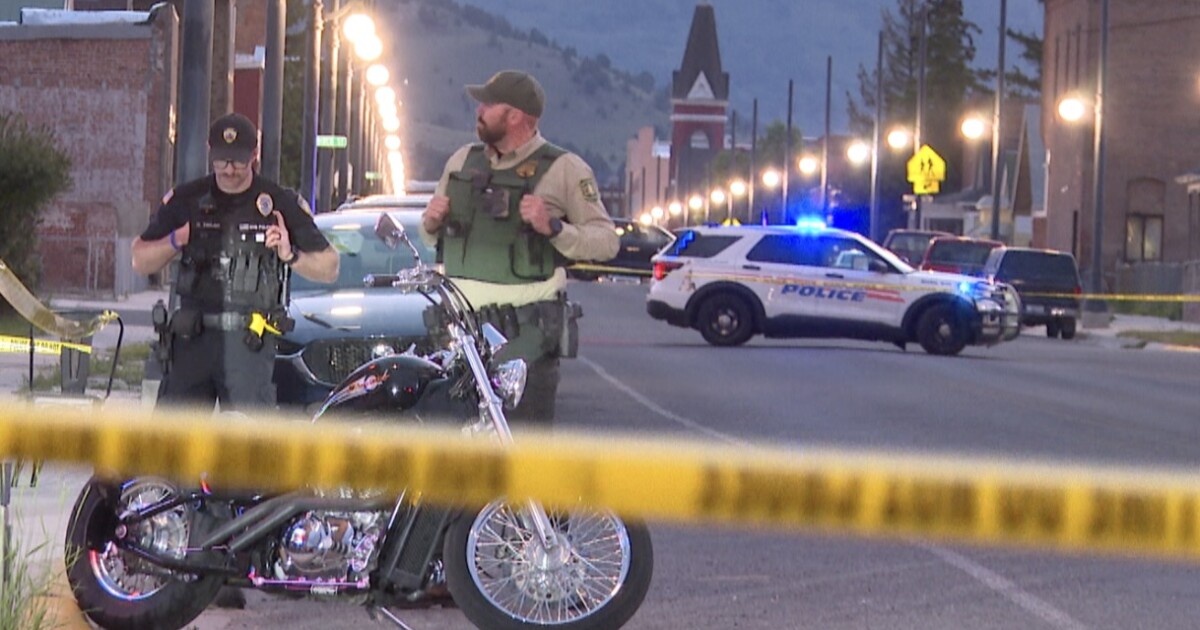
Anaconda shaken by second bar shooting within a year
-

 Nebraska21 minutes ago
Defensive Back Brennan Drummond Commits to Nebraska
-

 Nevada30 minutes ago
Desert state booms as workers flock from California amid game-changing discovery: ‘Remarkable’
-

 New Hampshire33 minutes ago
Police investigating after woman found dead in home in Hampstead, NH – Boston News, Weather, Sports | WHDH 7News

