Crypto
How XRP Became a Leading Cryptocurrency?


XRP, the prominent cryptocurrency of the Ripple network, has faced the longest legal battle in crypto history. Yet, XRP Carved out a distinct niche in digital assets. It is the go-to medium for cross-border payments, offering users speed, cost-effectiveness, and scalability. Today, XRP ranks 4th by market cap on CoinMarketCap, CoinGecko, and Coinbase. XRP’s tenacious journey so far has piqued the interest of many investors who are now asking how XRP became a leading cryptocurrency?
This Disruption Banking piece explores the multifaceted journey of XRP, providing a detailed analysis of how it all started, XRP’s technological underpinnings, its adoption by financial institutions, the legal battles it has faced up until March this year, XRP’s market performance as of today, and where it could be heading in the foreseeable future.
From RipplePay to XRP Ledger: The Origin Story
XRP started with RipplePay, a peer-to-peer (P2P) network created by Ryan Fugger in 2004 to allow direct transactions without middlemen. In 2011, Jed McCaleb, founder of the Mt. Gox exchange, a Bitcoin pioneer, alongside David Schwartz and Arthur Britto, started developing the XRP Ledger. McCaleb suggested creating a cryptocurrency network, leading to the creation of OpenCoin in 2012. This later became Ripple Labs. McCaleb teamed up with Chris Larsen to develop the XRP Ledger, which officially launched in 2012 with a total supply of 100 billion XRP.
Over 58 billion XRP are in circulation, while the rest are kept in escrow or given to the team. This pre-mined supply helps keep the Ripple network stable compared to cryptocurrencies like Bitcoin which relies on mining. The project was originally called the Ripple Consensus Ledger. But by 2013, it was renamed Ripple, and XRP became the token’s ticker, just like BTC for Bitcoin.
XRP’s Technological Edge: Speed, Scale, Sustainability
XRP uses advanced tech. The XRP Ledger is a decentralized blockchain built for enterprise. It settles payments in 3 to 5 seconds and handles 1,500 transactions per second. That’s far faster than Bitcoin’s 7 transactions per second and Ethereum’s current 15. Bitcoin has improved in speed since the introduction of the Lightning Network, whereas Ethereum recently had an upgrade but this didn’t address the speed of the network.
XRP’s Federated Byzantine Agreement (FBA) uses a network of trusted validators, selected by Ripple and community nodes, to confirm transactions without energy-intensive mining. An appeal to investors drawn to sustainability.
Fees are just $0.0002 per transaction, ideal for small or high-volume transfers. The ledger’s Payment Channels let many payments settle together, boosting capacity to tens of thousands per second. XRP also works as a bridge currency in RippleNet, speeding up conversions and cutting costs.
Thanks to these features and substantial corporate support, XRP stands out as a top cryptocurrency today.
Global Reach: XRP’s Financial Partnerships
Largely, XRP’s rise to the top is tied to its adoption by financial institutions worldwide, facilitated through RippleNet and On-Demand Liquidity (ODL) solutions. RippleNet, Ripple’s enterprise blockchain network, enables banks and payment providers to conduct cross-border transactions efficiently. This it does by leveraging XRP as a bridge asset for instant liquidity. This has eased remittances and international payments, where traditional systems often suffer from delays and high costs.
Here are some of XRP’s key partnerships/collaborations so far:
- American Express and Santander: Collaborated to power real-time, trackable cross-border payments for businesses, enhancing efficiency.
- MoneyGram: Utilized Ripple’s ODL to reduce transaction costs by 60% for global remittances, as reported in 2023.
- SBI Remit: Leveraged RippleNet for payments from Japan to Asia, recording a 28% increase in mobile app payments using Ripple in 2022.
- Bank of America and Euro Exim Bank: Uses RippleNet to offer faster payments to account holders across more than 80 countries, as of recent reports.
These partnerships have not only validated XRP’s utility but also expanded its reach, with institutions on all seven continents adopting the technology. Ripple’s focus on regions like the Middle East, with partnerships in Dubai, Egypt, and Africa, through collaborations like Onafriq for pan-African payment systems, gives you an idea of its global ambition. In 2023, Ripple secured a Major Payments Institution license from the Monetary Authority of Singapore, further scaling its services in Asia. More than 5 million wallets now hold XRP worldwide.
But success didn’t come easy for XRP. Regulatory battles have tested XRP’s resilience.
Navigating the SEC Lawsuit: XRP’s Legal Battle
XRP faced regulatory challenges in the U.S., from the 2020 $1.3 billion SEC lawsuit alleging XRP was an unregistered security, to the July 13, 2023, ruling by Judge Analisa Torres, and the SEC’s January 2025 appeal. See our recent write-up on the topic here.
The legal battle concluded on March 25, when Ripple and the SEC reached a $50 million settlement that ended the four-year legal saga. Since then, the market performance of XRP has improved.
XRP’s Market Resilience: Performance and Potential
XRP has shown strong grit despite regulatory challenges. With a market cap of $129 billion, it’s behind only Bitcoin, Ethereum, and Tether as the fourth largest cryptocurrency today Today, May the 2nd, XRP trades at just under $2.20, according to Coinbase, after dipping 0.67% over the past week.
XRP’s market performance points to both its technology and external factors like regulatory issues. The end of the SEC lawsuit likely helped stabilize it, as investors’ confidence in the token took a boost. However, XRP’s journey is still far from over.
XRP’s Future: Innovation and Institutional Growth
XRP’s future looks bright. Ripple is improving the XRP Ledger with better-decentralized exchange (DEX) tools and tokenization. These updates make XRP useful beyond cross-border payments — in DeFi and tokenized assets. This year, Ripple launched RLUSD, a USD-backed stablecoin on the ledger. This makes XRP’s appeal to financial institutions and liquidity providers stronger. Approval of various XRP ETF futures such as the recent Teucrium 2x Long Daily XRP ETF (XXRP) and the Brazilian Hashdex’s NASDAQ XRP Fundo de Índice. Both will further secure XRP’s place on the map.
There was a recent press release about the acquisition of prime brokerage Hidden Road on April 8th. Ripple’s CEO, Brad Garlinghouse believes that “Ripple and Hidden Road combined are a generational leap forward, ready to truly bring the worlds of traditional and decentralized finance together.” This is a very positive move as U.S. regulators bring regulatory clarity to the crypto space. This may also mean more institutional interest.
From RipplePay roots to a global payment system, XRP has paid its dues and proven itself. It still leads in linking finance and blockchain. And the next decade could put XRP on another pedestal.
Author: Richardson Chinonyerem
#XRP #Ripple #Crypto #Blockchain #TransactionSpeed #InstitutionalAdoption #Regulation
The editorial team at #DisruptionBanking has taken all precautions to ensure that no persons or organizations have been adversely affected or offered any sort of financial advice in this article. This article is most definitely not financial advice.
See Also:
Is the End of the Ripple-SEC Lawsuit a Turning Point for Crypto Regulation? | Disruption Banking
Ripple Acquires Prime Broker Hidden Road for $1.25 Billion | Disruption Banking
First XRP ETF Outperforms Crypto Market (XXRP) | Disruption Banking



The stablecoin industry has spent years trying to prove one thing above all else: that blockchain-based money can move faster, cheaper and more efficiently than the financial infrastructure it hopes to replace.

Key Takeaways
- Certik launched a security platform to provide an “anti-virus” layer for agent ecosystems.
- Sector audits reveal high risks, but CertiK aims to protect marketplaces with 90.5% scanning precision.
- Finchip.ai is among platforms expanding integrations ahead of future consumer-facing scan updates.
The Security Challenge
Blockchain and AI security firm Certik, on May 27, unveiled a new security platform designed to evaluate risks in third-party artificial intelligence (AI) skills. Dubbed the “anti-virus for AI agents,” the release comes amid growing industry concern over the security of AI skill marketplaces.
Security researchers have warned that many of these skills are unvetted, can execute system-level actions and may contain hidden malicious behavior, creating a new software supply chain risk for the AI era. Security audits across the sector have identified risks ranging from credential harvesting and data exfiltration to fund-transfer manipulation and prompt-based override attacks.
Despite these concerns, AI skill marketplaces have expanded rapidly as agent ecosystems mature. However, unlike traditional app stores, most skills are sourced from public repositories with little or no review. Analysts say this creates opportunities for attackers to embed harmful instructions, trigger unauthorized data access or manipulate autonomous execution flows.
In a recent blog post, Certik said its skill scanner platform is designed specifically to evaluate risks that emerge during execution, including scenarios involving financial transactions or fund calls. The scanner produces a numerical score from 0 to 100, along with “pass,” “warn” or “fail” verdicts and categorized findings. According to the company, the system achieves up to 90.5% precision in identifying security risks.
“As AI agents become more deeply integrated into financial systems, enterprise workflows and everyday digital interactions, the security model around third-party skills becomes critically important,” said Ronghui Gu, Certik’s CEO and co-founder. “CertiK Skill Scanner was built to establish a standardized trust layer before execution, helping users and platforms identify hidden risks before sensitive data, assets or systems are exposed.”
Certik said AI skill marketplaces can integrate the scanner directly into publishing pipelines, automatically reviewing skills before they go live and displaying security verdicts to users. Enterprises can deploy the tool as part of internal compliance and risk-management workflows, while independent developers can use it to self-audit skills before publishing.
The company said future updates will allow everyday users to scan skills themselves before installation. The scanner has already been deployed in select Web3 AI agent infrastructure environments. Certik is also expanding integrations with additional platforms, including Finchip.ai.
“Trust is the prerequisite for any skill economy to function at scale,” said Gary Yang, incubation investor at Finchip.ai. “CertiK’s work on skill security verification is exactly what this ecosystem needs. It’s what makes Finchip’s mission of programmable skill ownership and distribution worth building.”
The launch follows Certik’s expansion into AI-focused security infrastructure. Earlier this year, the company introduced its AI Auditor initiative to address risks tied to autonomous systems and AI-driven execution environments.
“AI applications are moving toward increasingly autonomous execution, which creates a new category of security and trust challenges,” Gu said. “We believe security infrastructure for the AI era must function proactively, not reactively.”
Crypto
FBI Seizes Over $8 Billion In Cryptocurrency As Part Of The Largest Forfeiture In US Government History

The FBI seized over $8 billion in cryptocurrency, freed nearly 2,000 trafficked workers, and arrested nearly 300 people in a recent international operation.
As part of the operation, authorities shut down several “scam compounds” and crime organizations, including groups known as the Prince Group in Cambodia, Operation Sand Dollar in Dubai, and the Democratic Karen Benevolent Army in Myanmar.
“Scam compounds are modern-day criminal enterprises built to steal from Americans, launder money, and exploit trafficked workers,” FBI director Kash Patel wrote on X announcing the results of the operation.
Fox News reports that the U.S. The Democratic Karen Benevolent Army, an armed militia named after a region in Myanmar that is allegedly connected to the Chinese mob, faces sanctions imposed by the U.S. Treasury. The government has classified it as a transnational criminal organization.
Images from an operation in Thailand reveal that the FBI confiscated office supplies and thousands of smartphones.
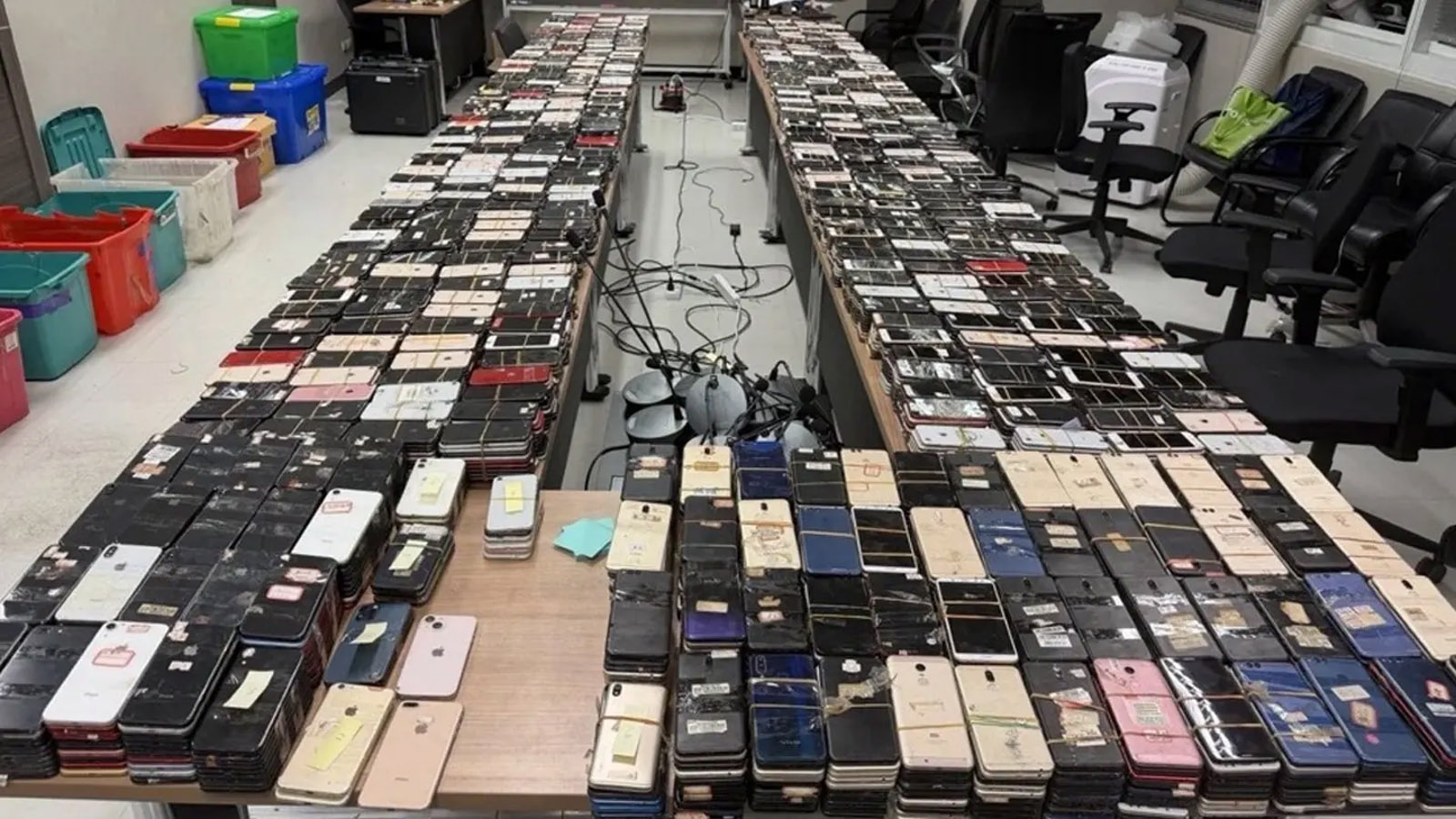
The FBI in Dubai will extradite six of the 275 individuals they and local police detained there to the United States to face federal charges, according to the FBI. The authorities raided nine “scam compounds” in Dubai, each allegedly generating $6 million in fraud proceeds annually.
Cryptocurrency scams in the US reached a record high in 2025
In April, an FBI report revealed that cryptocurrency scams in the U.S. reached a record high in 2025, with reported losses of almost $11.4 billion. According to the FBI, cyber-enabled crimes defrauded Americans of almost $21 billion in 2025, with the costliest complaints involving cryptocurrency and artificial intelligence (AI).
“The FBI’s 2025 Internet Crime Complaint Report highlights the ever-evolving tactics of internet scammers,” the FBI’s Baltimore office wrote on X. “From fake social media profiles to voice cloning and AI-generated content, cyber criminals are evolving.”
The Internet Crime Complaint Center (IC3) received over one million complaints in 2025, up from 859,532 in 2024. The most common complaints were about investment schemes, extortion, and phishing/spoofing.
-

 Nebraska3 minutes ago
Nebraska Man Fractures Spine After Falling Off Big Boy Locomotive At Whistle-Stop
-

 Nevada8 minutes ago
Nevada SPCA brings adoptable pet to spotlight on Furever Home Friday
-
 New Hampshire15 minutes ago
RFK Jr. visits NH to unveil new federal actions to fight Lyme disease
-

 New Jersey18 minutes ago
Mercer County, N.J. enacts new policies to limit ICE arrest activity
-

 New Mexico25 minutes ago
Virgin Galactic partners with nonprofit for menstruation research in space
-

 North Carolina33 minutes ago
Families in Durham say they’re barely getting by; New report says Americans are saving less
-

 North Dakota39 minutes ago
Public asked to weigh in on technology use in North Dakota schools
-

 Ohio45 minutes ago
I-TEAM: FBI searches multiple Stansley Mining properties in NW Ohio

