Deep in California’s agricultural heartland, Haleigh Holgate marched through the expansive wildflower-dotted plains of the San Luis national wildlife refuge complex in search of something precious.
She surveyed the native grasses and flowering plants that painted the Central valley landscape in almost blinding swaths of yellow. Her objective on that sweltering spring day was to gather materials pivotal to California’s ambitious environmental agenda – seeds.
“Over there it’s a brighter yellow, so I know those flowers are still blooming, rather than going to seed production,” she noted. “Versus over here, it’s these hues of deeper reds and deeper gold. That seed is ready.”
As a seed collection manager with the non-profit Heritage Growers native seed supplier, Holgate is tasked with traveling to the state’s wildlands to collect native seeds crucial for habitat restoration projects.
Advertisement
The need has become particularly acute as California aims to conserve 30% of its land by 2030, with the governor pledging to restore “degraded landscapes” and expand “nature-based solutions” to fight the climate crisis. And as the Trump administration systematically rolls back efforts to reduce greenhouse gas emissions and protect public lands, the state’s goals have taken on even greater importance.
But the rising demand for seeds far outpaces the available supply. California faces an “urgent and growing need” to coordinate efforts to increase the availability of native seeds, according to a 2023 report from the California Native Plant Society. There simply isn’t enough wildland seed available to restore the land at the rate the state has set out to, Holgate said.
The Heritage Growers farm in Colusa, California. Photograph: River Partners
Bridging the gap starts with people like Holgate, who spends five days a week, eight months of the year, traveling with colleagues to remote spots across the state collecting seeds – an endeavor that could shape California’s landscape for years.
That fact is not lost on the 26-year-old. It’s something she tries to remind her team during long, grueling hot days in the oilfields of Kern county or the San Joaquin valley.
“What we do is bigger than just the day that we live. The species that we collect are going to make impacts on the restoration industry for decades to come,” Holgate said.
Advertisement
Seeds play a vital role in landscape recovery. When fires move through forests, decimating native species and leaving the earth a charred sea of gray ash, or when farmlands come out of production, land managers use native seeds to help return the land to something closer to its original form. They have been an essential part of restoring the Klamath River after the largest dam removal project in US history, covering the banks of the ailing river in milkweeds that attract bees and other pollinators, andLemmon’s needlegrass, which produces seeds that feed birds and small mammals.
California has emphasized the importance of increasing native seed production to protect the state’s biodiversity, which one state report described as “the most imperiled … of any state in the contiguous United States”. Three-quarters of native vegetation in the state has been altered in the last 200 years, including more than 90% of California wetlands, much of them here in the Central valley.
For the state to implement its plans, it needs a massive quantity of native seeds – far more than can be obtained in the wild. Enter Heritage Growers, the northern California-based non-profit founded by experts with the non-profit River Partners, which works to restore river corridors in the state and create wildlife habitat.
The organization takes seed that Holgate and others collect and amplifies them at its Colusa farm, a 2,088-acre property located an hour from the state capital. (The ethical harvesting rules Heritage Growers adhere to mean that they can take no more than 20% of seeds available the day of collection.)
Workers dry the seeds collected in the wild over several weeks, clean them and send them off to a lab for testing. The farm cultivates them to grow additional seeds, in some cases slowly expanding from a small plot to a tenth of an acre, and eventually several acres. The process – from collection to amplification – can take years. Currently, the farm is producing more than 30,000lbs of seeds each year and has more than 200 native plant varieties.
Advertisement
A family watches the removal of the Iron Gate dam, near Hornbrook, California, on 28 August 2024. Photograph: San Francisco Chronicle/Hearst Newspapers/Getty Images
The goal, general manager Pat Reynolds said, is to produce source-identified native seed and get as much of it out in the environment as possible to restore habitat at scale. The group has worked with federal agencies such as the National Parks Service, state agencies and conservation organizations, and provided seed for River Partners’ restoration efforts of the land that would become California’s newest state park, Dos Rios.
The benefit of restoring California’s wildlands extends far beyond the environment, said Austin Stevenot, a member of the Northern Sierra Mewuk Tribe and the director of tribal engagement for River Partners.
“It’s more than just work on the landscape, because you’re restoring places where people have been removed and by inviting those people back in these places we can have cultural restoration,” Stevenot said. “Our languages, our cultures, are all tied to the landscape.”
He pointed to Dos Rios, where there is a native-use garden within the park where Indigenous people can collect the plants they need for basketweaving.
“It’s giving the space back to people to freely do what we would like for the landscape and for our culture,” he said.
Advertisement
skip past newsletter promotion
after newsletter promotion
Just three farms in California produce thousands of pounds of native seed each year, including Heritage Growers, Reynolds said, meaning that restoration efforts take significant long-term planning. In the case of the Klamath River project, it took at least five years of work – collecting the seed, cleaning it and amplifying it at multiple farms – to obtain the seed necessary to use for river restoration.
But before Heritage Growers can amplify seed, Holgate has to gather materials in the wild. Holgate, a sunny and personable seed collector who studied environmental science and management with a focus in ecological restoration, has developed Heritage Growers’ program over the last two years.
Advertisement
A field at the Heritage Growers farm. Photograph: Dani Anguiano
In late March, she headed out to scout the Arena plains area of the Merced national wildlife refuge, more than 10,200 acres of protected lands, including wetlands and vernal pools, in the San Joaquin valley. Her winter break had come to an end and collection season was kicking off again, meaning months of travel and logging upward of 1,000 miles a week as she and a group of wildland seed collectors visited dozens of sites across the valley and in the foothills. Collection days typically start when the sun rises, and stretch until it gets too hot to work.
In recent weeks, Holgate’s team had planned their collection strategy and surveyed sites to see what plants were available. Getting to the Arena plains area required a 30-minute drive down a bumpy dirt road.
In a large white pickup, she passed a large owl perched in a tree and navigated a narrow creekside lane. From her vehicle, Holgate often performs what she describes as “drive-by botany”, quickly scouting the land to see what’s available.
She maneuvered through a herd of curious, but cautious, calves before trudging through thick mud and carefully slipping through barbed wire fencing to take in the scene.
Equipped with a bucket, a sun hat and a backpack, Holgate was eager to observe the landscape, noting what was seeding and what needed more time. The work is simultaneously thrilling and sometimes tedious, Holgate said as she compared two plants that looked identical but were in fact different species. Seed collectors must be able to distinguish between species to ensure the materials they collect are genetically pure, she noted.
Advertisement
The temperature climbed to 89F as she meandered across the plains, noting which species were available and how ripe the seeds were.
Holgate monitored a herd of cattle approaching. When she began working in the area, Holgate viewed the creatures and the way they trampled through the vernal pools and chomped on the vegetation as a significant impact to the landscape, she said. But she later learned how grazing can benefit this ecosystem. The depressions cattle make as they move through the area allow seeds to nestle further into the ground, and their grazing reduces invasive grasses, allowing flowers to receive more sunlight and giving them space to bloom, Holgate noted.
Chasing down seeds is a nomadic lifestyle in which one has to be OK with long stretches away from home, and an inordinate amount of prepared road food, like bacon and gouda sandwiches from Starbucks, Holgate said, pausing as a coyote and its pup ran through nearby flowers, winding through the cows and heading just out of sight. Along with travel to distant locations from the wildlife refuge to Kern county in the south, Holgate has to return any seeds collected to the Heritage Growers farm within 24 to 48 hours.
But the mission is worthwhile, Holgate said. The seeds she collects are expensive, but if they can be amplified and expanded, native seeds will become more abundant and restoration projects can happen more quickly.
Haleigh Holgate working in the San Luis national wildlife refuge complex. Photograph: Dani Anguiano
“We can restore California faster,” she said. “It’s the only way we are going to be able to restore California at the rate we want to.”
Advertisement
The seed collection team has 35 sites they will return to this season. Spending so many hours on the same swaths of land has allowed Holgate and her colleagues to know the areas on a far deeper level than they would if they were just hiking through. It’s left her with a familiarity she can’t shake – that dainty grass isn’t just grass, it’s hair grass, the lighter spots are Hordeum depressum, a type of barley, and the dots of yellow are lasthenia. Sometimes the plants seep into her dreams.
“I know that when I’m dreaming about a certain species, I should go check that population and see what’s happening. And normally there’s something going on where it’s like grasshoppers came in and ate all the seed, or the seed is ripe and ready, and I gotta call in a crew,” she said.
“I’ve really put my whole heart into this job. I realize it’s more than just getting a paycheck – and it’s more than just doing this restoration for the land. It’s doing restoration for people.”
California Gov. Gavin Newsom, a Democrat who is considering a run for president as he approaches the end of his term, called for a national “billionaires’ tax” on Friday even as he fights another proposal targeting the wealthy in his home state.
Newsom also said the U.S. government should own a stake in artificial intelligence companies. His proposals, outlined in a Substack post, aligns him with the Democratic Party’s populist left, and he argued that urgent changes are needed to prevent the elite concentration of wealth and power from undermining democracy.
“It’s time for an economic reset for America,” Newsom wrote.
The governor announced his agenda a day after an influential health care union in California pledged to go forward with a ballot measure that would impose a one-time 5% tax on the assets of billionaires living in the state as of Jan. 1, 2026.
Advertisement
Newsom opposes that measure, as do many of the liberal interest groups that typically favor higher taxes. They fear it would drive billionaires out of California, eroding the state’s tax base over the long term for a one-time influx of cash. A technology mecca, California has more billionaires than any other state — a few hundred, by some estimates.
“You may not be able to pick up and move to Texas or Florida to shelter your income from taxation, but I promise you that billionaires can, and do,” Newsom wrote. “Wealth is movable, and it shops for the state with the lowest taxes. The fight belongs at the federal level, where this broken system was created in the first place.”
A minimum tax on large net worths
Newsom said the solution is a new national tax policy, rather than a state-by-state system. He proposed a minimum tax on anyone with a net worth above $100 million. He also wants to make it illegal for the wealthy to borrow against their stock portfolios to fund their luxury lifestyles tax free.
Newsom said there should be new rules for inheritance taxes, warning that “the transfer of wealth among the ultra-wealthy will lock in a permanent American aristocracy of inherited wealth.” And he wants to raise corporate tax rates to where they were before President Donald Trump’s first-term tax cut.
READ MORE: Sanders and Newsom clash over proposed tax on California’s billionaires
Advertisement
The need is especially urgent as artificial intelligence threatens to displace workers and further concentrate wealth, he wrote.
“We need to ensure every American owns a stake in the future being built by AI through a national public equity fund that takes a major stake in the new economy,” he wrote. “Simply, as artificial intelligence reshapes the country, every American should own a piece of the future it builds.”
Revenue generated by his proposals could be used to retrain workers, fund universal child care, make college free and increase funding for health care.
‘Money buys influence’
Newsom, who has drawn attention as one of Trump’s most high-profile political antagonists, is getting an early start on laying out a policy framework for his potential White House bid months before the midterm elections, which have typically marked the informal start of overt presidential campaigning.
WATCH: News Wrap: Newsom says Trump ordering DOJ to investigate him and wife
Advertisement
The embrace of a wealth tax by Newsom, a moderate on tax policy despite his liberal reputation, signals a notable shift in the political landscape since Massachusetts Sen. Elizabeth Warren struggled to get traction in her 2020 campaign, which she largely centered around a 2% levy wealth tax.
Newsom portrayed the nation’s tax code as a corrupt system built to help an elite few.
“Money buys influence, and influence rewrites the rules,” he wrote. “Those rewritten rules funnel even more wealth to the few. Under this weight, democracy itself starts to buckle.”
A free press is a cornerstone of a healthy democracy.
This is the latest instalment of The Inside Story, Wallpaper’s series spotlighting intriguing, innovative and industry-leading interior design.
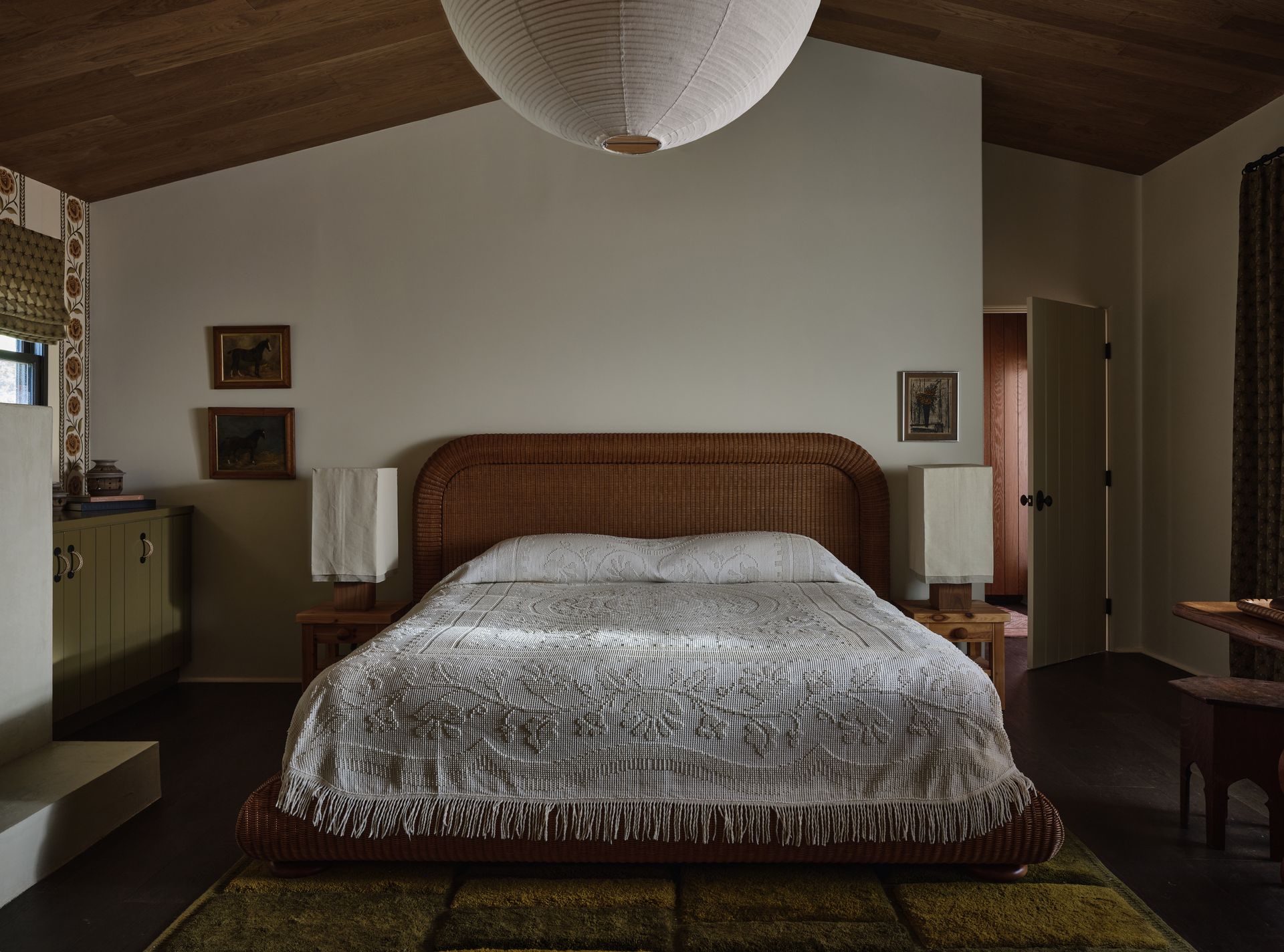
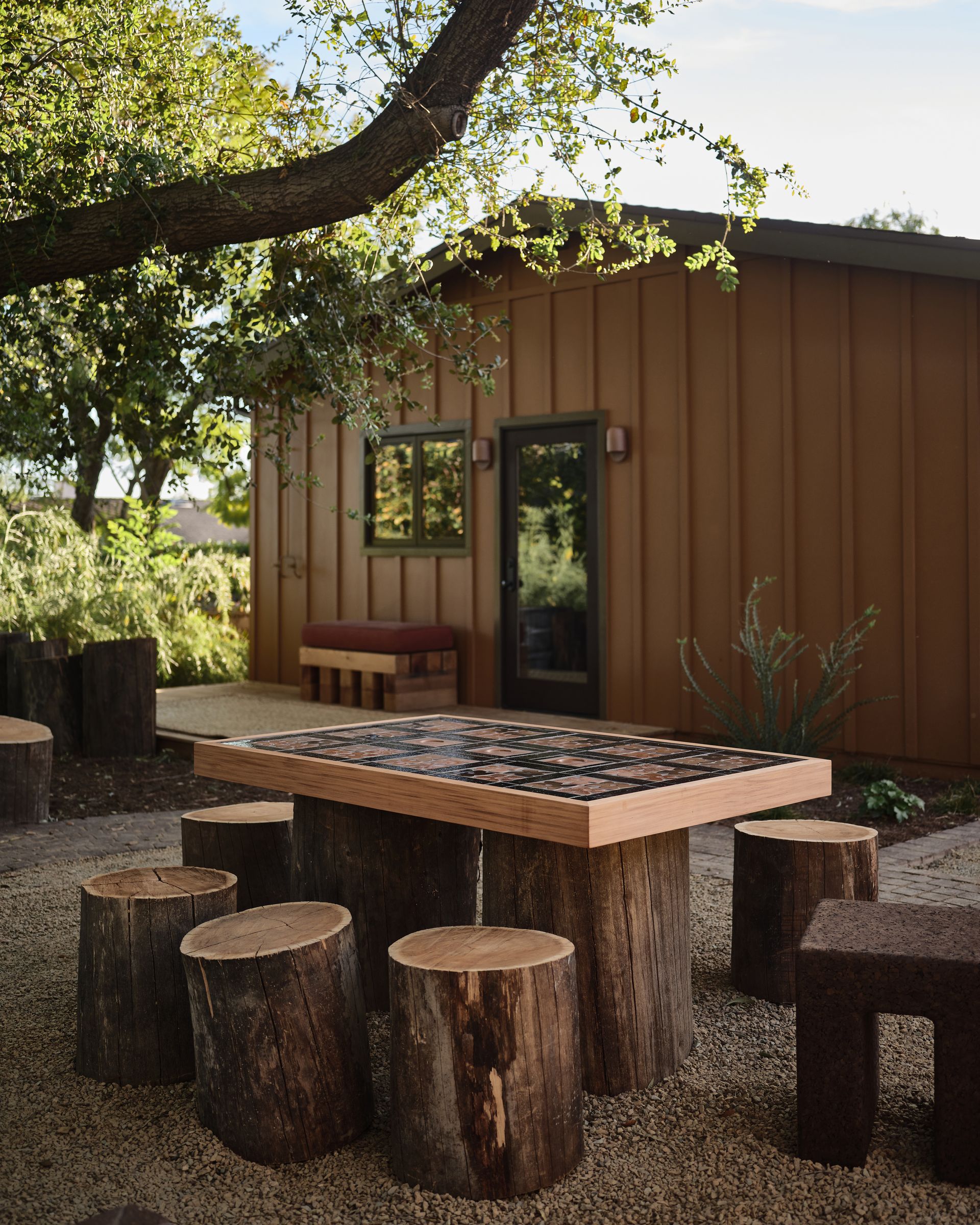
Nestled at the base of the San Gabriel Mountains in Sierra Madre, a 1947 adobe home – a traditional building method using sun-dried bricks of organic materials – has been reimagined. Removed from the noise and polish of Los Angeles, this neighbourhood is shaded by California oaks, eucalyptus and pine, and shares its hillside with bears. It’s an unusual setting for a design story.
(Image credit: Michael P.H. Clifford)
Advertisement
(Image credit: Michael P.H. Clifford)
The home’s transformation began with a fire that destroyed much of the structure, leaving only the original adobe brick wall standing. Rather than rebuild from scratch, designer Kirsten Blazek of A1000XBetter chose to work with what remained.
‘The overall vision was to maintain as much of the original character and style of the home as possible, while making it more functional for modern living,’ she explains. New rooms were added – a kitchen, a primary suite, a family room – though the expansion was restrained. ‘We worked mainly within the original footprint,’ the designer notes, ‘only adding a small amount of square footage for the primary closet.’
(Image credit: Michael P.H. Clifford)
(Image credit: Michael P.H. Clifford)
Advertisement
(Image credit: Michael P.H. Clifford)
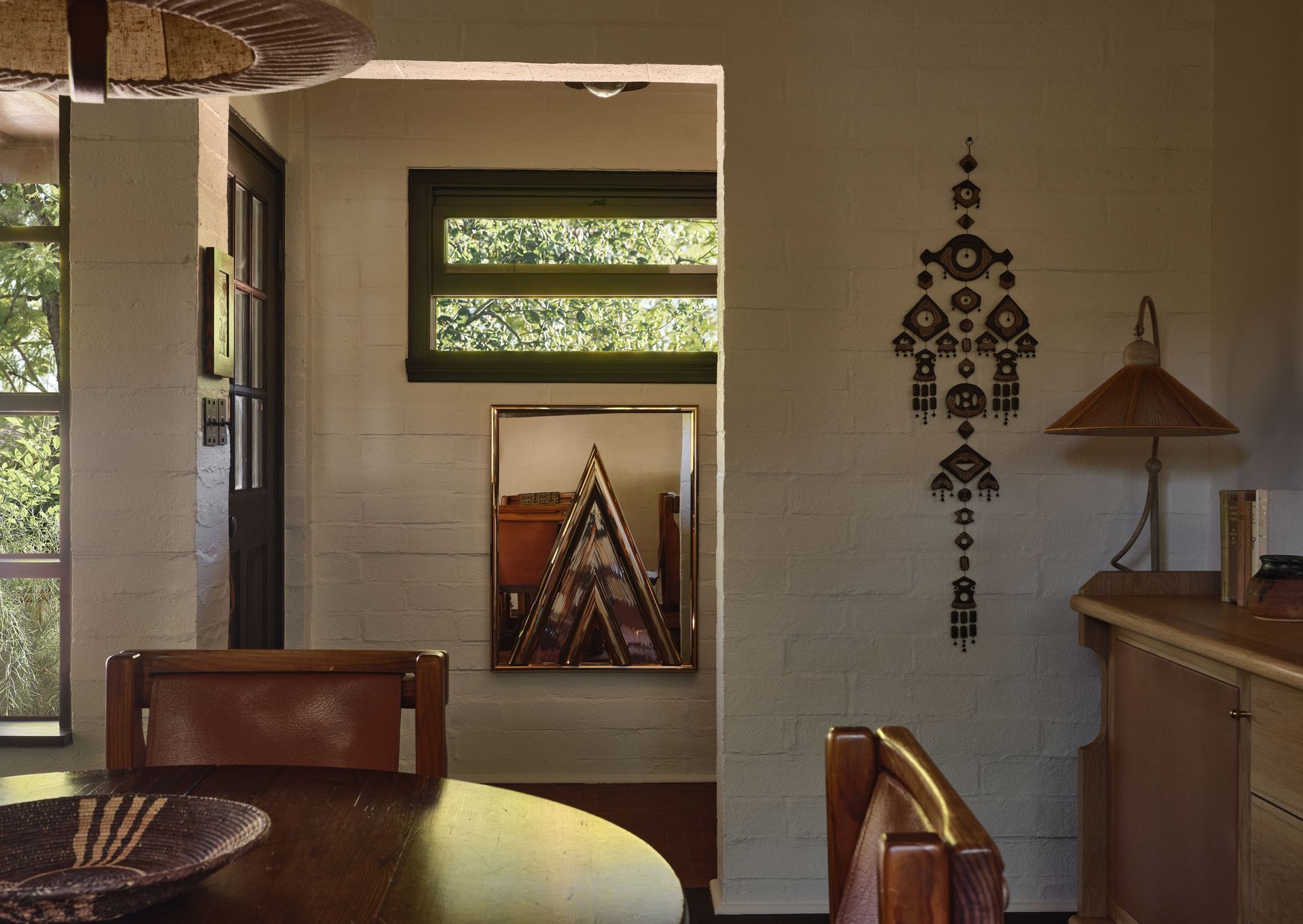
On the original adobe side, the layout was left untouched. The hallway windows, original to the 1947 build and ‘one of [Blazek’s] favourite features’, were preserved. ‘I wanted the house to feel like a modern California hacienda,’ she says of her guiding aesthetic, ‘and embraced that through every colour choice and finish.’
That palette draws directly from the landscape. Dunn-Edwards paints in warm, grounded tones – including an exterior shade named ‘Wild Horses’ – echo the surrounding terrain and scrubland. ‘I very much gravitate to an earth-based palette,’ says Blazek, ‘and the location at the base of the San Gabriel Mountains made that feel completely natural.’
Recreate the mood
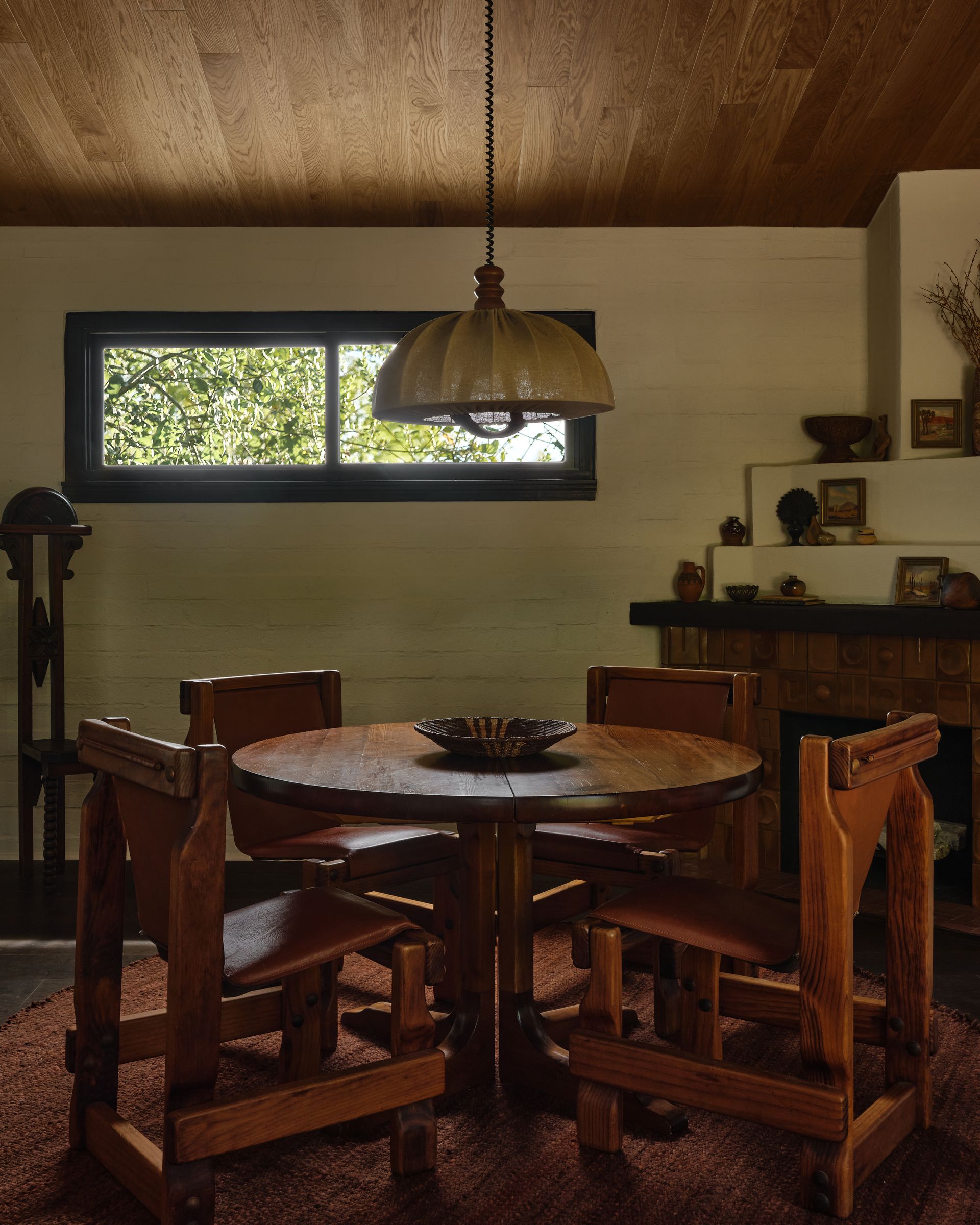
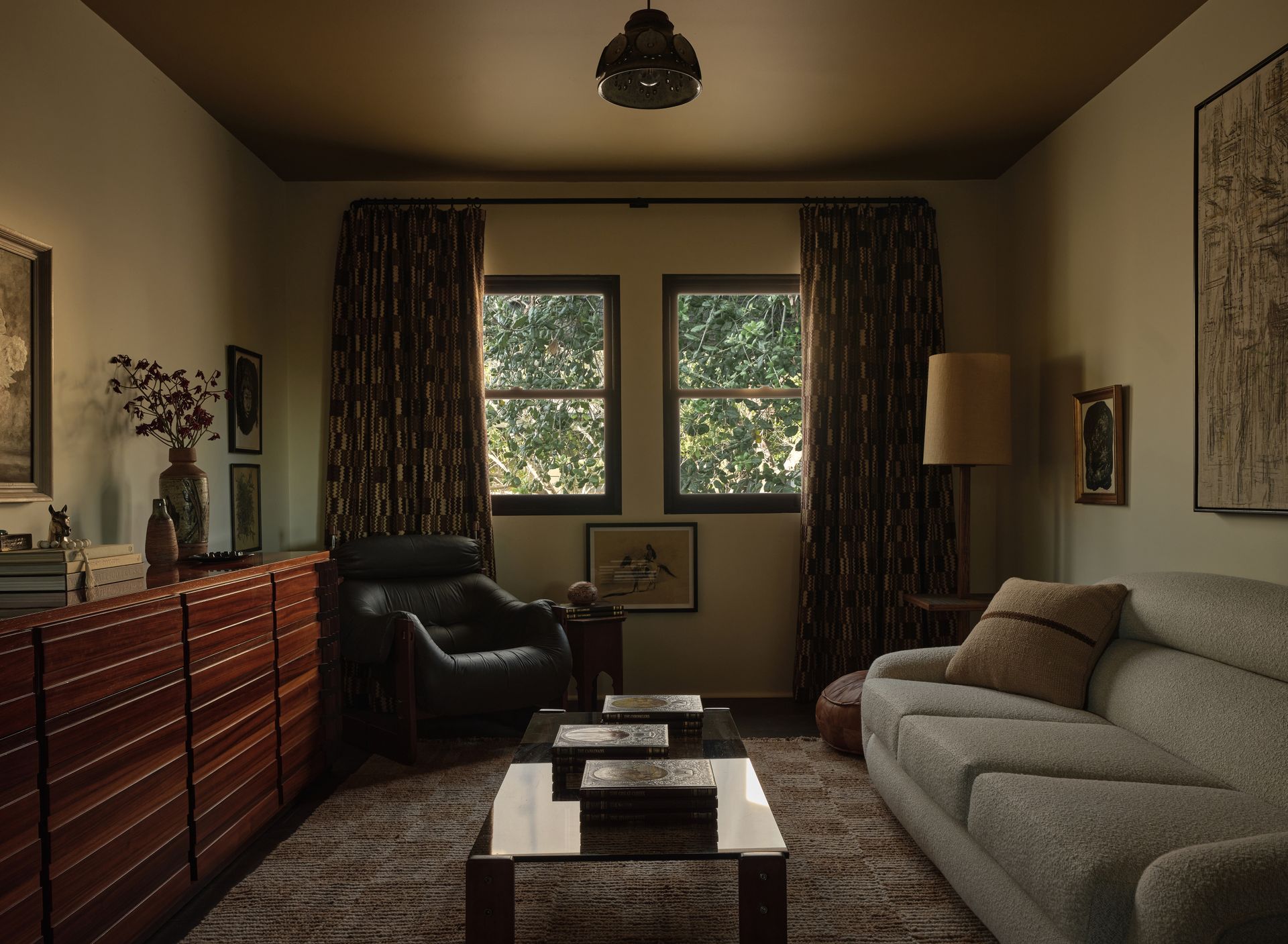
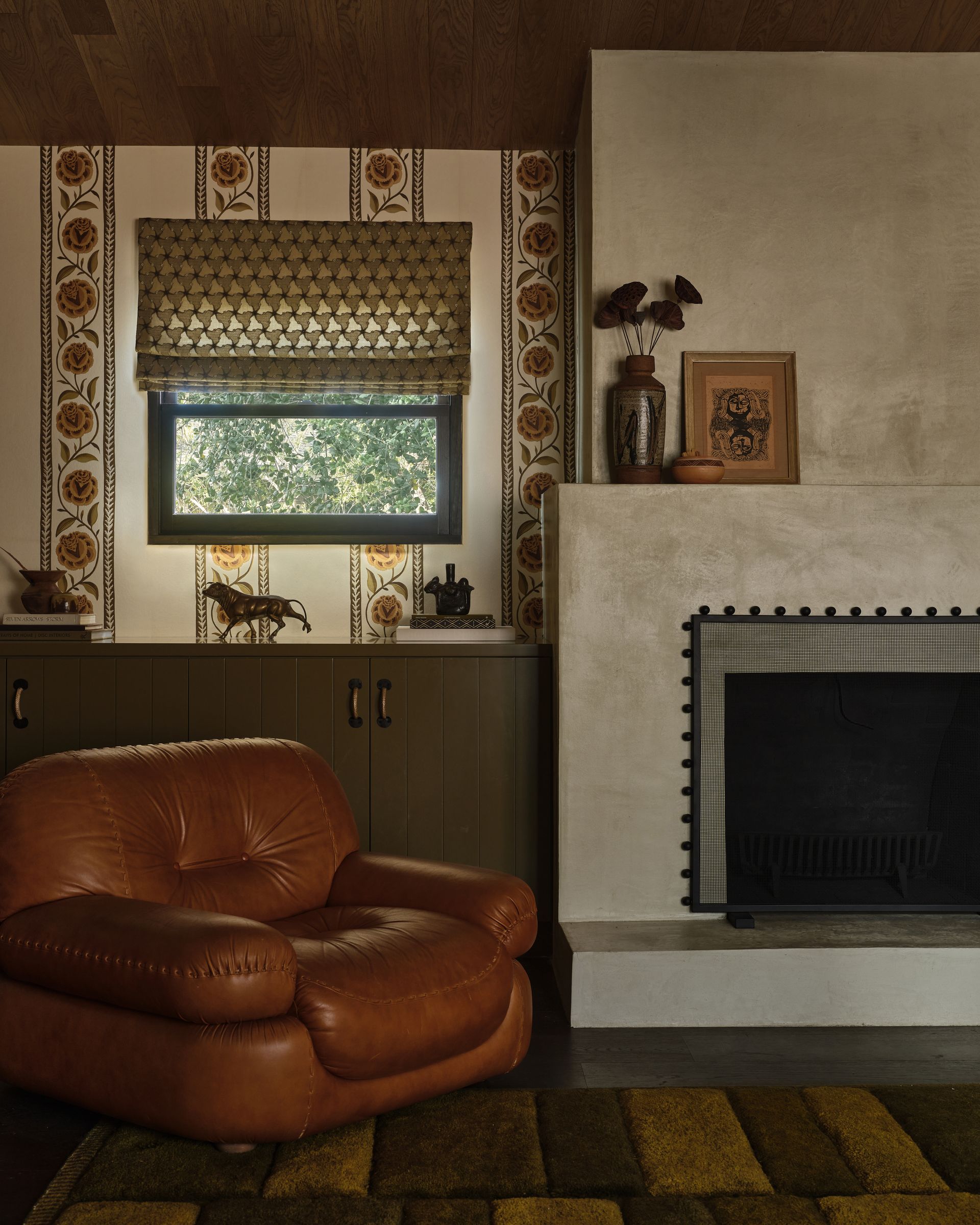
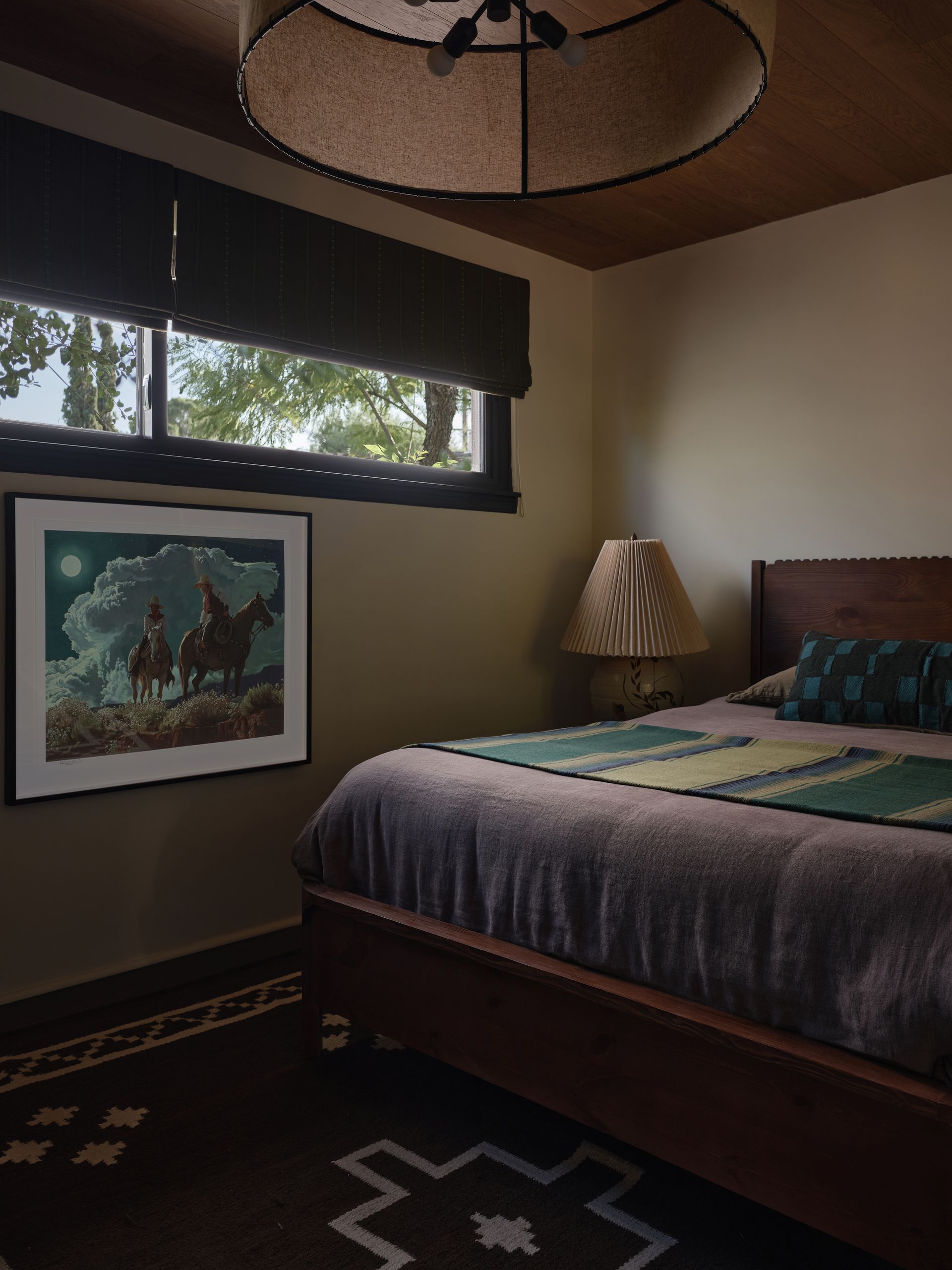
The interiors, meanwhile, speak to a lifelong passion. ‘I have a deep connection with the American Southwest and have long collected Native American and western-influenced art and objects,’ she says. Yet the rooms never tip into pastiche. Midcentury furniture – sourced from MidcenturyLA, Amsterdam Modern and Lawson-Fenning – grounds the collected pieces with clean, modern lines. Rugs from Pampa and Salam Hello add warmth underfoot; drapery by Zak and Fox frames the windows. ‘I never want my work to feel too referential,’ Blazek reflects. ‘I love midcentury lines, so there’s a pleasing blend of both genres throughout.’
Advertisement
Receive our daily digest of inspiration, escapism and design stories from around the world direct to your inbox.
(Image credit: Michael P.H. Clifford)
(Image credit: Michael P.H. Clifford)
Among her favourite moments is the dining room fireplace – original to the house, but updated with dimensional tile from Lofa Tile. Nearby, a framed print by artist Mark Maggiori anchors the wall. ‘It’s one of my favourite pieces,’ she says. ‘I was grateful to finally find the perfect place for it.’
(Image credit: Michael P.H. Clifford)
Advertisement
(Image credit: Michael P.H. Clifford)
Between the ancient craft of adobe and the clean geometry of midcentury design, this renovation represents both preservation and reinvention – a modern hacienda rooted in its land, its past and the strength of Blazek’s vision.
CDFW News | California Fish and Game Commission Takes Emergency Action to Prevent White Shark Take and Reduce Potential Interactions Between Hooked Sharks and Swimmers
Prosecutors Honored for Their Work to Protect Wildlife; Southern Resident Killer Whale Named CESA Candidate
Anticipating a larger presence of white sharks in Southern California as a result of warmer El Niño ocean conditions, the California Fish and Game Commission (Commission) adopted emergency regulations at its June 17-18, 2026 meeting to further protect the large ocean predator and reduce the potential for dangerous interactions with ocean users. These regulations will prohibit the use of certain fishing gear from beaches and nearshore that are used to hook large sharks and could create hazards for nearby beachgoers.
Forecasted warmer waters shift the preferred range for juvenile white sharks northward from Mexico and lead them to stay in California nearshore areas later in the year. The emergency regulations protect not only white sharks but also people recreating in the ocean, decreasing the risk of dangerous human encounters with sharks that are hooked with wire leaders from piers and beaches.
Specific gear types used to target large sharks, including hooks greater than 1.5 inches in maximum inside measurement and wire or metallic lines and leaders, will be prohibited when recreational fishing from shore or within 1,000 yards of shore from Pigeon Point (San Mateo County) south to the U.S.-Mexico border. Shore fishing includes beaches, banks, piers, jetties, breakwaters, docks and other man-made structures connected to the shore. Unless extended, the emergency regulations will expire 180 days after being filed with the secretary of state. The Commission may pursue up to two 90-day extensions of the emergency action and, ultimately, may propose continuing the restrictions through a regular rulemaking if the regulations prove to be effective.
Advertisement
Prosecutor of the Year
Commissioners recognized two deputy district attorneys who have demonstrated their dedication to protecting California’s natural resources and have effectively collaborated with the California Department of Fish and Wildlife (CDFW) to prosecute wildlife crimes. San Luis Obispo County Deputy District Attorney Ken Jorgensen and San Diego County Deputy District Attorney Michael McCann were presented with the Prosecutor of the Year Award for 2025.
Jorgenson’s work resulted in a landmark $165,000 settlement and injunctions in a case involving rare plant habitat destruction, and in another case a $12,500 fine and five years of probation for often under-prosecuted commercial fishing violations.
McCann assisted in the prosecution and investigation surrounding a global wildlife trafficking ring connected to illegal drug and firearm trade. The investigation disrupted a sophisticated trafficking network and resulted in multiple felony and misdemeanor charges, with more anticipated.
Southern Resident Killer Whale
Advertisement
The Commission named the southern resident killer whale (orca) a candidate species for listing under the California Endangered Species Act (CESA). This population of orcas inhabits ocean waters from British Columbia to California and is estimated to now number as few as 75.
Orcas face threats such as limited availability of prey; Chinook salmon are a primary food source and have experienced population decline across the entire West Coast range of orcas. The species’ abundance has also been impacted by past practices of capture for live display.
CDFW will have one year to complete a review on the status of orcas, of the best available science, before the Commission can make a final decision on CESA listing. Orca is currently listed as endangered under the federal Endangered Species Act and is considered depleted under the federal Marine Mammal Protection Act.
Western Spadefoot
Continued from the Commission’s April meeting, a decision to consider CESA candidacy for western spadefoot frog was postponed to the August meeting to give environmental advocates and the solar industry additional time to collaborate on proposing exceptions to CESA protections that would be allowed under Fish and Game Code Section 2084.
Advertisement
Meeting Participation and Next Meeting
Commission President Eric Sklar, Vice President Darius Anderson and Commissioners Samantha Murray and Erica Zavaleta were in attendance for both days of the June Commission meeting. Commissioner Jacque Hostler-Carmesin was in attendance for the first day. The meeting was held in Sacramento.
The complete agenda for the meeting, along with supporting information, is available on the Commission website. Archived video of past Commission meetings is available online. The next regularly scheduled meeting of the Commission is scheduled for Aug. 12-13, 2026, at the California Natural Resources Agency building in Sacramento. Participants are encouraged to attend in person, with options available for Zoom or phone; for more information visit the Commission website.
The Commission authorized public notice of upcoming potential regulation changes related to:
Harpoons and Flying Gaffs Allowance: A discussion hearing is scheduled for Aug. 12-13 and an adoption hearing Oct. 14-15 on amendments to regulations related to allowing use of harpoons and flying gaffs in the recreational tuna fishery.
Advertisement
###
Media Contacts: Krysten Kellum, CDFW Communications, (916) 825-7120 Alicia de la Garza, CDFW Communications, (916) 754-7237