Lifestyle
'Beautiful, happy, dopamine-injected.' Louis Vuitton and Takashi Murakami's frenzied comeback


In January, I was in a taxi driving through London’s Soho neighborhood when I looked out the window and saw a line of people stretched down an entire city block. It was after dark, but folks were still crowded onto the sidewalk, some huddled together to shield themselves from the cold and mist. Was it for a concert? A show? What was I missing? As my car turned the corner, it became clear: They were all waiting to enter the Louis Vuitton x Takashi Murakami pop-up.
The space occupied two stories, with a cafe on the top. The bottom floor was painted a bright “Brat” green, and the upper floor a sweet Hello Kitty-esque shade of pink. The windows, like the products inside, were covered in the brand’s signature interlocking L and V monogram. I was amazed not only by the scale of the operation but also by the fact that, over two decades since the original collaboration, the reissue, which is twofold and will see the release of a total of around 200 pieces starting this year, was able to attract such frenzied attention.

Louis Vuitton x Murakami Speedy Bandoulière 25 (top) and Coussin PM
When fashion designer Marc Jacobs debuted his Louis Vuitton collection with Murakami, a Japanese artist, in the spring of 2003, he called their mind-meld a “monumental marriage between art and business.” It marked the fact that, by that point, fashion and pop culture had become one, with celebrities on the cover of Vogue magazine instead of models, and paparazzi photos dictating sales.
A similar thing was happening in the art world too. Murakami, who is credited with founding the Superflat movement, which finds inspiration and art historical significance in two-dimensional imagery like Japanese manga and anime, was making a career out of combining what was then considered “highbrow” and “lowbrow.” The piece that got Jacobs’ attention, for example, was a fiberglass cartoon sculpture of a woman called “Hiropon,” whose super-size breasts produced a thick stream of milk that wrapped around her like a lasso. Jacobs, who served as creative director of Louis Vuitton from 1997 to 2013, told reporters at the time that “something snapped” when he saw Murakami’s Hiropon on the cover of a Christie’s catalog, and he reached out for a meeting. Murakami, meanwhile, said he’d never heard of Louis Vuitton before.
Before the Vuitton x Murakami collaboration, cross-pollination of this nature was rare. “I grew up in the art world with a lot of quote-unquote ‘serious artists’ who would certainly look down upon getting involved in a more commercial thing like that,” says Gabriel Held, 39, a New York-based stylist and vintage archivist. “But [Jacobs] got heavy-hitters in the art world to participate.”

Louis Vuitton x Murakami Nice Mini

Louis Vuitton x Murakami Monogram Multicolor LV Outline Headband
In 2001, Vuitton collaborated with pop-punk artist Stephen Sprouse on a run of handbags featuring the brand’s logo in a graffiti-like font, and in 2002, British artist Julie Verhoeven covered bags in colorful graphics. Following Murakami, other big-ticket artists including Richard Prince, Yayoi Kusama, Cindy Sherman and Jeff Koons expressed their Vuitton vision as well. The collaboration boosted Murakami’s profile to new heights, with his pop-y, rainbow aesthetic providing a fresh update to the brown-on-brown monogram from 1896 that the brand was known for, ultimately helping it capture the attention of a younger audience. Fandom on both sides for the limited-edition products created what we now commonly refer to as “hype.”
“I always describe the bags as being like beautiful white jawbreakers with saccharine colors all over them,” says Liana Satenstein, 35, a writer who focuses on the vintage market. The iconic “Monogram Multicolore” that Murakami introduced in 2003 fused the “LV” monogram with small florals, creating a new pattern with 33 colors that popped on an all-white background. “A beautiful, happy, dopamine-injected piece,” in Satenstein’s eyes. He also introduced panda and pink cherry blossom motifs.
In December, when Vuitton announced that it was reissuing the Murakami collaboration with a campaign starring Zendaya, Satenstein covered the news on her Substack, “Neverworns.” She declared that the bags “defined the maximalist ’00s.” Stars of the decade, including Paris Hilton, Nicole Richie, Lindsay Lohan and Kim Kardashian, were all photographed carrying one. In 2004, Vogue asked if Jessica Simpson’s choice of a Murakami buckle bag made her “the next Sarah Jessica Parker,” Satenstein pointed out.
“I worked with somebody over the summer who is not really a fashion person but of my age, and one thing on her wish list was a Murakami bag,” says Held. “Even for people who aren’t that invested in fashion, they have a desire for it still. It was a pop-culture moment.”
According to Kelly McSweeney, senior merchandising manager at the RealReal, a vintage marketplace, search interest in the original Louis Vuitton x Murakami collaboration “skyrocketed overnight” when the reissue was released on Jan. 3, with a 463% increase in searches day-over-day. The momentum continued into Jan. 4, climbing another 55% as the buzz around the collaboration intensified. “Reflecting this renewed excitement, resale prices for pieces from the collection have also soared, up 50% year-over-year,” McSweeney adds.


Louis Vuitton x Murakami Monogram Multicolor Chouchous
All of the links to vintage bags that Satenstein shared in her newsletter have since sold. “I should have bought like, five, of them,” she says in retrospect.
With the Y2K revival trend seemingly at its peak, nostalgia for the carefree innocence of the ’00s made this moment ripe for a Murakami relaunch. In fact, it’s a wonder Vuitton didn’t do it sooner. Some collectors will seek out the originals they maybe couldn’t afford at full price in high school, and others will line up for a second chance at the new thing. Judging by the crowd waiting outside the pop-up in London, many eager customers are perhaps excitedly discovering the collaboration for the first time, as they were probably in diapers in 2003.
Archival pieces are displayed behind glass across seven Louis Vuitton x Murakami pop-ups worldwide, from Milan to New York to Seoul to Shanghai to Tokyo to Singapore. But of course, the main draw is the new accessories, which will be released in various “chapters” throughout 2025, according to the brand. Chapter 1 celebrated Murakami’s original Multicolore monogram, while Chapter 2, launching this month, will feature 2003’s equally sought-after “Cherry Blossom” pattern on bags, shoes and trunks.
Before it closed on Feb. 9, customers at the London pop-up sipped from Murakami-branded cups at the cafe and ate cakes and pastries off Murakami-branded napkins. The staff wore kimono pajamas and sat on smiling Murakami flower pillows. The scene was simultaneously futuristic and nostalgic. After making a purchase, customers were given a token to put into a special vending machine, which spat out Louis Vuitton x Murakami novelty items, including stickers and trading cards.
When I got out of my taxi and arrived at my hotel, I told the friend I was meeting to pull her original Vuitton x Murakami bag out of her closet immediately. She was thrilled, but also, her curiosity was piqued. Should we get in line too?

Emilia Petrarca is a freelance fashion and culture writer based in Brooklyn.

Lifestyle
Terry Tempest Williams on why women with big ideas get labeled ‘crazy’ : Wild Card with Rachel Martin
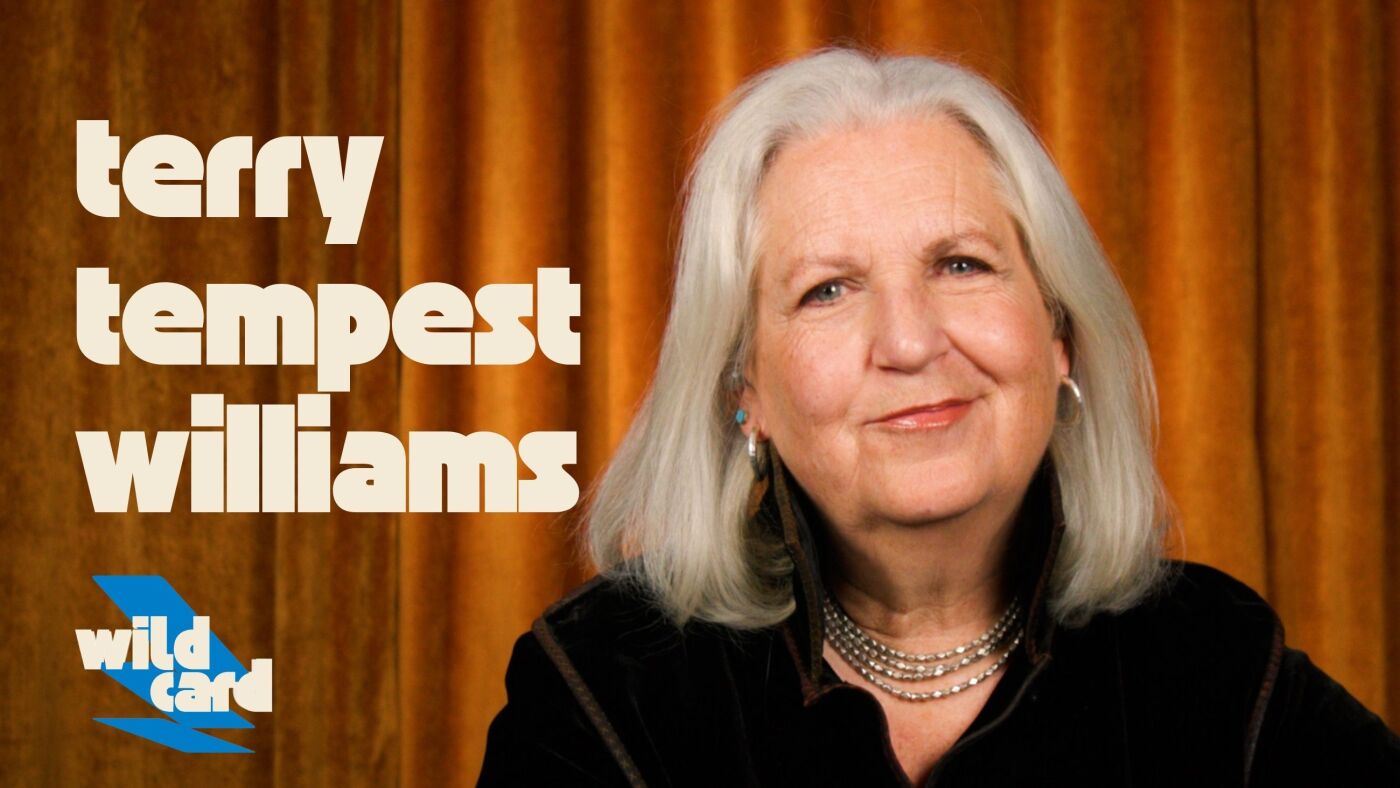
A note from Wild Card host Rachel Martin: I met Terry Tempest Williams about 25 years ago at a writer’s conference in Yosemite Valley. I was a young reporter who was there to do a story about how literature was addressing climate change and she made such a huge impression on me. I had never heard someone talk about the natural world the way Terry did and she had a spiritual depth I hadn’t encountered in my life at that point.
To this day, Terry’s writing always reorients me towards what is good, what is beautiful, and what is true. Her newest book is called “The Glorians.”

For its upcoming Los Angeles venue, experiential art firm Meow Wolf will focus on the art of storytelling, with a specific eye toward skewering our city’s moviemaking magic. To help bring that vision to life, Meow Wolf has entered into a creative partnership with Titmouse, one of L.A.’s most renowned independent animation houses.
The Hollywood-based studio behind popular series such as “Big Mouth” and “Star Trek: Lower Decks” will create animation that will be shown throughout the West L.A. venue, which is on target for a late 2026 opening at the Howard Hughes entertainment complex.
It’s a move that represents a shift for Santa Fe, N.M.-based Meow Wolf. Over the last decade-plus, the art collective has grown beyond its anything-goes, punk-meets-psychedelic roots into an organization with full-scale, maximalist installations in its hometown, Denver, Las Vegas, Houston and the Dallas suburbs. In the past, Meow Wolf kept most of its media in-house.
As part of its larger-than-life participatory art installations, Meow Wolf L.A. will feature a mix of live action and animation, the former filmed by Meow Wolf in its Santa Fe studio. Meow Wolf’s James Stephenson, a senior VP with the company and its creative director of emerging media, said the degree to which the L.A. exhibition will lean into various animation styles necessitated an outside partner. Titmouse’s work, in development by a number of directors with contrasting tones, will be shown on a variety of formats, ranging from cinema screens to full-room projections.
“I really believe in animation as an art form, and I know the Titmouse folks do too,” Stephenson says. “Animation is made by artists. It’s made by artists with their own hands. It’s something that is still very rooted in craft.”
Meow Wolf’s L.A. space is set in a former cinema complex, and will champion its location, taking guests on a journey through a converted movie house and beyond, into a sci-fi-inspired fantasyland with sentient spaceships and a 30-foot-tall mushroom tower. Meow Wolf creatives have spoken of the fantastical movie theater as one that will feature animated, self-aware candy before attendees enter the main exhibition space, making Titmouse’s work some of the first art guests will encounter. Titmouse co-founder Chris Prynoski has said the studio has lined up at least six directors for the exhibit.
An in-progress art installation destined for Meow Wolf L.A. at the art collective’s Santa Fe, N.M., headquarters. The L.A. exhibition will feature animation from Titmouse.
(Gabriela Campos / For The Times)
Titmouse, says Stephenson, is the right partner because “they’re known less for a house style, and more for a house vibe.” Over the years, Titmouse has been behind such diverse shows as “Scavengers Reign,” owning a Jean Giraud influence rooted in French and Spanish surrealism, the lively “Jentry Chau vs. the Underworld,” with an unique color palette that took inspiration from anime and Chinese mythology, the exaggerated comic book feel of Adult Swim’s “Metalocalypse,” and the approachable yet expressive tone of “Star Trek: Lower Decks.”
“Meow Wolf’s vibe is similar to Titmouse’s vibe,” Stephenson says. “It’s artist-first, artist-driven, independent and kinda edgy. They are always trying to find the edge of what’s possible. They try to see how far they can go, and it’s done for fun and in the spirit of taking risks.”
Prynoski says working with Meow Wolf will give Titmouse a sense of artistic freedom it doesn’t always have when delivering content for more traditional Hollywood partners. He says the multi-director approach is a callback to the early days of Warner Bros. Animation, when individual creators put their own stamp on Looney Tunes material.
“I use Bugs Bunny as an example,” Prynoski says. “You’ve got a Friz Freleng Bugs Bunny short. You’ve got a Chuck Jones Bugs Bunny short. You’ve got a Tex Avery Bugs Bunny short. They’re all different versions of Bugs Bunny, and people who are really paying attention can tell which director directed each one. Even though to the layman, these are all Bugs Bunny, but if you lined them up, they are drawing in different styles, sensibilities and techniques.”
Prynoski says that was a centerpiece of his pitch to Meow Wolf, noting that characters will reappear in multiple installations, each handled by a different artist. Meow Wolf L.A., in fact, will be the firm’s most character-driven exhibition, as guests will follow the storylines of three main protagonists throughout the space.
In announcing the partnership, Meow Wolf and Titmouse released an image from an animated work directed by Luca Vitale. It features a key character having a moment with a hummingbird and it’s done in an elegant, slightly anime-influenced style. It’s an image full of movement, reflecting a character in transition with inviting pastels and bold dashes.
“I like that image because I think it captures some of the sense of wonder that we want people to feel,” Stephenson says. “The character is having an encounter with the elusive nature of creativity and reality in a way that makes them have a different perspective of what’s possible.”
Other contributing animation directors to Meow Wolf L.A. include Space Dawg, Felix Colgrave, Alexander Vanderplank and Phimémon Martin, and Jun Ioneda.
Titmouse’s partnership with Meow Wolf will extend beyond the L.A. exhibition. The two will be working on the development of Meow Wolf New York, which is slated to open some time after Los Angeles, and are collaborating on a planned animated series, which Prynoski is spearheading.
Meow Wolf exhibits are the result of sometimes hundreds of disparate artists coming together in a shared space. Distilling that into a signature, singular style for a series could be a challenge. Stephenson pinpoints some guiding principles.
“You really need to feel the hand of the artist,” he says. “You need to feel a DIY aesthetic. You need to feel the materiality. Those are very specific to what we are.”

The Kennedy Center on June 28, with its facade signage still covered by a tarp and scaffolding.
Alex Wroblewski/AFP via Getty Images
hide caption
toggle caption
Alex Wroblewski/AFP via Getty Images
On Wednesday, a federal appeals court denied President Trump’s request to stop the removal of his name from Washington, D.C.’s Kennedy Center. The signage on the building has been covered with tarp and scaffolding since June 13, but in a court filing last month, the center’s current executive director said that Trump’s name has been removed.
In their decision, three judges from the U.S. District Court of Appeals for the District of Columbia Circuit said that the president had failed to prove that the arts center would be “irreparably injured” without Trump’s name attached to it.
NPR requested comment from the Kennedy Center, but did not receive an immediate reply.
This latest round of court decisions is part of the ongoing litigation filed by Rep. Joyce Beatty, D-Ohio, against President Trump and the board of the Kennedy Center. In a statement emailed Wednesday to NPR, Beatty said: “Today’s ruling again affirms that this administration’s efforts to rename the Kennedy Center were unlawful. His name no longer desecrates this sacred memorial, which belongs to the American people. Now it is time for the Trump administration to accept this, comply with the law, and take the tarps down.”
In previous court filings, Trump’s legal team had asserted that removing the president’s name from the arts complex, both on the physical building and in its digital materials, would inflict irreparable harm in both time and money already spent. In the denial, the three judges — Patricia Millett, Robert Wilkins and Gregory Katsas — wrote that since Trump’s name has already been removed, “a stay would not avert those harms.”
Furthermore, Trump had claimed that without his name attached, future fundraising would be threatened “and [will] contribute to the financial decline of the Center.” In response, the appeals judges wrote: “Appellants, however, have failed to support this assertion with any specific facts or evidence. They offer only the conclusory assertions of the Kennedy Center’s Executive Director that were made in a factually unsupported declaration.” The center’s current executive director, Matt Floca, specializes in physical plant management.
The presiding judge in the case, Christopher R. Cooper, has ordered that the center provide him a status report on the center’s operation and programming before the end of this month. As of Wednesday, the center’s calendar lists a small roster of programs, including outdoor free movie screenings, workshops for children, and five free live performances in July on its Millennium Stage. In the past, the Kennedy Center presented over 2,000 arts and education events each year, including free daily Millennium Stage performances.

-

 San Francisco, CA5 minutes ago
Man reported missing in San Francisco
-

 Dallas, TX10 minutes ago
How to buy France World Cup semifinal soccer tickets in Dallas
-

 Miami, FL17 minutes ago
Miami-Dade Schools names six semifinalists for superintendent
-

 Boston, MA20 minutes ago
Lawsuit: ICE detained East Boston father despite legal status
-

 Denver, CO25 minutes ago
Victor Marx wins GOP primary for Colorado governor, defeating veteran lawmaker after unorthodox campaign
-

 Seattle, WA32 minutes ago
Widower of pregnant woman who was shot to death in Seattle sues homelessness authority
-

 San Diego, CA35 minutes ago
Terrifying moment huge sea lions chase tourists off popular California beach
-

 Milwaukee, WI47 minutes ago
Milwaukee leaders condemn ICE arrests as agency ignores City mask ordinance

