
Connect with us

News

Judges threatened with impeachment, bombs for ruling against Trump agenda

Published

on

Judges threatened with impeachment, bombs for ruling against Trump agenda

Supreme Court Justice Amy Coney Barrett and retired Supreme Court Justice Anthony Kennedy listen as President Trump addresses a joint session of Congress at the U.S. Capitol on March 4.

Win McNamee/Getty Images


hide caption

toggle caption

Advertisement

Win McNamee/Getty Images

Federal judges who have ruled against the Trump administration this year are confronting a wave of threats, potentially compromising their personal safety and the independence of the judiciary.

The sister of Supreme Court Justice Amy Coney Barrett received a bomb threat earlier this month, and lower court judges who hit pause on some of President Trump’s efforts to dismantle federal agencies and programs have been singled out on social media.

Republican lawmakers close to the president even have proposed impeachment proceedings against a few of those judges, who serve for life.

Advertisement

Elon Musk, who oversees the Department of Government Efficiency making cuts to federal agencies, himself has repeatedly posted on social media about impeaching judges who delay or block parts of Trump’s agenda.

Efforts to undermine the judiciary come at the same time the Trump administration has moved to fire lawyers inside the Justice Department and the Pentagon, penalize private law firms who represented clients Trump does not like, and to back away from participation in the activities of the American Bar Association.

Judge Richard Sullivan, of the U.S. Court of Appeals for the Second Circuit, said in his lifetime four federal judges have been killed in retaliation for their work on the bench.

“This is not hypothetical,” Sullivan, who leads a Judicial Conference panel on security issues, told reporters in a news conference this week. The Judicial Conference is a representative body of federal judges that frames policies for courts. “It’s real. It’s happened before. We have to be certain that it doesn’t happen again,” he said.

The Federal Judges Association, a voluntary group of more than 1,000 judges across the nation, said judiciary plays a “critical role in preserving democracy and a law-abiding society.”

Advertisement

“Judges must be able to do their jobs without fear of violence or undue influence,” the group said in a written statement to NPR.

Early threats

One thing stands out to legal experts: these attacks on judges are coming at a very early stage in the legal process — often, before the Supreme Court weighs in as the final decider.

“We have a system of justice that allows for appeals,” Judge Jeffrey Sutton, chief judge of the Sixth Circuit Court of Appeals, told reporters this week. “That’s typically the way it works. Impeachment is not and shouldn’t be a short-circuiting of that process. And so it is concerning if impeachment is used in a way that is designed to do just that.”

Only 15 federal judges have faced impeachment, mostly for allegations of wrongdoing such as bribery, corruption, or perjury, in the past couple of centuries.

Stephen Vladeck, a law professor at Georgetown University, said the odds of a successful judicial impeachment are pretty low, and to remove a judge from the bench would require a two-thirds vote from the Senate.

Advertisement

“The more that people like Elon Musk are putting on the wall the idea that it’s appropriate to attack these judges for nothing more than ruling against the federal government, the more that we’re normalizing what really are in the main very serious threats to judicial independence,” Vladeck said.

“Jeopardize the Rule of Law”

But Paul Grimm, who spent 26 years as a federal judge, said even the threat of impeachment can amount to intimidation.

“And if you try to intimidate judges, if that’s your goal, so that they do not do their constitutional duty, then you jeopardize the rule of law,” said Grimm, who leads the Bolch Judicial Institute at Duke Law School. “And without the rule of law, every liberty and every right that we cherish as Americans is vulnerable.”

Grimm said he worries a lot about online posts that display the home and work addresses of judges and their adult children, a step that he said “crosses the line.”

Nearly five years ago, an angry litigant shot and killed the son of U.S. District Judge Esther Salas in New Jersey.

Advertisement

And in 2023, a state court judge in Maryland was gunned down in his driveway.

Attacks over rulings

The U.S. Marshals say threats against federal judges have doubled in recent years, according to the most recent data. And those threats have been directed at both Democrat and Republican judges.

Justice Barrett came under withering criticism this month from some right-wing political commentators, after she voted alongside Chief Justice John Roberts and the liberals on the high court against Trump’s effort to freeze foreign aid.

Lower court judges have faced online attacks for their early rulings on Musk’s DOGE team, efforts to restore government web pages, and the freeze on foreign aid.

Advertisement

The Marshals protect judges, but they also report to the U.S. Attorney General, not to the courts themselves. That’s got some members of Congress on alert.

“A judge’s security is dependent in many ways on the Marshals Service who the president appoints to protect the judges, and if a president doesn’t like a decision that’s coming from a judge, theoretically they could pull their security,” Rep. Eric Swalwell, a Democrat from California, said at a congressional hearing this month.

The administration has already yanked protection this year from former military and national security officials who disagreed with Trump in his first term.

Swalwell said Congress should consider giving judges their own security force — one that’s independent from the White House.

Advertisement

News

Former Olympian pleads not guilty in reflecting pool vandalism charges

Published

on

Former Olympian pleads not guilty in reflecting pool vandalism charges

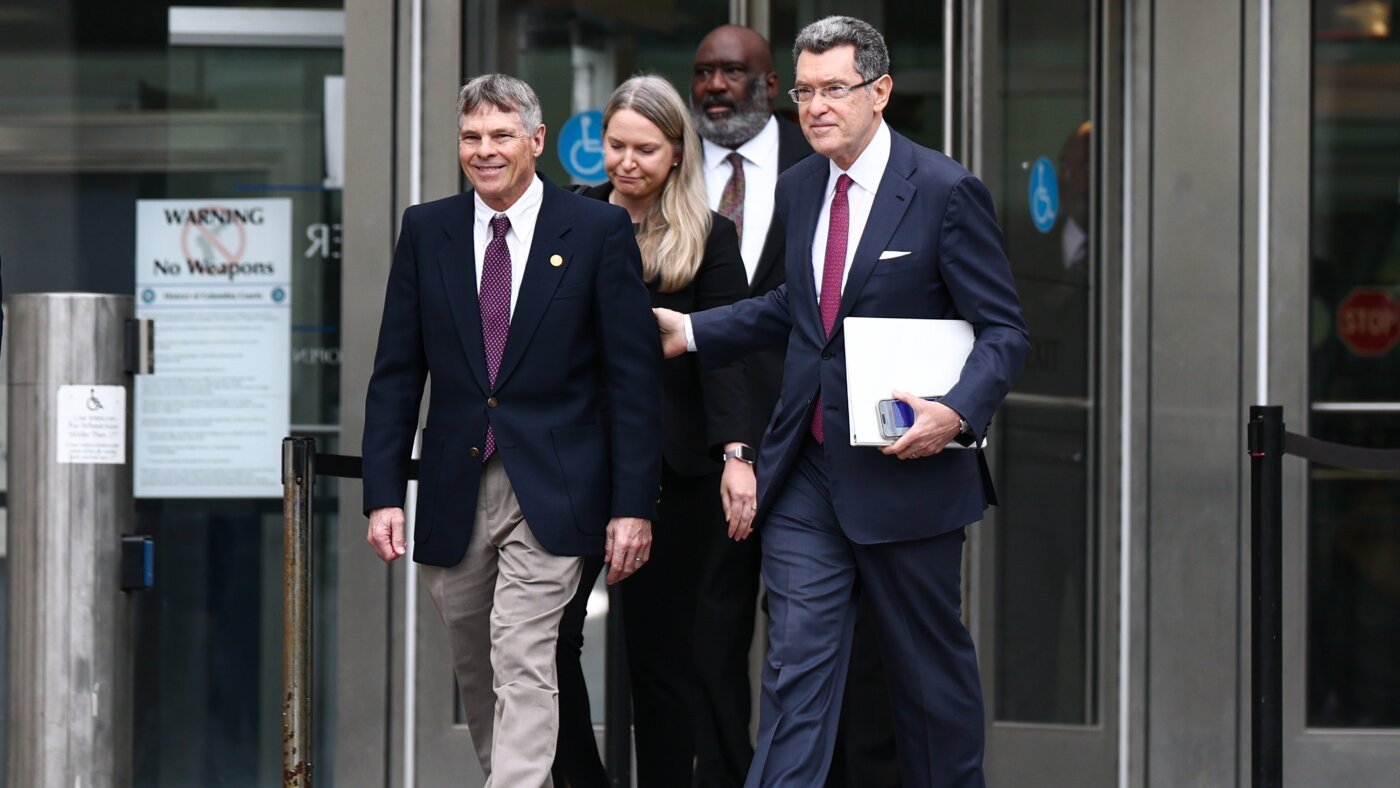
Former U.S. Olympian David Hearn (left) walks with his attorney Norman Eisen to speak to reporters and protesters gathered after his arraignment at the Superior Court of the District of Columbia in Washington, D.C. on Thursday.

Finn Gomez/Getty Images


hide caption


toggle caption

Advertisement

Finn Gomez/Getty Images

Former U.S. Olympic canoeist David Hearn pleaded not guilty to damaging the Lincoln Memorial Reflecting Pool in D.C. Superior Court Thursday morning.

Federal prosecutors charged Hearn with a single count of destruction of property causing more than $1,000 in damage to the pool.

Hearn has previously claimed, which his attorneys repeated during a short press conference outside the court, that he simply touched the water in the pool out of curiosity.

Advertisement

The Trump administration had just completed a $14 million renovation of the pool.

But shortly after the work finished, peeling paint and algae gathered in the water. The remodel has been largely criticized as a massive failure and waste of taxpayer dollars.

Superior Court Judge Carmen McLean released Hearn on his own recognizance. His next hearing is scheduled for Aug. 5.

Norm Eisen, one of Hearn’s attorneys, spoke to reporters outside of court following the hearing. He said the administration is using Hearn as a “scapegoat … for their own failures.”

“It is not a crime to touch the reflecting pool, to touch water in the United States of America,” he said.

Advertisement

Prosecutors say there is a host of evidence against Hearn.

This is a developing story.

Continue Reading

News

Three more people charged with damaging Reflecting Pool after Trump’s multimillion-dollar restoration | CNN Politics

Published

on

Three more people charged with damaging Reflecting Pool after Trump’s multimillion-dollar restoration | CNN Politics

Three more people have been criminally charged with destruction of property at the Lincoln Memorial Reflecting Pool.

Officers say they detained Cameron Thiers, Sophie Dennison-Gibby and Justin Carreno one Saturday afternoon in June and described in court documents witnessing them peeling and removing pieces of blue paint from the Reflecting Pool.

One officer “witnessed Carreno reach down into the reflecting pool and pull up a piece of the blue paint,” according to the court documents.

The officer who detained Dennison-Gibby “found 1 additional piece of the reflecting pool liner” in her purse, the documents said.

All three incidents were recorded on the officers’ body worn cameras, they said in the court documents.

Advertisement

Several “partnering law enforcement agencies assigned to the Reflecting Pool” working with US Park Police were involved in detaining the two men and one woman — including officers from Texas, Oklahoma, Montana and California.

One of the officers said in court documents that Thiers “admitted to removing a piece of blue sealant from the Reflecting Pool and still had it in his hand when I made contact with him.”

The three defendants were arraigned in court Wednesday and pleaded not guilty to the misdemeanor charges of destruction of property with a value less than $1,000. The judge ordered them to stay away from the Reflecting Pool.

Lawyers for Thiers and Dennison-Gibby declined to comment. CNN has reached out to Carreno’s attorney.

If found guilty of destruction of property, the defendants could be fined up to $1,000 and face a maximum of 180 days behind bars.

Advertisement

The New York Times first reported that three additional people had been charged with damaging the Reflecting Pool.

President Donald Trump has repeatedly claimed that vandals caused major damage to the pool by gashing the lining after his administration spent more than $14 million on renovations, though he has not provided evidence to support that claim. The officers who charged Carreno, Thiers and Dennison-Gibby did not accuse them of gashing the lining.

Former Olympic canoeist David Hearn was indicted by a grand jury in Washington, DC, last week for allegedly damaging the Reflecting Pool. Hearn — unlike Carreno, Thiers and Dennison-Gibby – was charged with destruction of property with a value of more than $1,000 which carries a maximum penalty of 10 years in prison, if convicted. He is set to be arraigned in court Thursday.

Crews began draining the Reflecting Pool over the weekend to make repairs, according to Interior Secretary Doug Burgum, for the second time in three months.

The move comes after weeks of problems – algae blooms, green-hued water, a chipping bottom and the administration’s allegations of vandalism – that have plagued the iconic landmark, making its woes the subject of national interest.
Advertisement
Continue Reading

News

Supreme Court financial disclosures reveal how their books add to their income

Published

on

Supreme Court financial disclosures reveal how their books add to their income

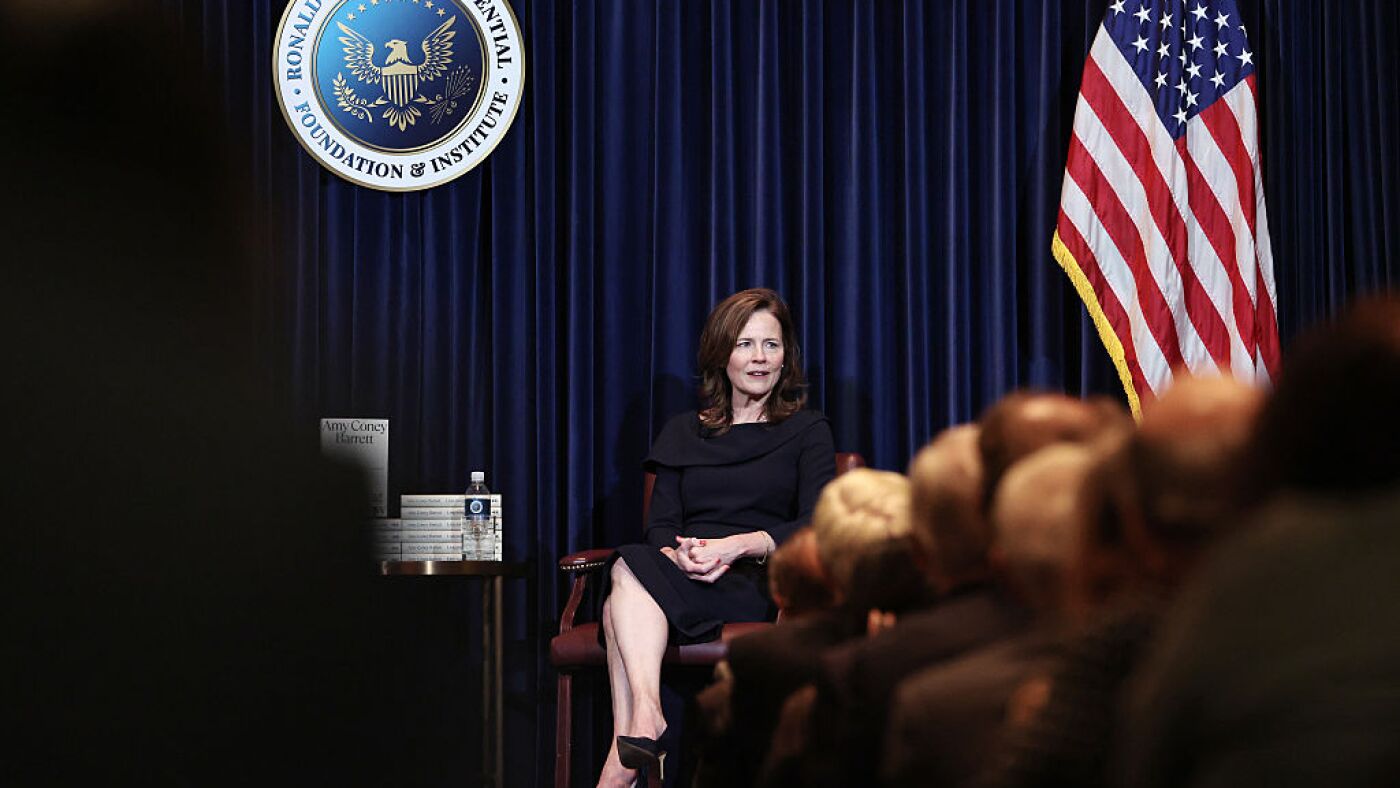
Supreme Court Justice Amy Coney Barrett speaks at the Reagan Library on Sept. 9, 2025, in Simi Valley, Calif. Barrett discussed and signed copies of her new book, Listening to the Law: Reflections on the Court and Constitution.

Mario Tama/Getty Images


hide caption


toggle caption

Advertisement

Mario Tama/Getty Images

Even as the Supreme Court was handing down one legal thunderbolt after another last week, the justices were quietly releasing their annual financial reports. Justice Samuel Alito was the only sitting justice to request an extension, which he has done for 15 years. The disclosures do not give a complete account of the justices’ total income and wealth, but they give insights into their concertgoing, guest professorships and even their involvement in youth sports.

In addition to their salaries, much of the justices’ reported income came from their book deals. Justice Ketanji Brown Jackson led the pack earning more than $1.1 million last year for a total of roughly $4 million since her memoir, Lovely One, was published in 2024.

Justices Sonia Sotomayor, Neil Gorsuch, Amy Coney Barrett and retired Justice Anthony Kennedy also reported income from published books. Earnings from their books ranged from $849,000 for Barrett, to $300,000 for Gorsuch and $88,000 for Sotomayor, whose books include her 2013 autobiography and five children’s books. Justice Clarence Thomas, who previously earned $1.5 million for his 2007 memoir, listed no publisher payments last year, and Justice Brett Kavanaugh, one of 13 co-authors of a 2016 legal treatise, also received no payments last year. Kavanaugh is said to be working on a memoir but he listed no payments for the anticipated book. Alito does have a book coming out in the fall, but with his financial report still outstanding, there is no data on how much he was paid for the work in 2025.

Advertisement

The only two sitting justices who have not written books are Chief Justice John Roberts and Justice Elena Kagan.

Many justices also earned income from teaching at law schools. Roberts reported income from New England Law, located in Boston, and Gorsuch reported teaching income from George Mason University in Virginia. Thomas taught classes at Catholic University in Washington, D.C., and Barrett and Kavanaugh taught at Notre Dame Law School. Barrett graduated from the school and began teaching there 23 years ago; Kavanaugh has family connections to Notre Dame.

Continue Reading
Advertisement

Trending