World
As U.S. Tariffs Become Reality, Canadians Prepare for Economic Pain


The trucks that carry about $300 million worth of auto parts each day over the bridge from Windsor, Ontario, to Detroit are still rolling as usual. But in the aftermath of President Trump’s decision to impose 25 percent tariffs on most categories of Canadian exports, the mood in Windsor, like all of Canada, was transformed.
Mr. Trump’s move has ignited a sense of economic anxiety and anger among Canadians about how they are being treated by their neighbor, ally and best customer. Most are still puzzling over Mr. Trump’s motivations and objectives for the tariffs, as well as his comments about annexing Canada as the 51st state.
And as they turned their attention to getting the potentially crippling tariffs, and a 10 percent levy on Canadian oil and gas and some minerals, lifted, politicians, business people and ordinary Canadians say that the relationship between the two countries will never return to what it once was.
Flavio Volpe, the head of a Canadian auto-parts maker trade group, said that his members could start shutting down factories in days, and that he feels betrayed by the United States.
“We’ve built two societies on the same values,” said Mr. Volpe, who is also a member of Prime Minister Justin Trudeau’s Council on Canada-U.S. Relations. “The man in the White House did a U-turn and drove right over us.”
Mr. Trudeau and anxious business leaders throughout Canada said that their country’s focus must be on ending the tariffs as quickly as possible.
Most forecasts project that Canada’s export-dependent economy will be sent into a recession, although they differ on timing and its initial severity.
“We have a limited experience for this magnitude of a trade shock,” the Royal Bank of Canada, the country’s largest financial institution, said this week. Some Canadians reached back for comparison to the Smoot-Hawley tariffs of 1930, which raised the average U.S. import duty to a staggering 59.1 percent. Many economists believe that they worsened the Great Depression, but the two countries’ economies were far less integrated at that time.
Aside from oil and gas, Canada’s largest export sector is the auto industry. On Tuesday, Mr. Trump suggested that the only way out of tariffs for the sector is to move all of its production to the United States. Aside from abandoning a skilled work force, that would require billions of dollars in new investments.
Historically, automotive trade has been largely balanced between the United States and Canada. Parts often swirl around between Canada, the United States and Mexico, sometimes crossing borders repeatedly before winding up in vehicles in a dealer’s showroom.
Mr. Volpe, of the Automotive Parts Manufacturers’ Association in Canada, said that, aside from the tariffs, trade remained unchanged on Tuesday, an assessment backed up by the usual migration of trucks to the Ambassador Bridge.
The 25 percent tariffs are being paid by the importers, either other parts makers or automakers. Most contracts allow an automaker to deduct tariffs it pays when settling a parts company’s bill.
Mr. Volpe said that those deductions will make parts suppliers, which have generally have single-digit profit margins, instantly and deeply unprofitable.
He expects that most of his members can cover those losses from their cash reserves for about a week. After that, they will be forced to stop shipments.
“No one is going to burn up their cash reserve for the president of the United States,” he said.
For more parts, automakers usually have no alternative suppliers, let alone ones in the United States. Setting up new suppliers would take time and substantial investment. The result, experts say, will be a parts shortage that rapidly cascades into assembly-line shutdowns. Thousands of workers in Canada, the United States and Mexico would be left idle.
Some industries began idling small numbers of workers before the tariffs came into effect.
Bill Slater, the president of a United Steelworkers local in Sault Ste. Marie, Ontario, said that Algoma Steel laid off about 20 of his members who are salaried employees, citing the tariffs. He said that a number of probationary hourly workers were also let go by the mill.
Truck drivers had a mixed experience. Stephen Laskowski, the president of the Ontario Trucking Association, said that some had a surge in business as companies moved to get products into the United States before the tariffs came into effect, while others were laying off drivers because customers were canceling shipments.
Canada’s forestry industry knows tariffs all too well. Special U.S. duties on softwood lumber go back decades and were a factor in Canada seeking the 1989 free trade agreement with the United States, which was later expanded to include Mexico. (Canada has repeatedly failed to get an exemption from the U.S. trade complaints system that imposes the softwood lumber tariffs.)
But Kurt Niquidet, the president of the British Columbia Council of Forest Industries, said that adding the 25 percent tariff “really puts us into unprecedented territory.”
Lumber mills in the western province are facing a dizzying array of tariffs. This week’s 25 percent tariff is on top of a 14.4 percent tariff that the U.S. government expects to raise this summer, to more than 27 percent. Then Mr. Trump announced last weekend that he’s opened an investigation into lumber imports that could result in even more tariffs.
While the United States supplies about 70 percent of its own lumber, Mr. Niquidet, an economist, said that American forests and mills cannot replace all the lumber from Canada, nor can it be sourced from other countries.
“There will still be imports from Canada,” he said. “Prices in the U.S. will rise.” Some Canadian lumber mills, however, may not survive the trade assault, he added.
While Mr. Trudeau speculated that Mr. Trump was seeking a “total collapse of the Canadian economy, because that’ll make it easier to annex us,” Mr. Volpe said he was not sure it’s that complicated. “If it looks like he is dismantling the structure of the postwar economy, then he is,” Mr. Volpe said. “What are you going to do about it?” Some Canadians believe that their country is simply being used as part of Mr. Trump’s plan to fund substantial U.S. tax cuts with tariffs.
Jean Simard, the president of the Aluminum Association of Canada, fought a successful battle over the 10 percent tariff on Canadian exports of the metal Mr. Trump enacted in during his first administration. Now Mr. Simard is attempting to fend off additional tariffs that Mr. Trump has promised to put on top of Tuesday’s 25 percent. He said that he believes the president is telling the world: “This is what I’m able to do to my closest allies — think about what’s awaiting you.”
Mr. Simard added: “It’s an old barbarian approach to war.”
As the tariffs were rolled out, actions against American goods quickly came into play. Government-owned liquor stores, including in Ontario, pulled U.S. beer, wine and spirits from off their shelves, and that province canceled a 100 million Canadian dollar ($69 million) contract with Elon Musk’s Starlink satellite service to provide internet in rural areas.
Some Canadians are also vowing not to travel south, a decision perhaps also informed by the decline of the Canadian dollar brought on by the tariffs.
Most winters, Lee Miller, a retired electrician from Saint John, New Brunswick, would be traveling in his motor home through sunny warm states, including Florida.
“As soon as Trump started talking tariffs, I said, ‘Nope, not going,’” Mr. Miller said. After canceling this year’s trip, he plans not to enter the United States as long as Mr. Trump is president. That will, however, mean missed visits with friends and family who live across the border.
“This is one of those things that tears families apart,” he said.



President Trump said Iran had agreed to the “highest level” inspections, hours after an Iranian official said there were “no detailed discussions on the nuclear issue,” as the two sides continued to present different narratives of their latest talks.
World
Turkey detains over 200 suspects, including alleged ISIS militants, in sweeping raid ahead of NATO summit
NEWYou can now listen to Fox News articles!
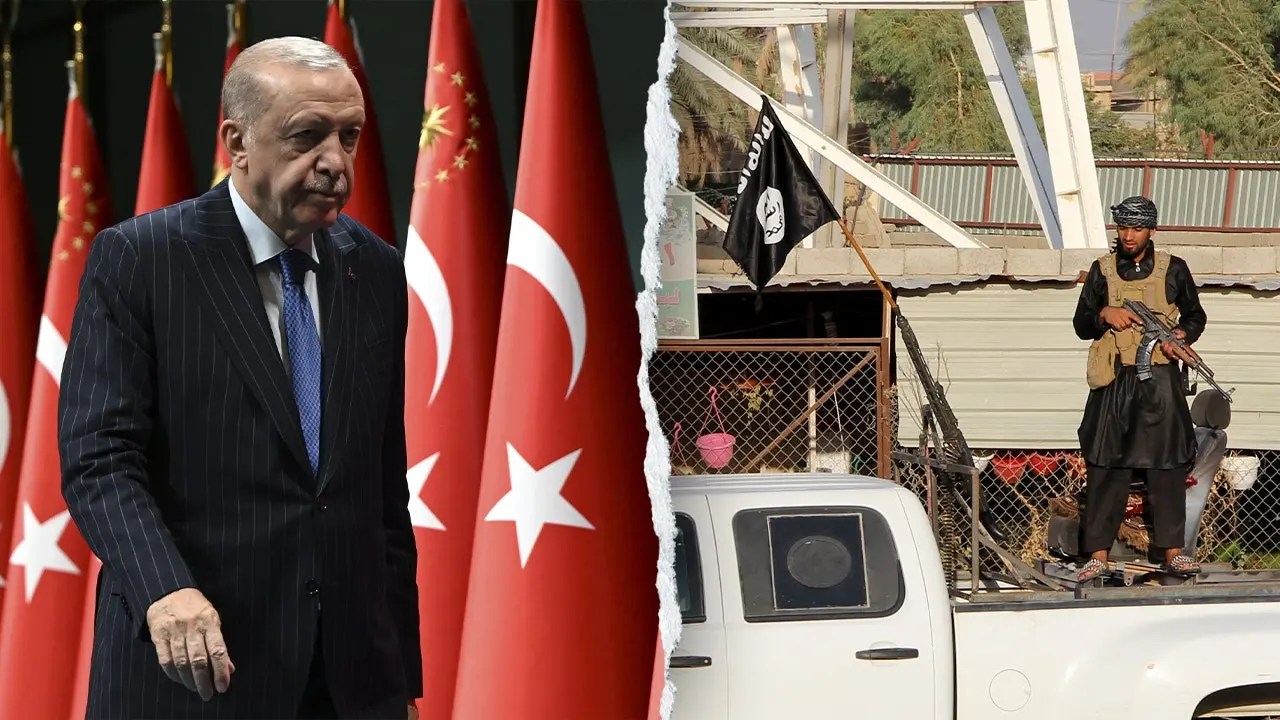
Turkish authorities reportedly detained more than 200 people, including suspected ISIS-linked militants, in a sweeping Tuesday raid in capital Ankara ahead of a July 7-8 NATO summit.
The raid came after Turkish authorities issued detention orders for 241 suspects, 209 of whom were taken into custody, The Associated Press reported, citing a statement from the office of Turkey’s chief prosecutor.
Among the 209 detained, 56 were allegedly ISIS militants, according to the AP. This comes after Turkish authorities said they detained 125 ISIS members in December.
The detention operations occurred just two weeks before a planned NATO summit in Ankara on July 7 that President Donald Trump is expected to attend.
TURKEY’S NATO ROLE UNDER SCRUTINY AMID NEW REPORT ON HAMAS, MUSLIM BROTHERHOOD TIES
President Donald Trump greets Turkey’s President Recep Tayyip Erdogan during a summit in Sharm El Sheikh, Egypt, on Oct. 13, 2025, to support ending the Israel-Hamas war in Gaza after a breakthrough ceasefire deal. (Evan Vucci/AP Photo/Pool)
Other militants scooped up were 35 alleged members of the Revolutionary People’s Liberation Party/Front, which a Turkish statement described as “a far‑left group known for armed attacks and assassinations in Turkey,” according to the AP.
The ISIS-combating operations demonstrate the terrorist group’s ongoing activity in the region, showing the group is still functioning despite the U.S. campaign during Trump’s first term to eliminate the group’s caliphate and its control of large swaths of territory in the Middle East.
Iraqi government forces celebrate while holding an Islamis Sate (IS) group flag after they claimed they have gained complete control of the Diyala province, northeast of Baghdad, on January 26, 2015 near the town of Muqdadiyah. (YOUNIS AL-BAYATI/AFP via Getty Images)
In recent years, ISIS has spread into the African continent, prompting a strong response from the U.S. In May, Trump authorized a series of strikes in Nigeria to combat the group.
PENTAGON SLASHES NATO COMBAT COMMITMENTS AS TRUMP PUSHES EUROPE TO DEFEND ITSELF
A May 16 strike killed ISIS leader Abu-Bilal al-Minuki, who was the group’s second-in-command globally.
U.S. and Nigerian forces conducted kinetic strikes against ISIS fighters in northeastern Nigeria on May 17, 2026, AFRICOM said. (X/U.S. Africa Command)
CLICK HERE TO DOWNLOAD THE FOX NEWS APP
“Abu-Bilal al-Minuki, second in command of ISIS globally, thought he could hide in Africa, but little did he know we had sources who kept us informed on what he was doing,” Trump wrote in a post on Truth Social after the strike. “He will no longer terrorize the people of Africa, or help plan operations to target Americans.”
The group’s renewed activity also includes a call to supporters to make attacks on U.S. soil during the World Cup.
The Associated Press contributed to this report.

By Euronews with AFP
Published on
Two whales were killed off the coast of Iceland overnight Sunday, two days after commercial hunting resumed, local media and animal rights activists reported Monday.
ADVERTISEMENT

ADVERTISEMENT
The kill ends a two-year pause and marks the first catches since 2023.
Icelandic public broadcaster RUV reported that two fin whales were killed. The fin whale is the second largest animal on Earth after the blue whale.
Before the vessels set off on Friday, a protester had attached himself to one of the masts in the port of Reykjavik, but climbed down and was escorted away by police.
Iceland, Norway and Japan are the only three countries that still openly permit whaling, despite international condemnation from the public and animal welfare organisations.
Iceland cancelled its whale hunt over the past two years, partly because economic problems had cut demand and the industry was not deemed profitable enough.
“The first fin whale deaths in Iceland’s hunt this year are devastating,” said Joanna Swabe, European senior public affairs director for animal rights group Humane World for Animals.
“Iceland has killed more than 1,000 fin whales in the past two decades — not only the second largest animal on the planet but also a species classified as globally vulnerable to extinction,” Swabe said in a statement.
Iceland’s government has said it is planning to introduce a bill aimed at banning whaling this autumn.
The International Whaling Commission banned the commercial killing of whales in 1986 amid alarm at the declining stock of the marine mammals.
Iceland’s Marine and Freshwater Research Institute has recommended that no more than 150 fin whales are caught in the 2026 season.
That represents a 28-percent drop on the annual quota it recommended for the period 2018–2025, it said.
The institute has set an annual catch of 168 animals for the minke whale hunt this year, a 23-percent drop on 2018-2025.
-

 Crypto6 seconds ago
Crypto’s Liquidity Outlook Darkens as Fed Hawkish Pivot Pushes Hike Odds to 77%
-

 Finance3 minutes ago
Building a scalable finance function at Coca-Cola Europacific Partners
-
Fitness8 minutes ago
Built Strong: Fitness forges unbreakable father-son bond
-

 Movie Reviews18 minutes ago
Film Review: Soy Frankelda – SLUG Magazine
-
World30 minutes ago
U.S. and Iran Offer Conflicting Accounts of Nuclear Discussions
-

 Health53 minutes ago
Video: Why Milder Symptoms Could Make This Ebola Outbreak More Dangerous
-
 Lifestyle1 hour ago
Working hard as ever, Wendell Pierce aims for an annual trifecta: TV, film and theater
-

 Education1 hour ago
The Patriot Housewife Whose Plays Helped Push America Toward Revolution

