Connect with us

News

The strange world of the Euro-Gulf 

Published

on

The strange world of the Euro-Gulf 

Stay informed with free updates

Waiting for the Tube, I see a poster for an upmarket gym chain. Locations? “City of London. High Street Kensington. Dubai.” What a shame to choose a setting that is so disfigured with bad taste and clueless expats. Still, the City and Dubai branches must be first-rate.  

Soon after, I am in Doha, and again the Euro-Gulf linkage is inescapable. The emir of Qatar is back from a state visit to Britain, where the hosts were angling for a trade deal. Swiss-headquartered Fifa has just given the World Cup hosting rights to Saudi Arabia. Even in skyscraper-free Muscat, where alleys that might have been rationalised elsewhere in the Gulf twist freely behind the corniche, three restaurants in my hotel are outposts of Mayfair brands. 

What a shame the word “Eurabia” is taken. And by such cranks. (It is a far-right term for a supposed plot to Islamise Europe.) Because we are going to need a word for this relationship. The Arabian peninsula has what Europe lacks: space, natural wealth and the resulting budget surpluses to invest in things. For its part, Europe has “soft” assets that Gulf states must acquire, host or emulate to carve out a post-oil role in the world. This isn’t the Gulf’s deepest external connection. Not while 38 per cent of people in the UAE and a quarter in Qatar are Indian. But it might be the most symbiotic, if I understand that word correctly. 

Advertisement

True, the US has a defence presence in all six Gulf Cooperation Council states. This includes the Saudi footprint that Osama bin Laden wasn’t super-stoked about. But everyday contact? America is a 15-hour flight away. Its soft assets are either harder to buy or less coveted. Its citizens have little fiscal incentive to live in tax havens, as Uncle Sam charges them at least some of the difference.  

In the 1970s, when Opec profits gushed through London, Anthony Burgess wrote a dystopia in which grand hotels became “al-Klaridges” and “al-Dorchester”. What a mental jolt it was for even the worldliest Europeans to see — we mustn’t pussyfoot around this — non-white people with more money than them. Still, they could condescend to the Gulf as being no place to live. Half a century on, their grandchildren would call that copium. In fact, their grandchildren might literally live there for economic opportunities. (Al-Dorado?) As a banker friend explains it, the time zones allow you to sleep late, trade the European markets, then dine late, so it is the young ones who do a Gulf stint, not the burnouts who are my age. 

For how long, though? It is the sheer unlikelihood of this tryst, between a universal rights culture and monarchical absolutism, between a mostly secular continent and the home peninsula of an ancient faith, that distinguishes it from anything I can think of. A relationship can be both necessary and untenable. It wouldn’t take much — some intra-GCC violence, say, which seemed close in 2017 — for Europe’s exposure to the Gulf to age as badly as its former openness to Russia. If Abu Dhabi-owned Manchester City are found to have committed financial chicanery, a chunk of Premier League history will be tainted. Because it is “just” sport, I sense people are underprepared for the backlash. 

And it is parochial to assume that the relationship could only ever break down on one end. It is the Gulf side that has to make the awkwardest cultural adjustments. Because Europeans associate 1979 with Iran and perhaps with Margaret Thatcher, they sometimes pass over the seizure of the Grand Mosque in Mecca by zealots who thought the House of Saud had grown soft on western habits. Governments in the region assuredly don’t forget.  

How far a place can liberalise without tripping a cultural wire occupies (and is answered differently in) each state, or emirate. Everyone is very nice to “Mister Janan” in his Doha hotel. But the metal scanners that must be passed on each re-entry to the building stand as a reminder of the stakes here. I wonder if Europe and the Gulf throw so much into their liaison out of a niggling doubt that it can last. 

Advertisement

Email Janan at janan.ganesh@ft.com

Find out about our latest stories first — follow FT Weekend on Instagram and X, and sign up to receive the FT Weekend newsletter every Saturday morning

News

Waymo called the cops on teen riders, raising privacy concerns

Published

on

Waymo called the cops on teen riders, raising privacy concerns

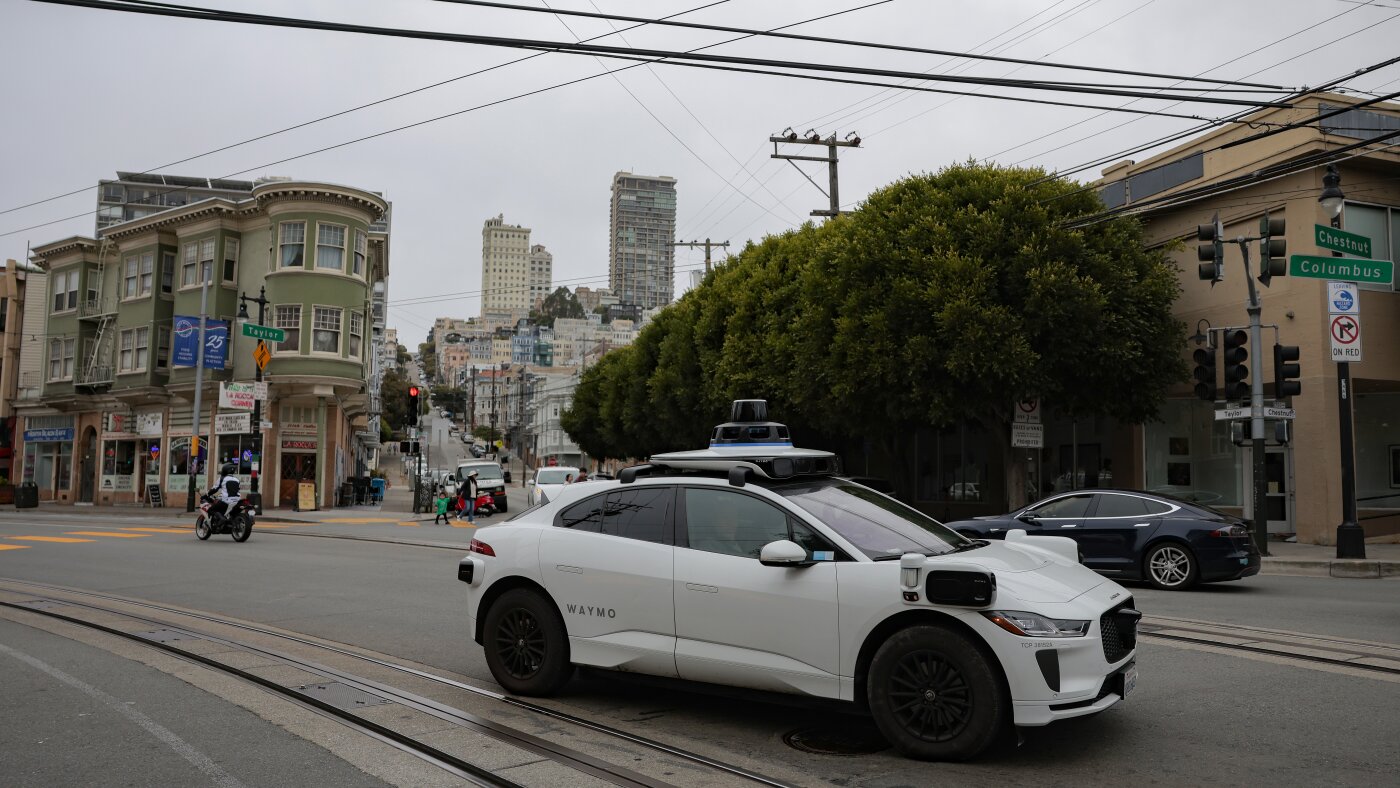
A Waymo robotaxi drives in San Francisco’s North Beach neighborhood this week.

Heather Diehl/Getty Images


hide caption


toggle caption

Advertisement

Heather Diehl/Getty Images

Police in San Mateo, Calif., posted Monday on social media that they had apprehended a pair of teenagers from a Waymo driverless robotaxi after the company alerted authorities to suspected criminal activity. It’s the latest incident involving video surveillance of passengers and others by autonomous vehicles — raising questions about the limits of privacy in such vehicles.

The Facebook post by the San Mateo County Police said: “Parents do you know where your teens are? @waymo does!”

The 15-year-olds were allegedly drinking alcohol and shooting toy guns from the car, according to the police. They said Waymo’s systems detected behavior that then triggered a safety response, after which the company disabled the vehicle and contacted police.

Advertisement

Waymo’s cars, equipped with an array of cameras, microphones and other sensors to monitor passengers and other nearby vehicles, are becoming more common in cities across the United States. Experts say the detention of the two teens in San Mateo highlights a potential — but not inevitable — trade-off between privacy and convenience. It also questions the extent to which companies similar to Waymo are required to hand over private data, including audio and video of passengers, in situations where a crime is suspected.

NPR reached out to Waymo, which is owned by Alphabet, the parent company of Google, for comment on the details of the San Mateo incident and how the company responded, but did not hear back. But on its website, the company says that as many as 29 cameras in its autonomous cars provide an all-around view and “are designed with high dynamic range and thermal stability, to see in both daylight and low-light conditions, and tackle more complex environments.”

“There already exist laws that govern duty to report or even duty to protect” for carriers such as Waymo, according to Alessandro Acquisti, a professor of information technology at the MIT Sloan School of Management. “The privacy problems arise when and if driverless carrier companies used such laws or ethical obligations as a pretext for blanket, indiscriminate accumulation of identifiable data for unspecified future purposes.”

That includes not just monitoring people inside the cars, but outside too. Take, for example, a hit-and-run investigation last year in Los Angeles. Media reported that the police inquiry was aided by video captured by a Waymo taxi that had a clear view of the crime. Critics suggested at the time that authorities were using the company’s vehicles as a mobile surveillance platform. And during 2025 protests in Los Angeles against Immigration and Customs Enforcement crackdowns, demonstrators vandalized Waymos, apparently angry that video recorded by the vehicles could be used by police, although there is no evidence that happened.

Continue Reading

News

Trump fires last members of election commission, inciting fears of midterm ‘chaos’

Published

on

Trump fires last members of election commission, inciting fears of midterm ‘chaos’

Donald Trump has terminated the remaining members of the independent, federal commission that assists election administration officials nationwide just a few months before the midterm elections, multiple outlets reported Thursday.

The remaining three commissioners of the four-member bipartisan commission ⁠were forced out on Thursday in different ways. The one Republican appointee resigned and the other ⁠two, Democratic appointees were notified of their terminations via email from ​the White House presidential personnel office.

“On ‌behalf of President ‌Donald J Trump, I am writing to inform you that your position ‌as Commissioner of the Election Assistance Commission is terminated, effective immediately. Thank you for your service,” the email, seen by Reuters, said.

The White House did not immediately respond to a request for comment.

The Election Assistance Commission serves as a “national clearinghouse of information on election ‌administration”, accredits testing laboratories and certifies voting systems, and maintains the national mail-voter registration form developed by the National ​Voter Registration Act of 1993, according to the commission’s website. The terminations follow Trump and top administration officials’ advocacy to change vote-by-mail requirements and investigations into the 2020 election outcome, which Trump lost to Democrat Joe Biden.

Advertisement

“It is ⁠irresponsible and dangerous that this Administration remains dead set on ​causing chaos for ​our election officials across this ​country,” Arizona secretary of state Adrian Fontes said in a ​Thursday statement. “This ‌move undermines the integrity ​of nonpartisan ​election administration.”

The 2002 law that established the commission, the Help America Vote Act, states the president can appoint replacements to the commission.

It is unclear how Trump will move ahead with the commission.

Reuters contributed reporting

Advertisement
Continue Reading

News

Former Olympian pleads not guilty in reflecting pool vandalism charges

Published

on

Former Olympian pleads not guilty in reflecting pool vandalism charges

Former U.S. Olympian David Hearn (left) walks with his attorney Norman Eisen to speak to reporters and protesters gathered after his arraignment at the Superior Court of the District of Columbia in Washington, D.C. on Thursday.

Finn Gomez/Getty Images


hide caption


toggle caption

Advertisement

Finn Gomez/Getty Images

Former U.S. Olympic canoeist David Hearn pleaded not guilty to damaging the Lincoln Memorial Reflecting Pool in D.C. Superior Court Thursday morning.

Federal prosecutors charged Hearn with a single count of destruction of property causing more than $1,000 in damage to the pool.

Hearn has previously claimed, which his attorneys repeated during a short press conference outside the court, that he simply touched the water in the pool out of curiosity.

Advertisement

The Trump administration had just completed a $14 million renovation of the pool.

But shortly after the work finished, peeling paint and algae gathered in the water. The remodel has been largely criticized as a massive failure and waste of taxpayer dollars.

Superior Court Judge Carmen McLean released Hearn on his own recognizance. His next hearing is scheduled for Aug. 5.

Norm Eisen, one of Hearn’s attorneys, spoke to reporters outside of court following the hearing. He said the administration is using Hearn as a “scapegoat … for their own failures.”

“It is not a crime to touch the reflecting pool, to touch water in the United States of America,” he said.

Advertisement

Prosecutors say there is a host of evidence against Hearn.

This is a developing story.

Continue Reading
Advertisement

Trending