Business
These are the top 7 issues facing the struggling restaurant industry in 2025

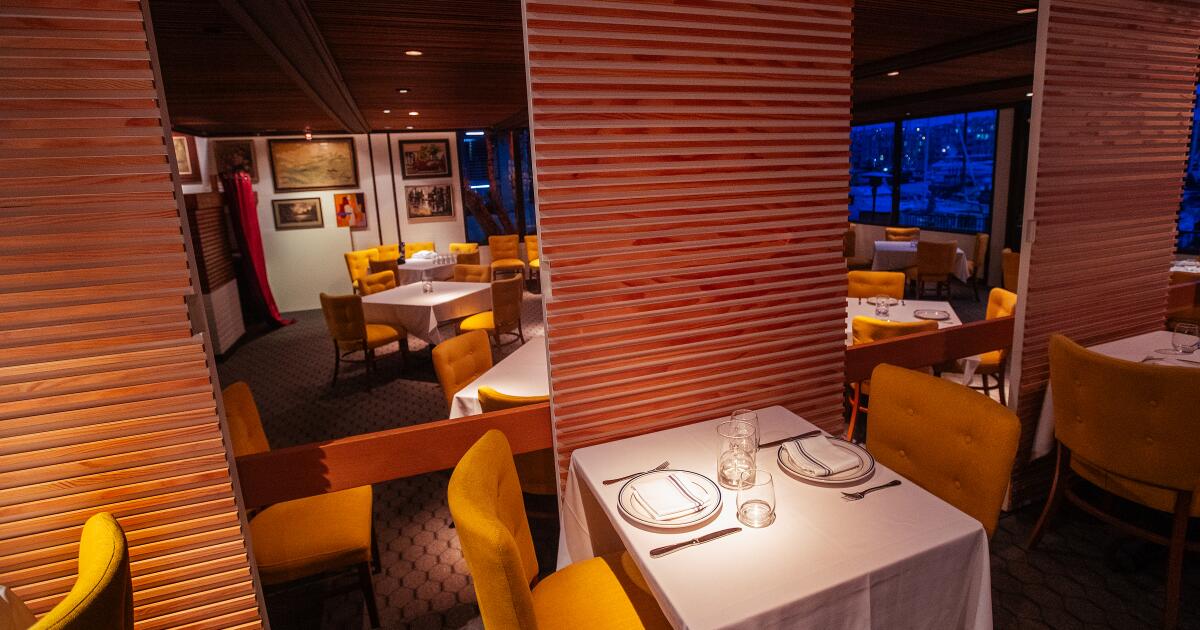
Operating a restaurant in Southern California continues to be a difficult endeavor, with many establishments still struggling from pandemic losses.
Food and labor costs increased in 2024, remaining by far the largest expenses of running a restaurant, according to the Independent Restaurant Coalition. And the minimum wage is set to increase again in California starting in the new year — to $16.50 an hour.
Locally, several Los Angeles restaurateurs report that they have yet to recover from entertainment industry strikes last year, which severely affected the service industry. Paired with low patronage and pandemic-era loans and rent payments that came due, several acclaimed restaurants are struggling or have shuttered across the country, particularly in L.A.
Most recently, the well-regarded All Day Baby in Silver Lake closed on Dec. 15. Owner Lien Ta told The Times that the restaurant simply didn’t make enough money on a day-to-day basis to sustain operations.
All Day Baby in March 2020. The Silver Lake restaurant is now shuttered.
(Mariah Tauger / Los Angeles Times)
It’s unclear what 2025 has in store for restaurants, but the needs of restaurants and bars are complex and numerous. Here are the top seven challenges restaurants are likely to face in the coming year.
Labor costs
Labor has long been a top expense for restaurants. In California, a larger percentage of the bottom line is spent on labor compared to other states. This doesn’t just mean the dollars for paying staff but includes other costs, such as payroll tax and workers compensation insurance.
It used to be that a good goal for a restaurant was for labor costs to be about 30% of gross sales. But many restaurants are spending much more. At some establishments, labor can account for 50% to 60% of the bottom line.
Ross Pangilinan, chef-owner of Terrace by Mix Mix restaurant at South Coast Plaza in Costa Mesa, said he spends the most on staff, which can account for up to 34% of his bottom line. The higher the labor, the more payroll tax and workers comp, he noted.
“Labor is going to be the No. 1 challenge” for 2025, said Pangilinan, who operates small, independent restaurants, including Populaire, also in South Coast Plaza.
Larger restaurants regularly poach his staff, he said.
“The restaurants can pay higher wages. They are paying their cooks over $20 an hour and smaller restaurants are trying to compete with that,” Pangilinan said. “We’re a tiny restaurant at Terrace — 70 seats or so. We’re not backed by a big corporation or big investors.”
To stay competitive he’s raised wages for his back-of-house staff, who also benefit from tip sharing, he said. “They deserve as much as the servers do. They are working more hours and they are working as hard and, sometimes harder, than the front of house.”
Food prices
Food prices are up 28% since 2019, according to the Consumer Price Index.
Higher production costs, labor and fuel costs are a few reasons that food is so much more expensive now than before the pandemic. Severe weather and disease have affected several essential crops and livestock. Also, global events such as the war in Ukraine have led to supply chain disruptions.
While the rate of growth has slowed, food costs are expected to still increase in the coming year.
Egg prices already are going up due to the accelerating spread of H5N1, a highly transmissible and fatal strain of avian influenza. The virus is to blame for below-normal levels of egg production that can’t keep up with consumer demand, which leads to higher prices.
Luis Perez, executive chef at Chapter One in Santa Ana, said he’s already paying about $114 for a case of 180 organic eggs. A few months ago, he was paying less than $100.
He’s bracing himself for what the cost will be in the coming weeks. “On any given week, we go through four to five cases of eggs,” Perez said.
In response, he’s had to pivot more often than in the past. For instance, instead of serving airline chicken, he’s dishing up less expensive chicken leg meat since a few months ago. Instead of filet mignon, he’s serving hanger steaks.
He stopped buying mixed greens months ago from local farmers markets because it was just too costly. Perez said he currently charges about $15 for a salad but would need to charge upward of $23 to justify the cost of farmers market greens.
Health insurance
Federal law requires employers with 50 or more full-time or equivalent employees to provide health insurance benefits with minimum essential coverage.
At the same time, the average cost of health insurance has increased for nearly every American. It’s no different for restaurant operators offering plans to employees. The average cost of single coverage health insurance was $8,951 in 2024, up 6% from the previous year, according to the National Restaurant Assn. For smaller outfits, the price was an average of $9,131.
Kerstin Kansteiner, owner of Alder & Sage in Long Beach, has a small staff and isn’t obligated to offer health insurance. Still, she decided to offer coverage to her six full-time employees. Three of them took her up on it. She also provides free dental insurance and a 401(k) plan.
“I promised myself, I can’t have health insurance myself and not offer it to my team,” she said. “We felt like we wanted to do the right thing.”
But that commitment comes at a price. Not long ago, Kansteiner said she got word from her health insurance provider that rates were increasing 17% to 19% in the coming year. She could switch to a lower-tier health insurance plan, but she said she doesn’t think it’s right.
“I ask my team to do the impossible every day,” she said.
She said she doesn’t quite know where she’ll find the money to pay her portion of the increase but doesn’t think she can pass it on to diners. Some already complain about prices on the menu, she said.
“I think we have to have a conversation with the public about what food really costs,” Kansteiner said.
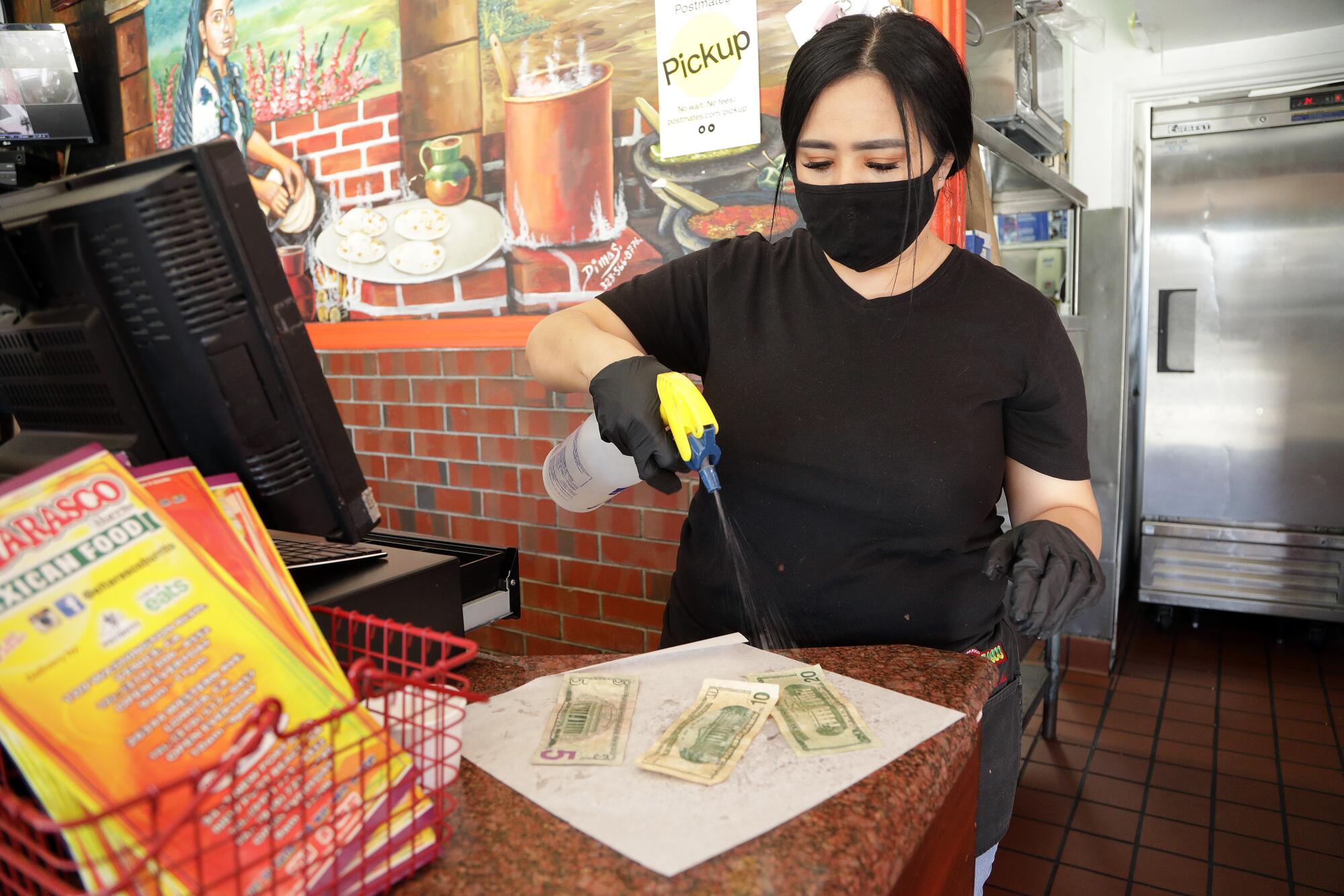
Maricela Moreno, manager at El Tarasco in Marina del Rey, disinfects cash at the restaurant in May 2020. Dining with a credit card purchase became ubiquitous after the pandemic.
(Myung J. Chun / Los Angeles Times)
Credit card fees
As use of cash in everyday transactions fades, credit cards have become the de facto way to pay for meals, and that means card transaction fees have become a growing monthly expense for restaurant operators.
The fees are particularly a burden on smaller independent restaurants, which already operate on the slimmest of profit margins.
Delilah Snell, who operates Alta Baja Market, a restaurant and market in Santa Ana, said card swipe fees take at least 3% of her bottom line.
“Three percent means everything over the course of a year,” said Snell, who sells an assortment of products and prepared foods sourced from Mexico, California and the U.S. Southwest. “If a business makes $500,000 a year and it’s a 3% fee just for credit cards? That’s a lot.”
Visa and MasterCard dominate the credit card market, controlling around 80% of transactions in the U.S.
“With little competition in the industry, these companies set the terms, leaving independent businesses with few options to reduce their processing costs,” according to a statement from the Independent Restaurant Coalition. “The lack of competition stifles innovation and prevents smaller restaurants from negotiating better rates or leveraging alternative payment systems.”
Child care
Affordable child care continues to be a major challenge for restaurant workers. Nearly 3.5 million parents work in the restaurant industry and more than 1 million of those are single mothers, 40% of whom live in poverty, according to a 2016 report by the National Women’s Law Center and the Restaurant Opportunities Center.
The rising cost of child care and the lack of flexible options put both parents and businesses under pressure, said the Independent Restaurant Coalition. Dan Jacobs, a “Top Chef” star and chef-owner of Dan Dan restaurant in Milwaukee, said that as his team expands, more of his staff are starting families.
“The rising cost of child care across the country presents a tough dilemma: Parents are forced to choose between remaining in the workforce or staying home with their children,” he said in a statement. “It’s disheartening that in a country as advanced as ours, basic parental leave and childcare support remain out of reach for so many. It’s time for a change.”
Delivery app fees
Meal delivery apps became ubiquitous during the pandemic, and the demand for food delivery continues to expand. The delivery app market — dominated by DoorDash, UberEats and Grubhub — seems to be a blessing and a curse for restaurant operators.
The apps helped restaurants survive during the COVID-19 pandemic, when everyone was hunkered down at home. But that convenience comes at a cost to restaurants.
The commission rates can be as high as 30% per order, according to the Independent Restaurant Coalition.
“For small and mid-sized restaurants, the costs and constraints imposed by third-party apps are unsustainable,” the IRC said. “High commission fees, coupled with marketing expenses, drastically reduce profitability.”

Caroline Styne is director of the Lucques Group of restaurants and Hollywood Bowl Food & Wine.
(Carolyn Cole / Los Angeles Times)
Caroline Styne, a restaurateur who is co-owner and wine director of the Lucques Group of restaurants, said her restaurant relies on third-party delivery apps because she’d rather get a sale than not get one.
“It’s a little like you’re damned if you do and damned if you don’t,” Styne said of delivery apps. “They have us in a stranglehold. And because of that they are able to continue and even increase their price as time goes on.”
Styne said she encourages diners who want food delivery to do so directly on the restaurant’s website, instead of going through a third party; that makes the fees slightly lower for restaurant operators.
Service charges and tipping
Service charges and junk fees came to the forefront this year after California prohibited “junk fees,” hidden online ticket sale fees and fees tacked onto hotels, restaurants, bars and delivery apps.
At the last minute in June, the state Senate passed an emergency bill to exempt restaurants from the service-fee ban.
Regardless of the 11th-hour reversal, the practice of service fees has been called into question and sparked lawsuits against restaurant operators over its use.
At the same time, the practice of adding service charges to restaurant checks has grown in Southern California and across the nation in recent years, giving rise to a debate about how the fees should be treated by customers and workers.
Several restaurant operators and industry advocates favor a service-charge model. Advocates say such a model can provide more equitable compensation to all staff so that pay is not reliant on factors such as customer satisfaction or implicit biases that may affect tipping behavior.
Mary Sue Milliken, chef and co-founder of Mundo Hospitality Group, whose restaurants include Socalo, Border Grill and Alice B, said she hopes the entire restaurant industry will one day turn to a service-charge model and get away from tipping, which she said can lead to “bad behavior” and an inequitable system where front-of-house workers get paid exponentially better than back-of-house employees.

“There has to be some movement toward a better system” on the subject of tipping and service feeds, said Mary Sue Milliken, left, with Susan Feniger in the dining room of their restaurant Alice B. in Palm Springs.
(Anne Fishbein)
But, she said, doing away with tipping would have to be done universally. Milliken compared it to how Beverly Hills in 1987 became the first city in California to ban smoking in restaurants — and most public places — while nearby cities continued to allow it.
“Beverly Hills had no smoking and all their restaurants were dead,” she said. “It has to be all in the state of California or the county of L.A. All have to do it to make it fair. There has to be some movement toward a better system.”


The luxury shopping center in Pacific Palisades will reopen next month after more than $100 million in renovations forced by the January 2025 wildfire that devastated the Los Angeles neighborhood.
Palisades Village will reopen Aug. 15, owner Rick Caruso announced Wednesday. The outdoor center survived the blaze that destroyed homes and other businesses but needed refurbishment to eliminate contaminants that the fire could have spread.
Crews are putting finishing touches on mall buildings after tearing them down to the studs, treating the wood and rebuilding the walls, Caruso said.
“Everybody’s working, and stores are moving their products in,” he said. “It’s a really cool feeling that people have really locked arms and are working together.”
An electrician installs lighting for a restaurant at Rick Caruso’s Palisades Village on Thursday. The shopping center is scheduled to reopen mid-August.
(Myung J. Chun / Los Angeles Times)
Pacific Palisades resident Allison Polhill, who is rebuilding the home of 30 years that her family lost in the blaze, said she is “thrilled” at the prospect of returning to the mall she used to frequent. Its comeback is a boost for the community, she said.
“Every single step that we make to reopen our commercial corridors is going to bring more people back into the Palisades,” said Polhill, who expects to move back into her home at the end of August.
A total of 6,822 structures were destroyed in the Palisades fire, including more than 5,500 residences and 100 commercial businesses, according to the California Department of Forestry and Fire Protection.
Caruso previously attributed the mall’s survival to the hard work of private firefighters and the fire-resistant materials used in the mall’s construction.
The $200-million shopping and dining center opened in 2018 with a movie theater and a roster of upmarket tenants, including Erewhon, which may be the only grocer in the heart of the fire-ravaged neighborhood when it opens.
Caruso’s company was able to fill the mall with tenants despite the long shutdown.
Palisades Village is 99% leased, with the majority of tenants returning, said Jackie Levy, chief financial and revenue officer. Nearly one-third of the shops and restaurants are new to the property.

A firefighter carries a hose back to his rig while walking through a destroyed home from the Palisades fire in Pacific Palisades on Jan. 7, 2025.
(Genaro Molina / Los Angeles Times)
Last year, Pacific Palisades-based fashion designer Elyse Walker said she would reopen her eponymous store in Palisades Village after losing her 25-year flagship location on Antioch Street to the inferno.
Other neighborhood shops destroyed in the fire that are reopening at the mall include K Bakery and Loomey’s Toys, which caters to children up to age 12 and used to be across the street from Palisades Elementary Charter School.
“It’s been a journey and I’m excited because I wasn’t sure that there was going to be a place to come back to,” said toy store owner Amanda Rastegar. “Hopefully we can bring some of that magic back.”
Rastegar’s home in the Palisades survived but was damaged by the fire. The family returned about eight weeks ago. Her last memory of the fire was a burning supermarket.
“I just couldn’t wrap my brain around what was happening,” she said. “By the time I left, Gelson’s was on fire.”
Among the returning tenants is Angelini Ristorante & Bar. Well-known Los Angeles chef Gino Angelini said he will be in the kitchen next month for a return of the Italian restaurant.
“We won’t do a big celebrity open,” he said. “We want to have a very soft opening and see our customers come back.”

Construction takes place at Rick Caruso’s Palisades Village on Thursday. The shopping center is scheduled to reopen mid-August.
(Myung J. Chun / Los Angeles Times)
An elaborate celebration would not feel “correct for me,” Angelini said, because the devastation has been “very sad” for so many.
Other new tenants include local chef Nancy Silverton, who has agreed to move in with a new Italian steakhouse called Spacca Tutto. Women’s activewear retailer LESET will open its first West Coast location.
Caruso said he is optimistic that customers will return to the center, even though many Pacific Palisades residents are still dispersed. One tracking system estimated that about 30% of the Village’s customer base was impacted by the fire, he said.
“That means 70% did not get impacted, so there’s a lot of customers still left out there,” Caruso said. Historically, the center drew customers from as far away as Beverly Hills and Calabasas, as well as Malibu, Brentwood and Santa Monica.
He also hopes many will be inspired to visit the revived mall.
“I believe in the goodness of people and I believe that people are going to want to support the Palisades,” he said. “They’re going to want to be there and support the businesses that have had the courage and the heart to reopen.”

Walmart is rapidly expanding its network of electric vehicle chargers designed for customers to use while they shop.
The network could help fill gaps in EV infrastructure in states with greater need for chargers. Walmart, which has more than 5,000 locations in the U.S. and hundreds in California, says more than 90% of Americans live within 10 miles of one of its stores.
The chargers also offer an incentive for customers to choose Walmart — Walmart Plus members will receive a 10% discount off an average price of $0.46 per kilowatt-hour of energy at the company’s chargers.
Walmart chargers are already available at more than 75 locations in 17 states, with Texas boasting the most charging stations, followed by Florida and Arizona.
Matthew Nelson, Walmart’s director of energy policy, said last week on LinkedIn that the network will soon reach 29 states, including California.
“We are delivering on the promise of affordable, reliable and convenient charging,” Nelson said in his post.
According to Walmart’s website, six charging stations are coming to California soon, though the company did not offer a specific timeline.
The chargers will be installed at stores in Antelope, Brea, Fresno, Stockton, Suisun City and Vallejo.
Most charging sites in California will include eight to 16 fast-charging stalls, said Walmart spokesperson Kelsey Bohl.
The company first announced plans in April 2023 to install its own EV chargers at Walmart and Sam’s Club stores, with a goal of installing thousands of chargers by 2030. Partnering with ABB E-Mobility and Alpitronic, it added 25 new charging sites this past May and six more in June.
“Walmart is building a leading retail-integrated EV fast-charging network, focused on delivering an affordable, reliable and convenient charging experience where customers already shop,” Bohl said in an emailed statement. “Customers can charge while they shop, access stations through the Walmart app they already use, and benefit from affordable pricing.”
The charging stations already available include 612 individual charging stalls using 400-kilowatt chargers. Each stall has a dual charging cord with both Combined Charging System and North American Charging Standard connectors. The standard connectors, designed by Tesla, are smaller and lighter than the combined systems.
The primary way to pay for the chargers is through the Walmart app, but the company is also experimenting with built-in credit card readers to allow those without the app to use the stations.
Customers can check charger availability on the Walmart app. The company said the chargers will be available 24 hours a day.

Robotaxis could be turning into robocops.
A self-driving Waymo reported two teens to San Mateo, Calif., police on Monday after they were found drinking alcohol and shooting toy guns in the back of the vehicle.
According to a social media post from the San Mateo Police Department, officers detained two 15-year-olds after the Waymo they were riding in contacted the department and stopped in a parking lot until law enforcement arrived.
“Parents do you know where your teens are?” the San Mateo Police Department wrote on Facebook following the incident. “Waymo does!”
Officers removed both teens from the vehicle and determined they were using toy guns to shoot Orbeez out the windows. Orbeez are small, water-absorbing beads sold at toy stores.
“Toy guns, water guns, and BB guns all pose real dangers, especially to an untrained eye,” the Police Department said. “The simple handling of them can cause fear in [passersby].” “
A video posted on Facebook shows at least five officers and a police dog responding to the scene and approaching the Waymo with their weapons raised.
Waymo did not immediately respond to a request for comment.
Waymo vehicles have internal cameras and microphones that may be used in an emergency or to “promote safety and security,” according to Waymo’s online support page.
The cameras are also used to ensure the vehicles are clean and to help find lost items, according to the support page.
The company said it does not use facial recognition or other biometric identification technologies to identify individuals.
“In more urgent circumstances, support may access live video during a trip,” the Waymo page said.
The San Mateo Police Department’s Facebook post has garnered nearly 60 comments, with one user accusing Waymo of “snitching.”
“At least they got a designated driver?!” one user commented.
-
 Lifestyle25 minutes ago
We unpack the 2026 Emmy nominations : Pop Culture Happy Hour
-

 Technology33 minutes ago
Get a $30 credit when you reserve Samsung’s upcoming Galaxy phones
-

 World40 minutes ago
Critics say Turkey’s verbal attacks on Israel have crossed into antisemitism
-

 Politics43 minutes ago
WATCH: Dana White drops 2028 hints while raving about his favorite Trump cabinet secretary
-

 Health48 minutes ago
Katie Couric couldn’t remember the year or the president during frightening brain episode
-

 Sports55 minutes ago
Justin Verlander announces he will retire after this season: ‘I’ve realized that time has come’
-

 Technology57 minutes ago
Apple AI security update proves hackers move fast
-
Business1 hour ago
Fire-damaged Pacific Palisades shopping center sets reopening date

