Florida
ACC v FSU Update: 11 States Join Florida, File Brief To Protect Sovereign Immunity


More than 10 states have joined the State of Florida in an amicus brief to support its fight over state’s rights after a North Carolina judge ruled Florida State University (a public university) waived its “sovereign immunity” by voluntarily dealing with the Atlantic Coast Conference
READ MORE: Former FBS Coach With Ties To Mike Norvell Spotted At Florida State’s Practice
Earlier this year, Florida Attorney General Ashley Moody sued the ACC after it failed to provide the details of the Grant of Rights agreement between the Conference and ESPN, which has been one of the focal points of both lawsuits.
Mecklenburg County (North Carolina) Judge Louis A. Bledsoe ruled that Florida State waived its sovereign immunity by being a member of the Conference, making the secrecy of the agreement between the ACC and ESPN legitimate.
The ACC has since released the (heavily redacted) details of the Grant of Rights agreement.
AG Moody claims the agreement is public record under Florida law, but the ACC – and Mecklenburg County Judge Louis A. Bledsoe – disagrees.
AG Moody’s argument in the lawsuit is that it does not matter if Florida State does business with the ACC outside of state lines, all records – due to Florida law – are public records.
The states alongside Florida involved in the amicus brief supporting the FSU Board of Trustees include Alabama, Arkansas, Idaho, Kentucky, Louisiana, Mississippi, Ohio, Oklahoma, South Carolina, South Dakota, and Utah.
Part of the amicus brief states:
“Each of the fifty states enjoys immunity under the U.S. Constitution from lawsuits to which they have not consented. Embracing a long history of sovereign immunity, the Constitution requires a state’s consent before a federal court or another state’s court can exercise jurisdiction over that state. The States have an interest in preserving the rights secured to them and their constituent institutions by the U.S. Constitution, including the immunity of their public universities from suit in other states’ courts without the States’ clear and unequivocal consent.”
In short, the states believe the ruling from Judge Bledsoe – should it become precedent – threatens the authority of each individual state guaranteed by the Constitution.
It is uncertain how this brief will affect the ongoing competing lawsuits between FSU and the Atlantic Coast Conference, but it could result in the case being thrown out and solidify a precedent protecting state’s rights.
READ MORE: Kickoff Time, TV Info Announced For FSU’s Rivalry Game Against Florida Gators
Stick with NoleGameday for more FREE coverage of Florida State Football throughout the 2024 Season
• Could Florida State Debut Its Turquoise Uniforms This Weekend?
• FSU Assistant Coach Reportedly Interviews For Southern Miss Head Coach Opening
• FSU Head Coach Mike Norvell Provides Ideal Timeline For Coaching Hires
• Florida State Running Back Could Return For Season-Finale Against Florida Gators


Archive photos show a sea of green in Florida. What usually causes harmful algal blooms along the Sunshine State’s coasts?
Harmful algal blooms — out-of-control colonies of microscopic algae — are a “growing problem” in every “U.S. coastal and Great Lakes state,” according to the National Oceanic and Atmospheric Administration.
They affect the “health of people and marine ecosystems,” and can also have a detrimental effect on the economy, according to NOAA, especially in coastal communities that are particularly dependent on fishing and tourism.
Climate change, along with increases in nutrient pollution, could cause harmful algal blooms (HABs) to occur more frequently, according to the agency.
Harmful algal blooms can “produce toxic or harmful effects on people, fish, shellfish, marine mammals and birds,” NOAA’s website states. Human illnesses caused by HABs are rare, but they can be “debilitating or even fatal.”
Sea of green? Aerial photos show toxic algae blooms, including in Florida waters
What are harmful algal blooms composed of?
Harmful algal blooms can be caused by a range of organisms, NOAA states, including “toxic and noxious phytoplankton, cyanobacteria, benthic algae, and macroalgae.”
Some HABs can make wildlife-killing toxins that negatively affect fish, mammals and birds, and can also cause human sickness or death in “extreme cases.” Other blooms, while nontoxic, can consume “all of the oxygen in the water as they decay, clog the gills of fish and invertebrates, or smother corals and submerged aquatic vegetation.” Additionally, some algae can discolor water, pile up on beaches or contaminate drinking water.
What usually causes harmful algal blooms along Florida’s coasts?
In the Gulf of Mexico, especially along the west coast of Florida, HABs are most often caused by Karenia brevis, which can turn the surface of the ocean a deep red.
Although there’s no way to predict exactly when a Karenia brevis overgrowth might occur, scientists can forecast the movement of a “red tide” when it does crop up by using wind and water data, according to the Florida Fish and Wildlife Conservation Commission.
They can last “as little as a few weeks or longer than a year,” and how long a bloom persists in “nearshore Florida waters” depends on a variety of factors, including nutrients, salinity and sunlight, reads the FWC’s website.
Sarah Perkel is a South Florida Connect Reporter for the USA TODAY Network’s Florida Connect team. You can get all of Florida’s best content directly in your inbox each weekday day by signing up for the free newsletter, Florida TODAY.

EA Sports released its official team ratings for College Football 27, and the Florida Gators checked in at No. 19 with an 84 overall rating.
Jon Sumrall’s team was granted an 84 offensive rating and a 83 defensive rating, indicating balance on both sides of the ball. Florida is one of 10 SEC programs to crack the top 25. Oregon leads the field with an overall rating of 91. The Ducks are followed by Ohio State (90), Indiana (90), Notre Dame (89) and Texas (89). UF joins nine other SEC teams rated inside the top 25.
The rating continues a major thrust of positive sentiment around Sumrall and the Gators. During this offseason, Florida has been pegged as a CFB playoff dark horse, an SEC wild card and one of sport’s biggest sleepers. The valuation is likely fueled by the Orange and Blue’s transfer portal additions and the retention of key pieces, including junior running back Jadan Baugh, who notched Second-Team All-SEC honors last season.
Sumrall’s cultural reset in Gainesville has started a buzz around college football that has continued to grow louder by the month. Despite a massive roster overhaul and the departure of a five-star quarterback, the Gators have seen a jolt in their national perception.
To reestablish a championship standard, UF will have to navigate an arduous nine-game conference schedule. The Gators face No. 17-rated Missouri (85) in Week 5, No. 5-rated Texas (89) in Week 7, No. 9-rated Georgia (87) in Week 8 and No. 10-rated Oklahoma (87) in Week 9.
Follow us @GatorsWire on X, formerly known as Twitter, as well as Bluesky, and like our page on Facebook to follow ongoing coverage of Florida Gators news, notes and opinions.

RIVERVIEW, Fla. (CBS12) — A Florida man was arrested after investigators linked him to a fatal fentanyl overdose that occurred in December.
The Hillsborough County Sheriff’s Office said deputies responded Dec. 29, 2025, to a home on Balm Boyette Road in Riverview, where they discovered the body of a woman identified as 43-year-old Grace Remington. Investigators determined she died from a fentanyl overdose.
See also: Man killed, grandson arrested after family dispute leads to quadruple shooting in PBC
According to the sheriff’s office, the investigation revealed that Aaron Lee Morris had delivered the fentanyl to Remington before her death. Toxicology results showed a fatal amount of the drug in her system.
On Tuesday, HCSO’s Opioid Overdose Investigation Section arrested Morris, 46, and charged him with first-degree murder resulting from the unlawful distribution of a controlled substance.
“Fentanyl continues to destroy lives and devastate families in our community,” Sheriff Chad Chronister said. “If you choose to distribute this deadly poison, you will be held accountable for the lives lost as a result of your actions.”
-
 Entertainment2 minutes ago
La Cruz offers a musical memorial to Pulse shooting victims on Pride Month
-
 Politics14 minutes ago
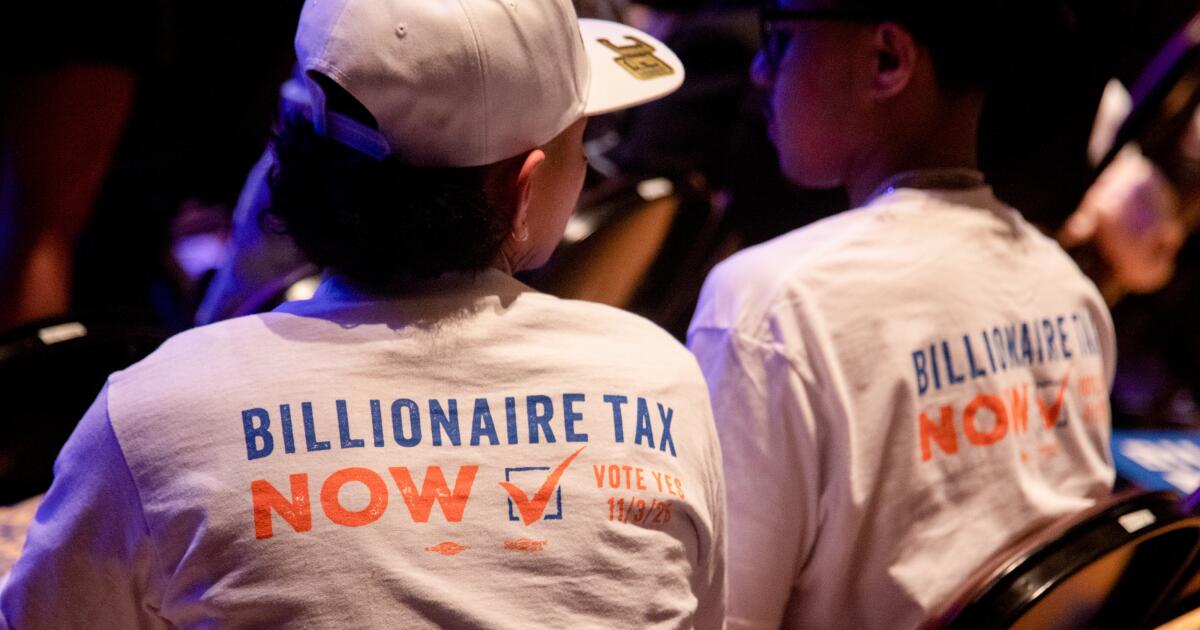
Controversial billionaire tax proposal will appear on November ballot
-
 Sports22 minutes ago
Shohei Ohtani is the first Dodger to be named 2026 All-Star
-

 World32 minutes ago
Who will control Africa’s AI infrastructure and at what cost
-
 News59 minutes ago
The Supreme Court says the U.S. can turn away asylum seekers at the border
-

 Los Angeles, Ca2 hours ago
Jury says it is deadlocked in trial of man accused in Palisades Fire
-

 Detroit, MI3 hours ago
Scene active as police shoot, kill man on Detroit’s west side
-

 San Francisco, CA3 hours ago
Civil grand jury report warns of wildfire risk at SF’s Glen Canyon Park

