West
Even Democrat voters rejected leftist policies and politicians in the most surprising places

NEWYou can now listen to Fox News articles!
In a seismic shift, voters across traditionally progressive strongholds like Los Angeles, San Francisco, and Portland are starting to send a clear message: the progressive experiment in public safety, housing and drug policy has failed. Decades of policies promising reform and social justice have instead delivered a relentless rise in crime, out-of-control homelessness and the normalization of rampant drug use in our communities. It’s the Democrat voters who have finally had enough.
Rejecting district attorneys like Los Angeles County’s George Gascón, declining to support mayors like San Francisco’s London Breed, and showing support for candidates vowing to aggressively tackle homelessness like Portland’s new Mayor-elect Keith Wilson, voters are signaling an end to the progressive playbook that’s led to urban chaos. This backlash marks a return to a public safety-focused agenda, a demand for accountability, and a turn away from the ideologies that have left countless communities in ruin.
Los Angeles County District Attorney Gascón, elected in 2020 on a promise to “reimagine” public safety, has become the face of what’s gone wrong with progressive criminal justice policies. His tenure has been defined by controversial “reforms” that have left criminals emboldened and the public terrified.
SAN FRANCISCO MAYOR-ELECT TOUTS ‘COMMON SENSE’ APPROACHES AFTER BEATING PROGRESSIVE INCUMBENT
Policies like no-cash bail, reduced sentences and an overall dismissal of traditional prosecution standards were supposed to right the wrongs of the system. Instead, they’ve given criminals free rein to continue breaking the law with no fear of consequences. Property crimes, car thefts and organized retail theft have surged to unprecedented levels under his watch. Since 2020, homicides surpassed 300 in four consecutive years, which hadn’t happened once in the 2010s.
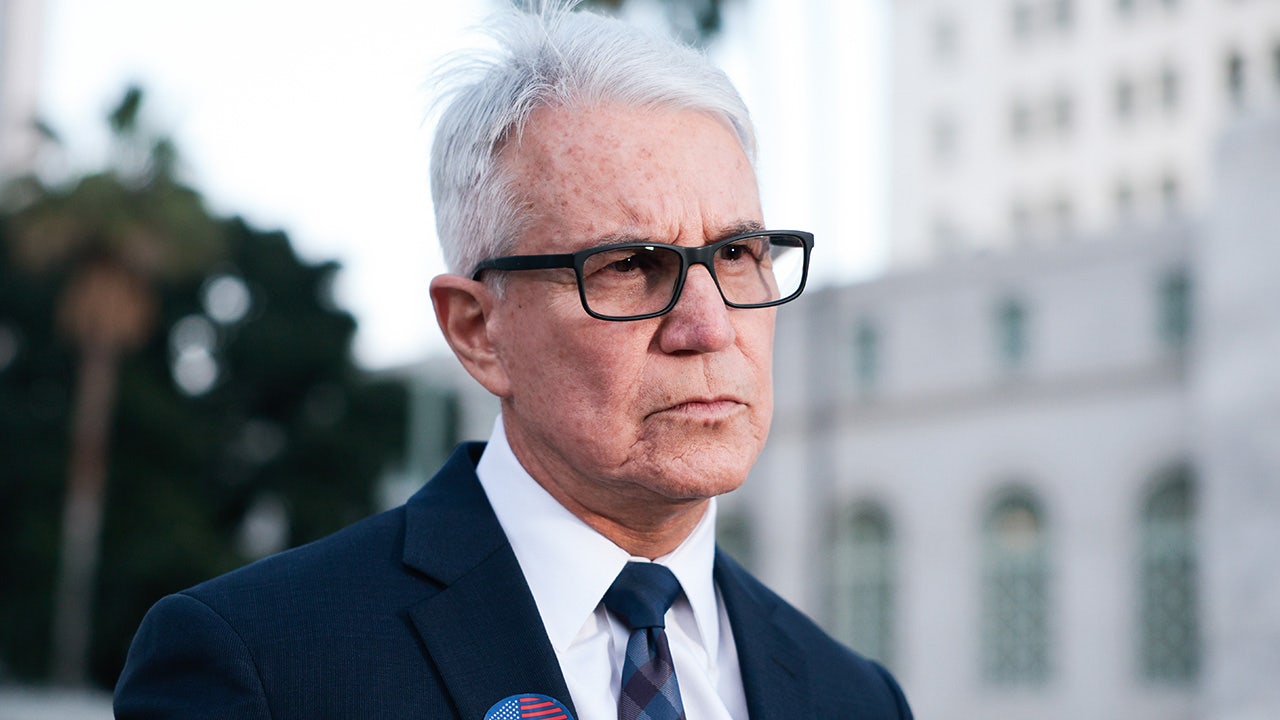
Los Angeles County District Attorney George Gascon’s time in office is coming to an end after voters rejected his liberal views of how to handle crime. (Myung Chun / Los Angeles Times via Getty Images)
The message was simple: Los Angeles no longer valued law and order. But voters finally responded, demanding accountability and a return to policies that prioritize the safety of law-abiding citizens over the protection of repeat offenders. They booted Gascon from office for former federal prosecutor Nathan Hochman.
Similarly, in San Francisco, Mayor Breed, once a rising star of progressivism, found herself on the wrong side of public opinion as her city deteriorated. San Francisco, a once-thriving hub of culture and innovation, has become infamous for its open-air drug markets, sprawling homeless encampments and streets littered with needles and human waste.
Progressive policies like decriminalizing drug possession, establishing “safe” injection sites and refusing to enforce basic quality-of-life laws have rendered the city unrecognizable. Even Breed, who has occasionally flirted with stricter law enforcement policies, has been unable to undo the damage inflicted by years of leftist governance. The voters’ rejection of Breed, to Levi Strauss heir and nonprofit founder Daniel Lurie, reflects a community desperate to restore sanity and safety to their streets.
Statewide in California, voters embraced Proposition 36 — essentially undoing some of the disastrous “reforms” implemented by Prop 47 — showing that the state’s liberal policies on crime may finally be reaching a breaking point. Originally sold as a way to reduce prison populations and give non-violent offenders a second chance, Prop 47’s reclassification of numerous felonies as misdemeanors led to a surge in crime rates.
Proposition 36, which reinstates harsher penalties for repeat offenders, demonstrates a growing realization among Californians: unchecked criminal behavior can’t be excused by progressive ideals. Proposition 36 was supported even as Democrat Governor Gavin Newsom, undoubtedly looking to shore up support ahead of his inevitable presidential run in 2028, asked voters to reject it.
Then there’s Portland — a city that became a national spectacle as protests, riots and “autonomous zones” dominated the headlines for months on end. But more recently, the focus of Portlanders’ ire has become the explosion of homeless encampments. For years, Portland served as a petri dish for every progressive experiment imaginable. Lenient policies toward encampments and open drug use turned the city into a dystopian cautionary tale. But in the recent election, Portland voters gave the mayorship to Wilson, a political outsider who promised to end the homelessness crisis with a more aggressive plan to bring people indoors.
CLICK HERE FOR MORE FOX NEWS OPINION
The progressive agenda that voters in cities like Los Angeles, San Francisco and Portland once supported has now run its course. But we should not forget the toll this has taken on some of society’s most vulnerable — ironically, the very people progressives claimed to champion.
Homeless people struggling with addiction have been turned into political pawns, used to justify policies that, in reality, have trapped them in cycles of poverty and dependency. Cities flooded with addiction services handing out fentanyl freebasing kits have only seen addiction rates climb, and open-air drug scenes have transformed once-vibrant neighborhoods into no-go zones. Instead of offering a hand up, these policies have encouraged a devastating lifestyle that’s nearly impossible to escape from, often costing lives.
The message was simple: Los Angeles no longer valued law and order. But voters finally responded, demanding accountability and a return to policies that prioritize the safety of law-abiding citizens over the protection of repeat offenders. They booted Gascon from office for former federal prosecutor Nathan Hochman.
This backlash should be a wake-up call to Democrats across the country and it shouldn’t come as a shock. As I detail in my book “What’s Killing America: Inside the Radical Left’s Tragic Destruction of our Cities,” these policies have provided little more than misery and chaos, doing the exact opposite of what they were supposed to. Voters aren’t rejecting progressivism because they’re “reactionary” or “fearful” — they’re rejecting it because it’s failed them, plain and simple.
They’re not voting for tougher policies because they’re “ignorant” or “backward” but because they understand that safety, order and accountability are the foundations of any functioning society. Politicians like Gascón and Breed refused to acknowledge this, found themselves on the wrong side of history — and out of a job.
As voters in these cities reclaim their right to safe and livable communities, one thing is clear: the progressive experiment has failed, and no amount of idealism can hide the gritty reality of what it’s wrought. With each ballot cast against crime, disorder and chaos, voters are steering the country back toward common sense. It’s a rebuke of progressivism’s failed promises and a rallying cry for leaders who will put the well-being of their constituents above ideological dogma. The message is clear — voters are done with the empty promises, and they’re ready to take back their cities.
CLICK HERE TO READ MORE FROM JASON RANTZ
Read the full article from Here


SEWARD — When David Norris moved to Colorado a few years ago, he figured his career as an elite athlete was more or less over.
Norris, a Fairbanksan who trained as a world-class cross country skier for more than a decade, took a job coaching for the Steamboat Springs Winter Sports Club.
But somehow he has only managed to improve.
Norris won the Mount Marathon men’s race on Saturday, his seventh victory in seven races — putting him just one win off the all-time men’s mark of eight set by the legendary Bill Spencer.
What little bit Norris may have lost physically, he’s made up for with an alloy of balance and gratitude that continues to motivate him at age 35.
“I view myself as fortunate for sure,” he said. “When I moved to Colorado, that was sort of like me thinking I was done competing.
“I’m a full-time banker now, but I think I have time in my life to prioritize exercise, and my wife and I like to do it together. … It’s what I love to do, and so having races is just like little extra inspiration.”


As rain and mist traded punches on the field, the route to the peak was slick and unpredictable.
But Norris used the same approach that helped him win the previous six. He built a lead on the uphill and cruised on the downhill to finish in a time of 43 minutes, 8 seconds.
But even the champion fell victim to a tough race in tricky conditions.
“I actually fell like, three times,” he said. “Basically, I’d never fallen until this year. I didn’t feel like I really had a great rhythm in the downhill. I was driving to lift my toes, which is just weird, like my legs felt really stiff.”
The conditions meant Norris was unable to improve on the course record of 40:37 that he set in 2024. But the win meant he pulled away from Sven Johanson and Brad Precosky, who he was tied with in the all-time wins category with six.


Finding himself among the luminaries in the race has been an interesting turn of events as he has grown older and now represents the pinnacle of the race for a younger generation.
“I remember growing up being really excited watching Eric Strabel get the course record (in 2013), and then to be like, part of that now is super special,” he said. “It’s cool how much Eric and those guys inspired me. So hopefully, it’s good for all the junior racers that are out there.”
Following the race, Norris shared a nice moment in the finish pen with his parents, who made the trip down from Fairbanks.
Norris claimed his first title in 2016, followed that up with victories in 2018 and 2021, and now has won four straight starting in 2023. While he isn’t training like he was in those early years when he was a U.S. Ski Team member, what he’s doing is clearly working.
“I think I’ve gotten better at certain things and maybe weaker at other things,” he said. “But overall, I think I’m maximizing the amount of time I’m putting towards training and I’m having fun, so ultimately if I’m happy and it’s going well, I’m not gonna change it.”
[Anchorage’s Klaire Rhodes earns a 3rd straight Mount Marathon women’s title]
[Thale Randall, Wren Spangler take junior titles at Mount Marathon Race]


Squamish, British Columbia, runner Jessie McCauley placed second, finishing in 43:54.
McCauley said the Seward conditions were just like being at home as temperatures hovered in the low 50s while rain fell on the runners.
“Coming from Squamish, we’re used to six months of rain, so it kind of felt like home a little bit,” he said. “But, in all honesty, I had a (personal record) today by like, 30 seconds, and I really wasn’t anticipating in these conditions. It just goes to show that temperatures really make a difference, especially on this course.”
The top five was rounded out by Lower 48 runners.

Bayden Menton of Gunnison, Colorado, placed third (44:02), followed by Jackson Cole of Missoula, Montana (44:16). David Kennedy of Boulder, Colorado, placed fifth with a time of 44:43.
Anchorage’s William McGovern finished in eighth after a strong uphill effort.
Next year, Norris said he’ll be back looking for No. 8. But he’s still two wins behind the all-time record holder Nina Kemppel, who won nine.
“Last year, Nina Kemppel gave me a hard time saying I’ve still got a long ways to go to her nine,” he said. “That’s pretty awesome. I’d love to keep racing, and I’ll be doing it my whole life.”

ARIZONA — The Arizona Cardinals will be one of the first teams to hit training camp this summer.
Arizona’s July 22 report date is among the earliest in the league thanks to their participation in the NFL’s Hall of Fame Game to begin preseason festivities.
Eyes and ears are curious to see what Mike LaFleur’s first training camp in the desert looks and sounds like. With four preseason games and numerous camp practices, Arizona will begin the process of trimming their roster down to 53 players ahead of the regular season.
These four Cardinals could find themselves on the chopping block:
RB Trey Benson
Benson’s had arguably the worst offseason of any returning veteran in Arizona, as numerous faces have arrived to his position room to ultimately push him down the depth chart.
Benson’s play in the prior two seasons leading up to the 2026 offseason was shaky at best. Injuries and erratic play in the backfield offset any flashes of potential the Florida State product has had.
Many thought Benson may have been the potential lead back this season, though after James Conner restructured his deal, Tyler Allgeier signed in free agency and Jeremiyah Love was drafted with the third overall pick — Benson’s playing time has been massively dwindled.
If the Cardinals keep four running backs, Benson is in line to compete with Bam Knight for the final spot.
CB Kei’Trel Clark
I’ve often included Max Melton’s name in similar lists, and while there’s no doubting the pressure facing Arizona’s former second-round pick, Melton’s spot on the roster feels safe.
Kei’Trel Clark, on the other hand, is a different discussion.
Clark started seven games his rookie season but has combined for just two starts in the last two years after. The Cardinals have continuously poured resources into the cornerback room, and Clark’s hung around.
Injuries to Starling Thomas and Sean Murphy-Bunting helped solidify Clark’s roster spot last season, yet with both working their way back to full health (on top of Garrett Williams potentially being ready for Week 1), the Cardinals will have a crowded depth chart.
Clark will need to have a big training camp and leapfrog somebody ahead of him to retain his roster spot.
QB Kedon Slovis
This is more circumstantial than regarding talent.
Slovis moves into training camp as the heavy favorite to get the axe with Jacoby Brissett, Gardner Minshew and Carson Beck over him on the projected depth chart.
Brissett has (reportedly) been told by Arizona he’s the starter. Minshew has more guaranteed money than Brissett on his contract and Beck is a third-round pick.
None of the three quarterbacks are going to be cut, leaving Slovis with two options: Turn into the greatest quarterback we’ve seen or be an unfortunate cut candidate.
Slovis probably won’t make his way back to the desert on the practice squad, either — especially if Arizona indeed keeps three active quarterbacks on the roster.
Was Slovis ever going to start for the Cardinals? No. However, he’s on the chopping block merely because of the new faces added this offseason.
Charge it to the game.
 Add us as a preferred source on Google
Follow

© PeopleImages / Shutterstock.com
California’s median household income landed at $100,600 in 2024, according to Census data compiled by the St. Louis Fed. That is the number a portfolio has to replace to hand a Golden State family the same paycheck without anyone clocking in. The wrinkle: California’s 2024 regional price parity was 110.7, meaning prices were about 10.7% above the national average. Replacing that income with dividends carries a built-in purchasing-power headwind.
The core equation: income target divided by yield equals the capital required before taxes. What changes across yield tiers is the risk, growth trajectory, tax treatment, and whether the check keeps up with California living costs over the next decade.
The Sleep-At-Night Tier: 3.5% to 4%
At a 3.5% blended yield, replacing $100,600 requires roughly $2,874,000 in invested capital. This is the dividend growth lane. PepsiCo (NASDAQ:PEP | PEP Price Prediction) yields about 4% and just raised its payout for the 54th consecutive year, with a $1.48 quarterly dividend up from $1.4225. Johnson & Johnson (NYSE:JNJ) yields a leaner 2% but just delivered its 64th consecutive annual raise to $1.34 quarterly.
The tradeoff is capital-heavy but growth-rich. PepsiCo’s annual dividend climbed from $4.02 in 2020 to $5.62 in 2025, roughly a 40% raise in five years. That is how this tier beats the California cost-of-living treadmill.
The Middle Path: 5% to 6.5%
At a 5% blend, the required capital drops to roughly $2,012,000. Push to 6.5% and the number falls to about $1,548,000. This tier is where net-lease REITs, gaming REITs, and pipeline partnerships live.
Realty Income (NYSE:O) yields about 5%, pays monthly, and just declared its 114th consecutive quarterly increase at an annualized $3.246 per share. Portfolio occupancy sits at 99%. VICI Properties (NYSE:VICI) yields almost 7% off a $1.783 payout backed by triple-net leases on Caesars Palace and MGM properties with 100% occupancy. Enterprise Products Partners (NYSE:EPD) yields near 6% on a $2.20 annualized distribution, though its K-1 tax form adds filing complexity in a high-tax state.
The tradeoff: growth slows. VICI’s quarterly dividend rose from $0.4325 to $0.45 over the past year, a mid-single-digit bump. Realty Income’s payout grew about 3% to 3.7% per its 2026 AFFO guide. That still edges past inflation, barely.
The High-Yield Tier: 8% and Above
At 8.3%, the required capital collapses to roughly $1,212,000. Main Street Capital (NYSE:MAIN) is the archetype. Its regular monthly payout of $0.26 annualizes to $3.12, and four $0.30 supplementals per year add another $1.20, for a total of roughly $4.32 per share. Against a $52 stock price, that is a total yield near 8.3%.
The catch: BDC supplementals are tied to net investment income and portfolio performance, not contractual. Non-accruals sat at about 1% of the portfolio at fair value at quarter-end, which is healthy, but the extras can shrink in a credit downturn. The 10-year Treasury yields about 4.5% for comparison, so an 8% equity yield is nearly double the risk-free rate for a reason.
Why the Cheapest Portfolio Is Often the Worst Deal
A 3.5% yield growing 8% per year doubles the income stream in nine years. A flat 8% yield stays exactly where it started. Nine years from now, that $100,600 California household budget needs to be closer to $130,000 just to hold ground against typical inflation. The high-yield portfolio funds today’s paycheck. The growth portfolio funds today’s paycheck and next decade’s.
California’s top marginal state rate reaches 13.3%, and MLP K-1s, REIT ordinary-income distributions, and BDC dividends are almost all taxed as ordinary income. Qualified dividends from PepsiCo or Johnson & Johnson get preferential federal treatment. That gap matters in Sacramento’s tax bracket.
Before Chasing Yield, Run These Three Numbers
- Calculate spending, not salary. California households often need to replace only 70% to 80% of their working income once payroll taxes, retirement contributions, commuting costs, and other job-related expenses disappear. Replacing $75,000 of actual spending requires far less capital than replacing a $100,600 paycheck.
- Compare total return, not just today’s yield. Run a simple ten-year spreadsheet comparing a 3.5% dividend-growth portfolio with an 8% high-yield portfolio, assuming dividends are reinvested. The higher-yield option often wins early, but the growth portfolio frequently catches and passes it over time.
- Model after-tax income. California’s 9.3% and 13.3% state tax brackets can change the ranking. Qualified dividends, REIT distributions, BDC dividends, and MLP distributions all receive different tax treatment, so the portfolio with the highest stated yield may not produce the most spendable income.
Replacing California’s median household income with dividends is possible, but the cheapest portfolio is not always the one that leaves you in the strongest position ten or twenty years from now. The right choice depends on whether your priority is maximizing today’s income, protecting tomorrow’s purchasing power, or striking a balance between the two. For most investors, the real goal is not simply matching a paycheck. It is creating one that never requires punching a clock again.
Contact [email protected] for any questions or corrections.
-
 Milwaukee, WI4 minutes ago
29-year-old motorcyclist dies in Milwaukee collision; charges pending
-

 Atlanta, GA7 minutes ago
Braves vs. Mets rain delay chat and discussion
-

 Minneapolis, MN12 minutes ago
Minneapolis shooting on Wilson Street leaves man dead
-

 Indianapolis, IN19 minutes ago
Mortgage expert warns of rising home prices while interest rates lower
-

 Pittsburg, PA22 minutes ago
Pirates Secure Pitcher With 40-Man Roster Move
-

 Augusta, GA27 minutes ago
86-year-old Augusta woman dies in Walton Way crash
-

 Washington, D.C34 minutes ago
Trump’s administration won’t seek new bids to repair the Lincoln Memorial Reflecting Pool
-

 Cleveland, OH37 minutes ago
MLB Rain Delay Watch Today (July 5): Weather Outlook for All 15 MLB Games

