Connect with us

News

The royal hotel creating a buzz on Morocco’s Mediterranean coast

Published

on

The royal hotel creating a buzz on Morocco’s Mediterranean coast

Even in the off-season there are 450 immaculately turned out members of staff at the Royal Mansour on Morocco’s Mediterranean coast. They pander to the needs of the guests housed in just 55 suites and villas and wear, by my reckoning, 17 distinct styles of uniform.

The butlers have crisp beige suits, the waiters green silk blouses, and the man who drives the luggage cart dazzles in a bright red uniform with matching cap. There are special outfits, mostly in understated colours, for the concierge staff, the engineers, the various ranks of housekeepers, as well as for those who deliver room service.

The mystery is: where are they all hiding? You can stroll along the beautiful sandy beach picking up vibrant-coloured shells, or cycle along the swept paths through the hotel’s lovely manicured gardens, and think yourself virtually alone. A few greeters and gardeners (in their own rustic outfits) are dotted about, but there’s no one shuttling between the lobby and the sand-coloured villas. Even the private butlers appear to be invisible, popping up as if by magic only when their discreet services are required.

It is only later that I solve the riddle of the disappearing staff. Beneath the hotel complex is a secret network of tunnels. Out of sight and out of earshot, members of staff flit along in vehicles beneath the surface, rising in dedicated lifts to deliver champagne and trays of Moroccan sweets, to plump pillows and to arrange the poolside towels just-so. It is not so much upstairs-downstairs as overground-underground.

Hotel loungers overlooking the Plage de M’Diq
A door to one of the hotel rooms
A traditional door to one of the suites

If it is service fit for a king, that is no coincidence. The hotel is owned by Mohammed VI, Morocco’s monarch since 1999. In 2010 he opened the Royal Mansour in Marrakech — a no-expense-spared celebration of Moroccan craftsmanship, newly built but with swathes of intricate zellij mosaics and traditional hand-sculpted plasterwork. Rather than rooms, its guests stay in their own private riads, arranged in a sort of simulacrum of the medina. Some visitors have found an eeriness in the way the real city’s colour and chaos have been substituted for jasmine-scented silence, but the hotel has been a hit, drawing a string of celebrities and commanding room rates that rarely dip below £1,300 per night.

Map of Morocco, highlighting the Royal Mansour Tamuda Bay and nearby areas such as Tangier and Tetouan

In April this year a second Royal Mansour opened, a marble-lined tower in the country’s economic and financial hub, Casablanca. And now the royal hotel group has launched its first beach hotel, here at Tamuda Bay. The king is unlikely actually to stay — he has a rather nice beachside pad-cum-palace right next door — but friends and members of his extended family were apparently frequent visitors in the run-up to the official opening last month.

If the movements of the staff are a well-kept secret so, in its way, is Morocco’s Mediterranean coast, at least outside the kingdom. With the Rif mountains arcing in the background, it extends for almost 400km, from the Spanish enclave of Ceuta all the way to the Algerian border in the east.

Advertisement

Though the Atlantic coast, and towns such as Essaouira, Agadir, Oualidia and Taghazout, are better known internationally, the stretch of Mediterranean coastline around the Royal Mansour and the little town of M’diq turns out to be where the country’s jet-set spend their summers, eating the local sardines in beachside restaurants and feeding the wild boars which come down from the wooded hillsides.

Modern four-poster bed surrounded by high-quality wooden furniture
One of the bedrooms, featuring typically muted colours
Picture of four white sunloungers under two large parasols beside a swimming pool with palm trees in the background
The hotel’s swimming pool

By October, when I visit, the king and his retinue have moved on, the boars are gone and the hullabaloo has quelled. Yet the temperature is still a glorious 27 degrees and the sky and ocean — at least during my stay — are improbable shades of uninterrupted blue. Only a three-hour flight from London, plus a 90-minute drive from Tangier airport in the hotel’s electric car, it makes for a viable winter getaway (especially given rates remain far below those of the Marrakech property).

I arrive at night and am golf-carted to my room. The hotel’s complex stretches a good half-mile along a wide private beach of fine sand. In the morning, the ocean is a leisurely 60-second walk away, assuming one is not waylaid by the swimming pool.

A series of low-rise buildings each house between four and eight suites; the seven villas are spread out for seclusion with their beach area further hidden by sand dunes. If walking to the main lobby seems too far, guests can go by golf-cart (courtesy of the man in red) or cycle. Wherever you abandon your bike, it mysteriously winds up next to your suite again, as if delivered by invisible pixies.

Junction in an old Arabic city at a very hot and sunny time of day, featuring white walls with brightly coloured painted patterns, and the colourful arched door to a mosque
The entrance to a mosque in Tétouan, a city about 20 minutes’ drive from the hotel © Alamy
A Middle Eastern marketplace, with some stalls selling fruit and veg, others selling material, others selling clothes and household items
Street market in the Ensanche district of Tétouan © Alamy
Picturesque Moorish arches in the medina of a North African town
The Moorish architecture in Tétouan, where the medina is a Unesco World Heritage Site © Getty

Though the decor is opulent, the tile work and woven carpets are in muted, rather soothing, colours. In the day, the light against the crisp lines of the hotel buildings’ walls has a stark, David Hockney quality. As the sun sets, the blues and beiges blur into the ocean, the sand and the purplish night air.

The hotel has multiple restaurants (including one Spanish, one French and one Italian) and a huge spa on two floors offering both therapeutic and hedonistic treatments. Children are welcome. Those aged four to 12 can be deposited in a kids club, almost as tastefully decorated as the adult quarters, where they are entertained, according to the hotel bumf, with calligraphy, music and cooking lessons — and no doubt with video games and cartoons when their parents’ backs are turned.

One day, I take a tour to the nearby walled city of Tétouan, a 25-minute drive away and about 40km south of the Strait of Gibraltar. Home to about 380,000 and a medina that is a Unesco World Heritage Site, it is an unexpected gem. In the second century BC, the region’s first inhabitants traded with Phoenicians and were later colonised by Romans and Berbers, but the city’s modern history began in the 15th century when it was settled by Muslims and Jews from Andalusia. When the last Moriscos were expelled from Spain between 1609 and 1614, many came to Tétouan, which is sometimes known as “Granada’s daughter”. In 1913, it became the capital of the Spanish Protectorate of northern Morocco, which lasted a little over 40 years.

Advertisement
An outdoor dining area in the grounds of a Mediterranean hotel, with tables under large parasols, and seats around a cooking station, with two chefs in it
The Pool Beach, the hotel’s casual all-day restaurant; its menu is overseen by the celebrated Spanish chef Quique Dacosta

Today it is a pleasant place to walk around, a curious mix of art deco in eye-dazzling white, heavy Andalusian doors and Moroccan riads, with their courtyard gardens. Spanish cafés selling bocadillos and strong black coffee sit side by side with outlets offering sweet cakes and syrupy mint tea. The maze-like medina, with its Jewish and Muslim quarters, is a mini-Marrakech, arguably more interesting because less touristic.

Morocco is starting to market the Mediterranean coast abroad and several grand hotels have opened on this stretch of coastline, including the St Regis and the Ritz-Carlton. But if your idea of luxury is an invisible retinue of underground staff and a monarch as an occasional next door neighbour, then there is probably only one choice.

David Pilling is the FT’s Africa editor

Details

David Pilling was a guest of the Royal Mansour Tamuda Bay (royalmansour.com), where double rooms start from Dh4,500 (£350) per night; villas sleeping seven cost from Dh52,000 per night. There are direct flights to Tangier from numerous European cities, including London, Paris, Madrid, Brussels and Rome

Find out about our latest stories first — follow FTWeekend on Instagram and X, and subscribe to our podcast Life and Art wherever you listen

Advertisement

News

Video: Minnesota Governor Condemns ICE Shooting

Published

on

Video: Minnesota Governor Condemns ICE Shooting

new video loaded: Minnesota Governor Condemns ICE Shooting

transcript

transcript

Minnesota Governor Condemns ICE Shooting

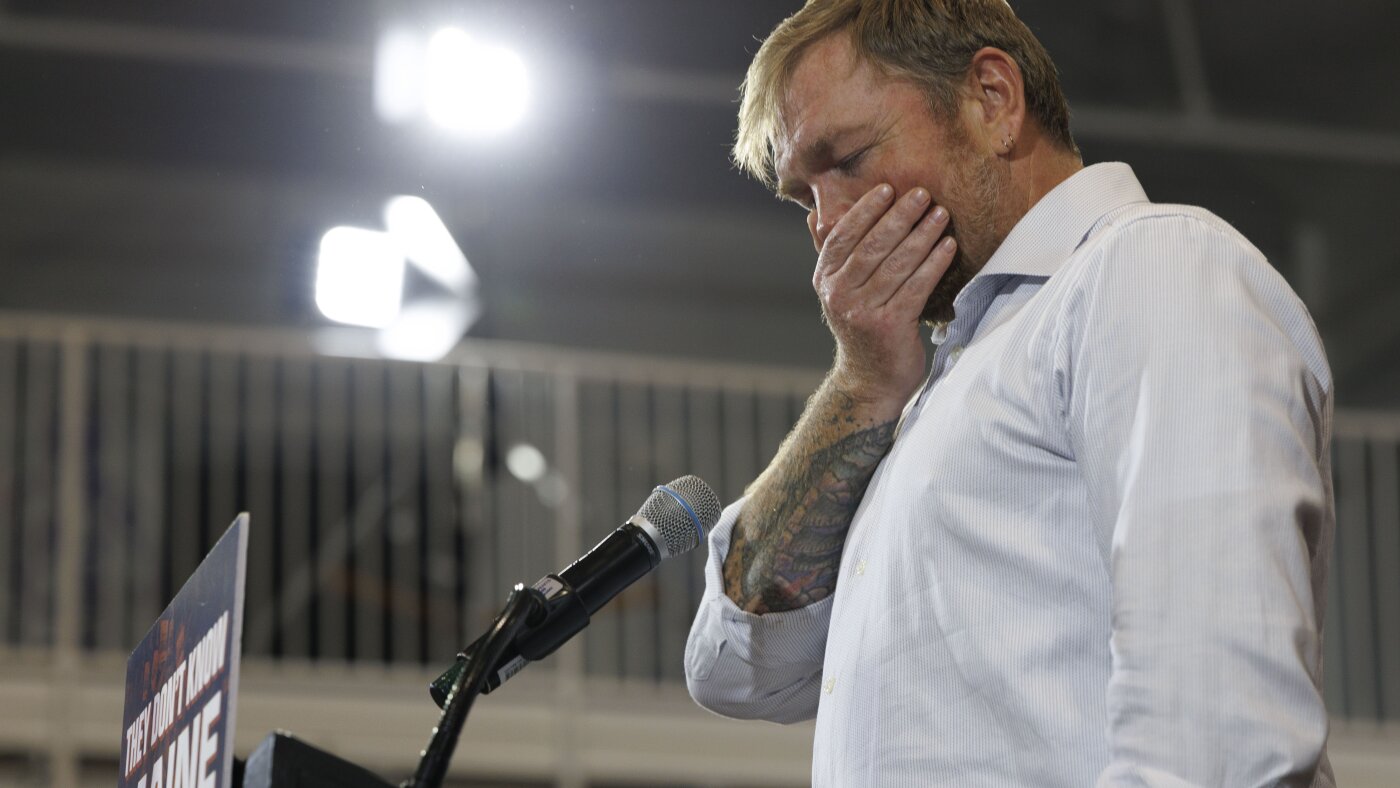
Governor Tim Walz of Minnesota slammed the fatal shooting of a woman by an immigration agent. President Trump said that the agents had acted in self-defense.

This morning, we learned that an ICE officer shot and killed someone in Minneapolis. We have been warning for weeks that the Trump administration’s dangerous, sensationalized operations are a threat to our public safety, that someone was going to get hurt. Just yesterday, I said exactly that. What we’re seeing is the consequences of governance designed to generate fear, headlines and conflict. It’s governing by reality TV. And today, that recklessness cost someone their life.

Advertisement
Governor Tim Walz of Minnesota slammed the fatal shooting of a woman by an immigration agent. President Trump said that the agents had acted in self-defense.

By Jiawei Wang

January 8, 2026

Continue Reading

News

U.S. to exit 66 international organizations in further retreat from global cooperation

Published

on

U.S. to exit 66 international organizations in further retreat from global cooperation

The symbol of the United Nations is displayed outside the Secretariat Building on Feb. 28, 2022, at United Nations Headquarters.

John Minchillo/AP


hide caption

toggle caption

Advertisement

John Minchillo/AP

WASHINGTON — The Trump administration will withdraw from dozens of international organizations, including the U.N.’s population agency and the U.N. treaty that establishes international climate negotiations, as the U.S. further retreats from global cooperation.

President Trump on Wednesday signed an executive order suspending U.S. support for 66 organizations, agencies, and commissions, following his administration’s review of participation in and funding for all international organizations, including those affiliated with the United Nations, according to a White House release.

Most of the targets are U.N.-related agencies, commissions and advisory panels that focus on climate, labor, migration and other issues the Trump administration has categorized as catering to diversity and “woke” initiatives. Other non-U.N. organizations on the list include the Partnership for Atlantic Cooperation, the International Institute for Democracy and Electoral Assistance and Global Counterterrorism Forum.

Advertisement

“The Trump Administration has found these institutions to be redundant in their scope, mismanaged, unnecessary, wasteful, poorly run, captured by the interests of actors advancing their own agendas contrary to our own, or a threat to our nation’s sovereignty, freedoms, and general prosperity,” Secretary of State Marco Rubio said in a statement.

Trump’s decision to withdraw from organizations that foster cooperation among nations to address global challenges comes as his administration has launched military efforts or issued threats that have rattled allies and adversaries alike, including capturing autocratic Venezuelan leader Nicolás Maduro and indicating an intention to take over Greenland.

U.S. builds on pattern of exiting global agencies

The administration previously suspended support from agencies like the World Health Organization, the U.N. agency for Palestinian refugees known as UNRWA, the U.N. Human Rights Council and the U.N. cultural agency UNESCO. It has taken a larger, a-la-carte approach to paying its dues to the world body, picking which operations and agencies it believes align with Trump’s agenda and those that no longer serve U.S. interests.

“I think what we’re seeing is the crystallization of the U.S. approach to multilateralism, which is ‘my way or the highway,’” said Daniel Forti, head of U.N. affairs at the International Crisis Group. “It’s a very clear vision of wanting international cooperation on Washington’s own terms.”

It has marked a major shift from how previous administrations — both Republican and Democratic — have dealt with the U.N., and it has forced the world body, already undergoing its own internal reckoning, to respond with a series of staffing and program cuts.

Advertisement

Many independent nongovernmental agencies — some that work with the United Nations — have cited many project closures because of the U.S. administration’s decision last year to slash foreign assistance through the U.S. Agency for International Development, or USAID.

Despite the massive shift, the U.S. officials, including Trump himself, say they have seen the potential of the U.N. and want to instead focus taxpayer money on expanding American influence in many of the standard-setting U.N. initiatives where there is competition with China, like the International Telecommunications Union, the International Maritime Organization and the International Labor Organization.

The latest global organizations the U.S. is departing

The withdrawal from the U.N. Framework Convention on Climate Change, or UNFCCC, is the latest effort by Trump and his allies to distance the U.S. from international organizations focused on climate and addressing climate change.

UNFCC, the 1992 agreement between 198 countries to financially support climate change activities in developing countries, is the underlying treaty for the landmark Paris climate agreement. Trump — who calls climate change a hoax — withdrew from that agreement soon after reclaiming the White House.

Gina McCarthy, former White House National Climate Adviser, said being the only country in the world not part of the treaty is “shortsighted, embarrassing, and a foolish decision.”

Advertisement

“This Administration is forfeiting our country’s ability to influence trillions of dollars in investments, policies, and decisions that would have advanced our economy and protected us from costly disasters wreaking havoc on our country,” McCarthy, who co-chairs America Is All In, a coalition of climate-concerned U.S. states and cities, said in a statement.

Mainstream scientists say climate change is behind increasing instances of deadly and costly extreme weather, including flooding, droughts, wildfires, intense rainfall events and dangerous heat.

The U.S. withdrawal could hinder global efforts to curb greenhouse gases because it “gives other nations the excuse to delay their own actions and commitments,” said Stanford University climate scientist Rob Jackson, who chairs the Global Carbon Project, a group of scientists that tracks countries’ carbon dioxide emissions.

It will also be difficult to achieve meaningful progress on climate change without cooperation from the U.S., one of the world’s largest emitters and economies, experts said.

The U.N. Population Fund, the agency providing sexual and reproductive health worldwide, has long been a lightning rod for Republican opposition, and Trump cut funding for it during his first term. He and other GOP officials have accused the agency of participating in “coercive abortion practices” in countries like China.

Advertisement

When President Biden took office in January 2021, he restored funding for the agency. A State Department review conducted the following year found no evidence to support GOP claims.

Other organizations and agencies that the U.S. will quit include the Carbon Free Energy Compact, the United Nations University, the International Cotton Advisory Committee, the International Tropical Timber Organization, the Partnership for Atlantic Cooperation, the Pan-American Institute for Geography and History, the International Federation of Arts Councils and Culture Agencies and the International Lead and Zinc Study Group.

Continue Reading

News

GOP gearing up to face tough midterms. And, Pentagon reviews women in ground combat

Published

on

GOP gearing up to face tough midterms. And, Pentagon reviews women in ground combat

Good morning. You’re reading the Up First newsletter. Subscribe here to get it delivered to your inbox, and listen to the Up First podcast for all the news you need to start your day.

Today’s top stories

President Trump continues to suggest that the U.S. will have a lengthy and active role in Venezuela after capturing the ousted president Nicolás Maduro. Trump has proposed several plans for Venezuela’s future government and economy. In those proposals, U.S. companies are expected to play a key role.

President Trump dances as he departs after speaking during a House Republican retreat at The John F. Kennedy Center for the Performing Arts on Jan. 6, 2026, in Washington, DC. House Republicans will discuss their 2026 legislative agenda at the meeting.

Alex Wong/Getty Images


hide caption

Advertisement

toggle caption

Alex Wong/Getty Images

  • 🎧 Trump and his aides are unclear about the future of Venezuela, NPR’s Franco Ordoñez tells Up First. When the president says the U.S. will run the country, many eyes are on Stephen Miller, Trump’s deputy chief of staff for policy. Miller, known for his stringent immigration policies, is one of the U.S. officials overseeing Venezuela. Ordoñez also says Miller has more recently described ruling over the hemisphere by force.
  • ➡️ Last night, Trump posted on social media that Venezuela will turn over between 30 million and 50 million barrels of sanctioned oil to the U.S. While seizing current oil production is one thing, overhauling Venezuela’s oil industry requires a far greater effort. Here’s why.

While meeting with House Republicans yesterday, Trump attempted to offer his party a roadmap to victory in this year’s midterm elections. The president acknowledged the possibility of his party losing the majority in the House this year. Trump said in his speech that the president’s party often loses the midterms.

  • 🎧 NPR’s Domenico Montanaro says that while it’s true the midterms are hard on the president’s party, it is even worse when a president’s approval rating is below 50%. Trump is facing his lowest second-term approval ratings, largely due to the rising cost of living. During yesterday’s speech, the president didn’t offer much on the topic. When he did discuss the economy, it was about how the stock market is at historic highs. He also touted his tariffs, which have actively raised prices on many things. People have informed pollsters for months that they believe the president’s policies have harmed the economy. Montanaro says one area where Trump and Republicans could take action is legislation on health care.

The Pentagon is preparing a six-month review to evaluate what it calls the military “effectiveness” of women serving in ground combat roles. Undersecretary Anthony Tata requested that the Army and Marine Corps submit data on the readiness, training, performance, casualties and command climate of ground combat units and personnel by Jan. 15. The effort aims to determine how gender integration has influenced operational success over the last decade.

Special series

j6_pod_1_wide.png

Trump has tried to bury the truth of what happened on Jan. 6, 2021. NPR built a visual archive of the attack on the Capitol, showing exactly what happened through the lenses of the people who were there. “Chapter 3: Assault on the Capitol,” lays out the timeline of key moments throughout the day as the riot unfolded.

Advertisement

On the morning of Jan. 6, 2021, Trump held a “Save America” rally at the Ellipse, a site near the White House and U.S. Capitol. Multiple speakers promoted voter fraud myths and urged Vice President Mike Pence to overturn the election. Meanwhile, a group of 200 Proud Boys marched toward the Capitol. Before Trump’s speech ended, violence erupted on Capitol grounds. The Jan. 6 attack on the Capitol “was the most videotaped crime in American history, if not world history,” according to Greg Rosen, a former federal prosecutor who led the Justice Department unit that investigated the riot. But conspiracy theories still falsely label the assault a “normal tourist visit.” NPR’s review of thousands of court videos shows rioters assaulting officers with weapons, calling for executions and looting the building. These videos show the exact timing of events as they occurred. Corresponding maps show the locations where the conflict took place.

To learn more, explore NPR’s database of federal criminal cases from Jan. 6. You can also see more of NPR’s reporting on the topic.

Picture show

The tin soldier, a marionette puppet made by Nicolas Coppola and the main character in "The Steadfast Tin Soldier" show at Puppetworks.

The tin soldier, a marionette puppet made by Nicolas Coppola and the main character in “The Steadfast Tin Soldier” show at Puppetworks.

Anh Nguyen for NPR


hide caption

Advertisement

toggle caption

Anh Nguyen for NPR

For more than 30 years, Puppetworks has staged classics like The Tortoise and the Hare, Pinocchio, Aladdin and more in Brooklyn’s Park Slope neighborhood. Every weekend, children gather on foam mats and colored blocks to watch wooden renditions of the shows. The company’s founder and artistic director, 90-year-old Nicolas Coppola, has been a professional puppeteer since 1954. The theater has puppets of all types, including marionettes, swing, hand, and rod. They transport attendees back to the 1980s, when most of these puppets were made. Over the years, Coppola has updated the show’s repertoire to better meet the cultural moment. Step inside his world with these images.

3 things to know before you go

An overhead view of Ascot Hills Park in Los Angeles, CA. A 10,000 square foot patch of green stands out against a dirt path and brown weeds.

This tiny forest in Los Angeles, CA is one of many micro-forests around the world offering green space and contributing to local biodiversity.

Demian Willette/Loyola Marymount University

Advertisement


hide caption

toggle caption

Demian Willette/Loyola Marymount University

Advertisement
  1. Scientists are establishing micro-forests in big cities to boost biodiversity and rejuvenate compromised land. Short Wave producer Rachel Carlson visited California’s largest micro-forest. Tune in to hear her account of the experience.
  2. The Hungarian arthouse director Béla Tarr has died at 70. He’s best known for his bleak, existential, and challenging films, including Sátántangó.
  3. While we often associate serendipity with luck or happy accidents, its origin suggests it’s more than just happenstance. This week, NPR’s Word of the Week explores the historical impact of serendipity and offers tips on how to cultivate it.

This newsletter was edited by Suzanne Nuyen.

Continue Reading

Trending