Midwest
Mob of up to 30 looters, some armed, ransack freight train in Chicago


Wild news helicopter footage captured the moment a mob of approximately 30 people, some armed, according to police, looted a freight train in Chicago on Friday and made off with appliances like air fryers and flat-screen TVs.
At least six people were arrested following the incident which took place at around 2:40 p.m. as the double-stacked train was stopped and awaiting an interchange with a partner railroad on the city’s West Side, Union Pacific tells Fox News Digital.
Swarms of thieves can be seen opening container doors and then plundering the boxed goods. Police radio communications said the suspects were armed with guns and lock openers, Fox 32 Chicago reports, citing police.
The train was stopped, awaiting an interchange with a partner railroad, when thieves began opening containers.
CHICAGO POLICE ARREST FOUR VENEZUELAN MIGRANTS FOR ALLEGEDLY STRANGLING, ROBBING MAN ON TRAIN
A mob of around 30 people looted a freight train in Chicago on Friday and made off with appliances like air fryers and flat-screen TVs. (WFLD)
The suspects load the stolen goods into several vehicles, and in at least one instance, a white box truck appears on the scene to help the looters take away their ill-gotten gains.
“They’re getting creative, they’re bringing a U-Haul to the alley now,” a police officer can be heard saying over police radio.
As the daylight robbery takes place, Chicago Police Department (CPD) officers arrive on the scene and draw their weapons, forcing the mob to flee the scene, video footage shows. The dramatic incident took place near Lake St. and Lockwood Avenue, Union Pacific tells Fox News Digital.
Witnesses told ABC7 that the burglary had been taking place for nearly an hour before police arrived.
UNION BOSS CALLS FOR NATIONAL GUARD ROLLOUT ON CHICAGO’S TRANSIT SYSTEM
Boxes spill out from the freight train. (WFLD)
“Rail burglaries are not victimless crimes, and they pose a safety threat to the public, our employees and local law enforcement officers,” a Union Pacific spokesperson tells Fox News Digital.
Union Pacific says that some of the stolen merchandise has been recovered.
The spillover from the incident stopped passenger traffic at around 4:40 p.m., Metra announced that inbound and outbound Union Pacific West Line trains were halted near Kedzie due to “ongoing police activity,” per Fox 32.
Wild news helicopter footage captured the moment a mob of around 30 people looted a freight train in Chicago on Friday and made off with appliances like air fryers, appliances, and flat-screen TVs. (WFLD)
At 6:50 p.m., Metra said UPW train service had resumed between Elburn and Maywood but remained suspended between Maywood and Chicago, warning riders to seek alternate transportation.
Train robberies are not uncommon in the Windy City, as a similar incident took place in August, ABC7 reports.
Read the full article from Here

Detroit, MI
5 realistic cornerback trade targets for the Detroit Lions after Terrion Arnold’s release

Detroit Lions may not need to overpay to replace Terrion Arnold. One former first-round pick, a familiar face, a young ascending starter, and two experienced veterans could all make sense as trade targets.
Mike Hughes
Hughes might be a name Lions fans remember. He spent time with Detroit in 2022 and had a pretty decent season before the Atlanta Falcons signed him. He started for Atlanta across three seasons. Hughes isn’t flashy, but he’s reliable. He averages about two penalties a year, which is a welcome change given what Arnold was doing in that department. Last season, he allowed a reception percentage of just 56.1 and posted a passer rating against of 84.5, the best of his career.
He’s going to turn 30 by the end of the season, so the price tag shouldn’t be steep. The Lions could probably call Atlanta, offer a sixth-round pick, and get him. Hughes could come in and compete with Rock Ya-Sin for the starting job, or he might just take it outright. He’s someone who has been in the Lions’ system before and knows what Detroit expects. That matters.
Renardo Green
Green is a younger option who plays for the San Francisco 49ers. They took him in the second round of the 2024 NFL Draft, the same class as Arnold. The problem for Green is that San Francisco’s cornerback room is stacked right now with Jack Jones, Deommodore Lenoir, their rookie Ephesians Prysock, Jakob Robinson, and veteran Eli Apple. Green was the starter all of last season, but there’s a growing thought that with so many options, the 49ers might consider moving him before the season starts. Plus, San Francisco is eventually going to have to pay him, and trading him now frees up future flexibility.
This one would probably cost a fourth- or fifth-round pick, and it might be the most unrealistic of the bunch. But the talent is real, and it’s worth monitoring.
Deonte Banks
Banks was the 25th pick in the 2023 NFL Draft, and it hasn’t worked out with the New York Giants. He’s been a starter, but the results haven’t matched the draft capital. Now he has to compete with Greg Newsome, Colton Hood, and Paulson Adebo for playing time, and there’s a real chance he gets beat out. The Giants might feel comfortable going with someone like Kori Black or Rico Payton and flipping Banks for whatever they can get.
Because he hasn’t lived up to his draft slot, the Lions wouldn’t have to pay a first-round price. A fifth- or sixth-round pick could get it done. This is a riskier play because the production hasn’t been there consistently, but Banks has been a starter for multiple years and has shown flashes. You’re betting on potential, which is exactly why you’re not giving up much to acquire him.
Paulson Adebo
Adebo signed with the Giants as a free agent last year, and it seemed like the Lions would be in on him at the time. He played under Dennis Allen in New Orleans, and Allen, Aaron Glenn, and Kelvin Sheppard all run a similar defensive scheme to what Detroit operates. It just made sense. The Lions ultimately went after D.J. Reed instead, which was the better move. But after a rough first year in New York, the Giants may feel Adebo isn’t what they paid for. If they decide to give Banks a longer look under Jon Harbaugh, Adebo could become available. The Lions would be smart to get on top of that because Adebo fits Detroit’s defense better than whatever New York has been running through its recent coaching changes.
Kristian Fulton
Fulton spent most of his career with the Tennessee Titans and Los Angeles Chargers before moving to Kansas City in 2025, where injuries derailed his season. He’s still just 27 years old. In 2024, his last full season, he allowed a 65.2 reception percentage. In the few games he played last year, he posted a 50% reception percentage and had four pass breakups before the injury shut him down. In the two games he started for the Chiefs down the stretch, he played pretty well, but Kansas City had already moved on from him as a long-term starter.
The Lions could probably get Fulton for a sixth-round pick. He could come in, compete for the starting job, and likely win it. At 27, he has multiple years of productive football ahead of him. That’s the kind of low-cost, high-floor move Detroit should be making right now.
Those are five names worth watching as the Lions look to fill the hole Arnold left behind. None of them will shake up the league, but the Lions don’t need that. They need someone who can step in, compete, and play solid football. Any of these guys could do that.

Detroit Lions News

Here’s what the huge Brewers Bob Uecker mural in Milwaukee looks like
See the completed 100-foot tall mural of Milwaukee Brewers play-by-play announcer Bob Uecker covers the Wintrust Financial Center in downtown Milwaukee.
Steve Czaban, a popular radio fixture on Milwaukee sports-talk airwaves, is back in the market with the announcement from the Wisconsin Sports Radio Network that he’ll host an hour-long morning show with Josh Albrecht soon.
The show will run from 8 a.m. to 9 a.m. on 105.7 FM and 1250-AM “The Fan” in Milwaukee. The network, established last October, also features stations in Green Bay/Appleton (99.7 FM, 101.9 FM), Wausau (93.9 FM), Madison (94.9 FM) and Duluth/Superior (710 AM).
Czaban, whose role as host of a morning show on 97.3 The Game was eliminated with iHeartRadio’s decision to end that station’s sports-talk format, hasn’t been on the air in Milwaukee since October.
His show somewhat takes the place of Trevor Thomas’s “Inside Wisconsin Sports,” a licensed property that will continue to broadcast within its usual 6 to 9 a.m. slot from its Green Bay home despite ending its partnership with the Wisconsin Sports Network, seemingly amicably. Thomas has been hosting with Albrecht, and their final show together was scheduled for June 30.
Thomas wrote on social media that he notified Audacy Milwaukee in March that he’d like to end the partnership, delaying his announcement until WSSP had a replacement lined up. Thomas said his show will still be heard on WNFL 99.7 FM in Green Bay and on YouTube.
“Changes are made in radio with little to no explanation because employees sign paperwork that, if they get let go, muzzles them in order to receive their severance pay. Probably not uncommon in other businesses as well,” Thomas wrote on X, responding to one commenter who noted it’s rare for changes in radio to receive full transparency.
“In this case, we created a brand, we own the trademark, our brand was hired to host a morning show, and I’m choosing to end the relationship with Milwaukee because it just wasn’t a fit. And it’s all good. I love those guys. Our show goes on our YouTube page, 99.7 WNFL, and other ‘spots’ to be announced sometime soon.”
Czaban has maintained a strong radio presence in Milwaukee despite unique circumstances; he has remained based in Washington, D.C. He had been a regular contributor to another wildly popular Milwaukee morning show, the “Bob and Brian” show on 102.9 FM, making appearances for two decades. At the time, Czaban also hosted an afternoon drive show at an ESPN affiliate in Washington, and he’s done nationally syndicated work for multiple high-profile outlets.
He joined The Game in 2019 and hosted a show with former University of Wisconsin basketball star Brian Butch.
Since “The Fan” itself ended local sports programming in 2022, it has resuscitated its presence in Milwaukee with shows featuring former Packers John Kuhn and Mason Crosby among its regular offerings, plus a drive-time show “Wisconsin Sports Daily” with longtime station voice Steve “Sparky” Fifer.
Minneapolis, MN
Minneapolis City Council abandons tax hike near George Floyd Square, revises development plan
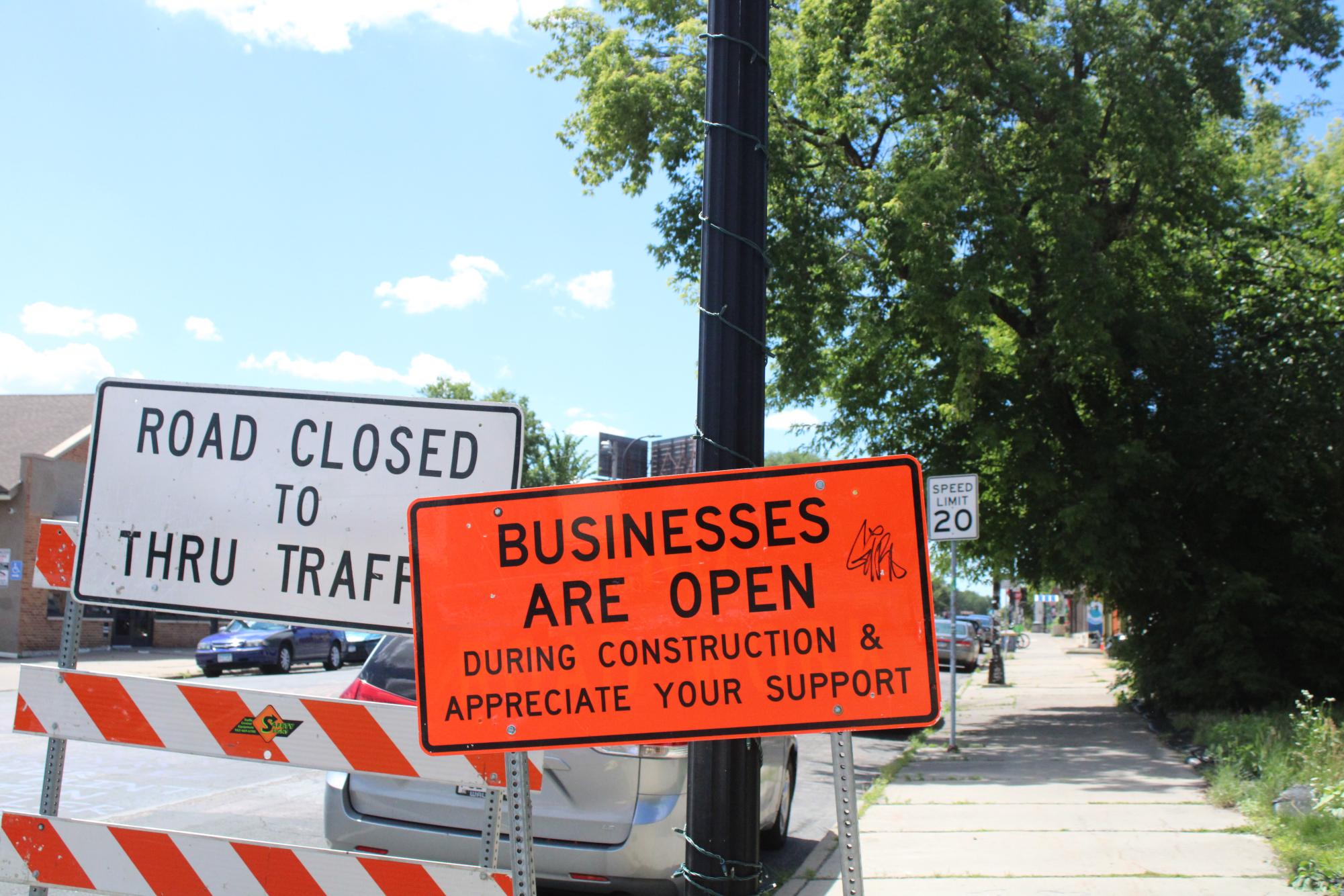
After community pushback, the Minneapolis City Council unanimously decided to cover about $630,000 in costs that property owners were originally required to pay to support the development of People’s Way, a former gas station turned memorial in George Floyd Square. Council members also voted down a contract with Minnesota Agape Movement, which submitted a plan for the development and was selected by Mayor Jacob Frey in May.
Edwin Reed had to close his business in George Floyd Square due to drops in revenue in July of last year. Reed said he was surprised to hear about the special assessment handed out.
Reed said the fact that the cost was to be offloaded to locals upset him. He believes the project should not be the people’s responsibility, but the city’s.
“We didn’t start it, they did,” Reed said. “To make us pay for it is just another slap in the face to me, my business was decimated up there.”
Hennepin County Commissioner Angela Conley lives near George Floyd Square. She said the city council’s original decision was unfair, and she’s glad the council took steps to reconsider.
“I think it’s great that the city reevaluated the assessments that would have been placed on residents and businesses,” Conley said. “When we set a levy that collects property taxes, it’s to do things like take care of the roads that we drive on.”
Self-proclaimed “Tourist Interrupter” of George Floyd Square and Minneapolis resident Marquise Bowie said the neighborhood has gone without city investment for far too long.
Bowie is a founder of the Agape Movement, a 40-year-old grassroots community safety organization based in South Minneapolis. Since Floyd’s death, he and others in the organization have tried to support the community in any way they can, a commitment that Bowie said he hasn’t seen from city officials.
“It’s been six years. Nobody’s really investing in our neighborhood without any fires. We’ve seen fires burn down buildings to the gravel that are built back up,” Bowie said. “We don’t have nothing permanent that lets people know anymore about George Floyd or about the community at large.”
Following the city’s purchase of Peoples’ Way in 2023, the Minneapolis City Council received submissions from four teams that pitched their development ideas for the People’s Way. The Agape Movement was chosen by Frey earlier this year, but the city council voted against the decision, opting to reconsider other applicants.
South Minneapolis resident Dee Thomas said restrooms are a need at George Floyd Square.
“They want people to come through here and do tours here, but there’s no place to use the bathroom,” Thomas said. “Where can the people that are here in the community day by day, watching over the square and keeping the people safe, get to use the restroom and wash our hands?”
South Minneapolis resident Roxy Drake sat alongside Thomas on a metal chair at People’s Way. She said she wants to see a recreational center built. Community members may soon have the development they’ve been hoping for, but struggles to agree on a developer bring further uncertainty to the project.
Conley said, given the survey distributed to community members, Rise and Remember was the more favored option.
“What you saw the city council do was deny the mayor’s recommendation and move forward with the recommendation of the people who were surveyed and who said Rise and Remember best represents what we want to see at the site,” Conley said. “I think the council was really honoring the voices of residents.”
While it may appear that for one developer to win the bid, another one must lose, Conley said there is plenty to go around with the 38th Street THRIVE Plan, a plan created by community members and the city of Minneapolis to drive engagement on 38th Street between Nicollet Avenue and Bloomington.
“We should be listening to the residents, and I think we need to really fund the 38th Street THRIVE Plan so that other development can happen,” Conley said. “One of them could be what Agape has presented. Why not both?”
The timeline for construction of the square remains the same, with the project set to be done in late 2027, though development action remains unclear. However, Minneapolis City Council members Soren Stevenson and Jason Chavez have made continuing efforts with the project, frequently meeting with Frey about what is best for People’s Way.
Though Stevenson declined an interview with the Minnesota Daily, a member of his team said the next steps are still undecided and will be publicly announced when ready.
Bowie said he wants the council to move forward with Agape Movement’s plans for the square.
“We’ve been here, we were open to working with whoever to try to build a better community,” Bowie said. “We don’t want to stay in activism mode forever and kick the can down the road. We want to start building.”
-

 Sports5 minutes ago
LeBron James Next Team Odds: Warriors, Cavaliers, Heat In Mix
-

 Technology8 minutes ago
The trick to smoother streaming at home and on the road
-
 Business13 minutes ago
Downtown L.A. World Trade Center to become affordable apartments
-
 Entertainment20 minutes ago
’47 Ronin’ director Carl Erik Rinsch sentenced to 30 months in prison for Netflix fraud case
-
 Lifestyle23 minutes ago
At Mindful Archery, L.A. women take aim at their exes, toxic jobs and Donald Trump
-
 Politics28 minutes ago
British regulator may challenge Paramount takeover of Warner Bros. Discovery
-
 Science35 minutes ago
Hospital visits for smoke inhalation spiked during Boyle Heights warehouse fire
-
 Sports38 minutes ago
Contributor: U.S.-born Brian Gutiérrez and Obed Vargas signal a new era for Mexico’s national team

