Oregon
Workers slam culture at Oregon Forestry Department


The state has received about a dozen complaints against Oregon Department of Forestry leaders this year, with some employees alleging a hostile work culture toward women and others saying they fear retaliation if they speak out.
The complaints include one from Brenda McComb, vice chair of the Oregon Board of Forestry, who told state officials that she had seen little evidence that the Forestry Department had advanced “diversity representation” among its workforce or advisory committees.
She said the state forester seemed to have made no progress implementing a “draft diversity plan.”
“If progress is being made, it is not apparent to me, and if it is not apparent to me then it is not apparent to other members of the public,” McComb wrote in her complaint. McComb is the retired vice provost for academic affairs at Oregon State University.
“I have two more years to serve on my term on this Board, and frankly I am exhausted from being stone-walled on this issue by the agency and their unwillingness to consider this a priority,” she wrote in an Aug. 23 email to Torrey Sims, the state’s diversity, equity, inclusion and belonging manager. “I am hoping that you or the Governor’s office will begin to hold this agency accountable in this regard.”
Sims responded, thanking McCombs for bringing the concern to his attention and telling her that two of his colleagues would “take over from here.”
Another employee questioned the Forestry Department’s pattern of directly hiring people without following the typical vetting process, saying “this seems shady and leads to an old and current image by employees at ODF that it is the ‘Good Old Boys Club’ or that it is ‘Who you know not what you know.’”
The state released the complaints in response to an Oregonian/OregonLive public records request. The agency redacted some of the names of the employees who filed the complaints.
Spokesperson Joy Krawczyk did not immediately respond to an email seeking comment. A spokesperson for Gov. Tina Kotek also did not immediately respond to a request for comment.
The Department of Forestry is charged with protecting about 16 million acres of public and private forestland.
The agency is overseen by State Forester Cal Mukumoto, who answers to the Oregon Board of Forestry, a seven-member citizen board appointed by the governor. Appointed in 2021, Mukumoto manages an agency of nearly 1,400 employees and a biennial budget of about $577 million. His salary is $237,288.
Mukumoto’s second-in-command, Mike Shaw, has been on paid administrative leave since Aug. 6, according to the agency. The reason for his leave is unclear; Krawczyk did not immediately respond to an email about the reason for Shaw’s leave. His annual salary is $192,288.
This story will be updated.
— Noelle Crombie is an enterprise reporter with a focus on criminal justice. Reach her at 503-276-7184; ncrombie@oregonian.
Our journalism needs your support. Subscribe today to OregonLive.com.

Oregon
National report: Oregon great for giving kids health insurance, bad for teaching them how to read
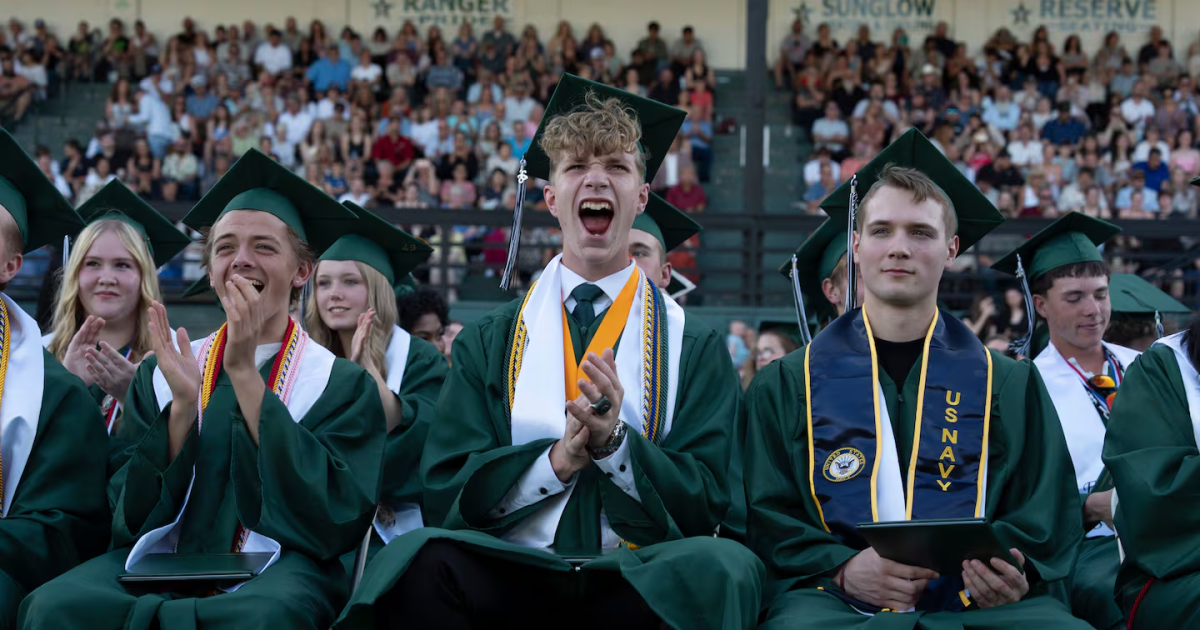
The Annie E. Casey Foundation releases the Kids Count Data Book annually, with its new 2026 edition mainly drawing on data from 2024. State-based organizations work with the Annie E. Casey Foundation on the report, including Our Children Oregon and the Children’s Alliance in Washington.
The report is a snapshot in time of how well the country is supporting its youngest residents in 16 different indicators, including percentage of children living in poverty, kids who lack health insurance and reading proficiency among fourth graders.
David Wieland, policy and advocacy director for Our Children Oregon, said all of the indicators are related and play a role in a child’s well-being.
“We can’t just say that we’ll address reading outcomes through the educational system,” Wieland said. “We actually need to look holistically at child well-being if we want to really improve any one of these single indicators.”
Oregon lags behind the vast majority of states when it comes to educational indicators, ranked at 44 of 50 states. At 31, Washington ranks a bit higher.
But outside of the classroom, the two states fare better. Both Oregon and Washington are in the top 10 of states in health and community indicators.
“These are often the result of policy choices that we make,” Wieland said. “Oregon has prioritized ensuring that children — we should celebrate that.”
But federal changes may hurt states’ progress.
As Children’s Alliance in Washington state mentions in their press release sharing the Kids Count Data, “The numbers do not reflect the current reality for kids and families impacted by federal cuts to vital programs that have already come into effect.”
One policy choice Oregon made allows students to opt out of standardized testing. As a result, Oregon’s testing participation rates are below 95%, the federal requirement.
Wieland said this policy makes Oregon’s outcomes “less reliable.”
“We simply know with less certainty how we compare,” Wieland said.
In addition to rankings, the report calculates index scores for each state, allowing year-over-year comparisons. Both Oregon and Washington’s scores declined compared to their pre-pandemic scores from 2019, and so have the index scores in 45 other states. Only Mississippi and Louisiana saw improvements. South Carolina stayed stable.
Looking Ahead
Through Oregon’s Early Literacy Success Initiative, the state has sent grants to school districts to help improve reading and provide more support for students in elementary school. But it may be a while before those investments show improvement in reports like the Kids Count Data Book, said Our Children Oregon executive director Bridget Dazey.
“We do have to be patient as the state and school districts try new things,” Dazey said. “At the same time, we can confidently say we’re underinvesting in students and so it shouldn’t be so delayed that we wait five to seven years to see how things start to shape up.”
Going forward, Dazey said her organization is working with a coalition of organizations on the next edition of the group’s Children’s Agenda, a list of legislative priorities for lawmakers. Dazey said the state also needs a vision that looks out beyond the legislature’s two-year budget cycle that school districts use to plan spending.
“We need to be thinking long term,” Dazey said. “Our state has gotten really comfortable with thinking about things in the biennium.”
This story comes to you from the Northwest News Network, a collaboration between public media organizations in Oregon and Washington.
The Oregon Lottery offers several draw games for those aiming to win big.
Here’s a look at July 6, 2026, results for each game:
Winning Powerball numbers from July 6 drawing
17-44-63-66-67, Powerball: 04, Power Play: 2
Check Powerball payouts and previous drawings here.
Winning Pick 4 numbers from July 6 drawing
1PM: 8-8-0-7
4PM: 4-2-9-2
7PM: 8-2-5-5
10PM: 7-7-2-2
Check Pick 4 payouts and previous drawings here.
Winning Win for Life numbers from July 6 drawing
18-28-41-70
Check Win for Life payouts and previous drawings here.
Winning Megabucks numbers from July 6 drawing
14-19-20-21-25-38
Check Megabucks payouts and previous drawings here.
Feeling lucky? Explore the latest lottery news & results
When are the Oregon Lottery drawings held?
- Powerball: 7:59 p.m. on Monday, Wednesday and Saturday.
- Mega Millions: 7:59 p.m. on Tuesday and Friday.
- Pick 4: 1 p.m., 4 p.m., 7 p.m. and 10 p.m. daily.
- Win for Life: 7:30 p.m. on Monday, Wednesday, and Saturday.
- Megabucks: 7:29 p.m. on Monday, Wednesday, and Saturday.
This results page was generated automatically using information from TinBu and a template written and reviewed by an Oregon editor. You can send feedback using this form.

If you headed to the lake early last week, you missed the best fireworks. Dan Lanning and his staff put on a cup of coffee and closed like the Wolf of Wall Street. Minus the cocaine, probably.
All jokes aside, and believe me, these are jokes, the recruiting this staff is doing is not a joke. From June 28 to July 3, a span of 6 days Oregon added four new commitments and all were four stars or better. If you weren’t paying attention, Oregon landed 12 commits in the months of June and what we’ve had in July so far.
The recruiting class has surged from the teens to No. 9 to start last week to No. 3 overall by Friday afternoon. Only Texas A&M and Notre Dame have better recruiting classes according to Rivals. Oregon has the best class in the Big Ten conference.
The 24 commits sit at an average rating of 90.76 according to Rivals. Additionally 16 of the 24 commits are ranked four-stars or better and that includes the Ducks having a pair of 5-Star commitments. Oregon has 11 defensive commits, 11 offensive commits and 2 listed as athletes.
Up next is a commitment from four-star linebacker Brayton Feister set for Saturday, July 11. I don’t believe that addition will move Oregon up in the rankings but will strengthen their current position.
With five-star wide receiver Xavier Sabb committing, Oregon now has a commitment from 17 different states. Should Feister from Ohio pick the Ducks on Saturday, that would give Oregon an 18th state. The national reach of this program is as good as any school in the country.
Last year Oregon finished with the No. 4 ranked class in the nation. The 2025 class also finished at No. 4 nationally.
The early signing period for the 2027 class begins on December 4 and ends on December 6. The transfer portal window begins on January 2.
Oregon kicks off its 2026 season opener at home on September 5 vs Boise State.
-

 Politics3 minutes ago
Abbott orders probe after Texas hospital advertises ‘birth packages’ in Mexico: ‘Citizenship is not for sale’
-

 Health11 minutes ago
Dr Oz warns Medicare scammers are stealing billions — and your personal information could be next
-

 Sports18 minutes ago
Donovan Mitchell signs massive $273M Cavaliers extension as LeBron James return speculation grows
-
 Business26 minutes ago
Waymo reports teen riders for bad behavior and delivers them to the police
-
 Entertainment33 minutes ago
Tito Double P seizes the spotlight with his latest album, ‘Acomodo’
-
 Politics48 minutes ago
Platner’s collapsing campaign in Maine adds new midterm pressures for Democrats nationwide
-
 Science51 minutes ago
Fans slam FIFA’s cooling breaks. Why the U.S. World Cup team doctor disagrees
-
 Sports56 minutes ago
Cowboys’ Marshawn Kneeland had early-stage CTE when he died by suicide

