West
Family of Blackfeet chief, face of NFL's Redskins for 48 years, wants his image back in NFL

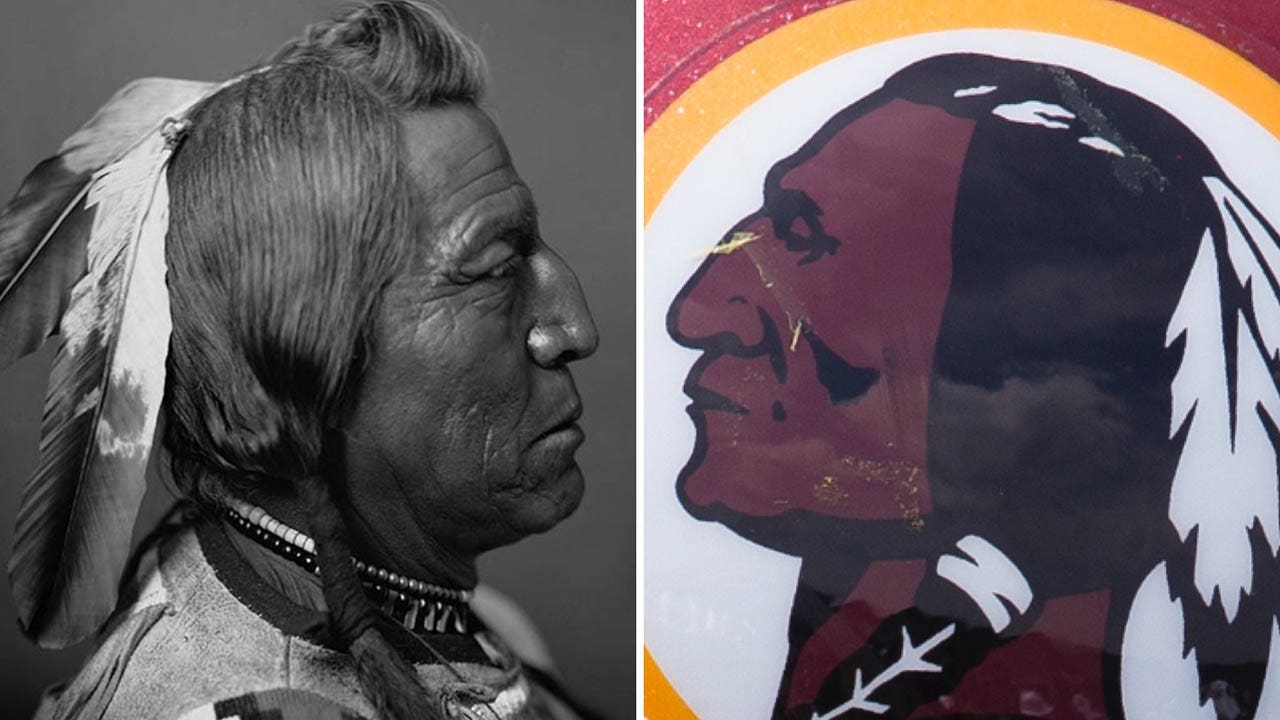
The family of the Blackfeet chief who served as the face of the Washington Redskins for 48 years want his image back on the fields of the NFL, relatives told Fox News Digital.
The descendants of John Two Guns White Calf also want his incredible life story retold, too, to a new generation of Americans who seek unity and value multiculturalism.
The White Calf family has support in Washington, D.C. from one of their Montana senators, while the NFL franchise itself, now known as the Washington Commanders, is making new efforts to honor the team’s heritage.
CANCELED TRIBAL CHIEF WHITE CALF, FACE OF THE REDSKINS, GENERATES NEW SUPPORT NATIONWIDE
“The fans want him back and we want him back,” Thomas White Calf, a great nephew of the celebrated early-20th-century native, said this week by phone, hours after the family met with Sen. Steve Daines, R-Montana.
Two Guns White Calf’s proud portrait adorned Redskins helmets, T-shirts, playing fields and marketing materials from 1972 until 2020.
Blackfeet chief John Two Guns White Calf, left, who served as the inspiration for the Washington Redskins logo that represented the NFL franchise on the field from 1972 to 2020. (Getty Images)
“Our ancestor was the most famous and most photographed native in history,” said White Calf, who was joined on the call by his mother, Delphine White Calf, a niece of the late Blackfeet chief.
“Two Guns was also the face on the Indian head nickel. I’m proud of him. The Blackfeet are proud of him.”
“I’m proud of him. The Blackfeet are proud of him.” – Thomas White Calf
White Calf’s portrait and the name Redskins were erased from the NFL in 2020 following years of mounting public pressure, much of it fueled by the George Soros-funded cancel-culture group, National Congress of American Indians. ,
The celebrated Blackfeet chief and his life story were canceled even as polls showed that 90% of Native Americans supported the team name and White Calf portrait.
A Washington Redskins helmet sits on the grass during a preseason game against the Cleveland Browns at FedExField on Aug. 18, 2014, in Landover, Maryland. (TJ Root/Getty Images)
Thomas White Calf, who lives on a Blackfeet reservation in Montana, says his family was never consulted and never supported the removal of Two Guns White Calf’s image from the NFL.
“This is about righting a wrong,” Sen. Steve Daines, R-Mont., said in an email sent to Fox News Digital.
SUPER BOWL CHAMP MARK RYPIEN NO FAN OF COMMANDERS NICKNAME
“It’s a point of pride and represents the rich Native American history that helped make our nation great, and it should be enthusiastically celebrated across our culture.”
The Washington Commanders were purchased in 2023 by a group of investors led by Josh Harris. They inherited the controversy over the team name and image.
Sen. Steve Daines speaks at the Republican National Convention in Milwaukee, Wisconsin, July 18, 2024. (Reuters/Mike Segar)
“We are collaborating with Sen. Daines to honor the legacy of our team’s heritage and the Native American community,” a Commanders spokesperson said in a statement sent to Fox News Digital.
“This is about righting a wrong.” – Sen. Steve Daines
“At the senator’s suggestion, we have developed a positive relationship with Ryan Wetzel, the grandson of Walter ‘Blackie’ Wetzel, who designed the logo. We look forward to honoring that legacy.”
Blackie Wetzel is the late Blackfeet tribal leader credited with creating the portrait of Two Guns White Calf in 1971, with widespread support from Native American groups, that the team adopted in 1972.
The team said it has no plans, however, to bring back Wetzel’s White Calf portrait that was erased in 2020.
Blackfeet chief John Two Guns White Calf was celebrated for his role aiding Native American causes in the early 20th century. He was the face of both the Indian head nickel from the U.S. Mint and the Washington Redskins NFL franchise. (Courtesy Thomas White Calf/White Calf family)
White Calf was born in Montana in 1872 and achieved international acclaim by fighting to preserve Native American culture.
He championed Native issues in Washington, D.C. – rubbing elbows with President Calvin Coolidge – and appeared to bridge cultures long at odds.
NATIVE AMERICAN GROUP THAT WANTED ‘REDSKINS’ REMOVAL IS FUNDED BY SOROS FOUNDATION, OTHER LEFTIST ORGS
White Calf was, according to multiple sources, the inspiration for the face that appeared on the U.S. Mint’s famous 1913 Indian head nickel and was so prominent in the United States that his death in 1934 earned a New York Times obituary.
The tribute noted that he helped make Coolidge “an honorary chief of the same Blackfeet tribe.”
The celebrated Blackfeet leader was steamrolled by the National Congress of American Indians in 2013, when it published a dubious report titled “Ending the Legacy of Racism in Sports & The Era of Harmful ‘Indian’ Sports Mascots.”
Donald Wetzel Sr., whose father Walter designed the Redskins logo, holds an autographed Washington football on June 27, 2014, in Great Falls, Montana. (Larry Beckner for The Washington Post via Getty Images)
The 29-page dissertation included a caustic 3,650-word history of the Redskins and its “legacy of racism” that critics note included a major oversight. The report failed to once mention Chief Two Guns White Calf, even though he was the face of the Redskins franchise for 48 years.
“Two Guns White Calf was a real person, not a mascot and he was canceled,” historian Andre Billeaudeaux, the author of “How the Redskins Got Their Name,” told Fox News Digital earlier this year.
The Redskins name remains too politically toxic, a person close to the issue told Fox News Digital.
The team “went too far” removing the White Calf image along with the name, the source said.
“The legendary Blackfeet logo that was championed by Blackie Wetzel and based on the likeness of Chief Two Guns White Calf must be restored to a place of honor,” said Daines.
While the Wetzel family is being recognized by the NFL franchise for its role honoring Two Guns White Calf, the Blackfeet chief’s family says the organization has ignored them for decades.
“We want a seat at the table,” said Thomas White Calf.
Follow Fox News Digital’s sports coverage on X, and subscribe to the Fox News Sports Huddle newsletter.
Read the full article from Here


In these Montana towns a stranger rarely stays a stranger for long. Shopkeepers in Philipsburg know their regulars by name. Bigfork neighbors fill the same theater seats every summer. Livingston locals still swap trail tips with visitors over coffee. The welcome here comes from people who greet newcomers like they belong. These eight communities show what small-town Montana hospitality looks like up close.
Whitefish
Whitefish sits within an hour of Glacier National Park, and that proximity shapes everything about the town. Central Avenue runs on covered Old West walkways lined with local shops, restaurants, and galleries, and the crowd shifts with the seasons as skiers give way to summer hikers.

Glacier National Park draws visitors with hundreds of miles of hiking trails, alpine lakes, and the scenic Going-to-the-Sun Road. Closer to town, Whitefish Lake offers public beaches, boat rentals, paddleboarding, and fishing during the warmer months. When winter arrives, Whitefish Mountain Resort becomes the area’s main attraction, with ski runs, snowboarding terrain, and gondola rides overlooking the Flathead Valley. Even after a day outdoors, many visitors return to downtown Whitefish to browse local shops or settle in at the town’s restaurants and breweries.
Bigfork
Sitting on the northeastern shore of Flathead Lake, Bigfork pairs a working harbor with a downtown built around its artists. Galleries and studios cluster within a few walkable blocks, and the water is never out of sight for long.
Flathead Lake is the town’s biggest draw, with boating, kayaking, fishing, and swimming on the largest natural freshwater lake west of the Mississippi River in the lower 48 states. Just offshore, Wild Horse Island State Park lets visitors hike among native wildlife, including wild horses, bighorn sheep, bald eagles, and mule deer. Theater lovers can catch a Broadway-style production at Bigfork Summer Playhouse, which has staged live performances for decades. Before leaving town, visitors can browse the independently owned galleries and studios showcasing paintings, sculptures, ceramics, and other work by Montana artists.
Philipsburg
Philipsburg made its money in silver, and the painted storefronts along Broadway Street date to those boom years. The old buildings now hold local businesses, and the mining past is easy to trace from one block to the next.
A visit to Gem Mountain Sapphire Mine lets visitors sift through mining gravel for Montana sapphires, many of which can be cut into finished gemstones. Just outside town, Granite Ghost Town State Park preserves the remains of a silver mining community, with abandoned buildings that mark the region’s boom years. Those interested in local history can stop at the Granite County Museum, where exhibits cover the area’s mining industry and early settlement. Before leaving, many visitors make time for The Sweet Palace, a candy store that has become one of the town’s signature stops.
Livingston
Livingston sits on the Yellowstone River and serves as a northern gateway to Yellowstone National Park. Restored commercial buildings house an active arts scene, and the Absaroka Range rises just south of the rooflines.
The historic downtown works as the town’s main visitor area, with independent bookstores, outfitters, cafes, and long-standing local businesses inside restored commercial buildings. At the Yellowstone Gateway Museum, exhibits trace the region’s history through Indigenous presence, railroad expansion, and early settlement in the Yellowstone Valley. Small galleries across the downtown core show work by regional artists whose subjects often reflect the river valley and the mountains around it.
Red Lodge
Red Lodge marks the start of the Beartooth Highway, one of the highest paved roads in the country. Its compact, walkable downtown keeps locally owned shops and restaurants busy in every season.
The Beartooth Highway climbs into the Absaroka-Beartooth Wilderness and continues toward Yellowstone National Park, with steep mountain passes, alpine lakes, and long-range views. In winter, Red Lodge Mountain becomes a major recreation area for skiing and snowboarding, with terrain that draws residents and visitors alike. During the warmer months, hiking trails in the surrounding mountains open onto forests, ridgelines, and wildlife viewing areas. Downtown Red Lodge stays active year-round, with local businesses and historic buildings packed into a walkable core.
Choteau
Choteau sits where the prairie meets the Rocky Mountain Front, and dinosaurs put it on the map. Fossil beds nearby produced some of the most important dinosaur nesting discoveries in North America, and the town leans into that history.
At the Old Trail Museum, exhibits cover the region’s natural history, including fossil finds and artifacts tied to its prehistoric past. The surrounding country is known for wildlife viewing, with elk, deer, and many bird species in the foothills and open plains near town. Just outside Choteau, fossil sites linked to major dinosaur discoveries have built the area’s reputation in paleontology research. The Rocky Mountain Front opens onto hiking routes and wide viewpoints where the plains give way to the peaks.
Stevensville
Stevensville is the oldest permanent settlement in Montana, founded in 1841 as St. Mary’s Mission. It sits in the Bitterroot Valley between the Bitterroot and Sapphire mountains, and the town center still runs at a slower pace.
St. Mary’s Mission is the town’s most significant landmark, preserving the mission’s early buildings and marking the first permanent Euro-American settlement in what became Montana. The Bitterroot Valley around Stevensville is known for its orchards, farmland, and mountain views, and it serves as a corridor to nearby communities and recreation areas. Local boutiques and small shops fill a compact town center that reflects its long history. Hiking trails in the nearby foothills reach forested terrain, open meadows, and views of the Bitterroot Mountains, drawing the most traffic during the warmer months.
Virginia City
Virginia City boomed after an 1863 gold strike in Alder Gulch, and much of that town survived. Wooden boardwalks, original storefronts, and period buildings still line the Main Street, so a walk here doubles as a walk through the 1860s.
Historic structures throughout the town can be toured to see how miners, shopkeepers, and early settlers lived during the gold rush era. Several small museums and preserved buildings cover mining equipment, frontier life, and local governance during the 1800s. Costumed interpreters run seasonal reenactments as well, recreating daily routines and events from Virginia City’s early years.
Small Towns Worth the Detour
These eight towns show how much Montana packs into its smaller communities. Livingston and Whitefish put national parks within reach of a walkable downtown, while Philipsburg and Virginia City keep their mining-era streets intact and open to visitors. Choteau turns fossil country into a point of local pride, and Stevensville carries the state’s oldest roots. Anyone looking for genuine small-town hospitality will find plenty of it across these Montana communities.

RENO, Nev. – A homicide suspect from Montana took their own life on Thursday night after police surrounded their car in northwest Reno, reports KTVN 2 News Nevada.
The incident happened in the area of Sharlands Avenue around 9 p.m., according to a spokesperson for the Reno Police Department.
Officers located the suspect and surrounded their car, blocking them in. They then heard a single gunshot and backed away.
Reinforcements were called, and a drone was brought in by UNRPD. It was then confirmed the suspect was in their car, dead from a self-inflicted gunshot wound, the news agency reports.
The suspect has not been identified pending the notification of next of kin, and no additional information has been released at this time.
In addition to the Reno Police Department, the Regional Narcotics Unit and Washoe County Sheriff’s Office also responded.
The investigation is ongoing.

ALBUQUERQUE, N.M. – Vers Bar will soon open in Nob Hill, adding a new gay bar to the city as its owners say Albuquerque’s LGBTQ+ community wanted more space.
KOB 4 got a preview before the opening and spoke with owners Lucas Romero and Luke Rogers outside the new bar.
Romero and Rogers said Albuquerque right now has only two gay bars and one gay club, fewer than other cities its size and fewer than the city used to have.
“We put a lot of love and effort into this space and put a lot of love and effort into the community. And I think when you bring those two things together, I think we have something really special for Albuquerque,” Romero said.
“Coming out of COVID. We realized that there was an opportunity or a need for people in the queer community to have a space, and so we hosted this mixer. We called it friends of Dorothy,” Rogers said.
They said those quarterly meetups at different bars across Albuquerque eventually drew close to 400 people and helped show demand for a permanent space.
“We were like, well, hold on. Is this our proof of concept for possibly a gay bar?” Romero said.
The couple found the former Albuquerque Distilling location on Central early last year and renovated it into a bar and lounge. They also leased the suite next door for a dance floor and event space.
They said social media posts about the project built interest beyond New Mexico, but they created Verse Bar with local customers in mind.
“To many of us in the gay community, having a gay bar or a strong queer culture is really important.” Rogers said.
Verse Bar will officially open to the public next weekend. Romero and Rogers said they plan a soft opening this weekend to test equipment and make sure staff are ready.
-

 Kentucky3 minutes ago
Affordable Care Act rates rate hikes could strain Kentucky families, WKAS warns
-

 Louisiana8 minutes ago
Moncus Park gets helping hand from 260 youth volunteers across Louisiana
-

 Maine15 minutes ago
Maine’s high court keeps transgender athlete referendum off 2026 ballot
-

 Maryland18 minutes ago
MD woman sentenced to 2 years, $6.8M restitution in multi-million-dollar laundering scheme
-

 Michigan30 minutes ago
Harmful algal blooms reported on 2 large West Michigan lakes
-

 Massachusetts33 minutes ago
Insider tips for navigating the Brimfield Antique Flea Market
-

 Minnesota38 minutes ago
Northwest Minnesota Foundation awarded $200,000 for child care economic development
-

 Mississippi45 minutes ago
Family of Mississippi teen Nolan Wells demand investigation into son’s death

